Photo by <a href="https://unsplash.com/@manucosen?utm_source=tokyodeepnightlife&utm_medium=referral">Manuel Cosentino</a> on <a href="https://unsplash.com/?utm_source=tokyodeepnightlife&utm_medium=referral">Unsplash</a>
Here’s the problem with almost every list of themed bars Tokyo has to offer: a large share of the venues on those lists are dead. The Robot Restaurant has been closed since 2020. Every branch of the prison-themed Lockup shut in 2022. Alcatraz E.R., the blood-spattered prison-hospital bar, is gone — and it was in Shibuya, not Shinjuku, no matter what the top-ranking articles tell you. We checked all of them against official sites, operator listings and Japanese-language sources before writing a word.
What follows is 20 themed bars Tokyo currently has open — concept bars and theme restaurants we could confirm are actually trading — organized by the kind of night you want, with the addresses, charge systems and booking quirks that decide whether you get in. At the end there’s an honest roll call of the famous places that no longer exist, so you don’t spend a Tokyo evening standing outside a shuttered building.
Contents
- How Themed Bars in Tokyo Actually Work
- Ninja and Samurai Themed Bars in Tokyo
- Robots, Maids and Otaku Tokyo
- Gothic, Fantasy and Whodunnit
- Golden Gai’s Themed Micro-Bars
- Only-in-Japan Concepts
- Themed for Drinkers, Not for Tourists
- The Famous Themed Bars in Tokyo That Are Closed
- Building a Themed Bar Crawl in One Night
- FAQ
- What do you do in Tokyo After 10?Join our Tokyo Nightlife Private Tour
- Seeing the Ones You’d Never Find Alone
- About the Author
How Themed Bars in Tokyo Actually Work
The themed bars Tokyo is known for run on rules that aren’t printed on the English signage. Five things trip up first-timers.
The seating charge is real. Most Japanese bars and izakaya add a per-person cover — variously called charge, otoshi or table charge — typically ¥500 to ¥1,000. At Golden Gai it’s often stated on a sign by the door. It is not a scam, and it is not negotiable. What is a scam is a venue that hides the number until the bill arrives; our guide to Tokyo nightlife scams covers how to spot those before you sit down.
Reservations matter more than you think. The high-production venues (Ninja Tokyo, Samurai Restaurant, the OriHime Diner at Dawn) sell out days ahead and several won’t take walk-ins at all. The tiny bars don’t take bookings and can’t — they have eight seats.
Cash still rules the small places. Deathmatch in Hell and the Penguin Bar are cash-only. The ninja café in Asakusa is the opposite: fully cashless. Carry both.
“Themed” spans a huge range. Some of these are theatrical dinner shows costing ¥13,000 a head. Others are ¥666-a-drink dives. Read the price note on each entry before you build an itinerary.
Hours shift. Small owner-run bars close irregularly, and show times at the big venues change seasonally. Every set of hours below is what the venue or its operator published when we checked in August 2026 — confirm on the day.
Ninja and Samurai Themed Bars in Tokyo
1. Ninja Tokyo — Otemachi
The most serious of the ninja restaurants, and the one that survived. It ran in Akasaka for 22 years before relocating; it now sits in the basement of the Shin-Otemachi Building at 2-1 Otemachi 2-chome, Chiyoda-ku, where it reopened in December 2023. You’re led through a dark stone corridor by a costumed guide into a warren of low-lit rooms, and the food is genuinely good kaiseki-style cooking rather than novelty plating with tricks bolted on.
Courses run from ¥8,800 to over ¥24,300, with the standard dinner offering starting at ¥13,200 (tax included, service charge extra). Open Monday to Saturday, 11:30–14:30 and 17:00–22:00; closed Sundays, national holidays and New Year’s Day. The site is fully in English and books through TableCheck. This is a splurge dinner, not a bar stop — plan the evening around it.
2. Ninja Experience Café Asakusa — Nishi-Asakusa
The cheap, hands-on alternative. Rather than watching ninja theatrics, you put on the costume and train: shuriken throwing, blowdarts and basic katana forms with safe practice gear, then eat ninja-shaped food. Listed courses include Kotaro at ¥3,900 (training plus a drink, about an hour), Jiraiya at ¥5,300 and Hanzo at ¥5,500, with child rates ¥400 lower.
Find it at 3-27-14 Nishi-Asakusa, Taito-ku — the entrance is marked by a red torii gate on the ground floor. Officially open daily 10:00–21:00, but the venue itself warns of irregular closing days, so book ahead. Payment is cashless only: card or an IC card like Suica or Pasmo. It works well for families and for anyone who’d rather do something than be performed at.
3. Samurai Restaurant — Kabukicho
This is the closest thing to the old Robot Restaurant, and deliberately so: it opened in late 2023 in the same Kabukicho basement, using the same gaudy gold booths. It’s run by a different operator, so treat it as a successor rather than a revival. The show is 90-plus minutes of LED walls, taiko, sword choreography and dance at B1F, 1-7-1 Kabukicho, Shinjuku.
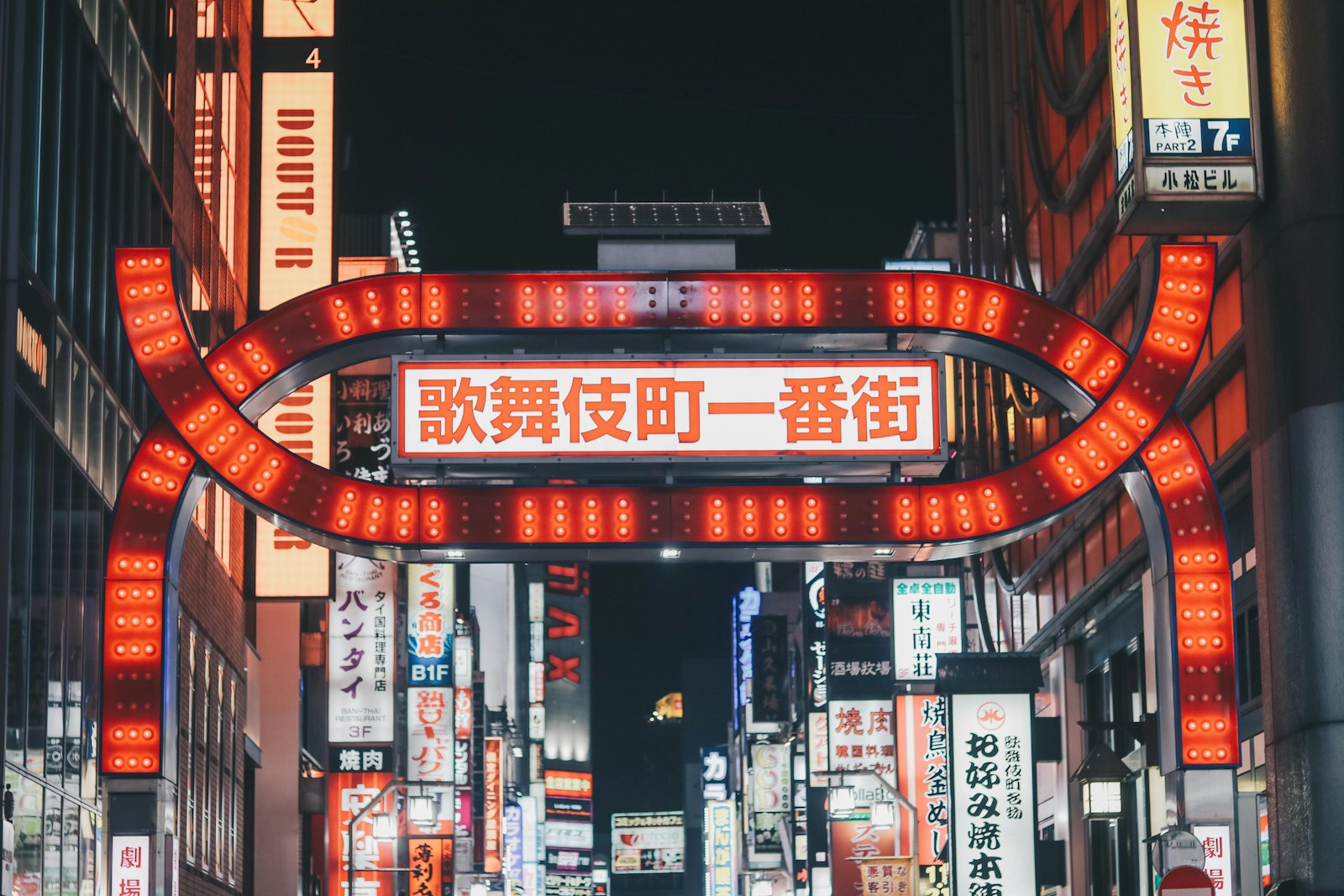
Tickets start at ¥8,000 including two drinks. Entry is 18+ and ID is checked at the door. Show times have run roughly 10:50, 14:30, 17:00 and 19:00, but they shift with the season — check the current schedule before you buy. Buying online is usually cheaper and safer than dealing with the street touts working that block, a subject we get into in our Kabukicho and Shinjuku nightlife guide.
Robots, Maids and Otaku Tokyo
4. Dawn Avatar Robot Café — Nihonbashi
The most quietly remarkable venue on this list. The OriHime robots that take your order are not AI — each one is piloted in real time by a person with ALS, spinal muscular atrophy or another condition that keeps them home or bedbound. There are now more than 60 pilots. You end up in a real conversation with a real human, routed through a small white robot, and it reframes what “robot café” means.
Address: 3-8-3 Nihonbashi-Honcho, Chuo-ku (Nihonbashi Life Science Building 3, 1F), open 11:00–19:00. Admission is ¥2,200 for adults and ¥1,100 for children including one drink; the OriHime Diner table-service experience is ¥5,500 for adults and requires advance online booking with card payment — no same-day. Tele-Barista runs Mondays, Wednesdays and Saturdays. There’s also OrySNACK, a guided Japanese rice-wine tasting, which is where the alcohol comes in. Be clear-eyed: this is a daytime café with a sake experience attached, not a night bar. Go anyway.
5. maidreamin — Akihabara (seven locations)
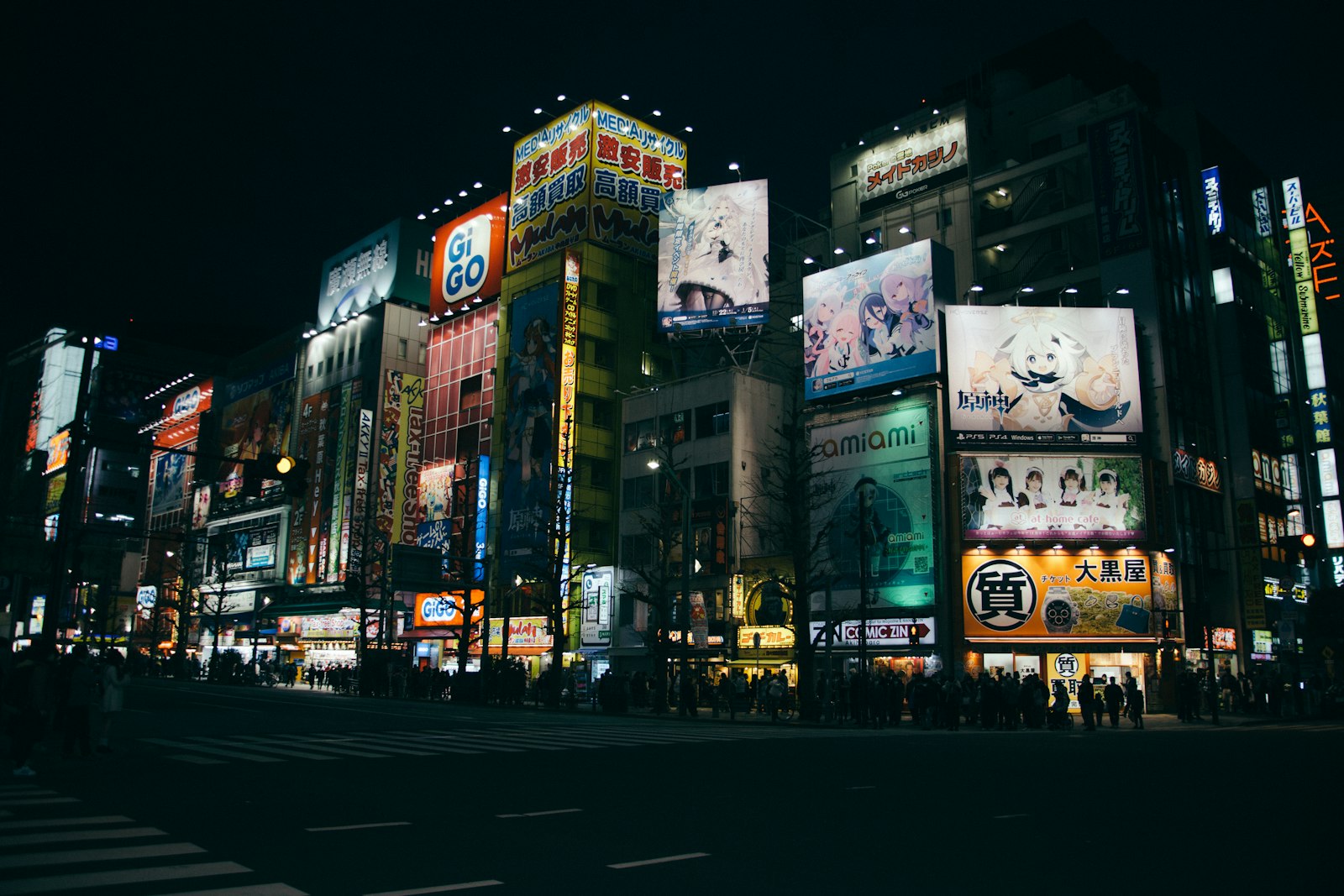
The maid café that scales. maidreamin runs seven venues in the Akihabara area alone, including a Head Store and the larger Heaven’s Gate live restaurant, and unlike most of the genre it’s built to handle foreign visitors — English menus, staff used to tourists, and a system explained at the door.
The model is an entry fee plus a one-drink-or-food minimum, charged by the hour, with prices that change depending on the time of day. It runs as a café by day and serves alcohol at night: draft beer, highballs, cocktails, wine by the glass, sake and sours. Check the specific store’s rules when you arrive rather than assuming the price you read online. It’s the low-risk way to see what the fuss is about.
6. Little TGV — Akihabara
A railway izakaya where the menu is laid out as a route map, the staff wear conductor uniforms, tamagoyaki arrives shaped like a three-car train, and the cocktails are colour-matched to real Japanese train liveries. The room is stuffed with model trains and salvaged station hardware.
It’s on the 4th floor at 3-10-5 Sotokanda, Chiyoda-ku — five minutes from JR Akihabara, three from Suehirocho. Published hours are Tuesday–Friday 18:00–23:00, Saturday and holidays 16:00–23:00, Sunday 12:00–23:00, closed Mondays. One caveat worth stating plainly: this shop posts irregular closures and schedule changes on its own blog, and the signals about its status have been muddy over the past year. Check the official site the day you plan to go.
7. 8bit Café — Shinjuku-sanchome
Fifth floor of an anonymous office building at 3-8-9 Shinjuku, and inside it’s a shrine to 1980s gaming: Famicom cartridges, a Virtual Boy, Power Gloves, shelves of consoles you’re allowed to take down and play while you drink. The signature is the Dr. Mario, served in a laboratory beaker with a test tube of candy capsules alongside.
Listings put it at roughly 19:00 to midnight with Tuesdays closed, though weekend hours run much later. It’s small, it’s warm, and it’s the rare theme bar where the theme is the owner’s actual obsession rather than a marketing brief.
Gothic, Fantasy and Whodunnit
8. Vampire Café — Ginza
The elder statesman of Tokyo’s theme restaurants, running in Ginza since 2001 — it marked its 24th anniversary in May 2025. Seventh floor of the Lape Building at 6-7-6 Ginza, Chuo-ku (tel 03-3289-5360). The lift opens onto deep red drapes, coffin-shaped tables, candlelight and staff in full costume.
The food is Italian-French with theatrical naming — dishes carry titles like Necromancer and Elizabeth Bathory — and there’s a list of original cocktails built around the conceit. Book through operator DD Holdings’ site. It’s dinner-with-a-concept rather than a drop-in bar, and it’s aged into something almost dignified.
9. Alice in an Old Castle — Ikebukuro
The Alice restaurants were once a small empire; Tokyo is down to this one. The Ginza flagship and the Shinjuku “fairytale book” branch have both closed, which makes 古城の国のアリス in Ikebukuro the survivor. B1F of the Suzuwa Building, 2-16-8 Minami-Ikebukuro, Toshima-ku, three minutes from JR Ikebukuro’s west exit.
Lunch runs 12:00–14:30 and dinner 17:00–22:00 on weekdays; weekends and holidays it serves straight through 12:00–22:00. There’s a ¥550 cover, waived if you book a course, and typical spend lands around ¥1,500–¥3,500. Expect teacup-shaped seating, Cheshire Cat plating and servers in blue pinafores.
10. Detective Café — Ikebukuro
Formerly Detective Café Progress, and the gimmick is that it isn’t one: the people mixing your drinks work as licensed private investigators by day. Bar time includes bug-sweeping demonstrations and fingerprint lifting, and they’ll show you redacted material from real infidelity investigations.
Ninth floor of the Kizuna Building II, 2-47-12 Ikebukuro, Toshima-ku, about three minutes from the north exit (tel 03-6698-2263). Café time is weekends and holidays 11:30–17:30; bar time runs 18:00–23:30 daily. Average spend is around ¥3,000. Fair warning: this one operates primarily in Japanese, so it rewards travellers with some language or a Japanese-speaking friend.
Golden Gai’s Themed Micro-Bars
Golden Gai’s 200-odd shoebox bars are the densest concentration of themed bars Tokyo can offer in a single block, each one a single owner’s fixation rendered in six square metres. Two stand out, and our complete Golden Gai guide covers the etiquette of the alley in full.
11. Deathmatch in Hell
Horror memorabilia, severed rubber limbs, Terminator skulls, B-movies on the screens and metal at volume. What makes it beloved rather than gimmicky is the pricing: every drink is ¥666, there’s no cover charge, and it’s cash only. Ten or twelve seats, run by an owner known as Go-san, and it’s consistently the bar people name as their favourite in the whole alley — including people who don’t like metal.
12. Bar Plastic Model
The nostalgia counterpart, two minutes away. The owner filled the room with the things he loves the way you’d build a model kit: Showa-era plastic models, retro toys, old records, 70s and 80s Japanese pop on the speakers. Japanese whisky and cocktails, and conversations that cross generations because the decor gives everyone something to point at.
Also worth knowing: Albatross spreads over three narrow floors with a chandelier and a third-floor open-air terrace — one of the only outdoor drinking spots in Golden Gai, and the easiest room in the alley to fit a group of four.
Looking for Adult Entertainment Services in Tokyo? Download this
I’ve spent over a decade exploring and studying Japan’s adult entertainment scene firsthand. If you’d like detailed insider information—including how to choose the right shop, what services are available, and tips for avoiding common mistakes—check out our exclusive E-book.
Only-in-Japan Concepts
13. Vowz Bar — Yotsuya
A bar staffed by practicing Buddhist monks, open since September 2000, on the 2nd floor of the AG Building at 6 Araki-cho, Shinjuku-ku, near Yotsuya-sanchome. Shaven-headed bartenders serve temple-themed drinks and shojin ryori snacks, will chant sutras on request, and are entirely happy to talk through whatever’s on your mind. The founding idea was to make Buddhism approachable; you don’t need to be Buddhist, or sober-minded, to be welcome.
Open 19:00–01:00, closed Sundays and public holidays (tel 03-3353-1032). The ¥500 cover is written on the menu as 500縁 — a pun swapping the character for yen with the one for karmic connection. About a dozen seats.
14. Zauo — Nishi-Shinjuku
You fish for your dinner. The dining room is built around a full-size wooden boat floating in a stocked moat of sea bream, flounder, horse mackerel, shrimp and lobster; you rent a rod for a token fee of around ¥110 with bait included, cast from the boat, and the kitchen cooks whatever you land. There’s no catch-and-release — you hook it, you buy it, priced by species.
Ground floor of the Shinjuku Washington Hotel, about eight minutes from Shinjuku Station’s south exit. Hours run roughly 11:30–15:00 and 17:00–22:30, varying by day. Boat seating needs a phone reservation (03-3343-6622); the online system won’t let you specify. Don’t fish if you’re not prepared to eat it.
15. Kappo Yoshiba — Ryogoku
Not a costume theme — a real one. The restaurant occupies the former Miyagino sumo stable, and the original dohyo still sits in the middle of the dining room; you eat chanko nabe, the protein-dense hotpot wrestlers actually live on, around the ring where they trained. Occasional live performances happen in the ring itself.
2-14-5 Yokoami, Sumida-ku (tel 03-3623-4480). Lunch 11:30–14:00 (last order 13:30), dinner 17:00–22:00 (last order 21:10). Closed Sundays and public holidays, plus Golden Week, Obon and New Year — with the notable exception that it opens for Sunday dinner during sumo tournaments, which is exactly when you want to be in Ryogoku anyway.
16. Penguin no Iru Bar — Ikebukuro
Four live penguins, behind glass, in a bar. Feeding times are 19:00 and 21:30 and you can take part; you can’t touch or hold them, which is the correct policy. 1F of the COSMY1 Building, 2-38-2 Ikebukuro, Toshima-ku (tel 03-5927-1310), open 18:00 to 03:00 with last orders at 02:00, closing earlier on Sundays and shut January 1–3.
Cash only, and there’s a seat and service charge on top of drinks. Note that the Kichijoji sister venue has closed, so Ikebukuro is the one.
17. Kagaya — Hatanodai
An izakaya that is really a one-man theatre. The owner, who introduces himself as Mark, disappears and returns in absurd costumes to perform routines that make no narrative sense and reduce entire rooms to tears. It ran for years in Shimbashi and has since moved to a house at 2-12-12 Hatanodai, Shinagawa-ku — well off the tourist map, which is part of the appeal.
It’s reservation-only and small; call two or three days ahead (050-5493-3863). Guests generally meet him at Hatanodai station and walk over. Go with people who won’t be embarrassed, because you will be participating.
Themed for Drinkers, Not for Tourists
The last three have a concept as tight as anything above, but they’re built for people who came for the drink.
18. Hanbey — Shibuya, Kabukicho, Kichijoji and more
A Showa-retro izakaya chain that recreates postwar Japan in obsessive detail: enamel advertising signs, tin toys, vintage manga, old film posters, and novelty drinks like the powdered juices Japanese people over 50 remember from childhood. Charcoal-grilled yakitori at prices that feel like a clerical error.
Tokyo branches include Shibuya Center-gai, Shibuya Dogenzaka, Kabukicho and Kichijoji. The Center-gai store runs 17:00–24:00 Sunday through Thursday and until 01:00 Friday and Saturday. It’s the cheapest themed night on this list by a distance and a genuinely good place to start one.
19. Shot Bar Zoetrope — Nishi-Shinjuku
Silent films loop on the wall while period soundtracks play, and behind the counter sit more than 300 Japanese whiskies — one of the deepest collections in the city, alongside Japanese rum, brandy, grappa and beer. Owner Horigami opened it in 2006 around his two obsessions; the interior was designed by Takeo Kimura, one of Japan’s best-known film art directors.
Third floor at 7-10-14 Nishi-Shinjuku, open 17:00–23:15, closed Sundays and some Mondays. Eight counter seats and a few tables. If you want to actually understand Japanese whisky rather than photograph it, this is the room.
20. Bar Benfiddich — Nishi-Shinjuku
An apothecary rendered as a cocktail bar: shelves of homemade tinctures, infusions and aged herbal liqueurs, a mortar and pestle in constant use, and no menu at all. Owner-bartender Hiroyasu Kayama asks what you like and builds from there, frequently using herbs, spices and fruit — yuzu, fennel, wormwood — grown on his family’s land in Chichibu. It placed No. 18 on The World’s 50 Best Bars 2025.
Ninth floor of the Yamatoke Building in Nishi-Shinjuku. Small, serious, and worth arriving early for.
The Famous Themed Bars in Tokyo That Are Closed
If you’ve been reading other lists, you have probably already written some of these into your itinerary. Don’t.
- Robot Restaurant (Kabukicho) — closed permanently in 2020. Samurai Restaurant now occupies the same basement under different management.
- The Lockup — the prison izakaya chain shut all of its branches, with the final Tokyo store in Kabukicho closing on 31 July 2022 after 23 years. Its website is no longer even a website.
- Alcatraz E.R. — the prison-hospital bar with the handcuffs and syringe drinks is permanently closed. It was in Shibuya, despite what several current “2026 guides” claim.
- Christon Café Tokyo — the Gothic church-themed restaurant in Shinjuku is listed as closed by its own operator, DD Holdings.
- Yūrei Izakaya (Kichijoji Yūrei) — the ghost izakaya closed in August 2019. It still appears on lists published this year.
- Kawaii Monster Café (Harajuku) — closed 31 January 2021. Its successor, Kawaii Monster Land, opened beneath Takeshita Street on 13 February 2026, with time-slotted tickets from around ¥2,800. It’s an immersive attraction rather than a café, and it’s the one genuinely new thing in this category.
So is there a prison-themed bar in Tokyo right now? Not one we can verify. Both flagship venues are gone, and nothing has replaced them. If the jail-cell aesthetic is what you’re after, Deathmatch in Hell delivers the same horror-kitsch register at a fraction of the price. We’d rather tell you that than send you to a building that closed four years ago.
Building a Themed Bar Crawl in One Night
Three routes that actually work geographically:
Shinjuku, budget: Hanbey on Dogenzaka or in Kabukicho for cheap Showa-era food around 18:00 → 8bit Café in Shinjuku-sanchome → finish in Golden Gai with Deathmatch in Hell and Bar Plastic Model. All walkable, roughly ¥6,000–8,000 a head.
Shinjuku, serious drinking: Zoetrope at 17:00 while it’s quiet → Bar Benfiddich → Golden Gai to end loud. Two of Tokyo’s best bars plus the city’s most famous alley, inside a fifteen-minute radius.
Ikebukuro, one area, three concepts: Alice in an Old Castle for dinner → Detective Café for bar time → Penguin no Iru Bar until late. Every venue within a short walk of the station, and the least commuting of any route here.
If your night is going to include Kabukicho, read up first — the street-level touting there is aggressive and the scam patterns are predictable once you know them.
FAQ
Do themed bars Tokyo visitors want to see require reservations? The theatrical ones do — Ninja Tokyo, Samurai Restaurant, the OriHime Diner at Dawn and Kagaya all need advance booking, sometimes days out. The small bars can’t take them. Golden Gai is entirely walk-in.
Are they foreigner-friendly? Varies sharply. Ninja Tokyo, the Asakusa ninja café, Samurai Restaurant and maidreamin are all set up for English-speaking visitors. Detective Café and Kagaya operate largely in Japanese. Golden Gai depends on the individual owner — most are used to visitors, and some post English signs at the door.
How much should I budget? Roughly three tiers: dinner-show venues at ¥8,000–¥15,000 per person, mid-range theme restaurants at ¥3,000–¥5,000, and small concept bars at ¥1,500–¥3,000 including the cover.
Is the target age 18+? Samurai Restaurant is 18+ with ID checks. Most bars are 20+ for alcohol, Japan’s legal drinking age. The ninja café and Dawn both welcome children and publish child rates.
What’s the single best one? For production values and food, Ninja Tokyo. For something you’ll still be describing to people years later, Kagaya. For the best hour-per-yen, Deathmatch in Hell.
What do you do in Tokyo After 10?
Join our Tokyo Nightlife Private Tour
You deserve better than overpriced bars and missed opportunities. We’re here for you.
Seeing the Ones You’d Never Find Alone
The themed bars Tokyo puts on the front page of search results are all findable if you plan carefully and confirm hours the day you go. What’s harder is the layer underneath: the eight-seat bars with no sign, the owners who’ll open up to you because someone vouched, and the ordering that gets you treated as a guest rather than a tourist. Those don’t show up in search results, and the language gap is real once you leave the venues built for visitors.
That’s the gap our guides close. Kokyo Tours’ Tokyo After 10 nightlife tour is a private, local-led crawl through the parts of Shinjuku most people walk straight past — including the small themed and specialist bars where knowing someone is the difference between a good night and a closed door. If you’d rather see what else Tokyo offers after dark first, our rundown of 20 after-dark experiences is a good place to start planning.
Whichever way you go: check the hours before you leave the hotel. In this corner of Tokyo nightlife, that one habit is worth more than any list.