
Is prostitution legal in Japan? It’s one of the most frequently Googled questions about Japanese law — and for good reason. On paper, prostitution has been illegal since 1956. In practice, the country operates one of the world’s largest adult entertainment industries — worth an estimated $24 billion a year. So what’s actually going on?
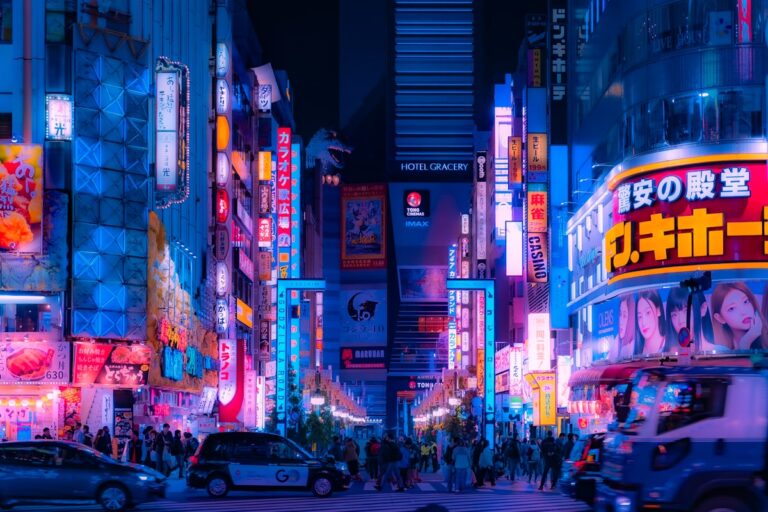
If you’ve ever walked through Tokyo’s neon-lit Kabukicho district or stumbled across the term fūzoku while researching Japanese nightlife, you’ve probably encountered conflicting information about whether prostitution is legal in Japan. The answer isn’t a simple yes or no. It’s a story of narrowly written laws, cultural nuance, and legal gray zones that have shaped Japan’s nightlife landscape for decades.
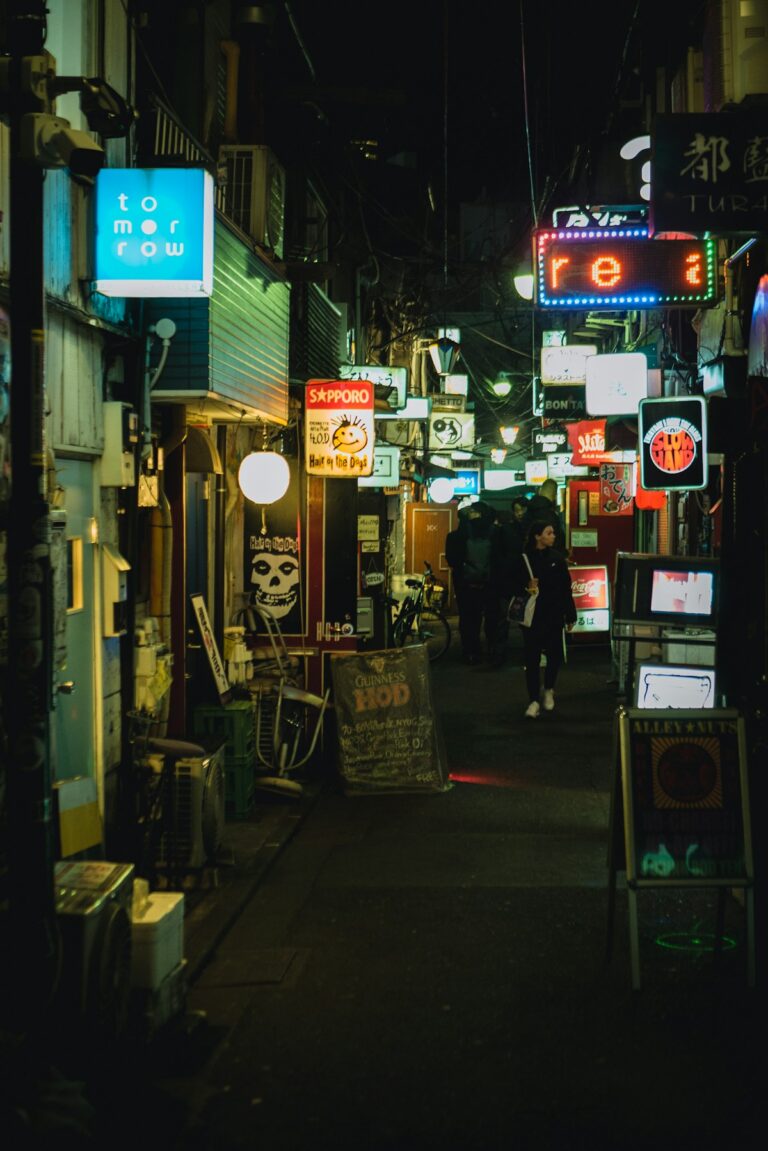
Photo by Jezael Melgoza on Unsplash
Contents
- Is Prostitution Legal in Japan? The Short Answer
- Japan’s Prostitution Prevention Law of 1956
- How Japan’s Adult Entertainment Industry Operates Legally
- A Brief History of Prostitution in Japan
- Red-Light Districts in Modern Japan
- Prostitution Legal in Japan: What Travelers Need to Know
- Experiencing Japan’s Nightlife the Right Way
- About the Author
Is Prostitution Legal in Japan? The Short Answer
Technically, prostitution is illegal in Japan. The Prostitution Prevention Law of 1956 (売春防止法, Baishun Bōshi Hō) explicitly states that “no person may either do prostitution or become the customer of it.” But — and this is a significant “but” — the law defines prostitution in an extremely narrow way. This narrow definition has created loopholes wide enough for an entire multi-billion-dollar industry to operate within the bounds of the law.
Understanding how prostitution is legal in Japan in practice — while technically prohibited — requires looking at the specific legal language, the historical context that produced it, and the cultural attitudes that sustain it. Let’s break it down.
Japan’s Prostitution Prevention Law of 1956
What the Law Actually Says
To fully understand the question “is prostitution legal in Japan,” you need to look at the actual law. The Prostitution Prevention Law was passed by the Diet (Japan’s parliament) on May 24, 1956, and came into full effect in April 1958. It was a landmark piece of legislation that officially ended Japan’s centuries-old system of licensed prostitution.
The law’s key provisions include:
- A declaration that prostitution “injures human dignity” and is “against sexual morality”
- A prohibition on both selling and buying sexual services
- Criminal penalties for soliciting, procuring, operating a brothel, and profiting from prostitution
- Rehabilitation provisions for women involved in prostitution
Here’s what makes the law unusual, though: while soliciting and managing prostitution carry criminal penalties, the act of prostitution itself does not. Neither the sex worker nor the client faces criminal punishment for the transaction alone. The law is primarily aimed at third parties — the managers, pimps, and operators.
The Critical Loophole: How “Prostitution” Is Defined
This is where things get interesting. The law defines prostitution (売春, baishun) strictly as “vaginal intercourse with an unspecified person in exchange for compensation.”
That single sentence creates two enormous loopholes:
Loophole 1: “Vaginal intercourse” only. The legal definition covers only one specific sexual act. This means that oral sex, manual stimulation, and all other non-coital sexual acts are technically not prostitution under the law. An entire industry of sexual services has developed around this distinction.
Loophole 2: “Unspecified person.” The law prohibits sex with an unspecified person — essentially a stranger. If two people become “acquainted” before engaging in sexual activity, the transaction arguably falls outside the law’s scope. Some establishments have built their entire business model around this interpretation.
These aren’t obscure technicalities. They’re the reason why people say prostitution is legal in Japan — and the foundation on which the country’s massive adult entertainment industry operates.
How Japan’s Adult Entertainment Industry Operates Legally
Fūzoku — The Umbrella Term
The Japanese word fūzoku (風俗) literally means “public morals” or “customs,” but in everyday usage, it refers to the adult entertainment industry. It’s a broad term that covers everything from hostess clubs to sexual service establishments — and much of it is perfectly legal.
The fūzoku industry is regulated under the Act on Control and Improvement of Amusement and Entertainment Businesses (風営法, Fūeihō), which requires businesses to obtain licenses and operate within specific guidelines. These regulations cover operating hours, location restrictions (near schools, hospitals, etc.), and the types of services that can legally be offered.
The industry generates an estimated 2.3 trillion yen (approximately $24 billion) annually, which represents roughly 1% of Japan’s GDP — a staggering figure that illustrates how deeply embedded these businesses are in the economy.
Types of Legal Establishments
Japan’s adult entertainment landscape includes a wide variety of establishment types, each operating within the legal framework in different ways:
Hostess and Host Clubs (キャバクラ / ホストクラブ): These venues offer paid companionship, conversation, and drinks. No sexual services are involved — the appeal is social interaction with attractive, attentive staff. Hostess clubs cater to male clients, while host clubs serve female clients. They’re entirely legal and widely popular.
Soaplands (ソープランド): Perhaps the most well-known example of the legal gray zone. Soaplands are bathing establishments where clients receive a bath and massage from an attendant. The “acquaintance” loophole comes into play here: because the client and attendant “get to know each other” during the bathing process, any subsequent sexual activity is technically between specified (known) persons — arguably placing it outside the law’s definition. This interpretation, while legally questionable, has been tolerated for decades.
Delivery Health (デリヘル): An outcall service where a worker visits the client at a hotel or residence. These services are officially licensed to provide non-coital sexual services, which — thanks to the narrow legal definition — are not classified as prostitution.
Pink Salons (ピンクサロン): Small establishments offering non-coital sexual services, primarily oral sex. Again, because the legal definition of prostitution covers only vaginal intercourse, these services occupy a legal gray area.
Fashion Health (ファッションヘルス): Similar to pink salons, these are licensed establishments providing massage and non-coital services within a regulated framework.
It’s worth noting that while many of these businesses operate within the letter of the law, the line between legal and illegal activity is often blurry in practice. The question of whether prostitution is legal in Japan ultimately depends on which specific acts and circumstances you’re talking about. Law enforcement tends to focus on unlicensed operations, trafficking, and organized crime involvement rather than on the services themselves.
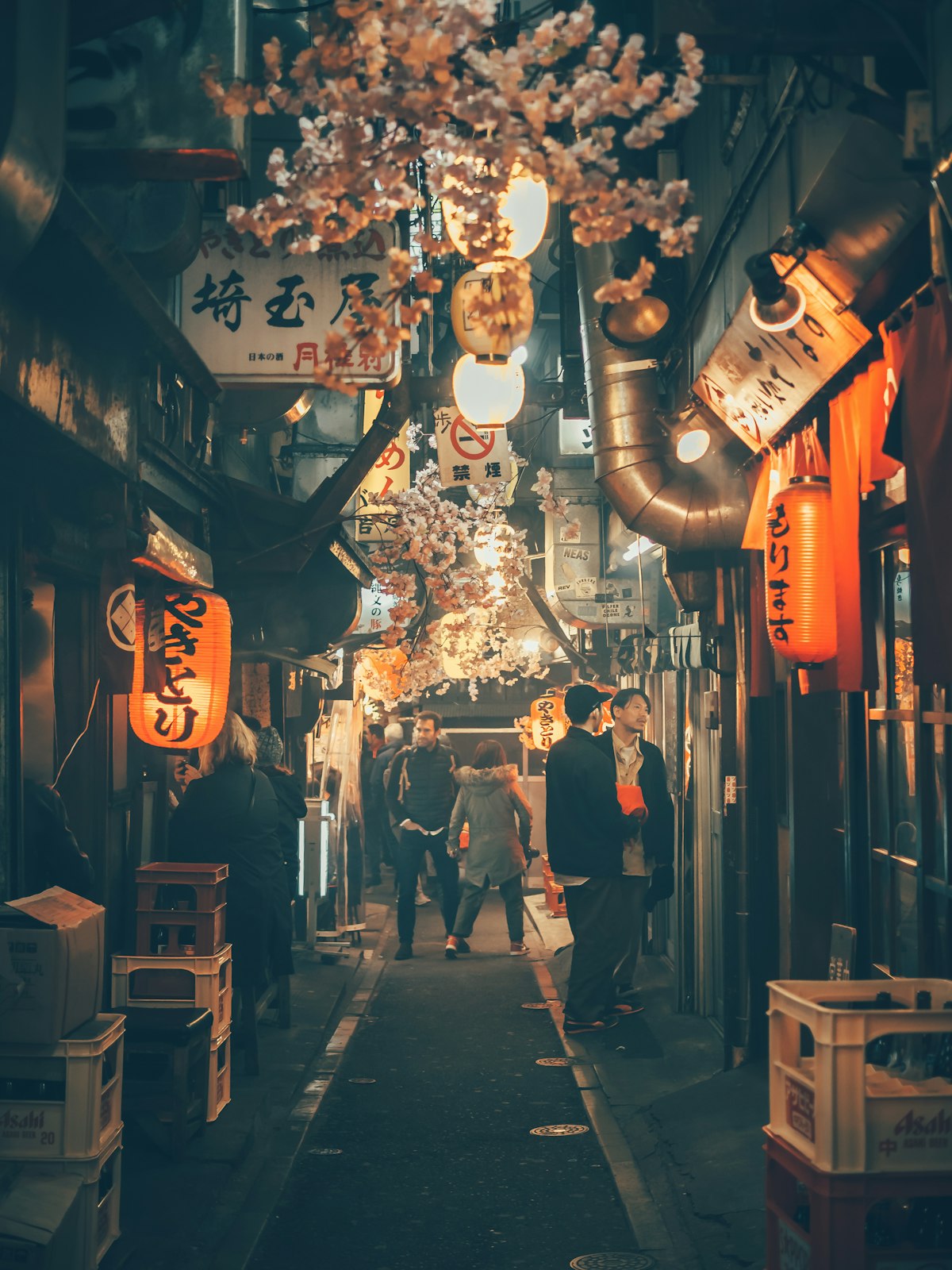
Photo by Bantersnaps on Unsplash
A Brief History of Prostitution in Japan
Understanding today’s legal landscape — and why so many people ask “is prostitution legal in Japan?” — requires knowing how Japan got here. The current law didn’t emerge in a vacuum — it was the product of centuries of regulated sex work and decades of post-war social reform.
The Yoshiwara Pleasure Quarter
Japan’s most famous historical red-light district was Yoshiwara (吉原), established in Edo (modern-day Tokyo) in 1617 by the Tokugawa shogunate. Rather than trying to eliminate prostitution, the shogunate chose to contain and regulate it within designated quarters.
At its peak, Yoshiwara employed more than 9,000 women and became a cultural epicenter that influenced art, literature, theater, and fashion. The ukiyo-e woodblock prints depicting Yoshiwara courtesans are now recognized as masterpieces of Japanese art. The district wasn’t just about sex — it was the heart of ukiyo (浮世), the “floating world” of entertainment and pleasure that defined Edo-period urban culture.
However, the romanticized image obscures a harsher reality. Many women were sold into Yoshiwara by impoverished families, and conditions could be brutal. Escape was nearly impossible, and disease was rampant. The system was one of exploitation as much as it was one of culture.
Licensed pleasure quarters existed throughout Japan — including Shimabara in Kyoto and Shinmachi in Osaka — and the system continued in various forms for over 300 years.
Post-War Reforms and the Path to the 1956 Law
After Japan’s defeat in World War II, the American occupation authorities initially tolerated the licensed prostitution system but eventually pushed for reform. In 1946, a directive from the Supreme Commander for the Allied Powers (SCAP) ordered the Japanese government to end licensed prostitution — though unlicensed sex work continued to flourish.
The so-called “red-line districts” (赤線, akasen) emerged as semi-legal zones where prostitution was openly practiced despite the occupation directive. These areas operated with a kind of unofficial tolerance from authorities.
Growing pressure from women’s groups, religious organizations, and reformers eventually led to the passage of the Prostitution Prevention Law in 1956. The red-line districts were officially shut down when the law took full effect in 1958.
But the law was deliberately written with the narrow definition that created the loopholes described above. Whether this was intentional — designed to keep prostitution legal in Japan in all but name — remains a subject of debate among historians and legal scholars. What’s undeniable is the result: the industry transformed rather than disappeared.
Red-Light Districts in Modern Japan
While the traditional licensed quarters are gone, several areas in modern Japan are strongly associated with adult entertainment and nightlife. These districts are where the reality of prostitution being legal in Japan — at least in its non-coital forms — is most visible.
Kabukicho, Tokyo
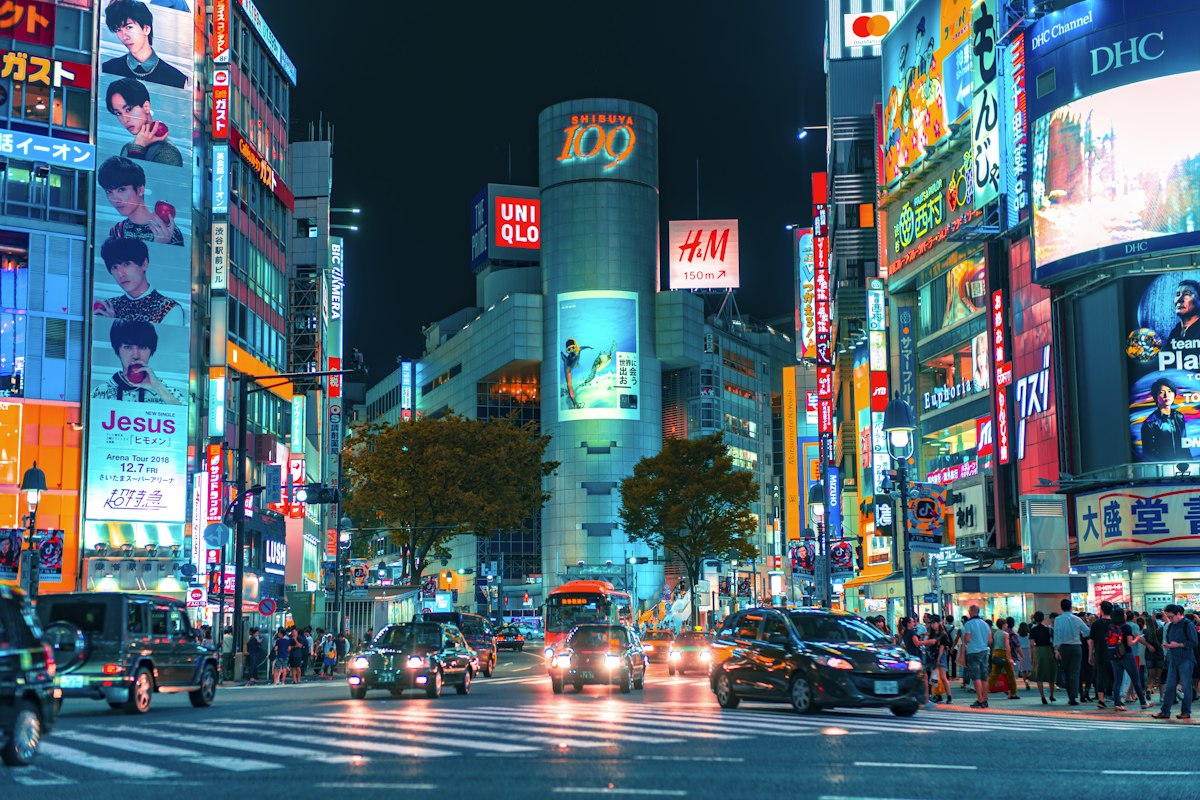
Kabukicho (歌舞伎町) in Shinjuku is Japan’s most famous entertainment district and is often called the “Sleepless Town” (眠らない街). Named after a kabuki theater that was planned but never built in the 1940s, this compact area packs in a staggering density of nightlife venues.
Walking through Kabukicho today, you’ll find everything from legitimate restaurants and karaoke boxes to host clubs, hostess clubs, and more explicit establishments. The area has undergone some gentrification in recent years — the opening of the Tokyu Kabukicho Tower in 2023 brought a cinema complex, hotel, and entertainment venue — but it retains its edgy reputation.
For visitors, Kabukicho is largely safe to walk through, but it comes with some well-known hazards. Street touts (called kyakkuhiki in Japanese) aggressively solicit passersby, often promising cheap drinks at bars or clubs. The practice is technically illegal, but it persists — and following a tout almost always leads to dramatically inflated bills, a scam known as bottakuri (ぼったくり).
Tobita Shinchi, Osaka
Tobita Shinchi (飛田新地) in Osaka’s Nishinari ward is perhaps the most surreal example of Japan’s legal gray zones. Operating since 1958 — the very year the Prostitution Prevention Law took effect — Tobita technically functions as a district of “restaurants” where women sit in illuminated doorways while a yarite-baba (an older woman) beckons passersby.
Officially, customers pay for food and rest. What happens between the customer and the “waitress” is considered a private matter between acquainted individuals. The district operates openly despite — or perhaps because of — its legal fiction.
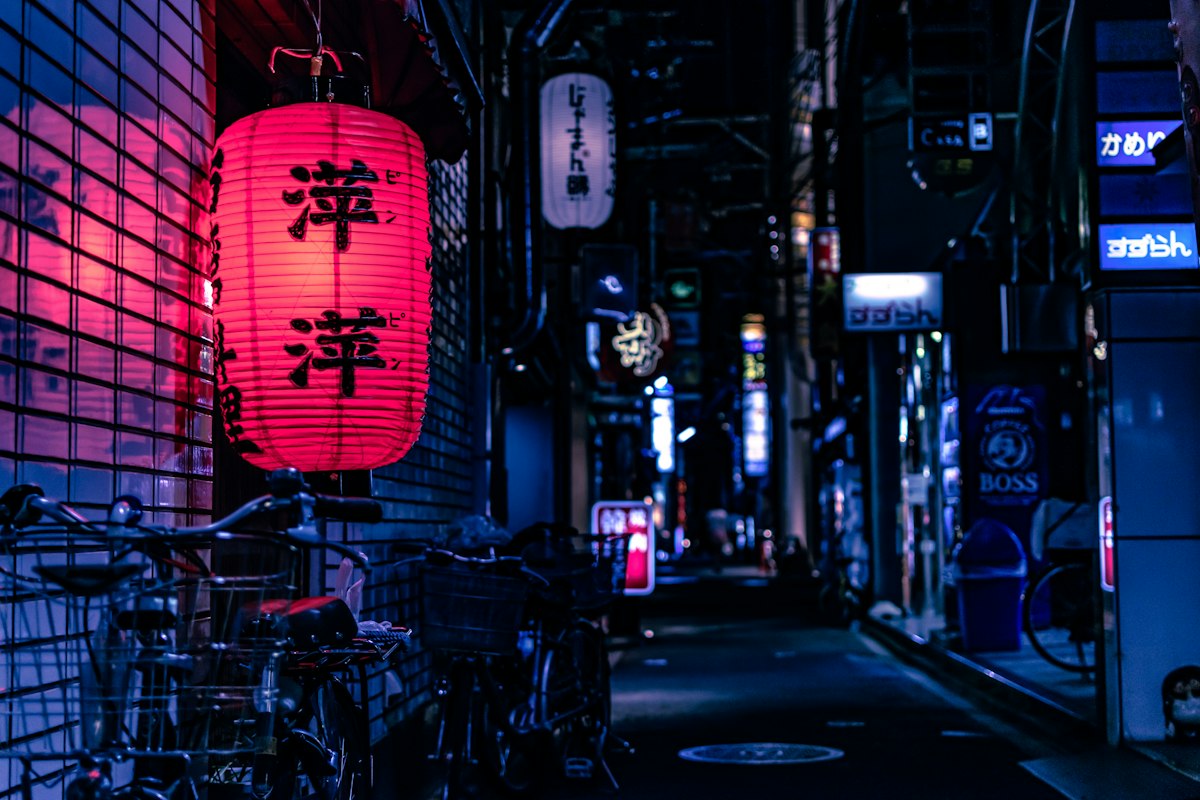
Photo by Tianshu Liu on Unsplash
Prostitution Legal in Japan: What Travelers Need to Know
Now that we’ve explored whether prostitution is legal in Japan and how the law actually works, let’s talk about what this means for visitors. If you’re traveling to Japan and curious about the nightlife scene, there are some important things to keep in mind — both for safety and for understanding what you’re seeing.
Common Scams and Safety Tips
Street touts in Kabukicho and other entertainment districts are the number-one risk for visitors. Here’s how to protect yourself:
- Never follow a street tout. If someone on the street offers to guide you to a bar or club, decline and walk away. These touts work on commission and typically guide victims to overpriced establishments where a few drinks can cost ¥50,000–¥100,000 ($350–$700) or more.
- Confirm pricing before sitting down. At any bar or club, ask about cover charges (otōshi), drink prices, and any time-based fees before ordering. Get this in writing if possible.
- Pay as you go. When possible, settle your tab after each round rather than running a tab all night.
- Avoid unmarked or basement establishments that you can’t verify online beforehand. Reputable venues will have reviews and an online presence.
- Keep your wits about you. Drink spiking, while rare, has been reported in some establishments. Watch your drinks.
How to Enjoy Japan’s Nightlife Safely
The vast majority of Japan’s nightlife is perfectly safe and incredibly rewarding. The country offers some of the world’s most unique drinking and dining experiences — you just need to know where to look.
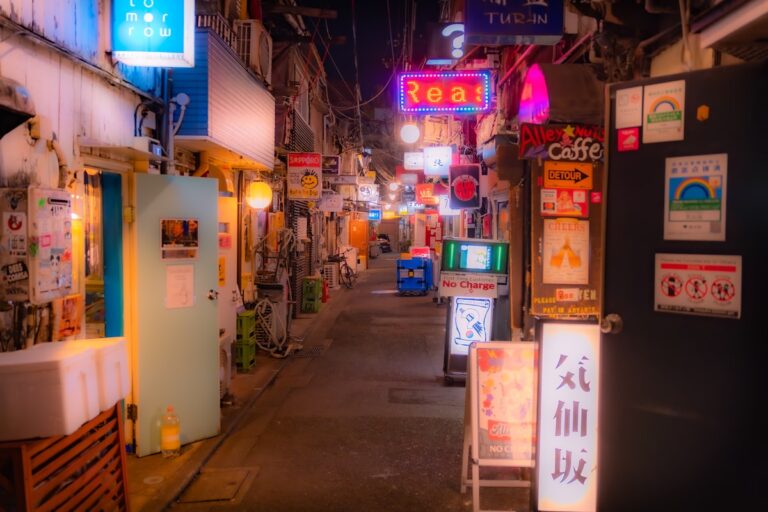
Golden Gai in Shinjuku is a legendary collection of over 200 tiny bars crammed into six narrow alleys. Each bar seats perhaps 6 to 10 people, and each has its own theme, personality, and regular crowd. It’s an intimate, authentic experience you won’t find anywhere else in the world.
Omoide Yokocho (Memory Lane), also in Shinjuku, is a smoky, atmospheric alley lined with yakitori stalls and small izakayas dating back to the post-war era. It’s a window into old Tokyo.
Izakaya (居酒屋) — Japan’s beloved pub-restaurants — offer incredible food, local drinks, and genuine interaction with Japanese locals. If you’re curious about the best nightlife spots in Shinjuku, izakayas are the place to start. The best ones aren’t in tourist areas; they’re tucked away on side streets, recognizable by their noren curtains and the buzz of conversation inside.
Yokocho (横丁) culture — the narrow food-and-drink alleys found across Tokyo and other cities — is experiencing a renaissance. Areas like Ebisu Yokocho, Yurakucho, and Kichijoji’s Harmonica Yokocho offer fantastic food and drinks without any of the risks associated with entertainment districts.
Experiencing Japan’s Nightlife the Right Way
Japan’s nightlife is one of the country’s greatest treasures — a world of hidden bars, smoky alleys, unforgettable food, and genuine human connection. The most rewarding experiences come not from the flashy entertainment districts but from the small, local spots where Japanese people actually go to unwind.
The challenge for most visitors is that these places can be hard to find on your own. They’re often unmarked, Japanese-only, and tucked behind unmarked doors. Navigating them — knowing the etiquette, what to order, and how to connect with locals — is where having a knowledgeable guide makes all the difference.
If you’re looking to experience the authentic side of Tokyo’s nightlife — the izakayas, the yokocho alleys, the tiny standing bars — without worrying about scams or language barriers, joining a local nightlife tour is one of the best ways to do it. A local guide can take you to the spots that don’t show up on Google Maps and help you connect with a side of Japan that most tourists never see.
This article is for informational purposes only and aims to answer the common question “is prostitution legal in Japan” with factual accuracy. Laws and regulations regarding prostitution in Japan can change, and this article does not constitute legal advice. Always respect local laws and customs when traveling.