

Photo by <a href="https://unsplash.com/@raph_lopes?utm_source=tokyodeepnightlife&utm_medium=referral">Raphael Lopes</a> on <a href="https://unsplash.com/?utm_source=tokyodeepnightlife&utm_medium=referral">Unsplash</a>
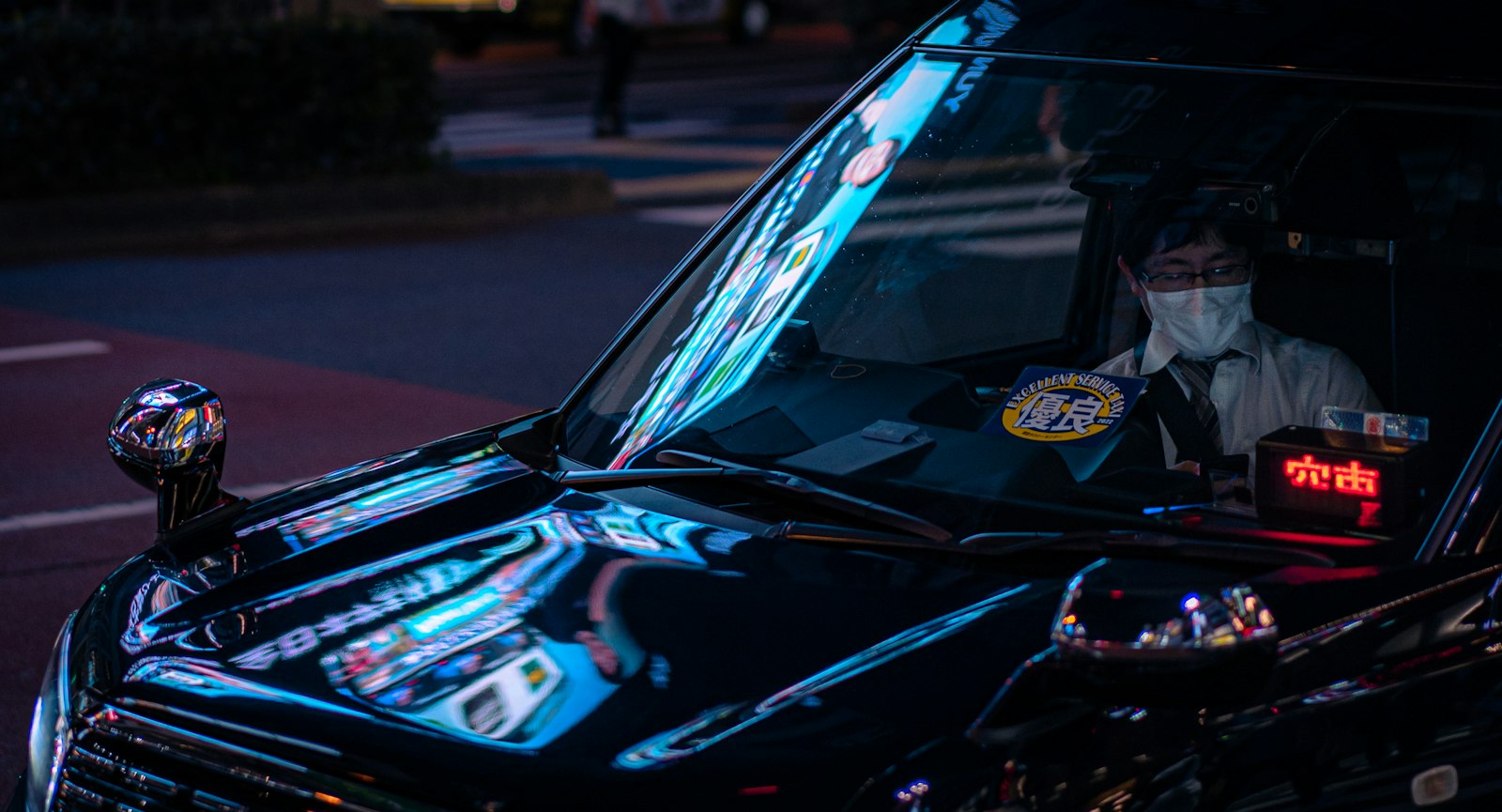
The last train has gone, your hotel is 6km away, and the only thing moving is a line of taxis with their red signs glowing. Before you jump in, it helps to know the real taxi at night Tokyo cost: the meter runs 20% higher after 10pm, and fares in central Tokyo went up in April 2026. Neither is a reason to panic. A cab home is usually the right call, as long as you know roughly what the meter will say when you arrive.
This guide covers the current fare rules, worked examples by distance, the extras that sneak onto the bill, and the easiest ways to hail or book a taxi after midnight.
Contents
- How Tokyo Taxi Fares Work in 2026
- The Late-Night Surcharge: Why Your Cab Costs More After 10pm
- Taxi at Night Tokyo Cost: Sample Fares by Distance
- How to Hail a Taxi in Tokyo After Midnight
- Booking a Taxi with an App
- Paying for Your Taxi
- Late-Night Taxi Tips from Locals
- What do you do in Tokyo After 10?Join our Tokyo Nightlife Private Tour
- Make the Night Worth the Cab Fare
- About the Author
How Tokyo Taxi Fares Work in 2026
Tokyo’s taxi fares are approved by the government, not set by each driver, so every licensed cab in the same area runs on the same meter. The rules below apply to the 23 special wards plus Musashino and Mitaka, which covers almost everywhere a visitor stays.
On April 20, 2026, these fares rose by an average of 10.14%, the first increase since November 2022. The current tariff is:
- Flag fall: ¥500 for the first 1.0km (it used to cover 1.096km)
- Distance charge: ¥100 for every additional 232m (previously every 255m)
- Slow-traffic charge: ¥100 for every 1 minute 25 seconds when the cab is moving below roughly 10km/h or waiting
- Late-night surcharge: 20% extra between 10pm and 5am
The flag fall looks the same as before, but the meter now ticks over a little faster. If you read an older blog quoting “¥100 every 255m”, the numbers it gives you will be slightly low.
The Late-Night Surcharge: Why Your Cab Costs More After 10pm
From 22:00 to 05:00, every metered fare in Tokyo carries a 20% premium. In practice the meter doesn’t show a separate line for it. The distance steps simply get shorter, so the ¥100 increments come around more often. You won’t see anything on the meter that says “surcharge”. It just climbs faster.
If you can hold out until 5am, the surcharge lifts, and that’s also roughly when the first trains start running again. Before then, the honest choice is between paying the night rate or waiting. For more on that midnight-to-5am gap, see our Tokyo last train survival guide.
Taxi at Night Tokyo Cost: Sample Fares by Distance
The figures below are our estimates based on the official tariff, worked out with the 20% night rate. They assume normal traffic and no expressway. Treat them as a floor, not a quote: time spent stuck at lights adds to the bill.
| Distance | Approx. day fare | Approx. night fare (10pm–5am) |
|---|---|---|
| 3km | ~¥1,400 | ~¥1,700 |
| 5km | ~¥2,300 | ~¥2,700 |
| 10km | ~¥4,400 | ~¥5,300 |
| 20km | ~¥8,700 | ~¥10,500 |
Check the distance on a map app before you leave the bar and you’ll know your fare within a few hundred yen.
Split between three or four people, even the 10km ride works out cheaper per person than most capsule hotels. That’s why groups in Tokyo usually stay out past the last train and share a cab home.
If you’re working out a full night’s budget, including drinks, cover charges and the ride back, our breakdown of how much money you need for Tokyo nightlife puts the taxi in context.
The Extras That Push the Fare Up
The meter is only part of the story. A few charges are added on top:
- Expressway tolls. If the driver takes the shutoko (Metropolitan Expressway), you pay the toll on top of the fare. If you’d rather stay on surface roads, say so before you set off.
- Pickup and booking fees. Hailing on the street costs nothing extra. Calling a cab through an app or by phone usually does. Each company sets its own fee: km Taxi, for example, lists ¥500 for a pickup and ¥500 for an advance booking. Apps show the fee before you confirm.
- Traffic. That ¥100 every 1 minute 25 seconds below about 10km/h adds up on a busy Friday night around Shinjuku or Shibuya.
Some companies also offer discounts. km Taxi, for example, lists a 10% long-distance discount on fares above ¥9,000. It isn’t universal, so don’t count on it.
How to Hail a Taxi in Tokyo After Midnight
Taxis are easy to find in Tokyo’s main nightlife districts, even at 2am. The trick is knowing which ones are free and where they’re allowed to stop.
Reading the Sign in the Windshield
Look at the small panel in the front passenger-side window:
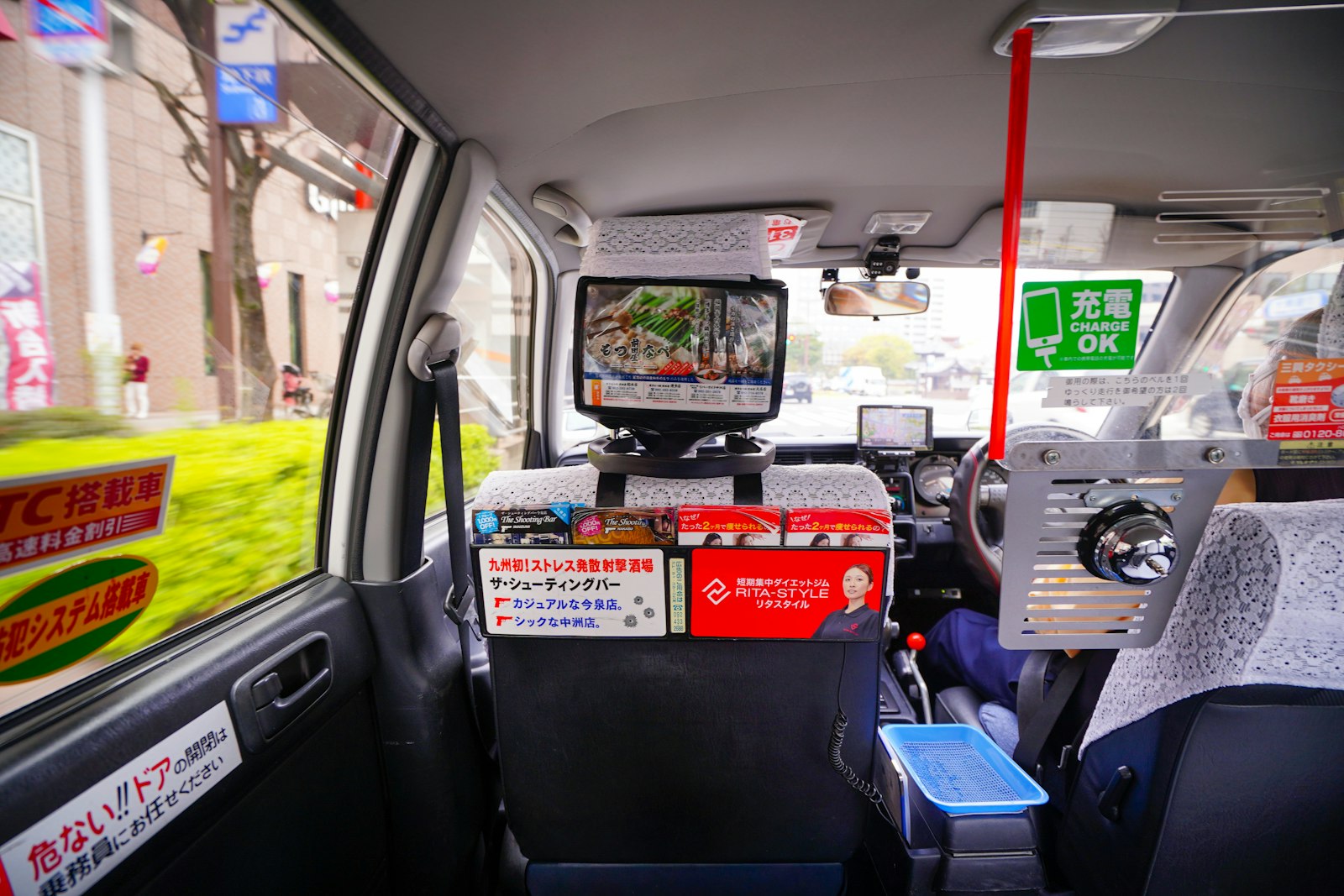
- Red 空車 (kūsha): vacant. Raise your hand and it will pull over.
- Green 賃走 (chinsō): occupied, already on a fare.
- 迎車 (geisha): on its way to a pickup booked through an app or phone. It won’t stop for you.
In Shinjuku, Shibuya and Roppongi, the most reliable spots are the official taxi ranks at major stations and big hotels. Where a crowd is fighting over every cab, walking a block or two to a quieter road often gets you a ride faster.
Getting In and Telling the Driver Where to Go
The rear left door opens and closes automatically. Don’t pull it or slam it; the driver controls it. Fasten your seatbelt, which is required for back-seat passengers in Japan too.
Many drivers speak little English, so don’t rely on saying an address out loud. Show your hotel’s name and address in Japanese on your phone, or pin it on a map. A hotel business card works well too. Tipping isn’t expected, and handing over extra money usually leads to an awkward attempt to give it back.
Looking for Adult Entertainment Services in Tokyo? Download this
I’ve spent over a decade exploring and studying Japan’s adult entertainment scene firsthand. If you’d like detailed insider information—including how to choose the right shop, what services are available, and tips for avoiding common mistakes—check out our exclusive E-book.
Booking a Taxi with an App
If you’re somewhere quiet, it’s raining, or it’s Friday at 1am in Shibuya, an app saves a lot of waving.
GO is Japan’s most used taxi app and runs in English. You can pay with a credit card registered in the app or with Apple Pay, or choose to pay in the car. You’ll need mobile data and a phone number that can receive an SMS for sign-up. Expect a pickup fee on top of the meter, shown before you confirm.
Uber also works in Tokyo, but it dispatches licensed taxis rather than private drivers. Check the price it shows against the meter rates above before you book.
Whichever app you use, the night surcharge still applies. The app doesn’t avoid it; it just brings the car to you.
Paying for Your Taxi
Most Tokyo taxis now take credit cards and IC transit cards such as Suica or PASMO, often through a touch screen behind the front seat. Cash is still accepted everywhere. Even so, carry a few thousand yen in case the card reader fails at 3am. If you want to pay by card, ask before you set off. It’s quicker than discovering a problem on arrival.
Ask for a receipt (ryōshūsho) if you need one. It’s printed from the meter and shows the company name, which is useful if you leave something behind.
Late-Night Taxi Tips from Locals
- Leave a bar district on foot first. Walking five minutes from Kabukicho or Center Gai usually means a shorter wait and less traffic on the meter.
- Only use marked taxis. Licensed cabs have green number plates and a roof light. Ignore anyone on the street offering you a “taxi” or a ride. Our Tokyo nightlife safety tips cover the other late-night touts to avoid.
- Airport runs have fixed-fare options. If you’re heading to Haneda or Narita, ask for or book a fixed-fare (teigaku) taxi rather than the meter. The late-night surcharge and expressway tolls can still apply, so check what’s included when you book.
- Stop for food on the way. A late bowl of ramen near your hotel is cheaper than a second round of drinks. These ramen shops open past 4am are good for exactly that.
What do you do in Tokyo After 10?
Join our Tokyo Nightlife Private Tour
You deserve better than overpriced bars and missed opportunities. We’re here for you.
Make the Night Worth the Cab Fare
A taxi at night in Tokyo costs more than the train, but it means you get the best of the city after midnight. Small bars only fill up after 11pm, and the streets go quiet around 2am. Knowing the fare rules just means the ride home comes with no surprises.
If you’d rather spend the night than plan it, our Tokyo After 10 nightlife private tour pairs you with a local guide who knows which alleys to turn down and when it’s time to call a cab. For official travel information on getting around Japan, the Japan National Tourism Organization is a good place to start.









