Photo by <a href="https://unsplash.com/@siddacool?utm_source=tokyodeepnightlife&utm_medium=referral">Siddhesh Mangela</a> on <a href="https://unsplash.com/?utm_source=tokyodeepnightlife&utm_medium=referral">Unsplash</a>
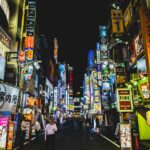
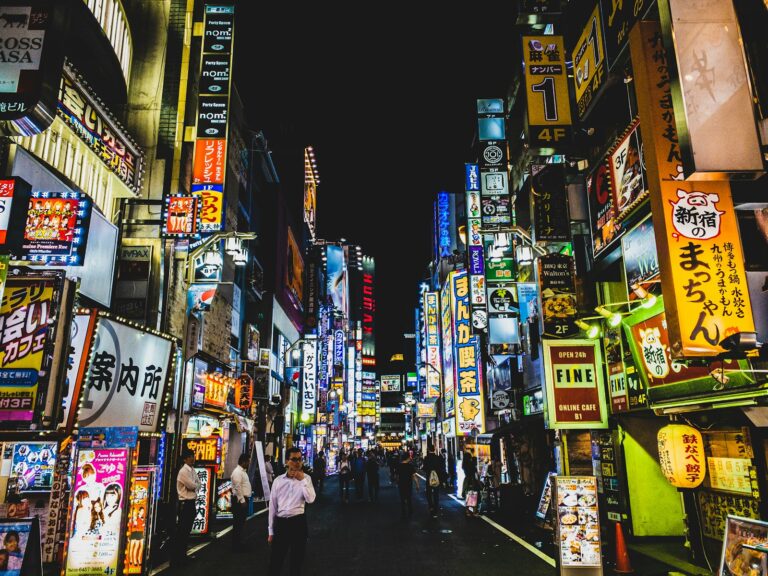
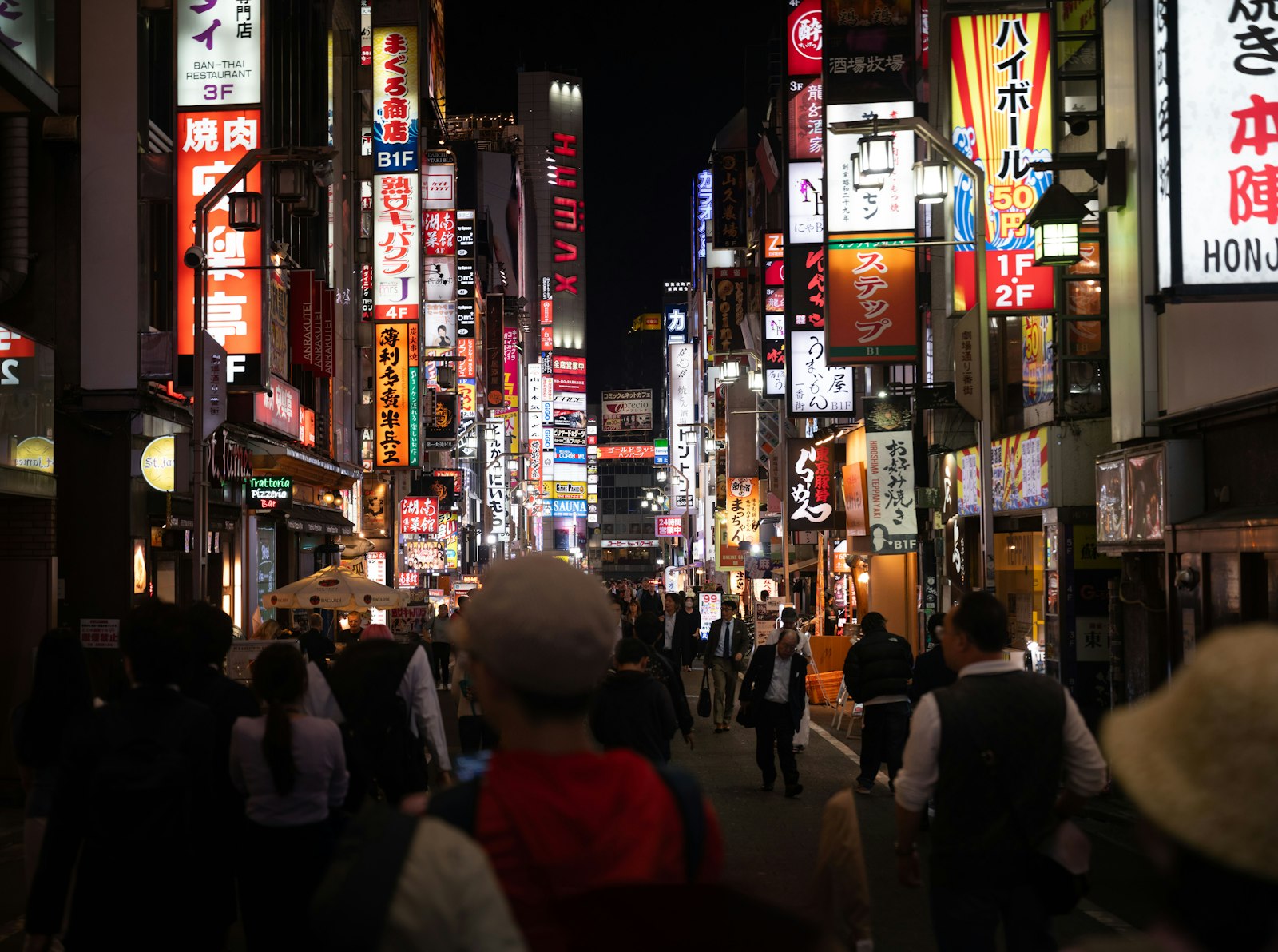
You’ve walked past them. Second and third floors above Kabukicho’s convenience stores, a lit sign with a girl’s name on it, a price board by the elevator in kanji you can’t read. That’s a girls bar — and finding a girls bar in Tokyo that’s genuinely foreigner friendly is easier than most travelers assume, as long as you know what you’re looking at before you climb the stairs.
Here’s the honest version. Most girls bars in Tokyo don’t have English websites, don’t take reservations, and don’t advertise to tourists. A handful actively welcome international guests. A smaller handful will politely turn you away at the door. And a few will happily seat you and hand you a bill that has nothing to do with the price on the board outside.
This guide covers all four situations: how to tell them apart from the street, what things actually cost in 2026, the exact Japanese you need at three specific moments, and which venues have English support you can verify yourself before you go.
Contents
- What a Girls Bar Actually Is (and What It Isn’t)
- Girls Bar Tokyo Foreigner Friendly: The Short Answer
- What It Costs in 2026
- Read the Price Board: Six Kanji That Save You ¥20,000
- The Three Moments You Need Japanese
- The Tout Rule (Non-Negotiable)
- Where to Go: Four Areas Compared
- Venues With English Support You Can Verify Yourself
- Basic Etiquette in Ninety Seconds
- Frequently Asked Questions
- What do you do in Tokyo After 10?Join our Tokyo Nightlife Private Tour
- Skip the Guesswork
- About the Author
What a Girls Bar Actually Is (and What It Isn’t)
A girls bar (ガールズバー, gāruzu bā) is a counter bar where the staff — usually women in their twenties — serve your drinks and talk with you from behind the counter. That last part is the whole distinction. The bar counter stays between you and the staff for the entire visit. Nobody sits next to you, nobody moves to your table, and there’s no nomination system where you pay to request a specific person.
It’s closer to a lively neighborhood bar with a chatty bartender than to anything else you’re imagining. Conversation, drinks, often a karaoke machine in the corner. That’s the product.
What a girls bar is not:
- Not a hostess club. At a kyabakura (hostess club), a hostess sits beside you at your table, you can nominate a specific hostess for a fee, and the hourly rate is several times higher. Different licence, different price bracket, different evening. We break that down in our hostess club Tokyo guide.
- Not adult entertainment. There’s no physical contact at a girls bar. Full stop. If a venue is implying otherwise on the street, you are not being sold a girls bar.
- Not a pickup venue. Asking staff for their LINE, phone number, or Instagram puts them in an awkward position and will end your welcome fast. Some venues have a house rule against it.
- Not a snack bar. A snack is a counter bar run by a mama-san, usually with an older regular clientele and a flat per-visit charge.
If you want the full taxonomy of Japanese nightlife venue types before you go out, our Tokyo girls bar guide for tourists covers the categories in more detail.
Girls Bar Tokyo Foreigner Friendly: The Short Answer
There is no official certification that makes a girls bar Tokyo foreigner friendly. What exists instead are three signals you can read from the sidewalk, and they’re reliable:
- A price board in English, or with Arabic numerals you can parse. A venue that has gone to the trouble of translating its own pricing wants your business and expects to explain it.
- The word “Tourists Welcome,” “English OK,” or “English Menu” on the venue’s own signage — printed, permanent, at the entrance. Not shouted at you by a man on the street. That distinction matters enormously and we’ll come back to it.
- Prices posted at all, clearly, before you go up. In Japan a legitimate drinking venue posts its system publicly. Ambiguity is a choice, and it’s a choice that costs you money later.
If a venue has all three, you can walk in. If it has none, walk on. There are hundreds of these bars in Shinjuku alone — you lose nothing by being picky.
The “gaijin NG” reality, without the outrage
Some girls bars will turn you away. You may see 「外国人のお客様のご入店はお断りしております」 or just get a polite crossed-arms gesture at the door.
It’s worth understanding why rather than taking it personally. These are tiny businesses — often six to ten counter seats — staffed by people with no English and no capacity to mediate a misunderstanding about a bill or a house rule mid-shift. A single confused interaction can burn twenty minutes they don’t have. Some venues have also had genuinely bad experiences and made a blanket rule.
You don’t have to agree with the policy. But the practical response is the same either way: say “sumimasen,” smile, and go to one of the many places that want you there. Arguing at the door has never once worked.
What It Costs in 2026
Girls bar pricing runs on one of two models, and you need to know which one you’re in before the first drink lands.
Model A — Seat charge plus drinks. You pay a set charge for a block of time (typically 30 or 60 minutes), then each drink is billed separately.
Model B — Time charge with nomihoudai (飲み放題, all-you-can-drink). One price covers the time block and unlimited house drinks. Beer is frequently excluded, and premium spirits almost always are.
Current market ranges across English-language guides and venue price boards:
| Item | Typical range (2026) |
|---|---|
| Seat / time charge | ¥1,500–¥4,000 per hour |
| Time charge + nomihoudai | ¥3,000–¥5,000 for 40–60 min |
| Your own drink | ¥700–¥1,500 |
| Lady’s drink (buying a staff member a drink) | ¥1,000–¥2,000 |
| Service charge | 10–20%, added at the end |
| Consumption tax | 10% |
A realistic first visit: one hour on a ¥3,000 nomihoudai set, one lady’s drink at ¥1,500, plus 20% service and 10% tax lands you around ¥5,900. Budget ¥6,000–¥7,000 per person for a comfortable hour and you will not be surprised.
Two line items catch people out. Service charge and tax are calculated on the subtotal at the end, so the number on the board outside is never the number you pay — add roughly 30% mentally. And automatic extension: many venues roll you into a second time block unless you say otherwise. Ask about it up front.
Lady’s drink: what you’re actually buying
Someone will eventually ask if you’d like to buy them a drink. This is a normal, expected part of the format — it’s how the staff earn beyond their hourly wage, and it’s not a scam. It’s also entirely optional, and declining once is fine. Being asked repeatedly after you’ve declined is a different signal, and it tells you something about the venue.
Read the Price Board: Six Kanji That Save You ¥20,000
This is the single highest-value thing in this article. Photograph the board outside, and check it against these:
| Japanese | Reading | What it means |
|---|---|---|
| セット料金 | setto ryōkin | Set charge — the base price for your time block |
| 延長 | enchō | Extension — the price of the next block after your first |
| 飲み放題 | nomihōdai | All-you-can-drink (check what’s excluded) |
| サービス料 | sābisu-ryō | Service charge, as a % added at the end |
| チャージ / TAX別 | chāji / tax betsu | Charge / tax not included in the listed price |
| 指名 | shimei | Nomination fee — if you see this, it’s likely a hostess club, not a girls bar |
If 延長 and サービス料 aren’t posted anywhere, that’s your cue to ask before sitting — or to keep walking.
The Three Moments You Need Japanese
Translation apps handle the conversation fine. But three specific moments move too fast for typing, so have these ready. Say them badly; nobody minds.
1. At the door — confirm the system.
料金システムを教えてください。 Ryōkin shisutemu o oshiete kudasai. “Please tell me the pricing system.”
Follow with: 延長は自動ですか? (Enchō wa jidō desu ka? — “Is the extension automatic?”). This one question prevents the most common bill shock there is.
2. When you’re ready to leave.
お会計お願いします。 O-kaikei onegaishimasu. “The check, please.”
Ask for it about ten minutes before your block ends, not after.
3. If the bill doesn’t match the board.
明細をください。 Meisai o kudasai. “Itemized receipt, please.”
Stay calm and stay seated. Ask them to point to each line on the printed price list. In a legitimate venue this resolves in two minutes because the numbers are all defensible. In a venue where it doesn’t resolve, say 警察を呼びます (keisatsu o yobimasu — “I’ll call the police”). Escalating to that phrase ends the overwhelming majority of disputes on the spot, because the venue’s licence is worth vastly more than your bill.
Looking for Adult Entertainment Services in Tokyo? Download this
I’ve spent over a decade exploring and studying Japan’s adult entertainment scene firsthand. If you’d like detailed insider information—including how to choose the right shop, what services are available, and tips for avoiding common mistakes—check out our exclusive E-book.
The Tout Rule (Non-Negotiable)
If a man on the street approaches you and offers to take you to a girls bar, do not go. Not “be careful.” Do not go.
Street touting — kyakuhiki — is prohibited under Tokyo’s nuisance ordinances, and Shinjuku Ward enforces an anti-solicitation rule covering Kabukicho. Police have made arrests specifically for touting aimed at foreign tourists in the district. Enforcement is inconsistent enough that touts still work the street nightly, which is exactly why the rule is worth stating plainly.
The logic is simple: a bar with fair prices and a good reputation fills its seats from its own signage and its regulars. A bar that pays a commission to a man on the sidewalk has to recover that commission from someone, and that someone is you. This is the mechanism behind essentially every bottakuri (rip-off bar) story you’ve read.
Note the trap in the earlier list: “English OK!” shouted at you by a tout is a targeting signal, not a service. It means he’s identified you as someone who can’t read the bill. The same words printed on a venue’s own permanent sign mean the opposite. We go deeper into how these operations run in our guide to Kabukicho scams and how tourists get ripped off.
Other hard rules: pay by card where you can, so there’s a paper trail and a chargeback path. Never hand over your passport — showing it is fine, surrendering it is not. And never follow anyone to a “second venue” you haven’t chosen yourself.
Where to Go: Four Areas Compared
Kabukicho, Shinjuku — The highest density of girls bars in Japan, and the widest quality spread. Everything from transparent ¥3,000 sets to the venues this article is warning you about, sometimes in the same building. Best selection, requires the most filtering. Walk the main streets rather than the narrow back alleys on your first visit.
Roppongi — The most internationally accustomed staff and the most English you’ll hear, because the district has served an expat and embassy crowd for decades. Prices run meaningfully higher, and the concentration of tourist-targeted venues is also higher. Good if you want the language barrier gone and you’re willing to pay for it.
Shibuya — Younger crowd, more casual, fewer venues than Shinjuku but a lower average risk. A reasonable choice if Kabukicho’s intensity isn’t what you’re after.
Ikebukuro — Locally oriented, cheaper, least English. Good value if you’re comfortable running a translation app for the whole visit and don’t mind being the only foreigner in the room.
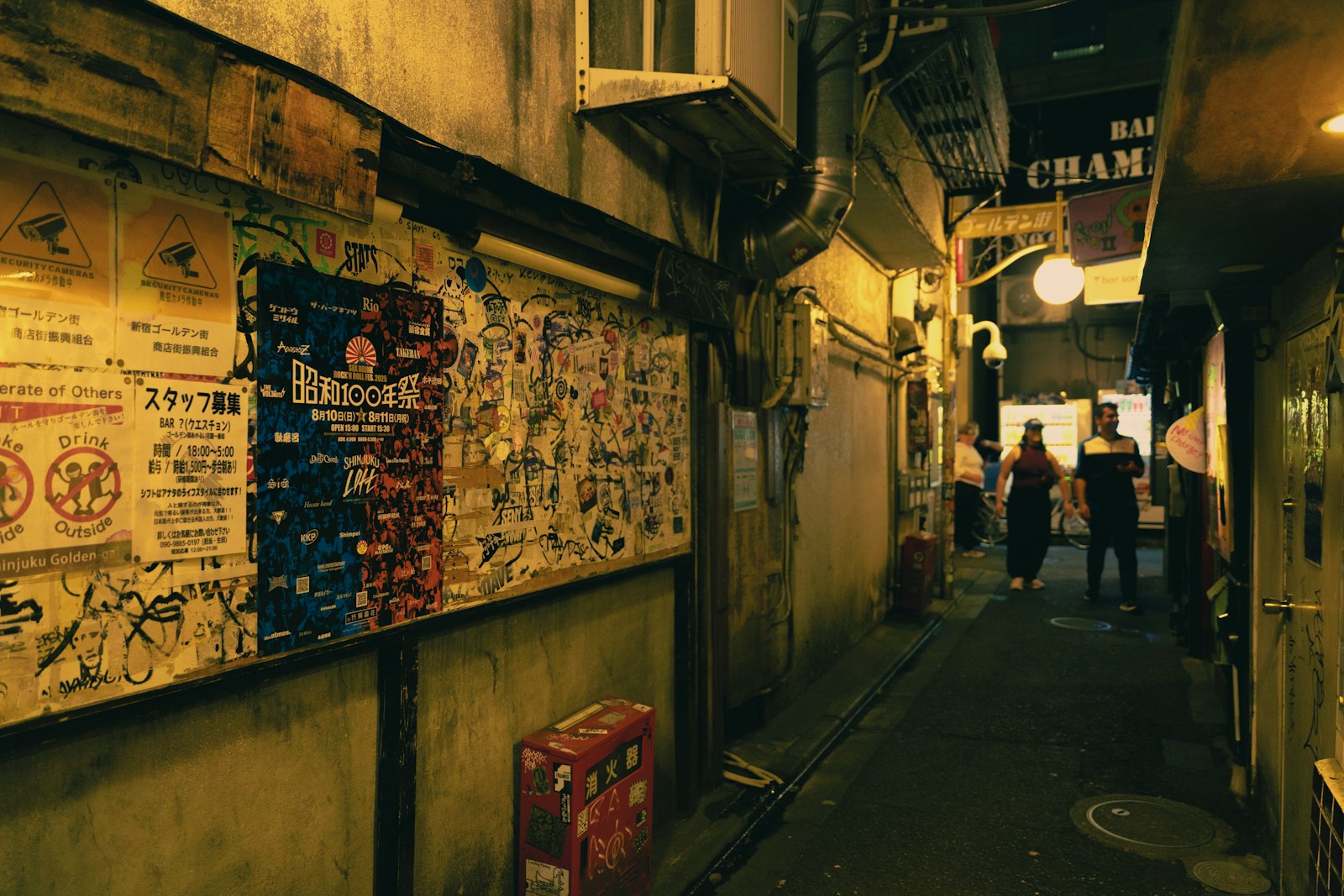
If you’d rather ease into Tokyo’s drinking culture before trying a girls bar at all, the tiny multi-seat bars of Shinjuku’s Golden Gai are a gentler introduction — many post cover charges in English and are used to visitors.
Venues With English Support You Can Verify Yourself
Here’s a caveat worth more than a list would be: girls bars almost never maintain English websites. They’re small, they turn over fast, and any “best girls bars in Tokyo” listicle naming specific venues is usually recycling information nobody has checked this year. That’s why this guide teaches you to read a price board instead of handing you names that may be closed by the time you land.
The venues below are the exception — each one publishes English pricing or an explicit multilingual policy on its own official site, which you can check before you go. Note the venue types: two are hostess clubs and one is a lounge, not girls bars. That’s not an accident. The venues that invest in English infrastructure are generally in the higher price bracket, because that’s where the margin to do so exists.
ORIGIN (Kabukicho, Shinjuku) — A hostess club, open since 1993, at Yukizaki Bld. 3F, 2-10-8 Kabukicho, Shinjuku City. Its site publishes a full price list: ¥9,000 per hour including a glass of Yamazaki, ¥2,000 per glass for drinks, ¥3,000 nomination, plus 20% service charge and 10% tax. Open Monday to Saturday, 8pm–1am. The site states that many hostesses and staff speak English and that the venue was built with international guests in mind.
LUXE Shinjuku (Kabukicho, Shinjuku) — A hostess club whose site states its cast speaks English, Japanese, Chinese and Korean, that it accepts major international credit cards, and that every fee is listed upfront on its pricing page. Check that page for current rates rather than trusting any number you read elsewhere.
LUNE (Roppongi) — A lounge, not a girls bar. Its site advertises ¥18,000 per person for 60 minutes, all-inclusive, covering drinks, private room, staff and karaoke, and says the flat rate exists because English-speaking guests asked for it.
Prices above are as published on each venue’s own site as of August 2026, and are the venues’ claims, not our verification of the final bill. Confirm the system at the door regardless — that habit is the point of this entire article.
Basic Etiquette in Ninety Seconds
- No reaching across the counter. The counter is the boundary and it’s absolute.
- Don’t ask for contact details. See above.
- Cash still matters. Card acceptance is rising in central Tokyo but is not universal. Carry ¥10,000 in cash per person as backup.
- Pace yourself. Nomihoudai is a time limit, not a challenge, and Japanese venues have very little tolerance for visible drunkenness.
- Tipping isn’t a thing. The service charge is the tip, and offering cash on top creates confusion rather than goodwill.
- Photos: ask first. Most venues prohibit photographing staff entirely. Assume no until told yes.
Frequently Asked Questions
Can I go alone? Yes, and solo visitors are completely normal here — the counter format is designed for it. A solo traveler is arguably a girls bar’s most natural customer. If clubs are more your speed, our Tokyo nightclub guide for solo travelers covers that scene.
Can women go to a girls bar? Yes. Mixed groups and female customers are unremarkable at most venues, though a few remain male-oriented in atmosphere.
Do I need a reservation? Almost never. Girls bars are walk-in businesses. Hostess clubs like the ones listed above often prefer one.
What time should I go? Most open around 7–8pm and run past midnight. Between 8pm and 10pm is the sweet spot — staff have time to talk with you, and you’re not competing with the post-midnight crowd.
Is it legal? Yes. Girls bars operate under standard food and beverage licensing. The behavior around them — street touting, price manipulation — is what’s regulated, and what to watch for.
How long should I stay? One time block. Sixty minutes is a complete experience, and leaving at the end of your first block is normal and expected, not rude.
What do you do in Tokyo After 10?
Join our Tokyo Nightlife Private Tour
You deserve better than overpriced bars and missed opportunities. We’re here for you.
Skip the Guesswork
Everything above is learnable, and plenty of travelers do learn it on their own over a couple of nights and one overpriced mistake. But there’s a version of this evening where the filtering is already done: someone who knows which venues on which floor of which building are worth your time this month, who handles the door conversation, and who confirms the bill in Japanese while you’re still enjoying yourself.
That’s the entire premise of our Tokyo After 10 nightlife tour — a local guide walking you through Shinjuku’s after-dark venues, translating in real time, and taking you into the places that have no English sign because they’ve never needed one.
Either way, go. Finding a girls bar Tokyo foreigner friendly enough to make a good night of comes down to three habits — read the board, confirm the system, and never follow the man on the street. Tokyo’s nightlife rewards curious visitors far more than it punishes them.
Planning the rest of your trip? The Japan National Tourism Organization and Go Tokyo both publish current visitor information for the city.