Photo by <a href="https://unsplash.com/@frogman1962?utm_source=tokyodeepnightlife&utm_medium=referral">Tsukada Kazuhiro</a> on <a href="https://unsplash.com/?utm_source=tokyodeepnightlife&utm_medium=referral">Unsplash</a>
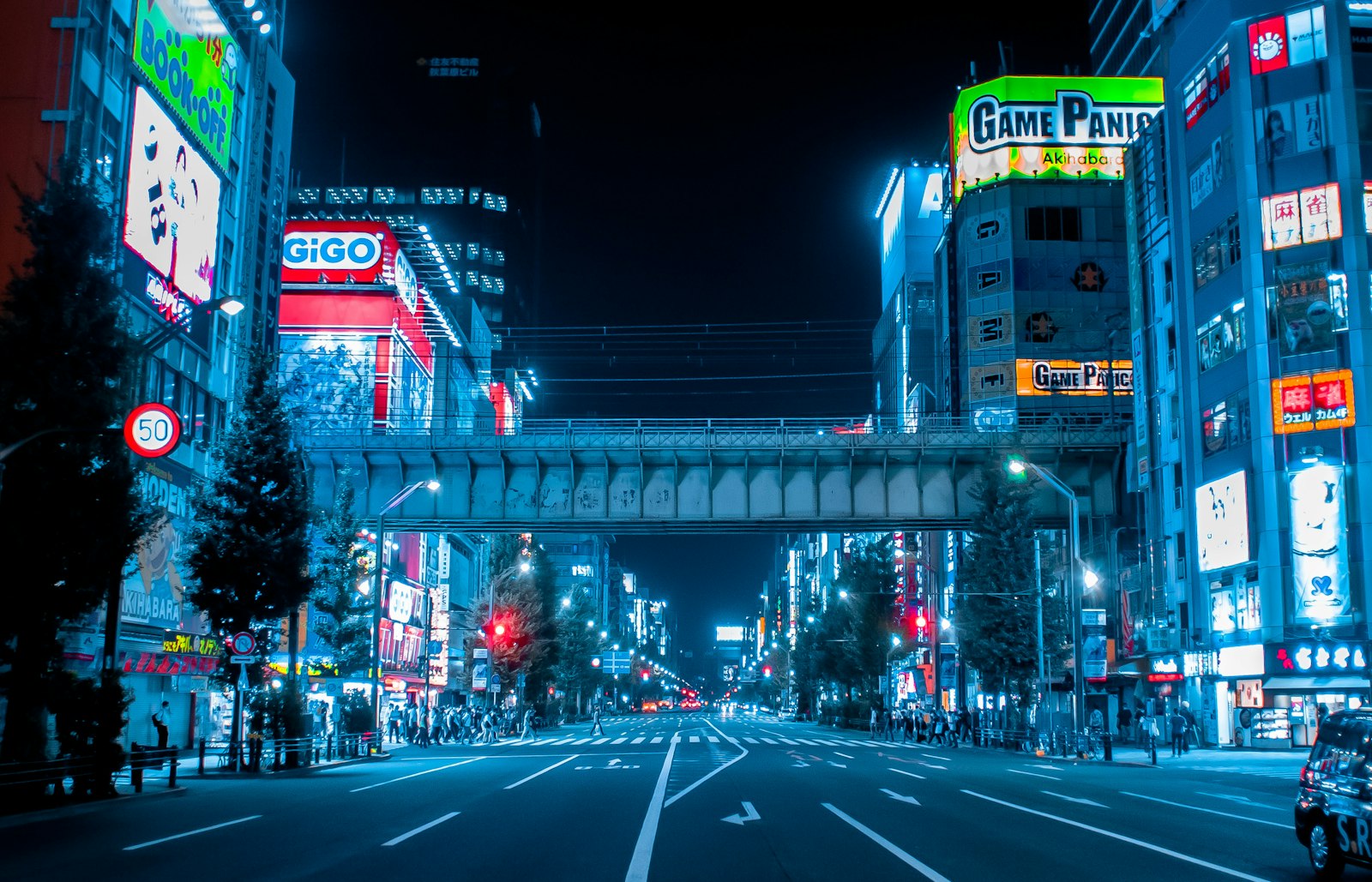
The original maid cafe in Tokyo is in Akihabara, and so are most of the ones worth your time. This is where the format was born, where the highest concentration of shops still operate, and where the staff have had two decades of practice explaining the whole thing to bewildered first-timers in English.
Here’s the honest version of what to expect: a table charge, a one-hour clock, a menu of cutely decorated food that costs more than it should, and roughly forty minutes of genuinely charming performance. Whether that’s worth ¥3,000 depends entirely on whether you walk in knowing how it works. Most people who leave disappointed are the ones who expected a normal cafe and got confused by the rules.
So let’s cover the rules first, then the money, then the specific shops.
Contents
- What a Maid Cafe Actually Is
- What Actually Happens Inside an Akihabara Maid Cafe
- What a Maid Cafe in Tokyo and Akihabara Costs
- Akihabara Maid Cafe Etiquette: Photos, Cheki, and the Tokyo Rules
- Four Akihabara Maid Cafes Worth Your First Visit
- Practical Tips Before You Go
- Where a Maid Cafe Fits Into a Tokyo Night
- Frequently Asked Questions
- What do you do in Tokyo After 10?Join our Tokyo Nightlife Private Tour
- Seeing Akihabara Is Easy. Seeing the Rest of Tokyo Is the Hard Part.
- About the Author
What a Maid Cafe Actually Is
A maid cafe is a themed cafe where the staff, dressed in frilled maid uniforms, treat you as the returning master or mistress of a household rather than as a customer. You get greeted with “okaerinasaimase” — welcome home — instead of the standard restaurant “irasshaimase.” The food arrives decorated. There are small interactive rituals. Some shops run live song-and-dance sets on a stage between table service.
The thing to understand is that it is a performance format, not a hospitality-with-an-angle format. Nobody is pretending this is a real household, and the maids aren’t pretending to be interested in you personally. It’s closer to interactive theatre with a drinks menu — which is exactly why it works when you play along and falls flat when you sit there stone-faced waiting to be impressed.
Why Akihabara owns this
Cure Maid Cafe opened in Akihabara in 2001 and bills itself as Japan’s first maid cafe. The neighborhood was already the country’s electronics-and-anime district, so the concept had a built-in audience, and other shops followed fast. By the early 2010s the district had seen hundreds of maid-themed businesses open — with plenty of churn as they came and went.
That history matters practically, not just trivially. The shops that survived that shakeout are the ones with English menus, clear posted pricing, and staff trained to walk foreign guests through the rules. For a first maid cafe in Tokyo, an Akihabara veteran beats a random new opening every time.
What Actually Happens Inside an Akihabara Maid Cafe
The sequence is fairly consistent across shops:
- You’re brought upstairs. Almost every maid cafe in Tokyo — Akihabara included — sits on an upper floor of a narrow building. Ground-floor entrances are usually just a sign and an elevator.
- The rules briefing. Before you’re seated, or immediately after, a staff member explains the photo policy and the prohibited behaviors. At the bigger shops this is a laminated card in English. Read it — it saves you awkwardness later.
- The time limit starts. Most shops seat you for 60 minutes. The clock starts when you sit, not when your food comes.
- You order. There’s a minimum: typically at least one drink or one set per person, on top of the entry charge.
- The rituals. The most famous is the “moe moe kyun” chant — the maid leads you through a short spell to make your food taste better, with hand gestures. You’re expected to do the gestures. Yes, everyone feels ridiculous. That’s the point.
- Optional extras. Games, a cheki (instant photo), a song request. All priced on the menu.
- Last orders, then out. Staff will warn you a few minutes before your hour ends. Extensions cost the entry fee again.
The whole thing is designed to be legible to someone who has never done it. You don’t need to know anime references, and you don’t need Japanese.
What a Maid Cafe in Tokyo and Akihabara Costs
The single biggest source of confusion is that the entry charge and the food are separate. Budget for both.
Entry / table charge. Maidreamin’s official pricing is a clear benchmark: ¥880 per adult per hour during the daytime period (tax included), with reduced rates of ¥660 for college and vocational students, ¥550 for junior and senior high school students, ¥330 for elementary schoolers, ¥440 for guests aged 60 and over, and free entry for children below elementary age. At-home cafe’s Akihabara main store runs a comparable one-hour admission plus one order system. Reported figures for at-home cafe hover around the ¥800 mark, so check the current rate at the door rather than trusting any blog number — including this one.
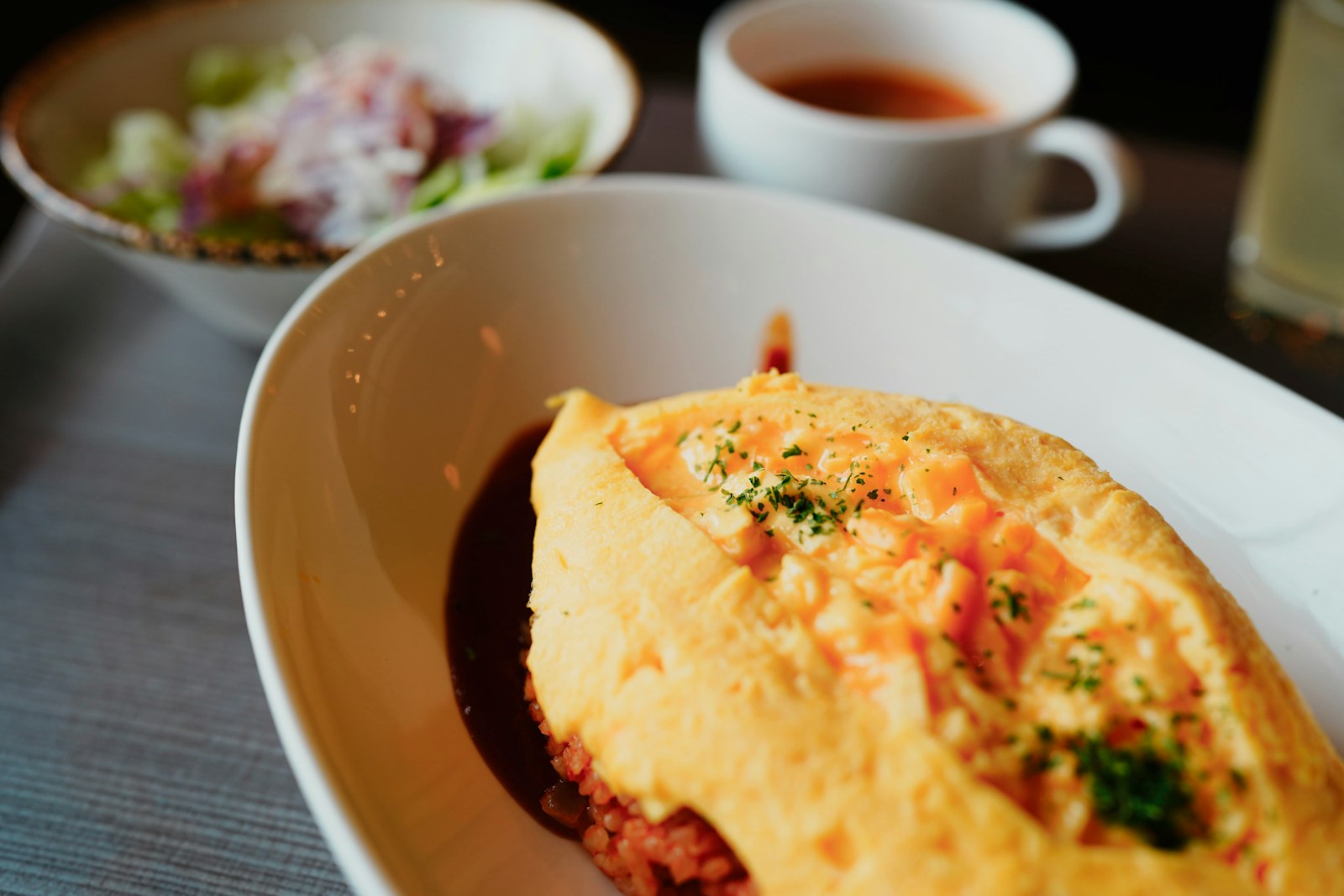
Food and drinks. This is where it adds up. Expect roughly ¥700–1,000 for a drink and ¥1,300–2,200 for a decorated omelette rice or parfait. At Maidreamin, a plain omelette rice runs around ¥1,320 and the character-decorated versions climb past ¥2,000.
Sets. Most shops sell a bundle — drink, food, and a cheki photo — which is usually the better deal for a first visit. At-home cafe’s booking sets have been listed in the ¥1,630–3,500 range depending on what’s included.
Evening pricing is different. Maidreamin switches to a night system after 20:00: around ¥3,800 for 60 minutes of all-you-can-drink, or ¥2,500 for the hour with one drink. If you’re going for the food and the show rather than the alcohol, go during the day.
Realistic total: ¥2,500–3,500 per person for a standard one-hour visit with a drink, a dish, and one photo. You can do it for under ¥2,000 if you order minimally.
Akihabara Maid Cafe Etiquette: Photos, Cheki, and the Tokyo Rules
This is the part worth reading twice, because the rules are strict, seriously enforced, and not always obvious to visitors.
You cannot photograph the maids. Not casually, not from across the room, not “just one.” Photographing the staff without going through the paid photo service is prohibited at essentially every shop. Some cafes also restrict photos of the interior.
Photos of your food and yourself are usually fine. Selfies and food shots are generally permitted, though the boundary varies by shop — the briefing will tell you.
If you want a photo with a maid, buy a cheki. A cheki is an instant Polaroid-style photo, ordered from the menu, typically around ¥1,000. The maid takes the shot with you and then decorates it by hand with drawings, hearts, and a short message. It’s the intended souvenir, and it’s the only sanctioned way to get a picture together.
Do not touch. Touching a maid’s body or costume is strictly prohibited. So is vulgar language.
Do not ask for personal information. No real names, no phone numbers, no social media. And do not wait for staff outside the shop after your visit — this is explicitly banned and treated seriously.
Do play along. Refusing the chant or the gestures doesn’t make you look cool, it just makes the interaction awkward for everyone including you. The maids are working through a routine; meeting them halfway is the entire deal.
None of this is arbitrary. These shops employ a lot of young part-time staff, and the boundaries exist to keep the format working as entertainment. Treat them as non-negotiable and you’ll have a good time. The same principle applies across the rest of Japanese nightlife too — our guide to kyabakura for first-time foreign visitors covers a very different venue type built on a very similar logic of clearly bounded, priced hospitality.
Looking for Adult Entertainment Services in Tokyo? Download this
I’ve spent over a decade exploring and studying Japan’s adult entertainment scene firsthand. If you’d like detailed insider information—including how to choose the right shop, what services are available, and tips for avoiding common mistakes—check out our exclusive E-book.
Four Akihabara Maid Cafes Worth Your First Visit
These are the shops with the most reliable track record for English-speaking first-timers. Verify hours and prices before you go — this industry turns over quickly.
Cure Maid Cafe — the calm, classical original
The historic option, open since 2001, and deliberately the least frenetic maid cafe in Tokyo’s original Akihabara cluster. There’s no chanting and no stage show. The uniforms are Victorian rather than frilly-pop, the music is classical, and the format is closer to a quiet European tea room with a themed staff. Herbal tea, omelette rice, and waffles are the mainstays.
It’s the right pick if the high-energy version sounds exhausting, or if you want to understand where the whole thing came from before seeing what it turned into.
- Address: Gee Store Akiba, Onoden Building 4F, 1-2-7 Sotokanda, Chiyoda-ku
- Hours: 11:00–20:00 daily (last order 19:00 food / 19:30 drinks)
at-home cafe — the big, polished, tourist-ready one
The most visible maid cafe brand in Akihabara, occupying multiple floors of one building near the station. This is the full-volume version: the moe moe kyun chant, the decorated food, the souvenir photos, the whole apparatus — delivered by staff who handle foreign guests constantly.
Because of its scale it’s also the easiest to book ahead, which matters on weekends. Sets bundle a drink, a dish, and a cheki so you don’t have to decode the à la carte menu.
- Address: Mitsuwa Building 3F–7F, 1-11-4 Sotokanda, Chiyoda-ku
- Hours: Weekdays 11:00–22:00; weekends and holidays 10:00–22:00
- System: One-hour stay, admission plus an order
Maidreamin — the transparent-pricing chain
Maidreamin runs multiple Akihabara branches and publishes its full price structure in English online, which removes most of the guesswork. The daytime entry charge is ¥880 per adult per hour, and the age-based discounts make it the most workable option for mixed groups — under-elementary-age children enter free.
Its Akihabara LIVE RESTAURANT “Heaven’s Gate” branch (Sumiyoshi Building 6F, 3-16-17 Sotokanda) leans hardest into the stage-show side, with performances between table service. Worth choosing specifically if you want the show rather than just the cafe.
Akiba Zettai Ryoiki — the themed alternative
A smaller, more concept-driven shop for people who’ve decided the standard format isn’t quite their thing. Entry has been listed at ¥880 per person for 60 minutes with one drink included, which makes the total cost easy to predict.
- Address: 3-1-1 Sotokanda, Chiyoda-ku
- Hours: 12:00–22:00 daily
Practical Tips Before You Go
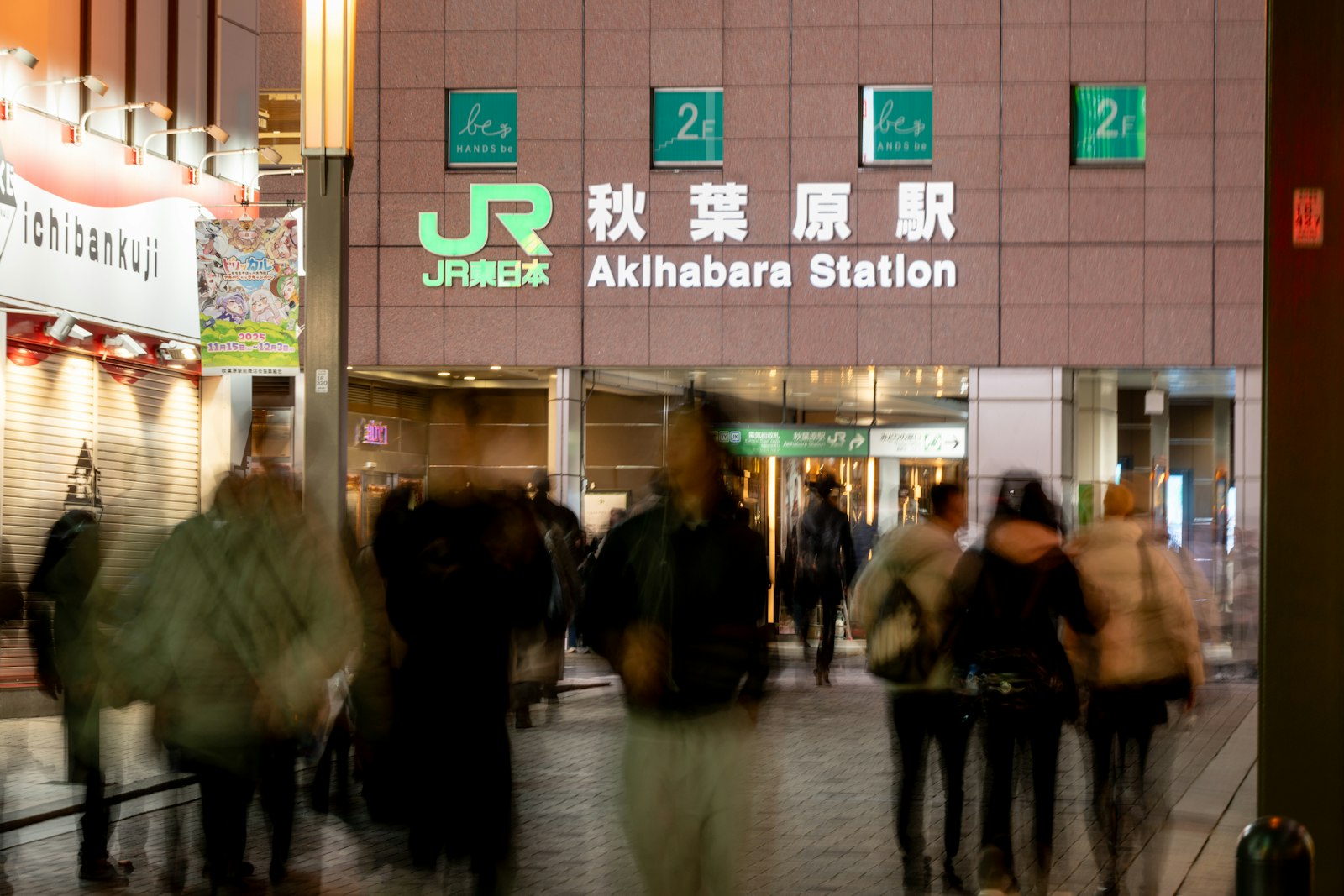
Getting there. Akihabara Station is served by the JR Yamanote, Keihin-Tōhoku, and Chūō-Sōbu lines, the Tokyo Metro Hibiya line, and the Tsukuba Express. Take the Electric Town Exit (電気街口) — nearly every shop is within a ten-minute walk. The Japan National Tourism Organization’s area page is a decent orientation if you want to build a fuller day around it.
Go on a weekday afternoon. Weekend evenings mean queues, and a hard one-hour limit means a queue actually costs you something. Weekday early afternoon is the sweet spot.
Bring cash. Most of the larger shops take cards now, but smaller ones may not, and you don’t want to discover that at the register.
Solo is completely normal. A large share of maid cafe customers come alone. Nobody will find it odd, and solo guests often get more direct attention from staff.
Sixty minutes is enough. Almost everyone finds one hour sufficient for a first visit. Don’t plan your whole afternoon around it — plan the rest of Akihabara around the cafe.
Street promoters are not the shops. You’ll see costumed staff handing out flyers on the street. Legitimate shops do this, but so do lower-quality ones. Pick your cafe before you arrive rather than following whoever hands you a leaflet — the same discipline that keeps you out of trouble in Tokyo’s rowdier districts, which we cover in detail in our Tokyo nightlife scams and safety guide.
Where a Maid Cafe Fits Into a Tokyo Night
Here’s the thing most guides skip: a maid cafe is a daytime-to-early-evening activity, and Akihabara largely shuts down early compared to the rest of the city. Cure Maid Cafe closes at 20:00. Most others wind down by 22:00 or 23:00.
So treat it as the opening act. Do Akihabara in the afternoon — the cafe, the arcades, the secondhand shops — then move west. Shinjuku is twenty minutes away on the Chūō line and doesn’t really start until the maid cafes are closing. Our roundup of what to do in Tokyo at night covers where to go once Akihabara’s shutters come down.
The maid cafe experience in Tokyo works best as a contrast — an hour of deliberately silly, brightly lit theatre before the city’s darker, quieter, more adult venues open up.
Frequently Asked Questions
Is a maid cafe a strip club or an adult venue? No. Maid cafes are ordinary licensed cafes. There’s no nudity, no physical contact, and children are welcome at most shops. It’s cosplay-themed food service, full stop.
Do I need to speak Japanese? No. The major Akihabara shops have English menus and staff used to foreign guests. The rituals are gesture-based, so language barely matters.
Can I go as a woman, or as a couple? Yes, and plenty do. The audience skews male but not overwhelmingly, and the larger shops are explicitly all-gender and family-friendly.
Should I tip? No. Tipping isn’t practiced in Japan and will create confusion. If you want to show appreciation, buy a cheki.
Do I need a reservation? Not usually on weekdays. On weekend evenings, booking ahead at a large shop like at-home cafe will save you a wait.
Is it worth it? If you go in expecting interactive theatre and participate, yes. If you go in expecting a great cafe, no — you’re paying for the format, not the coffee.
What do you do in Tokyo After 10?
Join our Tokyo Nightlife Private Tour
You deserve better than overpriced bars and missed opportunities. We’re here for you.
Seeing Akihabara Is Easy. Seeing the Rest of Tokyo Is the Hard Part.
A maid cafe is one of the few Tokyo experiences you genuinely can do alone with no preparation beyond this article. Show up, follow the rules, enjoy the hour.
The rest of the city is not like that. The bars worth finding are on the fourth floor of unmarked buildings, the good izakaya don’t have English menus, and knowing which door to open in Shinjuku or Golden Gai is the difference between a great night and an expensive mistake.
That’s the gap our Tokyo After 10 nightlife private tour is built to close. A local guide takes you through the places that don’t surface on Google Maps, handles the language, and reads the room so you don’t have to. If you want to understand the format first, our complete guide to Tokyo night tours breaks down what these evenings actually involve.
Do the maid cafe in the afternoon. Let someone who lives here handle the night.