Photo by <a href="https://unsplash.com/@ramonbucard?utm_source=tokyodeepnightlife&utm_medium=referral">Ramon Buçard</a> on <a href="https://unsplash.com/?utm_source=tokyodeepnightlife&utm_medium=referral">Unsplash</a>
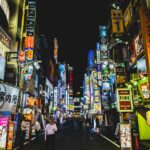
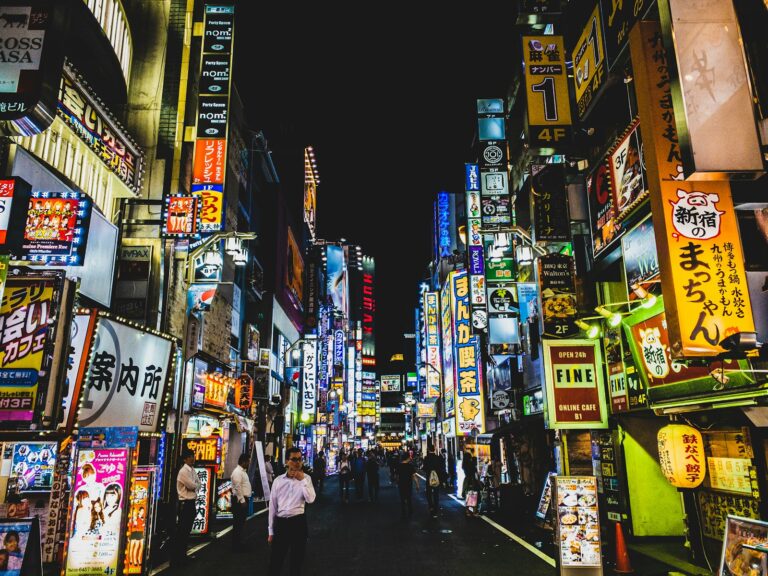
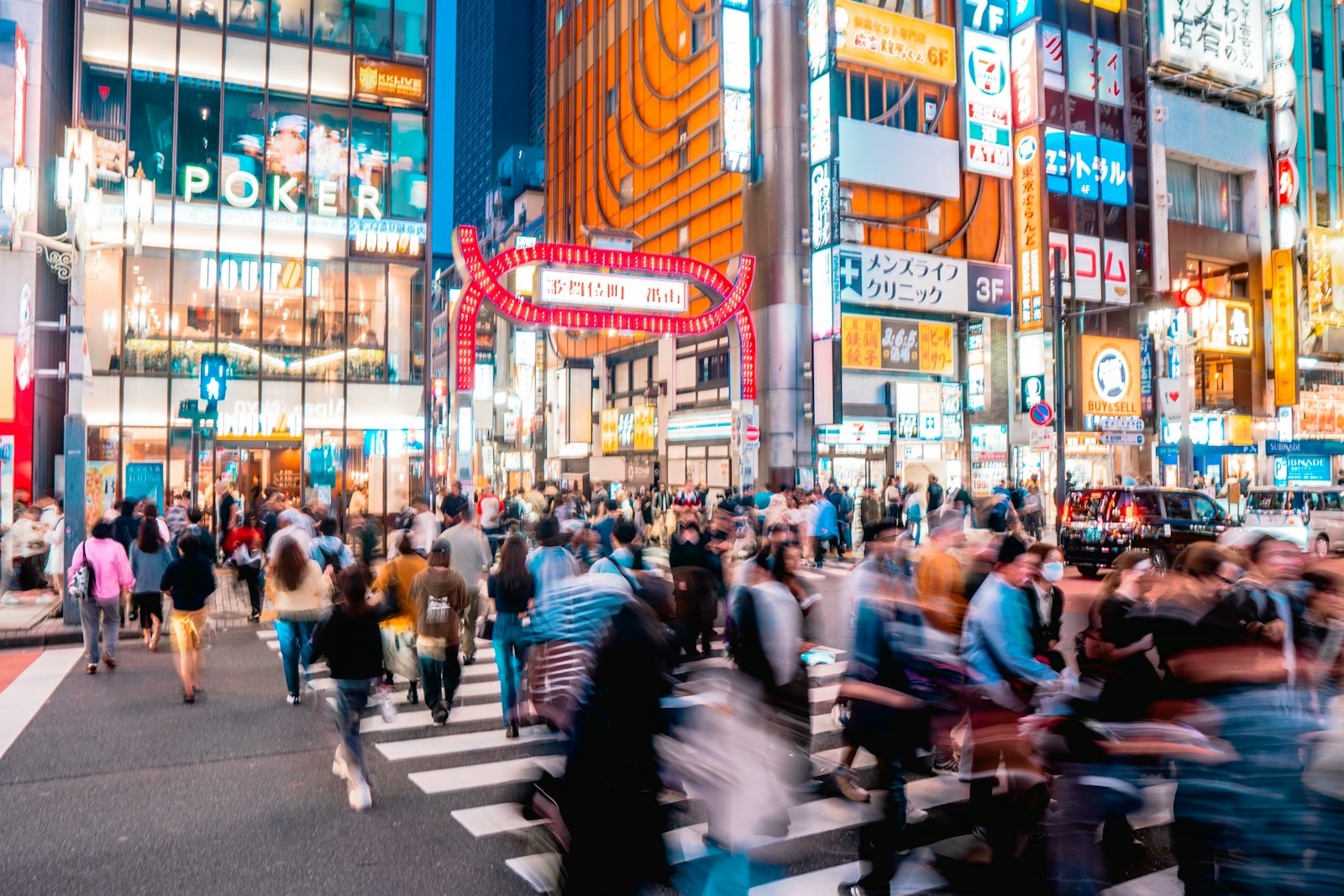
Walk through Kabukicho on a Friday evening and you’ll pass a hundred illuminated signboards covered in photographs of women in cocktail dresses. Those are kyabakura — Japanese hostess clubs — and they’re one of the most misunderstood corners of Japanese nightlife. Almost every visitor who asks about a kyabakura in Tokyo is quietly wondering the same two things: is this a brothel? and am I going to get ripped off?
The answers are no and probably not — but only if you understand what you’re actually buying. A kyabakura sells conversation, priced by the minute, with a bill structure that has more line items than a hotel invoice. First-timers don’t get burned because the system is dishonest. They get burned because nobody explained the system.
This guide explains it: what happens from the moment you sit down, what each charge on the bill means, what the law does and doesn’t allow, and the handful of etiquette rules that separate a good night from an awkward one.
Contents
- What Is a Kyabakura? (And What It Definitely Isn’t)
- How a Night at a Kyabakura Actually Works
- What a Kyabakura in Tokyo Costs
- The Vocabulary That Saves You Money
- Where to Find Kyabakura in Tokyo
- Etiquette: The Rules Nobody Writes Down
- Can You Go Without Speaking Japanese?
- The Legal Framework, Briefly
- Red Flags: How First-Timers Actually Get Burned
- Frequently Asked Questions
- What do you do in Tokyo After 10?Join our Tokyo Nightlife Private Tour
- Making Your First Night in Tokyo Count
- About the Author
What Is a Kyabakura? (And What It Definitely Isn’t)
Kyabakura (キャバクラ) is a contraction of two English loanwords: cabaret and club. It’s a licensed venue where male guests sit at a table and are joined by female staff — kyabajō — who pour drinks, make conversation, light cigarettes, play simple drinking games, and generally make you feel like the most interesting person in the room.
That’s the entire product. Conversation and attention, sold as a timed service. Every kyabakura in Tokyo, from a ¥5,000 Kabukicho room to a Ginza lounge, is a variation on that one idea.
Here’s the part that surprises people: there is no physical contact and no sexual service. Not “officially discouraged” — actually prohibited, both by the venue’s own rules and by the licensing law it operates under. Touching a hostess is the fastest way to be escorted out by a staff member who is significantly larger than you. Japan’s adult entertainment industry does exist, but it’s a completely separate category of business with separate licensing, and a kyabakura is not part of it. If you want the full taxonomy, our overview of Japan’s three main adult entertainment categories sorts out what’s what.
It also isn’t a nightclub. There’s no dance floor, and you generally won’t be mingling with other guests — tables are semi-private and the social unit is you (or your group) plus whichever hostesses are assigned to your table. If you’re looking for a place to meet other travelers, a kyabakura is the wrong room entirely.
A quick note on adjacent venues, because the categories blur in English:
- Girls bar — you sit at a counter, staff serve from behind it, and prices are far lower. Casual and much easier for a first-timer. We cover these in the Tokyo girls bar guide.
- Kurabu / “club” (クラブ) — the Ginza-style version. Older, wealthier clientele, introduction-only at the top end, dramatically more expensive.
- Kyabakura — the middle ground, and by far the most numerous.
How a Night at a Kyabakura Actually Works
Getting through the door
Reputable venues have a receptionist at the entrance or in a small ground-floor booth. You’ll be asked how many people are in your party and whether you’ve been to that venue before. Bring your passport — venues are legally required to keep under-18s out, and foreign faces get carded routinely.
This is also where you should ask the single most important question of the night: what is the base price, and what does it include? A legitimate venue will show you a printed price sheet without hesitating. Anything vaguer than that is your cue to leave.
The “set” — you are buying time
Pricing runs on a set system: a fixed block of time, usually 50 or 60 minutes, at a fixed base charge. At a typical kyabakura in Tokyo, set charges commonly fall in the ¥5,000–¥10,000 range, with upmarket venues going higher. When the set runs out, staff will ask whether you’d like to extend. Each extension is billed as another set.
Extensions are where budgets quietly detonate. Decide before you sit down how many sets you’re willing to buy.
The rotation
Unless you request otherwise, hostesses rotate — roughly every 15 to 20 minutes, the person at your table is replaced by someone else. This is deliberate. It gives you variety and it gives the club a way to find the match that keeps you coming back. Don’t take a rotation personally; it’s the default mechanic, not a verdict on your conversation.
Shimei — nominating a hostess
If you want to keep someone at your table, you request her by name. That’s shimei (指名), and it costs extra — typically ¥2,000–¥5,000, depending on whether it’s your first time nominating her or you’re an established regular. Shimei is the club’s core loyalty engine: hostesses are compensated partly on how many nominations they attract, which is why you’ll get a business card and, sometimes, a LINE message the next day.
The drink you buy for her
At some point your hostess will ask, gently, whether she may have a drink. Saying yes is normal and expected. Saying no is also completely acceptable. Hostess drinks typically run ¥1,000–¥3,000 each and are added to your bill — this is one of the main ways the venue earns, and one of the main ways a bill grows without you noticing.
Last order and the bill
Most kyabakura close around midnight to 1:00 a.m. — a legal constraint we’ll get to below. Staff will announce last orders, settle your tab, and typically walk you to the elevator or the street. That send-off is part of the service, not a hint for a tip.
What a Kyabakura in Tokyo Costs
The single biggest source of complaints about kyabakura in Tokyo isn’t overcharging — it’s the gap between the number on the signboard and the number on the bill. The signboard shows the set charge only. Here’s everything else that stacks on top:
| Line item | Typical range | Notes |
|---|---|---|
| Set charge | ¥5,000–¥10,000 | Per person, per 50–60 minutes |
| Extension | Same as set | Charged per additional block |
| Shimei (nomination) | ¥2,000–¥5,000 | Optional |
| Your drinks | ¥1,000–¥2,000 | Often unlimited within some set plans |
| Hostess drinks | ¥1,000–¥3,000 | Each, and they add up fast |
| Bottle keep | ¥10,000+ | Only relevant if you’re becoming a regular |
| Service charge | 10–30% | Applied to the subtotal |
| Consumption tax | 10% | Applied on top |
That last pair matters more than people expect. A service charge plus tax means your final bill typically lands 20–40% above the menu prices you added up in your head. Budget accordingly.
Realistically: a modest first visit — one set, no nomination, a couple of drinks each — lands somewhere around ¥15,000–¥25,000 per person. A longer night with extensions, a nomination, and generous rounds for the table can reach ¥30,000–¥80,000. Ginza-tier venues start above that range and keep climbing.
Two practical notes. Most established venues accept Visa, Mastercard, and JCB, but carry cash as a backup — card terminals fail, and some smaller venues are cash-only. And there is no tipping in Japan. The service charge already covers it. Leaving cash on the table will confuse everyone.
The Vocabulary That Saves You Money
You don’t need Japanese to enjoy the night, but these six words appear on menus and bills, and knowing them prevents unpleasant surprises:
- セット / setto (set) — your block of time
- 延長 / enchō (extension) — another block, another charge
- 指名 / shimei (nomination) — requesting a specific hostess
- 同伴 / dōhan — meeting a hostess for dinner before opening and arriving together. A regulars’ custom; the fee runs ¥10,000–¥25,000 plus the meal
- サービス料 / sābisu-ryō (service charge) — the 10–30% add-on
- ボトルキープ / botoru kīpu (bottle keep) — buying a bottle the club stores for your next visit
If you learn only one, learn enchō. It’s the word attached to every decision that increases your bill.
Where to Find Kyabakura in Tokyo
Three districts dominate, and they are genuinely different products. You’ll find a kyabakura in Tokyo neighborhoods well beyond these three, but for a first visit the choice really comes down to Kabukicho, Roppongi, or Ginza.
Kabukicho (Shinjuku) is the largest concentration of hostess clubs in Japan, packed into a few blocks of mid-rise buildings where a single elevator might serve eight different venues. It’s the most price-diverse district — you’ll find both budget venues and serious money — and the most likely to have at least some English-capable staff. It’s also where you need to be most alert about touts. Our Kabukicho nightlife and safety guide covers the district in detail.
Roppongi has the highest concentration of international clientele in Tokyo, which makes it the most realistic option if you speak no Japanese at all. The trade-off is that Roppongi also has the city’s most persistent street solicitation aimed specifically at foreigners. See the Roppongi nightlife guide for how to navigate it.
Ginza operates on a different logic entirely. The high-end clubs there are effectively members’ rooms — introduction-based, conversation-driven, and priced for corporate expense accounts. Walking in off the street is often simply not possible.
For a first visit, Kabukicho or Roppongi. Ginza is a destination for a second or third trip, ideally with someone who knows a room.
Looking for Adult Entertainment Services in Tokyo? Download this
I’ve spent over a decade exploring and studying Japan’s adult entertainment scene firsthand. If you’d like detailed insider information—including how to choose the right shop, what services are available, and tips for avoiding common mistakes—check out our exclusive E-book.
Etiquette: The Rules Nobody Writes Down
Most of these are obvious once stated. The problem is that nobody states them — and every kyabakura in Tokyo assumes you already know.
- Don’t touch. No arm around the shoulder, no hand on the knee. This is the one rule with no grey area.
- Let her pour. Pouring drinks is part of the service, not a chore you’re sparing her. Accepting graciously is the correct move.
- Don’t ask for personal information. Phone number, real name, where she lives, whether she’ll meet you later — all off-limits and all faintly insulting. The name she gives you is a work name.
- Don’t photograph anyone. Almost universally banned. Ask before you even take out your phone.
- Dress smart casual. Collared shirt, closed shoes. Some venues turn away shorts, sandals, or tank tops.
- Don’t interrogate her about the job. “How much do you make?” and “Do you like doing this?” are conversation-killers.
- Confirm before extending. When staff ask about an extension, ask what it costs before you nod.
- Don’t get visibly drunk. The room is built around conversation. Being the loud table is the fastest way to be quietly managed out.
- Don’t tip. Really. It’s already in the bill.
None of this is about being deferential — it’s about understanding that you’re a guest in a room with clear professional norms, and the people working there will match your energy if you get the register right.
Can You Go Without Speaking Japanese?
Honestly: it’s harder than the marketing suggests.
A kyabakura in Tokyo is a conversation business first and a drinking venue second. Remove the conversation and you’re paying premium rates to sit in a dim room next to someone you can’t talk to. Most hostesses in most venues speak little to no English, and the ones who do are concentrated in a small number of foreigner-oriented clubs in Kabukicho and Roppongi.
If you’re going anyway, three things genuinely help. Call ahead or have your hotel concierge call to ask whether English-speaking staff are working that night — availability changes by shift. Bring a translation app and set it to conversation mode; hostesses are usually good sports about it. And learn a handful of phrases — hajimemashite (nice to meet you), kanpai (cheers), oishii (delicious). The effort itself reads as respect and reliably warms up a table.
If none of that appeals, a girls bar is the better first step. The counter format makes short, simple exchanges feel natural rather than strained, and the bill is a fraction of the size.
The Legal Framework, Briefly
Every licensed kyabakura in Tokyo operates under Japan’s Act on Control and Improvement of Amusement Business — commonly called fūeihō (風営法). Three consequences matter to you as a customer:
- Closing hours are regulated. Licensed venues must generally close by midnight, with designated entertainment districts — Kabukicho among them — permitted to run until 1:00 a.m. A venue still openly serving at 3 a.m. is telling you something about its licensing.
- Under-18s are barred, and ID checks are real. Carry your passport — Japan’s Immigration Services Agency requires short-stay foreign visitors to have it on them anyway, so it costs you nothing.
- Sexual services are outside what this license permits. A venue offering them is operating illegally, which means every other protection you’re relying on is also unreliable.
The practical takeaway is simple: licensing is the thing keeping the night predictable. Venues that respect the rules also print their prices, itemize their bills, and let you walk out.
Red Flags: How First-Timers Actually Get Burned
The scam risk around kyabakura in Tokyo is real but narrow. It clusters around a specific set of behaviors:
Street touts. A man on the sidewalk offering to take you to a great club with beautiful girls is the number one warning sign. Solicitation of this kind is restricted in Tokyo’s main entertainment districts, and legitimate venues don’t need it. Whatever he quotes will not be what you pay. Walk on.
“All-you-can-drink for ¥3,000.” A price far below the ¥5,000-plus norm is bait. The set charge, the table charge, and the mandatory hostess drinks appear afterward.
No printed price list. If nobody can show you written prices before you sit down, the prices don’t exist yet — they’ll be invented when the bill arrives.
Being led somewhere else. You agreed to venue A; you’re being walked toward venue B. Stop and leave.
A bill that doesn’t match the sheet. Ask for the itemized breakdown, compare it to the price sheet, and if it’s genuinely wrong, call the police (110). Legitimate venues resolve disputes rather than escalate them; the ones that escalate are counting on you being too embarrassed to make a scene.
For the full inventory of tactics, our guide to Tokyo nightlife scams and how to avoid them goes deeper.
Frequently Asked Questions
Can women go to a kyabakura? Some venues welcome mixed groups and couples; many are men-only by house policy. Ask at the door. The mirror-image business — host clubs, where male staff entertain female guests — is a large industry in its own right, concentrated in the same Kabukicho blocks.
Do I need a reservation? Not usually, though weekends are busy and a call ahead helps — especially if you’re asking about English-speaking staff.
Will a hostess go home with me? No. Asking damages the evening and, in some venues, ends it.
Is it safe? At a licensed kyabakura in Tokyo with printed prices, yes. Nearly every bad story from Kabukicho traces back to a tout, a suspiciously cheap offer, or both.
How long should a first visit be? One set. Sixty minutes is enough to understand the format and decide whether you want a second night — and it caps your spending at a number you chose in advance.
What do you do in Tokyo After 10?
Join our Tokyo Nightlife Private Tour
You deserve better than overpriced bars and missed opportunities. We’re here for you.
Making Your First Night in Tokyo Count
A kyabakura in Tokyo is a genuinely distinctive slice of Japanese social culture — a business built entirely on the craft of making a stranger feel welcome. Approached with the right expectations, it’s memorable. Approached blind, it’s an expensive hour of mutual incomprehension.
The honest advice for most first-time visitors: don’t make a hostess club the centerpiece of your night. Make it one stop in a longer evening — after an izakaya, after a stretch of the backstreets, once you’ve got a feel for how Tokyo’s nightlife districts actually breathe. That’s the version people remember.
If the language barrier or the sheer density of Kabukicho feels like a lot to take on cold, going with someone local solves most of it at once. Our Tokyo After 10 nightlife tour is built around exactly that: a local guide who walks you through the districts, handles the Japanese, explains the systems as you go, and knows which doors are worth opening — and which ones to walk past.
Either way, now you know what you’re buying. That’s most of the battle.