

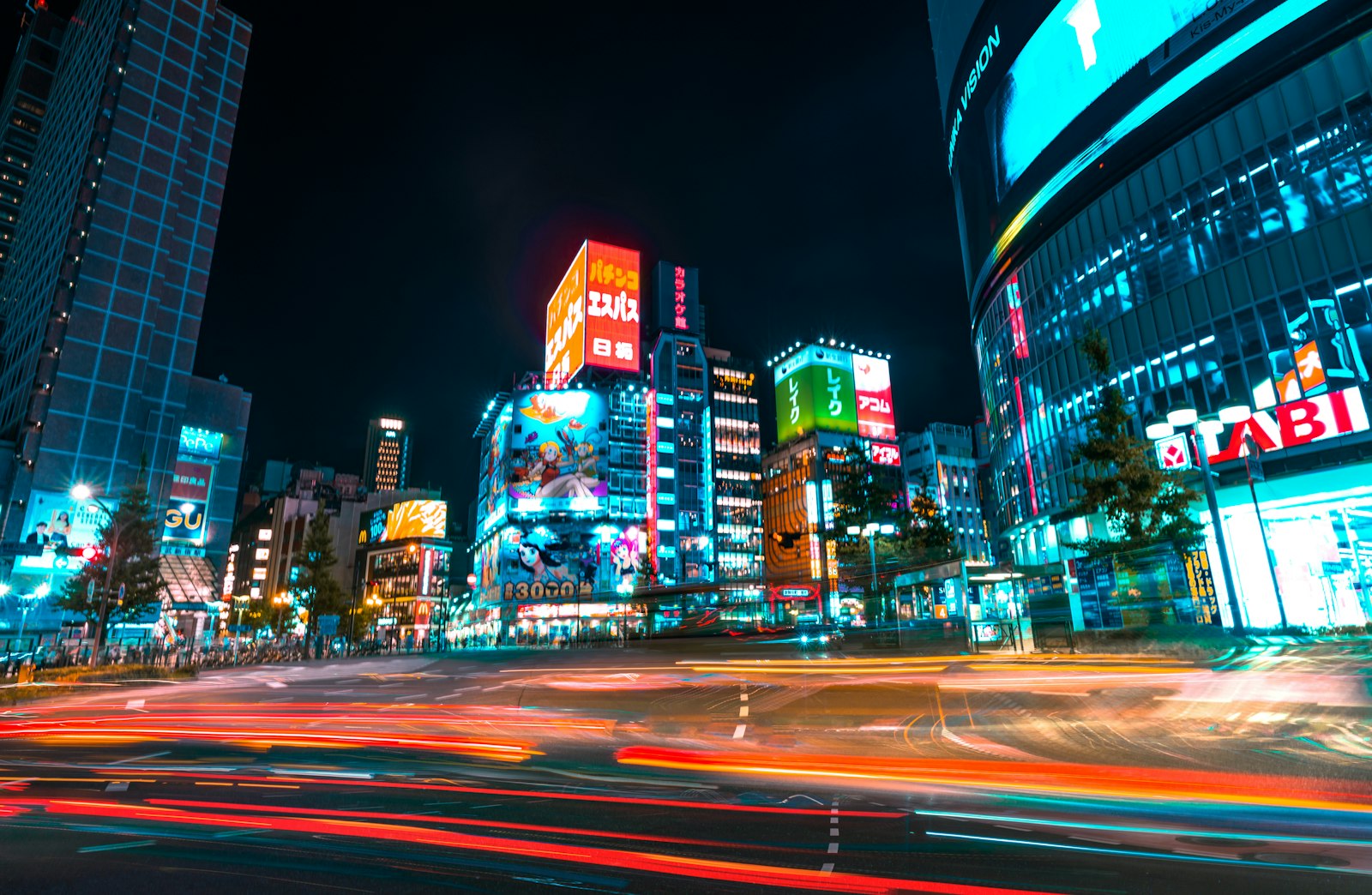
Photo by <a href="https://unsplash.com/@jezar?utm_source=tokyodeepnightlife&utm_medium=referral">Jezael Melgoza</a> on <a href="https://unsplash.com/?utm_source=tokyodeepnightlife&utm_medium=referral">Unsplash</a>
Most “where to stay in Tokyo” guides rank neighborhoods by sightseeing, shopping and how easy the station is. That’s useful in the daytime. At 1am, only one thing matters: how you get from the bar back to your bed. The best hotel area for Tokyo nightlife is the one that puts the places you’ll actually drink within walking distance — or a cheap taxi ride — of your room, because the trains stop around midnight and don’t start again until about 5am.
This guide compares the five areas that work best for a night out — Shinjuku, Shibuya, Roppongi, Ebisu and Ginza — by what kind of night each one suits, where exactly to book within each area, and what it costs to get home when you stay out past the last train.
Contents
- The Short Answer: Best Hotel Areas for Tokyo Nightlife
- Why Your Hotel Area Matters More at Night Than in the Day
- Shinjuku: The Best Hotel Area for Tokyo Nightlife for Most Visitors
- Shibuya: Best for Clubs and a Younger Crowd
- Roppongi: Best for International Bars and Big Clubs
- Ebisu: Best for Food-Led Nights and Better Sleep
- Ginza, Yurakucho and Shimbashi: Best for Cocktails and Salaryman Izakaya
- Choosing the Best Hotel Area for Tokyo Nightlife: A Quick Match
- Practical Tips for Booking a Nightlife-Friendly Hotel in Tokyo
- What do you do in Tokyo After 10?Join our Tokyo Nightlife Private Tour
- Make the Most of Your Base With a Local Guide
- About the Author
The Short Answer: Best Hotel Areas for Tokyo Nightlife
If you only read one section, read this one:
- Shinjuku — Best all-rounder and the best choice for first-timers. Golden Gai, Omoide Yokocho, Kabukicho and Shinjuku-sanchome’s bars are all walkable from the station.
- Shibuya — Best for clubs, a younger crowd and late-night street energy. Good if you’ll also spend evenings in Ebisu or Harajuku.
- Roppongi — Best for international bars and big clubs where English is the default. Loud, and some streets need care.
- Ebisu — Best for food-led nights: izakaya, yokocho stalls and good bars, without the chaos. Quieter streets to sleep on.
- Ginza / Yurakucho / Shimbashi — Best for cocktail bars and salaryman izakaya under the train tracks. Very calm after midnight, which cuts both ways.
Areas many travelers book that are not ideal for nightlife: Asakusa and Ueno. Both are lovely, but bar life is limited and a taxi back from Shinjuku or Roppongi after midnight is a long, expensive ride.
Why Your Hotel Area Matters More at Night Than in the Day
Tokyo’s trains are excellent and cheap, so during the day it barely matters where you sleep. At night that flips. Most JR and subway lines in central Tokyo run their final trains somewhere between about 11:30pm and 12:30am, and the exact time depends on the line, the station and the direction you’re traveling. We break down the cutoffs by district in our Tokyo last train guide.
After that, your options are walking, a taxi, or waiting for the first train. Taxis are safe and metered, but they aren’t cheap at night. Since the April 2026 fare revision in Tokyo’s 23 wards, the flag fare is ¥500 for the first 1 km, the meter adds ¥100 every 232 meters after that, and a 20% surcharge applies between 10pm and 5am. In practice that works out to roughly:
| Taxi ride after 10pm | Approx. meter fare |
|---|---|
| 3 km | ~¥1,700 |
| 5 km | ~¥2,700 |
| 10 km | ~¥5,300 |
Those are meter-only estimates; traffic and app booking fees can push them up. The pattern is what matters: a hotel inside your nightlife area means a free walk home, a hotel one district over means a ¥2,000–3,000 ride, and a hotel across the city can mean ¥5,000 or more — every night.
So the real question isn’t “which area has the best nightlife?” but “where will I actually be at 1am?” Book there.
Shinjuku: The Best Hotel Area for Tokyo Nightlife for Most Visitors
Shinjuku has more variety within a 10-minute walk than any other part of the city. On the east side you have Kabukicho’s neon, the 200-odd tiny bars of Golden Gai, and the yakitori smoke of Omoide Yokocho by the west exit. A little further east, Shinjuku-sanchome and Shinjuku Ni-chome cover everything from standing bars to Tokyo’s best-known LGBTQ+ bar district. For an overview of the whole area, see our Shinjuku nightlife guide.
It’s also the most practical base for the rest of your trip. Shinjuku Station is a major hub on the JR Yamanote Line, and Shibuya is three stops south, so you can easily split nights between the two.
Where to Book in Shinjuku
Shinjuku is big, and which side of the station you sleep on changes your night:
- East side, between Shinjuku-sanchome and Kabukicho — The sweet spot. You can walk to Golden Gai, Kabukicho and the sanchome bars in minutes, and the streets just south of Yasukuni-dori are calmer than Kabukicho itself.
- Inside Kabukicho — Maximum convenience, minimum sleep. Hotel Gracery Shinjuku at 1-19-1 Kabukicho is the landmark here, with a 12-meter Godzilla head on its eighth-floor terrace. Fine if you want to be in the middle of it; less ideal if you’re a light sleeper.
- West side (Nishi-Shinjuku) — Skyscraper hotels with quieter nights. You’ll cross the station or the tracks to reach the bars, which is a 10–20 minute walk late at night but still far better than a taxi from another district.
The Trade-Offs
Kabukicho has touts, and some of them steer visitors to bars with inflated bills. It isn’t dangerous if you ignore street solicitation and choose your own bars, but it’s worth knowing the common tricks before your first night.
Best for: first-time visitors, bar hoppers, solo travelers, anyone who wants options every night.
Shibuya: Best for Clubs and a Younger Crowd
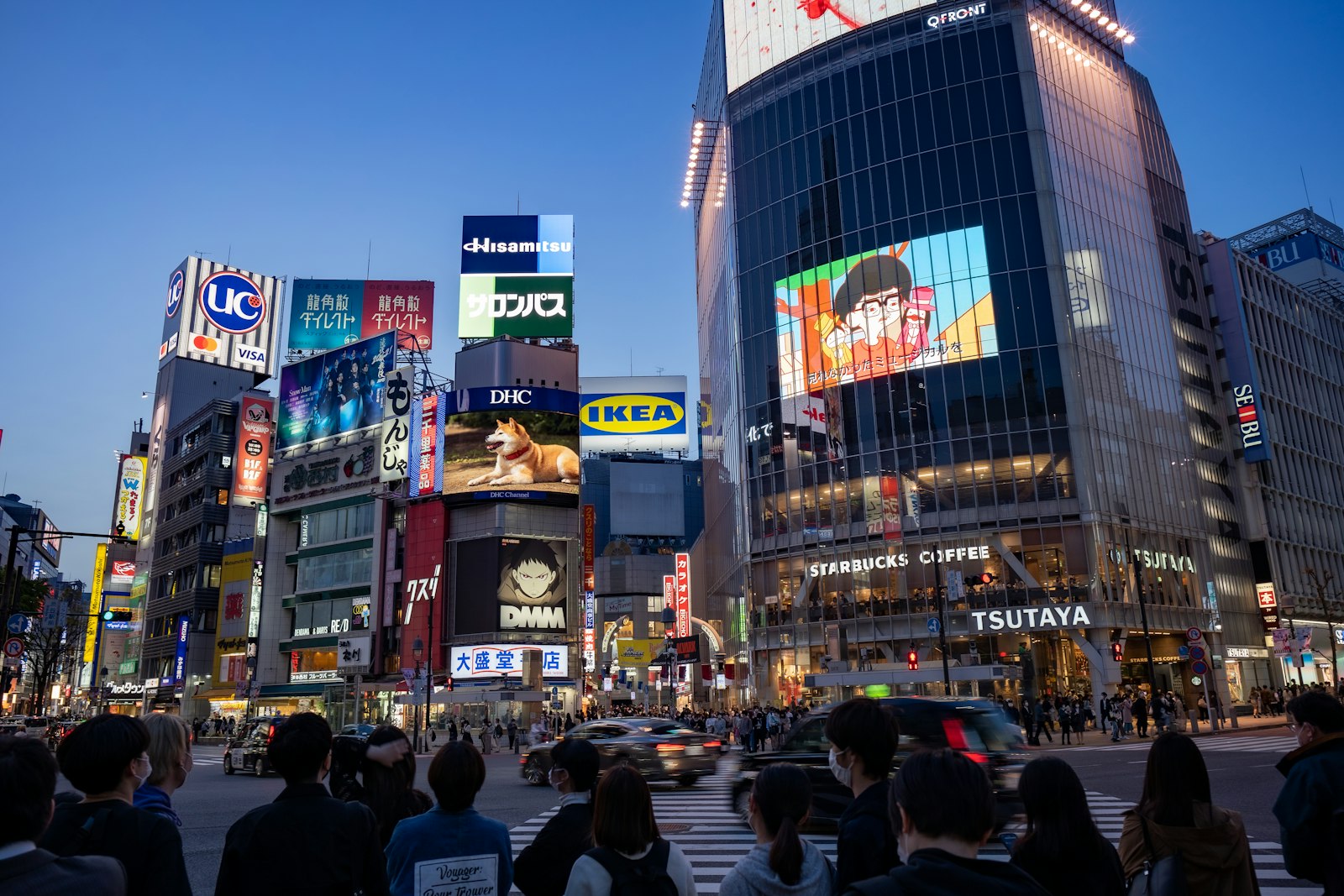
Shibuya’s nightlife is louder, younger and more club-oriented than Shinjuku’s. The streets around the scramble crossing and Center Gai stay busy late, the club scene runs well into the morning on weekends, and the area has its own alley bars at Nonbei Yokocho beside the tracks and the food hall–style Shibuya Yokocho inside MIYASHITA PARK.
Where to Book in Shibuya
Stay close to the station, within walking distance of the crossing. One example of a nightlife-friendly hotel is sequence MIYASHITA PARK, built into the MIYASHITA PARK complex about three minutes’ walk from Shibuya Station’s Exit B1. Its rooftop bar is open to non-guests too, and it offers a 2pm checkout — genuinely useful after a late night.
If you’d rather sleep somewhere calmer, Ebisu (one stop south on the Yamanote Line) is a good compromise; more on that below.
The Trade-Offs
Shibuya is crowded almost all the time, and the station is in the middle of years-long redevelopment, so routes and exits change. Hotels right on the main drag can be noisy on weekend nights.
Best for: clubbers, groups of friends, travelers in their 20s and 30s.
Roppongi: Best for International Bars and Big Clubs
Roppongi has long been the district where foreign residents and visitors go out. English menus and English-speaking staff are common, the clubs are large, and many bars open late. It also has a more polished side — Roppongi Hills and Tokyo Midtown, with galleries and restaurants — which makes it a good base if you want art in the afternoon and clubs at night. Our Roppongi nightlife guide covers the area street by street.
Where to Book in Roppongi
Staying near Roppongi Station or around Roppongi Hills keeps everything walkable. At the top end, Grand Hyatt Tokyo is directly connected to Roppongi Hills and about three minutes on foot from Roppongi Station.
The Trade-Offs
Roppongi’s main crossing area attracts heavy drinking crowds late on weekends, and street touts work the area. It’s also less convenient for the rest of Tokyo: it isn’t on the Yamanote Line, so getting to Shinjuku or Asakusa in the daytime usually means a subway transfer. And if you base yourself here but end up in Golden Gai, expect a taxi home rather than a walk.
Best for: travelers who want English-friendly nightlife, club-goers, groups with mixed tastes.
Looking for Adult Entertainment Services in Tokyo? Download this
I’ve spent over a decade exploring and studying Japan’s adult entertainment scene firsthand. If you’d like detailed insider information—including how to choose the right shop, what services are available, and tips for avoiding common mistakes—check out our exclusive E-book.
Ebisu: Best for Food-Led Nights and Better Sleep
Ebisu is where many Tokyo locals choose to go out when they want good food and a few drinks rather than a big night. The centerpiece is Ebisu Yokocho, a converted old market a few minutes from the station packed with small food counters — yakitori, oden, beef tongue and more. Most stalls open around 5pm, and closing times vary, with some running into the early morning.
Around it you’ll find izakaya, wine bars and cocktail bars on quieter residential-feeling streets. You still have Shibuya one stop away, so a big night is always an option, and a short taxi home from Shibuya is one of the cheapest late-night rides in this guide.
Best for: couples, food-focused travelers, anyone who wants nightlife without sleeping in the middle of it.
Ginza, Yurakucho and Shimbashi: Best for Cocktails and Salaryman Izakaya
Ginza is Tokyo’s grown-up nightlife: hushed, meticulous cocktail bars, often on upper floors of narrow buildings. A short walk away, Yurakucho’s izakaya under the train tracks and Shimbashi’s after-work drinking streets give you the working-Tokyo side of the night.
The Trade-Offs
This is the quietest area on the list after midnight. Many places close earlier than in Shinjuku or Shibuya, and there’s little club scene. If you want to dance, you’ll be taking taxis. If you want a few excellent drinks and a quiet street back to your hotel, it’s ideal — and it’s well placed for Tokyo Station if you’re heading out on the shinkansen.
Best for: cocktail lovers, business travelers, couples who want a calmer evening.
Choosing the Best Hotel Area for Tokyo Nightlife: A Quick Match
There’s no single best hotel area for Tokyo nightlife — it depends on the night you want. A quick way to decide:
| If your ideal night is… | Stay in |
|---|---|
| Tiny bars, alleys, a bit of everything | Shinjuku (east side) |
| Clubs until morning | Shibuya or Roppongi |
| English-speaking bars and an international crowd | Roppongi |
| Yokocho food and a few good drinks | Ebisu |
| Quiet cocktail bars | Ginza |
| First trip, want to try several areas | Shinjuku |
Still undecided between districts? Our comparison of the best neighborhoods for nightlife in Tokyo goes deeper on the atmosphere of each one.
Practical Tips for Booking a Nightlife-Friendly Hotel in Tokyo
A few things that standard hotel guides rarely mention:
- Check the walking route, not just the station. “5 minutes from Shinjuku Station” can mean the wrong exit and a 15-minute walk through the world’s busiest station. Put your hotel and your target bar area into a map and check the actual walking route.
- Ask for a high floor away from the street in Kabukicho, Center Gai or central Roppongi. Weekend noise carries late.
- Look for a late checkout. Many Tokyo hotels default to 10–11am. A late-checkout policy or option is worth paying for if you’ll be out until 3am.
- Note your hotel’s name in Japanese. Taxi drivers in Tokyo are used to foreign passengers, but a screenshot of the hotel name and address in Japanese makes the ride home far smoother.
- Budget for at least one taxi. Even if you stay in the right area, you’ll probably end up somewhere else one night. Plan for one ¥2,000–3,000 ride rather than being surprised by it.
For official transport and area information, the GO TOKYO official travel guide is a reliable reference.
What do you do in Tokyo After 10?
Join our Tokyo Nightlife Private Tour
You deserve better than overpriced bars and missed opportunities. We’re here for you.
Make the Most of Your Base With a Local Guide
Picking the right hotel area solves the logistics. Knowing which door to open once you’re there is a different problem — Shinjuku alone has hundreds of bars, and many of the best ones have no English sign, a cover charge you didn’t expect, or a regulars-only feel that’s hard to break into on your own.
If you’d rather spend your first night out learning the area with someone who lives here, our Tokyo After 10 private nightlife tour takes you through the bars and alleys locals actually go to. After that, you’ll know exactly where to head on the nights you explore on your own — and how to get back to your hotel when they’re over.









