

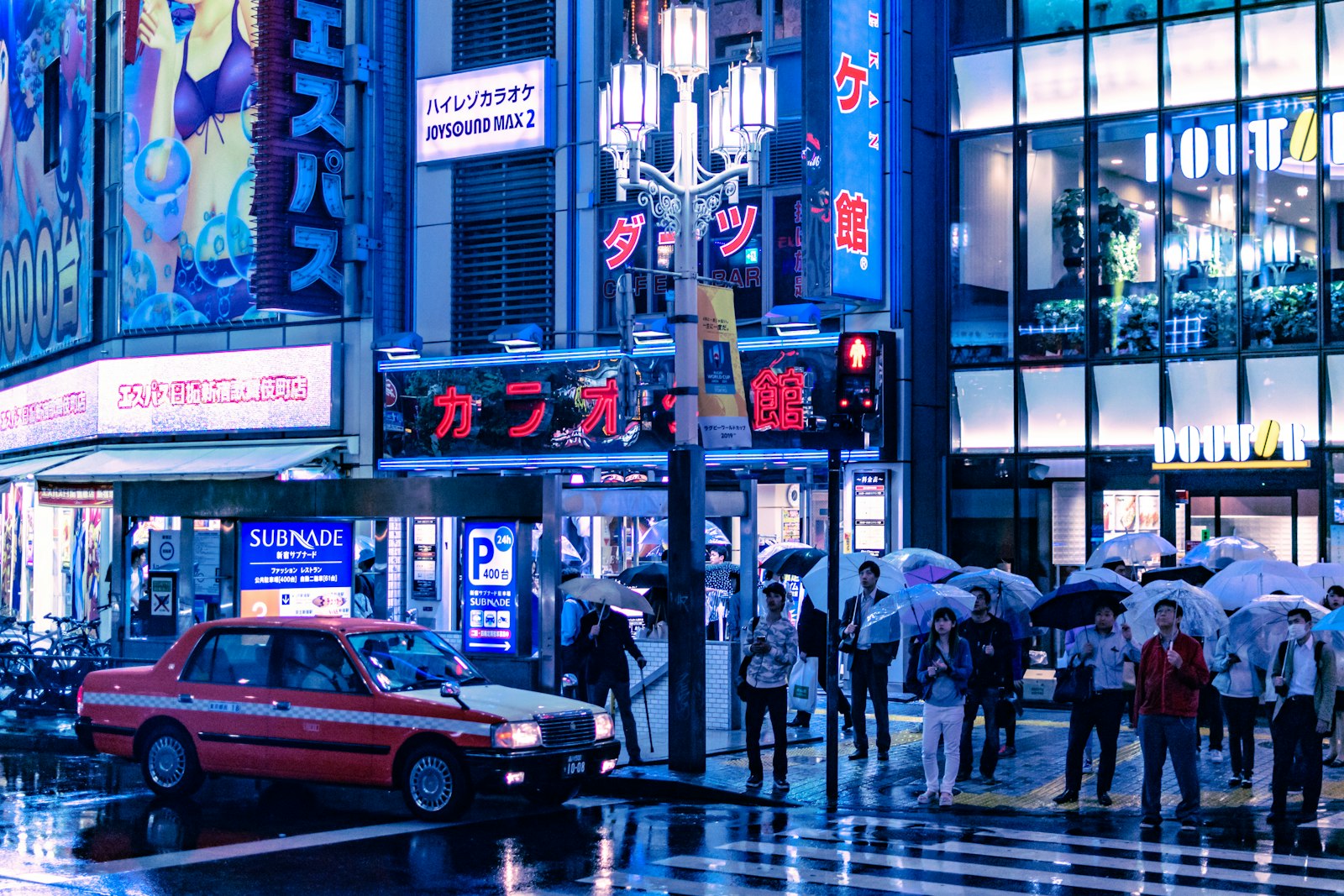
Photo by <a href="https://unsplash.com/@jasebloor?utm_source=tokyodeepnightlife&utm_medium=referral">Jase Bloor</a> on <a href="https://unsplash.com/?utm_source=tokyodeepnightlife&utm_medium=referral">Unsplash</a>
Tokyo’s trains are famous for running to the second, which makes it easy to forget that they also stop. Somewhere between 11:30pm and 12:30am the last departures pull out, and the city switches to a completely different set of rules until the first trains around 5am. If you’re wondering how to get around Tokyo at night, the honest answer is: trains until around midnight, taxis after that, and a plan for which one you’re using before your second drink.
This guide walks through every realistic option for a night out in 2026 — the train cutoff and its traps, what a taxi actually costs after the April 2026 fare change, which apps work with a foreign phone, and why the late-night buses many older guides still recommend have disappeared. At the end there’s a simple hour-by-hour plan you can follow.
Contents
- The Short Answer: How to Get Around Tokyo at Night
- Trains: Know Your Real Last Train
- Taxis: How to Get Around Tokyo at Night After the Trains Stop
- What Happened to Tokyo’s Late-Night Buses?
- Walking: Underrated After Dark
- Missed the Last Train? Your Options
- A Simple Plan for a Night Out in Tokyo
- What do you do in Tokyo After 10?Join our Tokyo Nightlife Private Tour
- Let a Local Handle the Logistics
- About the Author
The Short Answer: How to Get Around Tokyo at Night
Here’s the whole picture in one place:
- Before midnight: Trains and subways. Cheap, fast and safe, and they run later than most visitors expect in the city center.
- Midnight to 5am: Taxi, booked through an app or hailed on the street. This is the only door-to-door option that runs all night.
- Short distances at any hour: Walk. Central Tokyo is compact and among the safest big cities to walk after dark.
- Can’t afford the taxi home: Stay out until the first train, either somewhere open all night or in a capsule hotel.
What’s no longer on the list: the city’s late-night buses. More on that below, because it’s the single biggest change from guides written a few years ago.
Trains: Know Your Real Last Train
Most JR, Tokyo Metro and Toei subway lines in central Tokyo send out their final departures somewhere between roughly 11:30pm and 12:30am. That window is wide on purpose — the exact time depends on the line, the station and the direction you’re traveling, and it can differ between weekdays and weekends.
There are two traps that catch visitors every night:
- **The last train from your station isn’t the last train on the line.** The timetable at the terminal might say 12:14am, but the train passes the station you’re standing at much earlier — or later. Always check the departure from the station you’re actually at.
- The last train may not reach your stop. Late services often terminate short of the end of the line, and some branch lines stop running much earlier than the main line they connect to. If you’re staying out in the suburbs, a “last train” can leave you two stations from home.
The fix takes about 30 seconds: put your hotel into Google Maps or a Japanese transit app before you head out, set the departure time to around midnight, and see what comes up. We go deeper on this — including last-train times by nightlife district — in our Tokyo last train survival guide.
The First Train
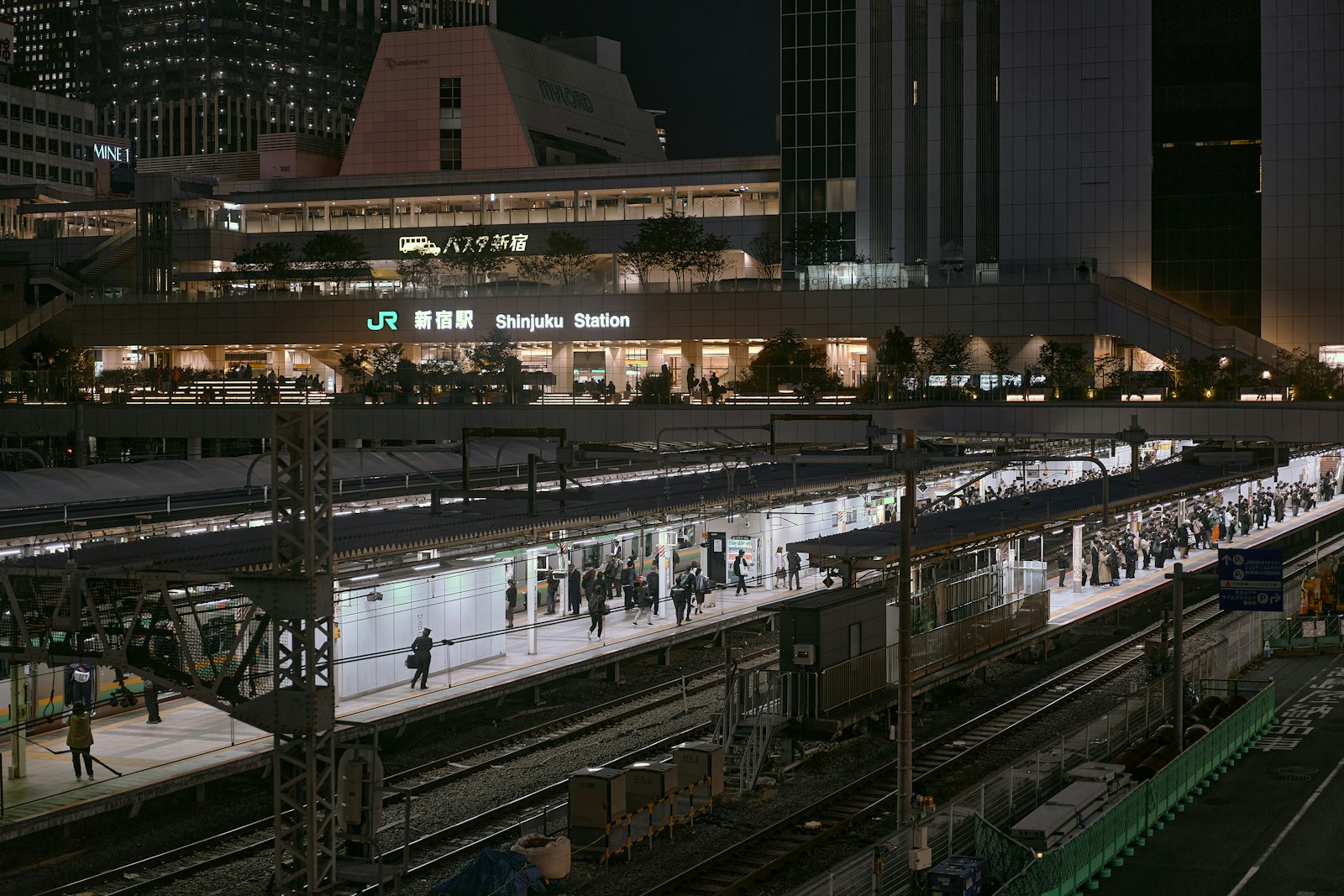
On the other end of the night, the first trains run from around 5am on most central lines. That four-to-five-hour gap is the reason Tokyo’s “go home or stay out until dawn” decision exists at all. If you’re aiming for the first train, head to the station a few minutes before 5am — the platforms fill up fast with people who made the same choice.
Taxis: How to Get Around Tokyo at Night After the Trains Stop
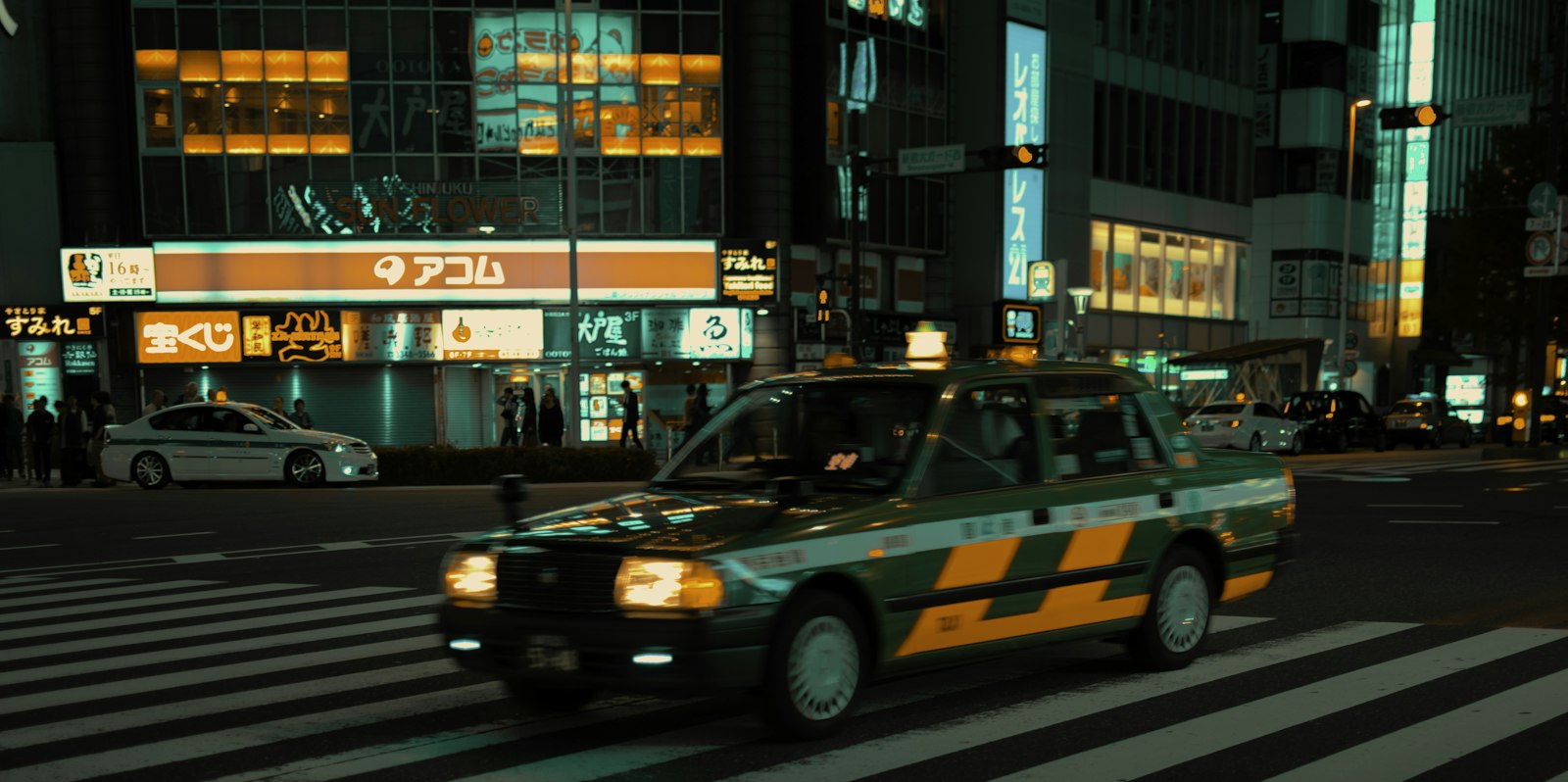
Once the trains stop, taxis are how most people get around Tokyo at night. They’re clean, the drivers are licensed professionals, and meter fares are regulated, so you won’t be quoted a “tourist price” on a metered ride.
What a Taxi Costs After Midnight
Tokyo’s 23 wards revised taxi fares on April 20, 2026. The flag fare is still ¥500, but it now covers only the first 1.0 km, and the meter adds ¥100 every 232 meters after that — shorter distances than before, so the same ride costs more. Between 10pm and 5am, a 20% late-night surcharge applies.
Working from those rates, meter-only night fares come out at roughly:
| Distance | Approx. night fare (10pm–5am) |
|---|---|
| 3 km | ~¥1,700 |
| 5 km | ~¥2,700 |
| 10 km | ~¥5,300 |
| 20 km | ~¥10,500 |
These are estimates for a smoothly moving car. The meter also ticks up while you’re stuck in slow traffic, and expressway tolls are added on top if the driver takes the highway (they’ll usually ask first). App bookings can add a dispatch fee.
In practice, that means hopping between neighboring nightlife districts — Shibuya to Shinjuku, Shibuya to Roppongi — is cheap enough to split between two or three people without thinking twice. A ride out to the suburbs or to an airport after midnight is a different story, and that’s when the “wait for the first train” math starts to make sense.
How to Hail a Taxi on the Street
Look at the small display in the windshield, on the passenger side:
- 空車 (kūsha), shown in red — Vacant. Raise your hand and it will pull over.
- 賃走 (chinsō) — Occupied.
- 迎車 — On its way to pick someone up who booked by app or phone.
A few things surprise first-timers. The rear door on the left opens and closes automatically, so step back and let the driver do it. Sit in the back. Tipping isn’t expected. Most taxis now take credit cards and IC cards like Suica, but it’s worth asking before you set off if you don’t have cash.
Taxi ranks outside major stations are the easiest place to get a cab on a busy night. Around last-train time on Fridays, though, the lines at Shibuya and Shinjuku stations can get long — which is exactly when an app helps.
Taxi Apps That Work for Visitors
Three apps cover most of what you need:
- GO — The most widely used taxi app in Japan. It has an English interface and accepts overseas phone numbers and credit cards, so you can set it up before you fly.
- Uber — Your existing account works. In Tokyo it dispatches licensed taxis (plus premium Uber Black cars) rather than private drivers, so think of it as a taxi app with a familiar interface.
- S.RIDE — Strong in central Tokyo, partnered with large taxi fleets.
Apps solve the two biggest headaches of late-night taxis in Tokyo: explaining your destination to a driver, and paying. Type your hotel in, see the car on the map, and pay through the app. Our tip: open the app before you leave the bar. Around midnight on a Friday, a car can take a while to show up.
What Happened to Tokyo’s Late-Night Buses?
If you’ve read older guides on how to get around Tokyo at night, you’ve probably seen “late-night buses” listed as the budget alternative to taxis. That advice is now out of date.
Toei Bus, run by the Tokyo Metropolitan Government, suspended its remaining late-night routes after service on March 31, 2026, citing a serious shortage of drivers. These were the buses that departed after 11pm at double the normal fare, and they had been running since the late 1980s. The Shibuya–Roppongi–Shimbashi late-night route that many foreign visitors used had already been suspended in 2022.
Private operators have pulled back too. Seibu Bus ended its late-night express from Ikebukuro on July 31, 2024, and Tokyu Bus has abolished its “Midnight Arrow” express routes out of Shibuya.
For a visitor, the takeaway is simple: don’t plan your night around a bus. If you see a late bus recommended somewhere, check the operator’s own site before you rely on it. Long-distance overnight buses from Shinjuku and other hubs still run, but they’re intercity coaches, not a way home across town.
Looking for Adult Entertainment Services in Tokyo? Download this
I’ve spent over a decade exploring and studying Japan’s adult entertainment scene firsthand. If you’d like detailed insider information—including how to choose the right shop, what services are available, and tips for avoiding common mistakes—check out our exclusive E-book.
Walking: Underrated After Dark
Tokyo’s nightlife districts are closer together than they look on a subway map. Shibuya to Harajuku, Shinjuku to Shin-Okubo, Roppongi to Azabu-Juban — these are walks of roughly 10 to 25 minutes, and the streets stay lit and busy late into the night.
Walking at 1am is also one of the best parts of a Tokyo night. Convenience stores glow on every corner, the ramen shops are still full, and the city feels very different from the daytime crowds. Tokyo is safe by global standards, but the usual big-city rules still apply in entertainment districts — ignore touts who approach you on the street, and don’t follow anyone to a bar you didn’t choose. Our Tokyo nightlife safety tips cover what to watch for.
A note on bicycles and the rental e-scooters you’ll see parked around the city: riding either after drinking is illegal in Japan. If you’ve been out drinking, walk or take a taxi.
Missed the Last Train? Your Options
It happens to everyone at least once. If the taxi fare home is more than you want to pay, you have three realistic ways to wait for the 5am trains:
- Keep the night going. Plenty of bars, clubs and izakaya in the big districts stay open past the last train, and that’s no accident — they’re built around the crowd that’s waiting for the first one.
- Sit it out somewhere comfortable. Karaoke boxes offer late-night packages, which turns a private room into a warm place to rest. If you’ve never tried it, our guide to the karaoke experience in Tokyo explains how booking and pricing work.
- Eat. A bowl of ramen at 3am is a Tokyo rite of passage, and several shops stay open until dawn. See our list of late-night ramen spots in Tokyo.
Capsule hotels and internet cafes are the other fallback. If you plan to use an internet cafe in Tokyo, bring your passport — Tokyo requires these businesses to verify ID.
A Simple Plan for a Night Out in Tokyo
Putting it together, here’s how to get around Tokyo at night without stress:
- Before you go out: Install GO or Uber and add a payment card. Check your last train home from the area you’re heading to.
- Around 11pm: Decide. Either you’re catching a train, or you’re committing to a taxi or a late night.
- Last-train window (11:30pm–12:30am): If you’re taking the train, be on the platform early — the last trains are crowded.
- After midnight: Take a taxi, splitting the fare if you’re in a group. Short hops between districts are affordable.
- Staying out till dawn: Pace yourself, grab a late meal, and be at the station a little before 5am.
What do you do in Tokyo After 10?
Join our Tokyo Nightlife Private Tour
You deserve better than overpriced bars and missed opportunities. We’re here for you.
Let a Local Handle the Logistics
The hardest part of a Tokyo night isn’t getting home — it’s knowing which alley to turn down before you get there, which bar welcomes foreigners, and when it’s time to move on. If you’d rather spend your night enjoying the city than checking timetables, our Tokyo After 10 nightlife private tour pairs you with a local guide who plans the route between bars and makes sure you know exactly how you’re getting back to your hotel.
For general travel information about getting around Japan, the Japan National Tourism Organization is a good official starting point, and Toei Transportation publishes current subway and bus information in English.









