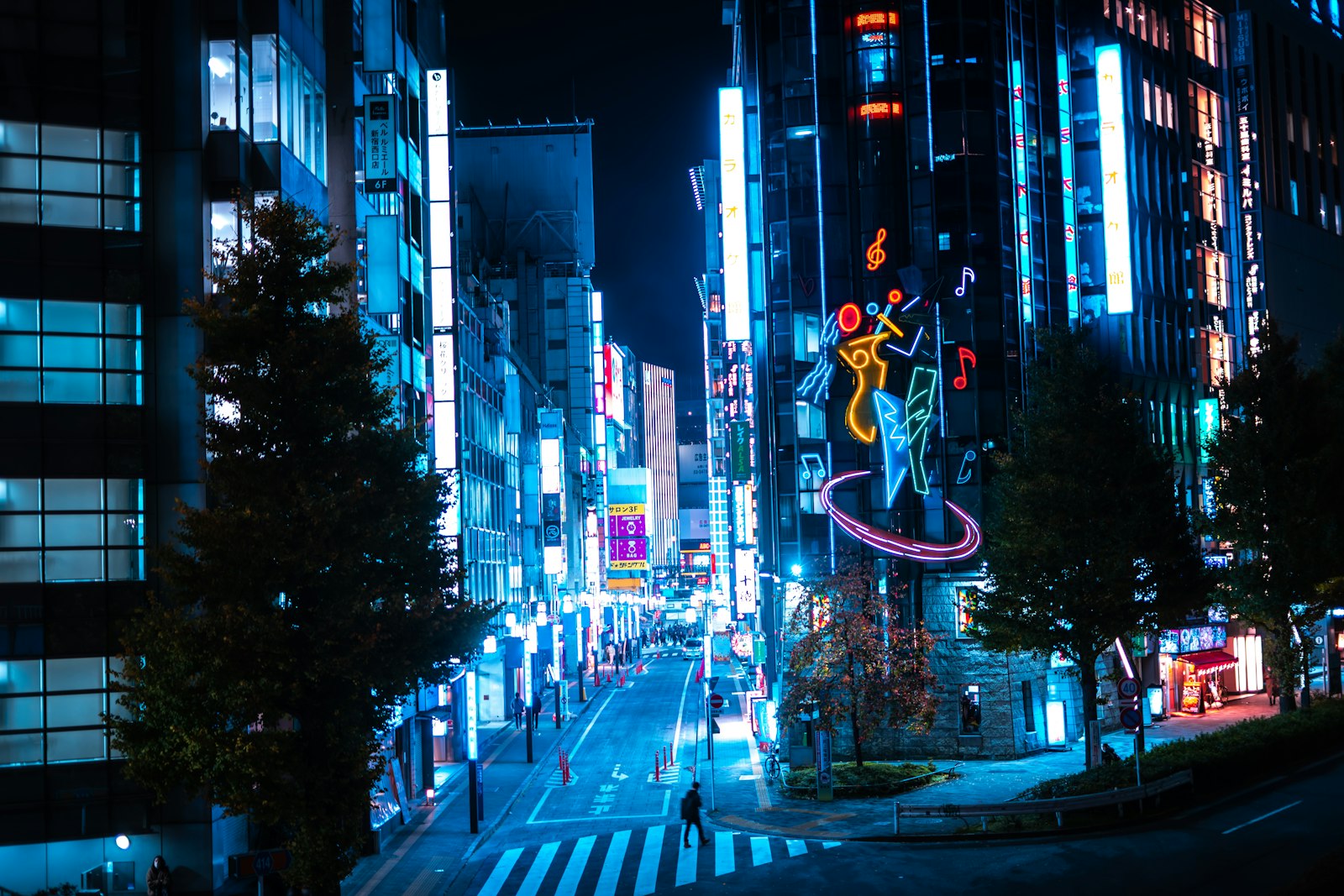
Photo by <a href="https://unsplash.com/@nicolabaka?utm_source=tokyodeepnightlife&utm_medium=referral">Nicolas Caetano</a> on <a href="https://unsplash.com/?utm_source=tokyodeepnightlife&utm_medium=referral">Unsplash</a>
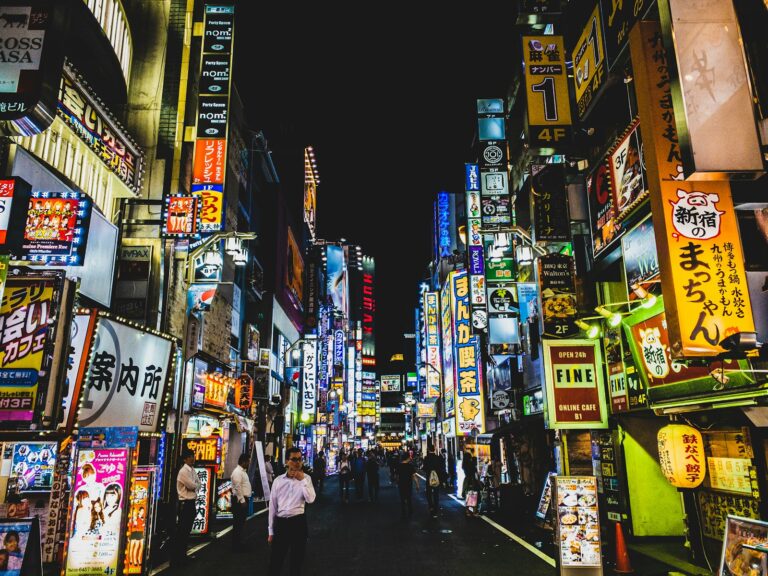
The first thing that surprises most women about a host club is how ordinary the building looks. You picture something cinematic — velvet ropes, a doorman. What you get is a scuffed elevator in a Kabukicho tenant building, seventh floor, wedged between a ramen shop and a dental clinic.
Then the doors open, a line of men in tailored suits bows in unison, and the ordinariness ends abruptly. If you’ve been searching for the host club Tokyo experience foreigner visitors actually get — as opposed to what the anime version promises — this is the honest version, including the parts that are less flattering. What follows is a reconstruction of that night, hour by hour: what happens when you walk in, what the bill really looks like, and where the traps are.
One thing worth knowing before you read further: the rules changed in 2025. Japan’s National Diet passed a revision to the Entertainment Business Act on May 20, 2025, and the key provisions came into force at the end of June that year. It is now illegal for a host to weaponize a customer’s romantic feelings to extract spending. That single change makes a first visit meaningfully safer than it was three years ago, and it reshapes almost everything below.
Contents
- What a Host Club Actually Is (and What It Isn’t)
- Can Foreigners Go? Yes — With Two Real Caveats
- The Night, Hour by Hour: The Host Club Tokyo Experience Foreigner Visitors Get
- What the 2025 Law Changed — and Why It Matters to You
- The Real Risk Isn’t the Club. It’s the Sidewalk.
- Etiquette: Nine Things Worth Knowing
- Should You Actually Go?
- Frequently Asked Questions
- What do you do in Tokyo After 10?Join our Tokyo Nightlife Private Tour
- Skip the Guesswork on Your First Night Out
- About the Author
What a Host Club Actually Is (and What It Isn’t)
A host club is a licensed drinking establishment where male staff — hosts — sit with customers, pour drinks, and provide conversation and attention. The customer base is overwhelmingly female. The format emerged in Tokyo in the mid-1960s and migrated to Shinjuku’s Kabukicho district over the following decades, which is why Kabukicho remains the dense center of the industry today.
Here is the part that trips up most first-timers: you are not buying romance. You are buying performance. A skilled host is doing what a skilled bartender, therapist, and improv actor do, simultaneously, for money. The warmth is real in the way an excellent waiter’s warmth is real — genuinely felt in the moment, professionally bounded outside it.
It is also not a sex industry venue. Hosts do not go home with customers as part of the service, and reputable clubs are strict about this. If you want the broader map of where host clubs sit relative to everything else in Shinjuku after dark, our Shinjuku nightlife guide lays out the categories.
The mirror image of a host club — female staff, male customers — is a kyabakura or hostess club. The economics and etiquette rhyme closely, and if you’ve read about one you’ll recognize the other. We break down that side in our guide to the kyabakura experience for foreigners.
Can Foreigners Go? Yes — With Two Real Caveats
Foreigners can and do visit host clubs. There’s no members-only wall, no requirement for a Japanese introduction. Show up with ID, be over 20, and you can walk in.
The two caveats are honest ones:
Language. The overwhelming majority of hosts speak little to no English. A handful of clubs employ English-capable staff, and translation apps genuinely work for the conversational register involved — but if you’re expecting effortless banter, calibrate. Some clubs will turn away groups with zero Japanese simply because they know the experience will be poor and the review worse.
Reservations. Walk-ins get turned away regularly, especially in groups. Booking ahead is the difference between a smooth night and standing on a Kabukicho sidewalk at 9pm renegotiating your plans.
A practical middle path exists: several operators now run explicitly foreigner-facing programs. The Smappa! Group, which maintains an English-language booking desk, advertises a guided 90-minute host club experience at ¥30,000 with all-you-can-drink, and points international guests to Club Cure Tokyo (2-20-9 Kabukicho, Shinjuku-ku, 7F), noting one English-fluent host on staff. That’s roughly ten times a bare-bones first-visit rate — you’re paying for interpretation, introduction, and the guarantee that you won’t be quietly overcharged.
The Night, Hour by Hour: The Host Club Tokyo Experience Foreigner Visitors Get
8:50 PM — Arrival and Registration
You give your name at the door. Someone takes your ID — passport or residence card, and they will actually look at it, because the industry association raised and now enforces a firm age-20 minimum. Coats go somewhere. You’re walked to a booth: low velvet seating, a mirrored wall, the lighting turned down two stops from comfortable.
Nobody sits with you yet. A staffer takes your drink order — for a first-visit plan, that’s usually from a fixed all-you-can-drink list of highballs, shochu, oolong tea, and something fizzy and sweet.
9:05 PM — The Rotation
This is the mechanic that defines the whole evening. Rather than being assigned one host, you get a rotation: a sequence of hosts, each sitting with you for roughly ten minutes, each performing a compressed introduction. Four is typical. Some clubs hand you an iPad or a physical catalog of headshots first so you can flag anyone who looks interesting.
Ten minutes is a strange unit of time. It’s long enough to establish that someone is quick, or kind, or trying too hard, and short enough that the next arrival always feels like a reset. By the third host you notice the structure of it — the opening question about where you’re from, the pivot to something you said, the practiced laugh — and once you see the scaffolding, you can’t unsee it.
That’s not a complaint. The craft is the product.

9:50 PM — Shimei
At the end of the rotation, you’re asked to choose. This is shimei — the nomination — and it’s the hinge of the entire business model.
Choosing a host means he becomes yours at that club. He gets a commission on what you spend, his ranking board position depends on customers like you, and he’ll typically hand over a LINE or Instagram contact so you can tell him when you’re coming next. At most clubs, the choice is effectively permanent within that venue — you don’t get to switch to his colleague on your next visit without significant awkwardness.
You can also decline. “Mada kimete imasen” — “I haven’t decided yet” — is a complete, acceptable sentence, and no reputable club will push past it. If you’re a tourist on a one-night visit, declining costs you nothing.
10:30 PM — The Bill
The moment everyone actually wants numbers for. Here’s the honest structure:
**First visit (shokai) is deliberately, almost suspiciously cheap. Published rates and coupons commonly land anywhere from ¥1,000 to ¥5,000** for 60–90 minutes including drinks. This is a loss leader, and everyone knows it. The club is buying your second visit.
Second visit onward is where the real pricing lives. A representative breakdown from one first-hand account: ¥8,000 table charge + ¥3,000 set charge + ¥3,000 shimei fee, before a single drink is added. Tokyo Weekender’s guide puts entry at ethical establishments from around ¥13,000 for two hours. Layer on a service charge commonly quoted at 30–40%, and a modest second visit realistically clears ¥20,000.
Bottles are the open-ended variable. Whisky and shochu start in the low thousands of yen. Champagne runs from roughly ¥30,000 into six figures, and the theatrical “champagne call” — lights, chanting, the whole club turning toward your table — exists precisely to make that purchase feel like an event rather than a transaction.
None of this is hidden if you ask. Ask.
What the 2025 Law Changed — and Why It Matters to You
For years the defining scandal of this industry was urikake: a tab system where hosts fronted the cost of drinks, letting customers run debts that reached ¥3,000,000 to ¥10,000,000 and beyond. Some of those women were then pushed toward sex work to pay it down. Tokyo police reported finding regulatory violations in the large majority of Kabukicho clubs they inspected.
The response came in layers. Kabukicho’s largest club association agreed to voluntarily abandon urikake and raised the guest age floor to 20. Then the Diet made it law. The revised Entertainment Business Act, reported on by The Japan Times as it moved through parliament, now prohibits:
- Romance-based coercion — a host cannot tell you the relationship is over, or that he’ll be demoted, unless you spend more
- Charging for items you didn’t order — surprise “bottle fees” and “VIP charges” are out
- Scout-back fees — venues can no longer pay finders’ commissions to street scouts who recruit women
Violations draw warnings and business suspension first, license revocation and arrest for repeat or criminal conduct.
Two caveats, because honesty matters more than reassurance here. First, enforcement is young and the pipeline it targets has not fully closed. Second, none of this protects you from your own decisions inside a legal, compliant club — a ¥100,000 champagne bought willingly is nobody’s crime.
But for a tourist making a single shokai visit, the practical risk profile in 2026 is genuinely better than it was in 2023.
Looking for Adult Entertainment Services in Tokyo? Download this
I’ve spent over a decade exploring and studying Japan’s adult entertainment scene firsthand. If you’d like detailed insider information—including how to choose the right shop, what services are available, and tips for avoiding common mistakes—check out our exclusive E-book.
The Real Risk Isn’t the Club. It’s the Sidewalk.
Every experienced source converges on the same warning, and it has nothing to do with the clubs themselves: do not follow a street tout.
Kabukicho’s touts are persuasive, mobile, and increasingly multilingual. The venues that rely on them are the ones that can’t fill seats legitimately, and they are disproportionately the source of pricing disputes and aggressive bill escalation. Established clubs affiliated with the major groups don’t need to hunt on the street.
The fix is trivially simple: know the club’s name before you leave your hotel, navigate there yourself with Google Maps, and walk past anyone who approaches you. A polite “daijoubu desu” and continued walking ends the interaction.
If you want the full taxonomy of what goes wrong in this neighborhood and how to spot it early, we’ve documented it in detail in our guide to Kabukicho scams and how tourists get ripped off.

Etiquette: Nine Things Worth Knowing
- Bring photo ID. Passport for tourists. Non-negotiable, and clubs enforce it.
- Book ahead. Via Instagram, the club’s site, or a booking desk. Walk-ins with groups get refused.
- Say “shokai de onegai shimasu” — “the first-visit plan, please” — at the door, so the rate is set before you sit.
- Confirm payment methods. Ask about credit cards before ordering anything beyond the set plan.
- You don’t have to drink. “Osake nomemasen” — “I can’t drink alcohol” — is respected. Oolong tea is standard.
- Don’t touch the hosts, and don’t expect them to touch you. It’s a conversation venue.
- Ask the price before you order. Every time. It’s normal and nobody is offended.
- Photos are usually restricted. Ask first; many clubs prohibit them outright.
- Plan your exit. Know the last train time or have the GO taxi app installed. Kabukicho at 1am is safe but disorienting.
Should You Actually Go?
Depends what you want from it.
If you want a genuinely unusual window into how a Japanese service industry constructs intimacy as a product — go. A first-visit plan at ¥1,000–¥5,000 is one of the more interesting things you can buy for that money in Tokyo, and the craft on display is real. Most women who’ve done it describe feeling entirely safe and entirely aware that what they were experiencing was, in the phrase one writer used, an illusion of intimacy.
If you’re hoping for a connection — don’t. The economics are structured against you, and the 2025 law exists specifically because a lot of people learned that the expensive way.
If you’re going for the atmosphere rather than the interaction, be aware that host clubs are actually one of the less accessible options in Shinjuku for a non-Japanese speaker. A hostess club, a Golden Gai bar, or an izakaya crawl will all give you more conversation per yen if language is your bottleneck.
Frequently Asked Questions
Can a woman go to a host club alone?
Yes, and plenty do. A solo shokai visit at a licensed, reputable club is a normal transaction — you’ll be registered, seated, and rotated through hosts exactly like a group would be. The staff are, if anything, more attentive to a solo guest because there’s no one else at the table to carry the conversation. The caution isn’t about being alone inside the club; it’s about the walk there. Book ahead, go directly, and don’t get intercepted on the street.
Do I need to speak Japanese?
Not strictly, but it changes the experience substantially. Translation apps handle the conversational register well enough — hosts are used to them and many will type back. What you lose is speed and nuance, which is most of what you’re paying for. If your Japanese is minimal, either book through an English-language desk or accept that the host club Tokyo experience foreigner visitors get without language will be more spectacle than conversation.
What should I wear?
Smart casual clears the bar at almost every club. There’s no formal dress code for customers, and you’ll see everything from office wear to jeans. Avoid beachwear and flip-flops. You’re in a room full of men in ¥100,000 suits, so the room does skew dressed-up — but nobody is going to turn you away for a nice top and clean sneakers.
Can men visit host clubs?
Some clubs accept male customers, often as part of a mixed group, and a few explicitly welcome them. It’s not the default and policies vary widely by venue, so ask when booking rather than assuming. If the goal is the general Kabukicho nightlife experience rather than host clubs specifically, there are far more options.
Is a host club the same as a hostess club?
No — they’re mirror images. Host clubs employ male staff for a predominantly female clientele; hostess clubs and kyabakura employ female staff for a predominantly male one. The pricing architecture is similar (set charge, nomination fee, bottle service), but the atmosphere, marketing, and customer dynamics differ considerably. We compare the categories in detail in our girls bar vs. hostess club breakdown.
How late do host clubs stay open?
Most operate through the late evening and into the small hours, with the busiest window falling well after midnight — which is precisely when Tokyo’s train network stops running. Decide before you sit down whether you’re catching the last train or taking a taxi, because “just one more hour” is the single most expensive sentence in Kabukicho.
Is it safe in 2026?
Meaningfully safer than it was in 2023, for the structural reasons above: urikake tabs abandoned by the main Kabukicho association, romance-based coercion outlawed, surprise charges outlawed, scout-back fees outlawed. That said, enforcement is still young, and no law protects you from voluntarily ordering a ¥100,000 bottle. Set a number before you walk in.
What do you do in Tokyo After 10?
Join our Tokyo Nightlife Private Tour
You deserve better than overpriced bars and missed opportunities. We’re here for you.
Skip the Guesswork on Your First Night Out
Here’s the thing about Kabukicho: the difference between an excellent night and an expensive one is almost entirely information. Which building. Which club. What to say at the door. When to say no.
That’s a lot to assemble from search results at 8pm on your first evening in Tokyo. If you’d rather have someone who works this neighborhood handle the reservations, the translation, and the judgment calls, Kokyo Tours runs a Tokyo After 10 nightlife private tour with English-speaking local guides who know which doors are worth walking through — and which ones to keep walking past.
Either way: go in informed, set your budget before you sit down, and enjoy it for exactly what it is.
Sources and further reading: The Japan Times on the host club bill · Tokyo Weekender’s guide to Tokyo host clubs