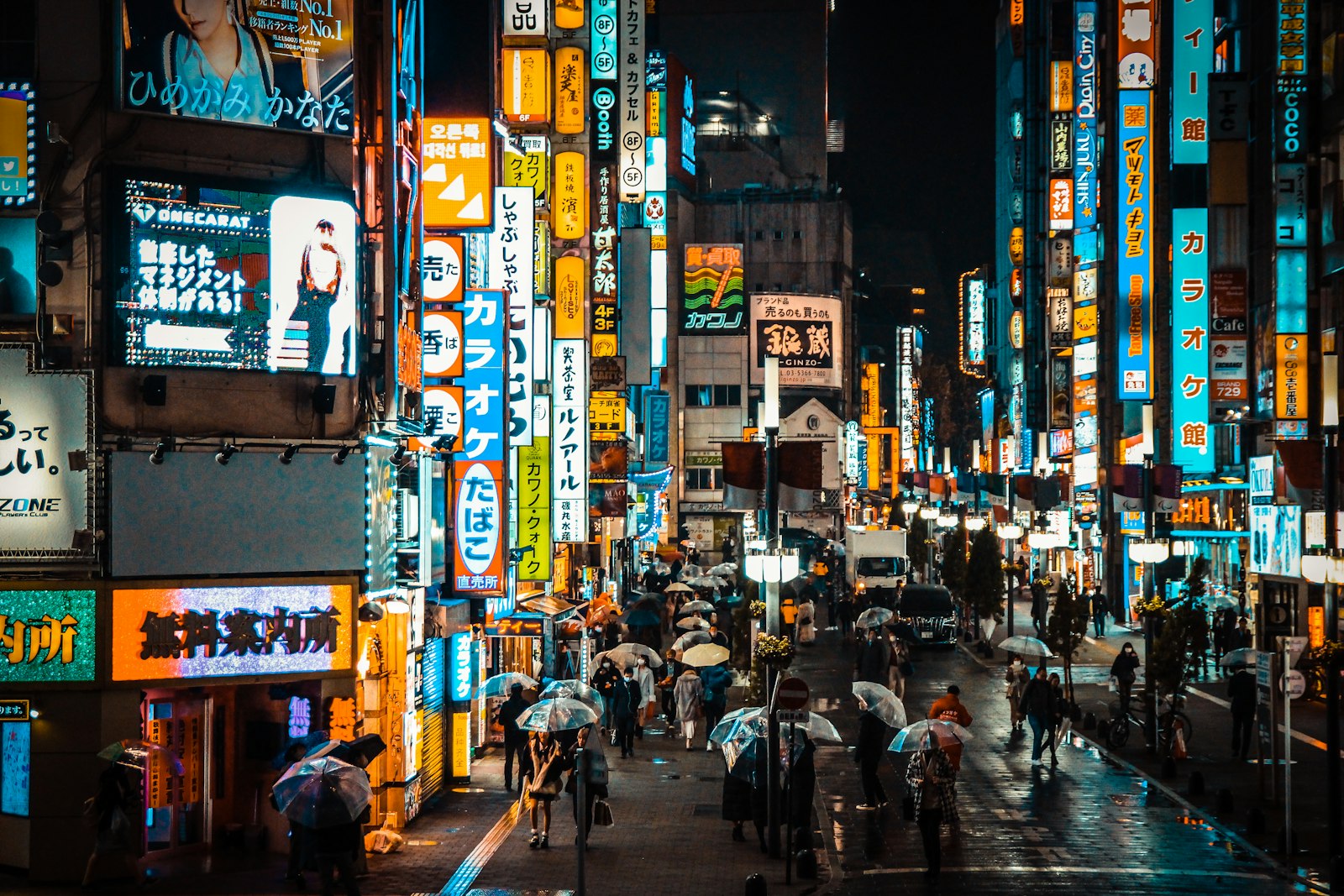
Photo by <a href="https://unsplash.com/@peemaglama?utm_source=tokyodeepnightlife&utm_medium=referral">Pema G. Lama</a> on <a href="https://unsplash.com/?utm_source=tokyodeepnightlife&utm_medium=referral">Unsplash</a>
If you want to know how to avoid scams in Kabukicho, the honest answer is that it comes down to about ninety seconds of your evening — the ninety seconds between a stranger saying “hey, my friend, where you from?” and you deciding what to do with your feet.
Almost every serious rip-off in Tokyo’s biggest nightlife district starts the same way: someone approaches you on the street, and you follow them. Not into an alley at 4am. Usually into a normal-looking elevator in a normal-looking building on a brightly lit street, surrounded by other tourists doing the same thing.
The numbers back this up. Between January and June 2026, Tokyo police logged 91 reports from people who said they followed suspected touts in Kabukicho and were then charged wildly inflated bills. The reported losses came to roughly ¥99 million — about US$670,000 in six months, from one neighbourhood, from people who mostly just wanted a drink.
This guide is not a list of scary stories. It’s the practical layer: what the approach actually sounds like, the exact words that end it, how to vet a bar in thirty seconds at the door, and what to do if you’re already sitting down and the number on the bill is wrong.
Contents
- The 30-Second Version: How to Avoid Scams in Kabukicho
- What Kabukicho Scams Actually Look Like in 2026
- Why the Touts Target You Specifically
- The Tout Playbook: What the Opening Lines Really Mean
- How to Say No: Scripts That Actually Work
- The Door Test: 5 Checks Before You Walk In
- Where the Risk Concentrates
- If You’re Already Inside and the Bill Is Wrong
- What Normal Actually Costs
- 8 Habits That Make You a Hard Target
- How to Avoid Scams in Kabukicho: FAQ
- What do you do in Tokyo After 10?Join our Tokyo Nightlife Private Tour
- Skip the Guesswork: See Kabukicho With Someone Who Lives Here
- About the Author
The 30-Second Version: How to Avoid Scams in Kabukicho
If you read nothing else, read this:
- Never follow anyone who approaches you on the street. Not for a bar, not for a club, not for a “special show.” If you only remember one thing about how to avoid scams in Kabukicho, this is it — the rule prevents the overwhelming majority of them.
- Never let your card leave your sight. Not “just to run it at the counter.”
- See prices in writing before you sit down. Photograph the price sheet.
- Watch your drink get poured. Don’t accept anything that arrives from off-camera.
- If the bill is wrong, say “I’m calling the police” and mean it. Dial 110.
Everything below is the reasoning, the scripts, and the edge cases.
What Kabukicho Scams Actually Look Like in 2026
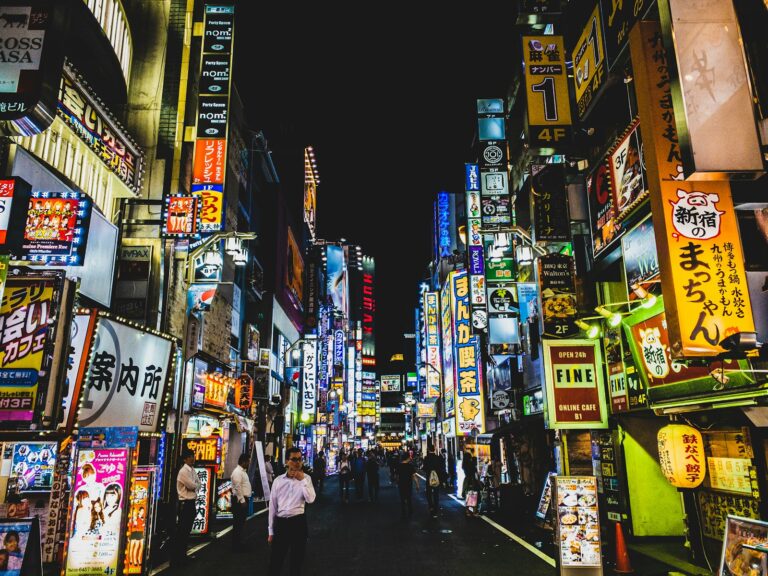
Kabukicho is roughly a quarter of a square kilometre of bars, clubs, restaurants, karaoke boxes, and cinemas, sitting just northeast of Shinjuku Station. It is heavily policed, extremely well lit, and busy until sunrise. Violent crime against tourists is genuinely rare here.
Financial crime is not. The UK’s Foreign, Commonwealth & Development Office travel advice for Japan states plainly that Japanese police have identified Kabukicho, Roppongi, Shibuya and Ikebukuro as high-risk zones, and that “most British victims have reported being targeted in Kabukicho.” When a national government names a specific four-block neighbourhood in its official advisory, that’s worth taking seriously — not as a reason to stay away, but as a reason to know the playbook.
Bottakuri: the inflated-bill trap
Bottakuri (ぼったくり) means gross overcharging, and it’s the backbone of the local scam economy. You’re told the deal is ¥3,000 for all-you-can-drink. Ninety minutes later the bill is ¥80,000, and it’s itemised with things you never agreed to: a “service charge,” a per-person seating fee, drinks for the staff, a “nomination” fee, a late-night surcharge.
The bill isn’t a mistake. It’s the product. Everything before it — the friendly walk over, the cheap quoted price, the small talk — is customer acquisition.
Drink spiking and card fraud
This is the version that has escalated most sharply. The FCDO notes “increased reports of drink spiking and credit card fraud,” with victims “waking up with no memory of what happened and discovering large amounts of money billed to their credit card.”
The mechanism is simple and it’s why rule #2 exists: if you’re not fully conscious, nobody needs to argue with you about the bill. Your card just gets run, repeatedly.
The “I’m not a tout, I’m just friendly” approach
The most effective operators don’t look like touts. They look like a guy who wants to practise English, a woman handing out flyers who then walks you somewhere, a “student” doing a survey, or someone who claims to work for a chain restaurant you’ve actually heard of. The pitch is engineered so that following them feels like your idea.
For a fuller breakdown of the individual schemes — including impersonation of chain-restaurant staff and the “friendly local” setup — our companion piece on how tourists get ripped off in Kabukicho goes venue by venue.
Why the Touts Target You Specifically
It isn’t personal, and it isn’t random. Touting for these kinds of businesses has been illegal in Japan since 2005, and Shinjuku Ward added its own street-solicitation ordinance in September 2013 — which, notably, arrived without any real penalty attached, so authorities could only issue “guidance” to violators. That gap is a large part of why the street never emptied out.
Enforcement has genuinely sharpened recently. In July 2026, Tokyo police arrested a man in Kabukicho under the metropolitan anti-nuisance ordinance for persistent touting, and reporting through 2026 has described near-nightly sweeps in the district.
But here’s the practical takeaway for you: a crackdown doesn’t change what happens at 11pm on a Friday when someone steps into your path. Enforcement is a lagging indicator. Your feet are a leading one.
You get selected because you’re visibly a visitor, because you’re moving slowly and looking around, because you’re in a group of two or three, and — above all — because you make eye contact and then hesitate. Hesitation is the tell. It signals that the conversation is negotiable.
The Tout Playbook: What the Opening Lines Really Mean
You’ll hear some version of these within minutes of entering the district. Recognising them as a script, rather than as a person talking to you, makes them dramatically easier to walk past.
- “Where are you from? Oh, [country]! I love [country].” — Establishing rapport so that refusing feels rude. That’s the entire function.
- “Just two minutes, my bar is right there.” — Distance is minimised to make the commitment feel small. It’s never two minutes.
- “¥3,000, all you can drink, no other charge, I promise.” — A verbal promise from a stranger is worth exactly nothing. Legitimate venues put prices on a board.
- “Girls bar? Very nice girls, English OK.” — Sometimes real, often not. If you’re curious about this category, read up on how girls bar pricing actually works before you’re standing in a doorway deciding.
- “You want massage? Show? Something special?” — Anything advertised as “special” on a public street is a category you should decline by default.
- “Don’t be scared. I love you.” — Yes, really. This exact line was reported in a 2026 arrest case. Absurdity is a tool: it disarms you, gets you laughing, and gets you talking.
None of these people are dangerous to walk away from. The pressure is entirely social.
How to Say No: Scripts That Actually Work
The mistake most travellers make is engaging politely — stopping, smiling, explaining that they already have plans. Every second you stand still is a second the pitch continues, and touts are professionals at extending a conversation you thought you’d ended.
The three-word exit. Keep walking. Don’t break stride. Say “Kekkō desu” (結構です — “no thank you,” firm and unambiguous) or simply “No, thank you,” once, at normal volume. Do not repeat it. Do not explain. Do not apologise. Do not make eye contact after the first refusal.
Why not just ignore them? You can, and it works fine. But a single clear refusal delivered while moving tends to end things faster than silence, which some touts read as an opening.
If they walk alongside you. This is normal and it’s designed to make you feel cornered. Keep your pace, keep your direction, and don’t answer follow-up questions. If they persist for more than a block, walk toward a koban (police box) or into a convenience store. Both end the interaction instantly.
Never get aggressive. Escalating gains you nothing and can turn a nuisance into a genuine problem. Bored indifference is the correct register — not anger, not nervous laughter.
The one that catches people out: if you’re already a few drinks in, your refusal threshold drops significantly. Decide your policy before you go out, not at midnight. “I do not follow anyone, ever” is a rule you can execute while tipsy. “I’ll judge each case on its merits” is not.
The Door Test: 5 Checks Before You Walk In
Choosing venues yourself is the other half of how to avoid scams in Kabukicho. Run this at the entrance — it takes thirty seconds.
- Is there a printed price list, visible from outside, in a currency and format you understand? No board, no entry. Photograph it if there is one.
- Does the venue exist on Google Maps with real reviews and photos? Search it while standing there. Scam venues either don’t appear, have no reviews, or have a burst of suspiciously recent five-star reviews.
- Are the seat charge and service charge stated explicitly? In Japan a small cover charge is completely normal — otoshi, the compulsory small appetiser, typically runs around ¥300–¥800 per person. That’s legitimate. A “seating fee” of ¥10,000 is not.
- Did anyone on the street point you here? If yes, walk away regardless of how good the other four checks look.
- Can you see into the room, or at least see other customers arriving independently? Windowless upper-floor rooms reached by a single small elevator, entered only via touts, are the classic architecture of a bottakuri operation.
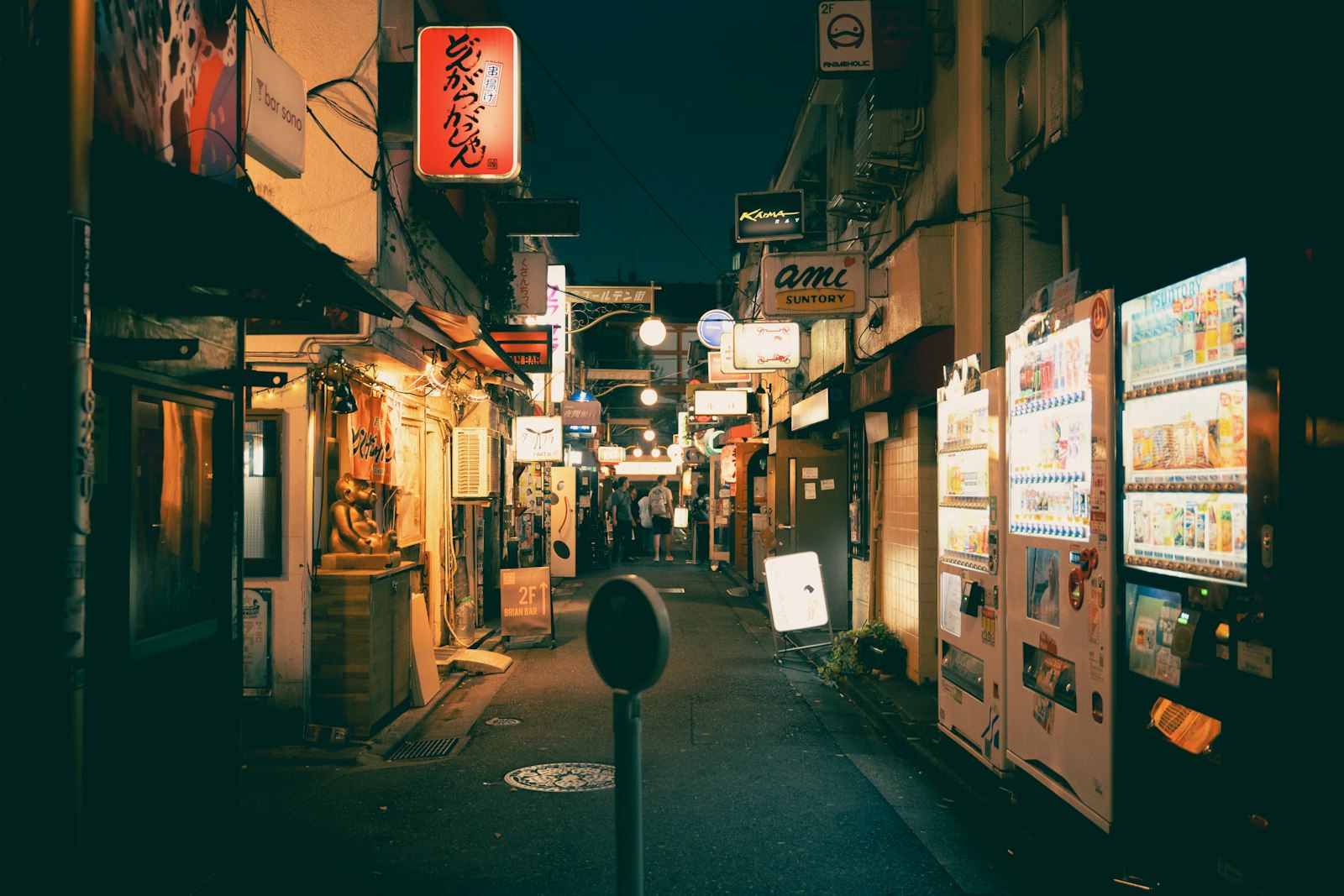
A useful mental model: legitimate bars in Kabukicho do not need to recruit you off the pavement. The good small bars in Shinjuku are usually full of regulars and are, if anything, mildly indifferent to whether you come in. That indifference is a quality signal. It’s exactly the dynamic you’ll find in places like Golden Gai’s 200-odd tiny bars, where the challenge is finding a free seat rather than fending off a sales pitch.
Looking for Adult Entertainment Services in Tokyo? Download this
I’ve spent over a decade exploring and studying Japan’s adult entertainment scene firsthand. If you’d like detailed insider information—including how to choose the right shop, what services are available, and tips for avoiding common mistakes—check out our exclusive E-book.
Where the Risk Concentrates
Part of knowing how to avoid scams in Kabukicho is knowing where you don’t need to worry. The district is not uniformly risky, and treating all of it as a danger zone will just make you miss a genuinely great night out.
Higher pressure: the main drag heading north from the Kabukicho Ichibangai gate after about 9pm; the streets radiating off the central square; anywhere with clusters of men standing still and scanning pedestrians. Pressure rises steeply between roughly 10pm and 2am.
Lower pressure: the same district between 6pm and 9pm, when it’s mostly people heading to dinner and the karaoke boxes; the cinema and hotel complex area; the ramen and izakaya blocks where Japanese office workers actually eat.
Simple scheduling fix: start early. An evening that begins at 7pm and ends at midnight passes through far less of the high-pressure window than one that starts at 11pm. You lose nothing — the food is better earlier anyway.
If you want the broader picture of which streets do what, our Kabukicho nightlife and safety guide maps the district in more detail.
If You’re Already Inside and the Bill Is Wrong
It happens. Here’s the sequence, in order.
1. Do not pay immediately. The bill’s power depends on you treating it as legitimate. State clearly, in plain English: “This is not the price I agreed to. I will not pay this.”
2. Say the word “police.” Say: “I am calling the police now.” Then actually dial 110. This is the free, 24-hour national emergency police number. A substantial number of disputes collapse the instant a phone comes out — an establishment operating this way does not want officers on site.
3. Never hand over your card. Not to “check the amount,” not to “run a partial.” Once your card is out of sight you have no control over how many times it’s charged.
4. Don’t use the ATM. If you’re walked to a cash machine, that’s a red line. Refuse, and head for the nearest koban — the small neighbourhood police boxes found throughout Shinjuku. Walking into one ends almost any pursuit.
5. Gather what you can, safely. A photo of the bill, the venue name, the building and floor, a voice memo. This matters enormously for a later card chargeback. Only do this if it doesn’t escalate the situation — your safety outranks your evidence.
6. If you feel physically threatened, pay and leave. Money is recoverable. Argue on the street, not in a locked room. Then go straight to a koban and report it, and call your card issuer to dispute the charge and freeze the card.
7. Report it even if you got out cheap. Those 91 reports in the first half of 2026 are why enforcement stepped up. Reports are the mechanism.
Numbers worth saving to your phone right now:
- 110 — Police (free, 24 hours)
- 119 — Fire and ambulance
- 050-3816-2787 — the Japan Visitor Hotline run by JNTO, staffed 24 hours a day in English, Chinese, Korean and Japanese
- Your card issuer’s international number
What Normal Actually Costs
A lot of scam anxiety comes from not knowing what a fair bill looks like, which makes travellers either overpay silently or panic at legitimate charges.
The main thing to internalise: small, disclosed charges are normal in Japan; large, undisclosed ones never are. The otoshi seat charge of roughly ¥300–¥800 is standard practice at izakaya and is not a scam, even though it arrives unrequested. A club or hostess venue charging a set-time fee is also normal — provided it was written down before you sat.
Where people get burned is the hostess and girls bar category, because the pricing structure is genuinely more complex than a regular bar: set fees, extension fees, drinks for staff, and nomination charges all stack. It’s not inherently a scam, but it is inherently easy to misread. If that’s on your list, go in already understanding what a hostess club night actually costs rather than working it out from a bill.
8 Habits That Make You a Hard Target
Most of how to avoid scams in Kabukicho is habit, not knowledge. Build these eight in before you go out:
- Decide before you leave the hotel: you follow no one. Non-negotiable, no exceptions.
- Split your cash between two places, and carry one card, not four.
- Keep your phone charged above 50% — it’s your map, your translator, your camera, and your 110 dial.
- Walk with direction, even when you don’t have one. Purposeful movement is the single biggest deterrent.
- Watch every drink get poured, and never leave one unattended, including when you go to the bathroom.
- Agree a meeting point with your group before you go in. Groups get split deliberately.
- Don’t photograph staff, touts, or shopfronts up close — it’s the fastest way to turn a non-event into a confrontation.
- Set a spending ceiling and a rough end time before the first drink.
How to Avoid Scams in Kabukicho: FAQ
Is Kabukicho safe to walk around? Yes. Walking through Kabukicho, eating there, going to the cinema or a karaoke box there is fine at essentially any hour — it’s one of the most heavily surveilled and best-lit areas in Tokyo. The risk is almost entirely concentrated in the decision to enter an establishment you were recruited into.
Is Kabukicho safe for solo travellers and women? The same rule set applies, and it works. Solo travellers do attract more approaches simply because they’re easier to engage, so the “keep walking, one firm refusal” habit matters more. Sticking to venues you chose yourself, on ground floors or with visible interiors, removes nearly all of the exposure.
What if a tout speaks perfect English and seems genuinely nice? Fluent English and a warm manner are job qualifications, not character references. The most successful operators are, by definition, the most likeable ones.
Are all upper-floor bars dangerous? No — a large share of Tokyo’s best bars are on the fifth floor of an unremarkable building, and that’s completely normal here. The variable isn’t the floor. It’s whether you found the place or someone else delivered you to it.
What if I already got scammed? Report it at a koban or to your hotel’s front desk, call your card issuer immediately to dispute and freeze, and keep every photo and receipt. Recovery isn’t guaranteed, but chargebacks on clearly fraudulent charges do succeed, and reports drive enforcement.
What do you do in Tokyo After 10?
Join our Tokyo Nightlife Private Tour
You deserve better than overpriced bars and missed opportunities. We’re here for you.
Skip the Guesswork: See Kabukicho With Someone Who Lives Here
Everything above is learnable, and plenty of travellers navigate Kabukicho perfectly well on their own with nothing more than the “follow no one” rule.
But there’s a version of the evening that isn’t about defence at all. When you’re with someone who already knows which door is which, the entire tout layer stops being a threat and becomes background noise — touts largely don’t approach groups with a Japanese local in them, because it’s obviously a waste of their time. You skip the vetting, the Google Maps checks at the door, and the low-level vigilance, and you get the part you actually came for: small bars, real conversations, and the places that don’t show up in English search results at all.
That’s what our Tokyo After 10 nightlife tour is built around — a local guide, venues we drink at ourselves, and prices you know before you walk in.
Either way, whether you go guided or go alone: the single most valuable thing you can take into Kabukicho tonight is a decision you’ve already made. Someone will step into your path. You already know what you’re going to do.
Sources: UK FCDO travel advice for Japan, Japan National Tourism Organization Visitor Hotline, and Japanese press reporting on Tokyo Metropolitan Police enforcement in Kabukicho (2026).