

Photo by <a href="https://unsplash.com/@shaipal?utm_source=tokyodeepnightlife&utm_medium=referral">Shai Pal</a> on <a href="https://unsplash.com/?utm_source=tokyodeepnightlife&utm_medium=referral">Unsplash</a>
You’ve booked a Tokyo night tour (or you’re about to), and now the practical questions start. Where exactly do you meet? Should you eat first? How much walking is there, how much drinking, and what happens when the tour ends near midnight and you’re still across town from your hotel?
This guide answers the question behind the search “Tokyo night tour, what to expect” by walking through a typical evening in order: the hours before, the meeting point, each stage of the route, and the ride home. It covers walking tours and bar-hopping tours, private and group, because the flow is surprisingly similar across all of them. The differences are in pace and in how far off the main streets your guide is willing to take you.
Contents
- Tokyo Night Tour: What to Expect at a Glance
- Before the Tour: How to Prepare on the Day
- The Meeting Point: The First 15 Minutes
- How a Typical Tokyo Night Tour Unfolds
- What the Guide Actually Does for You
- Etiquette Basics for the Night
- Costs: What’s Included and What Isn’t
- Getting Home After the Tour
- Common Questions Before a Tokyo Night Tour
- What do you do in Tokyo After 10?Join our Tokyo Nightlife Private Tour
- Finding the Right Tokyo Night Tour for You
- About the Author
Tokyo Night Tour: What to Expect at a Glance
Before the detail, here’s the short version most first-timers want:
- Start time: Evening. Most tours meet somewhere between late afternoon and early night, after the office crowds start filling the izakaya.
- Length: Short walking tours tend to run about 1.5 to 2 hours. Bar-hopping and private tours usually run longer, often 3 to 4 hours.
- Pace: A mix of walking and sitting. Expect to be on your feet between stops, but not hiking.
- Stops: Typically two to four venues, such as a yokocho (alley of tiny eateries), an izakaya and one or two small bars, with street-level sightseeing in between.
- Language: Your guide handles the Japanese. You don’t need any.
- Costs: Some tours bundle food and drinks, others charge for the guide only and you pay at each venue. Check your booking so you know which kind you’re on.
For comparison, even the free volunteer-guided Shinjuku route listed on the official GO TOKYO travel guide departs at 6 p.m. and lasts about an hour and a half. Commercial tours build on that same basic shape and add the parts a volunteer tour can’t, like seats at bars and a route shaped around your group.
If you’re still choosing between formats, our complete guide to Tokyo night tours compares the main types side by side.
Before the Tour: How to Prepare on the Day
What you do in the afternoon affects how much you’ll enjoy the evening. A few decisions are worth making in advance.
Eat Lightly, Not Nothing
If your tour includes food, arrive a little hungry. The first stop is often an izakaya or a yakitori counter, and you’ll want room for it. If your tour is drinks-only, eat a proper meal beforehand. Drinking several rounds on an empty stomach is the most common way first-timers cut their own night short.
Wear Shoes You Can Walk In
You’ll cover more ground than you expect, much of it in alleys and up and down narrow staircases. Many small bars sit on second or third floors reached by steep steps. Smart-casual clothes are fine almost everywhere a tour will take you. Leave the heels and the brand-new shoes at the hotel.
Bring Cash and a Charged Phone
Tokyo is far more card-friendly than it used to be, but tiny bars and older eateries are the places most likely to be cash-only. Carry some yen even if your tour is prepaid, because extra drinks are usually on you. A charged phone matters for the end of the night, when you’ll be navigating back alone.
Know the Drinking Age
The legal drinking age in Japan is 20. Tours that visit bars may ask for ID, and some won’t accept guests under 20 on drinking routes. If you don’t drink, say so when you book; most guides are happy to steer you toward soft drinks and food-focused stops.
The Meeting Point: The First 15 Minutes
Tours meet at a landmark that’s easy to find: a station exit, a tourist information center or a well-known building. In Shinjuku, “meet at the station” is useless advice. It’s one of the busiest stations in the world and has a maze of exits, so follow the exact exit name in your confirmation, not just the station.
Aim to arrive five to ten minutes early. Group tours often leave on time and can’t wait for latecomers, because every stop after the first depends on timing.
The first few minutes are low-key. The guide checks names, asks what you’ve already done in Tokyo, whether anyone doesn’t drink or has dietary limits, and what you’re hoping to see. On a private tour, this short chat is where the route gets shaped. Mention what you’re curious about now, because it’s much easier to adjust the plan before you start than halfway through.
How a Typical Tokyo Night Tour Unfolds
Every guide has their own route, and many tours are flexible. But most evening tours in Tokyo follow the same broad arc. They start with the big, bright streets, move into smaller spaces as the night goes on, and end somewhere quiet enough to talk. Using Shinjuku as the example, since it’s where many tours run, here’s roughly how it plays out.
Stage 1: The Neon Walk
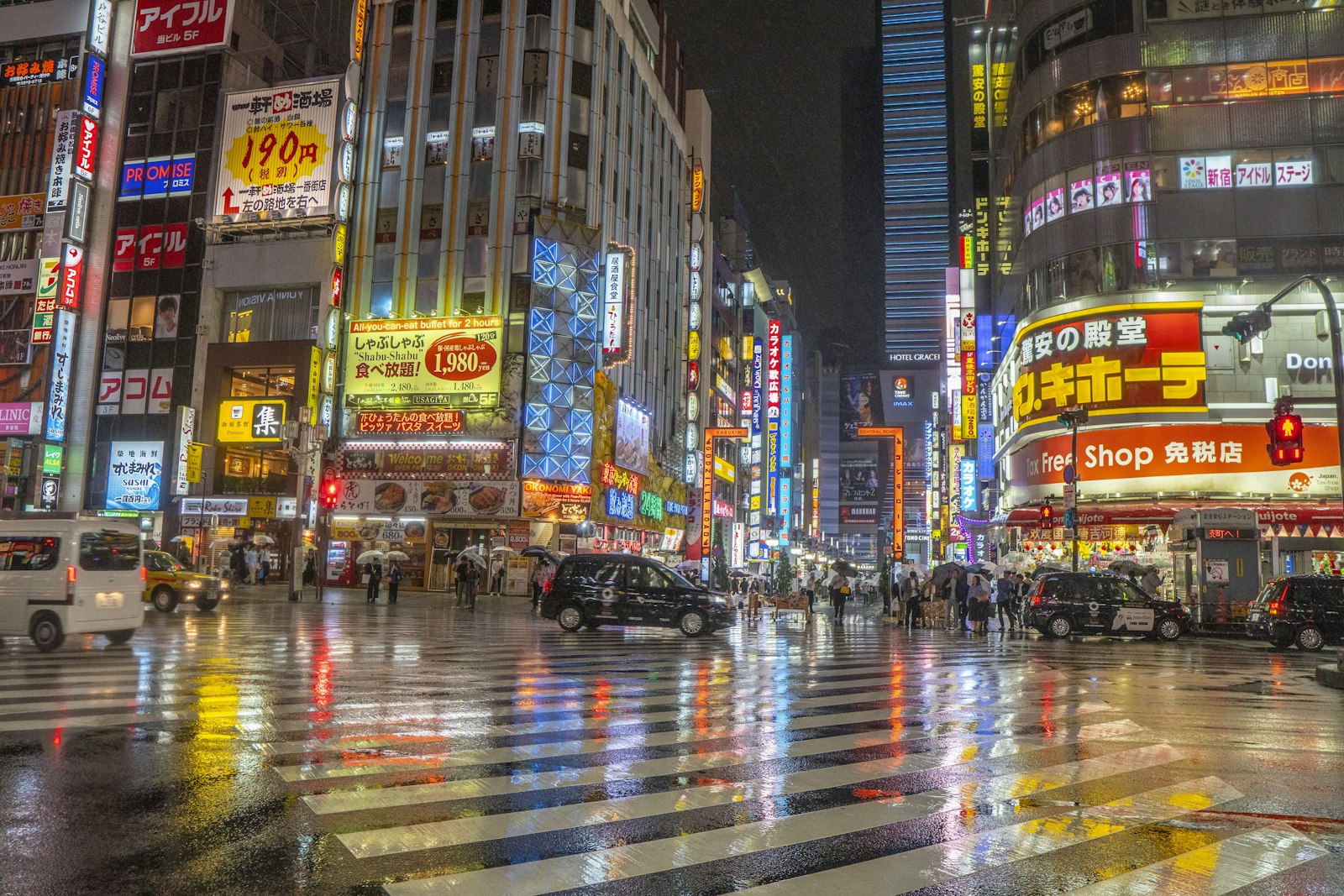
The first part of the tour is usually on foot through the loudest, brightest streets. In Shinjuku that means the station’s east side and Kabukicho, the entertainment district, including the giant Godzilla head that looms over the street. It’s a stop on the GO TOKYO route as well.
This part of the tour is orientation more than sightseeing. A good guide explains what you’re actually looking at: which buildings are hostess clubs, what the touts on the corners want, and which kinds of places you should never follow a stranger into. That context is worth having even if you never come back to the area on your own.
Stage 2: First Drinks in a Yokocho or Izakaya
Next comes the first sit-down stop. In Shinjuku this is often Omoide Yokocho, a small network of alleyways along the tracks northwest of the station, packed with tiny eateries serving yakitori, kushiyaki, ramen and more. Elsewhere it might be a busy izakaya, the Japanese pub-restaurant where locals go after work.
Here’s what the first stop usually looks like:
- The group squeezes onto stools at a counter, or around a small table.
- A round of drinks is ordered first, often beer, with soft drinks for anyone who isn’t drinking.
- A small dish you didn’t order may arrive. This is otoshi, which japan-guide.com describes as a small appetizer “typically provided in lieu of a seating charge,” costing a few hundred yen per person. It isn’t a mistake or a scam.
- The guide orders a spread of plates to share, explains what each one is and translates for the staff.
This is usually the longest stop of the night, and the one where the group loosens up. If you want to know the rules before you sit down, read our izakaya etiquette guide for foreigners.
Stage 3: The Small Bars
As the night goes on, the venues get smaller. In Shinjuku, the classic next step is Golden Gai, a small district of narrow alleys in a corner of Kabukicho with more than 200 small bars and eateries. Most seat only a handful of people and serve a steady crowd of regulars.
This is where a guide pays for itself. Some Golden Gai bars openly welcome foreign guests and post English menus and prices outside. Many others are built around regulars and aren’t set up for walk-in tourists. From the alley, you can’t tell which is which. A guide knows which doors to open, and often knows the person behind the counter.
Expect cramped seating, conversation with strangers and bartenders, and a bar charge at some venues. It’s the part of the night most people remember best.
Stage 4: The Last Stop and Wrap-Up
The final stop tends to be calmer: a quieter bar, a late snack or a short walk back toward a station. The guide will usually point out how to get back to your hotel and suggest places to go if you want to keep the night going on your own.
At this point you settle anything you owe. On an all-inclusive tour there may be nothing to pay. On a guide-only tour you’ll have paid at each stop as you went.
What the Guide Actually Does for You
People sometimes assume a night tour is just someone walking you between bars. In practice, most of the value is in things you don’t see:
- Getting you in. Small bars can seat a handful of people. Guides know which places will take a group, and at what time.
- Translating the menu and the rules. Ordering, cover charges, how to pay, when to leave. This is the stuff that makes a first visit stressful.
- Keeping you away from bad places. Tokyo is safe overall, but Kabukicho has a well-known problem with touts leading tourists to venues with inflated bills. A guide simply never takes you there.
- Reading the group. If someone is tired, not drinking or wants more food, a good guide adjusts on the fly.
Looking for Adult Entertainment Services in Tokyo? Download this
I’ve spent over a decade exploring and studying Japan’s adult entertainment scene firsthand. If you’d like detailed insider information—including how to choose the right shop, what services are available, and tips for avoiding common mistakes—check out our exclusive E-book.
Etiquette Basics for the Night
You don’t need to memorize a rulebook, and your guide will coach you as you go. A few habits will make you a welcome guest anywhere:
- Wait for the toast. At the first drink, the table raises glasses together with “kanpai!” before anyone sips.
- Don’t tip. Tipping isn’t part of Japanese bar and restaurant culture, and trying to leave money can cause confusion.
- Ask before photographing. Tiny bars are personal spaces, and regulars may not want to appear on your Instagram. Some bars don’t allow photos inside, so check with your guide first.
- Don’t linger over one drink at a tiny bar. Seats are scarce, so order a drink per person and move on when the group does.
- Keep your voice down in the alleys. People live and work above many of these streets.
Costs: What’s Included and What Isn’t
Prices vary widely by operator, group size and what’s bundled in, so we won’t quote figures here. For a breakdown by tour type, see our Tokyo night tour price guide. What you should expect is one of three structures:
- All-inclusive: The fee covers the guide plus a set amount of food and drink at each stop. Extra rounds may cost extra.
- Guide-only: You pay for the guide, then pay your own bill at each venue. This is common on private tours, and it’s flexible if your group drinks little or a lot.
- Free or tip-based walking tours: No food or drink included, and usually no bar entry. You’re paying for the walk and the stories.
Whichever you book, budget for small extra charges along the way: otoshi at izakaya, and cover or seating charges at some small bars. These are normal in Japan. They’re only a warning sign when nobody told you about them up front.
Getting Home After the Tour
Night tours often finish late, and Tokyo’s trains don’t run all night. The last trains on most lines leave around midnight, and the exact time depends on the line and the station. Check the last train from your end point before the tour starts, not after your third drink. Our Tokyo last train survival guide walks through the options.
If you miss the last train, taxis are safe and easy to find around major stations. Just expect to pay more for a long ride across the city late at night.
Common Questions Before a Tokyo Night Tour
Do I have to drink alcohol? No. Soft drinks, tea and non-alcoholic beer are available almost everywhere. Tell your guide at the start and they’ll plan around it.
Is it OK to join solo? Yes. Solo travelers are some of the most common night tour guests, since bar-hopping alone in a city where you don’t speak the language is exactly what a tour is designed to solve.
What if it rains? Most walking tours run in the rain, and an evening spent mostly indoors in bars isn’t much affected. Pack a compact umbrella, and check your operator’s weather policy.
Can I request a specific area? On private tours, usually yes. Shinjuku is the most common base, but guides also run evenings in Shibuya, Ginza and the izakaya under the train tracks around Yurakucho. Group tours stick to a fixed route.
What do you do in Tokyo After 10?
Join our Tokyo Nightlife Private Tour
You deserve better than overpriced bars and missed opportunities. We’re here for you.
Finding the Right Tokyo Night Tour for You
Now you know what to expect: a short orientation, a neon walk, a noisy first stop over shared plates, smaller and stranger bars as the night goes on, and a guide quietly handling the parts that would otherwise go wrong. What changes from one tour to the next is how personal it feels, and how far past the tourist streets you get.
If you’d rather have the evening shaped around your group, Tokyo After 10, our private night tour, pairs you with a local guide who plans the route around what you want from the night, whether that’s yokocho food, tiny bars or something you won’t find on Google Maps. Check the tour page for current availability and details, and bring your questions. That first conversation at the meeting point is where the best nights start.









