Photo by <a href="https://unsplash.com/@andrewsco?utm_source=tokyodeepnightlife&utm_medium=referral">Andrew Schofield</a> on <a href="https://unsplash.com/?utm_source=tokyodeepnightlife&utm_medium=referral">Unsplash</a>
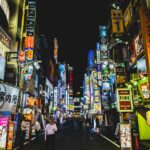
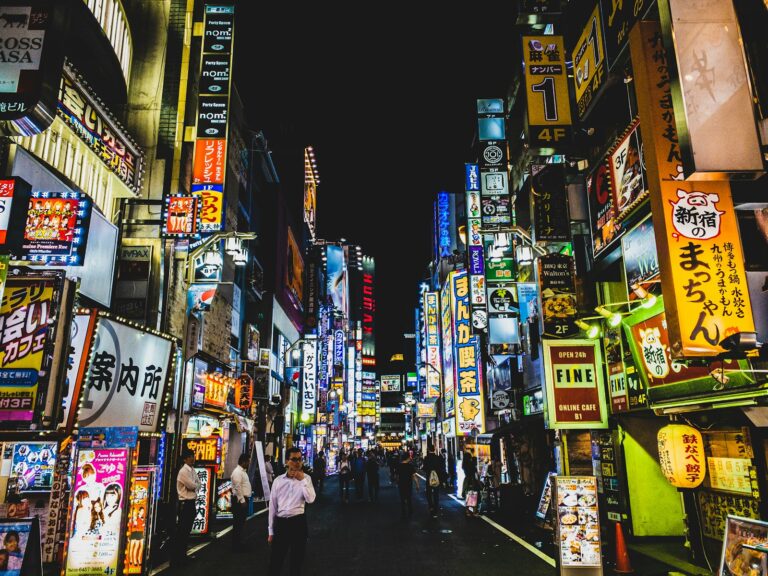
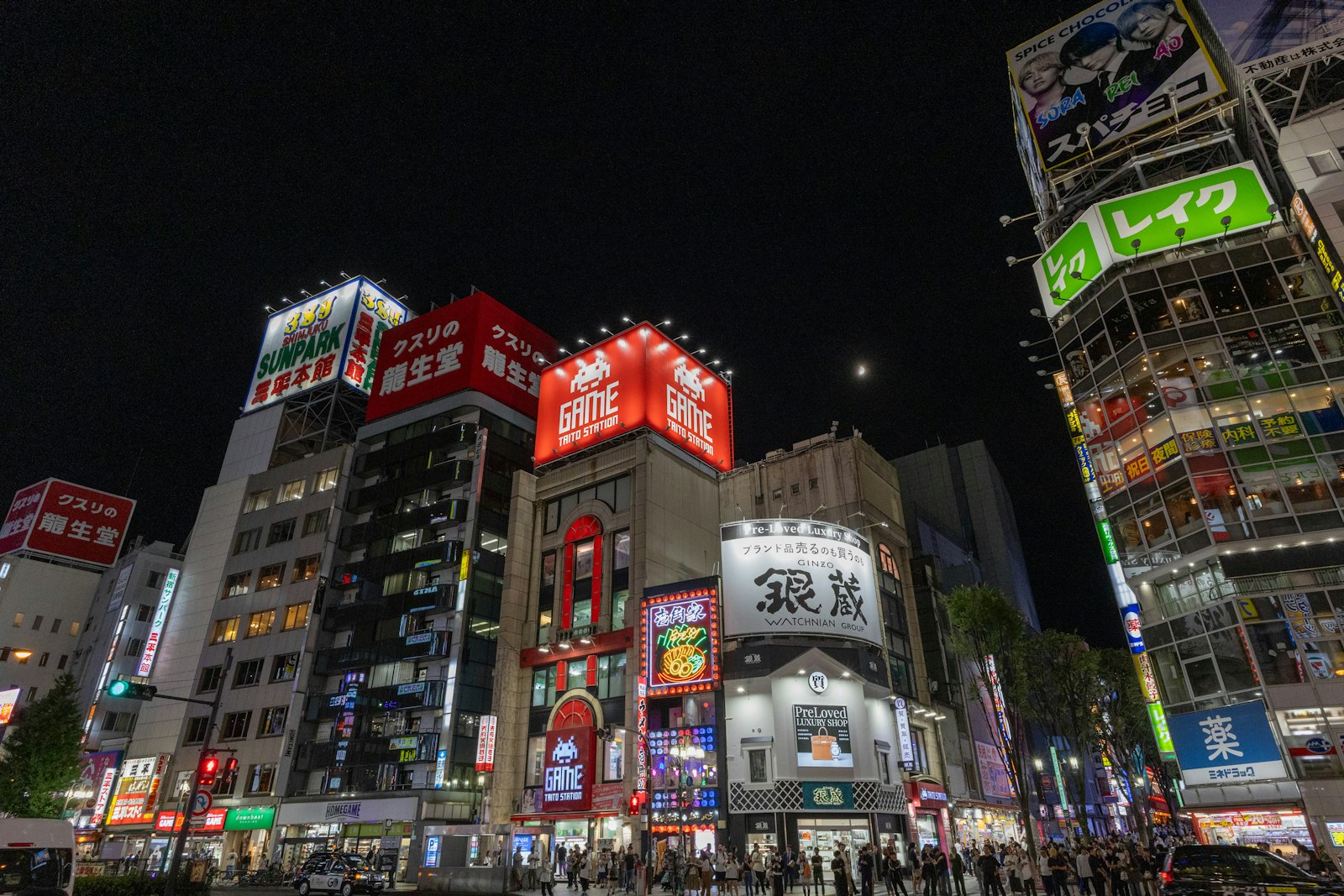
Two signs, one building, two floors apart. One says ガールズバー. One says キャバクラ. From the street they look identical — a lit panel, a woman’s name, an elevator. Get them mixed up and the difference shows up on your bill as a factor of five.
The girls bar vs hostess club Japan question comes down to one physical thing: whether a counter stays between you and the staff. Everything else — the price, the legal license, the closing time, the etiquette, even whether you’ll be welcomed as a foreigner — flows from that single detail. Once you can see it, you’ll never confuse the two again.
This guide covers what each venue actually is, what a realistic night costs at both in 2026, the paid systems that exist only in hostess clubs, and a straight answer to which one you should pick.
Contents
- The Counter Is the Whole Difference
- Girls Bar vs Hostess Club Japan: Side-by-Side
- What a Girls Bar Night Actually Costs
- What a Hostess Club Night Actually Costs
- The Systems That Exist Only in a Hostess Club
- Which Should You Choose?
- What Doesn’t Change Between the Two
- The Trap Both Venues Share
- Where Snack Bars, Lounges and Concept Cafés Fit
- Where to Find Each in Tokyo
- FAQ
- What do you do in Tokyo After 10?Join our Tokyo Nightlife Private Tour
- Skip the Guesswork
- About the Author
The Counter Is the Whole Difference
At a girls bar (ガールズバー, gāruzu bā), staff stay behind the bar counter. They pour your drink, they talk with you across the wood, they move between customers. Nobody sits down beside you. There’s no assigned person for the evening.
At a hostess club — kyabakura (キャバクラ), short for “cabaret club” — a hostess comes out from behind nothing at all. She sits next to you at your table, pours your drinks, lights conversation, and stays for a set rotation before another hostess takes her place. You can pay to keep a specific one.
That’s not a stylistic preference. It’s a legal boundary, and Japan draws it with a specific word: 接待 (settai). Roughly, “entertaining” — sitting beside a customer, sustained one-on-one attention, drinking alongside them. Under Japan’s Entertainment Business Act (風営法, fūeihō), a venue that provides settai is a Type 1 licensed business and needs a permit from the prefectural public safety commission.
A girls bar doesn’t provide settai, so it doesn’t need that permit. It files a much lighter notification as a late-night alcohol-serving restaurant and operates on that basis. The counter is what keeps it on the right side of the line — which is exactly why the staff won’t come around it, no matter how well the conversation is going.
Two practical consequences fall straight out of this:
- Closing time. Type 1 venues are restricted to midnight under the Act, with prefectural ordinance extending that to 1am in designated Tokyo districts. Girls bars, under the lighter filing, legitimately run past midnight — which is why they’re the venue still open when you finish dinner late.
- Price. The permit, the floor staff, the table service model, and the rotation system all cost the operator money. That cost lands on your bill.
Girls Bar vs Hostess Club Japan: Side-by-Side
| Girls Bar | Hostess Club (Kyabakura) | |
|---|---|---|
| Seating | Counter; staff stay behind it | Table or booth; hostess sits beside you |
| Assigned staff | No — staff rotate freely | Yes — rotation, with paid designation |
| Typical hourly base | ¥1,500–¥4,000 | ¥5,000–¥15,000 set fee (60–90 min) |
| Realistic first visit | ¥3,000–¥6,000 | ¥15,000–¥25,000 mid-range |
| Service charge | Often none; printed if it applies | Commonly 10–20%+ on the total |
| License type | Late-night restaurant filing | Type 1 entertainment permit |
| Closing | Past midnight, often 3–5am | Midnight, 1am in designated areas |
| Dress code | None meaningful | Smart casual minimum |
| Reservation | Almost never needed | Often preferred |
| Solo-friendly | Very | Yes, but built for groups and business |
| English support | Rare, occasionally excellent | Rare, more common in Roppongi |
Ranges above reflect what mainstream Tokyo venues were charging through 2026. Treat them as the shape of the bill, not a quote — always read the venue’s own posted board.
What a Girls Bar Night Actually Costs
Girls bar billing is refreshingly legible. Two models, and you want to know which one you’re in before the first drink lands.
Model A — seat charge plus drinks. A time charge for a block (usually 30 or 60 minutes), then each drink billed separately. Seat charge typically ¥1,500–¥4,000 per hour; your drinks ¥700–¥1,500 each.
**Model B — time charge with *nomihoudai*** (飲み放題, all-you-can-drink). One price covers the block and unlimited house drinks. Beer is often excluded. Premium spirits almost always are.
Then there’s the lady’s drink — buying a drink for the staff member you’re talking to, usually ¥1,000–¥2,000. It’s optional, it’s a real part of the culture, and it’s how staff earn a commission. Buy one if you’re enjoying yourself. Decline politely if you’re not; “kekkō desu” (けっこうです) is the phrase, and nobody will make it awkward.
A one-hour visit — seat charge, two drinks for you, one for the staff — realistically lands between ¥3,000 and ¥6,000. That’s the same territory as a decent izakaya round, which is precisely why locals treat girls bars as an ordinary Tuesday rather than an event.
What a Hostess Club Night Actually Costs
The kyabakura bill is built in layers, and the headline number on the sign is only the first one.
- Set fee (セット料金): the base, ¥5,000–¥15,000 per person for a 60- or 90-minute block. Usually includes house shochu and whisky.
- Table charge: at some venues, a separate per-table fee on top of the set.
- Designation fee (指名料, shimei-ryō): ¥1,000–¥5,000 to request a specific hostess instead of taking the rotation.
- Hostess drinks: ¥1,500–¥3,000 each, and there will be more than one if the evening is going well.
- Bottle keep: ¥10,000–¥50,000+ for a bottle held under your name for future visits. Optional, and a commitment.
- Extension (延長): ¥3,000–¥8,000 per additional 30 minutes.
- Service charge and tax: commonly 10–20% or more, applied to everything above.
Add it up honestly and a first visit at a mainstream Kabukicho or Roppongi venue is ¥15,000–¥25,000. Ginza’s established clubs start where that ends and go well past ¥50,000. Our hostess club Tokyo guide breaks the tiers down further.
None of this is a scam. It’s a disclosed pricing model that happens to have a lot of lines. The failure mode isn’t dishonesty — it’s a visitor who budgeted for the set fee and forgot the other six.
The Systems That Exist Only in a Hostess Club
If you’ve only been to girls bars, these will be unfamiliar. They’re the machinery of kyabakura and they’re worth knowing before you sit down.
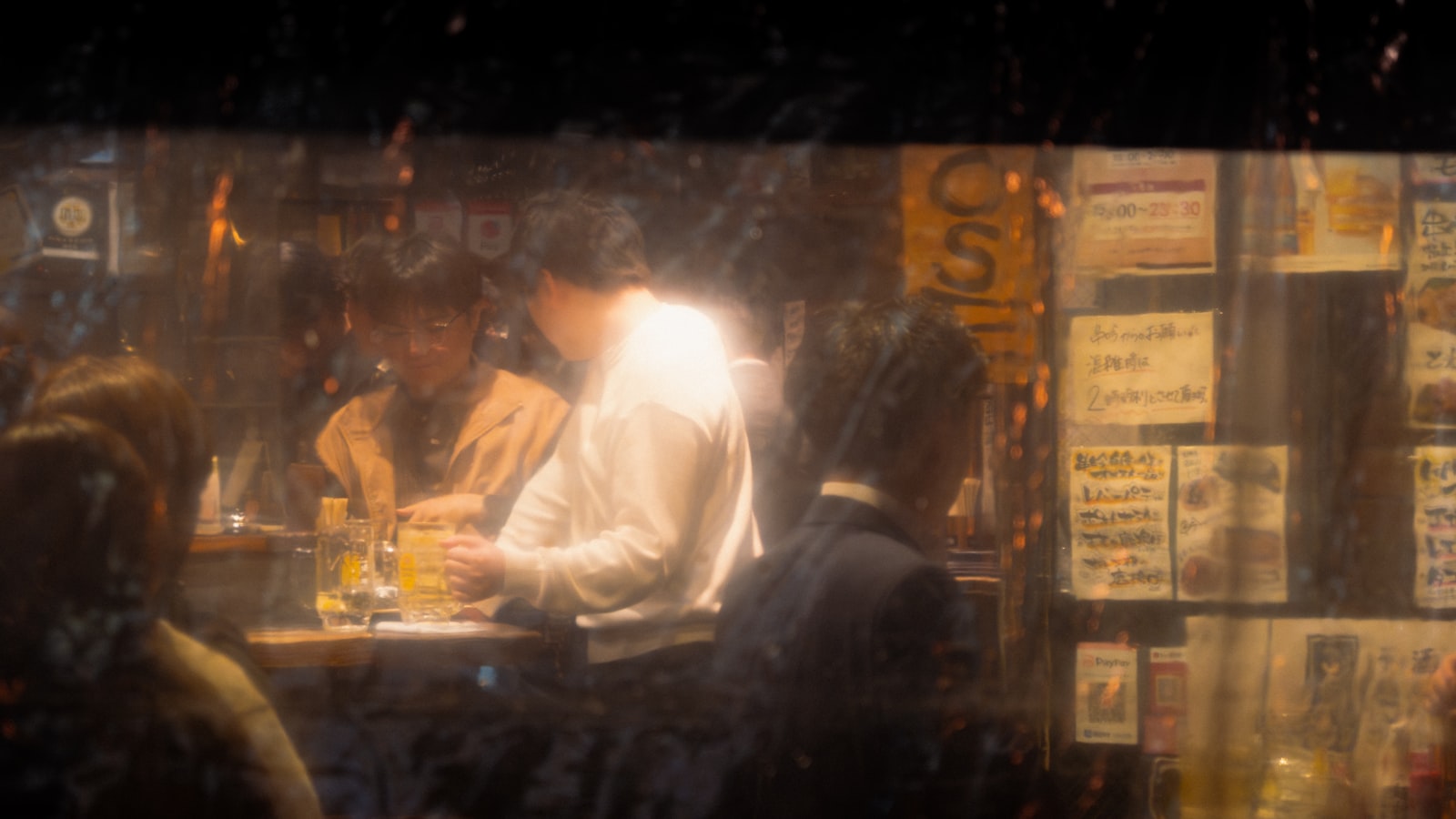
Shimei (指名) — designation. By default you get whoever the floor manager sends, rotating every 20–40 minutes. Pay the shimei fee and you keep the one you clicked with. Jōnai shimei is designating from within the venue that night; honshimei is naming her in advance as your regular. This is the core economic engine of the whole business, and it’s the system a girls bar simply doesn’t have.
Douhan (同伴) — the pre-dinner date. Meeting your regular hostess for dinner before her shift and arriving together. It carries a fee, it counts toward her performance targets, and it is a formalized commercial arrangement, not a date. Worth understanding so you don’t misread the invitation.
Bottle keep (ボトルキープ). Your unfinished bottle stored with your name on it. Common across Japanese nightlife, but in a kyabakura it also signals you intend to come back — which changes how you’re treated.
Enchō (延長) — extension. When your block ends, staff will ask if you want to extend. This is the single most common place a bill runs away from a visitor. Decide before you answer, and say it clearly.
By contrast, the entire girls bar system is: time charge, drinks, optional lady’s drink, go home. That’s it. For a fuller picture of how these venues sit alongside the rest of the scene, see our Tokyo girls bar guide for tourists.
Which Should You Choose?
Skip the venue names for a second and answer these instead.
Go to a girls bar if:
- You’re solo, or with one or two friends, and want conversation without a production
- Your budget for the stop is under ¥8,000
- It’s already past midnight and you want somewhere still open
- You want to leave whenever you feel like it, with no ceremony
- You’d rather talk to several people over an hour than one person for the whole block
Go to a hostess club if:
- You want the full, theatrical Japanese hospitality experience and have budgeted ¥20,000+
- You’re marking something — a group celebration, a business dinner’s second act
- The idea of undivided attention and genuinely skilled conversation appeals to you
- You have someone who speaks Japanese with you, or you’ve confirmed English support in advance
Honest note on the girls bar vs hostess club Japan choice for first-time visitors: most travelers get more out of the girls bar. Not because kyabakura are bad — they’re a genuine craft — but because the value of a hostess club is almost entirely in the conversation, and conversation is exactly what the language barrier takes away. Paying ¥20,000 to sit through polite silence with a translation app is a bad night at any price. The girls bar’s counter format, group dynamic, and low stakes survive a language gap far better.
Looking for Adult Entertainment Services in Tokyo? Download this
I’ve spent over a decade exploring and studying Japan’s adult entertainment scene firsthand. If you’d like detailed insider information—including how to choose the right shop, what services are available, and tips for avoiding common mistakes—check out our exclusive E-book.
What Doesn’t Change Between the Two
Some things are constant across both, and getting them wrong plays the same in either venue:
- No physical contact. Neither is adult entertainment. Touching staff will end your evening immediately and may get you removed.
- No contact details. Asking for LINE, Instagram, or a phone number puts staff in a difficult position. Many venues have an explicit house rule against it.
- No tipping. It isn’t done in Japanese nightlife. If a service charge applies, it’s printed.
- Cash still rules. Cards are increasingly accepted, but plenty of smaller venues remain cash-only. Carry enough.
- Ask the price first. At either venue, “ikura desu ka?” before you sit is normal, expected, and the single best habit you can bring.
Where etiquette does diverge: a kyabakura expects you to participate. Answer questions, ask them back, let the hostess do her job. Sitting silently isn’t stoic there, it’s just uncomfortable for both of you. A girls bar tolerates you nursing a highball and watching the room. Both are fine — they’re different social contracts.
The genuine risk in Kabukicho isn’t girls bars or hostess clubs. It’s the man on the street.
Never follow a tout. Street solicitation for these venues is illegal in Kabukicho, which tells you what kind of operator does it. The pattern is consistent: a friendly, English-speaking man quotes an unbeatable price, walks you to a venue you’d never have found, and the bill that arrives has no relationship to the number you agreed to. The venue then makes leaving difficult.
Legitimate venues post their pricing publicly and wait for you to walk in. Ambiguity about price is a decision, and it’s a decision made at your expense.
Two rules cover almost everything:
- If you didn’t choose the venue yourself, don’t enter it.
- Read the posted board before you go up. No board, no visit.
Our Kabukicho scams warning for tourists documents the specific patterns in detail — worth ten minutes before your first night out in Shinjuku.
Where Snack Bars, Lounges and Concept Cafés Fit
The girls bar and the kyabakura are two points on a longer spectrum. Knowing the neighbors helps you read a sign correctly:
- Snack bar (スナック) — a small counter bar run by a mama-san, older regular clientele, flat per-visit charge, karaoke almost guaranteed. Warmest, least commercial, hardest to enter without Japanese.
- Lounge (ラウンジ) — sits between girls bar and kyabakura. Table service, calmer than a kyabakura, lighter pricing, less system.
- Ginza club (クラブ) — the top tier. Introduction or membership expected, one hostess for the evening, ¥30,000–¥100,000+. Not a walk-in category.
- Concept café (コンカフェ) — themed café-bars, maid cafés and their descendants. Counter service, costumed staff, often no alcohol at all, and a much younger crowd.
They differ on the same two axes every time: does anyone sit beside you, and how is your time billed. Answer those and you know what building you’re in. If you want the wider map of Japan’s nightlife categories, our overview of Japan’s adult entertainment categories sets out where the legal lines actually run — and where these two venues sit well clear of them.
Where to Find Each in Tokyo
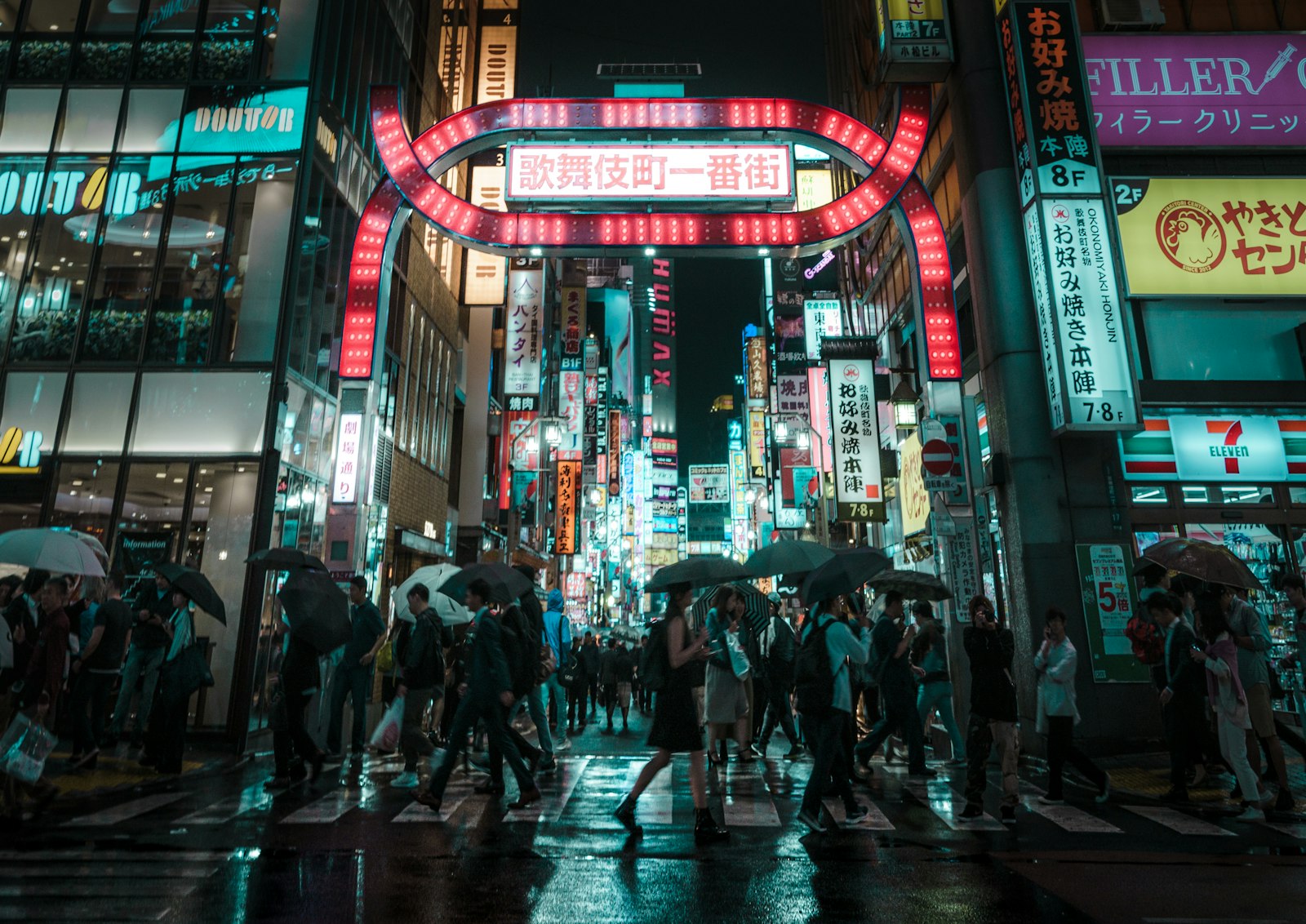
Kabukicho, Shinjuku — the highest density of both, stacked in the same buildings. The greatest choice and the greatest concentration of touts. Our Shinjuku nightlife guide covers navigating the area.
Roppongi — the most internationally-oriented venues in the city, and where English-capable hostess clubs are most likely. Prices reflect the convenience.
Ginza — hostess clubs at the top of the market, largely referral-based. Not the place for a spontaneous first visit.
Ikebukuro, Shibuya, Ueno — more local, more casual, less English, and generally kinder pricing than Kabukicho for equivalent venues.
FAQ
Is a girls bar cheaper than a hostess club? Substantially. A one-hour girls bar visit typically runs ¥3,000–¥6,000; a comparable hostess club visit runs ¥15,000–¥25,000. Different service model, different cost base.
Can women go to either? Yes to both. Girls bars see mixed groups and female customers routinely. Hostess clubs are more male-oriented in atmosphere but don’t refuse women, and the host club scene is the mirror image if that’s what you’re after.
Do I need to speak Japanese? For a girls bar, no — the group format and a translation app get you a long way. For a hostess club, it matters much more, because conversation is the product. Confirm English support before booking.
Will they refuse me for being foreign? Some venues at both tiers do. It’s usually about staff capacity to explain the system rather than hostility. Say “sumimasen,” move on, and find one of the many places that want your business.
Is any of this adult entertainment? No. Both are conversation-and-drinks businesses with a firm no-contact rule. Anything implying otherwise on the street is selling you something else entirely.
Which is better for a solo traveler? Girls bar, comfortably. The counter format is designed for people arriving alone, and the price makes a one-hour experiment low-stakes.
Can I go to both in one night? Yes, and it’s a good way to feel the difference. Hostess club first — it closes earlier — then a girls bar afterward, which will still be open.
What do you do in Tokyo After 10?
Join our Tokyo Nightlife Private Tour
You deserve better than overpriced bars and missed opportunities. We’re here for you.
Skip the Guesswork
Everything above is learnable on your own. Most people learn it over two or three nights and one bill they’d rather not discuss.
The shortcut is having someone who already knows which floor of which building is worth your time this month, who reads the price board in a glance, who handles the door conversation, and who confirms the bill in Japanese while you’re still enjoying the evening. That’s the whole idea behind our Tokyo After 10 nightlife tour — a local guide walking you through Shinjuku after dark and translating in real time.
Either way, the girls bar vs hostess club Japan decision isn’t complicated once you know the rule: look for the counter. If it stays between you and the staff, you’re in the cheap, easy, stay-as-long-as-you-like version of the night. If someone sits down beside you, the meter is running differently — and that’s fine too, as long as you walked in knowing it.
Planning the rest of your trip? The Japan National Tourism Organization and Go Tokyo publish current visitor information for the city.