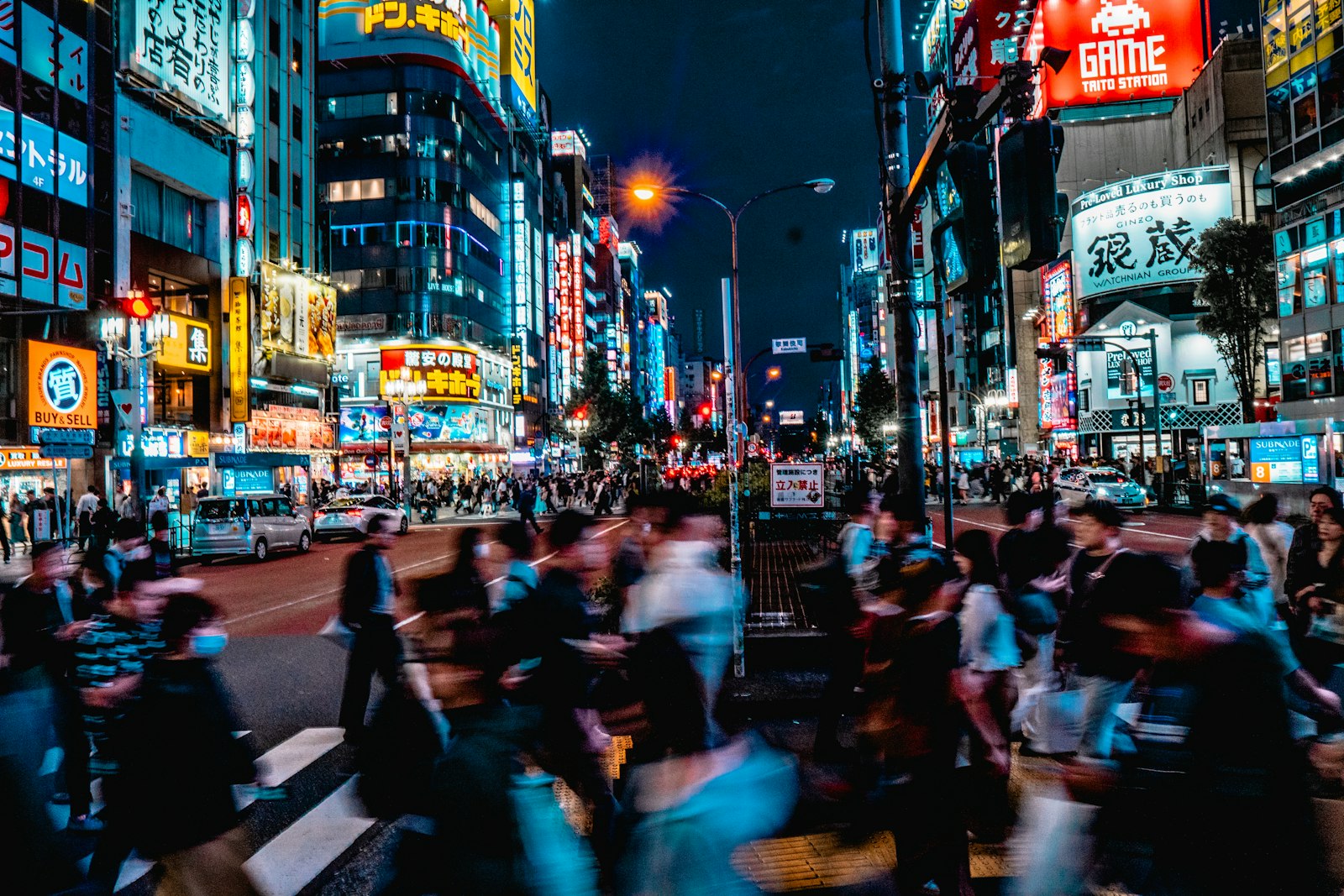
Photo by <a href="https://unsplash.com/@ramonbucard?utm_source=tokyodeepnightlife&utm_medium=referral">Ramon Buçard</a> on <a href="https://unsplash.com/?utm_source=tokyodeepnightlife&utm_medium=referral">Unsplash</a>
Every guide to Shinjuku tells you not to follow the guys on the street. That advice is still correct — but if that’s all you know, you’re working from a version of Kabukicho that no longer exists. The Kabukicho scams tourists warning that matters in 2026 isn’t about grubby touts shoving flyers at you. It’s about polite, fluent, well-dressed people who explain their pricing clearly, produce a printed menu, and still walk you into a six-figure yen bill.
Here’s the number that should get your attention. Between January and June 2026, Shinjuku police received 91 reports from people who followed a tout and were then charged an outrageous amount at the venue they were taken to. Total reported losses: roughly ¥99 million — about US$670,000 in six months, from one neighborhood. Most of the victims were overseas visitors.
This article covers what the police data actually shows, the two tactics that have replaced the old crude rip-off, and the specific decision points where a normal night goes wrong. Kabukicho is still worth visiting. It just rewards people who know the current playbook.
Contents
- The 2026 Numbers Behind This Kabukicho Scams Tourists Warning
- What’s New in 2026: Organized Crews Recruiting in English
- The “Polite Bottakuri”: The Tactic That Slips Past the Rules
- Women Get Targeted Too — and the Law Changed in 2025
- The Field Checklist: Decisions That Actually Cost Money
- If You’re Already Inside and the Bill Is Wrong
- Where It’s Genuinely Fine to Drink Around Kabukicho
- What do you do in Tokyo After 10?Join our Tokyo Nightlife Private Tour
- Skip the Guesswork: See Kabukicho With Someone Who Lives Here
- About the Author
The 2026 Numbers Behind This Kabukicho Scams Tourists Warning
Most safety articles about Shinjuku run on vibes and secondhand horror stories. The 2026 picture is better documented than that, and the documentation changes what you should actually watch for.
The 91 reports filed with Shinjuku police in the first half of 2026 share a specific shape: the victim was approached on the street, agreed to be led somewhere, and was then billed far beyond what was discussed. That’s an average of roughly ¥1 million per reported case. And these are only the people who filed a report — anyone who paid, felt stupid, and flew home the next day doesn’t appear in that figure at all.
Two things follow from this. First, the crossing point from “fine” to “very expensive” is almost always the moment you agree to be led somewhere by a stranger. Not the drinking, not the neighborhood, not the hour — the following. Second, the target profile is explicitly foreign visitors. You are not being paranoid if you feel singled out on Kabukicho’s side streets. You are being accurately identified.
What’s New in 2026: Organized Crews Recruiting in English
The old stereotype of a Kabukicho tout was a bored young Japanese guy with bleached hair. That’s outdated. Police have been tracking organized groups of foreign nationals working the street at night, and they speak the languages tourists speak.
On July 9, 2026, Tokyo’s Metropolitan Police arrested a 53-year-old Nigerian man in Kabukicho 1-chome for street touting, under the Tokyo anti-nuisance ordinance. According to investigators, he called out to passersby with lines like “How about it?” and “Don’t be scared — I love you,” and admitted to the touting, saying he received a cut of the bill from the venue.
That last detail is the whole business model in one sentence. The person on the street is paid a percentage of what you get charged inside. Their friendliness is not friendliness — it’s commission. Every extra ¥10,000 the venue extracts from you puts money in the pocket of the person who was so warm to you two minutes earlier.
Why this shift matters for you specifically: the language barrier used to function as accidental protection. If a tout could only pitch you in broken English, you were more likely to shrug and walk on. Now the pitch arrives in easy, confident English, often with humor, sometimes with a shared-outsider framing — “I’m not Japanese either, I’ll take care of you.” It bypasses exactly the instinct that used to keep tourists safe.
Touting Is Already Illegal Here — Which Tells You Something
Worth knowing: street touting in Kabukicho isn’t a grey area. Shinjuku Ward’s anti-touting ordinance has designated Kabukicho 1-chome and 2-chome (along with Shinjuku 2-chome and 3-chome and Nishi-Shinjuku 1-chome) as special prohibition zones since 2013, and the rules were tightened in 2016 to add penalties including public naming of offending businesses and fines.
So when someone approaches you on the street with an offer, you already know one thing about the business they represent: it is breaking a law that is posted on signs around them, in a zone with police boxes and English-language loudspeaker warnings. A venue that is comfortable with that is not going to get scrupulous once you’re seated.
Legitimate bars in this neighborhood do not need to recruit from the pavement. That single sentence does more work than any list of red flags.
The “Polite Bottakuri”: The Tactic That Slips Past the Rules
Classic bottakuri (ぼったくり — gross overcharging) was blunt: cheap sign outside, no menu, aggressive men and a ¥200,000 bill. Tokyo has an ordinance built specifically for that — the metropolitan anti-bottakuri rules require price display, prohibit improper solicitation, and ban forceful collection of payment, with business suspensions of up to eight months and criminal penalties available.
So the operators adapted. The current version is courteous.
Reporting by Tokyo Shimbun documented the newer method: staff give a polite, clear explanation of the pricing — “all-you-can-drink is ¥5,000” — and there’s a real menu. Then a companion at the table orders heavily. At the end, you’re told those particular drinks weren’t included in the all-you-can-drink plan, and the bill runs to several hundred thousand yen. Because prices were displayed and explained, the venue has a defense against the ordinance that was written for the crude version. Damages from this pattern were reported at around ¥140 million.
The Matching-App Variant
The nastiest evolution removes the street tout entirely.
You match with someone on a dating app. She suggests a bar in Kabukicho. She’s charming, she’s already there, everything feels organic — you chose this, nobody dragged you. In the documented cases, the “woman” was a member of the crew, and in some instances not a woman at all; the profile was operated by a man in the group. She orders freely, encourages you to keep up, and disappears around the time the bill lands.
This defeats the standard advice completely. “Never follow a tout” doesn’t help when you weren’t following a tout — you were on a date. The working rule that does hold: you pick the venue, or you don’t go. If a new online match steers you toward one specific bar in Kabukicho and resists any alternative, that resistance is the signal. Suggest somewhere else, ideally somewhere ground-floor with visible pricing, and watch what happens. Our guide to Tokyo nightlife scams and safety walks through more of these social-engineering setups across the city.
Women Get Targeted Too — and the Law Changed in 2025
The Kabukicho scams tourists warning usually gets written for men. That’s a gap, because the host club side of the neighborhood has caused enough documented harm that Japan rewrote national law over it.
The mechanism: hosts cultivate a romantic dynamic, encourage running a tab (urikake, deferred payment), and the debt compounds until it far exceeds what the customer can pay. Japanese women were the primary victims, but foreign visitors are increasingly worked the same way, minus any cultural context for how the tab system operates.
Japan’s revised Entertainment Business Act passed on May 20, 2025 and took effect June 28, 2025. It explicitly prohibits hospitality venues from exploiting customers’ romantic feelings to drive expensive orders, from serving items that weren’t ordered, and from giving false explanations of pricing. Penalties were raised sharply — up to ¥10 million for individuals and ¥300 million for corporations.
That’s real deterrence, and the neighborhood has visibly changed because of it. But a law does not make a bill disappear at 3 a.m. If you’re curious about this world, understand the pricing model before you sit down — our breakdown of how girls bar pricing actually works in Japan covers the fee structures (set charges, service charges, staff drinks) that produce the surprise on the bill.
Looking for Adult Entertainment Services in Tokyo? Download this
I’ve spent over a decade exploring and studying Japan’s adult entertainment scene firsthand. If you’d like detailed insider information—including how to choose the right shop, what services are available, and tips for avoiding common mistakes—check out our exclusive E-book.
The Field Checklist: Decisions That Actually Cost Money
Forget memorizing scam categories. In practice there are three moments where money is won or lost.
On the street. Anyone who approaches you first is disqualified — no exceptions, no matter how good the deal, how fluent the English, or how much they insist they’re just being friendly. Don’t argue and don’t explain; a flat “no” and continued walking works. Some will follow you a block or two. Keep going. Police guidance is explicitly to ignore them and keep moving, because engaging at all marks you as workable.
At the door. Ground floor with a window you can see through is dramatically safer than a fourth-floor room reached by an unmarked elevator. Look for a posted price board at the entrance — legitimate venues here display one, and the metropolitan ordinance requires it. Check the venue on Maps before you enter, and read the one-star reviews specifically, because that’s where overcharging reports collect. Confirm that the name and address match what you were told.
Inside, before you order. Ask directly what the seat charge, service charge, and table charge are, and whether the all-you-can-drink plan covers what you’re about to order. Ask about the plan’s time limit. If the answer is vague, waved off, or “don’t worry about it,” you have learned everything you need to know — pay for whatever you’ve had and leave. Walking out after one beer costs a few thousand yen. Staying costs six figures.
Two more things worth knowing. Keep your card in your wallet where possible; card fraud after a night out is a recurring complaint pattern, and cash caps your maximum loss at what you’re carrying. And never leave a drink unattended or accept one from a new acquaintance — theft while incapacitated is a documented Kabukicho problem, not an urban legend.
If You’re Already Inside and the Bill Is Wrong
This is the part most guides skip, and it’s the part people actually need.
Do not pay to make it stop. Once payment goes through, especially by card, your recovery odds fall dramatically. It feels like the fastest exit. It is the most expensive one.
Say you’re calling the police, and then call them. Dial 110. Overcharging in these zones is an ordinance matter that police in Shinjuku deal with constantly, and a great many disputes end the moment officers are genuinely involved — the venue’s business depends on not attracting attention. If you can leave the building safely, walk to the nearest koban (police box); Kabukicho has them, and Shinjuku Police Station handles this category of complaint routinely.
Get help in your language. The Japan Visitor Hotline, run by the Japan National Tourism Organization, operates 24 hours a day, 365 days a year in English, Chinese, and Korean: 050-3816-2787 (or +81-50-3816-2787 from overseas). Save it in your phone before you go out. For medical emergencies or fire, 119.
Preserve evidence. Photograph the bill, the menu, and the price board at the entrance. Note the building and floor. If a tout brought you there, that connection matters to police — it’s exactly the link the July 2026 arrest was built on.
If you did pay by card, contact your card issuer immediately and dispute it as a fraudulent or coerced transaction. Speed matters more than anything else here.
Where It’s Genuinely Fine to Drink Around Kabukicho
None of this means avoiding the area. Kabukicho is one of the densest, most alive nightlife districts on earth, and the overwhelming majority of its venues are ordinary businesses serving ordinary customers.
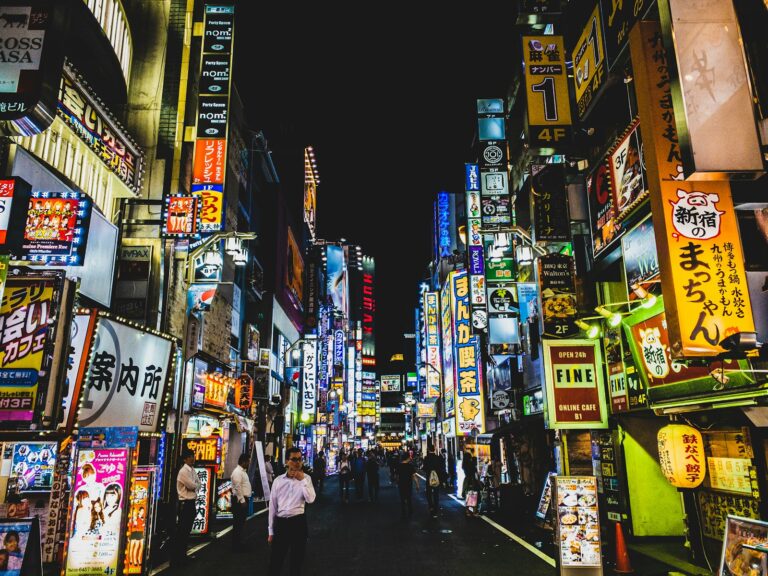
The main drag around the Godzilla head, Toho Cinemas, and Kabukicho Tower is heavily trafficked and heavily watched. Chain izakaya and ramen shops with photo menus and posted prices carry essentially zero risk — the model is volume, not extraction. Anything you found yourself, on the ground floor, with prices displayed, is fine.
Just east of Kabukicho, Golden Gai operates on a completely different logic: 200-plus tiny bars, cover charges typically ¥500–¥1,000, and the charge is stated up front. It’s small, personal, and about the furthest thing from a tourist trap once you understand the etiquette — our complete guide to Golden Gai covers which bars welcome newcomers and how the seat charge works. Omoide Yokocho, the yakitori alley on the other side of the station, is similarly straightforward; the first-timer’s guide to Omoide Yokocho explains what to order and what things cost.
For the tactical version of everything above — the specific streets, the specific phrases, the specific sequence when someone won’t leave you alone — see our dedicated guide to avoiding scams in Kabukicho.
What do you do in Tokyo After 10?
Join our Tokyo Nightlife Private Tour
You deserve better than overpriced bars and missed opportunities. We’re here for you.
Skip the Guesswork: See Kabukicho With Someone Who Lives Here
Everything in this article is learnable. The problem is that the learning curve runs in real time, at midnight, while someone charming is talking to you — and the cost of getting one decision wrong is measured in hundreds of thousands of yen.
The reason a local guide changes the math isn’t safety theater. It’s that touts don’t approach groups with a Japanese speaker in them; they’re reading the street for people who look uncertain, and that read fails instantly. More usefully, it removes the entire category of anxiety that keeps travelers on the main road when the good stuff is three doors down an alley they’d never have tried alone.
Our Tokyo After 10 nightlife tour takes small groups through Shinjuku’s bars with guides who drink in these places on their own nights off — the ones with the posted prices and the regulars and no one outside trying to pull you in. You get the version of Kabukicho that residents actually use.
Kabukicho isn’t dangerous. It’s transactional — and in 2026 the transaction is dressed better and speaks better English than it used to. Know where the money changes hands, and it’s one of the best nights out in the world.
Sources and further reading: Tokyo Metropolitan Police reporting via Kyodo News (July 2026); Tokyo Shimbun investigation into revised bottakuri methods; Shinjuku Ward anti-touting ordinance; Japan National Tourism Organization — Japan Visitor Hotline.