Photo by <a href="https://unsplash.com/@pen_ash?utm_source=tokyodeepnightlife&utm_medium=referral">pen_ash</a> on <a href="https://unsplash.com/?utm_source=tokyodeepnightlife&utm_medium=referral">Unsplash</a>
By 5pm, Senso-ji’s main hall has closed and most day-trippers are heading back to their hotels. That is exactly when an Asakusa night tour should begin. Every evening at sunset, Tokyo’s oldest temple switches on its lights, and the gates, the pagoda and the main hall glow red and gold over grounds that are suddenly quiet.
This guide is about that one experience: the illuminated Senso-ji. It covers when the lights come on and go off, the order to walk the temple in, the painted shutters you can only see after the shops close, where to catch the Skytree across the river, and whether a guided Asakusa night tour is worth booking. Opening times come from the temple, Taito City and Tokyo’s official tourism sites, so you can plan around them.
Contents
- Why Senso-ji Is Better at Night
- The Asakusa Night Tour Route: Gate by Gate
- Senso-ji at Night: Timing, Etiquette and Getting There
- Beyond the Temple: Sumida River and Skytree at Night
- Should You Take a Guided Asakusa Night Tour?
- After the Lights Go Off: Where the Night Goes Next
- Asakusa Night Tour FAQ
- What do you do in Tokyo After 10?Join our Tokyo Nightlife Private Tour
- Keep the Night Going with a Local Guide
- About the Author
Why Senso-ji Is Better at Night
Senso-ji’s light-up is not a festival or a seasonal event. According to the temple’s official light-up notice, it started on October 1, 2003, as part of the 400th-anniversary celebrations of the Edo shogunate, and it runs every day from sunset until around 11pm.
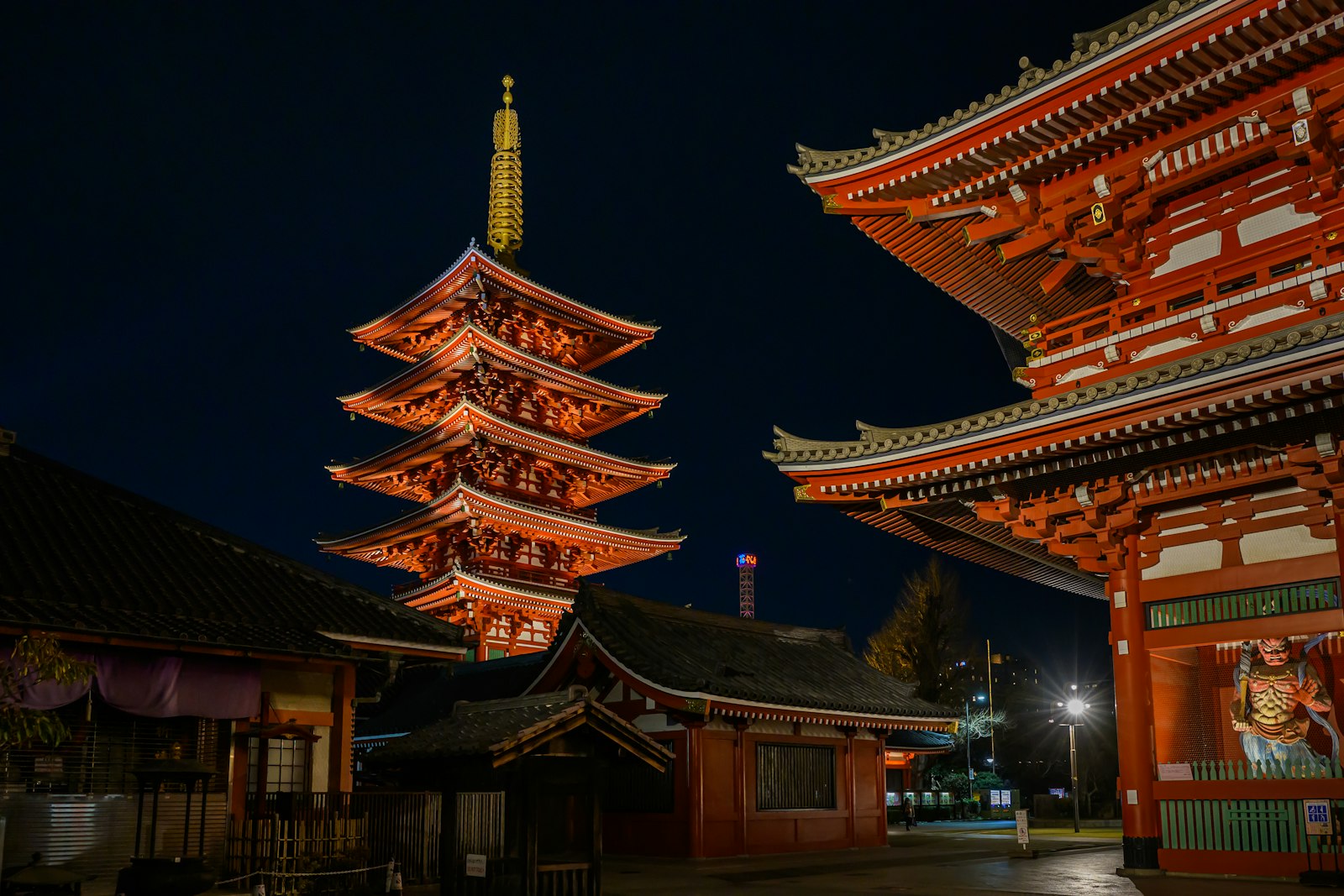
Four structures are lit: Kaminarimon, Hozomon, the five-storied pagoda and the main hall (Hondo). Together they form the temple’s central axis, so the walk from the front gate to the main hall stays lit from start to finish.
The trade-off is simple. The main hall is open from 6am to 5pm (from 6:30am between October and March), so at night you won’t go inside. What you get instead:
- Space. The approach that is shoulder-to-shoulder in the afternoon is far calmer once the shops have closed.
- Better photos. Floodlit vermilion against a dark sky looks far more dramatic than flat afternoon light.
- Art you can’t see by day. The shutters on Nakamise only come down after closing, and they are painted.
- A free evening. The grounds, the light-up and the viewing terrace across the street cost nothing.
The Asakusa Night Tour Route: Gate by Gate
The best way to see the illuminated temple is to walk it the way worshippers do, from the front gate to the main hall, with one detour at the start. Allow 60 to 90 minutes if you stop for photos.
1. Start High at the Asakusa Culture Tourist Information Center
Across the street from Kaminarimon, the Asakusa Culture Tourist Information Center (2-18-9 Kaminarimon) has a free observation terrace on the 8th floor. Taito City lists the building as open 9am to 8pm, with the terrace staying open until 10pm.
From the terrace you look down the line of Nakamise toward the temple. It’s the easiest way to understand the layout before you walk it, and it’s also the starting point of the free volunteer-guided night walk covered later in this guide.
2. Kaminarimon: The Thunder Gate Under Lights
Kaminarimon is the image everyone knows: a red gate, a huge red lantern, and the gods of wind and thunder standing guard on either side. Senso-ji’s own history says the gate was first built in 942 by the military commander Taira no Kinmasa. The current gate dates from 1960, rebuilt with a donation from Konosuke Matsushita, founder of Matsushita Electric (now Panasonic).
In the daytime, getting a clean shot of the lantern means waiting your turn. At night the gate is floodlit and much easier to photograph. Stand back from the gate to fit the whole structure in frame, then step underneath and look up at the carved dragon on the base of the lantern.
3. Nakamise-dori and the Asakusa Emaki Shutter Art
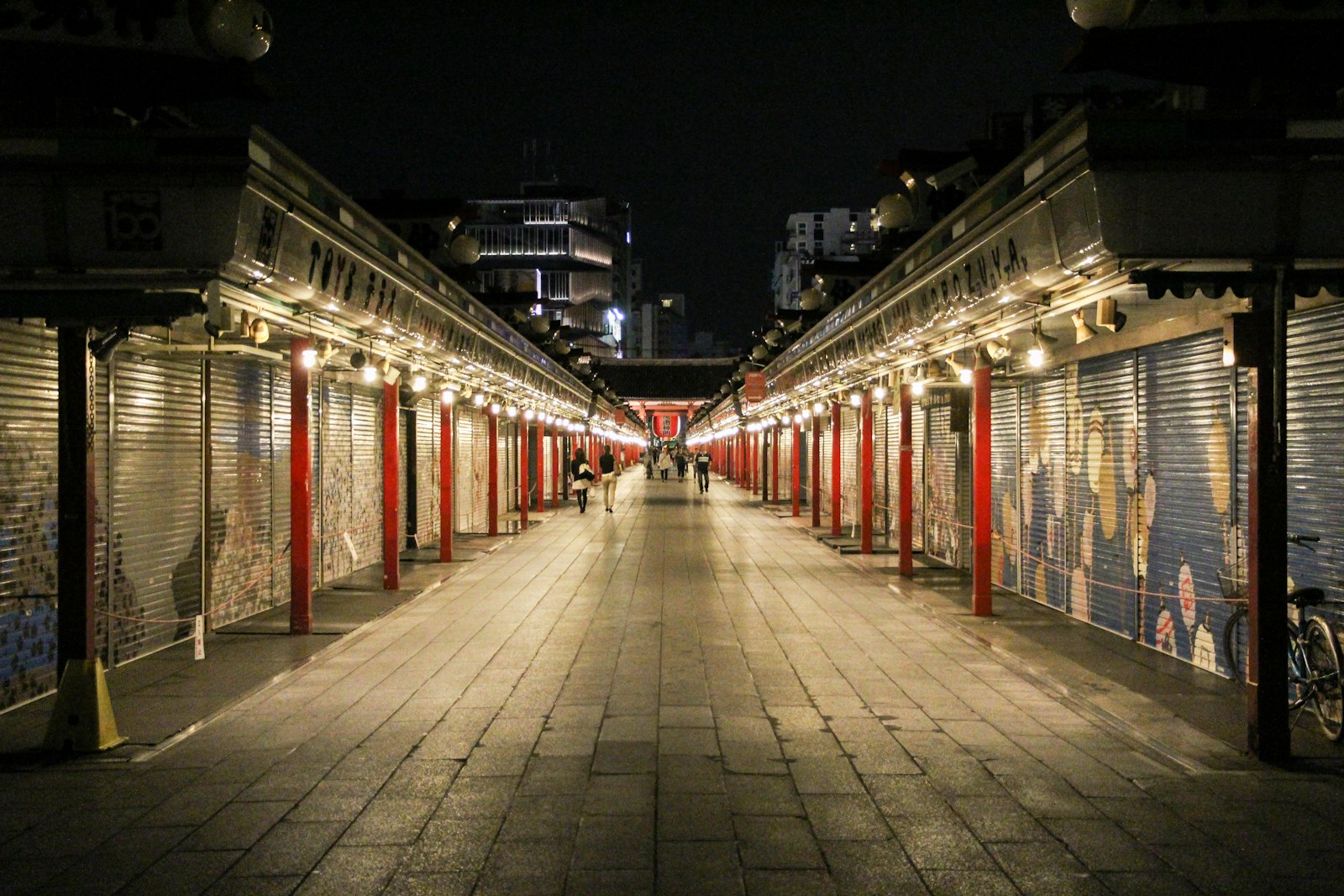
Nakamise-dori is the shopping street that runs from Kaminarimon toward the temple. Most stalls close in the early evening, and when their shutters come down, a gallery appears. The shutters are painted with scenes known as the Asakusa Emaki, or “Asakusa picture scroll.”
According to the Japan National Tourism Organization, the shutter art stretches about 400 meters and shows seasonal views, festivals and scenes of old Japan. Because the paintings are only visible when the shops are shut, most daytime visitors never realize they are there.
Walk this part slowly. With the stalls closed and only the lanterns lit, Nakamise at night feels like a different street from the one you may have pushed through at noon. This is the stretch that makes an Asakusa night tour feel different from a daytime visit.
4. Hozomon: The Treasure House Gate
At the far end of Nakamise stands Hozomon, the second gate, which is also lit every night. The temple says the current gate was rebuilt in 1964 with a donation from Yonetaro Otani.
Once you pass through, turn around. A pair of giant straw sandals hangs on the back of the gate, and they are easy to miss if your eyes are already on the pagoda.
5. The Five-Storied Pagoda
The five-storied pagoda is the photo many people come for on an Asakusa night tour. According to Senso-ji, it was rebuilt in 1973 with donations from worshippers across Japan. Lit from below, its stacked roofs catch the light in layers and stand out sharply against a clear night sky.
Timing matters more than gear here. The 20 to 30 minutes just after sunset give you a deep blue sky behind the warm-lit pagoda. After full dark the sky turns black and the contrast gets harsher, but the grounds are quieter.
6. The Main Hall (Hondo) After Closing
The main hall is shut at night, but its exterior is lit, and standing in front of it on quiet grounds is the natural end of the walk. This is also where the temple’s story begins.
According to Senso-ji, on March 18, 628, the brothers Hinokuma Hamanari and Takenari were fishing in the Sumida River when they found a statue of Kannon (the Bodhisattva of compassion). The temple grew around that statue, which makes Senso-ji the oldest temple in Tokyo.
Because the hall is closed, the fortune-slip (omikuji) and amulet counters keep daytime hours. If drawing an omikuji matters to you, plan a separate daytime visit.
Senso-ji at Night: Timing, Etiquette and Getting There
Closing Times, in Order
The single most useful thing to know for an evening in Asakusa is the order in which things close:
| Spot | Closes |
|---|---|
| Senso-ji main hall (Hondo) | 5:00pm |
| Asakusa Culture Tourist Information Center terrace | 10:00pm |
| Sumida River Walk (pedestrian bridge) | 10:00pm |
| Senso-ji light-up | Around 11:00pm |
| Tokyo Skytree regular lighting | Midnight on most nights |
If you arrive at sunset, walk the route above in order and head to the river afterward. If you arrive after about 8:30pm, reverse it: do the terrace and the river bridge first, then finish at the temple, where the lights stay on longest.
When to Arrive
Aim to be at Kaminarimon around sunset. In Tokyo that can be as early as about 4:30pm in December and close to 7pm in late June, so check the sunset time for your date. Arriving at sunset gives you blue hour at the pagoda and several hours before the lights go off.
Etiquette on the Temple Grounds
- It’s still a place of worship. Some people come to pray even after the hall closes, so keep your voice down near the main hall.
- Don’t block the path. If you use a tripod, set it up to the side, not in the middle of the approach.
- Mind the neighbors. Asakusa is residential around the edges of the temple, and the streets get quiet late at night.
Getting There
Asakusa is served by the Tokyo Metro Ginza Line, the Toei Asakusa Line, the Tobu Skytree Line and the Tsukuba Express. All four put you within walking distance of the temple, and Kaminarimon is the natural meeting point.
Beyond the Temple: Sumida River and Skytree at Night
The Sumida River is a short walk east of Senso-ji, and a good Asakusa night tour usually ends up on its banks. Two viewpoints are worth your time.
Sumida River Walk
This 160-meter pedestrian path runs alongside the Tobu railway bridge and, according to GO TOKYO, is the fastest way to walk from the Senso-ji area to Tokyo Skytree Town. Part of it has a glass floor, so you can watch boats pass underneath. It’s open from 7am to 10pm, which is why it comes before the temple if you’re running late.
Azumabashi and the Skytree View
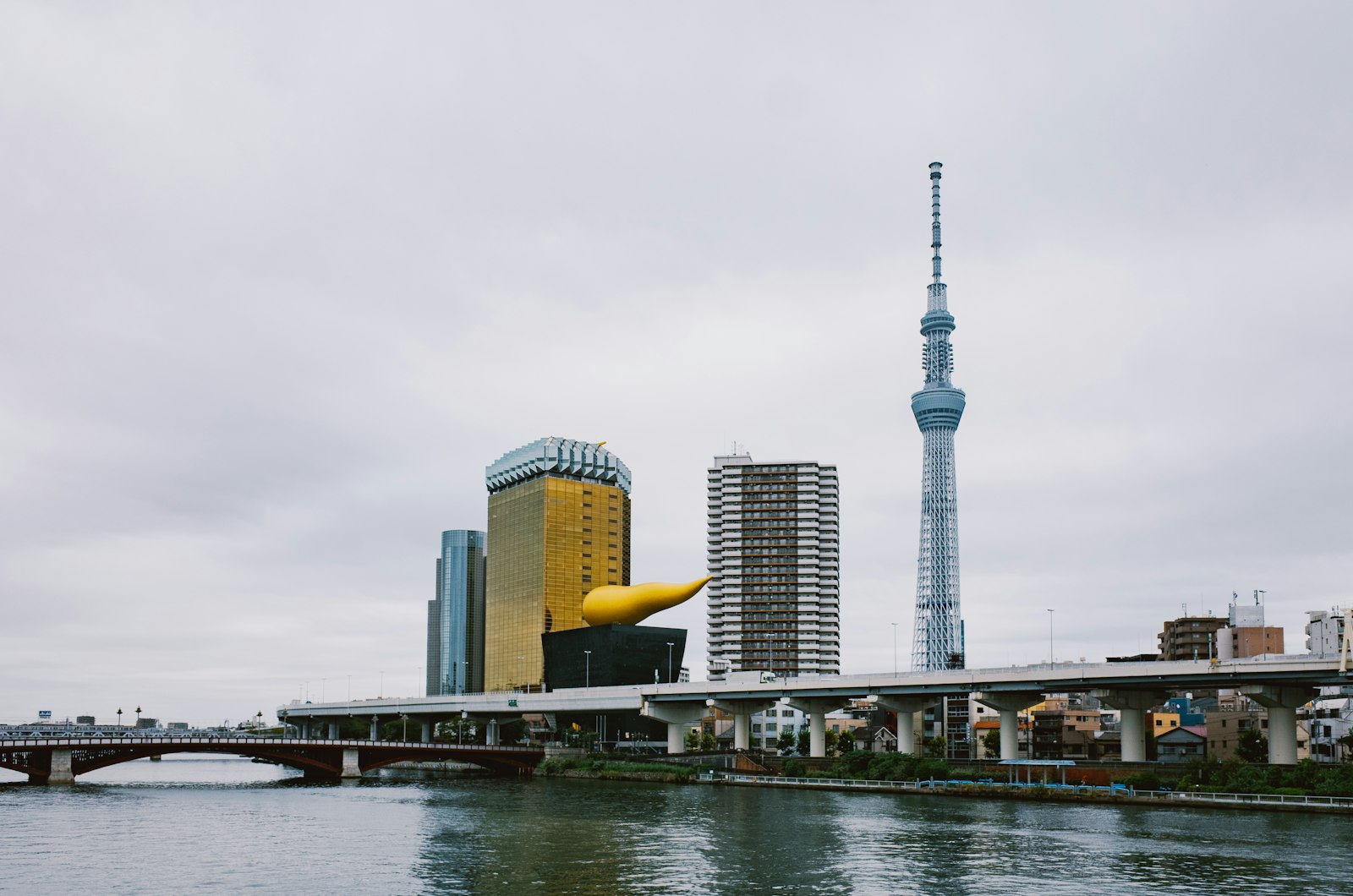
From the Asakusa side near Azumabashi bridge, you can line up the river, the Asahi Group headquarters with its golden Flamme d’Or sculpture by Philippe Starck, and Tokyo Skytree in a single frame.
The Skytree’s regular lighting runs until midnight and rotates between three designs: Iki, a pale blue inspired by the Sumida River; Miyabi, in Edo purple; and Nobori, in tachibana orange. Special designs replace these on some dates, so check the official lighting calendar if you’re hoping for a particular color.
Looking for Adult Entertainment Services in Tokyo? Download this
I’ve spent over a decade exploring and studying Japan’s adult entertainment scene firsthand. If you’d like detailed insider information—including how to choose the right shop, what services are available, and tips for avoiding common mistakes—check out our exclusive E-book.
Should You Take a Guided Asakusa Night Tour?
You don’t need a guide to see Senso-ji lit up. The route is compact, well lit and easy to follow with the steps above. A guide becomes worth it when you want the stories behind what you’re looking at, or when you want someone to handle the move from temple to dinner to drinks.
Here are the main options.
The free volunteer-guided walk. GO TOKYO, Tokyo’s official travel site, lists a free Asakusa Night Tour (Route 16). It departs at 6pm from the Asakusa Culture Tourist Information Center and takes about 90 minutes. Groups are capped at five people with two guides, bookings are accepted from one month to three days ahead, and at least one participant must be over 20. From September to March the route visits the temple before the river; from April to August the order is reversed.
Paid small-group tours. Booking platforms list several evening walks in Asakusa, many around 90 minutes, and some add a drink or a couple of food stops. Compare what’s included before you book, since prices and group sizes vary a lot.
A private night tour. If Senso-ji is only the first stop of your night, a private guide can build the rest of the evening around what you actually want to do.
If you want the full evening, including a Sumida River cruise and dinner in the backstreets, our complete Asakusa night tour itinerary covers the rest of the neighborhood. For other areas that are worth walking after dark, see our Tokyo night walking tour routes.
After the Lights Go Off: Where the Night Goes Next
At around 11pm the temple goes dark, but Asakusa doesn’t have to end there. A few minutes west of Senso-ji, Hoppy Street is lined with casual izakaya named after Hoppy, a low-alcohol beer-flavored drink that locals mix with shochu. Tables spill onto the street, and it’s one of the most relaxed places in Tokyo for a late drink.
If you’ve never ordered in an izakaya before, read our Japanese drinking culture guide first, so you know how the table charge, ordering and toasts work.
Keep an eye on the clock, though. If you’re staying in Shinjuku or Shibuya, your last connection from Asakusa can leave earlier than you’d expect. Our Tokyo last train guide explains how to plan around it and what to do if you miss it.
Asakusa Night Tour FAQ
Is Senso-ji open at night?
The main hall closes at 5pm, but you can still visit the temple grounds in the evening. Kaminarimon, Hozomon, the five-storied pagoda and the main hall are all illuminated from sunset until around 11pm every day.
What time does the Senso-ji light-up end?
The temple says the illumination runs from sunset until around 11pm daily. Arrive by 9pm if you want time to walk the full route without rushing.
Is an Asakusa night tour free?
Seeing the illuminated temple costs nothing, and so do the Nakamise shutter art, the observation terrace at the tourist information center and the Sumida River Walk. The GO TOKYO volunteer-guided walk is also free, though you need to book it in advance.
How long does an Asakusa night tour take?
A self-guided walk through the temple takes 60 to 90 minutes. Add another 30 to 60 minutes for the river views, and more if you stay for dinner and drinks.
What do you do in Tokyo After 10?
Join our Tokyo Nightlife Private Tour
You deserve better than overpriced bars and missed opportunities. We’re here for you.
Keep the Night Going with a Local Guide
Seeing Senso-ji glow over empty grounds is one of the best free things to do in Tokyo after dark. The harder part is everything after 11pm: which bars welcome first-timers, how to move between neighborhoods, and how to get back to your hotel.
If you’d rather not work that out alone, Tokyo After 10 is our private, fully customizable night tour. A local guide plans the evening around what you want to see, so the illuminated temple can be the start of your night instead of the end.