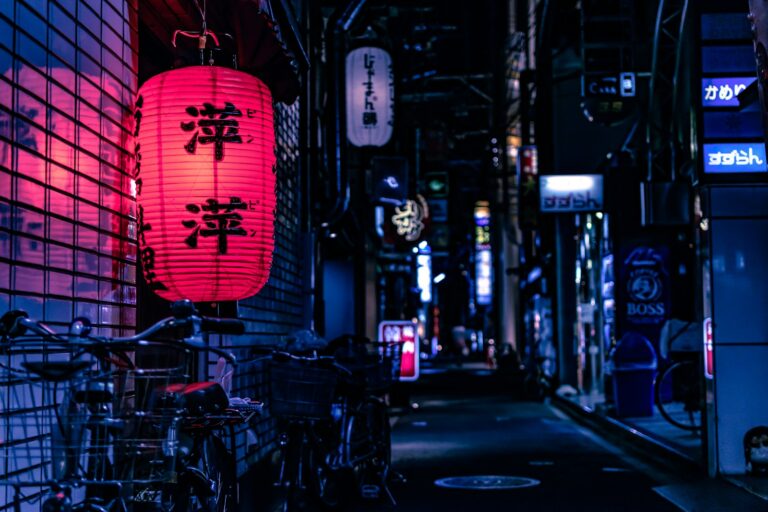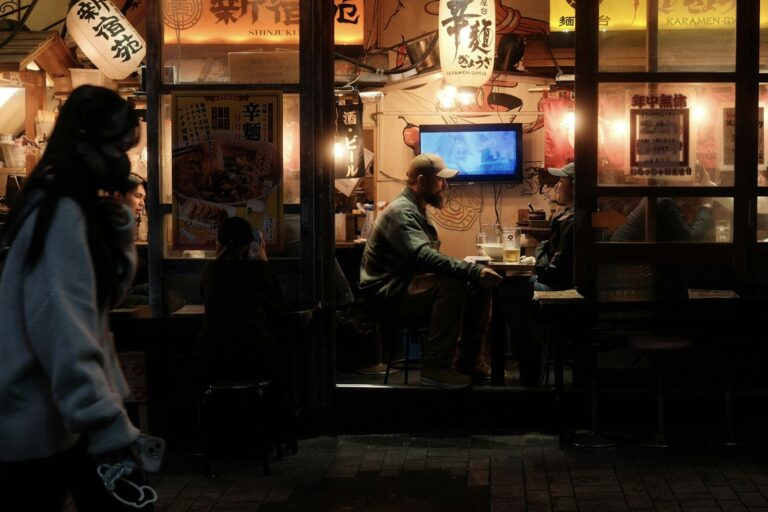
Photo by <a href="https://unsplash.com/@semspam?utm_source=tokyodeepnightlife&utm_medium=referral">Sem S</a> on <a href="https://unsplash.com/?utm_source=tokyodeepnightlife&utm_medium=referral">Unsplash</a>
Shinjuku is the easiest place in the city to start a night on foot. Within a few kilometers you get a free observation deck, a building-sized light show, smoky yakitori alleys, the neon of Kabukicho and a quiet shrine tucked behind the bars. This Tokyo night walking route from Shinjuku strings those stops together in a logical order, so you never backtrack and you hit each one at the right time of night.
The route below takes about three hours at a relaxed pace, longer if you stop to eat and drink (and you should). It works for first-timers, solo travelers and couples, and almost every stop is free to visit. We’ll also cover a shorter version, how to time the evening, and the mistakes that trip up visitors in Kabukicho.
Contents
- Tokyo Night Walking Route from Shinjuku: The Route at a Glance
- When to Start Your Tokyo Night Walking Route from Shinjuku
- Stop 1: Tokyo Metropolitan Government Building Observatory
- Stop 2: Projection Mapping on the Government Building
- Stop 3: Omoide Yokocho for Yakitori
- Stop 4: Kabukicho, the Neon Heart of the Route
- Stop 5: Shinjuku Golden Gai for a Nightcap
- Stop 6: Hanazono Shrine, a Quiet Finish
- A Shorter 90-Minute Version
- Is There a Free Guided Version of This Walk?
- Practical Tips for Walking Shinjuku at Night
- Want to Walk Shinjuku With Someone Who Knows It?
- What do you do in Tokyo After 10?Join our Tokyo Nightlife Private Tour
- FAQ
- About the Author
Tokyo Night Walking Route from Shinjuku: The Route at a Glance
Here is the full Shinjuku night walk in order. It runs west to east, from the skyscraper district to the old drinking lanes on the other side of the station:
- Tokyo Metropolitan Government Building — free 45th-floor observatory at dusk
- Projection mapping on the same building — watch from the plaza outside
- Omoide Yokocho — yakitori dinner under the train tracks
- Kabukicho — neon, the Godzilla head and Tokyu Kabukicho Tower
- Shinjuku Golden Gai — a tiny-bar nightcap
- Hanazono Shrine — a calm, lantern-lit finish
Total walking distance is roughly 3–4 km depending on detours. You can end at Shinjuku Station or Shinjuku-sanchome Station, both a short walk from the last stop.
When to Start Your Tokyo Night Walking Route from Shinjuku
Start about 30 minutes before sunset. That puts you at the observatory as the sky turns from blue to orange to full city lights, which is the best show in the whole route. In late autumn and winter, sunset in Tokyo falls well before 5 p.m., so you can start early and still have a long evening. In summer, plan for a later start.
Two hard limits shape the timing:
- The observatory takes its last entry at 9:30 p.m. and closes at 10 p.m.
- The projection mapping runs in the early-to-mid evening only, so catch it before you head east into the bar districts.
After that, the rest of the route only gets better as the night goes on. Golden Gai barely warms up before 9 p.m.
Stop 1: Tokyo Metropolitan Government Building Observatory
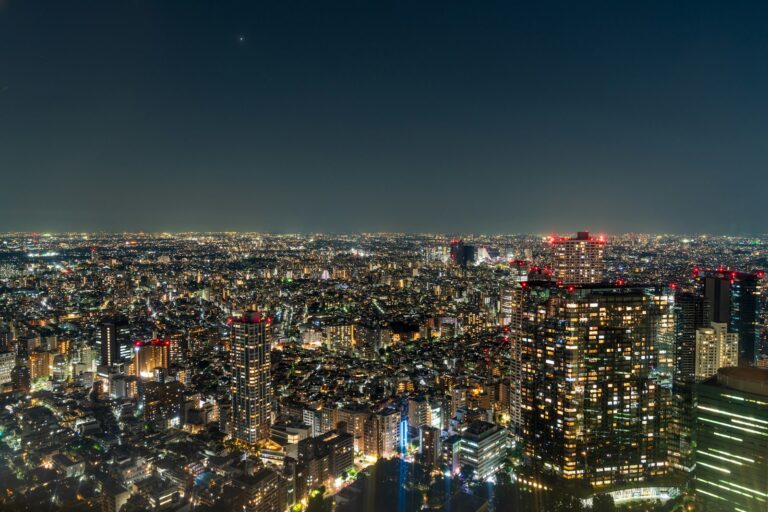
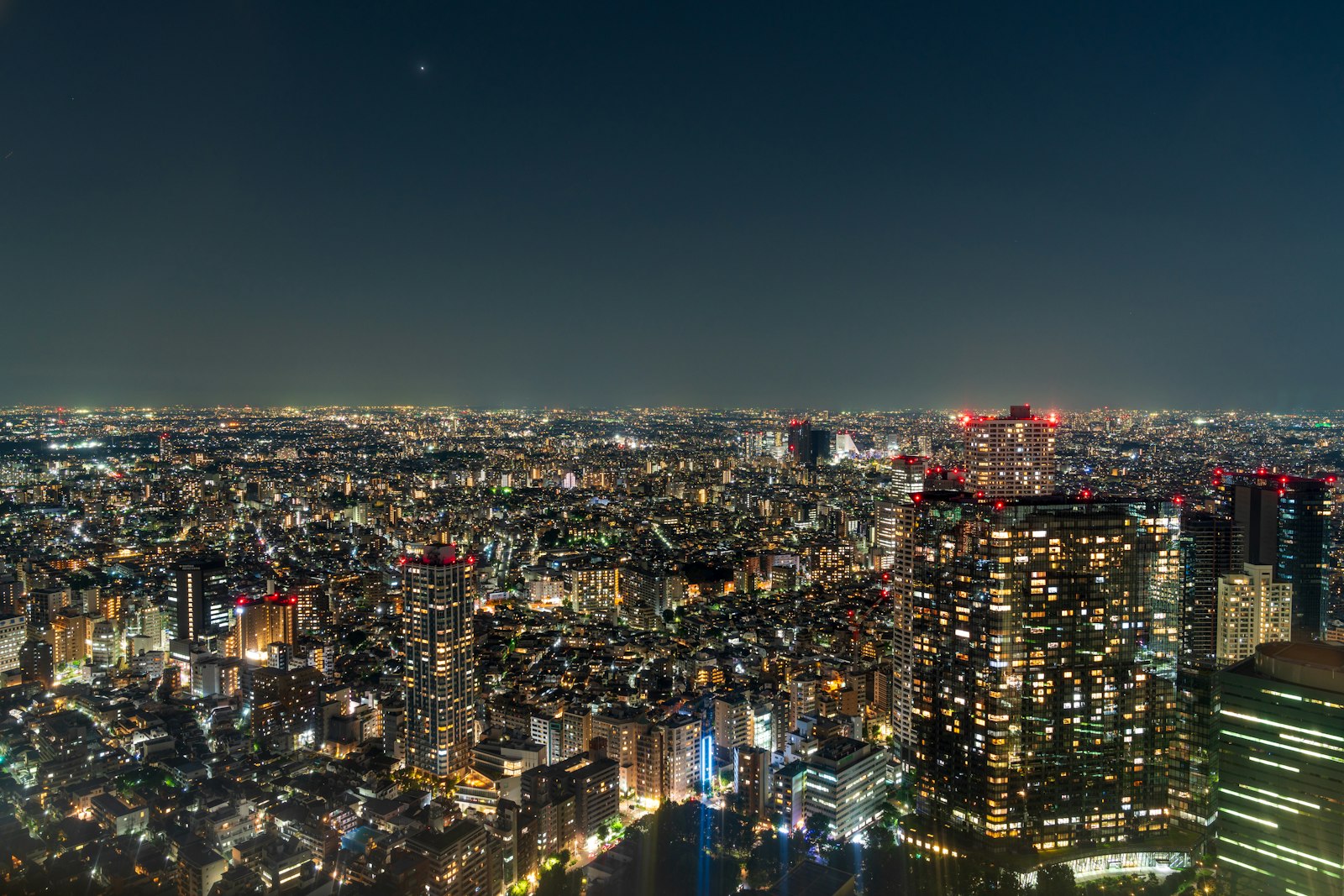
Tokyo’s city hall, often called “Tocho,” has two observation decks on the 45th floor, and both are free. According to the official GO TOKYO listing, the observatories are open from 9:30 a.m. to 10 p.m. with last entry 30 minutes before closing. The South Observatory closes on the first and third Tuesdays of the month and the North Observatory on the second and fourth Mondays, so check which side is open on your date.
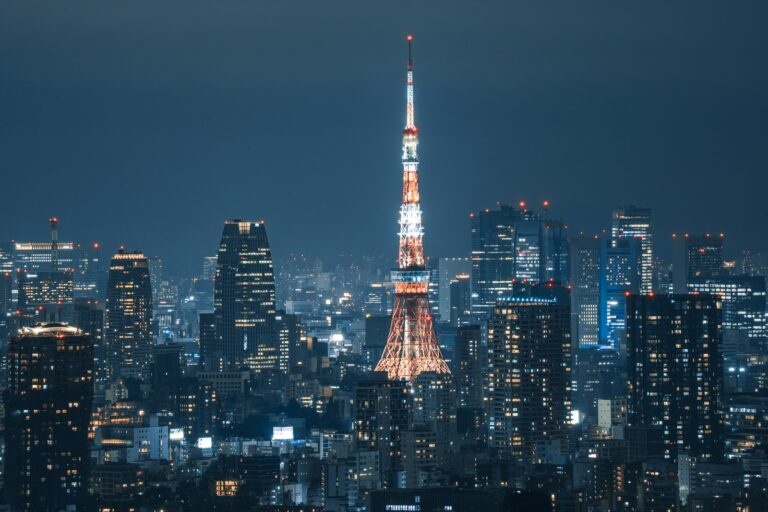
From the top you look east over the Shinjuku skyscrapers toward central Tokyo, and on a clear evening you can pick out Tokyo Skytree in the distance. Expect a short security check and a queue for the elevators around sunset. Lines can form on the way down too, so give yourself a buffer before the light show.
The nearest station is Tochomae on the Toei Oedo Line (Exit A4, about one minute away). From Shinjuku Station’s west exit, it’s an easy walk through the skyscraper district. For photo tips and the best side to visit, see our Tokyo Metropolitan Government Building night view guide.
Stop 2: Projection Mapping on the Government Building
Once you’re back on the ground, stay put. The east wall of the main building doubles as a giant screen for one of the world’s largest permanent projection mapping shows. The official Tokyo Projection Mapping Project site lists shows at half-hour intervals in the evening, with the schedule varying by month, so check the times for your date before you go.
There’s no ticket. Any spot with a clear view of the building’s east face works, and the plaza in front of the building is the most popular viewing area. Each show is short, so you can catch one and keep walking without derailing your evening.
Stop 3: Omoide Yokocho for Yakitori
Walk back toward Shinjuku Station and look for the cluster of narrow lanes just northwest of the west exit, beside the railway tracks. This is Omoide Yokocho, sometimes called “Memory Lane,” a postwar alley of tiny counter restaurants where smoke from charcoal grills drifts out into the lanes.
This is the dinner stop on the route. Most places seat only a handful of people, so expect to squeeze in at a counter. Order a few skewers and a drink, stay 30–45 minutes, and move on, which is exactly how locals use it. If a place looks full, try the next one rather than waiting outside.
If you’ve never been, our Omoide Yokocho first-timer’s guide explains how to order, what to expect on the bill, and how to read the signs out front.
Stop 4: Kabukicho, the Neon Heart of the Route
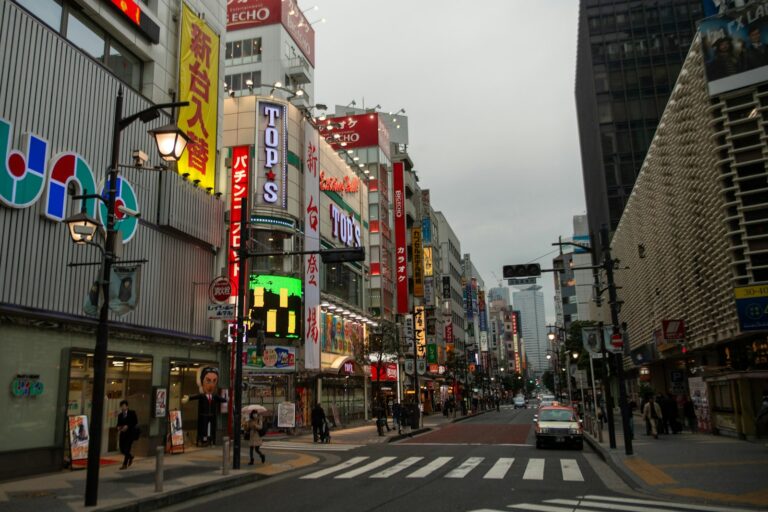
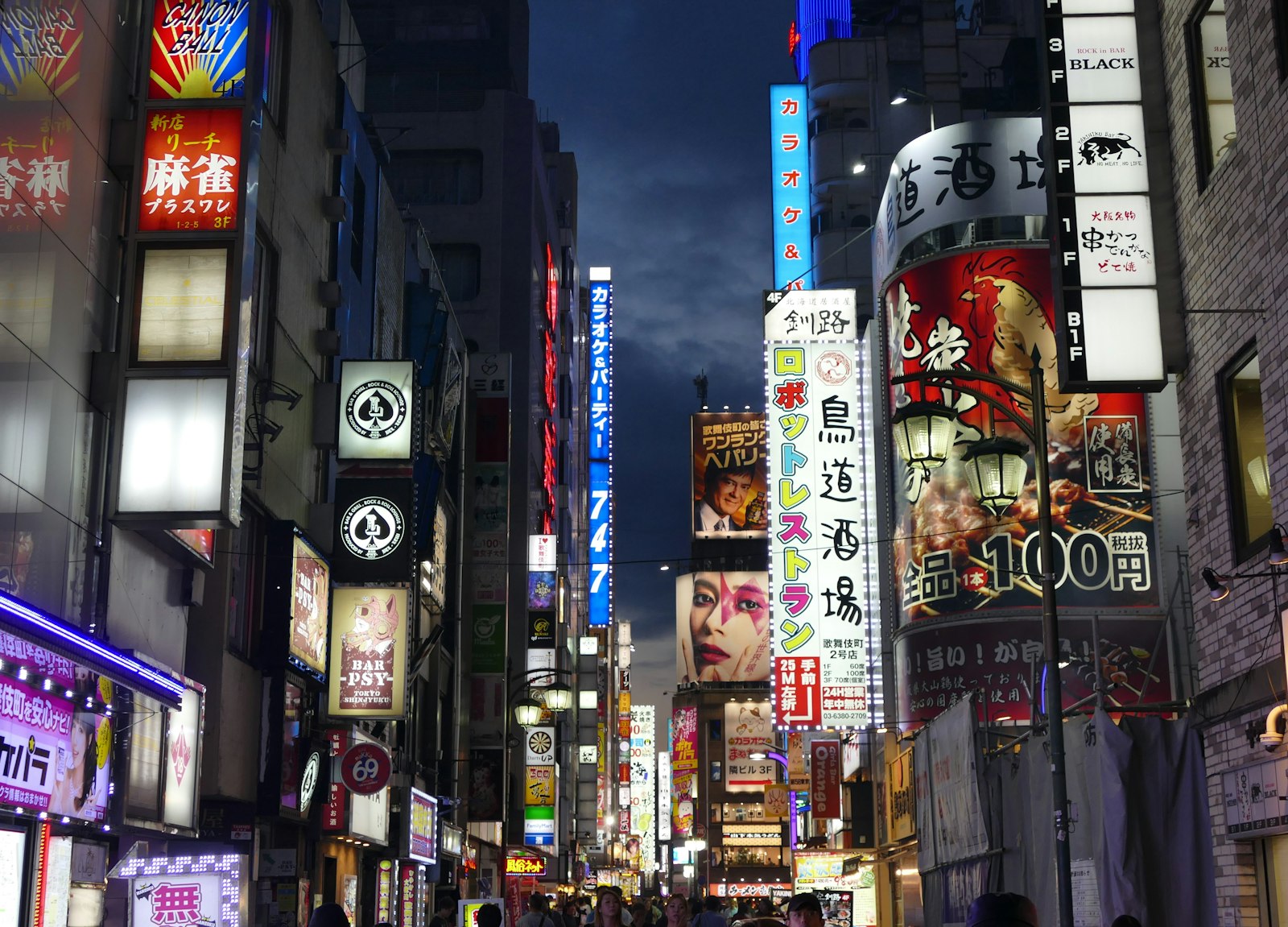
From Omoide Yokocho, cross under the tracks to the east side of the station and head north. Kabukicho is Tokyo’s biggest entertainment district: wall-to-wall signs, pachinko halls, karaoke, restaurants, host club billboards and constant foot traffic until late.
Two landmarks are worth stopping for:
- The Godzilla head peers over the street from the Shinjuku Toho Building. Walk up Kabukicho’s central avenue and you’ll see it at the far end.
- Tokyu Kabukicho Tower, opened in 2023, is the district’s newest skyscraper, with a food hall, entertainment venues and hotels inside.
Kabukicho is fine to walk through, but it has a reputation for a reason. Ignore anyone who approaches you on the street offering bars, clubs or “cheap drinks.” Street touting is a common setup for overcharging. Read our guide to Kabukicho scams tourists fall for before you go, so you know what to walk past.
Looking for Adult Entertainment Services in Tokyo? Download this
I’ve spent over a decade exploring and studying Japan’s adult entertainment scene firsthand. If you’d like detailed insider information—including how to choose the right shop, what services are available, and tips for avoiding common mistakes—check out our exclusive E-book.
Stop 5: Shinjuku Golden Gai for a Nightcap
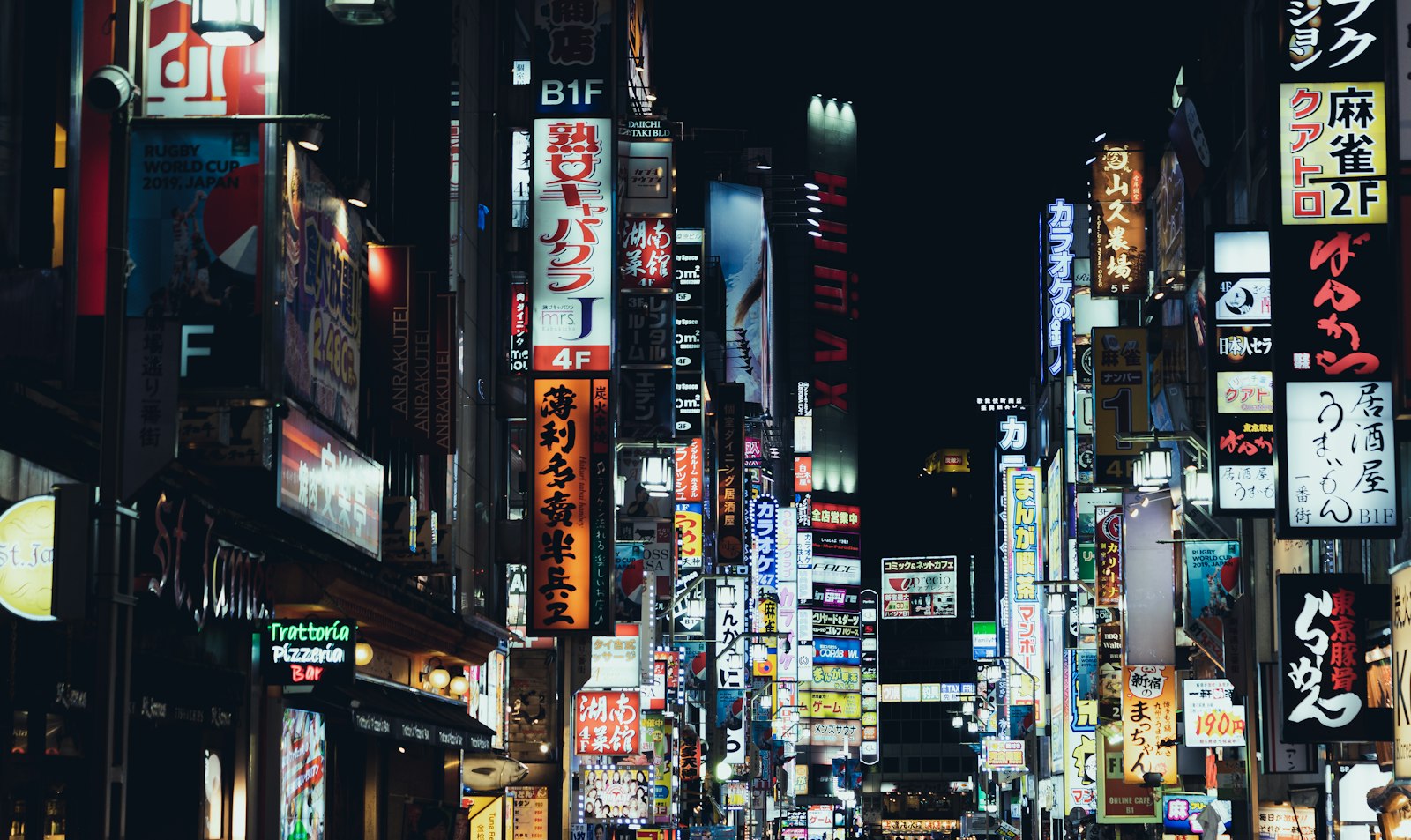
Just east of Kabukicho, the neon suddenly drops away and you’re in Golden Gai, a grid of six narrow lanes packed with around 200 tiny bars. Many seat fewer than ten people, and each has its own theme, from film and punk to jazz and literature.
A few things make the visit smoother:
- Expect a seating charge. Many bars charge a cover on top of drinks, so check the sign by the door before you go in.
- Look for foreigner-friendly signs. Some bars post English menus or “welcome” notices; others prefer regulars.
- Don’t photograph inside without asking. Many bars post no-photo signs.
- Bring cash. Not every bar takes cards.
Golden Gai picks up from around 9 p.m. and keeps going long after the trains stop. For bar-by-bar advice, see our Golden Gai complete guide.
Stop 6: Hanazono Shrine, a Quiet Finish
Hanazono Shrine sits right next to Golden Gai, but it feels like another world. The grounds are open to visitors throughout the day and evening, and the vermilion gates and lanterns look striking after dark. Ten minutes here is the perfect way to come down from Kabukicho.
Be respectful: this is an active shrine. Keep your voice low, don’t drink on the steps and don’t treat it as an after-party spot. From here, Shinjuku-sanchome Station is a short walk away, or you can head back to Shinjuku Station.
A Shorter 90-Minute Version
Short on time or energy? Cut the route in half:
- Omoide Yokocho for a quick skewer and drink
- Kabukicho for the neon and the Godzilla head
- Golden Gai to walk the lanes (one drink, or just look)
- Hanazono Shrine to finish
This version stays on the east side of the tracks after Omoide Yokocho and keeps everything within a compact area. You’ll miss the skyline, but you’ll still see the three faces of Shinjuku nightlife: old-school, neon and hidden. It’s the best way to squeeze a Tokyo night walking route from Shinjuku into an evening that already has dinner plans elsewhere.
Is There a Free Guided Version of This Walk?
Yes, with conditions. The Tokyo Metropolitan Government’s volunteer guide program offers a free Shinjuku Night Tour that starts at 6 p.m. from the Tokyo Tourist Information Center at the Shinjuku Expressway Bus Terminal and lasts about 1.5 hours. One course visits Hanazono Shrine, Kabukicho and the West Exit skyscraper district; the other ends at the projection mapping show.
The catch: groups are capped at five people, you need to apply between one month and three days in advance, dates depend on volunteer availability, and guides do not take you into restaurants or bars. It’s a great orientation, but it won’t help you get a seat at a Golden Gai bar.
Practical Tips for Walking Shinjuku at Night
- Wear comfortable shoes. Shinjuku Station is enormous, and the underground passages add distance you won’t see on a map.
- Use exit names, not station names. “West Exit” and “East Exit” are effectively different neighborhoods. Set your map app to the specific exit.
- Carry cash. Small alley bars and yakitori stalls are often cash-only.
- Watch the last train. Most trains stop running around midnight. If you plan to stay out past that, budget for a taxi or plan to keep going until the first trains in the morning.
- Stay alert, not anxious. Shinjuku is generally safe to walk at night. The main risks are aggressive touts and overpriced bars, not street crime.
Want to Walk Shinjuku With Someone Who Knows It?
This Tokyo night walking route from Shinjuku covers the highlights, but the best part of Shinjuku at night is the stuff that doesn’t appear on maps: which Golden Gai door is actually welcoming tonight, which yakitori counter the regulars pick, and how to slip into the local side of Kabukicho without getting overcharged.
That’s what our local guides do. On the Tokyo After 10 nightlife private tour, a guide who knows the neighborhood takes you through the bars and back streets, handles the ordering and the etiquette, and makes sure your night out ends with great stories rather than a surprise bill. If you’d rather explore on your own first, use this route for night one and save the guided tour for the deeper dive.
What do you do in Tokyo After 10?
Join our Tokyo Nightlife Private Tour
You deserve better than overpriced bars and missed opportunities. We’re here for you.
FAQ
How long does the Tokyo night walking route from Shinjuku take?
About three hours for the full route, including dinner and one drink. The shorter version takes around 90 minutes.
Is the Tokyo Metropolitan Government Building observatory free?
Yes. Admission to both 45th-floor observatories is free. Last entry is 9:30 p.m., and each side closes on certain days each month.
Is it safe to walk around Shinjuku at night?
Generally yes. Stick to busy streets, ignore street touts in Kabukicho, and always confirm prices before you sit down in a bar.
Where should the walk end?
Hanazono Shrine is the natural finish. From there, Shinjuku-sanchome Station and Shinjuku Station are both within walking distance.