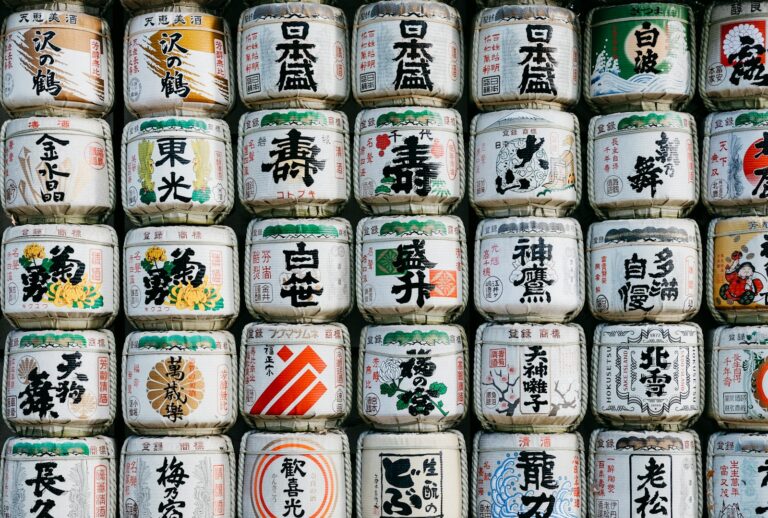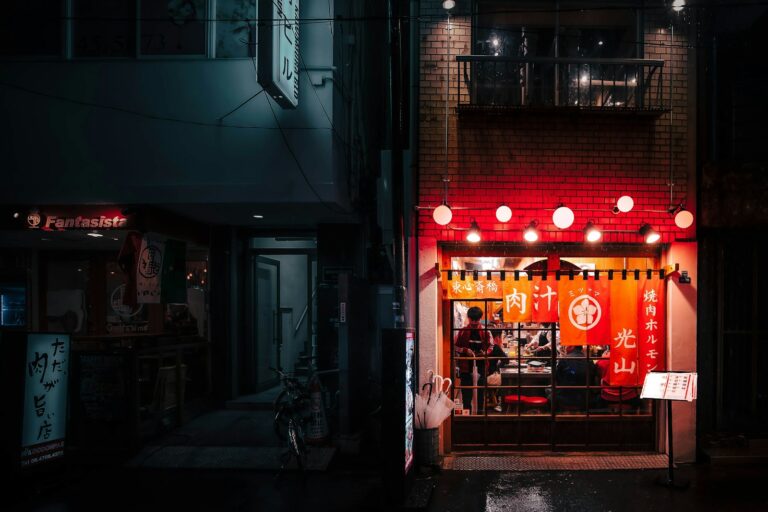
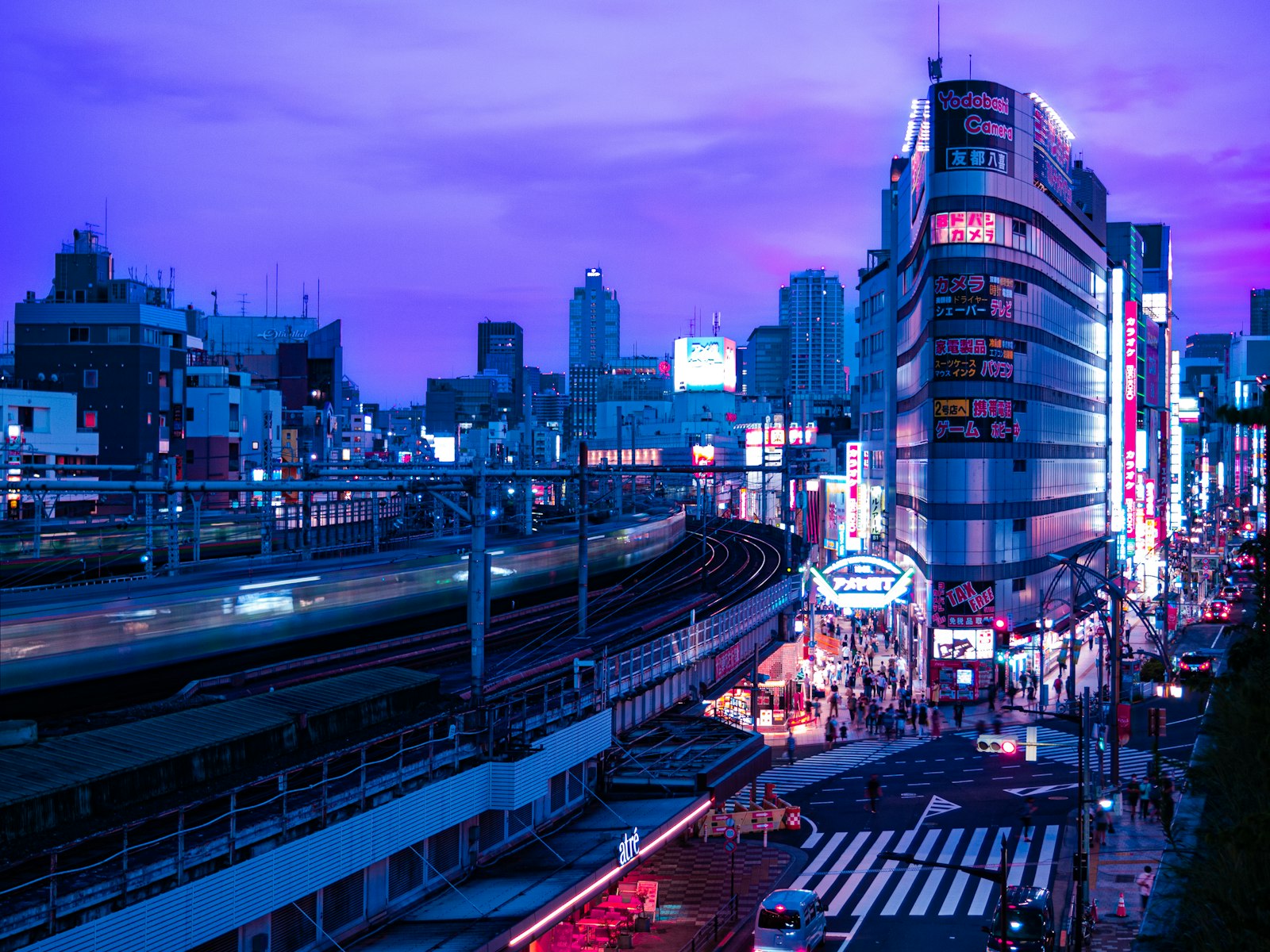
Photo by <a href="https://unsplash.com/@frankokay?utm_source=tokyodeepnightlife&utm_medium=referral">Frank Okay</a> on <a href="https://unsplash.com/?utm_source=tokyodeepnightlife&utm_medium=referral">Unsplash</a>
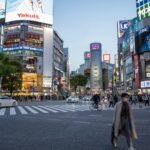
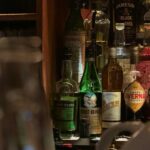
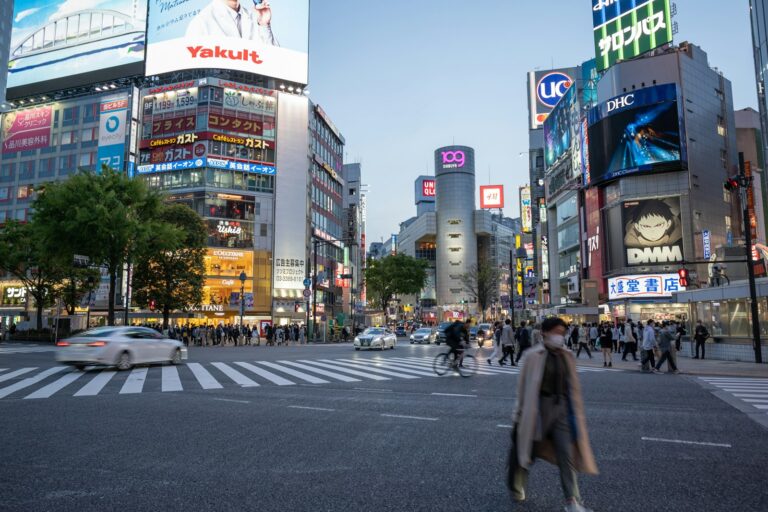
By 7pm the department stores on Chuo-dori are closing, and the shoppers head for the station. That’s when Ginza gets interesting. Ginza bars at night aren’t on the street. They’re in basements with a single brass plate by the stairs, on the seventh floor of office buildings, or behind a heavy wooden door you’d walk past twice. Inside, bartenders in white jackets carve ice by hand and stir a Martini as if the result matters. It does.
This guide is for travelers who want that side of Tokyo: quiet counters, serious cocktails, and a few lounges that stay open well past midnight. You’ll find how the district is laid out, what a night actually costs, the etiquette that matters, eight bars we checked against current listings, and two routes you can follow.
Contents
- Why Ginza Bars at Night Feel Different
- How Ginza’s Bar District Is Laid Out
- What a Night Out in Ginza Actually Costs
- Ginza Bar Etiquette: Dress, Ordering, and Manners
- 8 Ginza Bars at Night Worth Your Evening
- 1. Star Bar Ginza (1-chome)
- 2. Bar High Five (5-chome)
- 3. Lupin (5-chome)
- 4. Mori Bar (7-chome)
- 5. Little Smith (6-chome)
- 6. Penthouse Garden (7-chome)
- 7. CANVAS LOUNGE at The Royal Park Canvas – Ginza Corridor (6-chome)
- 8. Ginza Music Bar (7-chome)
- Looking for Adult Entertainment Services in Tokyo? Download this
- Two Routes Through Ginza’s Bars at Night
- Ginza Bars vs Ginza Clubs: Know the Difference
- Getting Home After a Night in Ginza
- Ginza Bars at Night: FAQ
- What do you do in Tokyo After 10?Join our Tokyo Nightlife Private Tour
- Skip the Guesswork: See Ginza After Dark With a Local
- About the Author
Why Ginza Bars at Night Feel Different
Shinjuku and Shibuya are loud, crowded, and cheap. Ginza is none of those things, and that’s the point.
Ginza sits on the site of an Edo-era silver mint, and according to the official GO TOKYO guide to Ginza, it has long carried “an air of self-assured elegance.” That extends to its bars. The Ginza bar tradition is built around the “authentic bar”: a small room, a long counter, a bartender who has trained for years, and customers who come for one or two very good drinks rather than a big night.
What that means in practice:
- The bartender is the attraction. Several of Tokyo’s most decorated bartenders run their own counters here. You’re paying for their technique as much as the alcohol.
- Most bars are hidden by default. Commercial rents push them into basements and upper floors, so a small sign in the lobby is often all you get.
- The mood is quiet. Conversation is fine; shouting across the room is not.
- Good Ginza cocktail bars cost more, but not absurdly so. The cover charges at the bars below range from ¥800 to ¥1,900, which is in line with serious bars elsewhere in Tokyo.
How Ginza’s Bar District Is Laid Out
Ginza is divided into numbered blocks, 1-chome to 8-chome, running roughly north to south along Chuo-dori. Knowing which chome a bar is in helps you plan a walking route, because the character of the neighborhood changes as you go south.
1-chome to 4-chome: The Quieter North
The northern end, toward Kyobashi and Ginza-itchome Station on the Yurakucho Line, is calmer after dark. It has fewer bars, but it’s home to one of the most famous: Star Bar Ginza.
5-chome and 6-chome: The Classic Core
The blocks around Ginza Station (Ginza, Marunouchi, and Hibiya lines) hold the densest cluster of historic and award-winning bars. Bar High Five, Lupin, and Little Smith are all within a short walk of each other here.
7-chome and 8-chome: Late Nights Toward Shimbashi
Head south toward Shimbashi and the buildings fill with lit-up signboards listing a dozen tenants per floor. This is the heart of Ginza’s high-end “club” scene, the members-style hostess clubs Ginza is famous for in Japan, alongside bars that stay open until 4 or 5am. It’s also where you’ll find Mori Bar, Penthouse Garden, and Ginza Music Bar.
What a Night Out in Ginza Actually Costs
The biggest surprise for first-timers trying Ginza bars at night isn’t the drink prices. It’s the charge that appears on the bill before you’ve ordered anything.
- Cover charge (charge / table charge). Almost every Ginza bar adds one per person. At the bars in this guide it runs from ¥800 at Lupin (before tax) to ¥1,900 at Mori Bar (tax included). Some include a small snack; Little Smith’s ¥1,650 covers the seat, an onion soup, and an appetizer.
- Service charge. A few places, especially larger lounges, add a percentage on top. Check the menu or ask.
- Drinks. Expect to pay noticeably more for a cocktail at a top Ginza bar than at a neighborhood bar in Shinjuku. Tabelog lists the typical spend at Bar High Five as ¥6,000–7,999 per person, which is a reasonable guide for two drinks plus the charge at a leading bar.
- Payment. Don’t assume cards. Lupin is cash only, while Star Bar Ginza, Bar High Five, and Mori Bar all list card acceptance. Carry enough yen to cover a bar or two regardless.
As a rough planning figure, three top bars with two drinks each can run ¥15,000–25,000 per person. That’s well above a night in Golden Gai, so decide in advance how many stops you really want.
Ginza Bar Etiquette: Dress, Ordering, and Manners
Ginza bars at night are welcoming to foreign visitors, but they reward people who read the room. A few rules make a big difference:
- Dress one step up. A collared shirt or smart top is safe everywhere. Lupin’s listing explicitly bans sandals, shorts, and tank tops, and you’ll feel out of place in most authentic bars dressed that way.
- Keep groups small. Star Bar Ginza’s listing caps parties at four. Counter bars are built for ones and twos, so a big group will struggle to find seats together.
- Tell the bartender what you like. At bars like these, “something refreshing with gin” or “a stirred whisky drink, not too sweet” often gets you a better drink than pointing at the menu.
- Don’t rush the drink, and don’t camp. A stirred cocktail takes a few minutes to make properly. Two drinks over an hour is a normal pace at a counter bar.
- Ask before taking photos. A quick shot of your glass is usually fine. Photographing other guests or the bartender at work is not.
- Keep your voice down. These are small rooms, often with regulars who come for the quiet.
If you want the cultural background on toasting, pouring for others, and why drinking together matters so much in Japan, our guide to Japanese drinking culture explained covers it.
8 Ginza Bars at Night Worth Your Evening
Ginza bars change hours and sometimes move, and many older lists online still send readers to former addresses. Every bar below was checked in September 2026 against its official website, the Ginza district’s official guide, or a current Tabelog listing. Hours still change, so confirm before you go.
1. Star Bar Ginza (1-chome)
Hisashi Kishi is one of the best-known names in Japanese bartending. Time Out Tokyo notes he won the International Bar Association’s world championship title in 1996, at the age of 31. His flagship is in the basement of the MODERNS GINZA building at 1-5-13 Ginza. The official site calls it the origin of the bar’s famous hand-cut “NINJA ICE.”
The Tabelog listing shows hours of 17:00–23:30 every day, a ¥1,100 charge, and 19 seats (nine at the counter). Cards are accepted. Since it’s open daily, it’s one of the few serious options on a Sunday.
Best for: A benchmark classic cocktail made with extraordinary precision.
2. Bar High Five (5-chome)
If you know one Ginza bar before you arrive, it’s probably this one. Bartender Hidetsugu Ueno runs Bar High Five from the basement of the Efflore Ginza 5 Building at 5-4-15 Ginza. According to 50 Best, it ranked No. 18 on The World’s 50 Best Bars 2019, was named Best Bar in Japan at Asia’s 50 Best Bars the same year, and placed No. 45 on Asia’s 50 Best Bars 2023.
Tabelog lists hours of 17:00–1:00 Monday to Saturday with last entry at 23:30, closed Sundays and public holidays. The charge is ¥1,000 and there are 22 seats. With a reputation like this and limited space, arriving early in the evening gives you the best chance of a seat.
Best for: Travelers who want to see why Japanese bartending gets global attention.
3. Lupin (5-chome)
Lupin opened in 1928 and is the bar to visit for history. Published histories of the bar say it was forced to drop its foreign-sounding name in 1941 during the war, reopened as a coffee shop in 1946, and after the war became a hangout for writers including Osamu Dazai, Ango Sakaguchi, and Sakunosuke Oda. You’ll find it down a narrow basement staircase at 5-5-11 Ginza.
On Tabelog, Lupin is open 17:00–23:30 Monday to Saturday and closed Sundays. The cover charge is ¥800 before tax, payment is cash only, and there are 30 seats. It also lists an English menu.
Best for: A first drink in a room that looks much as it did decades ago.
4. Mori Bar (7-chome)
Mori Bar is run by veteran bartender Takao Mouri, and its signature is the Mori Martini. Note the address: Mori Bar is now on the 7th floor of the Laviere Ginza Building at 7-5-4 Ginza, about three minutes from Exit B3 of Ginza Station, so ignore older guides that list a different building.
Tabelog shows hours of 16:00–2:00 Monday to Friday and 16:00–23:00 on Saturday, closed Sundays and public holidays. The charge is ¥1,900 including tax, cards and several QR payment apps are accepted, and there are 30 seats. The early opening and late weekday close make it flexible at either end of the night.
Best for: Martini lovers, and a late drink on a weeknight.
5. Little Smith (6-chome)
Little Smith opened on November 15, 1993, in the KN Building at 6-4-12 Ginza. The room is built around a horseshoe-shaped counter under a ceiling more than four meters high, and the Ginza district’s official guide describes it as a bar where the quality shows in the classics.
Its official site lists hours of 18:00–2:00 (last order 1:30) Monday to Saturday from May 2026, closed Sundays and public holidays. The ¥1,650 charge includes the seat, an onion soup, and an appetizer. In June 2026 it also opened a sister bar, Little Smith – The State Room –, on the 2nd floor of the same building.
Best for: A polished, grown-up setting that works well for a date.
6. Penthouse Garden (7-chome)
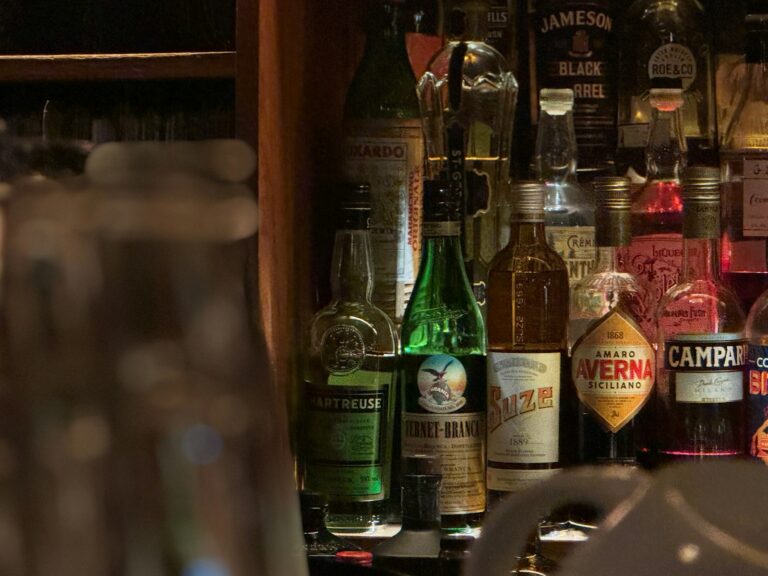
Many of Ginza’s classic bars are underground. Penthouse Garden goes the other way: it’s on the 10th floor of HULIC &New GINZA 7 at 7-3-8 Ginza, and has terrace seating, which the building’s official listing points out is rare in Ginza. The back bar holds more than 700 kinds of liquor, and the food menu is substantial enough for dinner.
The official listing shows hours of 17:00 to 5:00 the next morning, Monday to Saturday, closed Sundays and public holidays, with 32 seats. Check the charge when you sit down, especially if you arrive after midnight.
Best for: An open-air drink above Ginza, or a very late last stop.
7. CANVAS LOUNGE at The Royal Park Canvas – Ginza Corridor (6-chome)
For something livelier, this hotel lounge on the 2nd floor of The Royal Park Canvas – Ginza Corridor at 6-2-11 Ginza has DJs most nights. The hotel’s official site lists hours of 11:00–28:00 (4am) Monday to Saturday, with drinks until 27:00, and 11:00–22:00 on Sundays and holidays.
DJ events run Monday to Saturday, with the core time from 20:00 to midnight, and non-guests are welcome without a reservation. There are sofa seats, table seats, and a 20-seat terrace. It’s the easiest Ginza bar at night to simply walk into.
Best for: Groups, a relaxed start, or anyone who finds silent counter bars intimidating.
8. Ginza Music Bar (7-chome)
On the 4th floor of Brown Place at 7-8-13 Ginza, Ginza Music Bar was created by music producer Shinichi Osawa and coffee producer Nobuhiro Toriba. According to its official site, more than 3,000 carefully selected vinyl records play through a high-end sound system, and the selection runs from jazz and soul to techno and film soundtracks.
Current listings show it open from 19:00 to 4:00 Monday to Saturday. It’s a good place to end a night of cocktail bars, when you want to sit back and listen rather than talk.
Best for: Music lovers and after-midnight drinks.
For Tokyo bars with a view rather than a basement, see our round-up of rooftop bars in Tokyo with a night view.
Looking for Adult Entertainment Services in Tokyo? Download this
I’ve spent over a decade exploring and studying Japan’s adult entertainment scene firsthand. If you’d like detailed insider information—including how to choose the right shop, what services are available, and tips for avoiding common mistakes—check out our exclusive E-book.
Two Routes Through Ginza’s Bars at Night
Three bars is plenty for most people. Top-level cocktails are strong, and they’re best enjoyed slowly. Both routes are walkable and built around the hours above.
Route A: The Classics (Monday to Friday)
- 17:00 — Star Bar Ginza in 1-chome, early, while it’s quiet.
- 18:30 — Walk south to Lupin in 5-chome for a drink in its historic basement.
- 20:00 — Bar High Five, a few minutes away. Arrive well before the 23:30 last entry.
- Late — Finish with a Mori Martini at Mori Bar, open until 2:00 on weeknights.
Route B: Lounges and Late Nights (Monday to Saturday)
- 20:00 — CANVAS LOUNGE during the DJ core time. Grab a terrace seat if the weather allows.
- 22:00 — Little Smith for a classic cocktail at the horseshoe counter.
- After midnight — Either the terrace at Penthouse Garden or the records at Ginza Music Bar.
On Sundays most of Ginza’s authentic bars are closed. Star Bar Ginza and CANVAS LOUNGE (until 22:00) are your best options.
Ginza Bars vs Ginza Clubs: Know the Difference
In Japan, “Ginza” and “club” together don’t mean a dance floor. A Ginza club usually means an exclusive hostess club, where hostesses keep guests company, seating is often by introduction, and the bill works on a completely different system from a cocktail bar.
These clubs are a big part of Ginza’s reputation, especially in 7-chome and 8-chome, but they’re not the same thing as the bars in this guide. If a building sign lists a “club” with no menu or prices, assume it’s not a place you can walk into for a cocktail. Our Tokyo hostess club guide explains how they work, what etiquette to expect, and how foreigners can visit.
Getting Home After a Night in Ginza
Ginza is central, which makes getting home easier than from many nightlife districts. Ginza Station is served by the Ginza, Marunouchi, and Hibiya lines, with Ginza-itchome and Higashi-Ginza stations nearby. JR Yurakucho and Shimbashi stations are within walking distance.
The catch with Ginza bars at night is timing. Bar High Five’s last entry and Lupin’s closing time both fall close to the last trains, while Penthouse Garden and Ginza Music Bar keep going until morning. Decide early which kind of night you’re having. Our Tokyo last train survival guide explains how to plan around it, and when a taxi makes more sense.
Ginza Bars at Night: FAQ
Are Ginza bars expensive? They cost more than bars in Shinjuku or Shibuya, but less than many people expect. Cover charges at the bars in this guide range from ¥800 to ¥1,900. For a sense of the top end, Tabelog puts the typical spend at Bar High Five at ¥6,000–7,999 per person.
Is there a dress code? Rarely a strict one, but smart casual is the safe choice. Some bars, like Lupin, turn away sandals, shorts, and tank tops.
Do Ginza bars speak English? It varies by bar and by bartender. Lupin lists an English menu, and the award-winning bars are used to international guests. Still, keep your order simple and be patient, especially at small counters.
Can I go to Ginza bars alone? Yes. Sitting at the counter alone is completely normal in Ginza, and often easier than finding space for a group.
Which Ginza bars are open late? Penthouse Garden (until 5:00, Monday to Saturday), CANVAS LOUNGE (until 4:00, Monday to Saturday), and Ginza Music Bar (until 4:00, Monday to Saturday). Mori Bar and Little Smith stay open until 2:00 on weeknights.
Do I need a reservation? For most counter bars, no, but seats are limited. Going early in the evening, or on a weeknight, is the easiest way to get in without one.
What do you do in Tokyo After 10?
Join our Tokyo Nightlife Private Tour
You deserve better than overpriced bars and missed opportunities. We’re here for you.
Skip the Guesswork: See Ginza After Dark With a Local
Everything in this guide is possible on your own. But some of Ginza’s best bars are behind unmarked doors on the seventh floor of anonymous buildings, and the hardest part is often just knowing which door is worth opening, and how to act once you’re inside.
That’s what our Tokyo After 10 private nightlife tour is for. A local guide plans the night around what you actually want, whether that’s award-winning cocktails, a quiet historic bar, or a lounge that runs until morning. They also explain the charges before they hit your bill, and make sure you get home.
However you do it, dress one step up, start early, and let the bartender pick at least one drink.
Venue details, hours, and charges in this guide were checked in September 2026 against official websites, GINZA OFFICIAL, and current Tabelog listings. Bars in Ginza change hours and occasionally relocate, so confirm directly with each venue before you go.