Photo by <a href="https://unsplash.com/@jorisbeugels?utm_source=tokyodeepnightlife&utm_medium=referral">Joris Beugels</a> on <a href="https://unsplash.com/?utm_source=tokyodeepnightlife&utm_medium=referral">Unsplash</a>
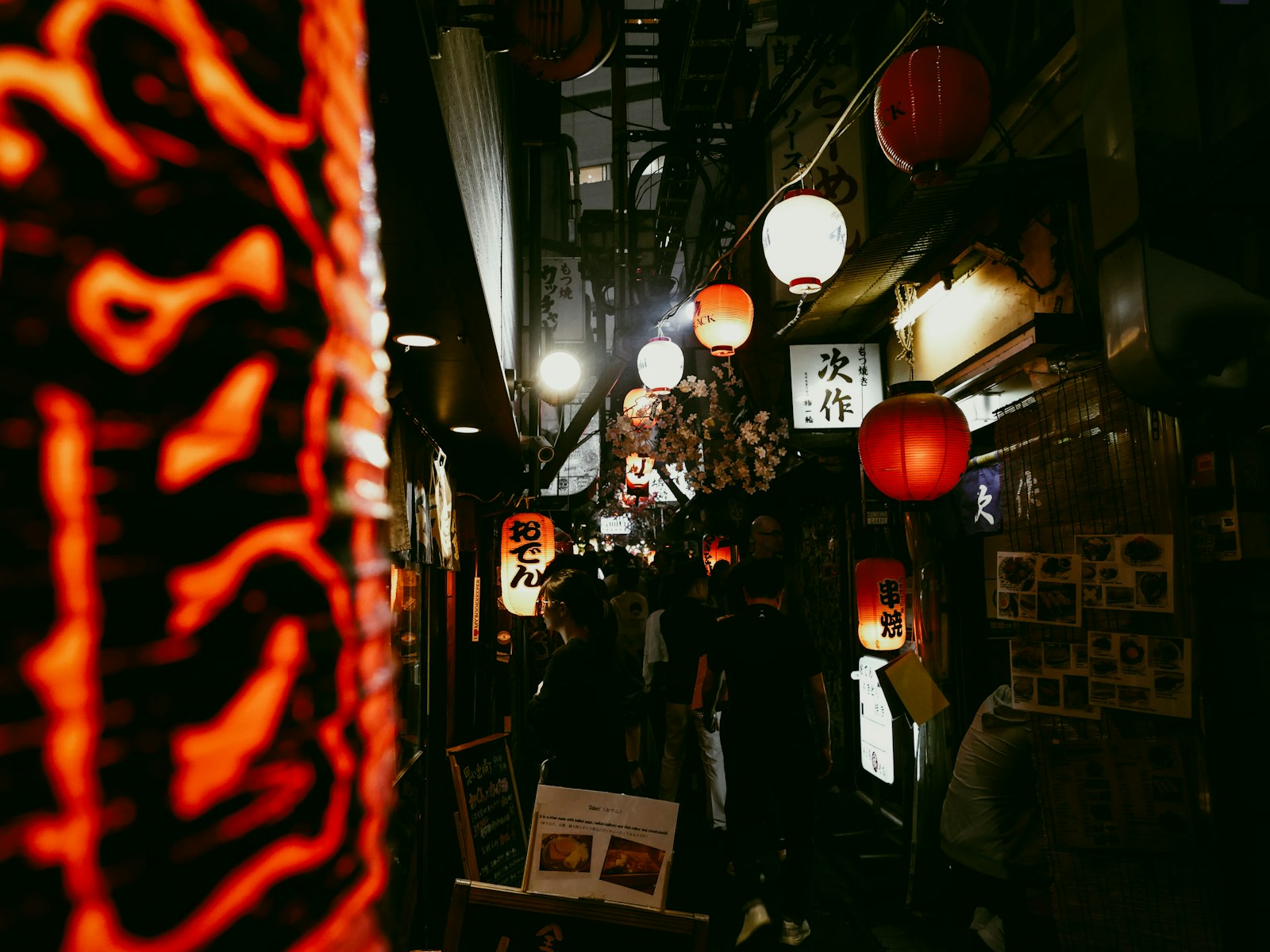
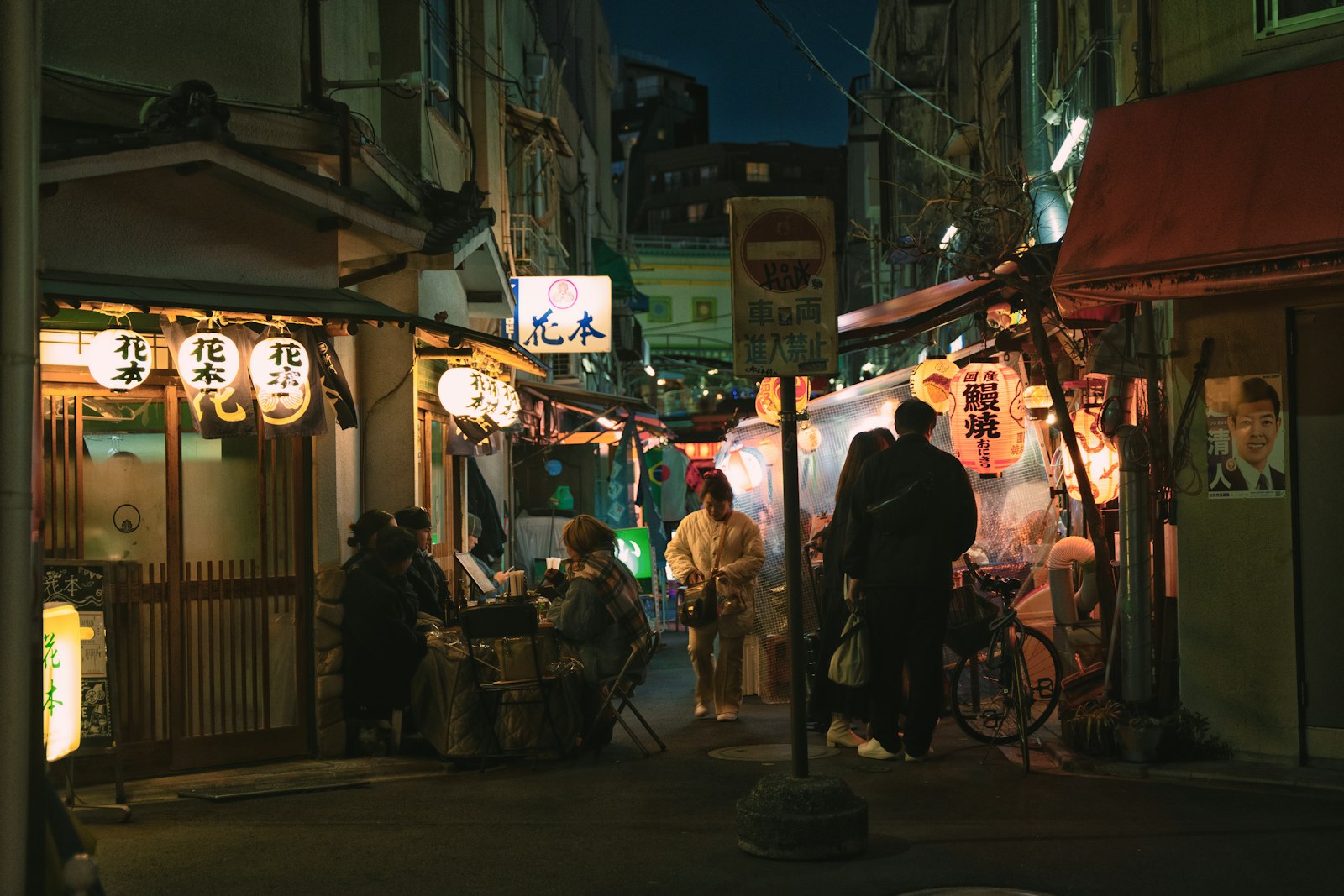
Ask a Tokyo local where they actually drink and almost nobody says “a rooftop bar.” They say a name — Omoide, Nonbei, Sankaku — followed by a station. Those are yokocho: narrow, lantern-strung alleys packed with counter bars so small that six customers is a full house. Finding the best yokocho Tokyo has to offer isn’t about hunting down one perfect bar. It’s about picking an alley and hopping — two skewers and a beer here, a bowl of stew there, then on to the next door.
That practice has a name in Japanese: hashigo-zake, “ladder drinking.” You climb from shop to shop, and each rung costs less than a single cocktail in Ginza. It’s the cheapest, warmest, most sociable way to spend a night in this city — and the format is almost impossible to replicate anywhere else, because these alleys are physical leftovers of postwar Tokyo that redevelopment hasn’t yet swallowed.
Below are ten alleys worth your evening, roughly ordered from the easiest for first-timers to the ones that reward a second or third trip. Each entry tells you where it is, what the alley actually feels like, and whether you should go there on night one or save it.
Contents
- What Is a Yokocho, and Why Is It Perfect for Bar Hopping?
- The 10 Best Yokocho in Tokyo
- 1. Omoide Yokocho, Shinjuku — the classic first stop
- 2. Shinjuku Golden Gai — six minutes away, a completely different animal
- 3. Nonbei Yokocho, Shibuya — the survivor
- 4. Ebisu Yokocho — the easiest introduction of them all
- 5. Yurakucho Gado-shita — drinking underneath the trains
- 6. Hoppy Street, Asakusa — day drinking with a temple view
- 7. Harmonica Yokocho, Kichijoji — the biggest maze
- 8. Sankaku Chitai, Sangenjaya — the local favourite
- 9. Ameyoko, Ueno — the afternoon option
- 10. Mikuni Koji, Ikebukuro — the deep cut
- Yokocho Etiquette: The Rules Nobody Writes Down
- What a Night of Bar Hopping Actually Costs
- How to Build Your Own Yokocho Crawl
- What do you do in Tokyo After 10?Join our Tokyo Nightlife Private Tour
- Going With Someone Who Knows the Doors
- About the Author
What Is a Yokocho, and Why Is It Perfect for Bar Hopping?
Yokocho (横丁) literally means “side street” or “alley off the main road.” In practice it describes a dense cluster of tiny food-and-drink shops, usually built on land that was a black market in the years right after 1945, and usually squeezed against a railway line or under it.
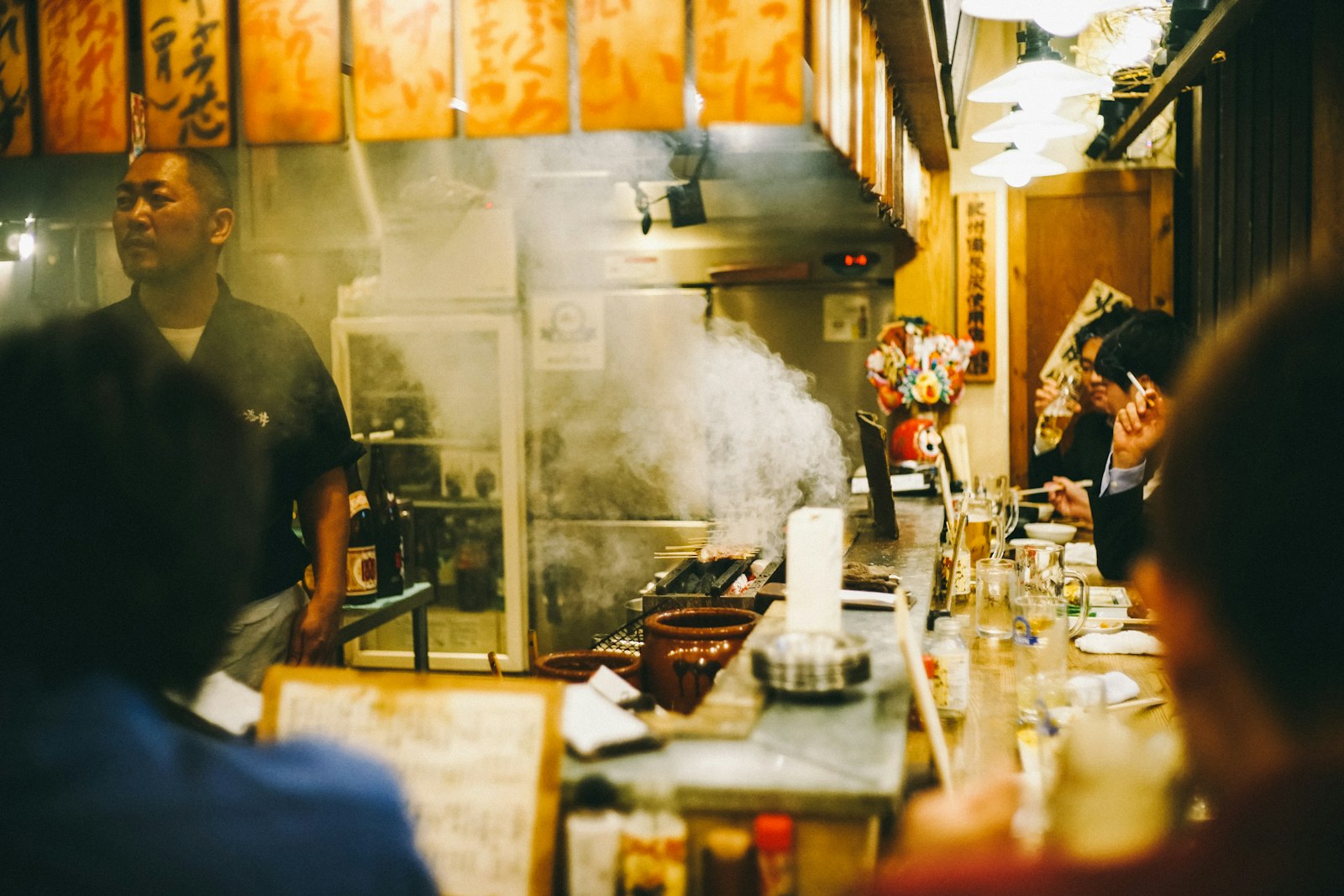
The economics are what make bar hopping work. Because each shop has six to twelve seats, the owner can’t survive on customers who nurse one drink for three hours. So the unwritten deal is: come in, drink two, eat two or three small plates, pay, and free the seat. That turnover is a feature, not a rush job — it’s exactly what lets you visit three or four shops in one night for the price of a mediocre dinner.
A few structural things to expect everywhere:
- Counter seating, no tables. You will sit shoulder-to-shoulder with strangers, which is how conversations start.
- Specialisation. Most shops do one thing — yakitori, offal stew, oden, sashimi — and do it for decades.
- Cash. Card acceptance has improved a lot, but a meaningful share of these shops are still cash-only. Carry ¥5,000–¥10,000 per person in small notes.
- Otoshi. A small dish arrives unrequested within a minute of sitting down, and it costs roughly ¥300–¥800. It’s a cover charge, not a scam. More on that below.
Tokyo’s official tourism body has a good primer on the format in its guide to exploring yokocho alleyways if you want the civic version of the history.
The 10 Best Yokocho in Tokyo
There’s no single best yokocho Tokyo can point to — the right one depends on what night you’re having and how much English you need. The list runs from the most forgiving to the most local, so read the “go here if” line under each before you commit your evening.
1. Omoide Yokocho, Shinjuku — the classic first stop
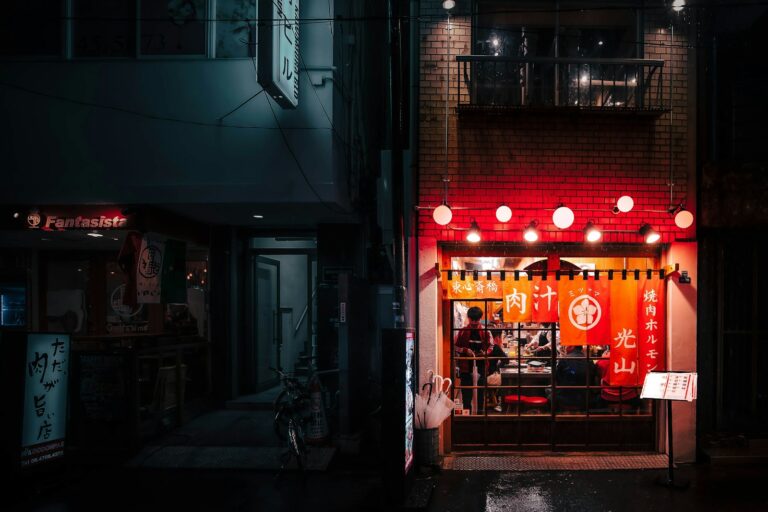
The one everybody photographs, and deservedly so. Roughly 60 shops fill a couple of lanes on the north side of Shinjuku Station’s west exit, most of them grilling yakitori and motsuyaki (offal skewers) over charcoal in front of you. The smoke, the hand-painted signs, the elevated tracks rumbling overhead — it is the platonic image of a Tokyo drinking alley.
Its nickname, Shonben Yokocho (“Piss Alley”), dates from an era before the lanes had plumbing. Ignore it. What matters today is that the shops are used to non-Japanese customers, many post English menus in the window, and you can eat well for ¥2,500.
Go here if: it’s your first yokocho and you want zero friction. Best time: 5–7pm, before the queues form. We’ve written a full walkthrough in our Omoide Yokocho first-timer’s guide covering exits, ordering and etiquette in detail.
2. Shinjuku Golden Gai — six minutes away, a completely different animal
Golden Gai is a ten-minute walk east of Omoide Yokocho and feels like another city. Seven interlocking alleys hold more than 270 establishments, and almost none of them are restaurants — these are bars, many with a theme, a fiercely specific music policy, or a master who’s been pouring behind the same counter since the 1970s.
The catch is the door policy. Some shops levy a seating charge on non-regulars, some are members-only, some are genuinely welcoming and say so with an English sign. Read the door before you climb the stairs, and don’t take a closed one personally — with eight seats, a bar that lets in a group of five has lost its evening.
Go here if: you care more about bars and conversation than food. Best time: after 9pm, once the masters are warmed up. Our complete Golden Gai guide breaks down which alleys are approachable and how the cover charges work.
3. Nonbei Yokocho, Shibuya — the survivor
“Drunkards’ Alley” sits in the shadow of the Shibuya Station tracks, two narrow wooden rows dating from the early 1950s and holding around 40 bars. Most are the size of a walk-in closet; four or five people is capacity. It survived a decade of Shibuya redevelopment that demolished nearly every comparable alley nearby, which gives drinking here a slight sense of occasion.
Upstairs shops are reached by staircases barely wide enough for one person. Take one anyway — the second floors are where the quieter, more idiosyncratic bars are.
Go here if: you’re already in Shibuya and want an antidote to the crowds. Pair it with: the rest of the neighbourhood, covered in our Shibuya nightlife local guide.
4. Ebisu Yokocho — the easiest introduction of them all
Ebisu Yokocho breaks the mould: it’s indoors, it’s a converted 1960s-era shopping arcade, and it opened in its current form in 2008. Around 20 stalls line a single covered corridor, each doing something different — yakiniku, Spanish plates, seafood, oden — with communal benches spilling into the walkway.
Because it’s a single roofed space, hopping here is almost frictionless: you don’t step outside between shops, and the atmosphere is loud, mixed-age, and unbothered by tourists. Many shops open around 5pm; some run until 4 or 5am.
Go here if: you’re travelling as a group, or you want a yokocho night without the intimidation of a wooden door you can’t see through. Access: two minutes from Ebisu Station’s east exit.
5. Yurakucho Gado-shita — drinking underneath the trains
Gado-shita means “under the girder,” and Yurakucho is its capital. Izakaya, yakitori counters and standing bars occupy essentially every arch beneath roughly 700 metres of Yamanote Line viaduct on both sides of Yurakucho Station, and the clientele is overwhelmingly office workers decompressing between 6 and 9pm.
This isn’t a preserved historical lane so much as a living commuter ritual, and that’s the appeal: you’re drinking in the middle of an ordinary Tokyo Tuesday. Walk south and the arches run on toward Shimbashi via Ginza Corridor, where old-school grill joints sit next to expense-account wine bars.
Go here if: you want a weeknight, after-work atmosphere rather than a tourist-facing one. Best time: 6–8:30pm on a weekday, when it’s fullest.
6. Hoppy Street, Asakusa — day drinking with a temple view
Officially Asakusa Kokusai-dori’s side lane, universally called Hoppy-dori. Twenty-plus shops line a 300-metre stretch just west of Sensō-ji, most of them putting plastic stools and low tables directly onto the street with a plastic awning overhead.
The street is named for Hoppy, a beer-flavoured, near-alcohol-free malt drink (under 0.8% ABV) invented as a cheap beer substitute in the postwar years. You order it mixed with shochu: the shochu arrives in one glass, the Hoppy in a bottle, and you pour and top up yourself. The signature dish is gyu-suji nikomi, beef tendon simmered for hours in miso.
Go here if: you want to start drinking at 2pm — this is one of the few alleys that’s genuinely busy in daylight, which makes it a perfect bolt-on after visiting Sensō-ji.
7. Harmonica Yokocho, Kichijoji — the biggest maze
Twenty minutes west of Shinjuku on the Chuo Line, directly outside Kichijoji Station’s north exit, sits a warren of roughly 100 shops crammed into a block of alleys so narrow that two people can’t comfortably pass. The name comes from the layout — the parallel passageways looked like the reeds of a harmonica.
It began as a postwar black market and never rationalised itself, so today you’ll find a 40-year-old yakitori counter next to a natural wine bar next to a standing gyoza shop. The crowd skews younger and more local than central Tokyo, and prices reflect that.
Go here if: you’re happy to travel 20 minutes out of the centre for a markedly less touristed night. Kichijoji itself is a pleasant half-day, so pair it with Inokashira Park before dark.
8. Sankaku Chitai, Sangenjaya — the local favourite
The “Triangle Zone” is a wedge of tangled lanes caught between Setagaya-dori and the elevated Tamagawa-dori, two or three minutes from Sangenjaya Station and just two stops from Shibuya on the Den-en-toshi Line.
It’s the alley Tokyo residents recommend to each other. Low-slung two-storey buildings, no through-traffic, and a clientele of regulars means you’ll find oden counters, kushikatsu joints and tiny bars where drinks run ¥600–¥800 and nobody is working a tourist angle. Some shops will be visibly regulars-only; plenty won’t be.
Go here if: it’s not your first night in Tokyo and you want to drink where the city actually lives. Navigation tip: it’s genuinely maze-like and Google Maps is unreliable inside it — wander rather than navigate.
9. Ameyoko, Ueno — the afternoon option
Strictly speaking Ameya Yokocho is a market street, not a bar alley: a loud, cheap pedestrian corridor running under the tracks between Ueno and Okachimachi stations, selling everything from dried squid to sneakers. But layered into it — and especially in the arches beneath the viaduct — is one of the best concentrations of daytime drinking in Tokyo.
Standing bars here open in the late morning. Seafood is the local strength, and tachinomi (stand-and-drink) counters mean a round can take fifteen minutes and cost ¥1,000. It’s the one entry on this list where showing up at 1pm is normal rather than eccentric.
Go here if: your evening is booked and you want a drink built into your sightseeing day.
10. Mikuni Koji, Ikebukuro — the deep cut
A short lane about five minutes from Higashi-Ikebukuro Station, dating to around 1951 and one of only two surviving yokocho in an area that once had four. It’s small — you can walk its length in ninety seconds — but the Showa-era texture is better preserved than in most of the more famous alleys, and the mix is genuinely odd in a good way: veteran izakaya sharing a wall with an Italian bar and an oyster counter.
There’s very little English here and effectively no tourist infrastructure. That’s the point.
Go here if: you’ve done Shinjuku and Shibuya and want an alley where you’ll likely be the only visitor.
Yokocho Etiquette: The Rules Nobody Writes Down
None of these are hard, but getting them right changes how you’re treated from the first minute.
Order a drink immediately. Before you look at the food menu, before you take your coat off. One drink per person, minimum, is the baseline expectation. Beer, a highball, or hot sake all work.
Accept the otoshi. The small dish that appears unasked costs ¥300–¥800 per person and is a seating charge in disguise. Refusing it reads as a challenge to the house. Consider it your table fee and move on.
Don’t camp. Two drinks and a couple of plates, then settle up — especially when people are waiting outside. In a six-seat bar, staying three hours costs the owner real money. Leaving early is polite, not rude.
Ask before photographing. “Shashin, ii desu ka?” (“Photo, is it OK?”) takes two seconds. Photographing the alley itself is fine; photographing into someone’s shop or at other customers without asking is not.
Keep the group to four or fewer. Groups of six will be turned away from most shops simply because the seats don’t exist. Split up and reconvene at the next stop.
Carry cash and small bills. Many counters still don’t take cards, and a ¥10,000 note for a ¥1,800 tab is awkward in a shop with a small float.
Read the door. An open door, a lit lantern, English on the menu board, or prices posted outside all signal walk-ins welcome. A closed door with no signage in Golden Gai often means regulars only — and being politely turned away is not a judgment on you.
Looking for Adult Entertainment Services in Tokyo? Download this
I’ve spent over a decade exploring and studying Japan’s adult entertainment scene firsthand. If you’d like detailed insider information—including how to choose the right shop, what services are available, and tips for avoiding common mistakes—check out our exclusive E-book.
What a Night of Bar Hopping Actually Costs
Budget per shop, not per night. A first round — one drink plus two or three small plates — lands around ¥2,000–¥3,000, plus the ¥300–¥800 otoshi. Skewers typically run ¥150–¥400 each; a draft beer ¥500–¥700; a highball ¥400–¥600.
That means a realistic three-shop hop comes to roughly ¥6,000–¥9,000 per person, which is less than one mid-range restaurant dinner in central Tokyo. Standing bars in Ameyoko or Yurakucho pull the average down; Golden Gai, with its cover charges, pushes it up.
Two practical notes. First, most yokocho shops open around 5pm and the last orders vary wildly — some close at midnight, some at 5am. Second, if you’re planning to run late, check what’s still open in our guide to what to do in Tokyo after 10pm, because the last train (roughly half past midnight in most of the city) is the real constraint on a long night. For general trip planning and transport, the Japan National Tourism Organization is the reliable official source.
How to Build Your Own Yokocho Crawl
A workable route is three shops in one alley, or two alleys within walking distance. You don’t need to visit the best yokocho Tokyo has in a single trip — two done properly beats five rushed. Some combinations that actually work:
- Shinjuku classic: Omoide Yokocho for yakitori at 6pm → walk 10 minutes east → Golden Gai for bars at 9pm.
- Shibuya to Sangenjaya: Nonbei Yokocho for a first drink → two stops on the Den-en-toshi Line → Sankaku Chitai for the rest of the night.
- Sightseeing hybrid: Sensō-ji in the afternoon → Hoppy Street from 3pm → dinner in Asakusa proper.
- Weeknight local: Yurakucho Gado-shita at 6:30pm with the after-work crowd → walk the arches south toward Ginza Corridor.
The rule that matters: don’t research individual bars in advance. Pick the alley, walk it once end to end without stopping, then choose the shop that looked best. Every alley has forty options and no reliable ranking — the one with two happy customers and a master who makes eye contact is the right one.
What do you do in Tokyo After 10?
Join our Tokyo Nightlife Private Tour
You deserve better than overpriced bars and missed opportunities. We’re here for you.
Going With Someone Who Knows the Doors
The honest limitation of a guide like this is that it can point you at alleys but not through the doors. The best shop on any given lane is often the one with no English sign, no online presence, and a master who warms up the moment someone speaks Japanese. That’s a hard gap to close on your own on a three-night trip — and it’s the same gap that makes some travellers stick to the two or three obviously tourist-friendly counters and call it a night.
If you’d rather skip the guesswork, our Tokyo After 10 nightlife tour is built exactly around this: a local guide walks you through several yokocho shops in one night, handles the ordering, and gets you into the counters that don’t advertise. You end up drinking where the regulars drink, without the twenty minutes of hovering outside a door wondering whether you’re welcome.
Either way — guided or on your own — the advice is the same. Pick one alley. Order the first drink fast. Leave before you’re ready. Then do it again next door.