

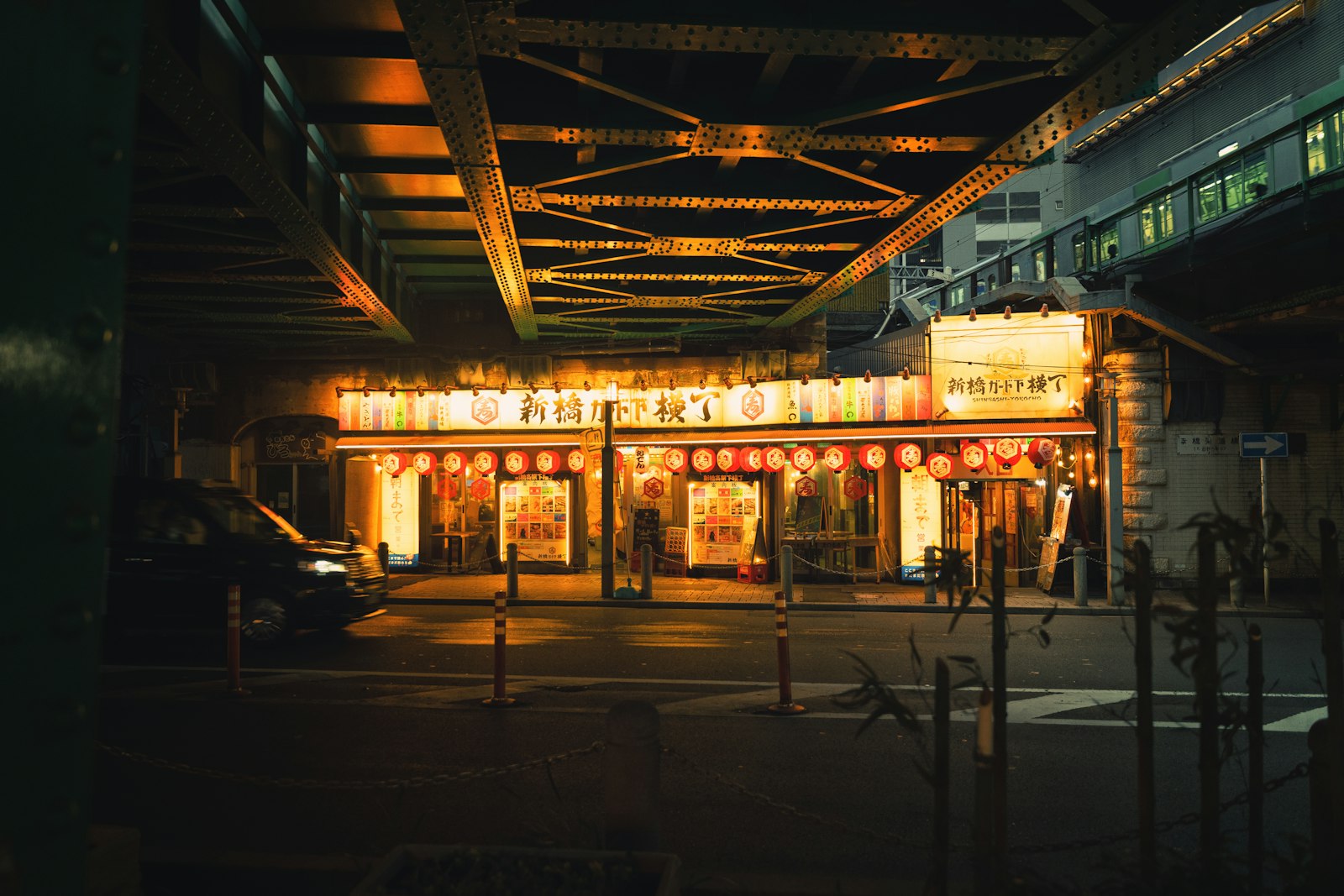
Photo by <a href="https://unsplash.com/@ayumikubo?utm_source=tokyodeepnightlife&utm_medium=referral">ayumi kubo</a> on <a href="https://unsplash.com/?utm_source=tokyodeepnightlife&utm_medium=referral">Unsplash</a>
Every weekday around 6pm, the crowds pouring out of Shinbashi Station change direction. The morning flow heads toward the office towers. The evening flow heads under the railway arches, into standing bars and smoky izakaya. This Shinbashi drinking guide shows you how to follow that second crowd.
Shinbashi is where Tokyo’s office workers come to unwind. Japanese TV crews go there when they want a quote from “the average salaryman,” and the bars are built for people with a budget and a last train to catch. It isn’t glamorous. But if you want to see how ordinary Tokyo drinks, few neighborhoods do it better.
Below you’ll find how the area is laid out, a few verified places to start, what a night costs and the unwritten rules that keep you from standing out for the wrong reasons.
Contents
- Why Shinbashi Is Called the Salaryman’s Sanctuary
- Gado-Shita Explained: Drinking Under the Tracks
- Shinbashi Drinking Guide: The Three Zones to Know
- Where to Drink: Our Shinbashi Drinking Guide Picks
- What a Night in Shinbashi Costs
- Etiquette: How to Drink Like a Local in Shinbashi
- Best Time to Go and How to Get There
- Sample Shinbashi Bar Crawl Route
- What do you do in Tokyo After 10?Join our Tokyo Nightlife Private Tour
- Want Someone to Open the Doors for You?
- About the Author
Why Shinbashi Is Called the Salaryman’s Sanctuary
Shinbashi sits between Ginza and the business towers of Shiodome and Toranomon. That position explains everything. Tens of thousands of office workers pass through its station every day, and the bars grew up to serve them. Prices stay low, food comes out fast and nobody minds if you’re still wearing a suit and lanyard.
The neighborhood also carries some history. The original Shinbashi station was the Tokyo terminus of Japan’s first railway in 1872, which is why the plaza outside the west exit holds a steam locomotive. That engine, the C11 292, was built in 1945 and went on display in 1972 to mark the railway’s 100th anniversary. It still sounds its whistle at 12:00, 15:00 and 18:00. “Meet at the SL” is the classic Shinbashi meeting line, and the 6pm whistle makes a good signal to start drinking.
If you want the bigger picture of after-work drinking culture, read our guide to salaryman drinking culture in Tokyo. It explains nomikai, rank at the table and why the boss often pays.
Gado-Shita Explained: Drinking Under the Tracks
Gado-shita means “under the girder,” and it refers to the shops and bars built into the arches beneath Tokyo’s elevated railways. The best-known stretch runs under the JR tracks between Shinbashi and Yurakucho stations. Parts of that brick viaduct are more than 100 years old.
After World War II, small taverns and stalls set up in the spaces under the tracks, and many of those spaces are still serving food and drink today. Expect low ceilings, the rumble of trains overhead and tables that sometimes spill out onto the pavement.
The two ends of the strip feel different:
- The Shinbashi end is rougher and louder. Think yakitori smoke, kushikatsu counters and standing bars full of office workers.
- The Yurakucho end mixes old-school izakaya with wine bars and Italian spots. We cover it in detail in our Yurakucho gado-shita guide.
- Hibiya OKUROJI, in between, is the polished version. It opened in September 2020 in a renovated section of the brick viaduct, about 300 meters long, with roughly 40 shops and restaurants.
If you have one night, start at the Shinbashi end for the atmosphere, then walk north under the tracks toward Yurakucho.
Shinbashi Drinking Guide: The Three Zones to Know
Shinbashi’s drinking is spread across three kinds of places, all within about five minutes of the station. Knowing which is which helps you plan a route.
1. Under the Tracks Near the Karasumori Exit
Leave the station by the Karasumori Exit and you’re one to three minutes from the bars built under the railway. This is the classic Shinbashi gado-shita scene: tiny counters, skewers and beer, with trains passing overhead.
2. The Station-Front Buildings
Two older buildings by the station are almost entirely bars and restaurants on their lower floors:
- Shinbashi Ekimae Building No. 1 opened in 1966 and has been a salaryman mainstay ever since. Most of the food and drink is in the basement and on the second floor, including a small basement alley called Tanuki Alley. Many shops have barely changed since the Showa era.
- New Shinbashi Building was completed in 1971 and stands in front of the SL plaza. Its basement is packed with izakaya. Be warned: it can get smoky and cramped.
These buildings are great on a rainy night. You can bar-hop for hours without stepping outside.
3. The Back Streets
The blocks of Shinbashi 2-chome and 3-chome, south and west of the station, hold hundreds of small izakaya, seafood bars and standing bars. This is where most of the places below are located.
Where to Drink: Our Shinbashi Drinking Guide Picks
Shinbashi has far too many bars to list. These are a few with details we could confirm in public listings. Hours and prices change often, so check before you go.
Kushi Ya (くし家): Kushikatsu Under the Overpass
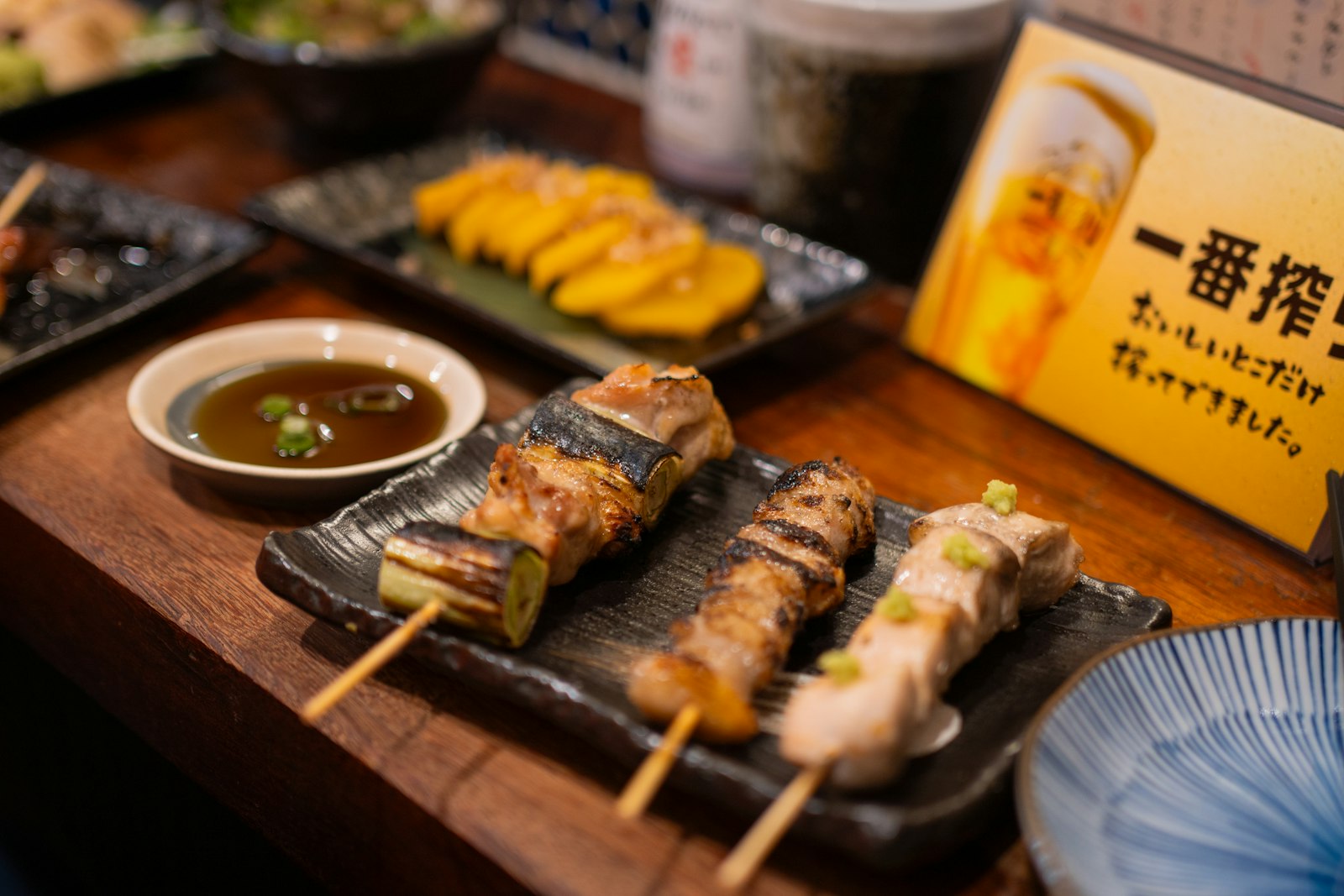
This is a standing bar and izakaya specializing in kushiage, deep-fried skewers. According to its Tabelog listing, it has been frying skewers under the overpass since 2004, about 30 seconds from the Karasumori Exit. It’s the gado-shita experience in one small room.
- Address: 3-25-21 Shinbashi, Minato-ku
- Hours: Mon–Fri 4pm–2am; Sat and holidays 2pm–midnight (hours may vary)
- Closed: Sundays
- Budget: about ¥2,000–¥3,000 per person (Tabelog)
Tachinomi Dokoro Heso, Shinbashi Main Store (立呑処へそ 新橋本店)
Heso is the standing bar to try if you want to drink cheaply on your own. It’s known for hand-fried kushiage, and its Gurunavi listing shows service-time prices of ¥299 for draft beer and ¥199 for a sour, with drink sets from ¥599. Average spend at dinner is around ¥2,000. It also takes cards and IC cards like Suica, which is unusual for a bar this cheap.
- Address: TM Building 1F, 2-8-2 Shinbashi, Minato-ku
- Hours: Mon–Fri 11:30am–midnight; Sat 12pm–11:30pm; Sun and holidays 12pm–9pm
Note that the cheapest prices apply only during set hours, usually early in the evening.
Akafuda-ya Shinbashi (赤札屋 新橋店)
Akafuda-ya is a no-frills izakaya with a menu of cheap small plates and very cheap drinks. Its big draw is the hours: HotPepper lists it as open from 1pm until 4:30am, which makes it one of the few places that’s still pouring after the last train. Expect a ¥300 table charge and around ¥2,000 per person.
- Address: 2-15-3 Shinbashi, Minato-ku (about 2 minutes from JR Shinbashi Station)
- Hours: 1pm–4:30am (Mon–Sat and holidays). Listings disagree on Sunday opening, so check before you go.
- Reservations: Not taken online
Shinbashi Ekimae Building No. 1 for Craft Beer
If you want a break from highballs, Time Out reported that Craft Beer iBrew Shinbashi in the Ekimae Building No. 1 pours 30 craft beers, with half pints from ¥390 and pints at ¥690. They also noted it’s one of the few spots in the building open on weekends. That report dates from 2022, so confirm the current prices.
Looking for Adult Entertainment Services in Tokyo? Download this
I’ve spent over a decade exploring and studying Japan’s adult entertainment scene firsthand. If you’d like detailed insider information—including how to choose the right shop, what services are available, and tips for avoiding common mistakes—check out our exclusive E-book.
What a Night in Shinbashi Costs
No Shinbashi drinking guide would be complete without the numbers. Shinbashi is one of central Tokyo’s best-value drinking areas. Here’s a realistic range:
- Standing bar, one or two drinks and a snack: ¥1,000–¥1,500
- Casual izakaya for a couple of hours: ¥2,000–¥3,000 per person
- A three-stop crawl with food: ¥4,000–¥6,000 per person
Two things push the bill up. The first is the table charge, often served as a small dish you didn’t order. Our guide to the otoshi charge explains why this is normal and not a scam. The second is drinking late. Once the trains stop around midnight, a taxi back to your hotel can cost more than the whole night out.
Etiquette: How to Drink Like a Local in Shinbashi
Shinbashi regulars are tolerant, but a few habits will make your night smoother.
Order Your First Drink Fast
The default first order is “Toriaezu biru”, “a beer to start.” Order drinks for the table straight away, then look at the food menu. Wait until everyone has a glass before taking a sip, then say “Kanpai!”
Keep It Short at Standing Bars
Standing bars run on turnover. One or two drinks, a plate or two, and you move on. Staying for three hours at a crowded counter is bad form. Squeeze in to make room when new customers arrive.
Expect Smoke and Japanese-Only Menus
Japan’s indoor smoking law exempts many small existing bars, and plenty of Shinbashi’s old-school spots still allow smoking. Look for signs at the door if it matters to you. Many small counters also have Japanese-only menus, so pointing at what your neighbor is eating works fine.
Bring Cash
Some places, like Heso, take cards and IC cards. Many older counters don’t. Carry a few thousand yen in cash.
For the full rulebook, including chopstick manners and when to pay, see our izakaya etiquette guide for foreigners.
Best Time to Go and How to Get There
Timing matters more in Shinbashi than in most nightlife areas. This is a weekday neighborhood. From Monday to Friday, the bars fill up after 6pm and peak around 7–9pm. Friday is the busiest night.
Weekends are much quieter. Many offices are closed, some bars shut on Sundays and holidays, and others close early. If you only have a weekend, aim for Saturday, start early and check hours first.
Getting there: Shinbashi Station is on the JR Yamanote, Keihin-Tohoku, Tokaido and Yokosuka lines, the Tokyo Metro Ginza Line, the Toei Asakusa Line and the Yurikamome. For bars under the tracks, use the Karasumori Exit. For the SL plaza and New Shinbashi Building, use the Hibiya Exit. Ginza is a 10-minute walk away, so it’s easy to combine the two in one night.
Sample Shinbashi Bar Crawl Route
To put this Shinbashi drinking guide into practice, here’s a simple three-stop plan for a weekday:
- 6:00pm – SL plaza. Meet at the locomotive and listen for the 6pm whistle.
- 6:15pm – A standing bar. Start with a cheap beer and a few skewers at a tachinomi like Heso, while early prices may still apply.
- 7:30pm – Under the tracks. Walk to the Karasumori side and find a seat (or a standing spot) at a gado-shita counter for kushikatsu or yakitori.
- 9:00pm – Walk north toward Yurakucho. Follow the tracks and finish with a quieter drink at the Yurakucho end or in Hibiya OKUROJI.
The whole route is walkable in under 20 minutes if you skip the stops.
What do you do in Tokyo After 10?
Join our Tokyo Nightlife Private Tour
You deserve better than overpriced bars and missed opportunities. We’re here for you.
Want Someone to Open the Doors for You?
Shinbashi is friendly, but it isn’t built for visitors. Menus are often in Japanese only, the best counters have no English signs, and it’s hard to tell from the street which tiny bar will welcome you.
If you’d rather skip the guesswork, our Tokyo After 10 nightlife private tour pairs you with a local guide who knows which doors to open. They’ll handle the ordering and the small talk, and take you to spots that don’t show up on Google Maps. You get the real salaryman night out without the stress of working it out alone.









