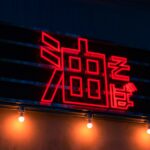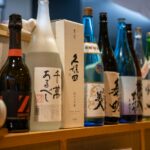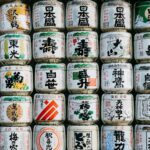
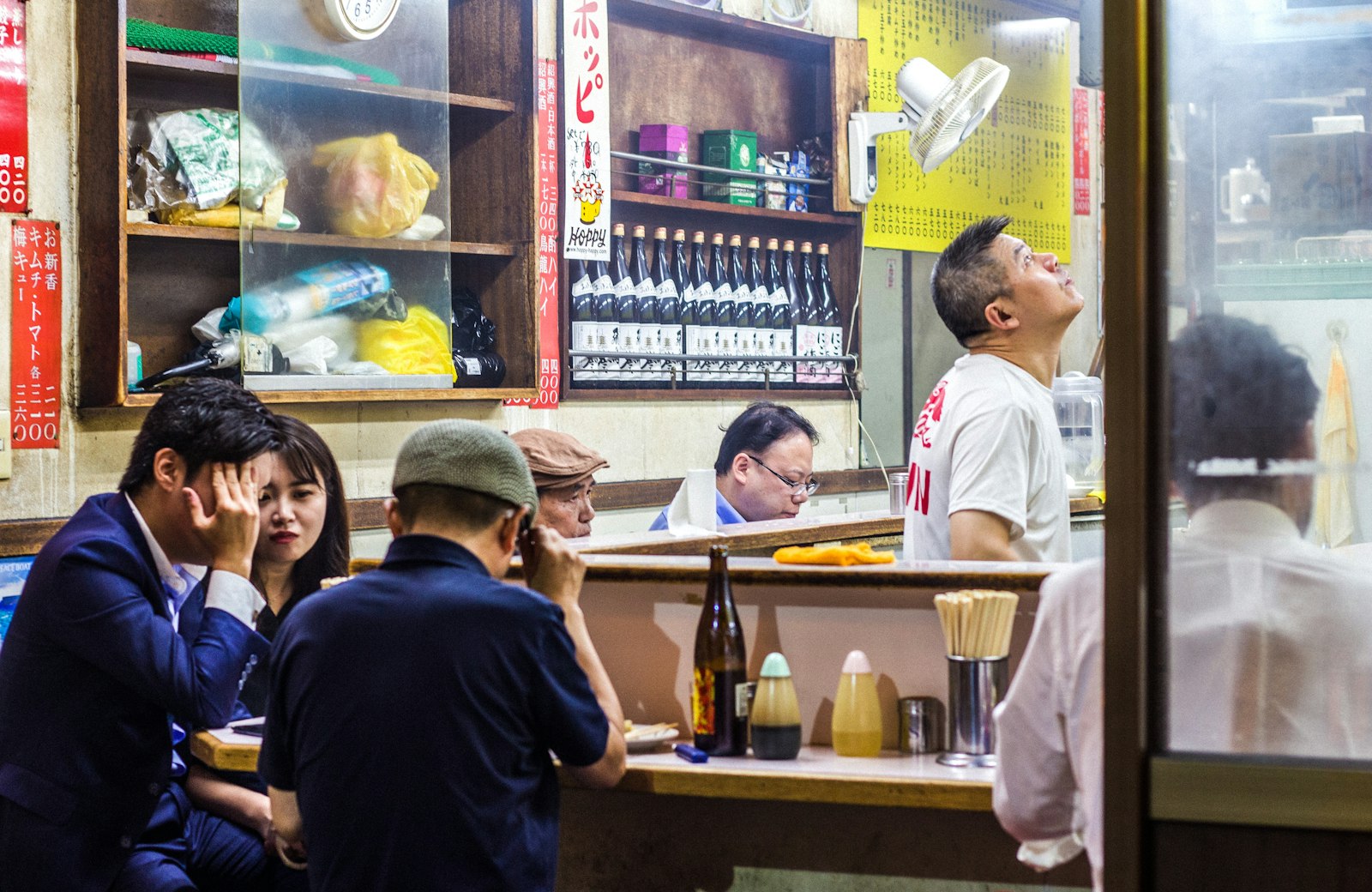
Photo by <a href="https://unsplash.com/@ayumikubo?utm_source=tokyodeepnightlife&utm_medium=referral">ayumi kubo</a> on <a href="https://unsplash.com/?utm_source=tokyodeepnightlife&utm_medium=referral">Unsplash</a>
Stand on the pavement outside Yurakucho Station at seven in the evening and you’ll hear two things at once: a Yamanote Line train rumbling over your head, and a room full of salarymen shouting kanpai underneath it. That’s Yurakucho gado shita — the under the tracks drinking district — and it’s one of the few places in central Tokyo where a two-minute walk from a luxury department store drops you into a smoky, red-lantern izakaya with plastic stools and a grill going full blast.
It’s also badly served in English. Most guides tell you the district exists, that it means “below the girder,” and that businessmen like it. Then they stop. This guide goes further: which stretch of track to walk, what a night actually costs, how to get a seat without a reservation, and which places we could verify as open in September 2026. Anything we couldn’t confirm against an official source, we left out.
Contents
- What “Gado-Shita” Actually Means
- Yurakucho Gado Shita Under the Tracks at a Glance
- The Four Stretches of Yurakucho’s Under-the-Tracks Scene
- The One Izakaya Everyone Names: Andy’s Shin Hinomoto
- What It Costs to Drink Under the Tracks
- How to Walk Into a Gado-Shita Izakaya Without Freezing Up
- What to Order Under the Tracks
- Timing: When to Arrive
- Getting There, and Getting Home
- Yurakucho vs Tokyo’s Other Alley Districts
- What do you do in Tokyo After 10?Join our Tokyo Nightlife Private Tour
- Skip the Guesswork Under the Tracks
- About the Author
What “Gado-Shita” Actually Means
Gado-shita (ガード下) is Japanese railway slang. Gado is a loan from the English “girder,” and shita means “under.” Put together it describes the dead space beneath an elevated railway viaduct — the vaulted brick arches and steel-framed gaps that most cities use for parking and storage.
Tokyo turned them into bars. The tracks running south from Tokyo Station sit on brick arches built in 1910, part of Japan’s first elevated railway, modeled on viaducts in Berlin and built by Japanese craftsmen working under German engineers, according to the Tokyo Metropolitan Government’s official travel guide. The arches were warehouses for decades. From the 1950s through the 1980s, one by one, they became restaurants.
At Yurakucho the conversion went further than anywhere else. Eateries now fill nearly every available arch along roughly 700 meters of track on both sides of the station, running almost the whole way to Tokyo Station in one direction and toward Shimbashi in the other. You are quite literally drinking inside the infrastructure, and every few minutes the ceiling shakes.
Yurakucho Gado Shita Under the Tracks at a Glance
The district isn’t one alley. It’s four distinct stretches with different prices and different crowds. Here’s the short version before the detail.
| Stretch | Where | What it’s like | Budget per person |
|---|---|---|---|
| North of the station | Toward Tokyo Station / International Forum | Wider arches, mixed izakaya, Italian and wine bars | ¥3,000–¥6,000 |
| South of the station | Toward Shimbashi | The classic scene: yakitori smoke, outdoor stools, loudest crowd | ¥2,500–¥5,000 |
| Yurakucho Sanchoku Yokocho | Under the tracks toward Shimbashi | 11 shops built around regional produce from across Japan | ¥3,000–¥5,000 |
| Hibiya OKUROJI | Between Yurakucho and Shimbashi, Hibiya side | Restored 1910 brick arches, polished, date-night pricing | ¥5,000–¥12,000 |
Budgets are typical ranges for food and a few drinks, not fixed prices. Nothing here is a set menu.
The Four Stretches of Yurakucho’s Under-the-Tracks Scene
1. North of the Station: The Softer Landing
Head out of Yurakucho Station toward the Tokyo International Forum and the arches get wider and better lit. This is where the district’s non-Japanese side lives — French wine bars, Italian places, German beer halls sitting alongside the izakaya. The crowd skews toward office workers from the Marunouchi towers, which means more English gets spoken and more places take cards.
If the idea of pushing through a curtain into a twelve-seat counter makes you nervous, start here. You still get the trains overhead and the arch ceiling, with a much gentler entry.
2. South of the Station: The Real Thing
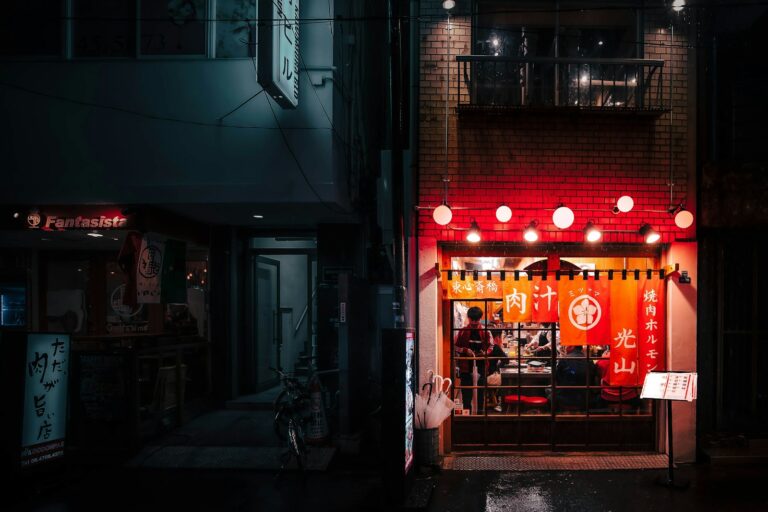
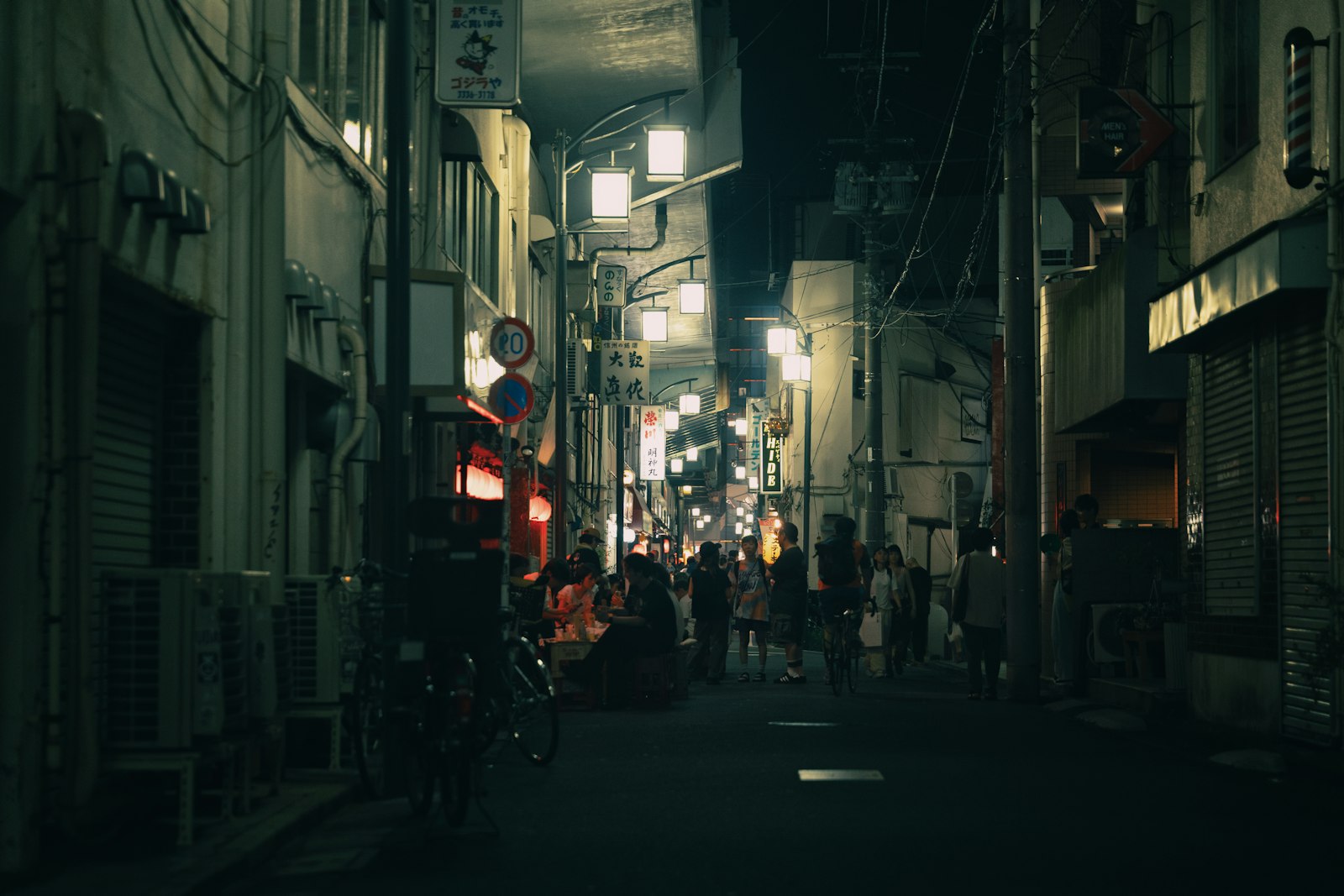
Cross under the tracks and walk south toward Shimbashi and the character changes fast. The arches narrow, the lanterns get redder, the yakitori smoke stops being atmospheric and starts getting in your eyes. Stools spill out onto the pavement. Men in suits stand around beer crates with their ties loosened.
This is the postcard version of Yurakucho gado shita under the tracks, and it’s the stretch worth walking end to end. Don’t research a specific shop — the useful strategy here is to walk the full run, look into each archway, and sit down at whichever one feels right. Places with a queue of locals outside at 7pm have earned it. Places with a laminated photo menu in four languages and someone waving you in from the street have not.
3. Yurakucho Sanchoku Yokocho: Regional Japan Under One Viaduct
Sanchoku means “shipped direct from the producer,” and this cluster under the tracks toward Shimbashi is organized around that idea. Each shop specializes in the food and drink of a particular part of Japan — Hokkaido, Kyushu, Tohoku, Shikoku — so you can eat Hokkaido seafood at one counter and move next door for Kyushu chicken without leaving the viaduct.
The original Yurakucho Sanchoku Inshokugai closed in 2017 when the viaduct needed earthquake reinforcement work. It reopened in 2019, larger, as Yurakucho Sanchoku Yokocho, with 11 shops under retro Showa-era signboards and bare filament bulbs. Hours vary by shop and have changed more than once since the reopening, so check on the day rather than trusting an old blog post.
This is the easiest stop in the district for a group that can’t agree on what to eat.
4. Hibiya OKUROJI: The Polished End of the Viaduct
Hibiya OKUROJI opened in September 2020 in a restored 300-meter section of those original 1910 brick arches, between Yurakucho and Shimbashi on the Hibiya side. It launched with just over 30 restaurants, bars and shops, and it is the deliberate opposite of the yakitori stretch: exposed brick, low lighting, cocktail bars, craft sake, fashion and homeware alongside the food.
- Address: 1-7-1 Uchisaiwaicho, Chiyoda-ku
- Access: About 6 minutes on foot from the Hibiya Exit of Yurakucho Station
- Hours: Vary by shop, with irregular closing days — check individual venues
Nobody will hand you a plastic stool here, and you’ll pay two or three times what you would one viaduct over. As a second stop after a cheap first round, it works beautifully.
A Note on Ginza Corridor Street
You’ll see Ginza Corridor Street (Corridor-gai) listed in gado-shita roundups. It runs about 400 meters between Shimbashi and Yurakucho and it is genuinely packed with bars and restaurants — but it sits under the elevated Tokyo Expressway, not the train tracks. Same architectural trick, different piece of infrastructure, and a noticeably more polished crowd. Worth your evening, but it isn’t technically gado-shita.
The One Izakaya Everyone Names: Andy’s Shin Hinomoto
If you read three articles about Yurakucho, all three will mention this place, and for once the consensus is earned. Shin Hinomoto has been operating since 1946 in an arch directly under the Yurakucho viaduct, and it’s run by Andy Lunt, a Briton who took over a Japanese izakaya rather than opening a foreigner-friendly imitation of one. The fish comes from Toyosu Market, chosen in person each morning.
The practical result: you get a genuine gado-shita izakaya where the language barrier disappears. For a lot of first-time visitors that’s the difference between a story and a missed evening.
- Address: 2-4-4 Yurakucho, Chiyoda-ku, Tokyo 100-0006
- Phone: +81 3-3214-8021
- Hours: 5:00 PM–11:30 PM, last orders 11:00 PM
- Closed: Sundays and the New Year holidays
- Getting there: About 3 minutes on foot from Yurakucho Station — come up to street level, pass Bic Camera, and look for it under the elevated tracks
- Payment: Cash only
- Booking: Reservations are taken through the official Shin Hinomoto site, and they’re a good idea
Two honest caveats. It’s popular enough with foreign visitors that it isn’t a secret, and cash-only means hitting an ATM first. Neither is a reason to skip it, but don’t treat it as your only stop — the point of the district is moving between arches.
What It Costs to Drink Under the Tracks
Drinking at Yurakucho gado shita under the tracks is cheap by central Tokyo standards, which is exactly why office workers walk past Ginza to get here.
Rough expectations at a standard izakaya on the south stretch:
- Beer or highball: ¥500–¥800
- Yakitori skewers: ¥150–¥400 each, usually ordered in twos
- Small izakaya plates: ¥500–¥1,000
- Larger dishes such as sashimi platters: ¥1,500–¥3,000
- Realistic total for a full evening: ¥2,500–¥5,000 per person
Then there’s the charge that catches everyone out. Most sit-down izakaya add an otoshi, a small appetizer you didn’t order, at roughly ¥300–¥700 per person. It isn’t a scam and you can’t decline it — it functions as a seating charge, and it’s normal across Japan. If any of this is new to you, our izakaya etiquette guide for foreigners walks through the full set of unwritten rules.
Two more money notes. Plenty of older arches are cash only — assume cash and be pleasantly surprised. And many of the small, long-established venues still permit smoking indoors; Japan’s indoor smoking law exempts smaller existing eateries that display a sign at the door, so check the doorway before you commit if it matters to you.
Looking for Adult Entertainment Services in Tokyo? Download this
I’ve spent over a decade exploring and studying Japan’s adult entertainment scene firsthand. If you’d like detailed insider information—including how to choose the right shop, what services are available, and tips for avoiding common mistakes—check out our exclusive E-book.
How to Walk Into a Gado-Shita Izakaya Without Freezing Up
The hardest part of this district isn’t finding it. It’s the ten seconds outside a noren curtain where you can’t tell whether you’d be welcome.
Here’s the sequence that works:
- Look for space, not English. Glance in. If there are visibly empty seats at the counter, you’re fine.
- Hold up fingers. Say “Futari” for two, or just show the number. Staff will either point you to seats or shake a hand — a refusal means full, not unwelcome.
- Take what you’re given. Counter seats, a corner of a table, a stool on the pavement. Don’t negotiate.
- Order a drink immediately. “Nama hitotsu” gets you a draft beer. Food can wait; a drink in hand signals you know how this works.
- Plan to move on. An hour and a bit, two or three rounds, then pay and free the seat. Camping at a counter for four hours is the one genuine faux pas here.
- Pay at the counter or table, in cash, and don’t tip. Tipping isn’t done and will cause confusion.
One more thing worth saying plainly: nobody is going to hustle you here. Yurakucho gado shita under the tracks is an after-work district, not a nightlife trap zone, and the aggressive street touts you’re warned about elsewhere in Tokyo don’t operate on this viaduct. If someone does approach you on the street offering to take you somewhere, the answer is still no.
What to Order Under the Tracks
Order like it’s a relay, not a banquet. Two or three things at a time, then more if you’re still hungry.
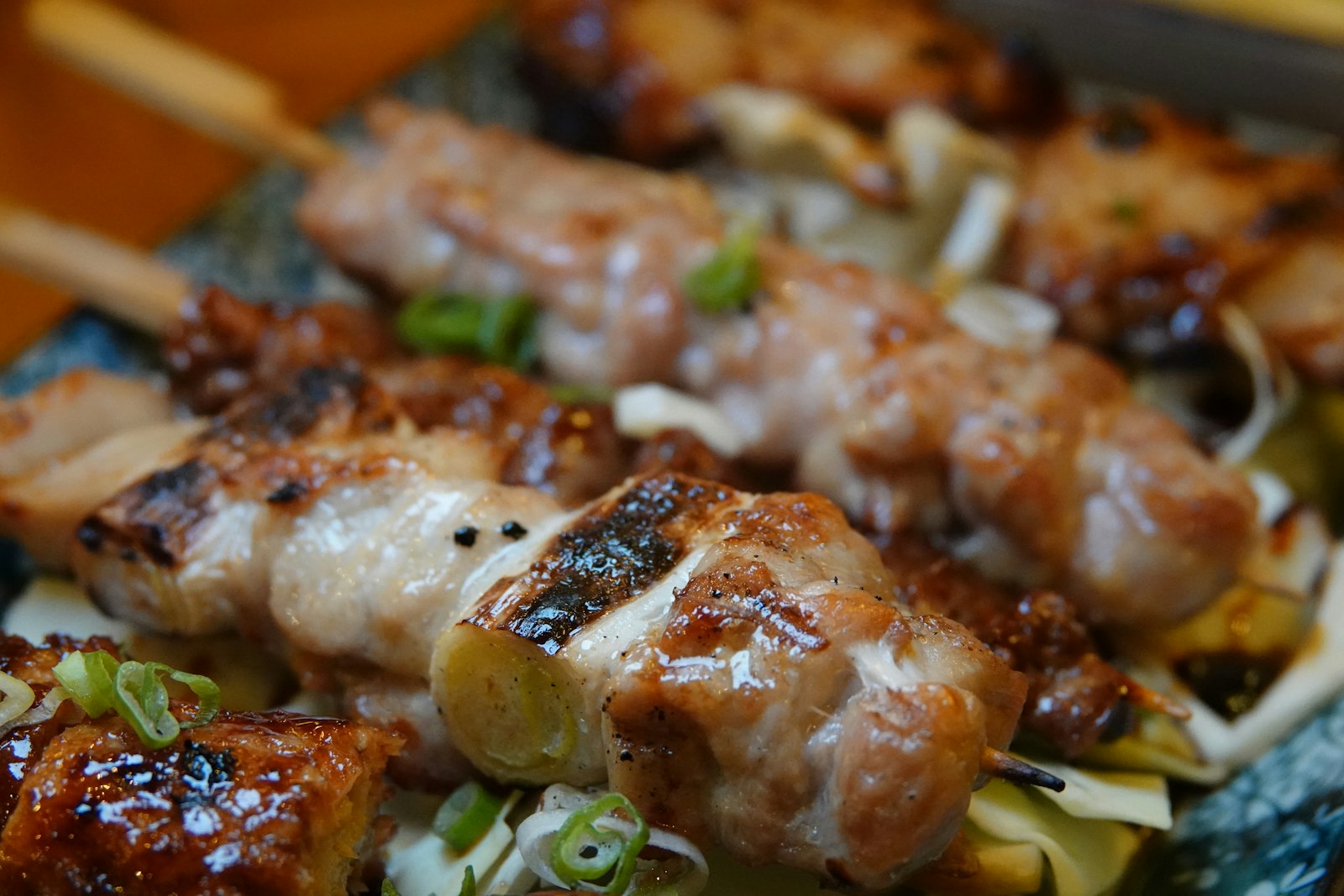
- Yakitori. The default. Momo (thigh), negima (thigh and spring onion), tsukune (meatball), kawa (crisped skin). Say shio for salt or tare for the sweet glaze — salt first, so you can taste the bird.
- Motsuni. Slow-simmered offal in miso. Divisive, brilliant, and a marker of a serious old arch.
- Sashimi. Strongest on the north stretch and at the seafood-focused shops, where the fish comes from Toyosu that morning.
- Potato salad. Sounds dull, isn’t. Every izakaya makes its own and it’s the cheapest way to judge a kitchen.
- Grilled fish, usually hokke or mackerel, if you want one substantial dish to anchor the table.
Drink beer or a lemon sour rather than sake at the noisy end of the district. Sake belongs at the quieter counters and at Hibiya OKUROJI.
Timing: When to Arrive
The rhythm of the district is strict, and it’s set by office hours.
- Before 6:00 PM — Quiet, seats everywhere, minimal atmosphere. Good if you want photographs of the arches.
- 6:00 to 8:00 PM — Peak. The whole point. Also when you’re least likely to get a seat at a popular shop, especially Thursday and Friday.
- 8:00 to 10:00 PM — The sweet spot. The first wave is leaving, seats open up, the noise stays.
- After 10:00 PM — Thinning out. Many arches take last orders around 11:00 PM.
Weeknights beat weekends here, which inverts the usual advice. This is a salaryman district; on Sunday a good chunk of it simply closes.
Getting There, and Getting Home
Yurakucho Station sits on the JR Yamanote Line and JR Keihin-Tohoku Line, plus the Tokyo Metro Yurakucho Line. It’s one stop from Tokyo Station, and Ginza, Hibiya and Tokyo International Forum are all short walks. Ginza Station and Hibiya Station are close enough that either works as an alternative exit.
Practically, you can be under the tracks within about three minutes of stepping off a Yamanote train — which makes this the single easiest izakaya district in Tokyo to reach.
Getting home, the last Yamanote trains leave central Tokyo around midnight to shortly after, depending on direction. Check yours before your last round; the taxi ride out of Yurakucho isn’t cheap.
Yurakucho vs Tokyo’s Other Alley Districts
It’s fair to ask why you’d come here instead of Shinjuku’s Omoide Yokocho or Golden Gai.
Yurakucho is the least intimidating of the three. The arches are wider, the shops are bigger, more of them are used to walk-ins, and there’s no equivalent of Golden Gai’s members-only culture or cover charges. The trade-off is that it’s less photogenic than Omoide Yokocho’s single narrow lane, and the crowd is office workers rather than a mix of locals and travelers.
It’s also the best value. You’re eating within a few minutes’ walk of Ginza at roughly half the price. If you want to see how Tokyo’s alley-bar culture works across the city, our guide to the best yokocho in Tokyo compares ten of them, and the Tokyo standing bar guide covers the tachinomi format you’ll find in several of these arches.
A good evening plan: start under the tracks around 6:30 PM for yakitori and beer, move to a second arch at 8:00, then walk ten minutes into Ginza for a proper cocktail. Our roundup of Ginza bars at night covers where to land.
What do you do in Tokyo After 10?
Join our Tokyo Nightlife Private Tour
You deserve better than overpriced bars and missed opportunities. We’re here for you.
Skip the Guesswork Under the Tracks
Yurakucho gado shita rewards people who can walk past forty near-identical doorways and pick the right one. That’s a skill built over years of living here, and it’s the part no article can fully hand over. Which arch is still family-run, which one quietly changed hands last year, which counter will make room for two people at 7:30 PM on a Friday — that’s local knowledge.
If you’d rather spend the evening drinking than deciding, a guide solves it. Our Tokyo After 10 nightlife tour takes small groups into exactly this kind of under-the-tracks izakaya, handles the ordering, explains what’s on the grill, and gets you into places that don’t advertise in English. You drink, someone else navigates.
Either way, go on a weeknight, go hungry, and start walking the viaduct.