

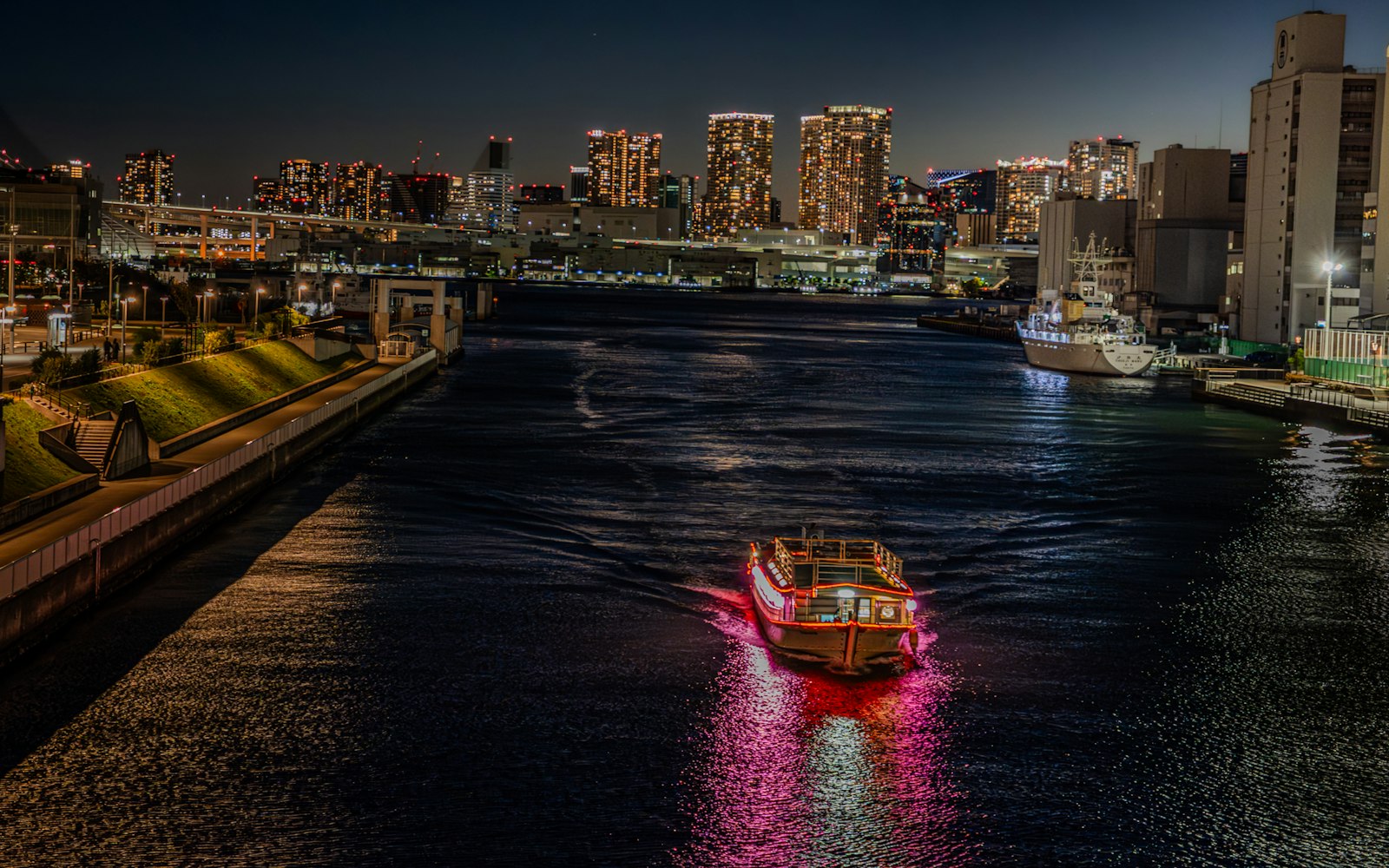
Photo by <a href="https://unsplash.com/@insane_scene?utm_source=tokyodeepnightlife&utm_medium=referral">Bhanu Singh</a> on <a href="https://unsplash.com/?utm_source=tokyodeepnightlife&utm_medium=referral">Unsplash</a>
Most people see Tokyo’s skyline from the top of a tower. A better angle is from the water, sitting cross-legged on tatami with a plate of fresh tempura while Rainbow Bridge passes overhead. That’s the idea behind a Tokyo night cruise on a yakatabune, the lantern-lit houseboats that have carried diners around Tokyo’s rivers and bay for centuries.
This guide explains how a yakatabune cruise actually works, what you’ll see from the boat, what it costs, and how it compares with the larger Western-style restaurant ships on Tokyo Bay. Prices, piers and timings for the two operators below were checked on their official websites in October 2026.
Contents
- What Is a Yakatabune?
- Yakatabune vs. Restaurant Ship: Two Ways to Do a Tokyo Night Cruise
- What You’ll See on a Tokyo Bay Night Cruise
- Two Tokyo Night Cruise Operators Worth Knowing
- How Much Does a Tokyo Night Cruise Cost?
- Tips for Booking a Yakatabune as a Visitor
- When Is the Best Time for a Tokyo Night Cruise?
- Continuing the Night After Your Cruise
- What do you do in Tokyo After 10?Join our Tokyo Nightlife Private Tour
- FAQ: Tokyo Night Cruise
- About the Author
What Is a Yakatabune?
A yakatabune (屋形船) is a flat, roofed wooden-style boat with a long tatami room inside. You’ll spot them by the rows of red paper lanterns hanging from the eaves. In the Edo period they were the party boats of wealthy merchants, who hired them for summer evenings on the Sumida River. Today they’re still used the same way: company parties, birthdays, family gatherings, and, increasingly, visitors who want something more memorable than another restaurant dinner.
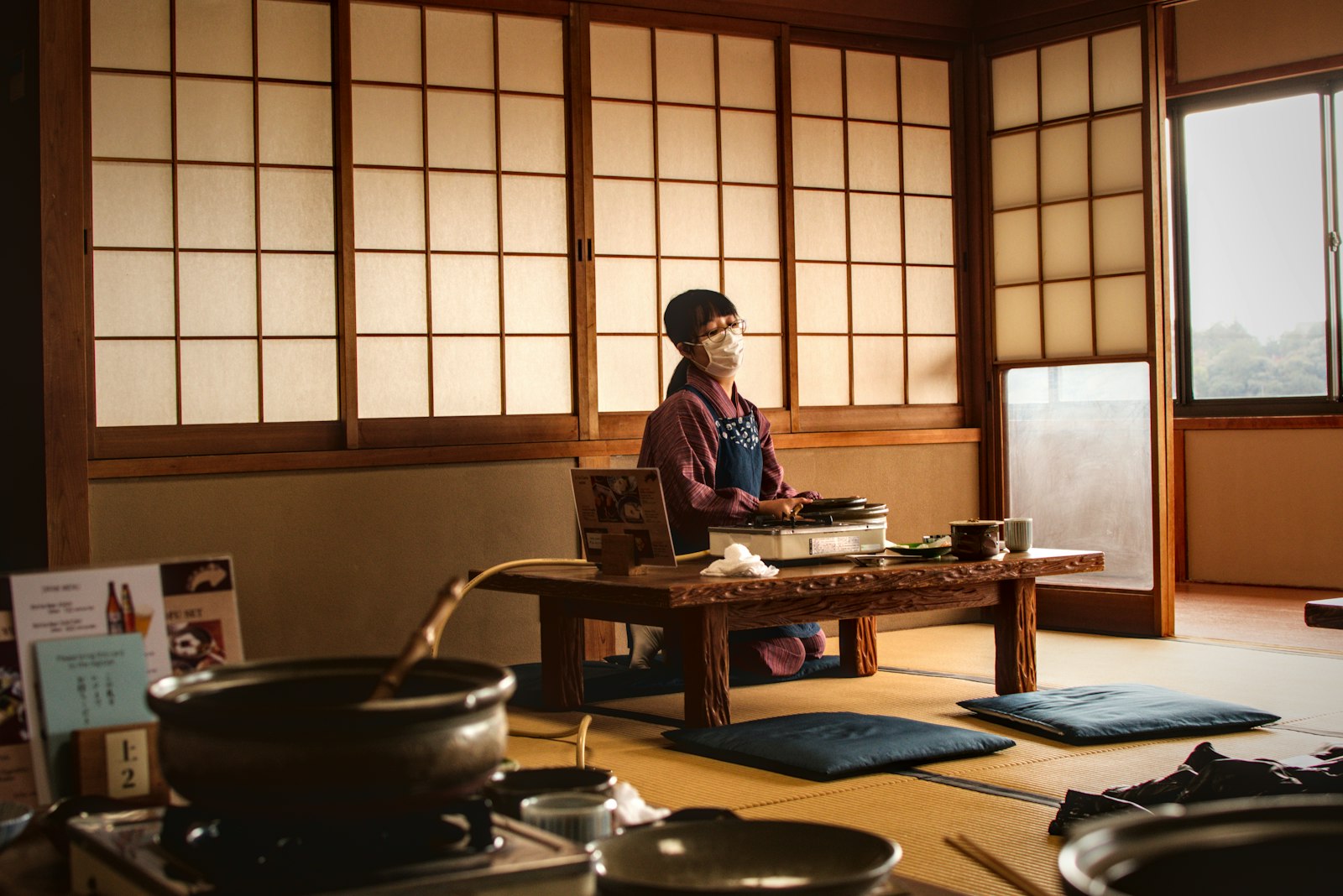
Inside, the room is set up like a Japanese banquet hall, which is what sets a yakatabune Tokyo night cruise apart from a sightseeing boat. Low tables run the length of the cabin, with either floor seating or a sunken horigotatsu layout where you can let your legs hang down. Many boats have a small open roof deck you can climb onto once the boat is moving, and that’s where most of the photos get taken.
The food is usually a set course of Japanese dishes. Tempura fried on board is the classic, along with sashimi and a rotating set of seasonal small plates. It’s closer to a relaxed banquet than a formal kaiseki dinner.
Yakatabune vs. Restaurant Ship: Two Ways to Do a Tokyo Night Cruise
When people search for a Tokyo night cruise, they usually end up choosing between two very different experiences.
Yakatabune (traditional houseboat)
- Tatami or low-table seating, shoes off
- Japanese course meal, often tempura and sashimi
- Smaller boats, so the city feels close
- Lively, social atmosphere, sometimes with karaoke
- Shared boats mean you may dine alongside other groups
Restaurant ship (Western-style cruise)
- Chairs, tables and white tablecloths
- French, Italian or Japanese-style courses
- Large multi-deck vessels with outdoor decks
- Quieter, date-night atmosphere
- Some offer a cheaper boarding-only ticket
If you want the “only in Japan” version, go yakatabune. If someone in your group can’t sit on the floor for two hours, or you’re planning a proposal or anniversary dinner, a restaurant ship is the easier choice. Our guide to Tokyo nightlife for couples has more ideas for a romantic evening built around either option.
What You’ll See on a Tokyo Bay Night Cruise
Routes vary by operator and season, but most evening cruises on Tokyo Bay take in the same handful of sights.
Rainbow Bridge
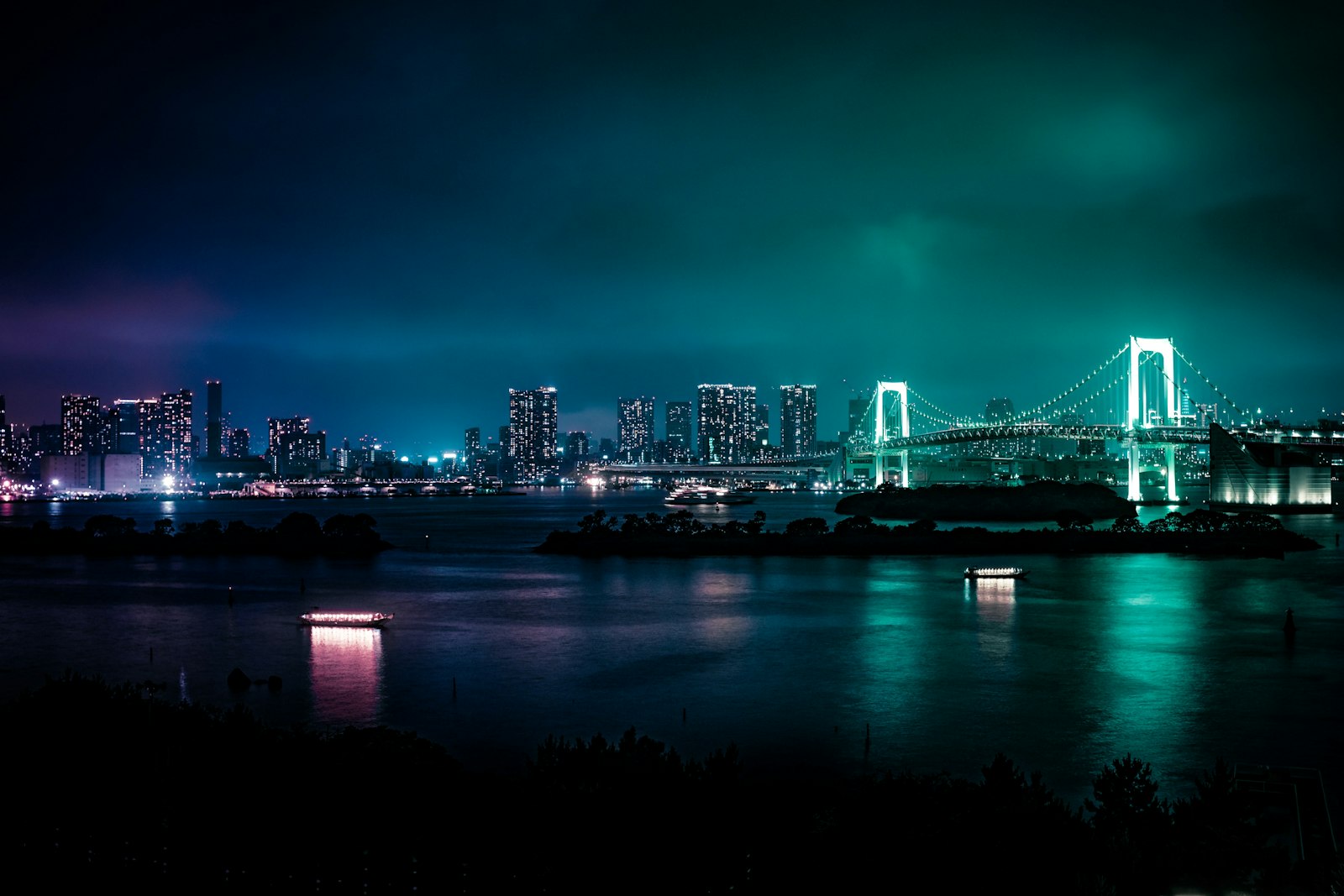
The big moment of almost every Tokyo night cruise is passing under or alongside Rainbow Bridge, the white suspension bridge linking Shibaura and Odaiba. From the water it looks far larger than it does from the shore, and its lights reflect across the whole bay.
Odaiba Waterfront
Many yakatabune drop anchor near Odaiba for a while so passengers can head up to the roof deck and take photos. You get the bridge, the Odaiba waterfront and the central Tokyo skyline in one sweep. It’s one of the best free-moving vantage points in the city, and you don’t have to fight crowds on the beach promenade for it.
Tokyo Skytree and the Sumida River
Some routes leave the bay and head up the Sumida River toward Tokyo Skytree. The river is narrower, the bridges are lit in different colors, and you’re much closer to the city. A Tokyo night cruise on the river feels less like a harbor tour and more like floating through the old downtown.
Tokyo Tower and the Outer Bay
The larger restaurant ships travel further out. On longer routes you can see Tokyo Gate Bridge, the lights of Haneda Airport, and Tokyo Tower and Skytree glowing over the skyline at the same time.
For a wider list of after-dark viewpoints you can combine with your cruise, see our roundup of Tokyo night sightseeing spots.
Two Tokyo Night Cruise Operators Worth Knowing
There are dozens of yakatabune operators around Tokyo, many of them small family businesses. Below are two we could verify in detail from their official sites: one traditional yakatabune and one restaurant ship. Prices are per person and include tax.
Funasei (Yakatabune, Shinagawa)
Funasei runs yakatabune out of Kita-Shinagawa, about a 10-minute walk from Kita-Shinagawa Station on the Keikyu Line, or 13 minutes from Shinagawa Station. It’s one of the better-known yakatabune companies in Tokyo and offers both shared boats and private charters.
- Shared boat prices (from April 15, 2026): four course levels at ¥14,000, ¥16,800, ¥20,800 and ¥23,900. The difference is the food.
- Group size on shared boats: 2 to 14 people per party, with a choice of horigotatsu or chair seating.
- Skytree Main Course (shared boats only): about 2 hours 45 minutes. The boat runs from Shinagawa past Rainbow Bridge, up the Sumida River for a 15-minute stop near Tokyo Skytree, then stops at Odaiba for 10 minutes before returning.
- On board: karaoke, air conditioning and an outdoor smoking area.
The chair-seating option is useful if anyone in your group has knee or back trouble but still wants a real yakatabune rather than a large cruise ship.
Symphony (Restaurant Ship, Hinode Pier)
The Symphony Tokyo Bay cruise is the classic Western-style option. Boats leave from Hinode Pier, a one-minute walk from Hinode Station on the Yurikamome Line, or about 12 minutes on foot from the South Exit of JR Hamamatsucho Station.
- Dinner cruise time: 7:00pm to 9:30pm (about 2.5 hours). Check-in closes 15 minutes before departure.
- Dinner course prices: mostly ¥14,000 to ¥20,000 on weekdays, with ¥1,000 to ¥2,000 added on weekends. The top couples’ plan is ¥30,000.
- Boarding only: ¥4,400 if you just want the cruise without a meal.
- Route: under Rainbow Bridge, past Odaiba and Shinagawa Pier, out to Tokyo Gate Bridge, with views toward Haneda Airport, Tokyo Tower and Skytree.
That boarding-only ticket is the cheapest way to do a Tokyo night cruise with a full bay route. You can eat at a local izakaya before or after and still get the views.
Looking for Adult Entertainment Services in Tokyo? Download this
I’ve spent over a decade exploring and studying Japan’s adult entertainment scene firsthand. If you’d like detailed insider information—including how to choose the right shop, what services are available, and tips for avoiding common mistakes—check out our exclusive E-book.
How Much Does a Tokyo Night Cruise Cost?
Based on the two operators above, here’s a rough way to budget for a Tokyo night cruise:
- Cruise only, no meal: around ¥4,400 on a restaurant ship
- Shared yakatabune with dinner: roughly ¥14,000 to ¥24,000 per person
- Restaurant ship dinner course: roughly ¥14,000 to ¥21,000 per person, more for premium plans
- Private charter: priced per boat or per head with a minimum, which makes sense for groups and works out much higher for couples
Drinks policies differ by operator and plan. Some packages include nomihodai (all-you-can-drink), while others charge per glass, so check exactly what’s included before you book. If the term is new to you, here’s how nomihodai works in Japan.
Tips for Booking a Yakatabune as a Visitor
Book ahead for weekends and summer. A Tokyo night cruise on a Saturday is far harder to get than one on a Tuesday. Shared boats only sail once enough people have booked, and popular dates fill up. Fireworks nights and the cherry blossom season sell out earliest.
Check the language situation. Many small yakatabune companies run their websites, booking forms and announcements only in Japanese. Booking through an English-language platform or a hotel concierge is easier, but read what’s included carefully, because the package can differ from what the operator sells directly.
Be honest about floor seating. Two to three hours cross-legged on tatami is hard if you’re not used to it. Ask for horigotatsu or chair seating if it’s available.
Dress for the deck. The deck is the best part of any Tokyo night cruise, so plan to spend time up there. It’s warm inside the cabin, but the roof deck can be windy and cold, especially from November to March. Bring a layer.
Plan your route home. Most cruises return to the pier between 9:30pm and 10pm, and piers like Kita-Shinagawa and Hinode aren’t in the busiest neighborhoods. Our guide on getting around Tokyo at night covers last trains and taxis.
When Is the Best Time for a Tokyo Night Cruise?
Yakatabune run all year, but each season changes what a Tokyo night cruise feels like.
- Spring (late March to early April): cherry blossom routes along the Sumida River are the most popular trips of the year. Book well in advance.
- Summer (June to September): this is traditional yakatabune season. Evenings are warm enough to stay on the deck, and fireworks nights are the busiest of all.
- Autumn (October to November): cooler, less humid air means sharper skyline views. It’s an underrated time to go.
- Winter (December to February): crisp, clear nights and the best visibility, though the deck is cold. Holiday illuminations add color to the waterfront.
Whatever the season, try to book a departure that leaves around sunset so you see the skyline change from dusk to full night.
Continuing the Night After Your Cruise
A Tokyo night cruise usually ends between 9:30pm and 10pm, which in Tokyo is when the night is just getting started. From Shinagawa or Hamamatsucho, Shinjuku, Shibuya and Ginza are all a short train or taxi ride away.
The hard part is knowing where to go next. The best bars in Tokyo are often tiny, unsigned and up a narrow staircase, and some of the busiest streets are also where tourists get overcharged. If you’d rather not leave it to chance, our Tokyo After 10 nightlife private tour pairs you with a local guide who takes you to the standing bars, izakaya and back-alley spots locals actually go to. It works well as the second half of an evening that starts on the water.
What do you do in Tokyo After 10?
Join our Tokyo Nightlife Private Tour
You deserve better than overpriced bars and missed opportunities. We’re here for you.
FAQ: Tokyo Night Cruise
How long is a Tokyo night cruise? Most dinner cruises last two to three hours. Symphony’s dinner cruise runs about 2.5 hours, and Funasei’s Skytree Main Course takes about 2 hours 45 minutes.
Can I join a yakatabune alone or as a couple? Yes. Shared boats (noriai-bune) let small groups book seats on a boat with other parties. Funasei’s shared boats take parties of 2 to 14 people.
Is a Tokyo night cruise worth it? If you want a long, sit-down dinner with views you can’t get from land, yes. If you mainly want photos of Rainbow Bridge, a boarding-only ticket or a walk along the Odaiba waterfront costs far less.
Do I need to speak Japanese? Not to enjoy the cruise, but it helps when booking directly with smaller operators. English booking platforms or your hotel can handle the reservation for you.









