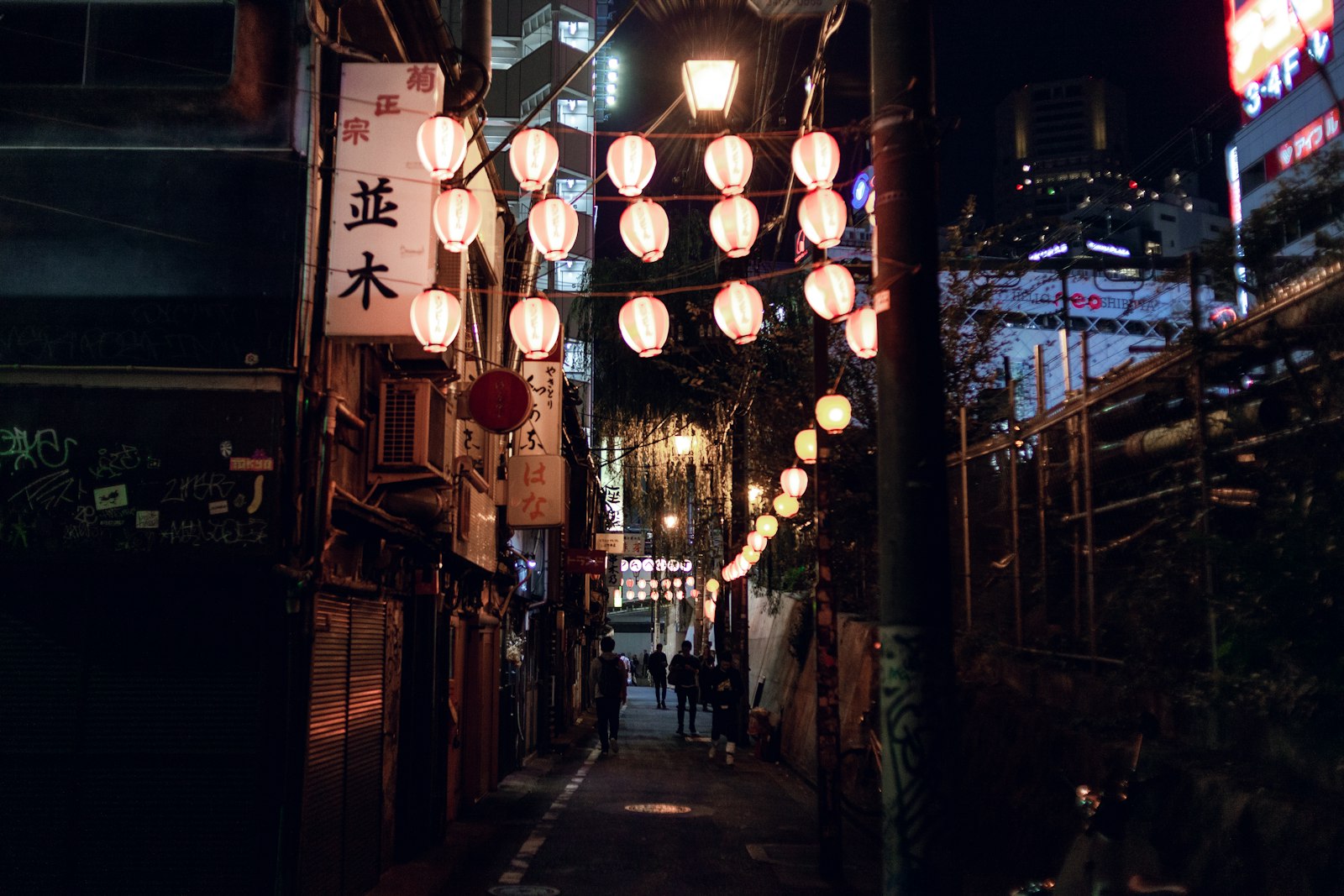
Photo by <a href="https://unsplash.com/@miyatankun?utm_source=tokyodeepnightlife&utm_medium=referral">Takashi Miyazaki</a> on <a href="https://unsplash.com/?utm_source=tokyodeepnightlife&utm_medium=referral">Unsplash</a>
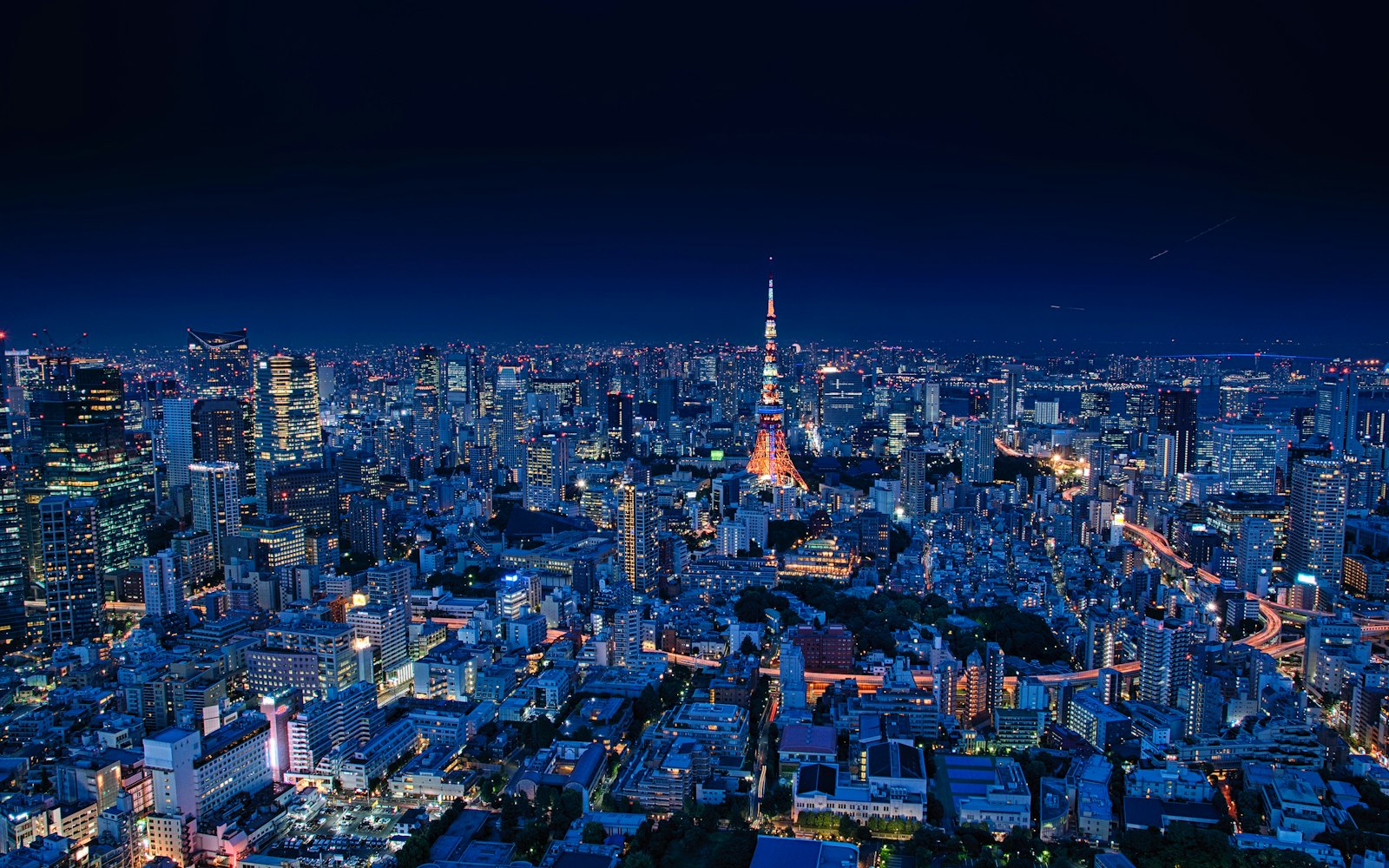
Tokyo looks like two different cities depending on when you see it. By day it’s efficient, gray, and a little overwhelming. After sunset the towers light up, temple gates glow orange, and tiny alleys fill with lantern light and grill smoke. If you only do daytime sights, you’re seeing half the city.
This guide to Tokyo night sightseeing covers 30 spots worth seeing after dark. They’re grouped by type: observation decks, free rooftop gardens, illuminated landmarks, neon streets and alleys, art, and the water. We checked hours and prices against official sources in September 2026. They do change, so confirm on the day, especially for anything with a last-entry time.
If you’re more interested in bars, karaoke, and late-night food than views and landmarks, our guide to what to do in Tokyo at night covers that side of the city.
Contents
- Tokyo Night Sightseeing at a Glance
- Observation Decks: The Best Night Views in Tokyo
- Free Rooftop Gardens for a Quieter Evening
- Landmarks That Light Up at Night
- Neon Streets and Yokocho Alleys
- Art and Culture After Dark
- On the Water
- Three Easy Tokyo Night Sightseeing Routes
- Practical Tips for Seeing Tokyo at Night
- Frequently Asked Questions About Tokyo Night Sightseeing
- What do you do in Tokyo After 10?Join our Tokyo Nightlife Private Tour
- Want Someone to Show You Tokyo After Dark?
- About the Author
Tokyo Night Sightseeing at a Glance
Use this table to plan by area and closing time. “Open until” is the latest time listed by the venue. Many observation decks stop letting people in 30 to 70 minutes before closing.
| # | Spot | Area | Cost | Open until |
|---|---|---|---|---|
| 1 | SHIBUYA SKY | Shibuya | ¥2,700–3,400 (online, adult) | 22:30 (last entry 21:20) |
| 2 | Tokyo Skytree | Oshiage | From ¥1,800 | 22:00 (last entry 21:00) |
| 3 | Tokyo Tower | Shibakoen | ¥1,500 (Main Deck) | 23:00 (last entry 22:30) |
| 4 | Tokyo Metropolitan Government Building, South Deck | Nishi-Shinjuku | Free | 21:30 |
| 5 | Tokyo City View | Roppongi | Paid | 22:00 (last entry 21:30) |
| 6 | Sunshine 60 Observatory Tenbou-Park | Ikebukuro | Paid | 21:00 (last entry 20:30) |
| 7 | Caretta Shiodome SKY VIEW | Shiodome | Free | 23:00 |
| 8 | Asakusa Culture Tourist Information Center | Asakusa | Free | 22:00 (terrace) |
| 9 | KITTE Garden | Marunouchi | Free | 23:00 weekdays, 22:00 weekends |
| 10 | GINZA SIX Rooftop Garden | Ginza | Free | 23:00 |
| 11 | MIYASHITA PARK | Shibuya | Free | 23:00 |
| 12 | Park View Garden, Tokyo Midtown Hibiya | Hibiya | Free | Check on the day |
| 13 | Senso-ji Temple | Asakusa | Free | Lit until around 23:00 |
| 14 | SUMIDA RIVER WALK | Asakusa | Free | 22:00 |
| 15 | TOKYO Night & Light | Nishi-Shinjuku | Free | Last show 21:30 |
| 16 | Tokyo Station Marunouchi Building | Marunouchi | Free | Exterior view |
| 17 | Shiba Park (Tokyo Tower view) | Shibakoen | Free | Public park |
| 18 | Rainbow Bridge from Odaiba Seaside Park | Odaiba | Free | Lit until midnight |
| 19 | Shibuya Scramble Crossing | Shibuya | Free | Street |
| 20 | Kabukicho and the Godzilla Head | Shinjuku | Free | Last roar 20:00 |
| 21 | The Shinjuku 3D Cat | Shinjuku | Free | Street |
| 22 | Omoide Yokocho | Shinjuku | Pay per shop | Varies by shop |
| 23 | Golden Gai | Shinjuku | Pay per bar | Most bars open around 20:00 |
| 24 | Nonbei Yokocho | Shibuya | Pay per bar | Varies by shop |
| 25 | Yurakucho Sanchoku Inshokugai | Yurakucho | Pay per shop | Listed as 24 hours |
| 26 | Ameyoko | Ueno | Free to walk | Varies by shop |
| 27 | teamLab Planets TOKYO | Toyosu | Timed tickets | Varies by date |
| 28 | teamLab Borderless | Azabudai Hills | Timed tickets | Varies by date |
| 29 | Kabuki-za (single act seats) | Higashi-Ginza | ¥2,000–3,500 per act (Aug 2026, 4th level) | Varies by program |
| 30 | Yakatabune dinner cruise | Asakusa or Odaiba piers | Paid | About 2.5 hours |
Observation Decks: The Best Night Views in Tokyo
Start high. An observation deck at dusk shows you the whole city at once, and it helps you see how the neighborhoods you’ll walk later fit together. Tokyo has paid decks with polished experiences and free ones that are nearly as good.
1. SHIBUYA SKY
SHIBUYA SKY is the open-air rooftop of Shibuya Scramble Square, 229 meters above the ground and directly connected to Shibuya Station. It’s open 10:00 to 22:30, with last admission at 21:20.
Pricing rewards people who come earlier. According to GO TOKYO, online adult tickets are ¥2,700 for entry until 14:59 and ¥3,400 from 15:00. Sunset slots sell out first, so book ahead if you want golden hour. If you don’t need sunset, a mid-evening slot still gives you the full lit-up city plus the crossing far below.
2. Tokyo Skytree
Tokyo Skytree has two decks: the Tembo Deck at 350 meters and the Tembo Galleria at 450 meters. The official site lists tickets from ¥1,800 for the Tembo Deck and from ¥3,000 for both decks. Prices vary by visit date.
On the day we checked, hours were 10:00 to 22:00 with final entry at 21:00. From this height the city lights spread out like a map rather than a skyline. Pair it with a walk to Asakusa afterwards (see route below).
3. Tokyo Tower
Tokyo Tower stays open later than any other paid deck on this list. The Main Deck, at 150 meters, is open 9:00 to 23:00 with last admission at 22:30, and adult tickets are ¥1,500.
The Top Deck Tour takes you up to 250 meters as well. It costs ¥3,300 online or ¥3,500 at the counter, with the last tour at 22:15. If dinner runs long, this is the deck you can still make.
4. Tokyo Metropolitan Government Building Observation Deck
The Tokyo Metropolitan Government Building in Nishi-Shinjuku has free observation decks 202 meters up. The South Deck is open 9:30 to 21:30, with last entry 30 minutes before closing. It’s closed on the first and third Tuesday of each month.
The North Deck closes at 17:00 on normal days but stays open until 22:00 when the South Deck is closed. Time your visit with the projection mapping show on the same building (spot #15) and you get two sights for zero yen.
5. Tokyo City View (Roppongi Hills)
Tokyo City View sits high in Roppongi Hills Mori Tower. It’s open 10:00 to 22:00, with last admission at 21:30. Its big selling point at night is position: Tokyo Tower stands close by, so it fills the frame instead of looking like a distant pin.
Roppongi’s restaurants and bars are right downstairs, which makes this an easy first stop before a night out in the area.
6. Sunshine 60 Observatory Tenbou-Park
In Ikebukuro, SUNSHINE 60 OBSERVATORY TENBOU-PARK is 251 meters above the ground. It’s open 11:00 to 21:00, with last admission at 20:30.
Ikebukuro is often skipped by first-time visitors, which is exactly why the view from here feels different. You’re looking back at central Tokyo from the northwest, with the Shinjuku towers on the horizon.
7. Caretta Shiodome SKY VIEW
This is one of Tokyo’s better free secrets. The SKY VIEW space on the 46th floor of Caretta Shiodome sits about 200 meters up and costs nothing to enter. It’s generally open until 23:00, following the hours of the restaurant floor.
The view looks over the bay: Hamarikyu Gardens, Rainbow Bridge, and Odaiba. It’s a one-minute walk from Shiodome Station on the Toei Oedo Line. Benches make it a relaxed alternative to paid decks.
8. Asakusa Culture Tourist Information Center Terrace
The Asakusa Culture Tourist Information Center, at 2-18-9 Kaminarimon, has a free observation terrace on the 8th floor. The building itself closes at 20:00, but the terrace stays open until 22:00.
From up here you look down Nakamise shopping street toward Senso-ji, with Tokyo Skytree across the river. It’s a one-minute walk from Asakusa Station on the Tokyo Metro Ginza Line.
Free Rooftop Gardens for a Quieter Evening
Not every night view needs a ticket or a queue. These rooftop gardens sit lower than the big decks, but they’re free, open late, and far less crowded. If you’d rather enjoy a view with a drink in hand, see our list of rooftop bars in Tokyo with a night view.
9. KITTE Garden
KITTE Garden is a free rooftop garden on the 6th floor of KITTE Marunouchi. It looks straight down on Tokyo Station’s red-brick Marunouchi Building. It’s open 11:00 to 23:00 on weekdays and 11:00 to 22:00 on weekends and holidays. It may close in bad weather.
Train fans love it, because you can watch trains glide in and out of Tokyo Station below. At night the lit station facade looks almost like a model.
10. GINZA SIX Rooftop Garden
The rooftop garden at GINZA SIX is free and open from 7:00 to 23:00. After the department stores close, it’s a calm place to sit above Ginza’s main streets.
It works well as a pause between dinner in Ginza and a late drink nearby. Ginza’s evenings run quieter and more grown-up than Shinjuku or Shibuya.
11. MIYASHITA PARK
MIYASHITA PARK is a public park built on the roof of a long, low complex a few minutes from Shibuya Station. The park is open 8:00 to 23:00, closing over the New Year holidays (December 29 to January 3).
Up top you’ll find a skate park, a bouldering wall, and a sand court, plus lawn space to sit. At night it’s a good breather from the Shibuya crowds without actually leaving Shibuya.
12. Park View Garden, Tokyo Midtown Hibiya
The 6th-floor Park View Garden at Tokyo Midtown Hibiya is free. It looks out over the greenery of Hibiya Park, with benches along the terrace.
Published hours differ from source to source, so check the building’s official site before making a special trip. It’s an easy add-on if you’re already in Hibiya, Yurakucho, or Ginza (see spots #10 and #25).
Landmarks That Light Up at Night
Some of Tokyo’s best-known sights look better lit up than in daylight. Most of these are free, and several are open when the daytime crowds have gone home.
13. Senso-ji Temple
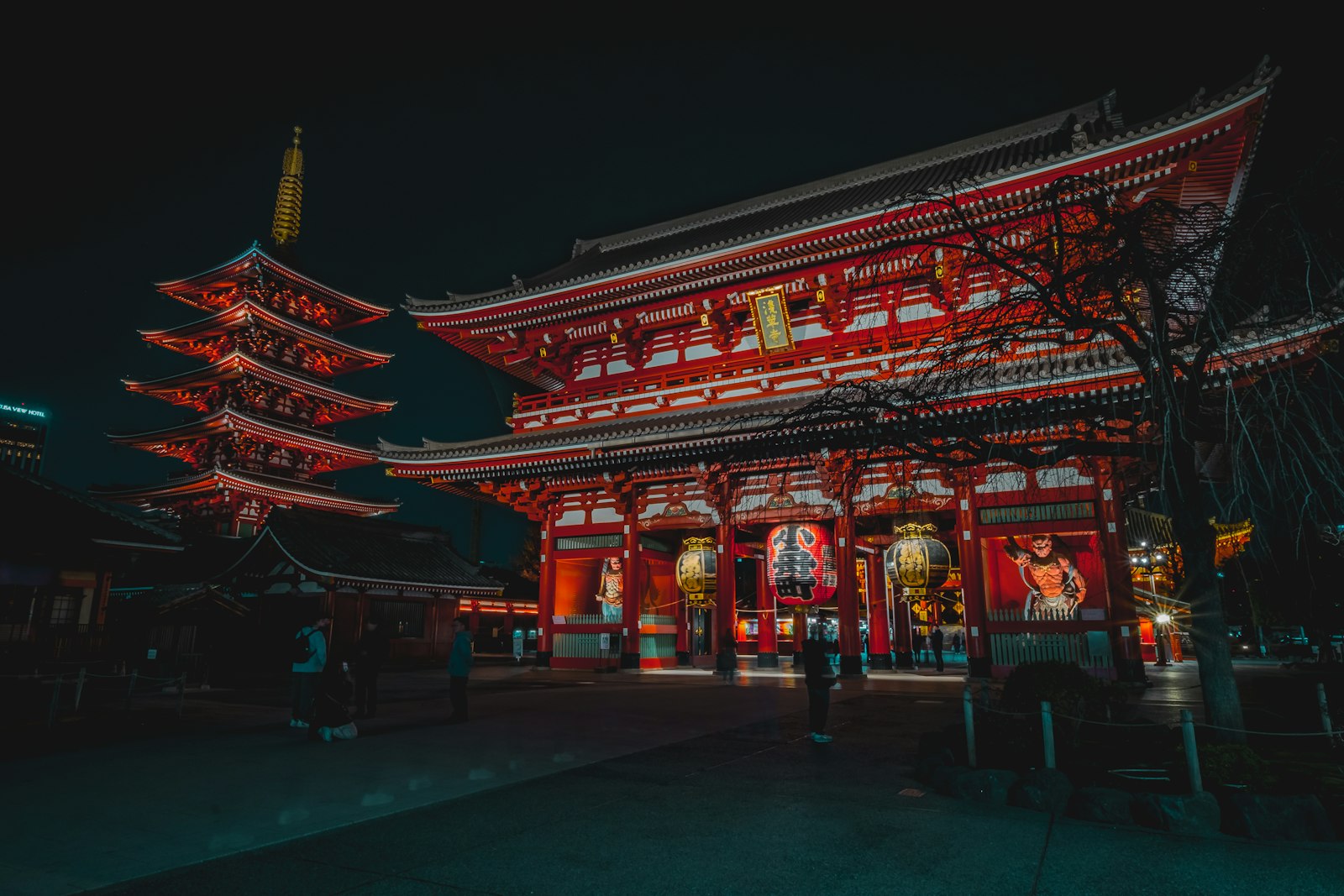
Senso-ji is the classic example of a sight that improves after dark. The temple says it lights up the Main Hall, the five-story pagoda, Hozomon Gate, and Kaminarimon Gate every day from sunset until around 23:00. It has done so since October 2003.
Know one thing before you go: the Main Hall itself opens 6:00 to 17:00 (from 6:30 between October and March). At night you’re admiring the buildings from the grounds, not going inside. That’s the charm, though: it’s quiet, and the vermilion gates glow against the dark sky.
14. SUMIDA RIVER WALK
The SUMIDA RIVER WALK is a 160-meter pedestrian crossing over the Sumida River, linking the Senso-ji area with Tokyo Skytree Town. Part of it has a glass floor so you can see boats passing below. It’s open 7:00 to 22:00.
Beneath the Tobu Skytree Line tracks nearby, TOKYO mizumachi (opened in June 2020) has waterfront restaurants and cafes. Walking this route at night gives you Skytree lit up ahead and the river lights below.
15. TOKYO Night & Light Projection Mapping
TOKYO Night & Light turns the east wall of Tokyo Metropolitan Government Building No. 1 into a canvas for light and sound. Guinness World Records certified it as the largest permanent architectural projection-mapped display, at 13,904.956 square meters.
Screenings run several times each evening. The start time shifts with the seasons. In September, the first screening is at 18:30 and the last at 21:30. From May to August the first is at 19:30, and from November to January it’s at 17:30. Check the official TOKYO Night & Light schedule before you go. It’s about a 10-minute walk from JR Shinjuku Station.
16. Tokyo Station Marunouchi Building
Tokyo Station opened in December 1914, and its red-brick Marunouchi Building was restored to its prewar appearance in 2012. That restoration rebuilt the third floor that had been lost after wartime damage.
At night the facade is lit up, and the wide Marunouchi Central Plaza in front gives you space to step back and take it all in. Then head up to KITTE Garden (#9) for the view from above.
17. Tokyo Tower from Shiba Park
You don’t need to go up Tokyo Tower to enjoy it. Shiba Park, right beside the tower, is one of the best ground-level spots to see it lit up, with open space in front of you.
It’s a favorite with photographers for a reason. Bring a small tripod if you want long exposures, and pair it with the Main Deck (#3), which stays open until 23:00.
18. Rainbow Bridge from Odaiba Seaside Park
Shutoko, the expressway company that runs Rainbow Bridge, lights the bridge from about 30 minutes after sunset until midnight. The main towers glow cool white from April to October and warmer white from November to March. The cable lights change color depending on the day, the time, and special events.
Odaiba Seaside Park is the classic place to watch, with the bridge and the city skyline behind it across the water. Plan your return trip, because Odaiba is a train ride away from central Tokyo.
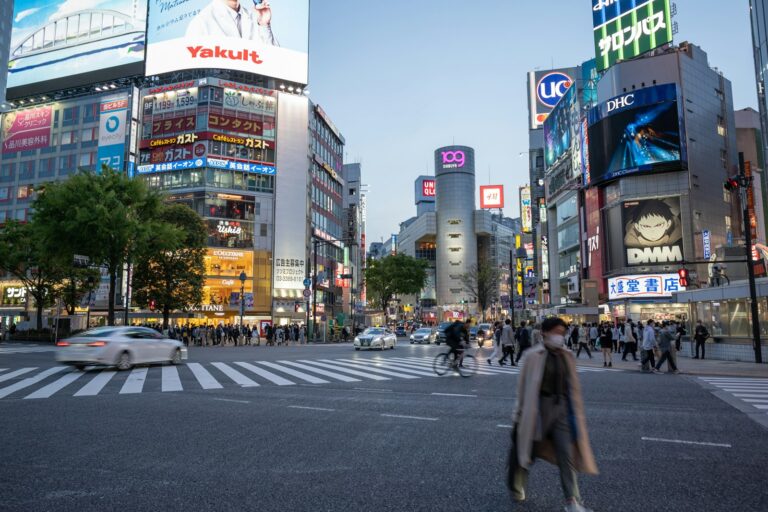
19. Shibuya Scramble Crossing
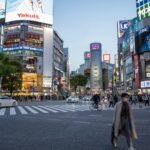
Shibuya Scramble Crossing doesn’t need an introduction, but it’s a very different experience at night. Screens glow on every side, and each light change sends a wave of people across from all directions.
Cross it at street level first, then see it from above at SHIBUYA SKY (#1). Nonbei Yokocho (#24) is right next to the station if you want a drink afterwards.
Neon Streets and Yokocho Alleys
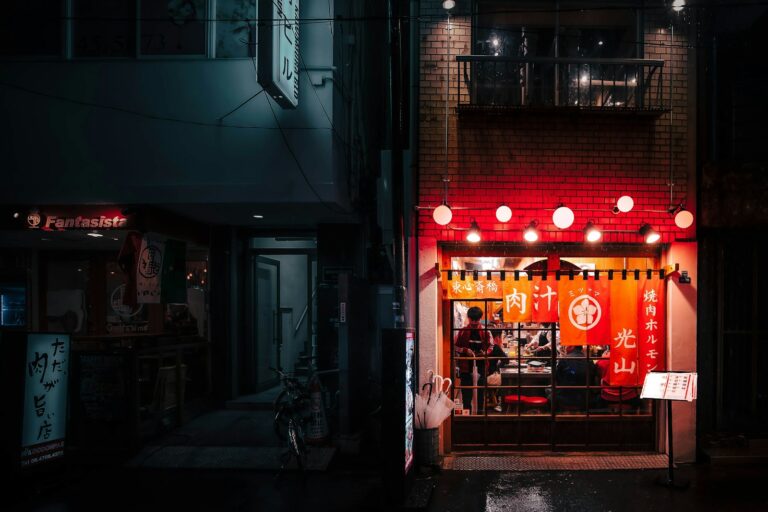
This is the Tokyo from the movies: signs stacked on signs, and narrow alleys where the whole bar is a counter and six stools. These spots are part sightseeing and part nightlife. You can simply walk through, but they’re best if you stop for one drink.
20. Kabukicho and the Godzilla Head
Kabukicho is Shinjuku’s brightest, loudest entertainment district. Its unofficial mascot is a Godzilla head about 12 meters tall on top of the Shinjuku Toho Building, which houses Hotel Gracery Shinjuku. Every hour from 12:00 to 20:00, Godzilla roars and lights up. The last show is at 20:00, so don’t leave it too late.
The building notes that its Godzilla Terrace is currently closed, so watch from the street. Kabukicho is fine to walk through, but ignore street touts inviting you into bars. That’s where most visitor problems start.
21. The Shinjuku 3D Cat
Across from the East Exit of Shinjuku Station, a giant calico cat appears on the curved Cross Shinjuku Vision screen. The curved screen makes it look like it’s leaning out of the building.
It’s a quick, free stop on the way to Kabukicho or Golden Gai. Stand across the plaza from the building for the best 3D effect.
22. Omoide Yokocho
Omoide Yokocho, by Shinjuku Station’s west exit, began as a market of street vendors in the burned-out area right after World War II. Today it has about 60 eateries, mostly motsuyaki and yakitori grills, plus around 20 other shops.
The alleys are narrow, smoky, and very photogenic. Shop hours and menus change without notice, so it’s best to walk the lanes and pick a spot with an open seat.
23. Golden Gai
GO TOKYO describes Golden Gai as around 280 bars packed into a tight block of six alleys, a few minutes from Shinjuku Station’s east exit and next to Kabukicho. Many bars seat only five or six people, and most open around 20:00.
Some bars are for members only, while others welcome everyone. Local rules ask visitors not to smoke or drink in the street and not to take photos without permission. For which bars welcome visitors and how cover charges work, read our Golden Gai guide.
24. Nonbei Yokocho
Nonbei Yokocho (“drunkard’s alley”) dates back to the early 1950s and sits right next to Shibuya Station. It’s known for yakitori, but you’ll also find izakaya and bars. Some are so small that four or five people fill them.
After the scale of Shibuya Crossing, this alley feels like stepping back several decades in a few steps. Walk its length even if you don’t stop in.
25. Yurakucho Sanchoku Inshokugai
Under the train tracks near Yurakucho Station, this alley was renovated in 2019. It has 11 bars and restaurants serving regional Japanese ingredients and cuisine. GO TOKYO lists it as open 24 hours, seven days a week.
It’s a good late option in central Tokyo, especially if you’re coming from Ginza or Tokyo Station. You’ll hear the trains rumbling overhead.
26. Ameyoko
Ameyoko runs about 500 meters between Ueno and Okachimachi stations, with roughly 500 shops and stalls selling seafood, snacks, clothes, cosmetics, and international food. The atmosphere is loud and down-to-earth.
Shop hours vary, so come in the early evening if browsing the stalls matters to you. It fits naturally before or after an evening in Ueno.
Looking for Adult Entertainment Services in Tokyo? Download this
I’ve spent over a decade exploring and studying Japan’s adult entertainment scene firsthand. If you’d like detailed insider information—including how to choose the right shop, what services are available, and tips for avoiding common mistakes—check out our exclusive E-book.
Art and Culture After Dark
If you want something more structured than walking and looking, these venues run into the evening and give you a different kind of night out.
27. teamLab Planets TOKYO
teamLab Planets in Toyosu is an immersive digital art museum where you go barefoot, and some rooms have you wading through water. Its run has been extended to the end of 2027.
Tickets are dated with timed entry, and opening hours vary by day, so check the official calendar when you book. Popular slots can sell out, so don’t leave it until the day.
28. teamLab Borderless
teamLab Borderless is now in Azabudai Hills, close to Roppongi and Tokyo Tower. Its artworks move between rooms and blend into one another, so no two visits are quite the same.
As with Planets, check the date-specific hours and book a time slot in advance. It pairs well with Tokyo City View (#5) or Tokyo Tower (#3) on the same night.
29. Kabuki-za Single Act Seats
You don’t need to commit to a full kabuki program. Kabuki-za in Higashi-Ginza sells single act seats, so you can watch just one act. For the August 2026 program, 4th-level single act seats cost ¥2,000 to ¥3,500 per act. Upgraded 2nd-level seats cost ¥7,200 to ¥12,000.
The act lineup and prices are announced each month on the official Kabuki Web site. Single act seats can’t be bought through Ticket Web Shochiku, by phone, or at the box office, so follow the purchase steps on that month’s page.
On the Water
30. Yakatabune Dinner Cruise
Yakatabune are traditional boats decorated with lanterns, originally used for dinner parties on the water. According to GO TOKYO, scheduled cruises last about two and a half hours. They usually include Japanese dishes such as sushi and tempura, an all-you-can-drink bar with alcoholic and non-alcoholic drinks, and often karaoke.
Boats commonly leave from piers on the Sumida River in Asakusa or from the Odaiba area. Evening cruises show you the city lights from the water. Book early for cherry blossom season and the summer fireworks, when seats go fast.
Three Easy Tokyo Night Sightseeing Routes
Thirty spots is too many for one night. These routes group nearby places and put them in an order that works with their closing times.
East Tokyo: Skytree to Asakusa. Go up Tokyo Skytree around sunset (last entry 21:00). Walk back toward Asakusa over the SUMIDA RIVER WALK before it closes at 22:00. Then head up to the Asakusa Culture Tourist Information Center terrace (until 22:00) and finish at Senso-ji, lit until around 23:00.
Shinjuku: towers to alleys. Start at the Tokyo Metropolitan Government Building’s South Deck and catch a TOKYO Night & Light screening outside. Walk about 10 minutes to Omoide Yokocho by the west exit. Cross to the east side for the 3D cat and Kabukicho (the Godzilla head’s last show is 20:00), then end in Golden Gai once the bars open.
Central Tokyo: station to bay. Look down on Tokyo Station from KITTE Garden, then walk to Yurakucho Sanchoku Inshokugai for food under the tracks. Finish with a free bay view from Caretta Shiodome SKY VIEW, or the GINZA SIX rooftop, both open until 23:00.
Practical Tips for Seeing Tokyo at Night
Watch the last train. According to GO TOKYO’s nightlife guide, trains stop running around midnight and don’t restart until 5 or 6 a.m. Miss it and you’re looking at a taxi or a very long night. Our guide to Tokyo’s last train times explains how to plan around it.
Last entry is not closing time. SHIBUYA SKY closes at 22:30 but stops admitting people at 21:20. Tokyo Skytree’s final entry is an hour before it closes. Plan around last entry, not the closing time.
Rooftops depend on the weather. Open-air spaces like KITTE Garden may close in bad weather. On a rainy night, indoor decks like Tokyo Tower or the Tokyo Metropolitan Government Building are the safer bet.
Mix free and paid. You can build a full night without spending anything on views. Use Caretta Shiodome, the Tokyo Metropolitan Government Building, KITTE Garden, and the Asakusa terrace, then spend the money on food and drinks instead.
Respect the alleys. Places like Golden Gai are working neighborhoods, not theme parks. Ask before photographing people or bars, don’t drink in the street, and expect some bars to be for regulars only.
Frequently Asked Questions About Tokyo Night Sightseeing
Which Tokyo observation deck stays open latest? Of the decks in this guide, Tokyo Tower’s Main Deck is open latest, until 23:00 with last admission at 22:30. For free options, Caretta Shiodome SKY VIEW is generally open until 23:00.
What can I see in Tokyo at night for free? Plenty. Free options include the Tokyo Metropolitan Government Building’s South Deck, TOKYO Night & Light, Senso-ji’s illumination, KITTE Garden, GINZA SIX Rooftop Garden, Caretta Shiodome SKY VIEW, Rainbow Bridge from Odaiba Seaside Park, and walking through Shibuya Crossing and the yokocho alleys.
Where should I go on my first night in Tokyo? For a first night, Shinjuku packs the most variety into one walkable area. It has a free deck, a projection mapping show, Omoide Yokocho, Kabukicho, and Golden Gai. If you prefer something calmer and more traditional, do the Asakusa route instead.
What do you do in Tokyo After 10?
Join our Tokyo Nightlife Private Tour
You deserve better than overpriced bars and missed opportunities. We’re here for you.
Want Someone to Show You Tokyo After Dark?
Views and landmarks are easy to find on your own. The harder part is what comes after. That means knowing which alley bar welcomes first-timers, what a cover charge covers, and where to go when the observation decks close and the city is just getting started.
That’s where a local guide makes the difference. Tokyo After 10 is our private, custom night tour. A guide who knows these neighborhoods builds the night around what you want to see, drink, and eat. You’ll see the side of Tokyo that doesn’t show up on the map.