Photo by <a href="https://unsplash.com/@mosdesign?utm_source=tokyodeepnightlife&utm_medium=referral">mos design</a> on <a href="https://unsplash.com/?utm_source=tokyodeepnightlife&utm_medium=referral">Unsplash</a>
It’s 9pm, you’ve just finished dinner in Shibuya, and you want to know where the music is. Searching “Tokyo DJ events tonight” mostly turns up flyers for parties that ended months ago, or “best clubs” lists that don’t say who is playing. Tokyo has one of the deepest club scenes in Asia. The problem is that most of its schedule is published in Japanese, on Instagram, or on sites that most visitors have never heard of.
This guide covers how locals actually find out what’s on tonight. It explains which listing sites are kept up to date, how to read a Japanese event flyer, roughly what a night costs, and the door rules that turn tourists away. To show what a normal night looks like, we’ve used the real schedule for Friday, October 16, 2026, which we checked against the venues’ own sites and Clubberia’s listings.
Contents
- Why “Tokyo DJ Events Tonight” Is Harder to Search Than It Should Be
- Where to Check Tokyo DJ Events Tonight: The Sources Locals Use
- What a Real Friday Looks Like: The Tokyo Club Schedule for October 16, 2026
- Picking the Right Tokyo Club Event for Your Night
- How to Read a Japanese Club Flyer
- What Tokyo DJ Events Tonight Will Actually Cost
- Door Rules: ID, Age and What You Can Bring
- Timing Your Night: Last Trains and the 5am Rule
- Going Solo? That’s Normal Here
- Frequently Asked Questions
- What do you do in Tokyo After 10?Join our Tokyo Nightlife Private Tour
- Skip the Guesswork: Go Out With Someone Who Knows the Schedule
- About the Author
Why “Tokyo DJ Events Tonight” Is Harder to Search Than It Should Be
Tokyo’s club calendar is fragmented. There’s no single official listing. Every venue runs its own website and social accounts, and promoters often post the final lineup only a few days before the party. Bigger nights also sell advance tickets through outside platforms, so the lineup and the tickets can end up on different sites.
Three things catch visitors out:
- Old pages rank well. Club guides from 2017 still show up in search results, and several of the venues they recommend have closed. Contact and Sound Museum Vision in Dogenzaka both shut in 2022, and ageHa in Shin-kiba closed the same year.
- Dates often have no year. Japanese flyers usually say “10.16 FRI” and leave the year off, so a page can look current when it isn’t.
- The real information is on Instagram. Small DJ bars often don’t have websites. Their weekly lineup goes up as an image post or a story.
The fix is to check two or three live sources, not one static guide.
Where to Check Tokyo DJ Events Tonight: The Sources Locals Use
Resident Advisor (ra.co)
Resident Advisor is the main international listing site for electronic music, and its Tokyo section is the most useful starting point if you only read English. You can filter by date and see lineups, venue pages and how many people are interested in each event. Many Tokyo techno and house parties sell tickets directly through RA. It covers the underground scene best and has fewer of the big commercial clubs.
Clubberia
Clubberia is a Japanese club-culture site, and it’s still updated daily. In October 2026 it had dated news posts and a full list of events by day. The site is in Japanese only, but the event lists are easy to scan: each day shows event names (often in English) next to the venue. Browser auto-translate is enough to read it. It covers more mid-size and smaller venues than RA does.
Venue websites and Instagram
For any club you’ve already picked, check the venue itself. WOMB’s official homepage lists each event with its time range, and ZEROTOKYO links every date to its ticket page. When a lineup changes on the day, the venue’s Instagram story is usually the first place it appears.
Ticket platforms
Some large venues sell through ticketing platforms rather than RA. ZEROTOKYO, for example, sends ticket buyers to ZAIKO and table reservations to TableCheck. If a party is selling out, these pages will show it before the door does.
Our routine: check RA for the underground lineups, Clubberia for everything else, and then the venue’s Instagram before you leave the hotel.
What a Real Friday Looks Like: The Tokyo Club Schedule for October 16, 2026
To show what you’ll find when you search for Tokyo DJ events tonight, here is part of what was listed for Friday, October 16, 2026. Clubberia alone had 11 events that night:
- WOMB (Shibuya): DEEP DIVE DRIVE. WOMB’s own site listed the night as running 23:00–4:30.
- ZEROTOKYO (Shinjuku): THE ONE Presents Axwell, with tickets on ZAIKO.
- VENT (Omotesando): ATA
- HARLEM (Shibuya): BORN FREE SPECIAL -NOVA BIRTHDAY BASH-
- ENTER shibuya: cipher take over ENTER
- Z MARUYAMA (Shibuya): MORPH VOL.7
- SPREAD: yuu.ten vol.3
Saturday the 17th was just as busy. Clubberia listed nine events, including SESSION 25TH ANNIVERSARY at WOMB and MONSTER at HARLEM.
The pattern is typical. Most nights are concentrated around Shibuya’s Maruyama-cho and Dogenzaka. Shinjuku has the biggest single room. Omotesando, Aoyama and Nakameguro have the smaller, sound-focused venues. If you’re going out on a Friday or Saturday, you’ll have plenty of options. Weeknights are thinner, but there’s almost always something on.
These listings are a snapshot from the day we wrote this. Use the sources above to check what’s on the night you go.
Picking the Right Tokyo Club Event for Your Night
A full schedule isn’t much help if you don’t know which kind of night you want. Here’s a quick way to narrow it down.
By neighborhood
- Shibuya (Maruyama-cho / Dogenzaka): This area has the most clubs within walking distance. It’s the best choice if you want to see a couple of places in one night. WOMB is at 2-16 Maruyama-cho, Shibuya-ku, and HARLEM is a few minutes’ walk away. Our Shibuya nightlife guide covers the area before and after the clubs.
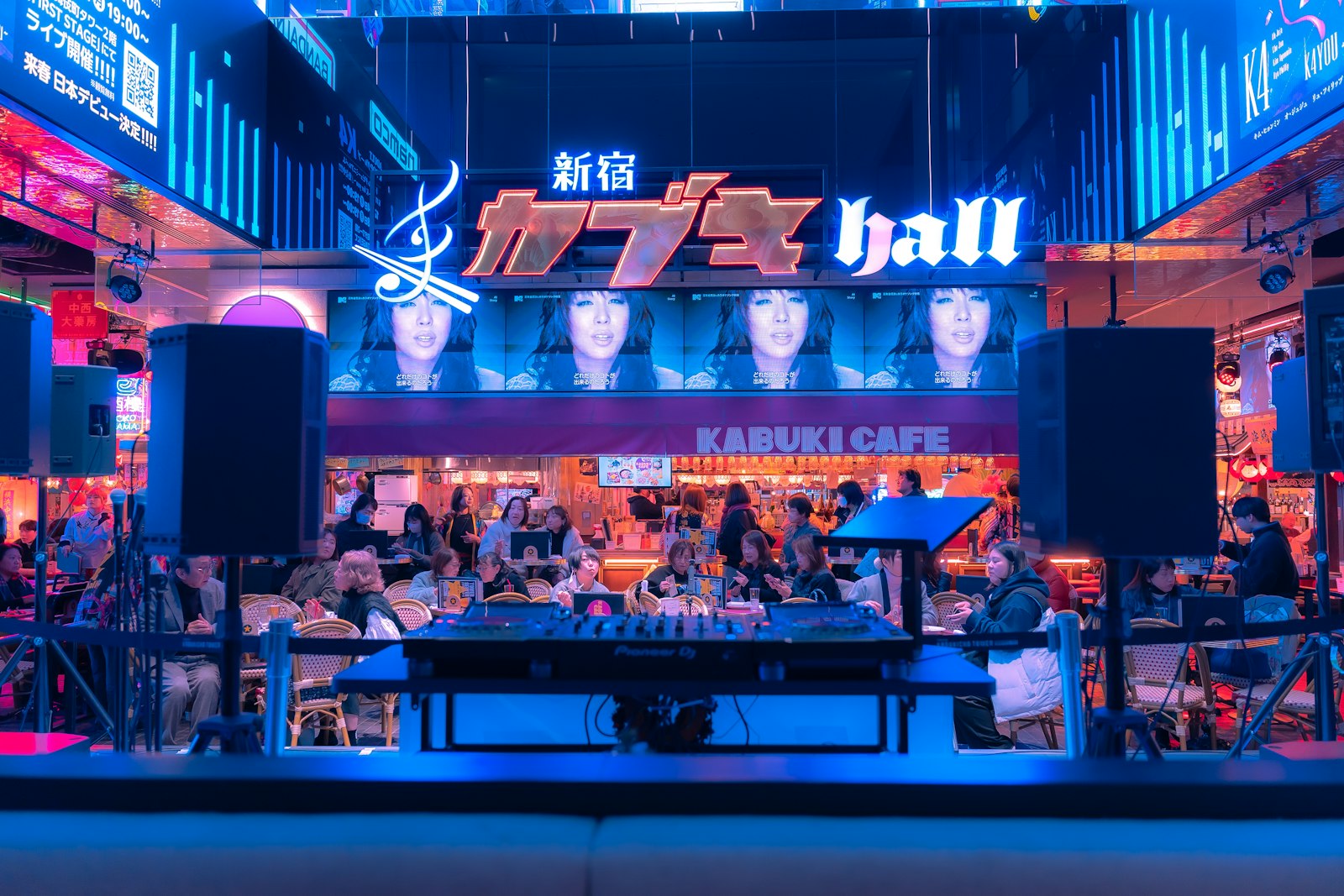
- Shinjuku (Kabukicho): ZEROTOKYO takes up floors B1 to B4 of Tokyu Kabukicho Tower. It’s a one-minute walk from Seibu-Shinjuku Station and about seven minutes from JR Shinjuku. Come here for big international headliners.
- Omotesando / Aoyama: Smaller rooms with serious sound systems, where the crowd comes for the DJ more than the scene.
- Roppongi / Ginza: Bigger budgets, table service and a more tourist-heavy crowd.
By music
If the flyer is full of names you don’t recognize, the venue tells you more than the event title. Techno and house nights cluster at the Shibuya and Omotesando sound-system clubs. Hip-hop has its own long-running rooms like HARLEM. EDM and big-name headliners lean toward the larger Shinjuku and Roppongi venues. For a venue-by-venue breakdown, see our best clubs in Tokyo guide, which we checked against official sources.
How to Read a Japanese Club Flyer
Japanese flyers use a shorthand that’s easy to learn once you’ve seen it a few times:
- OPEN / START: OPEN is when the doors open. START is when the first act plays. At club nights they’re often the same time.
- ADV / DOOR: ADV is the advance ticket price and DOOR is the price you pay at the entrance. Door is almost always higher.
- w/1D or 1D: “With one drink.” Your entry includes one drink ticket, but separate drink charges on top are also common.
- Early bird / 早割: A cheaper price for people who arrive before a set time.
- B2B: “Back to back,” meaning two DJs sharing one set and alternating tracks.
- Guest / Resident / Lounge: The guest is the headliner, residents play the warm-up and late slots, and “lounge” lineups play the second, quieter room.
Set times are rarely printed. As a rule, the headliner at a big night plays somewhere between 1am and 3am.
Looking for Adult Entertainment Services in Tokyo? Download this
I’ve spent over a decade exploring and studying Japan’s adult entertainment scene firsthand. If you’d like detailed insider information—including how to choose the right shop, what services are available, and tips for avoiding common mistakes—check out our exclusive E-book.
What Tokyo DJ Events Tonight Will Actually Cost
Prices depend a lot on the venue and the booking, so treat these as rough ranges, not a quote:
- Small DJ bars: Often around ¥1,000 at the door, sometimes less. Many charge a small music fee and then you pay for drinks one at a time.
- Mid-size and large clubs: Usually ¥2,000–¥5,000 depending on the night. Big international headliners cost more, and advance tickets are usually cheaper than the door.
- Roppongi and Ginza high-end clubs: Expect the top of the range or higher, plus table charges if you book a table.
- Drinks: Plan on several hundred yen to over ¥1,000 per drink at most clubs.
Most large clubs take cards, but small bars and some entrances may only take cash. Carry some yen so you don’t need to look for an ATM at 2am. Budget for a couple of drinks on top of the cover.
Door Rules: ID, Age and What You Can Bring
Getting turned away at the door is the most common way a first night out in Tokyo goes wrong. Here’s what ZEROTOKYO’s official FAQ says. Most large clubs in the city have similar rules:
- Age: Under-20s aren’t allowed into regular club-time events. Some daytime or live shows are an exception.
- ID: Photo ID is required. A passport is accepted. Bring the actual passport. A photo of it on your phone usually won’t work.
- Dress code: There’s no formal dress code, but staff can refuse outfits they judge inappropriate. Tank tops, sleeveless tops and beach sandals are the examples given.
- Cameras: Cameras and recording equipment have to go in a coin locker before entry.
- Food and drink: No outside food or drink.
Rules differ between venues, so check the FAQ of the club you’re going to. Our club entry age and ID guide covers the differences in more detail.
Timing Your Night: Last Trains and the 5am Rule
Tokyo club nights are built around the train timetable. Most lines stop running around midnight and start again around 5am, and the clubs work on the same schedule. Doors open around 10–11pm. The room fills up after the last train, when everyone who’s staying is committed, and the night winds down when the first trains start.
That gives you two options:
- Stay until the first train. This is what most locals do. It’s the cheapest way home, and you’ll catch the headliner.
- Leave early and take a taxi. Late-night taxis cost more, and fares from Shibuya to outer neighborhoods add up quickly.
Check your last train before you head out. Our guide to Tokyo last train times covers the main lines. For general travel information on getting around Japan, the Japan National Tourism Organization is a reliable source.
Going Solo? That’s Normal Here
Plenty of people go to Tokyo DJ events on their own, especially at techno and house nights where the crowd is there for the music. Smaller rooms and DJ bars are the easiest places to start a conversation. Bartenders are often the best people to ask where everyone is heading next.
Frequently Asked Questions
Where can I find Tokyo DJ events tonight in English?
Resident Advisor (ra.co) is the best English-language source for Tokyo club events, especially techno and house. For wider coverage, Clubberia’s daily event list is easy to read with browser translation.
Do I need to buy tickets in advance?
For most nights, no. You can pay at the door. For big international headliners, buying in advance is usually cheaper and avoids the risk of a sell-out.
What time should I arrive?
Doors usually open between 10pm and 11pm, but most rooms don’t fill up until after midnight. Arriving before the last train and staying until the first train is the local norm.
Is my passport required?
Most large clubs require photo ID, and a passport is the standard ID for visitors. Under-20s are refused at regular club-time events.
What do you do in Tokyo After 10?
Join our Tokyo Nightlife Private Tour
You deserve better than overpriced bars and missed opportunities. We’re here for you.
Skip the Guesswork: Go Out With Someone Who Knows the Schedule
The club schedule changes every week, the best rooms don’t always have English websites, and the bar where the night really starts is often a fifth-floor walk-up you’d never find yourself. If you only have a few nights in Tokyo and want to spend them well, it helps to go out with someone who does this every weekend.
Our Tokyo After 10 nightlife private tour is run by local guides who know which bars and late-night spots to start with, what’s worth your money, and how to handle the door. They’ll get you started so that by the time the DJ comes on, you’re already where you want to be.