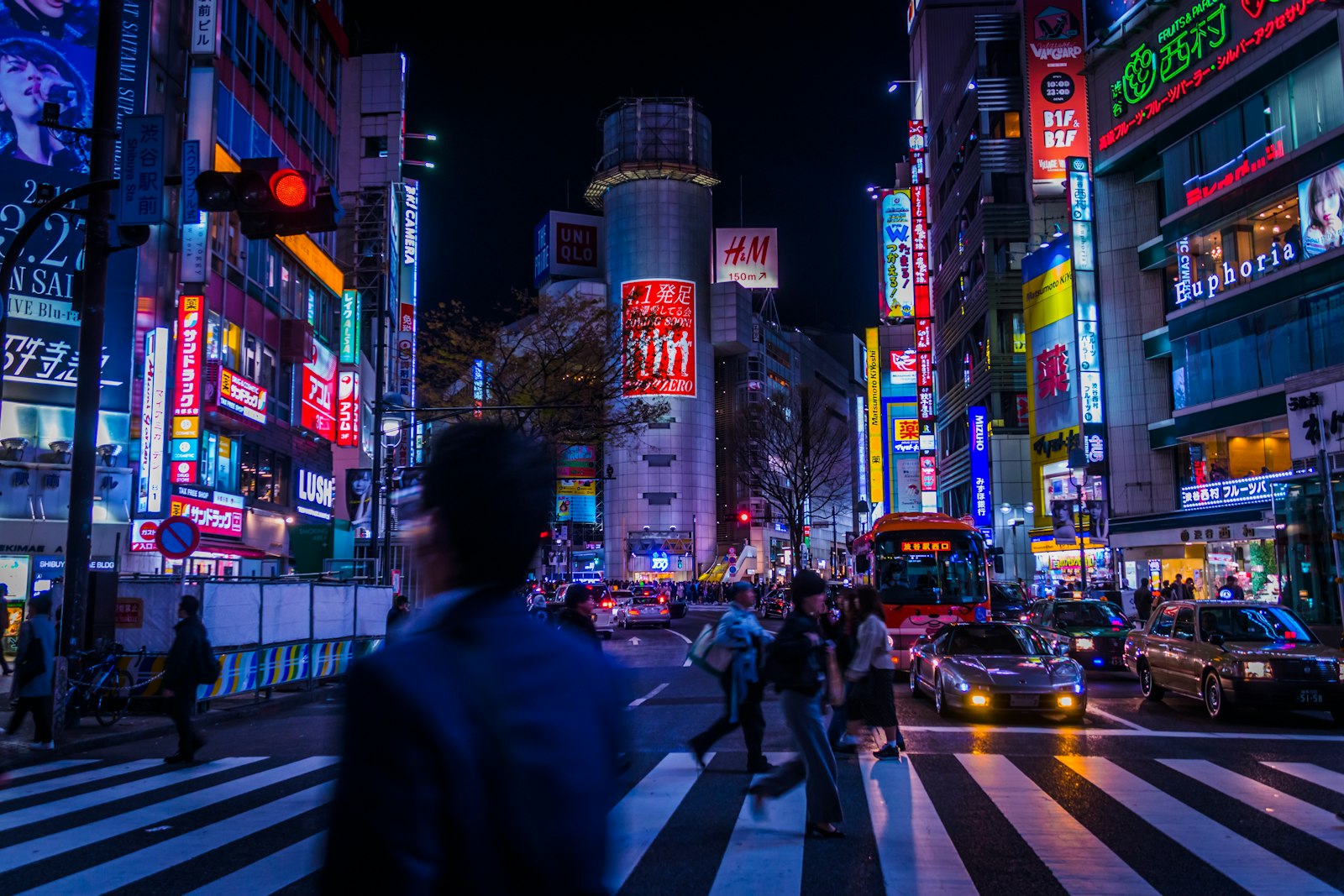
Photo by <a href="https://unsplash.com/@koukichi_t?utm_source=tokyodeepnightlife&utm_medium=referral">Koukichi Takahashi</a> on <a href="https://unsplash.com/?utm_source=tokyodeepnightlife&utm_medium=referral">Unsplash</a>
Here’s the problem with most lists of the best clubs in Tokyo: a good chunk of the venues on them no longer exist. ageHa, Contact, Sound Museum Vision — three of the most-recommended names in every “Tokyo nightlife” article — have all shut their doors, and plenty of 2026-dated guides still list them as if you can turn up tonight.
This guide covers 15 clubs we’ve confirmed are operating, organised by area and by what they actually sound like. Every address, floor count and opening detail below comes from the venue’s own site or from reporting we could trace. Where we couldn’t confirm something — a cover charge, a capacity — we’ve said so rather than guessed.
Contents
- First, What Changed in Tokyo’s Club Scene
- The Best Clubs in Tokyo: Shibuya
- Best Clubs in Tokyo: Shinjuku
- Best Clubs in Tokyo: Roppongi and Ginza
- Best Clubs in Tokyo for Underground Music
- Live Venues That Double as Clubs
- What a Night Actually Costs
- Rules Nobody Tells You Beforehand
- Frequently Asked Questions
- What do you do in Tokyo After 10?Join our Tokyo Nightlife Private Tour
- Skip the Guesswork
- About the Author
First, What Changed in Tokyo’s Club Scene
Three closures reshaped the map, and they’re the reason old lists mislead people.
ageHa in Shinkiba was Tokyo’s largest club — an outdoor pool, a warehouse main room, shuttle buses from Shibuya. It played its final New Year’s countdown and closed in January 2022.
Sound Museum Vision (last event 3 September 2022) and Contact (closed 17 September 2022) both sat in Dogenzaka and both fell to the Shibuya redevelopment project that’s currently rebuilding that whole hillside. Their operator, Global Hearts, said at the time it was hunting for new sites.
Camelot, the big Shibuya crossing-side venue, ended its run as a nightclub after around two decades and now operates as a rental studio space.
So if a guide sends you to any of those four, treat the rest of it with suspicion. What follows is what’s left standing — and honestly, the best clubs in Tokyo are in better shape than that list of ghosts suggests.
The Best Clubs in Tokyo: Shibuya
Shibuya is still the centre of gravity. Most of the good rooms cluster in Maruyamacho and Dogenzaka, within a five-minute walk of each other, which makes it the one area where club-hopping on foot genuinely works. For the wider picture beyond the dancefloor, our Shibuya nightlife guide covers the bars and late-night food around these same streets.
1. WOMB — the one everyone means
Four floors, an enormous mirror ball over the main room, and a booking policy that’s been pulling serious house and techno names since it opened in 2000. WOMB sits at 2-16 Maruyama-cho, Shibuya-ku, holds around 1,000 people, and typically runs 23:00 to 4:30.
It placed 88th in DJ Mag’s Top 100 Clubs 2026, down ten spots on the previous year, which tells you something about how competitive the global field has become rather than about the club slipping. Its 25th anniversary run in 2025 brought through Sven Väth, Richie Hawtin, Laurent Garnier and Sasha.
Go on a weekend with a name booked. Midweek can be very quiet.
2. Harlem — the hip-hop institution
Open since 1997 on Maruyamacho, Harlem is the room Japanese hip-hop grew up in. It’s spread across two floors of the Dr. Jeekan’s building and reports somewhere near 160,000 visitors a year.
If you want rap and R&B rather than four-to-the-floor, this is the first place to check. It’s also one of the least pretentious big rooms in Shibuya.
3. clubasia — three floors, no single genre
Running since 1996 and holding 600-plus across three floors, clubasia programmes across rock, house, techno, hip-hop, reggae and breaks depending on the night. That range is the whole point: you can go twice in a month and have completely different evenings.
Check the lineup before you commit. “clubasia tonight” means very little without knowing which promoter has the building.
4. Circus Tokyo — for people who came for the music
Small, dark, and about a ten-minute walk from JR Shibuya at 3-26-16 Shibuya. Circus opened in October 2015 as the Tokyo sibling of Osaka’s Circus and draws the crowd that reads lineups rather than Instagram stories.
Drum and bass, techno, leftfield electronics. If you find the megaclubs exhausting, start here.
5. ATOM Tokyo — three floors, three moods
At 2-4 Maruyama-cho, ATOM stacks its rooms vertically: CAVE on the fourth floor, the main all-mix dancefloor on the fifth, and LOFT on the sixth for R&B. That layout makes it a decent hedge when you’re in a group that can’t agree on anything.
It gets genuinely packed on weekends. Arrive before midnight if you want to move.
6. ENTER Shibuya — Contact’s successor, in miniature
When Contact closed, the same operator opened ENTER: roughly 150 capacity, sixth floor, over near Miyashita Park in Jingumae. It inherited the sound system from Contact’s main room, Studio X.
The twist is the DJ booth, which sits in the middle of the floor so the crowd surrounds the artist. It’s the closest thing Tokyo has to a proper small listening club, and it fills up fast.
7. DJ Bar Oath — where the night ends
A tiny room with a sound system out of all proportion to its size. Drinks run ¥500 with a ¥1,000 first drink, doors are 21:00 to 4:00, and on Fridays, Saturdays and the day before public holidays it stays open until 8am.
Nobody plans to go to Oath. You end up there at 5am, and that’s correct.
Best Clubs in Tokyo: Shinjuku
Shinjuku’s club scene is newer and considerably bigger in scale. Both of the venues below sit in Kabukicho, within about two minutes of each other.
8. ZEROTOKYO — the flagship
Buried across basement floors 1 to 4 of the Tokyu Kabukicho Tower, ZEROTOKYO opened in April 2023 with five distinct areas and room for up to 1,500 people. The main floor is wrapped in 360-degree LED and built around a sound system designed to be felt.
The house rules are worth knowing before you queue. For events during normal club hours you must be 20 or over, and you’ll need a driver’s licence, passport or residence card — a photo of your ID on your phone won’t do. There’s no formal dress code, but tank tops, sleeveless dresses, sandals and flip-flops can get you turned away.
Tickets are cheaper in advance than at the door.
9. WARP Shinjuku — four floors of maximalism
Opened in October 2018 at 1-21-1 Kabukicho, right beside the Kabukicho Tower, WARP spreads four floors across four different moods — EDM and hardstyle on the main room, hip-hop elsewhere. It’s loud, bright, and unapologetically built for a big night out.
It’s also right in the middle of Kabukicho, which cuts both ways. Read our guide to Tokyo nightlife scams before you let a street tout walk you anywhere in this neighbourhood — the clubs themselves are fine, the men outside them are the problem.
Best Clubs in Tokyo: Roppongi and Ginza
This is where the money is, and the pricing reflects it.
10. Sel Octagon Tokyo — Roppongi’s big room
In the AXALL Roppongi basement at 7-8-6 Roppongi, Sel Octagon is the area’s main EDM venue, reopened after the pandemic with a lounge floor added to the club space. Festival-scale sound, big visuals, international crowd.
Roppongi is the most foreigner-friendly nightlife district in the city and the easiest place to start if it’s your first night out here — our Roppongi nightlife guide breaks down the surrounding bars.
11. Zouk Tokyo — the highest-ranked club in the city
The Singapore brand landed in Ginza in October 2023, taking basement floors 2 and 3 of the Granbell Square complex at 7-2-18 Ginza. Capacity is around 1,000, the rig is Void Acoustics, and it entered DJ Mag’s Top 100 Clubs 2026 at number 51 — a new entry, and the highest placement of any club in Japan.
Expect a dressier crowd and higher door prices than Shibuya. That’s the trade.
Best Clubs in Tokyo for Underground Music
If big rooms aren’t your thing, these four are where Tokyo’s actual dance music culture lives. Smaller, cheaper, and far more interesting on an ordinary Thursday.
12. VENT — the sound system pilgrimage
In the Festae Omotesando building basement at 3-18-19 Minami-Aoyama, VENT books selected house and techno artists into a room built around flat SR speakers chosen for clarity down into the low end. It’s a club for people who care what the kick drum sounds like.
Long sets, minimal decoration, no photography culture. Excellent.
13. Aoyama Tunnel — a basement lounge, not a megaclub
Open since 2011, roughly ten minutes’ walk from Shibuya Station, in the basement of the same building that houses Aoyama Hachi upstairs. It’s small and bar-shaped rather than club-shaped, with DJs playing across a wide spread of genres.
Good for a first stop or a last one, less so for a full night.
14. solfa — Nakameguro’s house and techno room
At 1-20-5 Aobadai in Meguro-ku, a short walk from the Meguro River, solfa has been running since 2008. The main floor holds around 100 with maybe 70 on the dancefloor itself, plus a small lounge, all fed by an Italian RCF system.
It is genuinely intimate. Turn up alone and you’ll end up talking to someone.
15. Forestlimit — the experimental outlier
Out in Hatagaya at 2-8-15 Hatagaya, Shibuya-ku, Forestlimit doubles as an atelier and studio, and the programming reflects that — noise, ambient, improvised electronics, things that don’t fit anywhere else. It is not a nightclub in the way the other 14 are.
If you want to see the strangest corner of the scene, this is it.
Looking for Adult Entertainment Services in Tokyo? Download this
I’ve spent over a decade exploring and studying Japan’s adult entertainment scene firsthand. If you’d like detailed insider information—including how to choose the right shop, what services are available, and tips for avoiding common mistakes—check out our exclusive E-book.
Live Venues That Double as Clubs
Two more worth knowing, because they blur the line and often have the better lineup on a given night.
Unit in Daikanyama (Za House Building, 1-34-17 Ebisu-Nishi) has run since 2004 across three levels — the main space on B2, the Saloon on B3, and a café-lounge on B1. It flips between live gigs and club nights.
Liquidroom in Ebisu (3-16-6 Higashi) is primarily a live house with a roughly 900-capacity floor and one of the better systems in the city, plus a lounge, café and gallery attached.
What a Night Actually Costs
Cover at the best clubs in Tokyo runs ¥2,000 to ¥5,000, and that usually includes one or two drink tickets. The high-end Ginza and Roppongi venues sit higher, in the ¥4,000 to ¥8,000 range.
Budget beyond the door price. A coin locker for your coat, drinks past your included tickets, and a taxi home if you leave between 1am and 5am will all add up faster than the entry fee did.
Advance tickets are consistently cheaper than door prices at the larger venues. Buying ahead also means you’re not standing in a queue at 1am deciding whether it’s worth it.
Rules Nobody Tells You Beforehand
Bring your passport. The legal age is 20 and enforcement is real. Most venues want original photo ID — a photo on your phone or a photocopy is often refused, and a foreign driving licence may not be accepted.
The trains stop. Tokyo’s last trains run around midnight and the first ones start near 5am. That gap is the single biggest thing shaping how clubbing works here: people either go home early or commit to staying until dawn. There is very little in between.
Don’t shoot the dancefloor. At the underground venues especially, filming is discouraged and sometimes explicitly banned. Read the room.
Lockers first. Coats and bags go in a locker at the entrance. Sorting this before you go in saves you a fight with a queue later.
Weeknights are a different city. Several of these rooms are excellent on a Friday and nearly empty on a Tuesday. If you’re going midweek, pick by lineup, not by reputation. Solo travellers in particular should read our notes on going out alone in Tokyo before picking a night.
Frequently Asked Questions
Which are the best clubs in Tokyo for a first visit? WOMB in Shibuya or ZEROTOKYO in Shinjuku. Both are large enough to be forgiving if you turn up alone, both are used to international visitors, and both are easy to find.
Do Tokyo clubs speak English? Door staff at the larger venues generally handle basic English. The smaller underground rooms are more variable, though the transaction — ID, cover, locker — is short enough that it rarely matters.
What should I wear? Smart casual covers almost everything. Ginza and Roppongi venues lean dressier; Shibuya’s underground rooms genuinely don’t care. Avoid sandals, flip-flops and tank tops, which are the specific items most likely to get you refused.
Is Tokyo clubbing safe? The clubs themselves, yes — overwhelmingly. The risk in Tokyo nightlife is almost entirely on the street outside, particularly around Kabukicho, and it comes from touts rather than from the venues.
When should I arrive? Rooms start filling around midnight and peak between 1am and 3am. Turning up at 11pm means paying to watch staff set up.
Are the best clubs in Tokyo all in Shibuya? Most of them, but not all. Shibuya has the highest concentration and the easiest hopping on foot, while Shinjuku has the biggest single rooms and Ginza has the highest-ranked venue in the country.
What do you do in Tokyo After 10?
Join our Tokyo Nightlife Private Tour
You deserve better than overpriced bars and missed opportunities. We’re here for you.
Skip the Guesswork
Picking from a list is the easy part. The hard part is knowing which of these rooms is worth your Tuesday, which promoter is running the good night this weekend, and how to get from a Shibuya izakaya into a basement club without losing two hours to trial and error.
That’s local knowledge, and it changes month to month. If you’d rather spend the night dancing than researching, our Tokyo After 10 nightlife tour puts a guide who actually goes out in this city next to you for the evening — bars first, then wherever the night is actually good.
Either way, go. The best clubs in Tokyo reward people who show up curious.