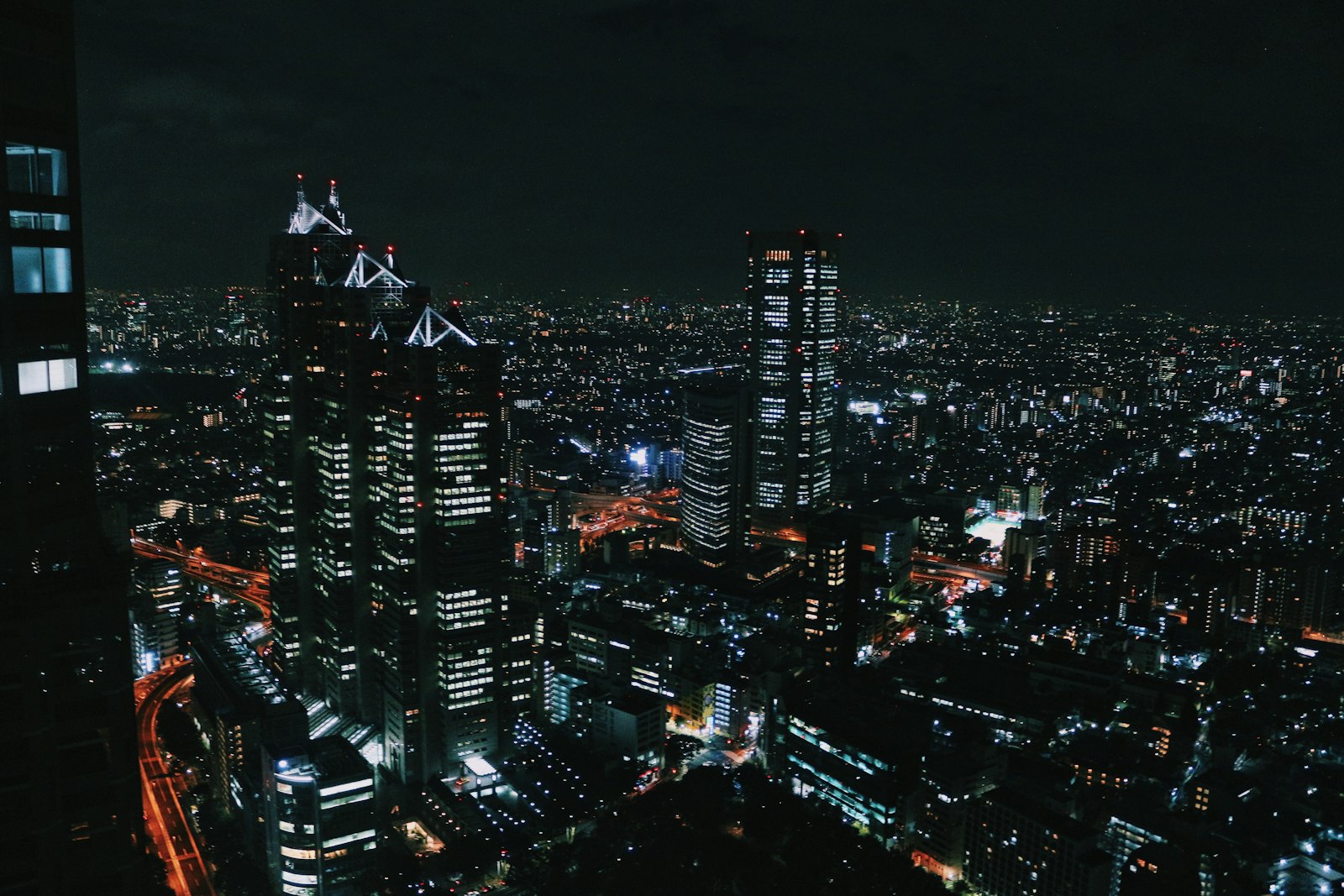
Photo by <a href="https://unsplash.com/@ernestporzi?utm_source=tokyodeepnightlife&utm_medium=referral">Ernest Porzi</a> on <a href="https://unsplash.com/?utm_source=tokyodeepnightlife&utm_medium=referral">Unsplash</a>
Every evening in West Shinjuku, a 48-story government building turns into a giant screen. The Tokyo Night and Light projection mapping show at the Tokyo Metropolitan Government Building (locals call it “Tocho”) is free and runs most nights of the year. Guinness World Records recognizes it as the largest permanent projection-mapped display on a building. You don’t need a ticket or reservation. You just need to know when to arrive and where to stand.
This guide covers the practical side: the monthly show times, the best viewing spots, how to get the music on your phone, and how to turn a 10-minute light show into a proper night out in Shinjuku.
Contents
- What Is the Tokyo Night and Light Projection Mapping?
- Tokyo Night and Light Schedule: Show Times by Month
- What’s Showing on the Tocho Projection Mapping?
- Where to Watch: Best Viewing Spots
- How to Hear the Music (Bring Headphones)
- Getting to the Tokyo Metropolitan Government Building
- Combine It with the Free Observatory
- Sample Evening Plan: Projection Mapping + Shinjuku Nights
- Practical Tips Before You Go
- FAQ: Tokyo Night and Light Projection Mapping
- What do you do in Tokyo After 10?Join our Tokyo Nightlife Private Tour
- See Shinjuku After Dark with a Local
- About the Author
What Is the Tokyo Night and Light Projection Mapping?
TOKYO Night & Light is a permanent projection mapping project run by the Tokyo Metropolitan Government and the Tokyo Projection Mapping Executive Committee. It opened on February 25, 2024. The images are projected onto the east wall of Building No. 1, the twin-towered landmark designed by Kenzo Tange that has dominated the Shinjuku skyline since the early 1990s.
A few numbers explain why people stop in their tracks:
- Projection area: 13,904.956 m², certified by Guinness World Records as the “Largest architectural projection-mapped display (permanent)”
- Coverage: roughly from the 4th to the 32nd floor of the facade, according to GO TOKYO, the city’s official tourism site
- Equipment: 40 projectors. Panasonic Connect has said its PT-RQ50K and PT-RZ34K models power the display
- Power: the project runs on green electricity
Here’s the part most visitors don’t realize: this isn’t one fixed show. The program rotates between original art pieces and limited-time collaborations with anime, games, and musicians, so what you see on a Tuesday in October may be completely different from what played in spring.
Tokyo Night and Light Schedule: Show Times by Month
Shows start after sunset, which in Tokyo changes a lot between winter and summer. The official annual timetable published on the TOKYO Night & Light official site looks like this:
| Month | Screening start times |
|---|---|
| January, November, December | 17:30, 18:00, 18:30, 19:00, 19:30, 20:00, 20:30, 21:30 |
| February, October | 18:00, 18:30, 19:00, 19:30, 20:00, 20:30, 21:30 |
| March, September | 18:30, 19:00, 19:30, 20:00, 20:30, 21:30 |
| April | 19:00, 19:30, 20:00, 20:30, 21:30 |
| May to August | 19:30, 20:00, 20:30, 21:30 |
A few things to keep in mind:
- Check “Today’s show time” before you go. The official site posts a daily timetable, and special programs sometimes add extra slots (for example, a 21:00 screening that isn’t on the annual chart).
- Weather matters. Screenings run daily except in stormy weather or similar conditions. Light rain usually isn’t a problem, but strong wind or heavy storms can cancel a show.
- Each show is short. News coverage at launch described individual screenings as about 10 to 15 minutes. Arrive five minutes early so you’re not rushing across the plaza when the first image hits the wall.
Insider tip: In November and December, the first show starts at 17:30. That makes an early slot easy to combine with dinner. Catch the show, then head east to Omoide Yokocho before the after-work crowd fills it.
What’s Showing on the Tocho Projection Mapping?
The content changes throughout the year, so treat this section as a guide to the kind of thing you’ll see rather than a promise.
Original art programs
The core TOKYO Night & Light lineup is made up of art pieces themed on Tokyo: its history, nature, and city energy. Past programs have included titles such as Ukiyo, Lunar Cycle, and Evolution, plus music-driven pieces. These are the shows you’re most likely to catch on a random weeknight.
Pop culture collaborations
This is where the Tocho projection mapping gets fun. Since 2024 the building has been “attacked” by Godzilla. The Godzilla: Attack on Tokyo program launched in April 2024 for the character’s 70th anniversary, and a follow-up called TOKYO GODZILLAs came later. Other titles featured on the official site include:
- Pokémon Trading Card Game TOKYO LUMINOUS NIGHT (ran March 20 to April 30, 2026)
- Bocchi the Rock! Seishun Complex
- BLUE LOCK -TOKYO EGOIST-
- HATSUNE MIKU LIGHTS TOKYO
- Atarashii Gakko no Leaders
- Music pieces by Aimer
Collaboration programs often run only on certain days (Godzilla originally played on weekends and holidays) or for a limited period. If you’re going for a specific title, check the official site’s CONTENTS page on the day.
Where to Watch: Best Viewing Spots
The official viewing location is the Citizens’ Plaza (Tomin Hiroba), the semicircular open space in front of Building No. 1. It’s free, wheelchair-accessible via elevator routes, and staffed by security during screenings.
Some tips on positioning:
- Center of the plaza, toward the back. The projection covers roughly 28 floors, so standing right under the building means craning your neck. Backing toward the far edge of the plaza gives you the whole facade in one view and in one phone frame.
- Slightly off-center for photos. A diagonal angle shows off the 3D effects, since the mapping plays with the building’s windows and vertical lines.
- Anywhere with a sightline works. The organizers say you can enjoy the show from any spot where the building’s east wall is visible. On busy weekend nights, the sidewalks on the approach from Shinjuku Station’s west side are a fine plan B, though you won’t hear the music there.
Weekday shows are noticeably calmer than weekend ones, especially when a popular collaboration is running. If you want a clear photo without a sea of raised phones, aim for a weekday and a later slot.
How to Hear the Music (Bring Headphones)
The show is synced to music played at the site, but the plaza is wide and city noise carries. The official site has a SOUND ON/OFF toggle that plays the soundtrack in sync on your phone. A few practical notes:
- If you open the page early, reload it when the screening starts, or the audio may not play.
- Use earbuds. Blasting audio from your phone in a crowded plaza isn’t great etiquette in Japan.
- Some programs don’t stream music on the site, including the Aimer pieces, BLUE LOCK -TOKYO EGOIST-, Bocchi the Rock! Seishun Complex, HATSUNE MIKU LIGHTS TOKYO, OTONABLUE, and TTTTOKYO.
Looking for Adult Entertainment Services in Tokyo? Download this
I’ve spent over a decade exploring and studying Japan’s adult entertainment scene firsthand. If you’d like detailed insider information—including how to choose the right shop, what services are available, and tips for avoiding common mistakes—check out our exclusive E-book.
Getting to the Tokyo Metropolitan Government Building
The building is at 2-8-1 Nishi-Shinjuku, Shinjuku-ku. Access options:
- Toei Oedo Line, Tochomae Station: directly connected. This is the easiest route
- JR Shinjuku Station, West Exit: about a 10-minute walk through the skyscraper district
- Tokyo Metro Marunouchi Line, Nishi-Shinjuku Station: about a 10-minute walk
- Toei Bus “Tocho Loop”: from the underground bus stop at Shinjuku Station West Exit to “Tocho Daiichi Honcho” (weekdays only)
The walk from Shinjuku Station is underground for much of the way, which helps on cold or rainy nights.
Combine It with the Free Observatory
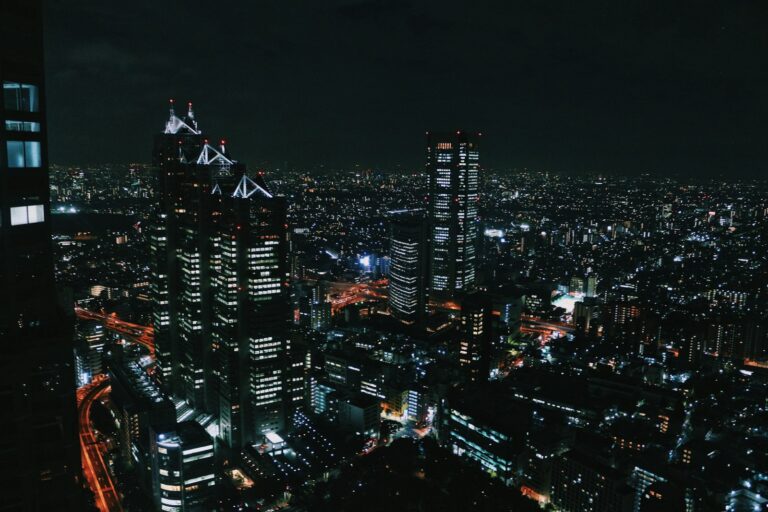
The same building has two free observation decks, one in each tower on the 45th floor, 202 meters up. According to GO TOKYO, they’re open 9:30 to 22:00 with last entry at 21:30. Each tower closes on certain days: the South Observatory on the first and third Tuesdays, and the North Observatory on the second and fourth Mondays.
You can’t watch the projection from inside the observatory, since you’d be standing in the building being projected on. But it pairs well with the show. Go up first for the city lights (on clear evenings you can sometimes spot Tokyo Skytree and Tokyo Tower), then come down to the plaza for the next screening. For more ideas along these lines, see our list of the best Tokyo night sightseeing spots.
Sample Evening Plan: Projection Mapping + Shinjuku Nights
The Tokyo Night and Light projection mapping makes a good opening act for a night in Shinjuku. Here’s a simple plan for an autumn or winter evening:
- 17:00: Head up to the 45th-floor observatory for sunset and the city lights.
- 18:00 or 18:30: Catch a screening from the Citizens’ Plaza with earbuds in.
- 19:00: Walk back toward the station and grab yakitori and a beer at Omoide Yokocho, the smoky alley right by the West Exit.
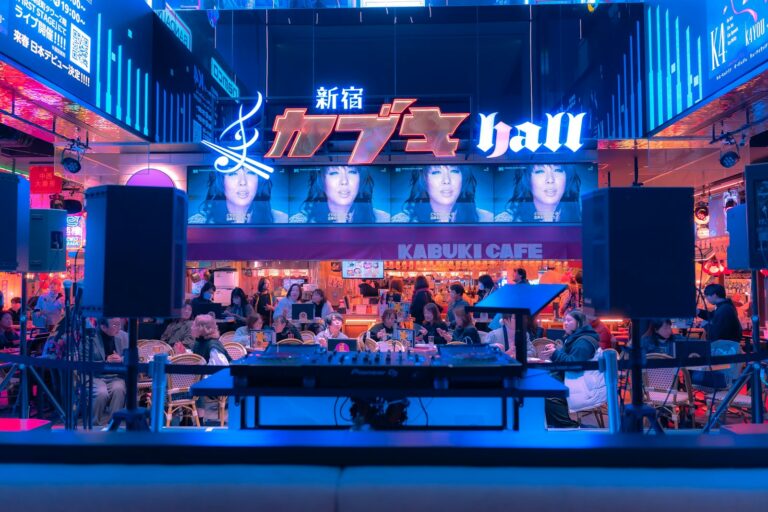
- 20:30 onward: Cross to the east side for Golden Gai’s tiny bars or the neon of Kabukicho. Our Shinjuku nightlife guide explains how the two areas differ and how to avoid common tourist traps.
If you’re visiting in the colder months, the projection fits nicely into a wider illumination tour. Our guide to Tokyo nightlife in winter covers the seasonal light-ups and the warm izakaya to retreat to afterward.
Practical Tips Before You Go
- It’s free. No tickets or reservations are needed.
- Dress for the wind. The plaza sits between skyscrapers, and the wind gets surprisingly cold in November and December.
- Keep the path clear. Staff may ask you to stay out of walkways. Tripods can be a problem in a crowd, so a phone is usually the better choice.
- Don’t expect food stalls. The plaza is a government building’s forecourt, not a festival ground. Eat before or after in Shinjuku.
- Check the weather. If a storm is coming, check the official site or social accounts before making the trip.
FAQ: Tokyo Night and Light Projection Mapping
Is the Tokyo Night and Light projection mapping free? Yes. Viewing is free and requires no tickets or reservations.
What time does the Tocho projection mapping start? It depends on the month. The first show ranges from 17:30 in winter to 19:30 in summer, and the last regular screening is at 21:30. Always confirm the daily timetable on the official site.
How long is each show? Individual screenings are short, roughly 10 to 15 minutes according to launch coverage, though length varies by program.
Is it held when it rains? Shows run daily except in stormy weather or similar conditions.
Can I see it from the observatory? No. The projection is on the building’s own east wall, so watch from the Citizens’ Plaza below.
What do you do in Tokyo After 10?
Join our Tokyo Nightlife Private Tour
You deserve better than overpriced bars and missed opportunities. We’re here for you.
See Shinjuku After Dark with a Local
The Tokyo Night and Light projection mapping is one of the easiest wins in Tokyo: free, central, and spectacular. The harder part is what comes after. Shinjuku has thousands of bars, and the ones worth your time rarely have English signs or an obvious door.
If you’d rather skip the guesswork, Tokyo After 10, our private nightlife tour, pairs you with a local guide who knows which alleys to turn down, which counters welcome first-timers, and how to order like a regular. Watch the light show, then let someone who lives here take it from there.