Photo by <a href="https://unsplash.com/@taisiat?utm_source=tokyodeepnightlife&utm_medium=referral">Taisia Karaseva</a> on <a href="https://unsplash.com/?utm_source=tokyodeepnightlife&utm_medium=referral">Unsplash</a>
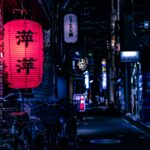
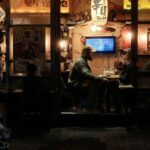
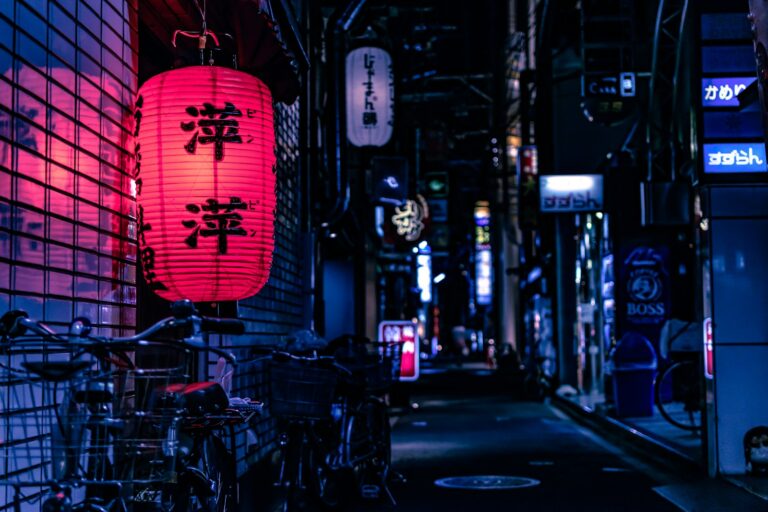
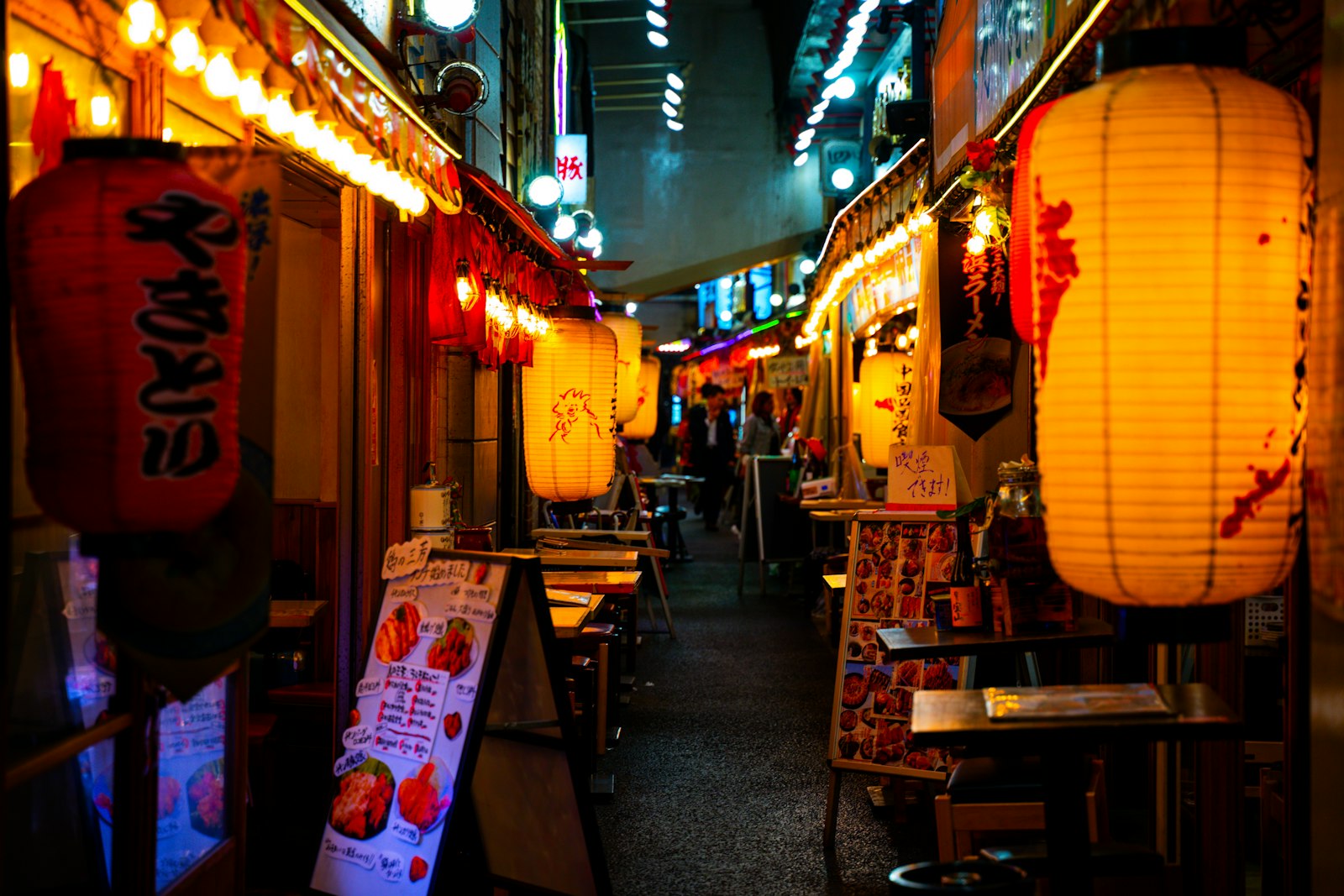
Two minutes from the Scramble Crossing, wedged between the train tracks and the glass towers, there is a pair of lantern-lit lanes that look like Shibuya forgot to modernize them. That is Nonbei Yokocho Shibuya — “Drunkard’s Alley” — and its biggest challenge for visitors isn’t finding it. It’s working up the nerve to slide open a door onto a bar with six seats, all of them occupied by regulars who turn to look at you.
This guide is about that moment. We’ll cover where the alley is and how it came to be, but mostly how to actually walk into one of its tiny bars: how to read the door, what to say, what you’ll pay, and which spots are a safe first stop.
Contents
- What Is Nonbei Yokocho in Shibuya?
- Nonbei Yokocho vs. Other Tokyo Yokocho
- How to Get to Nonbei Yokocho Shibuya
- How to Enter a Tiny Bar in Nonbei Yokocho (Step by Step)
- Etiquette Rules at Nonbei Yokocho Shibuya
- Budget and Payment at Nonbei Yokocho Shibuya
- Where to Start: Verified Spots in Nonbei Yokocho
- Tips for Solo Travelers and First-Timers
- Frequently Asked Questions
- What do you do in Tokyo After 10?Join our Tokyo Nightlife Private Tour
- Skip the Guesswork: See Drunkard’s Alley With a Local
- About the Author
What Is Nonbei Yokocho in Shibuya?
Nonbei means “heavy drinker” and yokocho means “side alley,” so the name is honest about what happens here. The alley sits at 1-25 Shibuya, right beside Shibuya Station along the elevated tracks on the Miyashita Park side.
Its roots go back to 1950. According to a TV Tokyo history segment, street food stalls that had been operating around present-day Tokyu Honten-dori and Dogenzaka were gathered together to form the alley, which later moved to its current trackside spot during a land readjustment project. Some of today’s shops trace their family history back to those stalls.
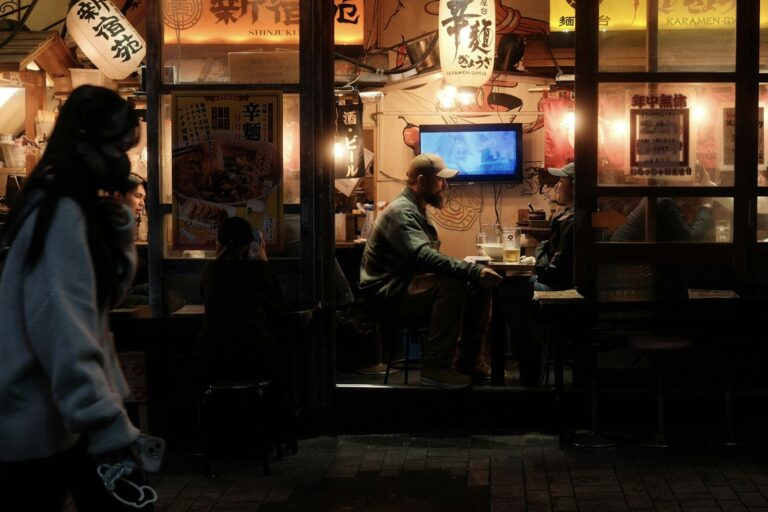
Today, Nonbei Yokocho is home to just under 40 small bars and eateries — TV Tokyo counted 39 in 2021. Most seat somewhere between 6 and 10 people, and a few have a second floor reached by stairs so steep they’re closer to a ladder. The mix ranges from oden and yakitori counters that have been there for generations to wine bars, bistros, and even a fragrance-themed bar that opened in 2025.
It’s worth knowing how much the locals value this place. When the 2020 state of emergency hit, every shop in the alley voluntarily closed, and the yokocho launched a crowdfunding campaign to keep its businesses alive; rewards included lanterns printed with supporters’ names. You’re not visiting a theme park — you’re visiting a community that fought to stay open.
Nonbei Yokocho vs. Other Tokyo Yokocho
If you’ve read about Shinjuku’s alleys, you might wonder whether this is worth a separate trip. Here’s the short version:
- Golden Gai is bigger (200+ bars), more international, and more of an “event.” Expect crowds and more cover charges posted in English.
- Omoide Yokocho is smoky, yakitori-heavy, and built for quick eating and drinking near Shinjuku Station.
- Nonbei Yokocho in Shibuya is smaller and quieter. With under 40 shops in two short lanes, it feels more like a neighborhood than a district — great for a slow drink and a real conversation.
For a full comparison of the city’s alleys, see our guide to the best yokocho in Tokyo.
How to Get to Nonbei Yokocho Shibuya
The alley is roughly a 2–3 minute walk from the Hachiko Exit of Shibuya Station.
- Exit at Hachiko Square.
- Head north along the JR tracks, toward Miyashita Park.
- Follow the narrow road that runs alongside the elevated tracks until you see the lanterns and signboards of the alley.
At night the glow is easy to spot. During the day, most shops are shuttered and the lanes look almost empty, so come in the evening.
Hours: There are no alley-wide hours. Most shops open around 6pm and close around midnight; a few start earlier (some yakitori counters open at 4pm), and some bars run later. Several of the long-running shops close on Sundays. Check each shop individually before making plans around a specific bar.
How to Enter a Tiny Bar in Nonbei Yokocho (Step by Step)
This is the part most guides to Nonbei Yokocho Shibuya skip. A 6-seat bar works differently from a pub at home, and knowing the flow makes all the difference.
1. Read the Door Before You Open It
Before you touch the handle, look for clues:
- Posted prices or a menu outside — a good sign the bar expects new faces.
- An English sign or “Welcome” sticker — even better.
- A sign that says 会員制 (members only) or “regulars only” — respect it and move on.
- A small window — peek in to see if there’s a free seat. If every stool is taken, try the next door.
2. Slide the Door and Show Your Number
Open the door a little, make eye contact with the person behind the counter, and hold up the number of people in your group with your fingers. You can also say:
- “Futari desu” (two people) / “Hitori desu” (just me)
- “Daijoubu desu ka?” (is it OK?)
If the owner crosses their arms in an X or says “sumimasen, ippai desu” (sorry, we’re full), smile, say “arigatou,” and move on. It’s about space, not about you.
3. Ask About the Charge
Most bars in the alley serve an otoshi — a small appetizer that’s placed in front of you automatically and doubles as a seating charge. Most guides put the typical range at roughly ¥500–¥1,000, but it varies by shop, and some bars charge a separate cover on top. If you want to know before you sit:
- “Otoshi wa ikura desu ka?” (how much is the otoshi?)
- “Chaaji wa arimasu ka?” (is there a table charge?)
Asking is completely normal and nobody will find it rude. For a deeper explanation, read our guide to what the otoshi charge is and why Japanese bars use it.
4. Order Simply
Many shops don’t have printed menus, let alone English ones. Easy wins:
- “Nama biiru” — draft beer
- “Haibooru” — whisky highball
- “Osusume wa nan desu ka?” — what do you recommend?
- “Onaji mono o kudasai” — I’ll have the same (point at your neighbor’s glass)
Our guide on how to order in a Japanese bar has more phrases that actually work at the counter.
5. Stay a Round or Two, Then Move On
Seats are precious in a bar this small. One or two drinks — about 30 to 60 minutes — is the norm, especially if people are waiting outside. When you’re ready, say “okaikei onegaishimasu” (the bill, please) and, as you leave, “gochisousama deshita” (thank you for the food and drink). That second phrase earns real smiles.
Etiquette Rules at Nonbei Yokocho Shibuya
Nonbei Yokocho Shibuya is a working neighborhood, not a backdrop. These rules keep you welcome:
- Keep groups small. Two or three people is ideal. A group of five will struggle to fit anywhere at once — split up and meet later.
- Don’t drink in the street. Shibuya Ward bans drinking on streets and in public spaces around Shibuya Station from 6pm to 5am, year-round, since October 2024. There’s no fine, but drink inside the bars.
- Ask before taking photos inside. Owners and regulars are often happy to chat, but not everyone wants to end up on Instagram. Don’t stand in the lanes blocking doors for photos.
- Don’t come “just to look.” The lanes are narrow and shared by customers coming and going. If you want to see the alley, have a drink in it.
- Talk to the owner. In a 6-seat bar, the person behind the counter is the experience. Ask how long the bar has been there — the stories are often the highlight of the night.
Looking for Adult Entertainment Services in Tokyo? Download this
I’ve spent over a decade exploring and studying Japan’s adult entertainment scene firsthand. If you’d like detailed insider information—including how to choose the right shop, what services are available, and tips for avoiding common mistakes—check out our exclusive E-book.
Budget and Payment at Nonbei Yokocho Shibuya
There’s no entrance fee to the alley itself; you pay per bar. As a rough guide, most guides estimate a single bar visit at around ¥2,000–¥3,000 per person (otoshi plus a couple of drinks), and a night at two or three bars at around ¥4,000–¥6,000. Food-focused counters like yakitori shops will cost more if you eat a full meal.
Bring cash. Most shops in the alley are cash-only. There are convenience store ATMs around Shibuya Station that accept international cards, so withdraw before you head in.
Where to Start: Verified Spots in Nonbei Yokocho
Shops in the alley change over time, and hours shift, so we’re only listing places whose details we could confirm through multiple sources. Treat this as a starting point, not a checklist.
Torifuku (鳥福) — Yakitori With Pre-War Roots
According to TV Tokyo, the family behind Torifuku has been grilling yakitori in Shibuya since a street stall in 1932 (Showa 7) — older than the alley itself. Its Tabelog listing shows a 13-seat counter, cash-only payment, and an otoshi of ¥770. It’s one of the more food-focused stops in the alley and fills up early, so arrive near opening time.
Nadaichi (なだ一) — Old-School Oden
Nadaichi is a long-running oden shop that TV Tokyo has profiled as a family business now in its fourth generation. TV Tokyo describes a broth built on kombu and dried mackerel flakes, seasoned with white soy sauce, and a wooden storefront that is one of the most atmospheric in the alley. A bowl of oden and a glass of sake here is about as “Showa Shibuya” as it gets.
Tight — The Bar Named After Its Size
Tight opened in 2004 at 1-25-10 Shibuya, and Time Out describes it as a tiny upstairs bar with only about four stools, reached by a steep staircase. On busy nights, guests end up perched on the stairs. A window looks out over the passing trains, and the owner is known for chatting with guests — a good first stop if you want conversation with your drink.
Hana (はな) — A Bar for Your Nose
A newer arrival: Hana is a bar opened in March 2025 by niche fragrance retailer NOSE SHOP at 1-25-9 Shibuya, in the alley’s middle lane. The concept pairs scent and flavor. It’s a good example of how the alley keeps evolving while keeping its old bones.
Tips for Solo Travelers and First-Timers
- Go early. Between opening and about 8pm you’ll find more empty stools and owners with more time to talk.
- Solo is an advantage. One person fits where a group of four never will. Many visitors find Nonbei Yokocho easier solo than Golden Gai.
- Weekdays are calmer. Friday and Saturday nights get crowded, especially after 9pm.
- Combine it with the area. Miyashita Park and the Shibuya Scramble are steps away, and our Shibuya bar hopping guide maps out more back-alley bars to continue the night.
- Know your last train. The alley is right next to the station, which makes it a perfect final stop before heading home.
For broader context on Tokyo’s alleys and drinking culture, the official GO TOKYO guide to yokocho alleyways is also worth a read.
Frequently Asked Questions
Is Nonbei Yokocho Shibuya foreigner-friendly?
Mostly, yes. Some shops have English signs or menus, and owners are used to visitors. A few bars prefer regulars — if you see a members-only sign or are politely turned away, simply try the next door.
Do I need to speak Japanese?
No, but a few phrases (“futari desu,” “otoshi wa ikura desu ka,” “gochisousama deshita”) make the night much smoother and are genuinely appreciated.
Can I pay by card?
Assume not. Most bars in Nonbei Yokocho are cash-only.
Is it worth visiting during the day?
Not really. Most shops open in the evening, and the alley only comes alive after dark.
What do you do in Tokyo After 10?
Join our Tokyo Nightlife Private Tour
You deserve better than overpriced bars and missed opportunities. We’re here for you.
Skip the Guesswork: See Drunkard’s Alley With a Local
Nonbei Yokocho rewards people who know which door to open. The best bars are the ones without English signs, run by owners whose stories you’d never hear without a translator — and those are exactly the places first-timers walk past.
If you’d rather spend your night drinking than hesitating outside closed doors, a local guide can take you straight to the counters where visitors are genuinely welcomed, handle the introductions, and help you order like a regular. Our Tokyo After 10 nightlife private tour is built for exactly that — Tokyo’s back alleys, with someone who knows them by heart.