Photo by <a href="https://unsplash.com/@peemaglama?utm_source=tokyodeepnightlife&utm_medium=referral">Pema G. Lama</a> on <a href="https://unsplash.com/?utm_source=tokyodeepnightlife&utm_medium=referral">Unsplash</a>
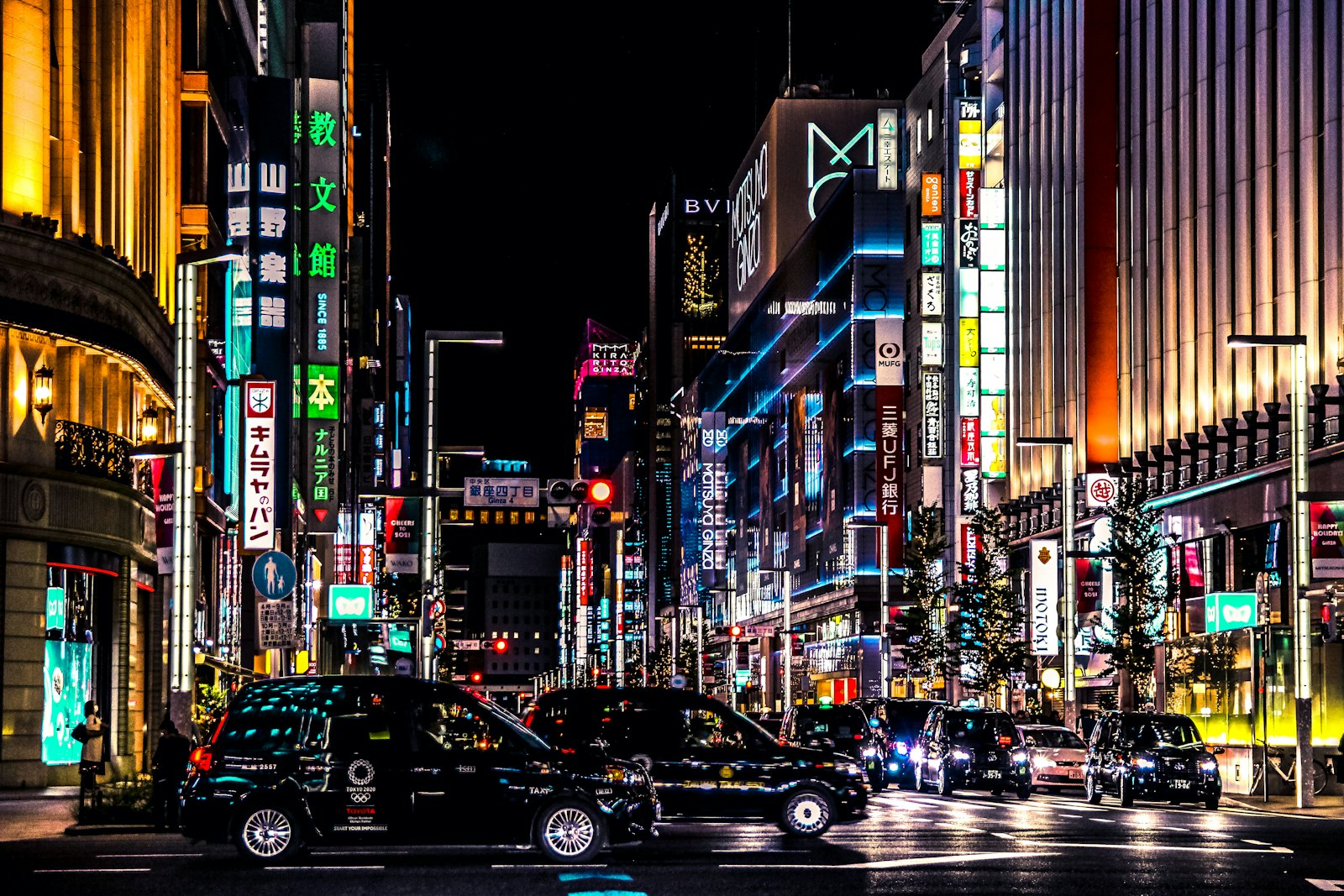
A Tokyo night walking tour is the cheapest upgrade you can make to a Tokyo itinerary. The temples, the crossings, the skyline — you can see all of it during the day, and most visitors do. But Tokyo is a city built out of light, and it does not switch on until the sun goes down. Walk the same block at 9pm that you walked at 2pm and it is a genuinely different place: quieter in the parts that were mobbed, louder in the parts that were dead, and lit in a way no photo from midday will ever match.
The problem is that “night walking tour” covers everything from a free two-hour group stroll to a self-guided route you piece together from a map. This guide gives you three routes that actually work after dark, with the opening hours and costs that decide whether a route is possible on a given night, and an honest breakdown of when a guide is worth paying for.
Contents
- Why walking is the right way to see Tokyo at night
- Route 1 — Shinjuku: neon, alleys, and a free 202-meter view
- Route 2 — Asakusa and the Sumida River: old Tokyo after the crowds go home
- Route 3 — Rainbow Bridge to Odaiba: the skyline walk almost nobody does
- Guided or self-guided? Choosing your Tokyo night walking tour
- Night walking etiquette most visitors get wrong
- Safety, touts, and the last train
- What to bring
- Frequently asked questions
- What do you do in Tokyo After 10?Join our Tokyo Nightlife Private Tour
- Walk it with someone who lives here
- About the Author
Why walking is the right way to see Tokyo at night
Tokyo rewards walking more than almost any major city, and it rewards it most at night. Three reasons a Tokyo night walking tour beats every other way of seeing the city after dark.
The interesting parts are too small for anything else. The alleys that make Tokyo’s nightlife famous — Omoide Yokocho, Golden Gai, Nonbei Yokocho — are barely wide enough for two people to pass. A bus tour drives past them. A taxi drops you at the corner. Only a walk puts you inside them.
Distances are shorter than they look. Shinjuku’s east side, where most of the neon lives, is maybe fifteen minutes end to end on foot. Asakusa’s temple grounds to the Sumida riverbank is under ten. Any night walking tour in Tokyo covers less ground than you’d expect, which is why they usually run two to three hours.
Tokyo is safe enough to walk at night. This is the part that surprises first-timers most. Walking through central Tokyo at 11pm is, for most visitors, an unremarkable experience. The risks that exist here are financial rather than physical — the touts and the bar bills, which we’ll cover below — not the ones people worry about in other big cities.
Route 1 — Shinjuku: neon, alleys, and a free 202-meter view
This is the default Tokyo night walking tour for a reason. It packs the most contrast into the smallest area, and it starts and ends at a station you can reach from anywhere.
Start: Shinjuku Station, West Exit. Time: 2.5–3 hours. Best start time: 6:30–7pm.
The walk
Begin on the west side at the Tokyo Metropolitan Government Building. The observation deck sits 202 meters up and costs nothing — the South Observatory runs until 22:00 with last entry at 21:30, while the North Observatory shuts at 17:30, so evenings mean the South deck. The South is closed on the 1st and 3rd Tuesday of each month; the North on the 2nd and 4th Monday. It’s about ten minutes on foot from Shinjuku Station’s west side, or directly connected to Tochomae Station on the Toei Oedo Line. Going up first is deliberate: you see the entire grid of light you’re about to walk into.
Come back down and cut east under the tracks to Omoide Yokocho, a cluster of postwar-era yakitori counters wedged along two narrow lanes. Smoke, six-seat counters, salarymen two beers deep. You do not have to eat here to enjoy walking through it, though the grilled skewers are worth the stop — our first-timer’s guide to Omoide Yokocho covers how to order and which counters welcome visitors.
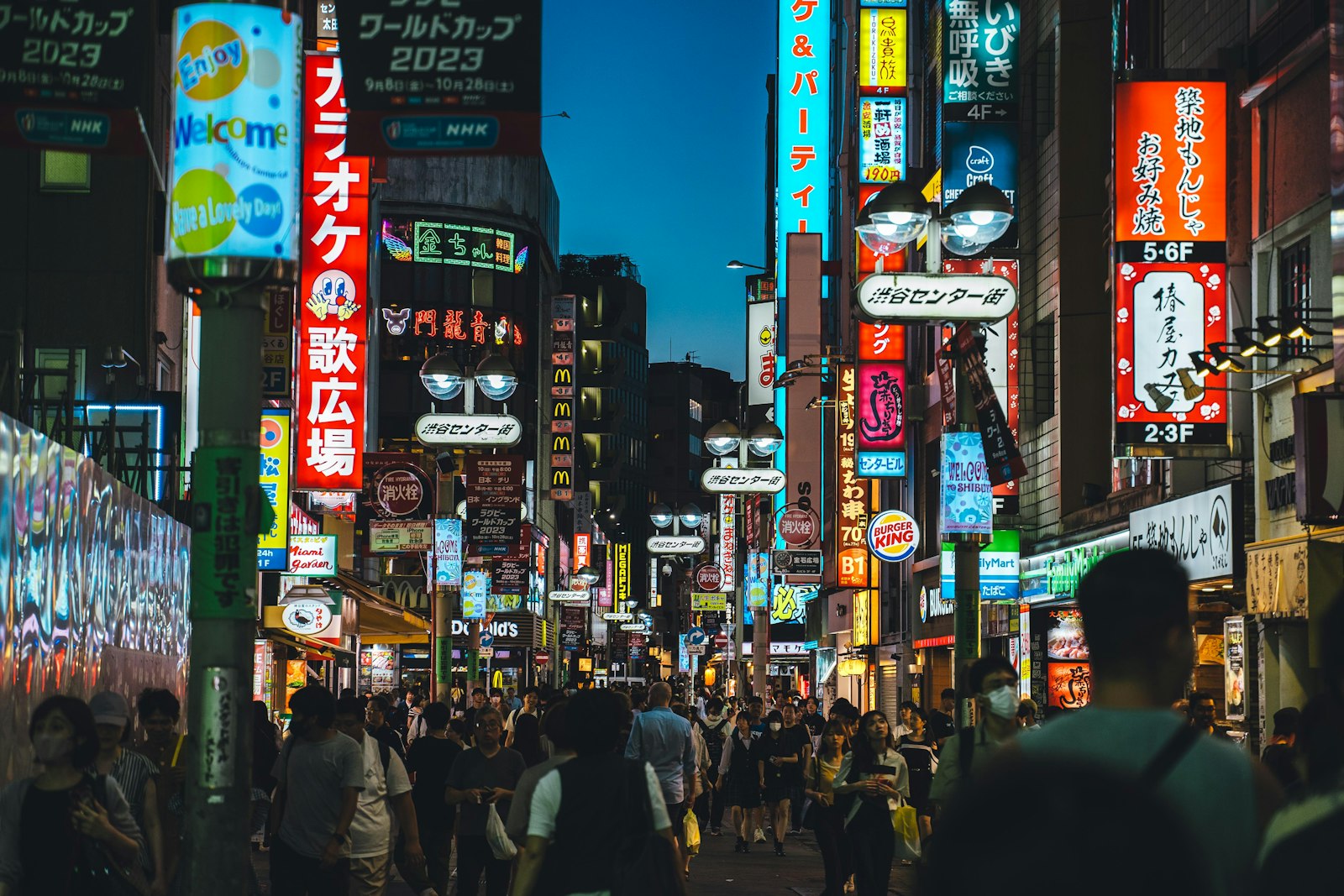
From there, cross into Kabukicho through the red gate. This is the loudest ten minutes of the route: the Godzilla head mounted on the Toho building, the wall-to-wall signage, the touts working the corners. Keep moving through it.
Exit Kabukicho’s east side and you arrive at Golden Gai — roughly 200 tiny bars packed into six alleys, most seating four to eight people. The seat charge, usually somewhere between ¥500 and ¥1,500 per person, is what makes a six-seat bar viable in central Shinjuku. Read the door before you enter: some bars advertise that visitors are welcome, others are regulars-only, and respecting that sign is the whole etiquette of the place. Our complete Golden Gai guide breaks down which bars are approachable and what the charges actually cover.
What it costs
The walk itself is free. The observation deck is free. Budget ¥1,500–3,000 if you stop for skewers in Omoide Yokocho, and ¥2,000–4,000 per person for a drink and seat charge in Golden Gai. A Shinjuku-based Tokyo night walking tour done self-guided runs under ¥5,000 all in.
Route 2 — Asakusa and the Sumida River: old Tokyo after the crowds go home
Asakusa in the daytime is one of the most crowded places in Tokyo. At night it empties out, and what’s left is the reason people came in the first place. This is the calm counterweight to Route 1, and the two make a strong two-evening Tokyo night walking tour if you have the time.
Start: Asakusa Station. Time: 1.5–2 hours. Best start time: 7:30pm onward.
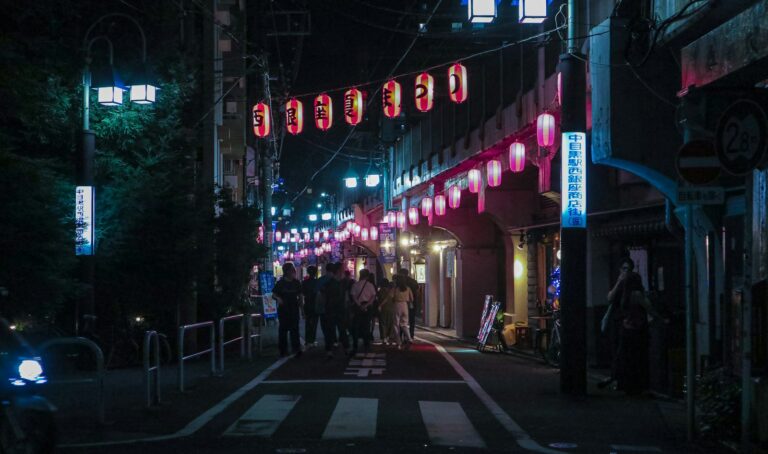
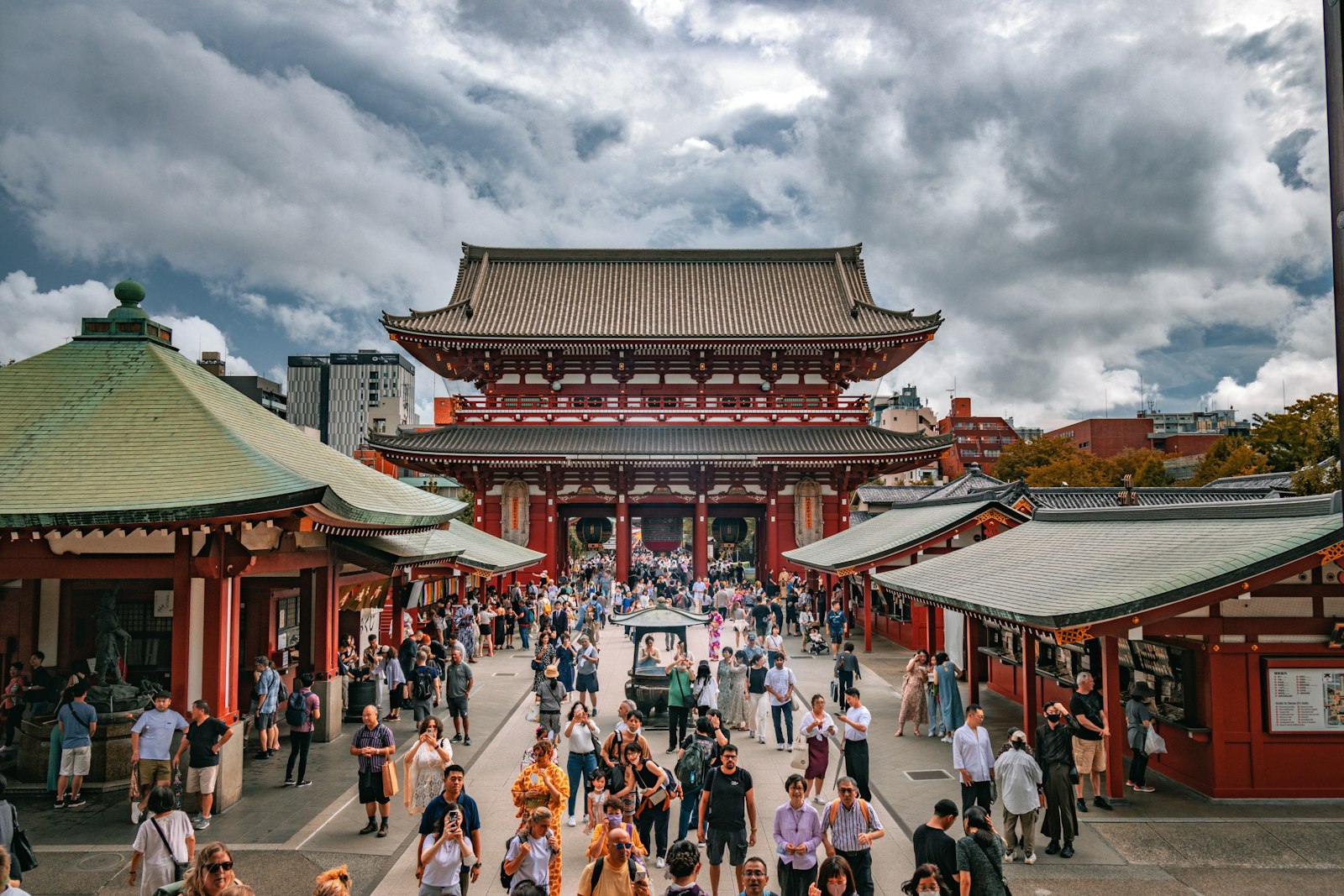
The grounds of Senso-ji are open around the clock, and the temple is illuminated every night. The main hall closes to visitors in the late afternoon, so an evening visit is an exterior one — which is entirely the point. You get the Kaminarimon lantern, the five-story pagoda and the main hall lit up against a black sky with a fraction of the daytime crowd. The Japan National Tourism Organization’s Senso-ji listing has the background on the temple’s history if you want context before you go.
Nakamise-dori, the shopping street running up to the temple, is a different experience at night too. The stalls pull their shutters down around 7pm — but the shutters themselves are painted with traditional scenes, so the street turns into an open-air gallery you can walk end to end without dodging anyone.
Then walk five minutes east to the Sumida River. From Azuma-bashi bridge you get Tokyo Skytree lit up across the water, the Asahi Beer Hall’s golden sculpture, and the river reflecting all of it. This is the single best photo on this route and almost nobody is standing there at 9pm.
Asakusa’s nightlife is quieter and older than Shinjuku’s — standing bars, small izakaya, no touts. If you want to extend the evening rather than head straight back, the streets one block inland from the river are where to look.
Route 3 — Rainbow Bridge to Odaiba: the skyline walk almost nobody does
This is the route that separates people who have researched their Tokyo night walking tour from people who haven’t — and it comes with one hard constraint that catches most visitors out.
You can walk across Rainbow Bridge. The bridge has 1.7km of pedestrian walkways and entry is free. Start at Shibaura-futo Station or Odaiba-kaihinkoen Station on the Yurikamome line and cross on foot, with Tokyo Bay on one side and the city skyline on the other.
The constraint: the walkways close early. April through October they run 9:00–21:00; November through March, 10:00–18:00. Last entry is 30 minutes before closing, and the walkways shut on the third Monday of every month. In winter that means the “night” walk is really a sunset walk — check the official Rainbow Bridge information before you build an evening around it. Strong winds can close it too.
Time it for the hour after sunset in summer and it is the best free view in the city. Finish in Odaiba, where the waterfront promenade faces back across the bay toward the bridge and the Tokyo skyline behind it.
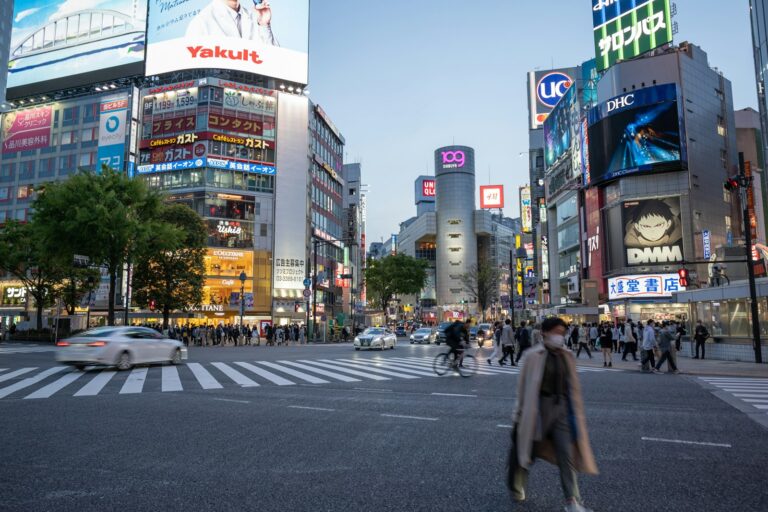
If the bridge is closed on your night, the paid alternative is Shibuya Sky at the top of Shibuya Scramble Square — 229 meters up, open until 22:30 with last admission at 21:20, and ¥2,700 online for entry before 15:00 or ¥3,400 from 15:00 onward. It’s directly connected to Shibuya Station. For free or cheap options at height, our roundup of rooftop bars in Tokyo with a night view covers places where a drink buys you the same skyline.
Guided or self-guided? Choosing your Tokyo night walking tour
All three routes above work perfectly well on your own. Here’s when they don’t, and what your options cost.
Free (tip-based) group walks
Several operators run tip-based walks, typically around two hours through Shinjuku or Shibuya, meeting at a station tourist information center. It is the lowest-commitment Tokyo night walking tour available. Groups are large, the route is fixed, and you pay the guide what you think it was worth at the end.
Good for: solo travelers who want company, and getting oriented on your first night in the city. Not good for: going inside anywhere. These walks show you the outside of the alleys and explain them; they don’t sit you down at a counter.
Paid small-group tours
The middle tier, commonly running two to three hours with six to twelve people, usually including one or two bar or izakaya stops with a drink and a snack included.
Good for: getting inside a bar you would never have walked into alone. The value here isn’t the walking — it’s the door. Not good for: anyone who wants to set their own pace or skip the group photo stops.
Private guided walks
A guide to yourself, route built around what you actually want to see. More expensive per person, and the gap closes fast once you’re a group of three or four.
Good for: couples, small groups, anyone with a specific interest — deep nightlife, food, photography — and anyone nervous about walking into a Japanese bar cold. Not good for: solo budget travelers, where the free walks give you 70% of the experience.
The honest summary: if your night is about seeing Tokyo — views, neon, temples — walk it yourself using the routes above and save your money. If your night is about entering Tokyo — the six-seat bars, the counters where nobody speaks English, the places with no sign — a guide is the difference between looking at a door and going through it.
Looking for Adult Entertainment Services in Tokyo? Download this
I’ve spent over a decade exploring and studying Japan’s adult entertainment scene firsthand. If you’d like detailed insider information—including how to choose the right shop, what services are available, and tips for avoiding common mistakes—check out our exclusive E-book.
Night walking etiquette most visitors get wrong
Four things that will mark you out, in a good way, on any Tokyo night walking tour — guided or not.
- Don’t eat while walking. Buy the skewer, eat it standing at the stall, then move on. Walking down the street eating is read as sloppy here.
- Keep your voice down on trains and in residential blocks. Volume that is normal in a bar is conspicuous on the Yamanote line at 11pm.
- Read the door before you enter a bar. A sign saying regulars only is not a challenge. Golden Gai has hundreds of alternatives thirty seconds away.
- Photograph places, not people. Streets, signs and skylines are fair game. Individuals — especially staff outside nightlife venues — are not, and asking first is the whole difference.
Safety, touts, and the last train
Central Tokyo is safe to walk at night. The things that actually go wrong on a Tokyo night walking tour are commercial, not physical.
Never follow a tout. In Kabukicho and Roppongi you will be approached by men offering to take you to a bar. The bars they lead you to are the ones that need touts. This is the origin of nearly every “I got charged ¥80,000” story you’ll read — our guide to Tokyo nightlife scams walks through exactly how the setup works and how to shut it down politely.
Ask the price before you sit. Seat charges are normal and legitimate in Japan. Being unable to get a straight answer about one is the warning sign, not the charge itself.
Know your last train. Most Tokyo lines run their final services somewhere between midnight and 1am. Miss it and you’re choosing between a taxi with a late-night surcharge after 10pm, a capsule hotel, or waiting until roughly 5am for the first train. Screenshot your route home before you start walking.
Carry cash. Card acceptance has improved a lot, but the smallest and most interesting bars — exactly the ones a Tokyo night walking tour is trying to reach — are frequently cash only.
What to bring
Not much, but the right not-much. A Tokyo night walking tour is a light-luggage evening.
- Shoes you’d walk 8km in. Every route above is longer on your feet than it looks on a map.
- A power bank. Maps, translation and photos in the dark will drain a phone by 10pm.
- A light layer year-round. Tokyo summers stay humid well past sunset, and the temperature drop after dark in spring and autumn is sharper than the forecast suggests.
- ¥10,000 in cash minimum if bars are part of the plan.
- A folding umbrella in June and July, when the rainy season can turn a clear evening in an hour.
Frequently asked questions
How long does a Tokyo night walking tour take?
Two to three hours is standard for both guided tours and the self-guided routes here. Route 1 through Shinjuku runs closest to three hours with stops; the Asakusa route is comfortably done in ninety minutes.
What time should a night walk start?
Between 6:30 and 7:30pm for most of the year. That gets you the observation decks before they close, the neon at full strength, and bars at a stage where getting a seat is still realistic. Rainbow Bridge is the exception — in winter it closes at 18:00, so plan around it.
Is a Tokyo night walking tour safe for a solo traveler?
Yes, including for solo women, in the central districts covered above. Stay on lit main streets after midnight, keep your last train time in mind, and treat anyone who approaches you offering a bar as a hard no.
Which area is best for a first night walking tour in Tokyo?
Shinjuku. It has the highest density of what people picture when they picture Tokyo at night, it’s compact, and the transport connections make it easy to end the night from anywhere.
Do I need to book a Tokyo night walking tour in advance?
For guided tours, yes — including the free tip-based ones, which cap group sizes and generally don’t accept walk-ups. Self-guided costs nothing and needs no booking.
What do you do in Tokyo After 10?
Join our Tokyo Nightlife Private Tour
You deserve better than overpriced bars and missed opportunities. We’re here for you.
Walk it with someone who lives here
Every route in this guide is walkable on your own tonight, and if you’re the kind of traveler who’d rather figure out a city yourself, go do exactly that. Nothing above needs a booking.
But there’s a specific ceiling you hit walking Tokyo alone at night, and it’s a door. It’s standing in Golden Gai at 10pm, looking at six alleys and three hundred bars, and picking none of them because you can’t tell which ones want you there. It’s the counter with no English menu, no sign, and the best food on the block.
That’s the part a local guide is actually for. Kokyo Tours’ Tokyo After 10 nightlife tour is a private, small-group night out built around getting you inside those places — the bars locals go to, ordered in Japanese, with someone at the table who can explain what you’re drinking and why the place matters. Same streets as the free walk. Very different night.
Whichever way you do your Tokyo night walking tour — guided, or with nothing but this page and a charged phone — walk this city after dark. It’s the version of Tokyo that people come back for.