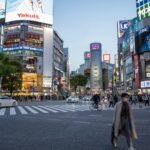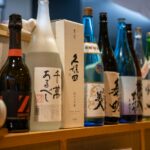
Photo by <a href="https://unsplash.com/@ayumikubo?utm_source=tokyodeepnightlife&utm_medium=referral">ayumi kubo</a> on <a href="https://unsplash.com/?utm_source=tokyodeepnightlife&utm_medium=referral">Unsplash</a>
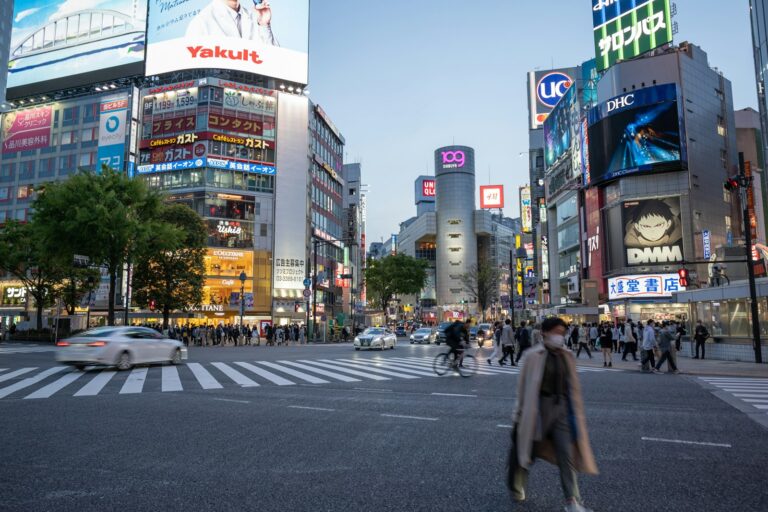
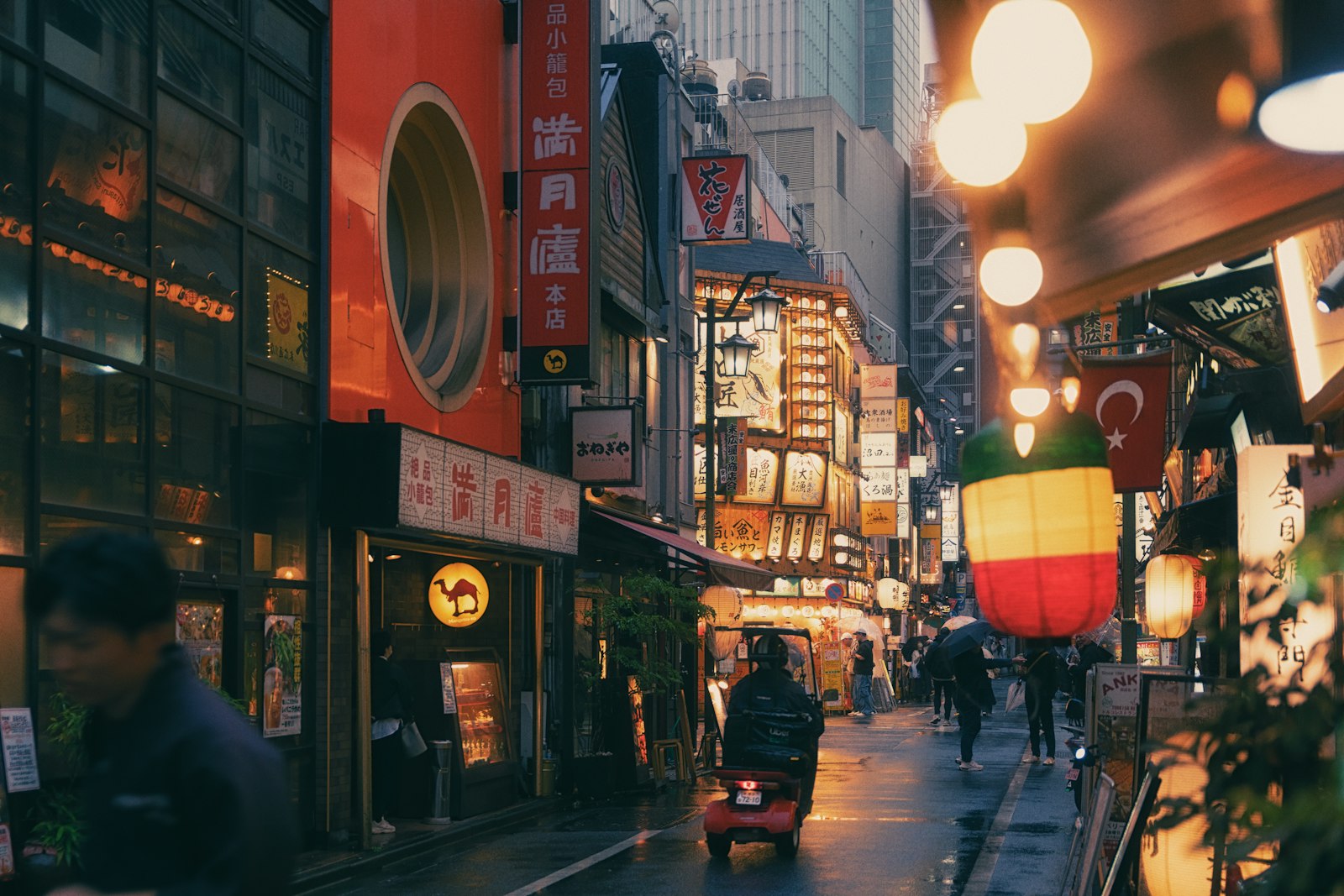
Here’s the thing most guides won’t tell you about a Tokyo food tour at night: the city you read about during the day and the city that opens at 6pm are barely the same place. The famous markets have already pulled their shutters down. The alleys nobody mentioned in your guidebook are just switching on their lanterns.
That gap trips up a lot of visitors. They arrive in Tokyo with a list built for daylight, wander out at eight in the evening, and end up in a chain restaurant with a picture menu — in the city with more Michelin-starred restaurants than anywhere else on earth.
This guide fixes that. It covers what a Tokyo food tour at night actually consists of: the standing counters and yokocho alleys where Tokyo street food at night really happens, the etiquette that gets you served instead of politely turned away, and how Michelin recognition fits into a night that doesn’t require a five-figure budget.
Contents
- What a Tokyo Food Tour at Night Actually Looks Like
- First: What’s Already Closed When You Head Out
- Tier 1 — Tokyo Street Food at Night: Where It Really Happens
- Tier 2 — The Yokocho Alleys Are the Real Night Food Tour
- Tier 3 — Michelin, Without the Five-Figure Bill
- A Realistic Tokyo Food Tour at Night: 18:00 to Midnight
- Etiquette That Keeps the Door Open
- What It Costs — and How the Costs Work
- What do you do in Tokyo After 10?Join our Tokyo Nightlife Private Tour
- When a Guide Is Worth It — and When It Isn’t
- About the Author
What a Tokyo Food Tour at Night Actually Looks Like
Forget the image of a food truck row or a night market square. Tokyo doesn’t really do that.
What Tokyo does instead is volume in miniature. A single alley beside a train line holds forty separate businesses, each with six seats. A tiny shop with no English sign turns out one dish, perfected over thirty years, and closes when the broth runs out. The eating happens in a series of short stops — one or two dishes and a drink at each — rather than one long sit-down meal.
That structure is why “food tour” is the right mental model even if you’re doing it alone. A good night moves through three tiers:
- Street-food-style counters — grilled skewers, stewed offal, standing bars. A few hundred yen a plate.
- Yokocho alleys — clusters of six-seat izakaya where the atmosphere is half the point.
- Michelin-recognized specialists — shops the guide rates, many of them cheaper than your hotel breakfast.
Most visitors do one tier and assume they’ve seen it. The good nights move across all three.
First: What’s Already Closed When You Head Out
This is the single most useful thing in this article, and no competing guide leads with it.
Tsukiji Outer Market is a morning destination, not a night one. Shops run roughly 5:00 to 14:00, and after 2pm the market is effectively shut. If a blog put “Tsukiji” on your evening itinerary, that blog was recycling a daytime list.
Ameyoko in Ueno is a hybrid. The market stalls and shops generally wind down around 20:00, but the eateries, izakaya and sushi counters wedged between them keep going until 22:00 or midnight, and a couple run all night. So Ameyoko is a night option — just not the bustling bargain-market version you saw in photos. After dark it turns into a drinking street, which is arguably better.
The practical rule: markets are for mornings, alleys are for nights. Build your evening around the second category and you’ll never stand in front of a closed shutter.
Tier 1 — Tokyo Street Food at Night: Where It Really Happens
A quick correction to expectations. In Tokyo, “street food” mostly doesn’t mean eating while walking. It means eating at the street — standing at a counter, perched on a plastic stool on the pavement, plate in hand, shoulder to shoulder with people who came straight from the office.
Walking while eating is mildly frowned upon in most of Tokyo, and there are almost no public bins. Eat where you bought it. That’s the whole rule.
Hoppy Street, Asakusa
If you want Tokyo street food at night in its most photogenic form, start here. Hoppy Street (Hoppy-dori) is a roughly 80-metre stretch on the west edge of the Sensō-ji temple complex, behind Denbōin Garden, lined with izakaya that spill plastic tables and stools straight onto the pavement.
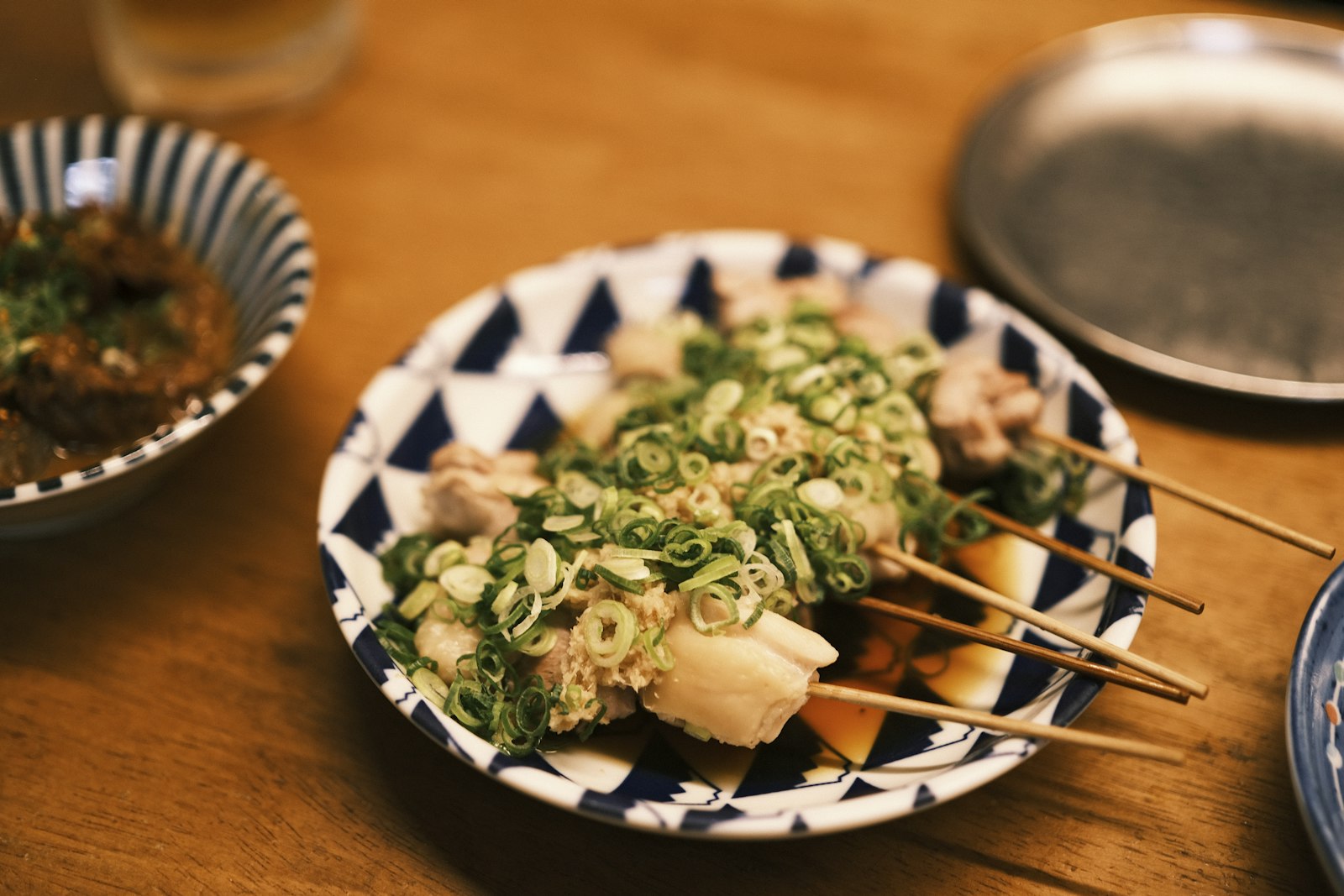
It’s also nicknamed Nikomi-dori — “Stew Street” — because so many of the shops here serve nikomi, a slow-cooked stew of beef tendon and vegetables. Order that, order grilled skewers, and order the drink the street is named after.
Hoppy is a beer-flavoured drink of about 0.8% alcohol, launched in 1948 by what is now Hoppy Beverage Co. It was created in an era when real beer was a luxury, and it’s designed to be mixed with shōchū — you get a mug of spirit and a bottle of Hoppy, and you pour it yourself. Ask for white or black. Refills of the spirit are called naka; refills of the Hoppy are soto. Using those two words will get you a grin.
Hours vary shop by shop, but the street serves the local office crowd as well as visitors, so things are generally running from late afternoon through to around 11pm. For a fuller picture of how the neighbourhood shifts once the temple crowds go home, our Asakusa night tour guide covers what else is walkable from here after dark.
Tier 2 — The Yokocho Alleys Are the Real Night Food Tour
Yokocho means “side alley.” In practice it means a warren of tiny post-war-era bars and grills, usually pressed up against a railway line, where each shop seats fewer people than your dinner party at home.
This is the heart of any serious Tokyo food tour at night. Here are the three that reward first-timers most.
Omoide Yokocho, Shinjuku
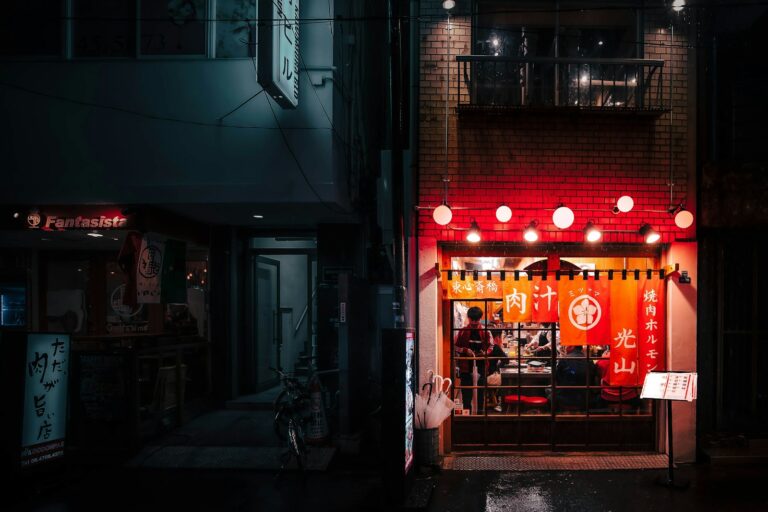
On the west side of Shinjuku Station, hard against the tracks, roughly sixty tiny stalls are crammed into a low, smoke-filled lane. Mostly yakitori and motsuyaki (grilled offal) counters, with a few soba shops and a ramen counter or two mixed in.
Most counters open around 5pm and run to midnight or later, though hours are entirely shop-by-shop. The sweet spot for a first visit is 18:00–20:00 on a weeknight: the working-locals atmosphere is intact, you won’t queue, and the chefs aren’t slammed enough to rush you through.
Six seats means you will be sitting next to a stranger. That’s the feature, not the bug. If you want the full breakdown of which counters welcome English speakers and how to order without a menu, we’ve covered it in our Omoide Yokocho guide.
Nonbei Yokocho, Shibuya
Nonbei is colloquial Japanese for “drinker,” and the alley lives up to it. Two short lanes beside the railway, a few minutes from the Hachikō crossing, holding around forty micro-shops — yakitori counters, oden bars, and shot bars barely wider than their own doorways.
What makes Nonbei worth the detour is the contrast. Walk past during the day and you’d swear it was abandoned. Come back after sunset and every shutter is up. It sits within a five-minute walk of one of the most photographed intersections on the planet, and roughly nobody who takes that photo ever finds it.
Yūrakuchō Gado-shita
Gado-shita means “under the girders” — and that’s exactly what this is. A run of yakitori counters, izakaya and standing bars built into the brick arches directly beneath the elevated JR tracks near Yūrakuchō Station, with trains rumbling overhead every few minutes.
It’s the most salaryman-dense of the three, which means it’s also the least performative. Nobody here is doing it for the photo. It’s between Ginza and Tokyo Station, so it slots neatly into an evening that started somewhere more polished.
Looking for Adult Entertainment Services in Tokyo? Download this
I’ve spent over a decade exploring and studying Japan’s adult entertainment scene firsthand. If you’d like detailed insider information—including how to choose the right shop, what services are available, and tips for avoiding common mistakes—check out our exclusive E-book.
Tier 3 — Michelin, Without the Five-Figure Bill
Here’s where most Tokyo food tour at night itineraries stop short, because people assume Michelin means a ¥40,000 counter booked three months out. Some of it is. Most of it isn’t.
The MICHELIN Guide Tokyo 2026, announced on 25 September 2025, covers 526 restaurants. Of those, 160 hold stars — 12 with three stars, 26 with two, and 122 with one. Tokyo remains the most starred city in the world.
But the number that matters for a food-tour night is a different one: 114 Bib Gourmand restaurants, including 16 new additions this edition. Bib Gourmand is Michelin’s value distinction, and in Japan the inspectors’ working benchmark is a quality two-course meal with a glass of wine or a dessert for around ¥5,000 or less.
That is not a special-occasion number. That’s dinner.
The ramen shops that made the point
Tokyo’s ramen scene is the clearest illustration. In 2015, Japanese Soba Noodles Tsuta in Yoyogi-Uehara became the first ramen restaurant in the world to earn a Michelin star. Others followed — Sōsakumenkōbō Nakiryū in Ōtsuka took one in 2017 for its tantanmen, and SOBAHOUSE Konjiki Hototogisu held one as well.
In more recent editions those ramen shops have been repositioned into Bib Gourmand rather than the starred list. Nakiryū, for instance, carries a Bib Gourmand in the 2026 guide, at 2-34-4 Minami-Ōtsuka in Toshima ward.
Read that as good news, not a demotion. It means the guide is telling you these are among the best-value meals in the city — and they sit in ordinary residential neighbourhoods, not on hotel top floors.
One honest caveat: these are small shops with idiosyncratic hours, and several of the most celebrated close in the early evening or sell out of broth before then. Check the current hours on the day, and have a backup. A Michelin-recognized ramen counter is a wonderful anchor for a night out and a terrible thing to build the whole night around.
A Realistic Tokyo Food Tour at Night: 18:00 to Midnight
You can’t do all three tiers in every neighbourhood. Here’s a shape that actually works, using Shinjuku as the base.
18:00 — Start at a counter, not a restaurant. Omoide Yokocho, before the after-work rush lands. Two or three skewers, one drink, forty minutes. Don’t settle in — the point is to keep moving.
19:15 — Second stop, different register. Move to a sit-down izakaya for something cooked rather than grilled: nikomi, oden, a small hot pot. This is where you eat enough to keep drinking sensibly.
20:45 — The specialist. One shop that does one thing. Ramen, tonkatsu, yakitori omakase — whatever you can get into. If you’re chasing a Bib Gourmand listing, this is the slot for it, and it’s the one to confirm hours for in advance.
22:00 onward — Wind down or push on. Tokyo doesn’t close here. Plenty of counters run past midnight, and the last-train rhythm around 00:30 empties some places and fills others.
Three to four stops is the realistic ceiling. A Tokyo food tour at night lives or dies on pacing, and anyone selling you six stops is selling you a jog.
Etiquette That Keeps the Door Open
Small shops are small businesses, and on a Tokyo food tour at night you’ll visit three or four of them in a row. A few habits make the difference between being welcomed back and being quietly steered elsewhere.
- Carry cash. Many of the smallest counters are cash-only. Have ¥1,000 notes; splitting a ¥10,000 note for a ¥900 tab is not a great start.
- Expect a seating charge. Most izakaya add a small cover charge, usually served as otoshi — a little appetiser you didn’t order. It isn’t a scam. It’s the table charge, and it’s normal.
- Order a drink on arrival. At a drinking counter, ordering food only can read as odd. Beer, highball, oolong tea — anything counts.
- One party, one set of seats. Don’t take four stools in a six-seat shop and then order one plate between two people.
- Check the posted prices. Reputable small shops post their menu and prices at the entrance or on the wall. If a place won’t show you prices before you sit — or someone is pulling you in off the street — walk on. That’s the reliable tell, and our Tokyo nightlife scams guide explains how the small number of bad actors actually operate.
- Take your rubbish with you. Public bins barely exist. A convenience store is your disposal point.
None of this requires Japanese. A pointed finger, a nod, and sumimasen covers about 90% of a night.
What It Costs — and How the Costs Work
Prices at individual shops move, so rather than quote figures that go stale, here’s the cost structure of a Tokyo food tour at night — which doesn’t change:
Yokocho eating is priced per item, not per meal. Skewers run a few hundred yen each, small plates a bit more, and drinks are usually in the same range as the food. You order in small rounds and the bill accumulates. That makes it easy to control — and easy to lose track of, if you’re three shops in.
Add the cover charge per person per venue, remember that each new shop restarts that charge, and budget cash accordingly. The Michelin end is more predictable, not less: the Bib Gourmand benchmark of roughly ¥5,000 tells you where the ceiling sits before you walk in.
If you’d rather have the whole evening priced up front, that’s a fair reason to book a guided experience — as is wanting a specific cuisine done properly. Kokyo Tours runs a Tokyo all-wagyu beef food tour for exactly that case, where the point is the beef rather than the alley-hopping.
What do you do in Tokyo After 10?
Join our Tokyo Nightlife Private Tour
You deserve better than overpriced bars and missed opportunities. We’re here for you.
When a Guide Is Worth It — and When It Isn’t
Straight answer: if you’re comfortable walking into a six-seat shop where nobody speaks English and pointing at what the person next to you is eating, you don’t need a guide. Everything in this article is doable alone.
A guide earns their fee in three specific situations. When you have one night and can’t afford to lose an hour to a closed shop or a wrong turn. When you want the shops that have no sign, no website and no English menu — the ones that genuinely can’t be found by search. And when you want someone to read the room: which counter has space, which master is in a talking mood, when to move on.
That’s the gap Kokyo Tours’ Tokyo After 10 night tour is built for — a local leading a small group through the alleys they’d actually drink in, at the hour the city is at its best.
Either way, the mistake to avoid is the same one this article opened with. Don’t plan your Tokyo nights from a daytime list. The markets will be shut, the guidebook restaurants will be full, and two blocks away sixty tiny counters will be doing exactly what they’ve done every night for seventy years.
Go find those.
Sources: MICHELIN Guide Tokyo 2026 selection and The Japan Times coverage of the 2026 announcement. Shop hours and prices change frequently — confirm before you travel.