Photo by <a href="https://unsplash.com/@mosdesign?utm_source=tokyodeepnightlife&utm_medium=referral">mos design</a> on <a href="https://unsplash.com/?utm_source=tokyodeepnightlife&utm_medium=referral">Unsplash</a>
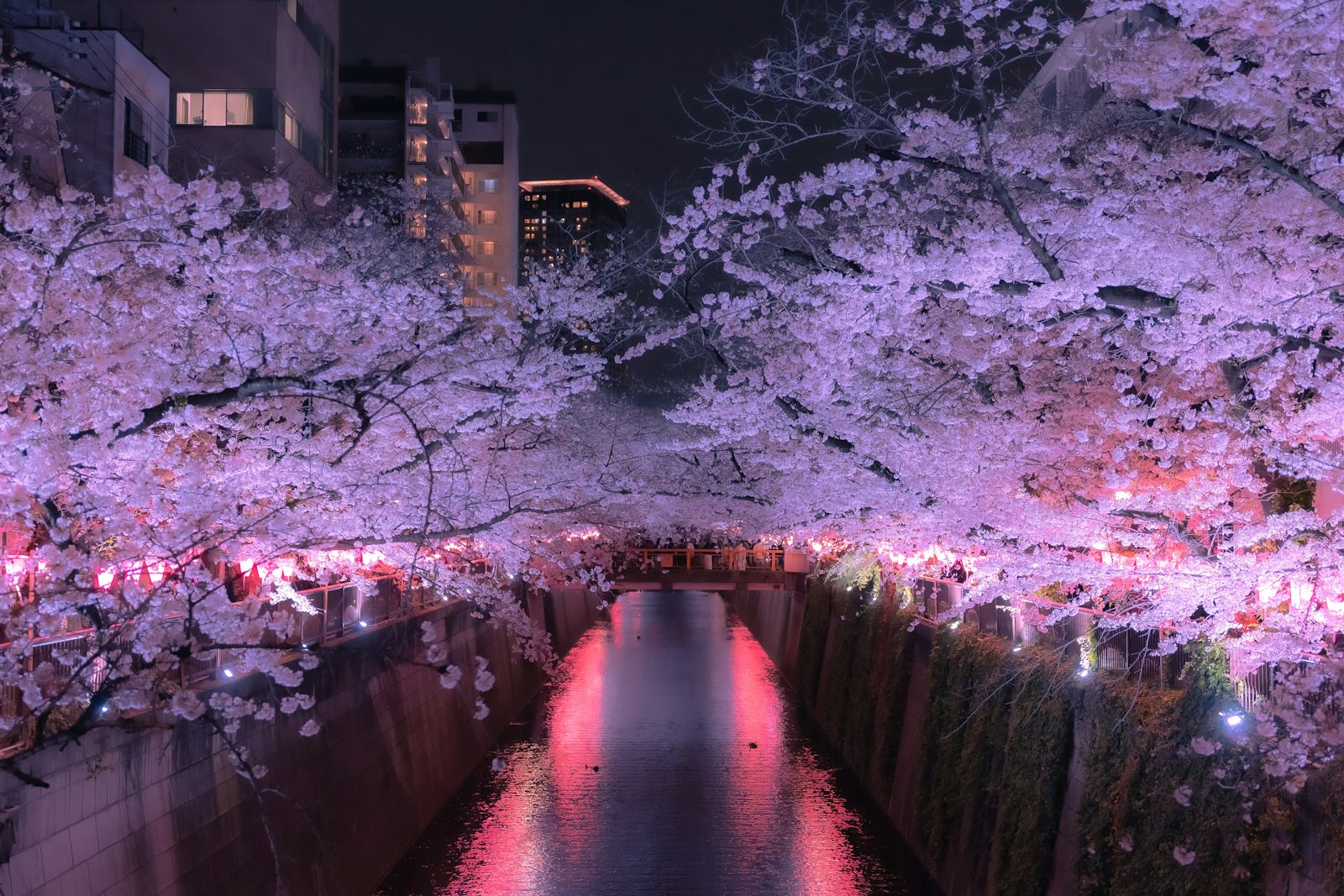
Tokyo cherry blossom night viewing is a different experience from the daytime version, and not just because it’s darker. Under lantern light, the blossoms stop reading as decoration and start looking like weather — a low pink ceiling that hangs over the river and doesn’t quite seem attached to anything. The Japanese have a separate word for it: yozakura (夜桜), literally “night sakura.”
Here’s the thing most guides skip. The illumination schedules and the actual bloom don’t always line up. Light-up dates get locked in months ahead, the trees bloom when they feel like it, and in a bad year you can show up to a perfectly lit avenue of bare branches. Knowing how to read that gap is the difference between a good night and a wasted train fare.
This guide covers seven spots worth your evening, what each one actually costs and when it’s lit, and the timing strategy that keeps you out of the worst crowds.
Contents
- What Yozakura Actually Means (And Why Locals Take It Seriously)
- Timing Your Tokyo Cherry Blossom Night Viewing: Read the Bloom, Not the Calendar
- The 7 Best Tokyo Cherry Blossom Night Viewing Spots
- 1. Meguro River (Nakameguro) — The One Everyone Photographs
- 2. Chidorigafuchi — Blossoms Over the Imperial Palace Moat
- 3. Rikugien — The Weeping Cherry, Alone in the Dark
- 4. Sumida Park — Sakura, the River, and Tokyo Skytree
- 5. Ueno Park — The Loud, Historic, Lantern-Lit One
- 6. Nakano-dori — The One Without the Crowd
- 7. Roppongi (Tokyo Midtown & Mohri Garden) — Blossoms With a Cocktail
- Looking for Adult Entertainment Services in Tokyo? Download this
- Practical Notes That Save the Evening
- Making It a Full Night, Not a Photo Stop
- What do you do in Tokyo After 10?Join our Tokyo Nightlife Private Tour
- Quick Answers
- About the Author
What Yozakura Actually Means (And Why Locals Take It Seriously)
Daytime hanami is social. People stake out tarps at 7 a.m., coworkers drink in the park, someone’s boss gets uncomfortably honest by 3 p.m. It’s fun, but it’s a picnic that happens to have trees.
Yozakura is quieter and, honestly, more beautiful. Backlit against a black sky, Somei-yoshino petals read as almost white with a pink edge — a color they simply don’t have at noon. The practice goes back to the Edo period, when Ueno and the Sumida riverbank were already established blossom destinations and viewing continued after dark by lantern.
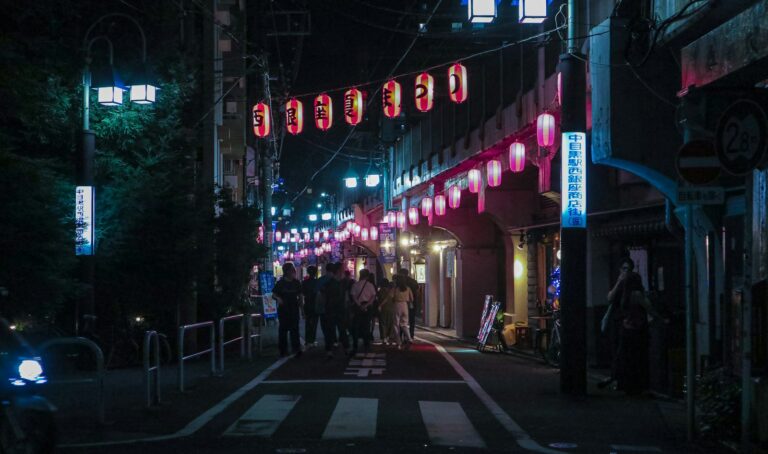
That history matters for a practical reason: the two dominant lighting styles you’ll see tonight come straight out of it. Bonbori (paper-shaded lanterns) give a warm, festival-orange glow and light the crowd as much as the trees. Modern floodlighting aims cool white light up into the canopy and makes the blossoms pop for photos. Ueno is the classic bonbori experience. Meguro River and Chidorigafuchi lean modern. Neither is better — but if you only have one night, pick the one that matches the photos you actually want.
Timing Your Tokyo Cherry Blossom Night Viewing: Read the Bloom, Not the Calendar
Tokyo’s cherry trees typically open in late March, hit full bloom about a week later, and hold for roughly another week before the petals go. That’s the pattern, not a promise — the opening date has swung by more than a week between years depending on winter temperatures.
A few rules that have served me well:
- Don’t book flights around illumination dates. Book around the bloom forecast, which private forecasters like the Japan Meteorological Corporation publish from January and revise repeatedly through March.
- Aim for two to four days after “full bloom” is declared. Peak bloom plus a light wind is when the falling petals start, and falling petals under a spotlight is the whole reason to be there.
- Have a backup spot with late-blooming trees. Weeping cherries (shidarezakura) and later varieties like Kanzan run behind Somei-yoshino by several days to two weeks. If you arrive late and the main avenues are green, they’re your rescue plan.
- Check the specific event page the week of your visit. Light-up dates shift year to year, and organizers do extend or cut them based on the actual bloom. Tokyo’s official travel guide keeps a running list of yozakura events that’s updated each season.
One scheduling note as of this writing: the spring 2027 dates aren’t published yet. The figures below are from the most recent confirmed season, and these events run on a stable annual pattern — but treat them as a planning baseline, not a booking guarantee.
The 7 Best Tokyo Cherry Blossom Night Viewing Spots
1. Meguro River (Nakameguro) — The One Everyone Photographs
Roughly 800 cherry trees line about 3.8 kilometers of narrow river, and because the banks are close together the branches meet overhead. You walk through a tunnel, not past a row. The reflection in the water below doubles everything.
Lit: lanterns along the Nakameguro stretch typically run 5 p.m. to 8 p.m. for around 15 days from the start of blooming. Free.
The honest warning: this is the single most crowded yozakura spot in Tokyo. On a peak-bloom weekend evening, the riverside path becomes one-way shuffling with station staff on megaphones, and Nakameguro Station exits back up onto the platform. Go on a weekday, and arrive by 5:30 p.m. rather than 7.
The move most visitors miss: the illuminated stretch continues downstream toward Gotanda, where a separate Shinagawa-run light-up covers a longer window into the evening — in the last confirmed season, until 9 p.m., with short colored-lighting sequences on the hour. Same river, a fraction of the people.
2. Chidorigafuchi — Blossoms Over the Imperial Palace Moat
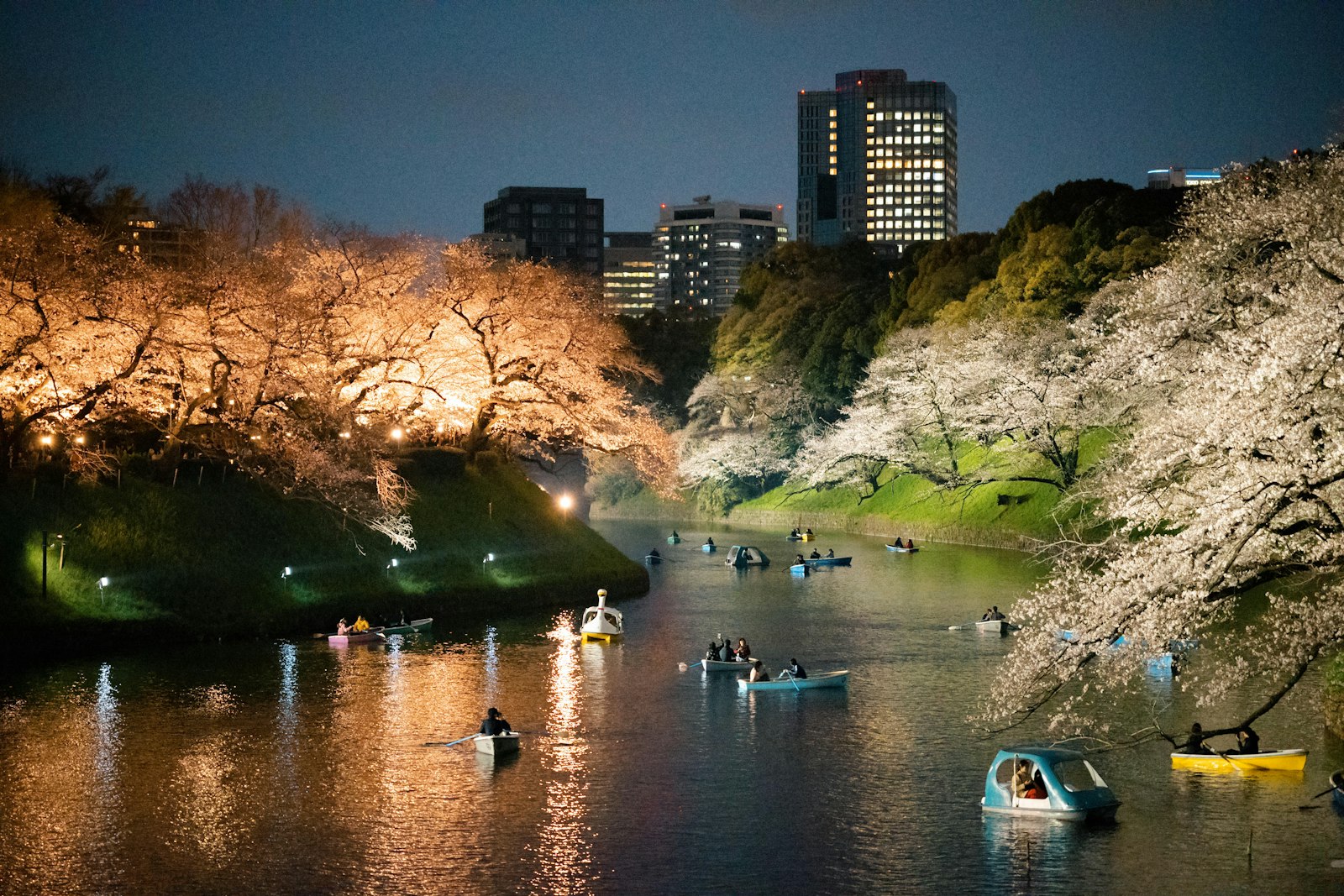
The Chidorigafuchi walkway runs along the northwest moat of the Imperial Palace, and the cherry branches lean out over the water until they nearly touch it. It is, for my money, the most striking of the lot.
Lit: during the Sakura Festival in Chiyoda, illumination has run roughly March 26 to April 6, starting at 6 p.m. The lights-out time has moved between about 9 and 10 p.m. in recent years, so check before planning a late arrival. The walkway itself is free.
Rowboats: the boat pier operates roughly 9 a.m. to 7:30 p.m., which means you can get about an hour of overlap with the illumination if you time it right. Pricing has climbed steeply — Tokyo’s official guide listed ¥12,000 per boat per hour for the most recent season, with part of that going to sakura restoration, and advance reservation strongly recommended. Same-day on-site rates have historically been lower. Confirm the current figure on the Chiyoda City event page before you count on it.
Access: about five minutes on foot from Kudanshita Station (Shinjuku, Hanzomon, and Tozai lines).
3. Rikugien — The Weeping Cherry, Alone in the Dark
Rikugien is a formal Edo-period daimyo garden, and its centerpiece is a single enormous shidarezakura (weeping cherry) that gets floodlit against black. No river, no crowd of trees — one specimen, staged. It looks like it’s hovering.
Cost and hours: regular admission is ¥300 (¥150 for visitors 65 and over), with normal hours 9 a.m. to 5 p.m. During the spring light-up the garden stays open to around 9 p.m., and night viewing generally requires a separate timed ticket in the ¥900 range. Those tickets sell out — buy ahead.
Because it’s a weeping variety, Rikugien often peaks before the Somei-yoshino spots. If you’re in Tokyo in mid-to-late March and the main parks look premature, this is where to go.
4. Sumida Park — Sakura, the River, and Tokyo Skytree
About 510 trees line the Sumida River in Asakusa, and the reason to come at night is the composition: blossoms in the foreground, the river, and Tokyo Skytree lit up behind. It’s the one shot that says “Tokyo” without needing a caption.
Lit: evening illumination has typically run around 6:30 p.m. to 9 p.m. Free.
Asakusa also happens to be the easiest of these areas to build a full evening around, since Senso-ji is floodlit after dark and the backstreet izakaya stay open long after the blossom lights go off. If that’s the plan, our Asakusa night tour guide maps out the route.
5. Ueno Park — The Loud, Historic, Lantern-Lit One
Roughly 800 cherry trees, around a thousand bonbori lanterns strung along Sakura-dori, and a festival atmosphere that’s been running in some form since the Edo period. This is the least serene option and the most fun.
Lit: the Ueno Cherry Blossom Festival has run mid-March into early April, and the Sakura-dori lanterns stay lit notably later than most Tokyo light-ups — well past the 8 p.m. cutoff you’ll find elsewhere.
Rules that catch people out: you can spread a sheet and eat in the park, but you must carry your trash out, and holding an empty space with an unattended tarp is prohibited. Park rules around nighttime drinking and food stalls have also been tightened and relaxed in different years — check the current season’s notice rather than assuming.
6. Nakano-dori — The One Without the Crowd
Around 300 trees along a stretch of ordinary Nakano street, lit in the evening through late March and into early April. There’s no festival, no food stalls, and no tour buses. It’s just a residential avenue that happens to look extraordinary for two weeks.
If your priority is photographing yozakura without forty other people’s phones in frame, go here. It pairs naturally with a night in Nakano, which is one of Tokyo’s genuinely underrated drinking districts.
7. Roppongi (Tokyo Midtown & Mohri Garden) — Blossoms With a Cocktail
About 100 cherry trees across the Midtown complex, illuminated from mid-March through mid-April as part of the annual spring program, with Mohri Garden’s weeping cherries and the Sakura-zaka slope nearby.
Fewer trees than anywhere else on this list — but it’s the only entry where the yozakura is a five-minute walk from a proper cocktail bar and a rooftop view. If you want your night viewing to be one part of an evening rather than the whole thing, start here. Our guide to Tokyo rooftop bars with a night view covers the nearby options.

Looking for Adult Entertainment Services in Tokyo? Download this
I’ve spent over a decade exploring and studying Japan’s adult entertainment scene firsthand. If you’d like detailed insider information—including how to choose the right shop, what services are available, and tips for avoiding common mistakes—check out our exclusive E-book.
Practical Notes That Save the Evening
Dress for March, not for spring. This is the detail that ruins more Tokyo cherry blossom night viewing plans than anything else — peak bloom nights regularly drop to 5–8°C, and riverside spots have wind. The single most common mistake I see is visitors leaving the hotel in what they wore at 2 p.m. and abandoning the walk after twenty minutes.
Bring cash. Festival food stalls are cash-only more often than not, and so are some of the smaller bars you’ll duck into afterward.
Tripods are usually banned on crowded riverside paths and in gardens during light-up periods, both for congestion and safety. Plan on handheld — brace against a railing, and let the lanterns do the work rather than pushing ISO.
Have a dinner plan before you go. Every restaurant within sight of a major yozakura spot is full on a peak-bloom evening. Book ahead, or walk ten minutes away from the blossoms before you start looking. Our Tokyo night walking tour routes include a few reliable ways to string an evening together.
The lights go off earlier than you think. Most of these end between 8 and 9 p.m. That’s not the end of your night — it’s the start of the second half. Shinjuku’s alley bars in Omoide Yokocho are twenty minutes from Meguro River and run until the early hours.
Making It a Full Night, Not a Photo Stop
Here’s the pattern that works. Yozakura is roughly a 60-to-90-minute activity. You walk, you look, you take more photos than you’ll ever use, and then the lights cut out and you’re standing on a dark riverbank at 8:15 p.m. with a group of people who are now hungry and have no plan.
The travelers who get the most out of Tokyo cherry blossom night viewing treat the illumination as the opening act. Blossoms first, then a yakitori counter or an izakaya where the seasonal menu is running sakura-themed dishes and the spring sake has just arrived — that’s the full experience, and it’s the half that doesn’t show up in anyone’s Instagram research.
That’s also the part that’s genuinely hard to arrange from abroad. The good spots don’t have English websites, several don’t take reservations from overseas numbers, and knowing which alley in Nakameguro or Asakusa is worth turning down at 8:30 p.m. is local knowledge, not search-engine knowledge.
If you’d rather not gamble on it, our Tokyo After 10 private night tour is built around exactly this handoff — a local guide who knows which spots are peaking that week, handles the seating, and takes you somewhere worth being once the blossom lights go dark. During cherry blossom season, guides adjust the route to whichever spot is actually at its best that night, which is not something a fixed itinerary can do.
What do you do in Tokyo After 10?
Join our Tokyo Nightlife Private Tour
You deserve better than overpriced bars and missed opportunities. We’re here for you.
Quick Answers
When is the best time for Tokyo cherry blossom night viewing? Late March into the first days of April in a typical year, ideally two to four days after full bloom is declared. Check a bloom forecast in early March before finalizing plans.
Is yozakura viewing free? Mostly yes. Meguro River, Chidorigafuchi’s walkway, Ueno, Sumida Park, and Nakano-dori all cost nothing. Rikugien charges admission plus a separate night ticket, and Chidorigafuchi’s rowboats are a paid extra.
Which spot is best for Tokyo cherry blossom night viewing if I only have one night? Chidorigafuchi for the most beautiful setting, Meguro River for the classic tunnel shot if you can handle crowds, Nakano-dori if you’d rather have space than a landmark.
How late do the illuminations run? Most end between 8 and 9 p.m. Ueno’s lanterns run later. Plan your dinner and drinks for afterward — see our guide on what to do in Tokyo at night for how to fill the rest of the evening.
Illumination dates, hours, and fees change every season and are adjusted based on the actual bloom. Confirm details on the official event page for each spot before you travel.