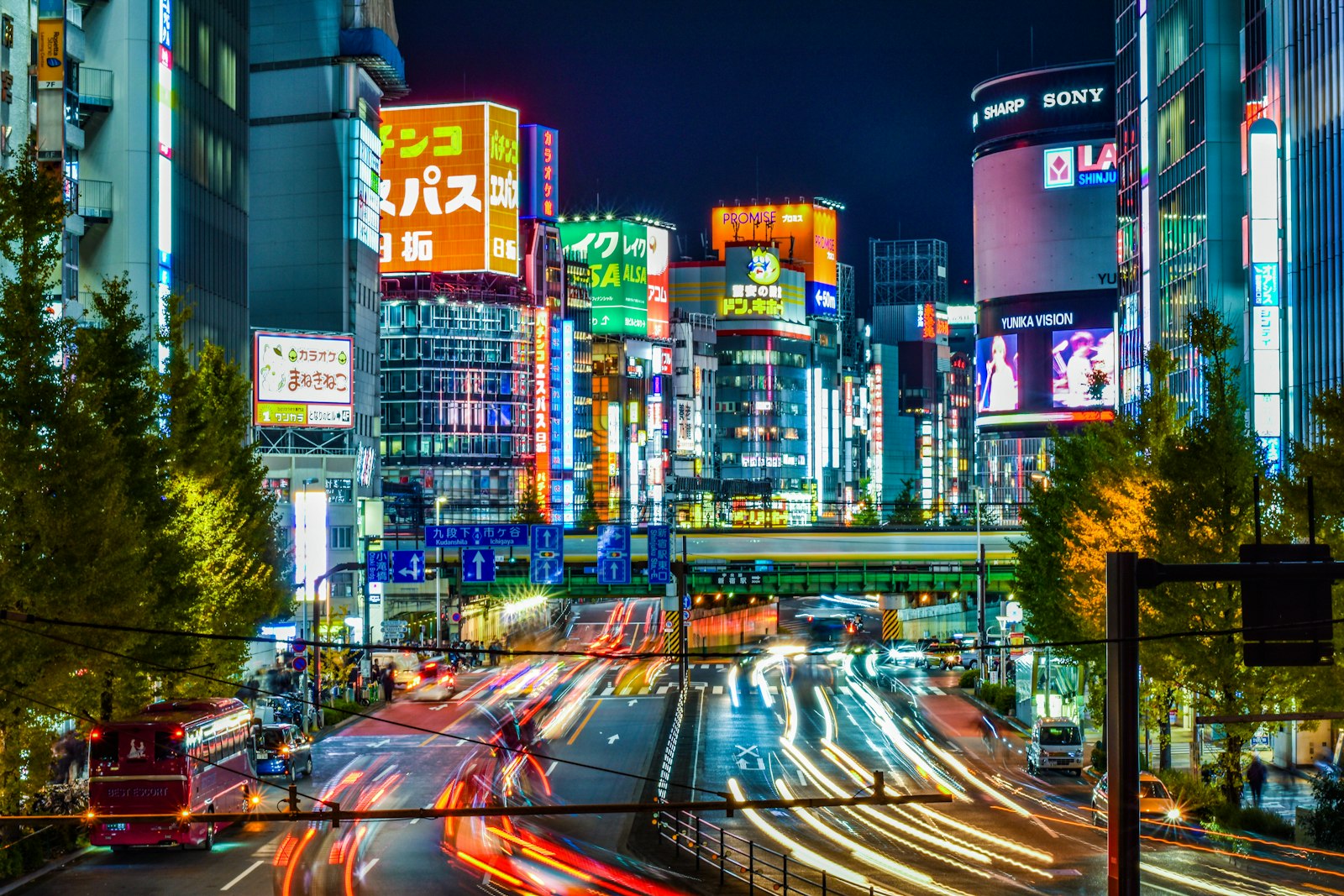
Photo by <a href="https://unsplash.com/@j_booker_official?utm_source=tokyodeepnightlife&utm_medium=referral">John Booker</a> on <a href="https://unsplash.com/?utm_source=tokyodeepnightlife&utm_medium=referral">Unsplash</a>
Almost nobody gets scammed in Kabukicho by wandering into a dark alley at 3 a.m. It happens on a bright, crowded street, at maybe 10 p.m., after a friendly guy in a decent jacket says the words “my friend, I know a good place.” Learning how not to get scammed in Kabukicho is mostly about recognizing that one moment — and knowing exactly what to do with your feet in the two seconds that follow.
This isn’t a “Kabukicho is dangerous, stay away” article. It isn’t. Shinjuku’s entertainment district is one of the most alive places in Tokyo, and tens of thousands of people move through it every night without incident. But there is a specific, well-documented, repeatable scam running there, it targets foreign visitors on purpose, and the numbers got worse in 2026. Here’s what it looks like from the inside, and how to walk out of the neighborhood with your money.
Contents
- The numbers: how bad is it, really?
- The five stages of a bottakuri night
- Rule one: how not to get scammed in Kabukicho, in one sentence
- The 10-second legality test that most guides skip
- Where and when the risk concentrates
- The 2026 version: drink spiking and card fraud
- You’re already inside and the bill is wrong. Now what?
- How to actually enjoy Kabukicho instead
- Quick answers
- What do you do in Tokyo After 10?Join our Tokyo Nightlife Private Tour
- Skip the guesswork
- About the Author
The numbers: how bad is it, really?
Between January and June 2026, Shinjuku Police received 91 reports from people who followed a street tout and were then charged excessive amounts at the venue they were taken to. Total reported losses came to roughly ¥99 million — around $670,000 — and police said many of the victims were overseas visitors. (Japan Today)
Do the math and the average reported loss is a little over ¥1 million per person. That is not a “they overcharged me for a beer” number. That is a rent payment.
In July 2026, police arrested a 53-year-old man in Kabukicho 1-chome under Tokyo’s anti-nuisance ordinance for touting, after he was seen approaching passersby with lines like “Don’t be scared. I love you.” Investigators believe he may be connected to an organized group of touts working the area at night. So this is not a handful of freelancers — it’s a system.
Two things follow from that. First, 91 reports over six months in a district that sees millions of visitors means your individual odds are low. Second, the losses are concentrated and severe, and they land almost entirely on people who did one specific thing: they followed a stranger who approached them.
The five stages of a bottakuri night
Bottakuri (ぼったくり) is the Japanese word for a gross overcharge, and the venues that run it are called bottakuri bars. The script is remarkably consistent. If you can name the stage you’re in, you can still get out.
Stage 1 — The approach
Someone starts a conversation on the street. In Japanese these touts are called kyakuhiki (客引き). The tell is not how they look — many are well-dressed, cheerful, and speak good English. The tell is the direction: legitimate staff stand in front of their own shop holding a sign. A kyakuhiki walks around and comes to you.
The approach is warm, never sleazy. Common openers: asking where you’re from, complimenting your country’s football team, offering to “show you the real Tokyo,” or claiming they work for a well-known chain. Magical Trip’s guides have documented touts specifically posing as staff from Torikizoku, the famous cheap yakitori chain, precisely because travelers recognize the name and relax.
Stage 2 — The number that is too good
They quote a price. All-you-can-drink for ¥4,000 an hour. ¥3,000 flat. Sometimes they show you a laminated card or a phone screen with a menu on it. This is the hook, and it’s designed to be just plausible — not free, not suspiciously cheap, simply good.
That quoted number has no legal weight whatsoever once you’re inside a venue whose real menu says something else.
Stage 3 — The walk
You follow. This is the point of no return, and it’s usually longer than you’d expect — around a corner, up a narrow elevator to the fourth or fifth floor of a multi-tenant building, sometimes past the venue they originally named to a completely different one. The elevator matters: an upstairs bar with no street frontage has no walk-in reputation to protect.
Stage 4 — The bill
An hour later the total is ¥100,000, or ¥300,000, or more. Where does it come from? Charges you were never told about, stacked:
- A seat charge or table charge of ¥10,000–¥20,000 per person instead of a normal ¥300–¥700 otoshi
- Ladies’ drinks — every drink bought for a staff member sitting with you, at ¥3,000–¥5,000 each, ordered without you registering that you agreed
- Per-hour, per-person service fees that were never quoted
- A “service charge” of 50% or more applied on top of the whole thing
Reports collected by Magical Trip describe bills exceeding ¥100,000 for minimal orders — in a city where a beer runs about ¥600 and a full izakaya dinner lands between ¥3,000 and ¥4,000 a head.
Stage 5 — The pressure
This is the part people aren’t prepared for. Staff who were charming for an hour become immovable. You’ll be told the card machine is broken and it’s cash only. Someone will offer to “walk you to the ATM.” The door will be blocked, politely, by someone’s shoulder. Nobody usually shouts. That’s what makes it work — there’s no obvious moment where a reasonable person decides to make a scene.
Rule one: how not to get scammed in Kabukicho, in one sentence
Never enter a venue you did not choose before you left your hotel.
That’s it. That single rule eliminates almost every case in the police data, because the scam structurally requires a tout to steer you. Not “be careful with touts.” Not “negotiate first.” Do not follow. If someone approached you, the answer is no — even if they’re funny, even if they’re a woman, even if they say they’re from Torikizoku, even if a second person confirms their story a block later.
How to actually do it:
- Keep walking. Don’t stop to be polite. Stopping is interpreted as interest, and some touts will follow for several blocks if they think there’s a live prospect.
- Say it in Japanese. “Kekkō desu” (結構です — “no thank you,” firm) or “Iranai” (いらない — “don’t need it”). Japanese words signal you’re not a first-day tourist.
- Use the hand. A flat palm raised at chest height, no eye contact. It’s the standard local refusal and it reads as final.
- Don’t argue. Never get aggressive — it escalates and gains you nothing. Bored disinterest works far better than confrontation.
The 10-second legality test that most guides skip
Here’s the piece almost no English-language article mentions, and it’s genuinely useful.
Tokyo has had an anti-bottakuri ordinance since 2000 (formally, an ordinance regulating improper solicitation and improper collection of fees in the nightlife trades). Within designated areas — Kabukicho is one — it places a legal obligation to display prices, and it bans both improper solicitation and coercive bill collection. Violations can bring administrative penalties including business suspension of up to eight months, plus criminal penalties of up to six months’ imprisonment or a fine of up to ¥500,000.
The practical consequence for you: a bar operating legally in Kabukicho has its prices posted where you can see them before you sit down. Menu at the entrance, price board on the street, or a clear list handed to you at the door.
So before you commit to any seat, run this check:
- Is there a posted price for the seat/table charge, not just the drinks?
- Is the charging unit stated — per person, per hour, or flat?
- Is there any mention of a service charge percentage?
If a venue can’t answer all three before you sit, walk out. A normal Kabukicho bar answers them without blinking. A bottakuri bar will tell you not to worry about it — and “don’t worry about it” is the single most expensive phrase in Shinjuku. The same logic applies to the district’s cabaret and girls bar venues, where the pricing structure itself is the thing that catches people out; our breakdown of the girls bar price system in Japan walks through where the legitimate charges actually come from, and what a night at a hostess club really costs does the same for kyabakura.
Where and when the risk concentrates
Kabukicho isn’t uniformly risky. Risk clusters:
- Time. Touts thin out early and swarm late. Before roughly 9 p.m. the streets are mostly ordinary people eating dinner. After 11 p.m. the approach rate climbs sharply and the pitches get pushier. If it’s your first visit, go early and leave before midnight.
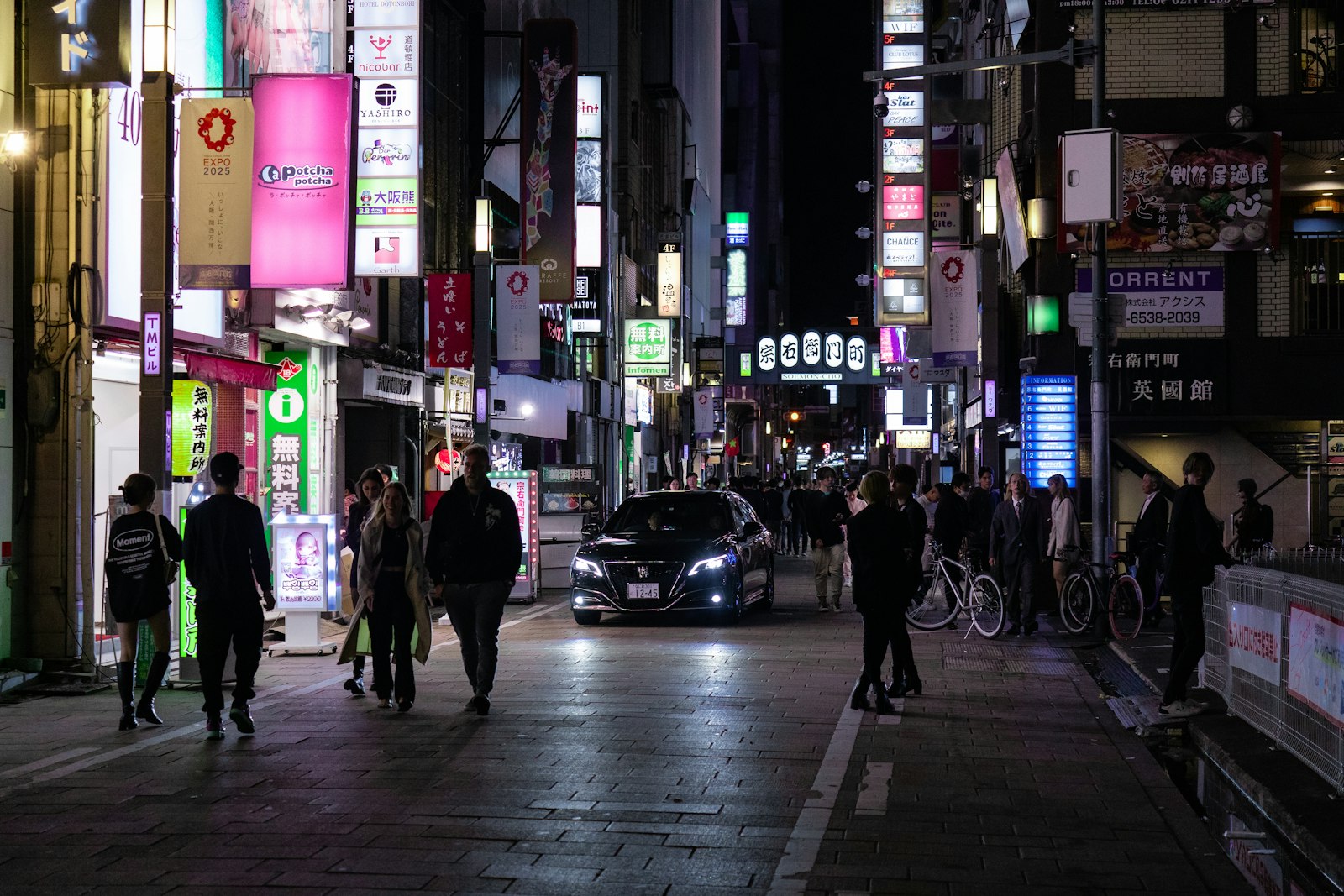
- Geography. The main drag around Godzilla Street and the area near Shinjuku Toho Building draw the heaviest tout concentration because that’s where tourists are densest. The scam venues themselves are usually one street off it, upstairs.
- Group size. Solo travelers, and especially solo men who’ve had a couple of drinks, get approached far more than groups. Fatigue and alcohol are part of the targeting.
- Direction of travel. Looking lost with a phone in your hand is a signal. Walk like you know where you’re going, even when you don’t.
Looking for Adult Entertainment Services in Tokyo? Download this
I’ve spent over a decade exploring and studying Japan’s adult entertainment scene firsthand. If you’d like detailed insider information—including how to choose the right shop, what services are available, and tips for avoiding common mistakes—check out our exclusive E-book.
The 2026 version: drink spiking and card fraud
The classic bottakuri bill is now not the worst-case scenario. In 2026 the UK Foreign, Commonwealth & Development Office issued travel advice citing increased reports of drink spiking and credit card fraud in Japan, and named the areas Japanese police have identified as high-risk zones in Tokyo: Kabukicho, Roppongi, Shibuya, and Ikebukuro. (UK FCDO travel advice)
The FCDO describes victims waking up with no memory of the night and large amounts billed to their credit card. That changes the defensive priorities:
- Watch the pour. Only accept a drink you saw made and carried straight to you. Don’t leave a glass unattended, even to use the bathroom — and don’t come back to a drink you left.
- Treat your card as the crown jewel. The bill is the symptom; the card is the injury. A disputed ¥80,000 cash bill is a bad night. A card left in someone’s hands for ten minutes is an open-ended loss.
- Don’t drink to the point where you’d follow someone. The scam doesn’t need you drunk. But drunk makes stage 1 much, much easier.
You’re already inside and the bill is wrong. Now what?
First: this is recoverable. People who handle these final minutes well usually pay far less than the number on the paper, or nothing.
1. Do not pay the full amount, and do not hand over your card. Once your card is swiped, you’ve moved from a dispute to a chargeback fight from another country. Cash is bad; card is worse.
2. Say the word “police” — calmly, and as information, not a threat. State plainly that you’d like to call the police to sort out the bill. Legitimate venues are unbothered by this. Bottakuri venues are not, because the ordinance above is aimed squarely at them and they lose their license. Do not, however, signal that you’re afraid of police involvement — that hands them all the leverage.
3. Offer to pay what was quoted. “I was told ¥4,000. Here is ¥4,000.” Putting a reasonable amount on the table and refusing the rest is a much stronger position than a flat refusal, and it’s what many resolved cases look like.
4. Record. Audio from your pocket is fine. Photograph the bill and any posted menu. Under the price-display rule, the absence of a posted price is itself evidence against them.
5. Call 110. That’s the emergency police number in Japan. You can also walk to a koban, the neighborhood police box. The Kabukicho koban is a large, permanently staffed 24-hour facility in Kabukicho 2-chome, and it exists precisely because of this district. Officers there deal with this exact complaint constantly.
6. Afterwards, still report it. Even if you paid. Even if you feel foolish. Those 91 reports are how venues get shut down, and if a card was involved, a police report is what your bank will ask for. If you want the fuller picture of how these cases have played out, we’ve documented Kabukicho scams and the 2026 police data in detail.
How to actually enjoy Kabukicho instead
None of this means drinking somewhere sterile. The neighborhood is genuinely great when you’re choosing your own doors.
- Pick venues before you go. Google Maps, sorted to read the 1-star reviews first. Bottakuri venues are usually either invisible on Maps or carry a wall of furious one-star reviews saying the same thing.
- Ground-floor and street-facing beats fourth-floor. A bar that depends on walk-in trade and repeat locals can’t afford to rip people off.
- Chain izakaya are a genuinely good floor. Torikizoku, Watami and similar chains have fixed, published, per-item prices. Unglamorous, but nobody has ever been surprised by a Torikizoku bill.
- Go one district over for the atmosphere. Golden Gai, a few minutes’ walk east, has its own quirks — most bars there charge a cover of roughly ¥500–¥1,500 — but the crucial difference is that the charge is stated up front, at the door, in writing.
- Set a cash budget and leave the cards at the hotel. The cleanest hard ceiling on any possible loss is the cash in your pocket.
Put those five habits together and you’ve covered most of what how not to get scammed in Kabukicho actually means in practice — it’s door selection, not vigilance. For the wider Shinjuku context beyond this one district, our Shinjuku nightlife guide maps out where else the night can go.
Quick answers
Is Kabukicho dangerous? Violent crime against tourists is rare. The realistic risk is financial, and it’s concentrated in venues you were led to by a stranger.
Are all touts scammers? No. Some are just annoying marketing for ordinary bars. But you can’t tell the difference from the street, and the downside is asymmetric, so the rule stays: don’t follow anyone.
Is street touting even legal? Aggressive street touting is restricted under Tokyo ordinances, which is exactly what the July 2026 arrest was made under. The fact that someone is doing it openly doesn’t make it legal — it means enforcement is stretched.
What if I don’t speak Japanese? It matters less than you’d think. “Police,” said calmly, is understood by every single person in that building.
Is it safe to go alone? Going alone is the single biggest risk multiplier in the data. Go with someone. If you’re travelling solo, go early, or go with a guide.
What do you do in Tokyo After 10?
Join our Tokyo Nightlife Private Tour
You deserve better than overpriced bars and missed opportunities. We’re here for you.
Skip the guesswork
Everything above is learnable, but it’s a lot of vigilance to run on your third night of jetlag while also trying to have a good time. The shortcut is simple: go in with someone who already knows which doors are which.
That’s what our guides do on the Tokyo After 10 nightlife tour — small groups, bars chosen and vetted in advance, prices known before you sit down, and a local doing the talking. No one approaches you on the street when you’re clearly already with someone who lives here.
Kabukicho rewards people who show up with a plan. Bring one, and it’s one of the best nights you’ll have in Tokyo.
Sources: Japan Today — Kabukicho tout arrest and Shinjuku Police figures · UK FCDO Japan travel advice — safety and security · Tokyo Metropolitan Police — Shinjuku Police Station koban directory