Photo by <a href="https://unsplash.com/@hidingninjatokyo?utm_source=tokyodeepnightlife&utm_medium=referral">hiding ninja</a> on <a href="https://unsplash.com/?utm_source=tokyodeepnightlife&utm_medium=referral">Unsplash</a>
Most guides to izakaya etiquette for foreigners open with a warning about chopsticks. That is not what trips people up. What trips people up is the small plate of food nobody ordered, the bill that comes to more than the menu suggested, and the moment a server says something in Japanese and everyone at the table freezes.
None of that is complicated once you know the shape of the evening. An izakaya runs on a sequence — walk in, get seated, drinks, rounds of food, pay at the register — and almost every rule is just a consequence of that sequence. Learn the sequence and the etiquette follows on its own.
This guide covers the whole run, from the door to the last train. No mystique, no lectures about ancient traditions, just what actually happens and what you’re expected to do about it.
Contents
- What an Izakaya Actually Is — And Why the Rules Feel Different
- Before You Walk In: Age, Group Size, and Reservations
- Getting Seated: The First Ninety Seconds
- Otoshi: The Charge That Surprises Everyone
- How to Order at an Izakaya: Drinks First, Then Rounds
- Table Manners for Foreigners at an Izakaya: Pouring, Toasting, and Chopsticks
- The Clock: Time Limits and Last Order
- Smoking Rules Inside Izakaya
- Paying the Bill: No Tipping, and Why Splitting Is Awkward
- After You Leave: Street Drinking and Getting Home
- Izakaya Etiquette for Foreigners: The 10 Most Common Mistakes
- Quick Phrase Sheet
- Izakaya Etiquette for Foreigners: Common Questions
- What do you do in Tokyo After 10?Join our Tokyo Nightlife Private Tour
- Skip the Guesswork
- About the Author
What an Izakaya Actually Is — And Why the Rules Feel Different
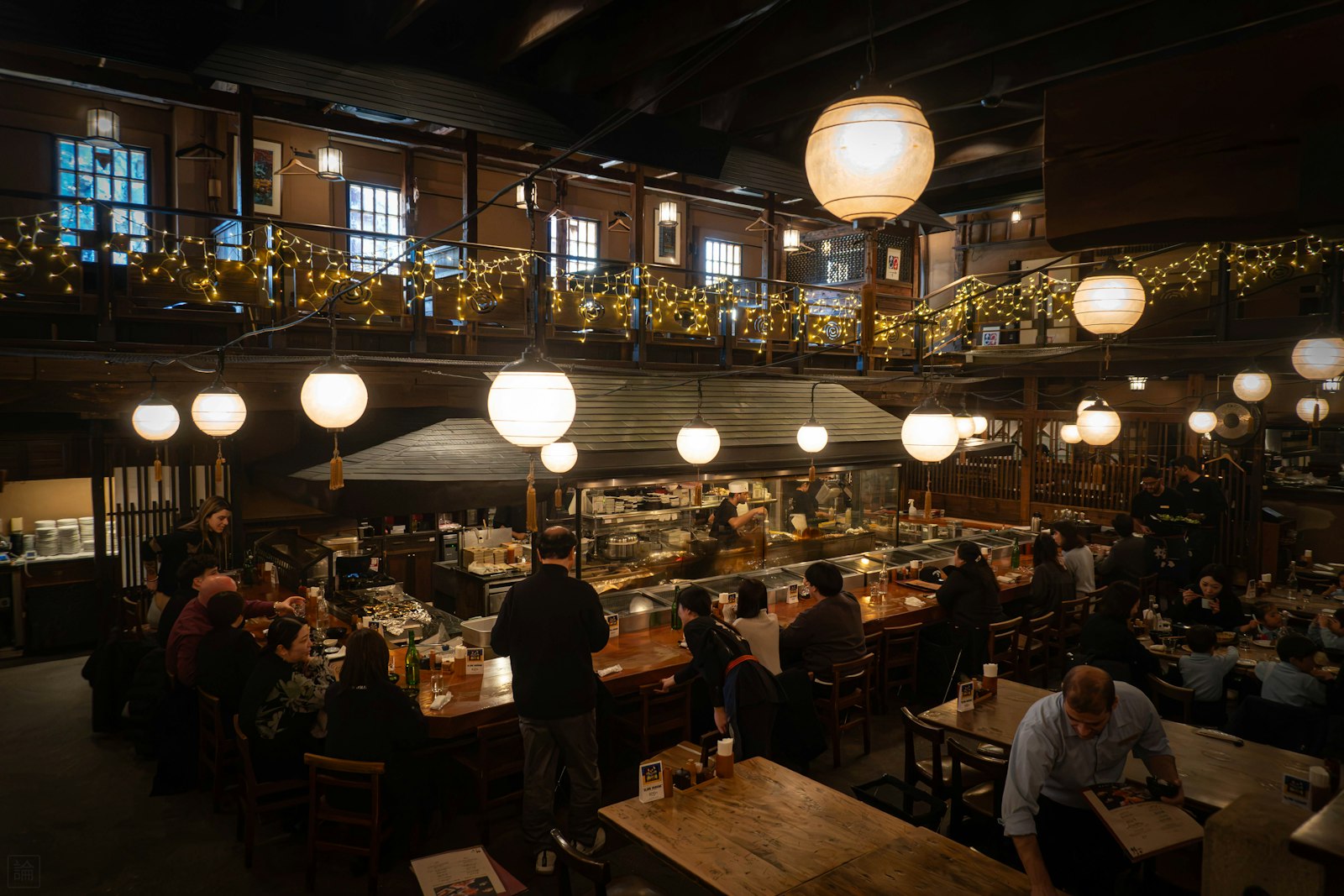
An izakaya is a drinking place that takes food seriously. The word breaks down roughly to “stay-drink-place,” and that middle idea matters: you’re not stopping in for one drink, and you’re not sitting down to a plated three-course meal. You settle in for two hours, order in waves, and share everything.
That format explains nearly all of the etiquette. Dishes are shared, so serving yourself with the ends of your chopsticks matters. Drinks are ordered in rounds, so the table moves together. Nobody tips, so the venue recoups service costs another way — which brings us to the otoshi.
The mental model that helps most: think of it as a pub where the kitchen is the main event, not an afterthought.
Chain or Independent? Pick the Right One for Your First Night
This single decision changes the difficulty level more than anything else in this guide.
Chain izakaya are the low-stress option. Many have tablet ordering at the table, and Torikizoku’s official visitor page confirms its touch panels can be switched to English, Chinese, or Korean. Watami and other large chains typically offer English menus or QR-code translation too. You can have a perfectly good night without saying a word of Japanese.
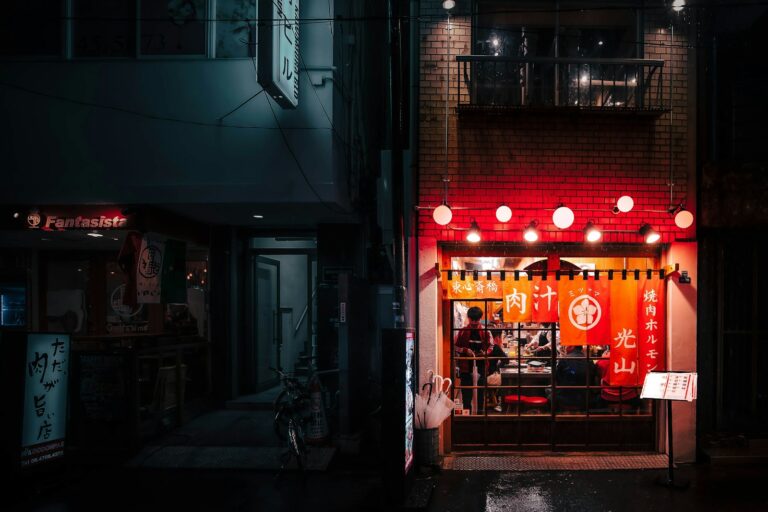
Independent izakaya — the ten-seat counters in the alleys — are where the food gets memorable and the difficulty spikes. Menus are often handwritten on the wall, staff may speak no English, and payment may be cash only. Worth doing, but not on night one unless someone is guiding you.
If you want the alley experience without the guesswork, our guide to Tokyo’s best yokocho alleys breaks down which lanes are welcoming to visitors and which are effectively locals-only.
Before You Walk In: Age, Group Size, and Reservations
The legal drinking age in Japan is 20. Enforcement at izakaya is inconsistent, but chain restaurants increasingly ask, and a passport is the ID that always works — a foreign driver’s license often isn’t recognized.
Group size is the constraint travelers underestimate. Small izakaya seat eight to twenty people total. A party of six walking in at 7 p.m. on a Friday will be turned away almost everywhere, politely and without an alternative offered. Two people can usually find a counter seat somewhere; four is manageable; six or more needs a reservation, and reservations at small independents often need to be made in Japanese by phone.
The practical workaround for larger groups is to book a chain, which takes online reservations and has the floor space.
Getting Seated: The First Ninety Seconds
If izakaya etiquette for foreigners has a single high-stakes moment, this is it — the rest of the night is forgiving. Do not seat yourself. Wait just inside the door until a staff member acknowledges you — this is universal, including at places that look casual enough to walk in and grab a table.
You’ll be asked how many people. Holding up fingers works fine. You may also be asked whether you want a table or the counter (kauntaa), and at some places whether you want the smoking or non-smoking section.
Two things to say at the door if they apply to you:
- “Eigo no menyuu, arimasu ka?” — Do you have an English menu?
- “Otoshi wa irimasen” — We’ll skip the otoshi. Say this now, not later. More on why below.
Then you’ll get a hot or cold towel (oshibori). Use it on your hands. Not your face, not the table.
Otoshi: The Charge That Surprises Everyone
A few minutes after you sit down, a small dish arrives that you did not order. Pickled vegetables, simmered fish, edamame, a bit of salad. This is the otoshi, and it is the single biggest source of confusion in izakaya etiquette for foreigners.
It is not a free appetizer and it is not a mistake. It’s a per-person seating charge served as food — Japan’s structural substitute for tipping and service fees. Expect ¥300 to ¥800 per person, with most places in the ¥300–¥600 range and upscale bars going higher. It’s charged per head, not per table, so a group of four pays it four times.
It is rarely explained and rarely signposted, which is exactly why it feels like a bait-and-switch when it lands on the bill. It isn’t one. It’s just an unspoken norm that nobody thought to translate.
Can You Refuse the Otoshi?
Sometimes, if you’re quick. At independent shops, saying “otoshi wa irimasen” as you’re being seated will occasionally work. Once the dish is on the table, refusing almost never works — the kitchen has already made it and the charge is already in the system.
Honestly, the better move is to stop fighting it. Treat ¥300–¥800 as the cover charge for a seat, a server, and a place to sit for two hours, and it’s a reasonable deal by any international standard. Eat it or don’t.
Where it genuinely matters is in the touristy pockets of nightlife districts, where a handful of venues inflate the charge well past normal. That’s a different problem from ordinary otoshi, and it’s covered in our Tokyo nightlife scams and safety guide.
How to Order at an Izakaya: Drinks First, Then Rounds
The order of operations is fixed, and getting it wrong is the most visible mistake a first-timer makes.
Drinks come first. Before anyone opens the food menu, the server wants a drink order. Don’t make them wait while the table debates the yakitori. The standard opener is “Toriaezu, nama!” — “draft beer for now” — and it exists precisely so nobody has to think. For two beers: “Nama futatsu.”
Then food, in rounds. Order three or four small dishes, eat them, then order more. Ordering twelve dishes at once means they arrive simultaneously and go cold. Rounds also let you adjust — you’ll want more of one thing and none of another.
Flag the server actively. Say “Sumimasen!” at conversational volume. This is not rude; in a noisy izakaya it is the expected way to get attention. Many places also have a call button on the table. Waiting quietly for someone to notice you can mean waiting a very long time.
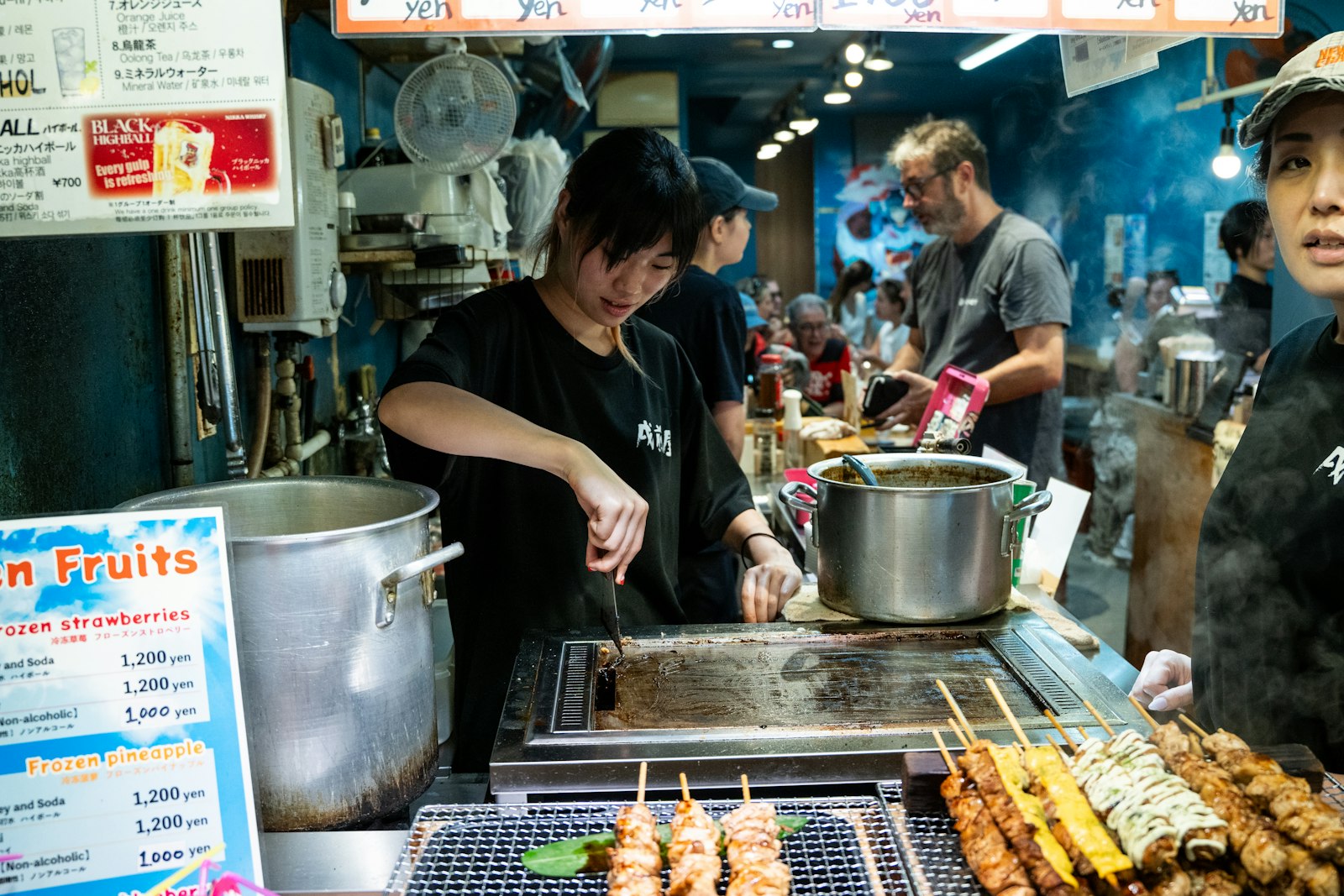
What to Drink
- Nama beer (draft) — the default, always safe
- Highball — whisky and soda, light and very popular
- Chu-hi / sour — shochu with soda and fruit flavor, sweet and low-alcohol
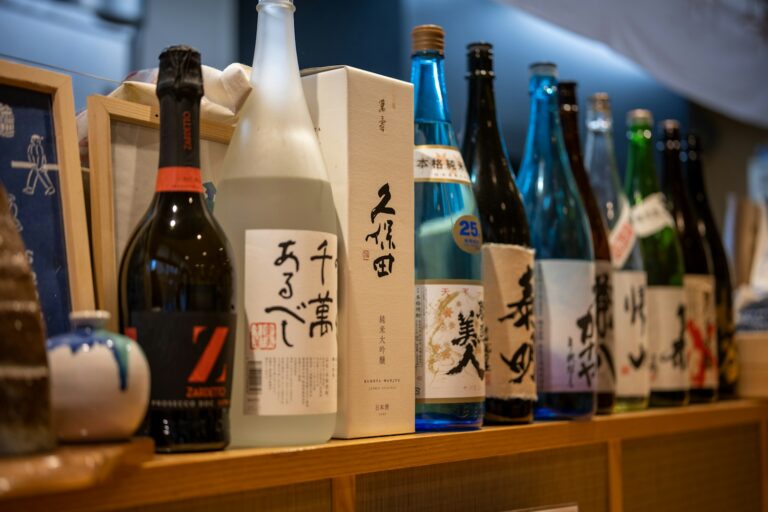
- Sake (nihonshu) — ask for atsukan (hot) or reishu (chilled)
- Shochu — order it mizuwari (with water) or oyuwari (with hot water)
- Oolong-cha — the standard non-alcoholic order, and nobody blinks at it
Individual drinks typically run ¥300–¥600 at chains, more at independents.
What to Order to Eat
Order for the table, not for yourself. Reliable openers: edamame, karaage (fried chicken), yakitori assortments, grilled fish, potato salad, agedashi tofu. A rough rule is two dishes per person across the night, adjusted as you go.
If you’re on a budget, standing bars are the cheaper cousin of the izakaya and follow most of the same rules — our tachinomi guide for foreigners covers how those work.
Nomihoudai: The All-You-Can-Drink Trap
Nomihoudai is unlimited drinks for a fixed time, typically ¥1,500–¥3,000 for two hours. It’s good value if you’re drinking steadily, and a bad deal if you’re not.
Three things nobody tells you:
- Last order is usually 30 minutes before the end. The staff will come around to take a final order. If you wave them off, you’re done drinking.
- It often requires the whole table to sign up. Individual opt-ins are usually not allowed.
- The premium drinks are excluded. The listed set is beer, highball, chu-hi, house wine. Better sake and whisky cost extra.
Ordering three drinks and letting the clock run out is how people lose money on nomihoudai.
Table Manners for Foreigners at an Izakaya: Pouring, Toasting, and Chopsticks
This is the part most articles on izakaya etiquette for foreigners lead with, and it’s genuinely the least important — but a few of these rules do carry weight.
Don’t Drink Before Kanpai
When the first drinks land, wait. Everyone raises their glass, someone says “Kanpai!”, and then you drink. Starting early is the one table-manners error that Japanese companions genuinely notice.
Clink glasses at a slightly lower height than anyone senior to you. This is a soft rule with foreign guests and nobody will correct you, but it’s an easy point to score.
Pour for Others, Not for Yourself
The convention is that you keep an eye on your companions’ glasses and top them up; someone else does the same for you. Pouring your own beer in company reads as either impatient or as a quiet signal that nobody is looking after you.
When someone pours for you, lift your glass slightly with both hands rather than leaving it on the table. When you pour, use both hands on the bottle.
This applies to shared bottles — beer and sake. Nobody is pouring your highball for you.
The Chopstick Rules That Actually Matter
Most chopstick etiquette is minor. Two rules are not, because both echo funeral rites:
- Never stand chopsticks upright in a bowl of rice. Lay them across the rest or the edge of the dish.
- Never pass food chopstick-to-chopstick. Set it on a plate and let the other person pick it up.
For shared dishes, use the serving chopsticks if provided. If not, flip your own chopsticks and use the clean ends to move food to your plate. It’s a small gesture that signals you know what you’re doing.
Beyond that: don’t spear food, don’t wave your chopsticks around while talking, and don’t rummage through a communal plate looking for the good piece.
The Clock: Time Limits and Last Order
Many izakaya operate a two-hour limit (nijikan-sei), especially on weekends and especially for reservations. You’ll usually be told at the door, sometimes only in Japanese, and a staff member will appear near the ninety-minute mark to warn you.
This isn’t a hint to leave early. It’s a hard boundary, and the table is likely booked after you. Plan the night as two hours here, then move on — which is exactly why bar-hopping is the default way to spend an evening in Tokyo rather than an unusual one.
Last trains are the other clock. Most lines stop running between midnight and 1 a.m. Missing it means a taxi at night rates or waiting until roughly 5 a.m. for service to resume.
Looking for Adult Entertainment Services in Tokyo? Download this
I’ve spent over a decade exploring and studying Japan’s adult entertainment scene firsthand. If you’d like detailed insider information—including how to choose the right shop, what services are available, and tips for avoiding common mistakes—check out our exclusive E-book.
Smoking Rules Inside Izakaya
Japan’s revised Health Promotion Act took full effect in April 2020 and bans indoor smoking in restaurants and bars as a baseline. But it carved out an exemption for small, pre-existing establishments, which are allowed to permit smoking if they post signage — and a great many independent izakaya fall exactly into that category.
Tokyo’s own ordinance is stricter than the national law, so central Tokyo is noticeably more smoke-free than the countryside. Chains are almost always non-smoking or have sealed smoking rooms.
Practical upshot: if smoke bothers you, check the signage at the door or ask “Kin’en desu ka?” (Is it non-smoking?) before you sit down. Moving after you’ve been seated is awkward.
Paying the Bill: No Tipping, and Why Splitting Is Awkward
You pay at the register on the way out, not at the table. Bring the slip that’s been sitting on your table in a little holder.
To ask for the bill, either say “Okaikei onegaishimasu” or make a small crossed-fingers “X” gesture with your index fingers across the room. The gesture is standard and universally understood.
Do not tip. Not a coin, not rounding up, not leaving change on the table. Staff will chase you down the street to return it. The phrase that does the work of a tip is “Gochisousama deshita” — roughly “thank you for the meal” — said on your way out. It lands better than money would.
Two things to plan for:
- Cash. Chains take cards and IC cards without issue. Plenty of small independents are still cash-only, and the ATM inside a convenience store is the reliable fallback for foreign cards.
- Splitting. Japanese groups usually divide the total evenly (warikan) rather than itemizing. Some registers can split a bill — say “Betsu-betsu de onegaishimasu” — but at a busy independent counter it’s a real imposition. Settle up as one payment and sort it out between yourselves afterward.
Also worth knowing: the menu price you see may be pre-tax, with 10% consumption tax added at the register, and a few venues add a separate service charge on top. Between that and the otoshi, budget roughly 15–20% above what the menu implies.
After You Leave: Street Drinking and Getting Home
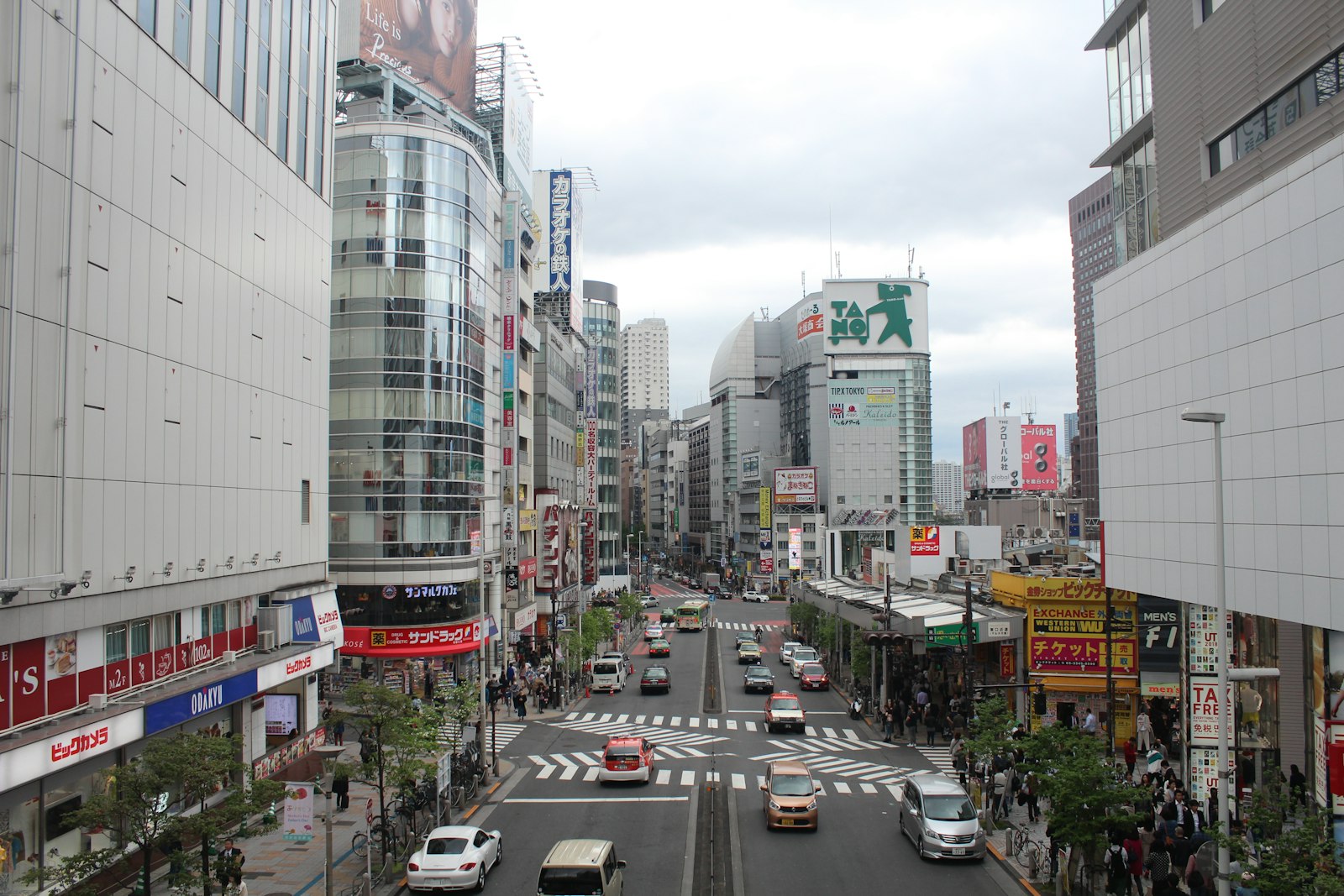
Drinking on the street is broadly legal in Japan and long-standing — but Shibuya has moved against it. Shibuya Ward’s year-round public drinking ban took effect on October 1, 2024, and applies daily from 6 p.m. to 5 a.m. around Shibuya Station, the scramble crossing, Center-gai, Miyashita Park, and the Maruyamacho club area. There are no fines attached, and staff can only ask you to stop voluntarily, but as Nippon.com’s reporting on the ordinance makes clear, the ward is serious about the norm. Just don’t.
Elsewhere, keep it low-key: quiet, no glass in the street, and take your trash with you. Japan has famously few public bins.
Never cycle after drinking. Drunk cycling carries criminal penalties in Japan, and tourists on rental bikes are not exempt.
Izakaya Etiquette for Foreigners: The 10 Most Common Mistakes
Ranked by how often they actually happen:
- Seating yourself. Wait at the door.
- Opening the food menu before ordering drinks. Drinks first, always.
- Refusing the otoshi after it arrives. Say it at the door or accept it.
- Ordering everything at once. Go in rounds of three or four dishes.
- Waiting silently for a server. Say “Sumimasen!” out loud.
- Drinking before kanpai. Wait for the toast.
- Trying to tip. Say “Gochisousama deshita” instead.
- Assuming cards work. Carry ¥5,000–¥10,000 in cash per person.
- Showing up as a group of six with no reservation. Book, or split into pairs.
- Ignoring the two-hour limit. Plan the night around it.
Quick Phrase Sheet
| Situation | Say this | Meaning |
|---|---|---|
| Asking for an English menu | Eigo no menyuu, arimasu ka? | Do you have an English menu? |
| Declining the otoshi (at the door) | Otoshi wa irimasen | We’ll skip the otoshi |
| First drink order | Toriaezu, nama! | Draft beer to start |
| Two draft beers | Nama futatsu | Two drafts |
| Getting attention | Sumimasen! | Excuse me! |
| Toasting | Kanpai! | Cheers! |
| Checking for non-smoking | Kin’en desu ka? | Is this non-smoking? |
| Asking for the bill | Okaikei onegaishimasu | The check, please |
| Splitting the bill | Betsu-betsu de onegaishimasu | Separate checks, please |
| Leaving | Gochisousama deshita | Thank you for the meal |
Izakaya Etiquette for Foreigners: Common Questions
Can I go to an izakaya alone?
Yes, and the counter seat exists for exactly this. Solo diners are completely normal in Japan, and a counter seat at a small izakaya is one of the better ways to actually talk to people. Nobody will treat you as odd.
Do I need to speak Japanese?
No. Chain izakaya with tablet ordering require essentially none. At independents, pointing at the menu plus “kore” (“this one”) and a held-up number of fingers gets you most of the way. If you’d rather stack the deck, our guide to finding English-friendly bars in Tokyo lists the areas where English is genuinely common.
Are tattoos a problem at izakaya?
Generally no. Tattoo restrictions in Japan apply mainly to onsen, sento, gyms, and pools. Izakaya almost never care.
What does a night actually cost?
At a chain, roughly ¥3,000–¥4,000 per person for a few drinks and shared plates. At a mid-range independent in central Tokyo, ¥4,000–¥8,000. Nomihoudai sets can bring the total down if you’re drinking steadily. Add the otoshi and 10% tax to any menu math.
How long should I stay at one izakaya?
Two hours, then move. That’s both the house policy at many venues and the local rhythm — Tokyo evenings are built around moving between two or three places rather than settling into one.
Is it rude to leave food uneaten?
Slightly, yes, and it’s easy to avoid by ordering in rounds instead of loading the table up front. Nobody will say anything, but ordering to finish is the norm.
What do you do in Tokyo After 10?
Join our Tokyo Nightlife Private Tour
You deserve better than overpriced bars and missed opportunities. We’re here for you.
Skip the Guesswork
You can absolutely do this on your own. Everything above is enough to walk into a chain izakaya tonight and have a good, uneventful night out — izakaya etiquette for foreigners is not a test anyone is grading.
The gap is the other kind of izakaya — the six-seat counter down an alley with no English menu, no website, and a chef who has been doing one thing for thirty years. Those places are the reason people fall in love with Japanese drinking culture, and they are also the ones where walking in cold genuinely doesn’t work. No sign, no reservation system, and often a quiet preference for regulars.
That’s the whole reason guided nights exist. On our Tokyo After 10 nightlife tour, a local walks you into the places you’d never find and handles the ordering, the otoshi, and the bill while you eat.
Either way: drinks first, order in rounds, don’t tip, and say gochisousama on the way out. That’s izakaya etiquette for foreigners in one line. The rest is dinner.