Photo by <a href="https://unsplash.com/@juliebaa?utm_source=tokyodeepnightlife&utm_medium=referral">Juliana Barquero</a> on <a href="https://unsplash.com/?utm_source=tokyodeepnightlife&utm_medium=referral">Unsplash</a>
It is one of the most argued-about questions among travelers in Japan: is Osaka nightlife better than Tokyo? Ask people who have gone out in both and you will get a split vote, usually delivered with a lot of conviction. The honest answer is that the two cities are good at different things, and the “better” one depends on what you want from a night.
Osaka is loud, chatty and food-obsessed, with most of the action packed into a few walkable blocks. Tokyo is bigger, quieter on the surface and far more varied, with a completely different night waiting in every neighborhood. This guide compares them the way you actually experience a night out — atmosphere, districts, bars, clubs, food, cost and getting home — so you can decide where to spend your evenings.
Contents
- The Quick Verdict: Is Osaka Nightlife Better Than Tokyo?
- Atmosphere: Osaka’s Open Door vs Tokyo’s Many Rooms
- Districts: Compact Osaka vs Sprawling Tokyo
- Bars and Drinking Culture in Osaka and Tokyo
- Clubs and Live Music
- Late-Night Food: Osaka’s Home Advantage
- Cost: Is Osaka Nightlife Better Than Tokyo on a Budget?
- Getting Home: Last Trains and Logistics
- Safety and Scams in Both Cities
- Osaka vs Tokyo Nightlife: Side-by-Side Summary
- Is Osaka Nightlife Better Than Tokyo for Your Travel Style?
- FAQ: Osaka vs Tokyo Nightlife
- What do you do in Tokyo After 10?Join our Tokyo Nightlife Private Tour
- Make Your Tokyo Nights Count
- About the Author
The Quick Verdict: Is Osaka Nightlife Better Than Tokyo?
If you only read one section, read this one. Osaka is the better party; Tokyo is the better nightlife city. That sounds like a contradiction, but it sums up the difference well.
- Pick Osaka if you want an easy, social night where strangers talk to you at the counter, eating and drinking blur into one activity, and every stop is a short walk from the last.
- Pick Tokyo if you want range: six-seat bars, serious cocktail and whisky bars, large clubs, live music, themed bars and drinking alleys that most visitors never find.
- Do both if your trip allows it. Most first-time itineraries pass through both cities anyway, and the contrast is half the fun.
So is Osaka nightlife better than Tokyo across the board? No — but it does win several categories outright. Here is the breakdown.
Atmosphere: Osaka’s Open Door vs Tokyo’s Many Rooms
Osaka has a reputation inside Japan as a merchant city with a comedian’s sense of humor, and that personality comes out after dark. Bartenders and fellow drinkers are more likely to start a conversation, tease you a little and pull you into their group. Even with very little Japanese, visitors tend to feel included quickly.
Tokyo is more reserved at first glance. Groups keep to themselves, and many bars have a calm, polished mood. But the reserve hides depth. Once you find the right counter, Tokyo’s tiny bars can be some of the warmest rooms in Japan — the best example being Golden Gai, where more than 200 micro-bars squeeze into a handful of narrow lanes.
Winner: Osaka for instant friendliness. Tokyo for the sheer range of moods, from rowdy to near-silent.
Districts: Compact Osaka vs Sprawling Tokyo
This is the biggest practical difference between the two cities, and it shapes almost everything else about a night out.
Osaka Nightlife Districts
Osaka’s nightlife is usually split into Minami (south) and Kita (north), with a few character neighborhoods in between.
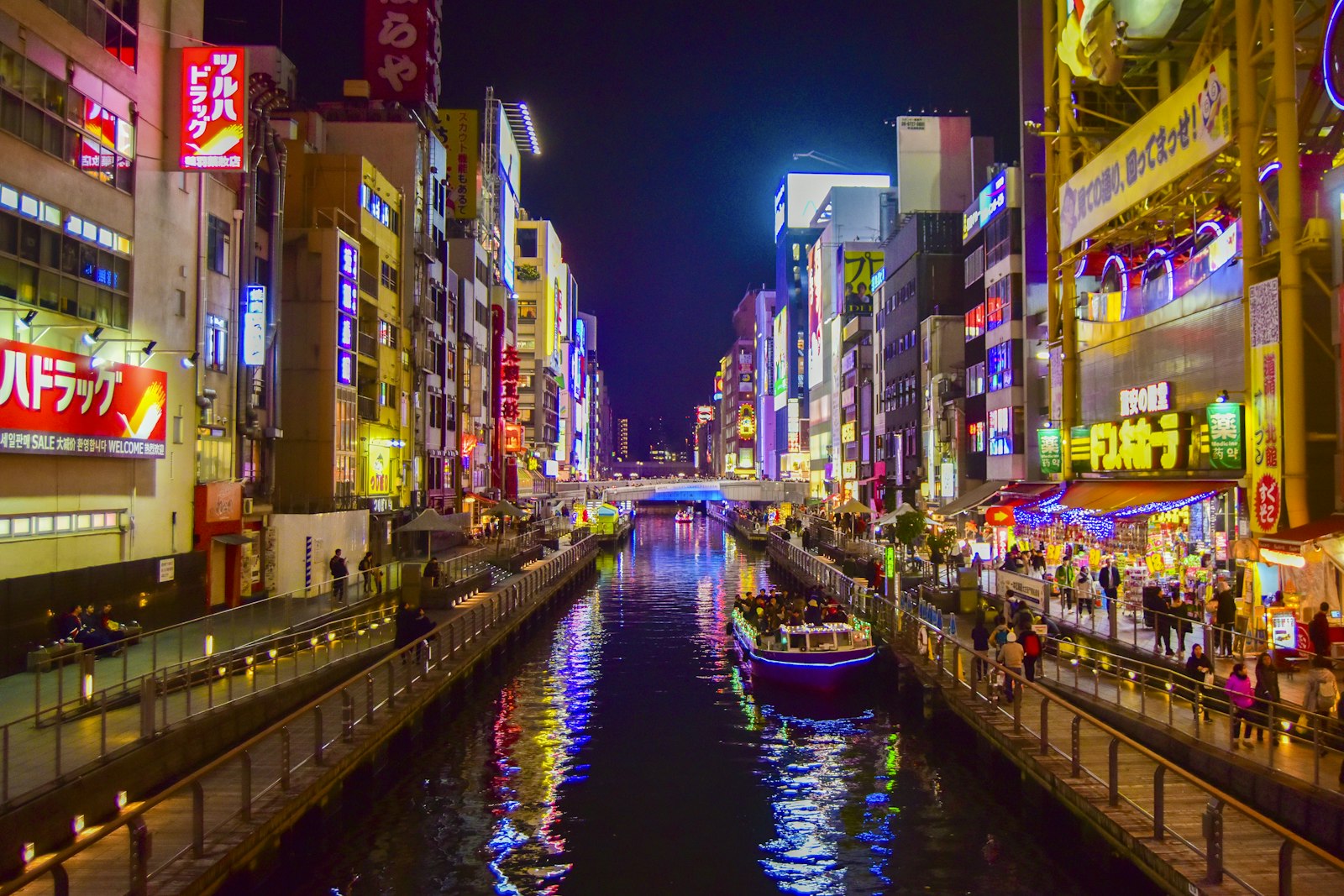
- Dotonbori and Namba (Minami): The canal-side strip of giant signs, food stalls and crowds. It is the loudest and most touristy part of the city, and the natural starting point for a first night.
- Hozenji Yokocho: A stone-paved lane roughly 80 meters long, a few minutes’ walk from Namba Station, lined with long-standing restaurants and small bars. Its Fudo statue is covered in moss because so many people have poured water over it as a prayer, according to the official Osaka tourism site.
- Ura-Namba: The “back side” of Namba, between Sennichimae and Nansan-dori, with Kuromon Market on its eastern edge. It has more than 100 places to eat and drink and has been a bar-hopping favorite since around 2010, with standing bars that now draw young people and women as well as the older regulars.
- Amerikamura (Shinsaibashi): Osaka’s youth and street-culture neighborhood, with independent bars, small clubs and live houses.
- Umeda and Kitashinchi (Kita): Umeda brings hotel bars and big-city views. Neighboring Kitashinchi is Osaka’s upscale district of refined cocktail bars, high-end dining and hostess clubs, and it is priced accordingly.
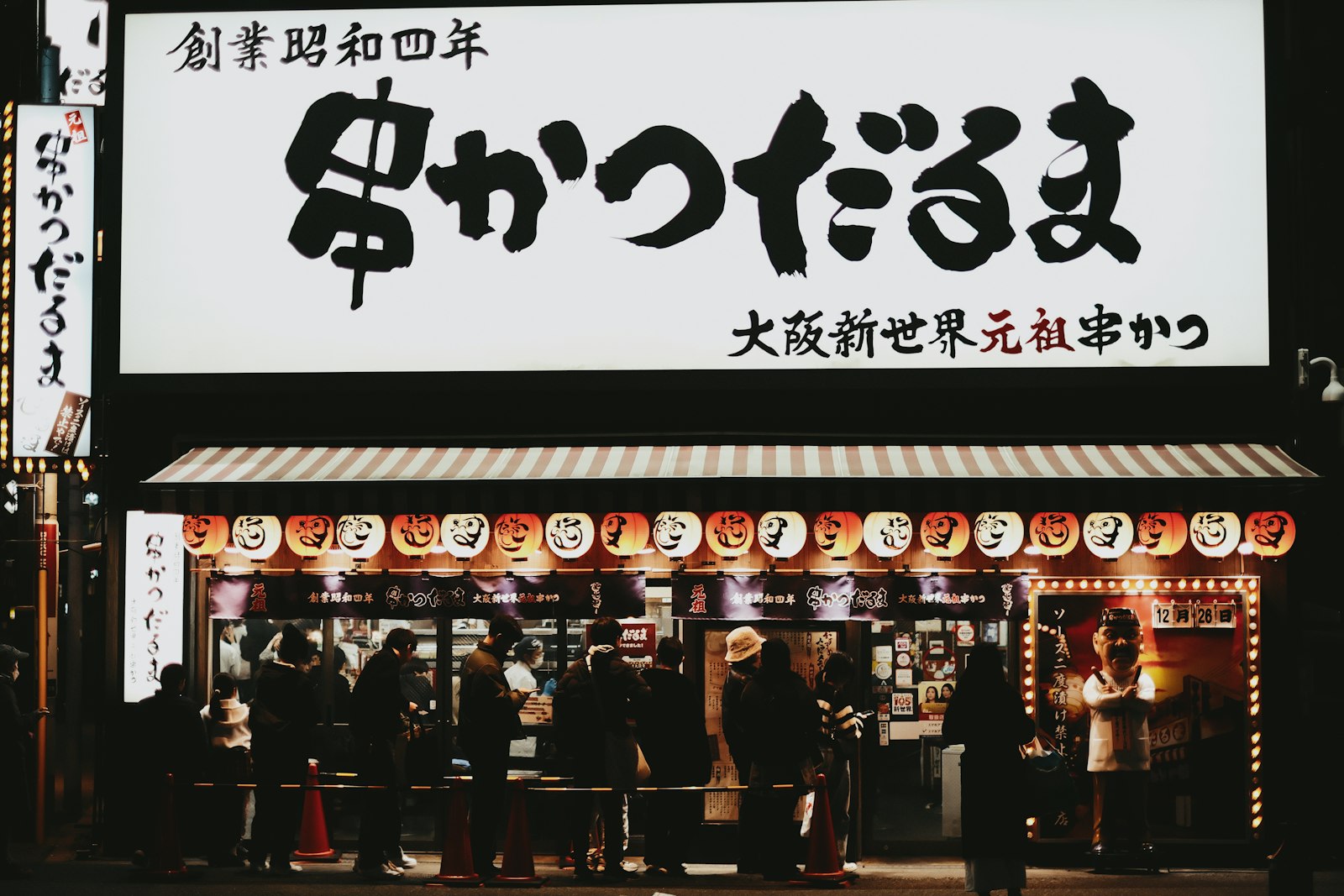
- Shinsekai: A retro district whose origins go back to a 1903 industrial exposition, crowned by Tsutenkaku Tower. Its Janjan Yokocho arcade runs about 130 meters with around 50 shops, including the kushikatsu counters the area is famous for.
- Tenma: A local favorite for cheap, cheerful standing bars and izakaya around the station and its long shopping arcade.
The key point: Dotonbori, Hozenji Yokocho, Ura-Namba and Amerikamura are all within walking distance of one another. You can bar hop across most of Minami without touching a train.
Tokyo Nightlife Districts
Tokyo has no single center. Each district works like its own small city, and moving between them usually means a train ride.
- Shinjuku: The heavyweight. Golden Gai’s micro-bars, Omoide Yokocho’s smoky yakitori alley, Kabukicho’s neon and Ni-chome, one of Asia’s best-known LGBTQ+ nightlife areas.
- Shibuya: Younger crowds, big clubs, standing bars and the scramble crossing.
- Roppongi: An international crowd, late-night clubs and stricter dress codes at the upscale end.
- Ginza: Polished cocktail bars and Tokyo’s most expensive hostess clubs.
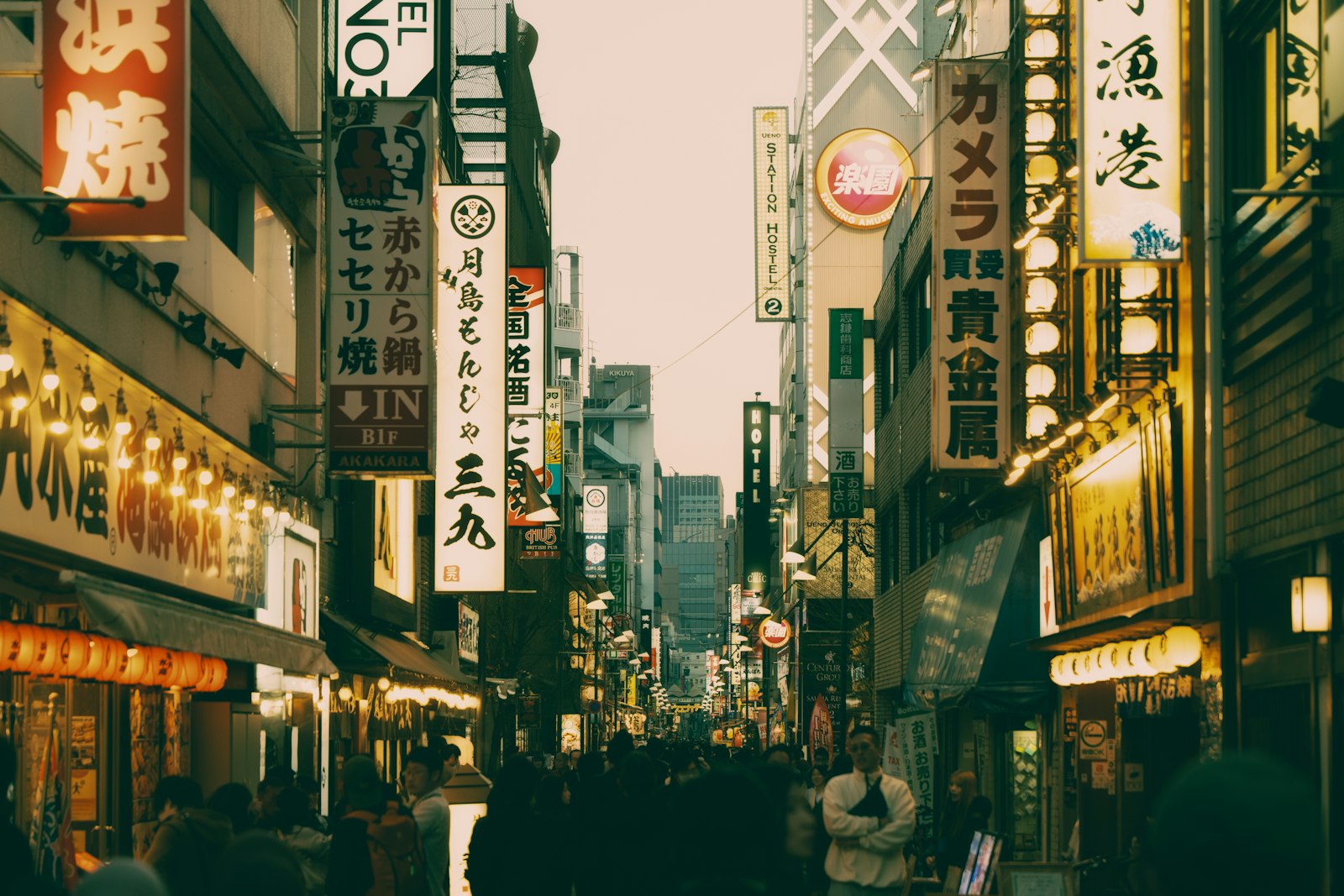
- Ebisu, Shimokitazawa, Nakano, Ueno and Shinbashi: Smaller, more local scenes, from salaryman drinking spots under the train tracks to indie music bars.
If you are not sure where to start, our ranking of the best neighborhoods for nightlife in Tokyo matches each area to a travel style.
Winner: Osaka for convenience. Tokyo for depth. One good night in Osaka covers a large share of what the city offers; a week in Tokyo barely scratches the surface.
Bars and Drinking Culture in Osaka and Tokyo
The two cities share the same core drinking culture: izakaya, standing bars, highballs, sake, no tipping, and a seating charge (often called otoshi) at many sit-down places, which usually arrives as a small appetizer with your first drink.
The difference is in the range:
- Tokyo has far more specialist bars simply because of its size. Whisky bars, jazz bars, craft beer taprooms, sake specialists, themed and anime bars, and internationally recognized cocktail bars are all easy to find.
- Osaka leans toward casual, food-first drinking. Standing bars, kushikatsu counters and noisy izakaya dominate. A serious cocktail scene exists, mostly in Kitashinchi and Umeda, but it is smaller.
Winner: Tokyo for bar hopping with variety. Osaka for a fun, talkative izakaya crawl.
Clubs and Live Music
If dancing until the first train is the priority, Tokyo has the edge. It has more large clubs, a deeper underground electronic scene and much more choice on any given night across Shibuya, Roppongi and Shinjuku.
Osaka’s clubs are clustered in Minami, especially around Shinsaibashi and Amerikamura. The scene is energetic and welcoming to visitors, but there are simply fewer venues. Osaka’s small live houses for local bands are worth a look if you like close-up, sweaty gigs.
Winner: Tokyo, clearly.
Late-Night Food: Osaka’s Home Advantage
Osaka is famous as “the nation’s kitchen,” and the local word kuidaore roughly means “eat until you drop.” In Osaka, going out and eating are the same activity. A typical night means takoyaki from a street stand, kushikatsu at a counter, okonomiyaki, and another round of beers somewhere in between.
One rule worth knowing at kushikatsu counters: never double-dip your skewer in the shared sauce pot. It is a well-known Osaka rule, and staff will remind you.
Tokyo has excellent late-night food too, from yakitori alleys to ramen counters open past midnight, but eating tends to be a separate stop rather than the main event.
Winner: Osaka. If food is central to your ideal night, this category alone may answer whether Osaka nightlife is better than Tokyo for you.
Looking for Adult Entertainment Services in Tokyo? Download this
I’ve spent over a decade exploring and studying Japan’s adult entertainment scene firsthand. If you’d like detailed insider information—including how to choose the right shop, what services are available, and tips for avoiding common mistakes—check out our exclusive E-book.
Cost: Is Osaka Nightlife Better Than Tokyo on a Budget?
Osaka is generally a little cheaper, but the gap at the bar is smaller than many travelers expect. The real savings come from how a night in Osaka works:
- In Osaka, walking between stops means you rarely need taxis, and food-heavy bar hopping fills you up cheaply.
- In Tokyo, moving between districts adds train fares, and missing the last train can mean an expensive late-night taxi.
- In both cities, upscale areas (Kitashinchi in Osaka; Ginza and Roppongi in Tokyo) cost far more than casual ones, and hostess clubs in either city can run up large bills quickly.
For realistic numbers on the Tokyo side, see our breakdown of how much money you need for Tokyo nightlife.
Winner: Osaka, mostly thanks to its compact layout and food-first drinking style.
Getting Home: Last Trains and Logistics
In both cities, most train lines stop running around midnight and restart early in the morning. That leaves you two options: head home before the last train, or commit to staying out until the first one.
Osaka’s compact layout makes this much easier. If your hotel is in Namba or Shinsaibashi, you can often walk back. In Tokyo, the distances between districts mean you need a plan — where you are drinking, where you are sleeping and how you will connect the two.
Winner: Osaka.
Safety and Scams in Both Cities
Japan is one of the safest countries in the world for a night out, and both cities are generally very safe. The main risks are the same in each: street touts, too-good-to-be-true drink offers and bars with hidden charges, especially around Kabukicho in Tokyo and the busiest parts of Minami in Osaka.
The rules are simple. Ignore touts, never follow anyone from the street into a bar, and confirm the price system before you order. Our guide to Tokyo nightlife scams and how to stay safe covers the details, and the same advice works in Osaka.
Winner: A tie.
Osaka vs Tokyo Nightlife: Side-by-Side Summary
If you are still asking yourself “is Osaka nightlife better than Tokyo?”, this table pulls the category verdicts together.
| Category | Osaka | Tokyo |
|---|---|---|
| Atmosphere | Loud, friendly, social | Varied, from rowdy to hushed |
| Layout | Compact and walkable | Spread across many districts |
| Bars | Casual, food-first | Huge range of specialist bars |
| Clubs | Fewer, mostly in Minami | More venues, bigger scene |
| Late-night food | Exceptional | Excellent, but a separate stop |
| Cost | Slightly cheaper | Slightly more expensive |
| Getting home | Easy | Needs planning |
Is Osaka Nightlife Better Than Tokyo for Your Travel Style?
Here is how the comparison plays out for different kinds of travelers:
- First-timer with one or two nights: Osaka gives you a fuller experience in less time because everything is close together.
- Foodie who loves casual drinking: Osaka, without much debate.
- Cocktail, whisky or jazz lover: Tokyo’s specialist bar scene is hard to match anywhere in Asia.
- Club-goer: Tokyo for scale and choice.
- Solo traveler hoping to meet people: Osaka’s chattiness makes it easy, though Tokyo’s tiny counter bars are just as good once you find the right ones.
- Traveler who likes discovering hidden places: Tokyo, where many of the best bars sit on the upper floors of buildings you would walk straight past.
FAQ: Osaka vs Tokyo Nightlife
Is Osaka nightlife better than Tokyo for a short trip? Usually, yes. Because Minami’s districts are walkable, you can see a lot in one or two nights without planning around trains.
Is Osaka nightlife better than Tokyo for clubbing? Not really. Osaka’s club scene is lively, but Tokyo has more venues and more variety on any given night.
Is Osaka nightlife better than Tokyo for couples? It depends on the mood you want. Osaka suits a playful night of street food and canal-side wandering, while Tokyo offers more quiet, romantic options such as hotel bars and small cocktail counters.
Is Osaka nightlife better than Tokyo for solo travelers? For meeting people quickly, often yes. Osaka’s counters are chatty and you can walk between bars alone without planning. Tokyo rewards solo travelers too, but it takes more effort to find the right small bars.
Is Osaka nightlife better than Tokyo for upscale cocktail bars? No. Kitashinchi has refined bars, but Tokyo’s high-end cocktail and whisky scene is much larger, especially in Ginza.
Which city is friendlier to foreigners at night? Osaka has the edge for spontaneous conversation. Tokyo has more bars set up for English speakers, but you often need to know where they are.
Can I do both cities on one trip? Yes. Osaka and Tokyo are connected by the shinkansen, and many travelers split their nights between the two.
What do you do in Tokyo After 10?
Join our Tokyo Nightlife Private Tour
You deserve better than overpriced bars and missed opportunities. We’re here for you.
Make Your Tokyo Nights Count
In the end, the question “is Osaka nightlife better than Tokyo” has no universal answer. Osaka hands you a brilliant, easy night out. Tokyo gives you a different night every time — as long as you know where to look.
That is also Tokyo’s one downside: its best spots are easy to miss. Many have no English signs, sit four floors up in an unremarkable building, or simply feel more welcoming when you arrive with someone they know. If you want to see the side of the city that does not show up on Google Maps, join our Tokyo After 10 nightlife private tour. A local guide takes you through hidden bars, yokocho alleys and late-night spots matched to your taste, handles the language and etiquette, and makes sure you never end up in a tourist trap.