Photo by <a href="https://unsplash.com/@k_k_yam?utm_source=tokyodeepnightlife&utm_medium=referral">K. K. Yam Amot</a> on <a href="https://unsplash.com/?utm_source=tokyodeepnightlife&utm_medium=referral">Unsplash</a>
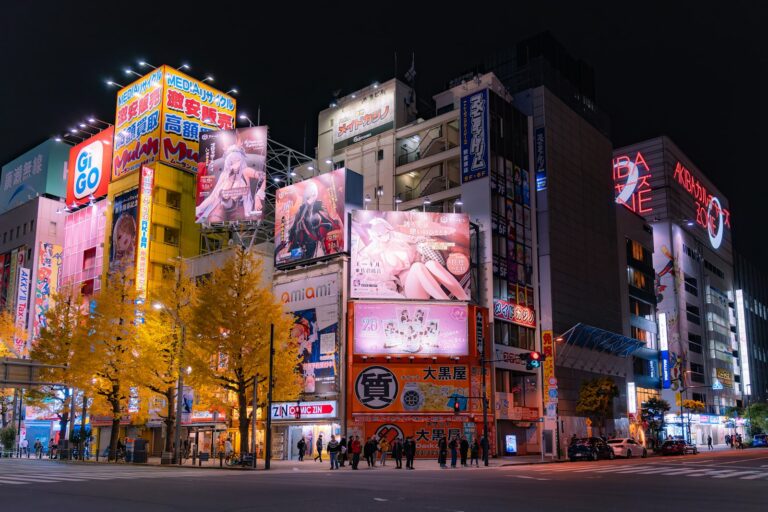
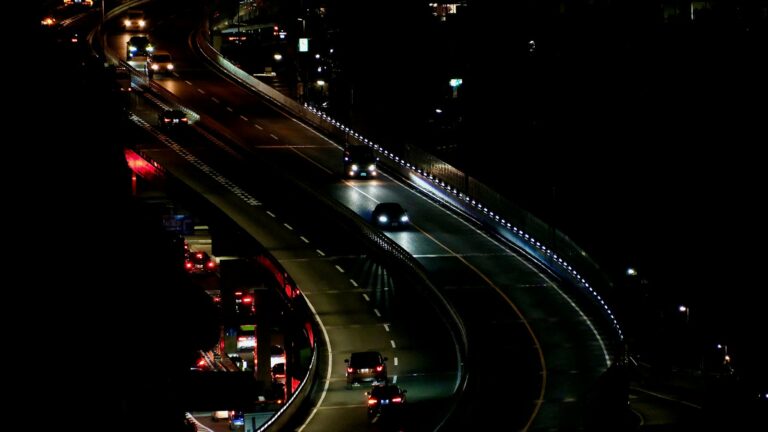
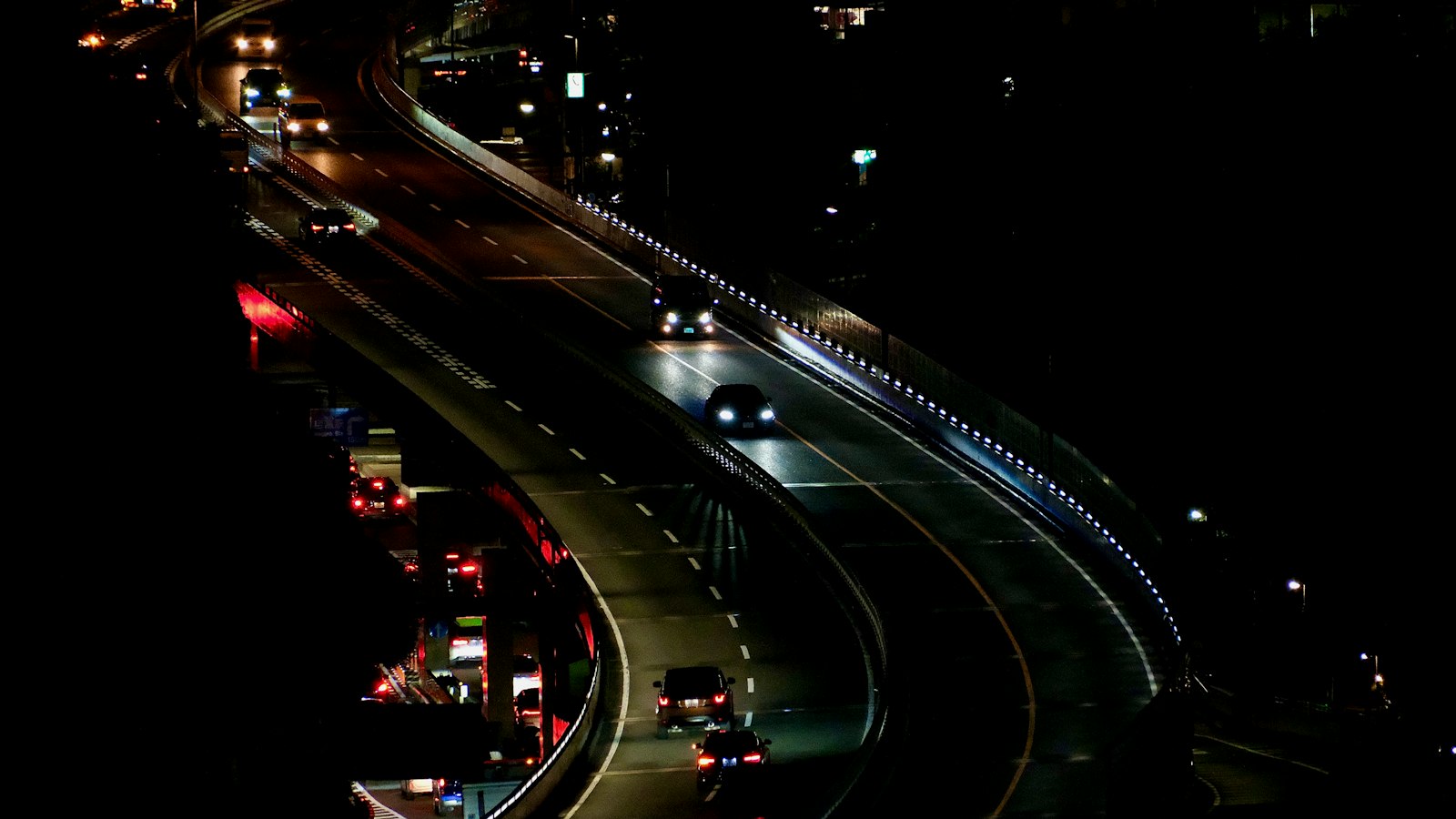
If you grew up on Initial D, Wangan Midnight or late-night racing games, a Tokyo night drive tour for JDM fans is probably near the top of your Japan list. The image is irresistible: an elevated expressway threading between glowing office towers, the bay bridges lit up below, and a parking area full of tuned Skylines, Supras and RX-7s at the end of the road.
The reality is still special — but it works differently from what many listings suggest. Meets are unofficial, police close the most famous spot without warning, and a surprising number of “JDM night tours” sold online sit in a legal grey zone or worse. This guide explains how the Shutoko and Daikoku PA actually work, what a tokyo night drive tour jdm experience realistically looks like in 2026, and how to choose one you won’t regret.
Contents
- What Is a Tokyo Night Drive Tour (JDM Edition)?
- Why the Shutoko at Night Is Legendary
- Daikoku PA: The Heart of Tokyo JDM Culture
- Other Spots on a Shutoko Night Drive
- Is a JDM Night Tour in Tokyo Legal? The Question Nobody Asks
- Self-Drive Option: What You Need
- How to Choose the Right Tokyo Night Drive Tour
- Car Meet Etiquette: How Not to Be “That Tourist”
- Make a Full Night of It
- FAQ: Tokyo Night Drive Tours for JDM Fans
- What do you do in Tokyo After 10?Join our Tokyo Nightlife Private Tour
- Want Tokyo After Dark Without the Guesswork?
- About the Author
What Is a Tokyo Night Drive Tour (JDM Edition)?
Broadly, a JDM night drive tour in Tokyo is a guided evening on the Shuto Expressway (the “Shutoko”), usually ending at one or more highway parking areas where car enthusiasts gather. Most products fall into three formats:
- Passenger tours — You ride in a Japanese sports car or a van while a driver takes you along the expressway and stops at a parking area. This is the most common format.
- Self-drive tours — You rent a JDM car and drive it yourself, often in a convoy behind a guide. You need a valid driving permit for Japan (see below).
- Car-spotting tours — The focus is less the drive and more the time spent walking around the parking area, photographing cars and chatting with owners.
The common thread is the night. The Shutoko after dark — skyline on both sides, sodium lights flickering past, tunnels and junctions stacked on top of each other — is the real star. The car meet is the bonus.
Why the Shutoko at Night Is Legendary
The Shuto Expressway is a toll network of elevated roads built over, between and sometimes through central Tokyo and Yokohama. Its tight curves, tunnels and long bayside stretches gave rise to two famous (and illegal) street-racing subcultures that inspired decades of manga and games:
- The “Wangan-zoku” — Drivers who chased top speed on the long, straight Bayshore Route (Wangan Line) along Tokyo Bay. According to LIVE JAPAN’s history of the scene, some exceeded 300 km/h on public roads.
- The “Roulette-zoku” — Drivers who raced laps of the C1 Inner Circular Route around central Tokyo.
Those days are over. Heavy enforcement, speed cameras and changing car culture pushed racing off public roads. What survived is the aesthetic and the community: owners who spend years building a car, then drive it on a Friday night to park it next to other people’s builds and talk shop.
That’s what a good Shutoko night drive gives you today — not racing, but the atmosphere, the cityscape and a living car culture you can see up close.
Daikoku PA: The Heart of Tokyo JDM Culture
Where Daikoku PA Actually Is
Despite being called a “Tokyo” spot, Daikoku Parking Area is in Yokohama. Wikipedia lists it as a rest area on the Daikoku Route of the Shuto Expressway in Tsurumi-ku, Yokohama, Kanagawa Prefecture. It sits inside a huge looping junction, which is part of why it photographs so well — ramps spiral around the lot on every side.
The PA was renovated and reopened on March 1, 2020. It’s a normal highway rest stop with parking for hundreds of cars, toilets, food counters and a 24-hour Lawson convenience store — which matters when you’re there at 11 p.m. and want a hot can of coffee.
Why You Can’t Just “Go” to Daikoku
This is the part most first-timers miss: Daikoku PA is only reachable from the expressway. There is no pedestrian entrance, no train station and no public bus. You arrive in a vehicle that entered the Shutoko, or you don’t arrive at all.
Walking in from the surrounding industrial area is trespassing, and Wikipedia notes that police have stepped up arrests and fines for people entering illegally, including tourists arriving by taxi or unlicensed tour services. It also reports that around ten such incidents are logged every month. Don’t be one of them.
The Police Closure Problem
Daikoku is a public rest area, not an event venue. When it fills up with enthusiasts and spectators — typically on Friday and Saturday nights — police can close the entrance with no advance notice. Every source we checked agrees on that, but none agrees on a precise time, because there isn’t an official one. Closures have been reported starting in the early evening and lasting into the small hours.
What that means in practice:
- No tour can guarantee entry. Honest operators say so up front and have a backup plan.
- Weekend nights are the most crowded and the most likely to close.
- Weeknights are quieter but less predictable — some nights are packed, others nearly empty.
If a listing promises “guaranteed Daikoku access every night,” treat that as a red flag rather than a selling point.
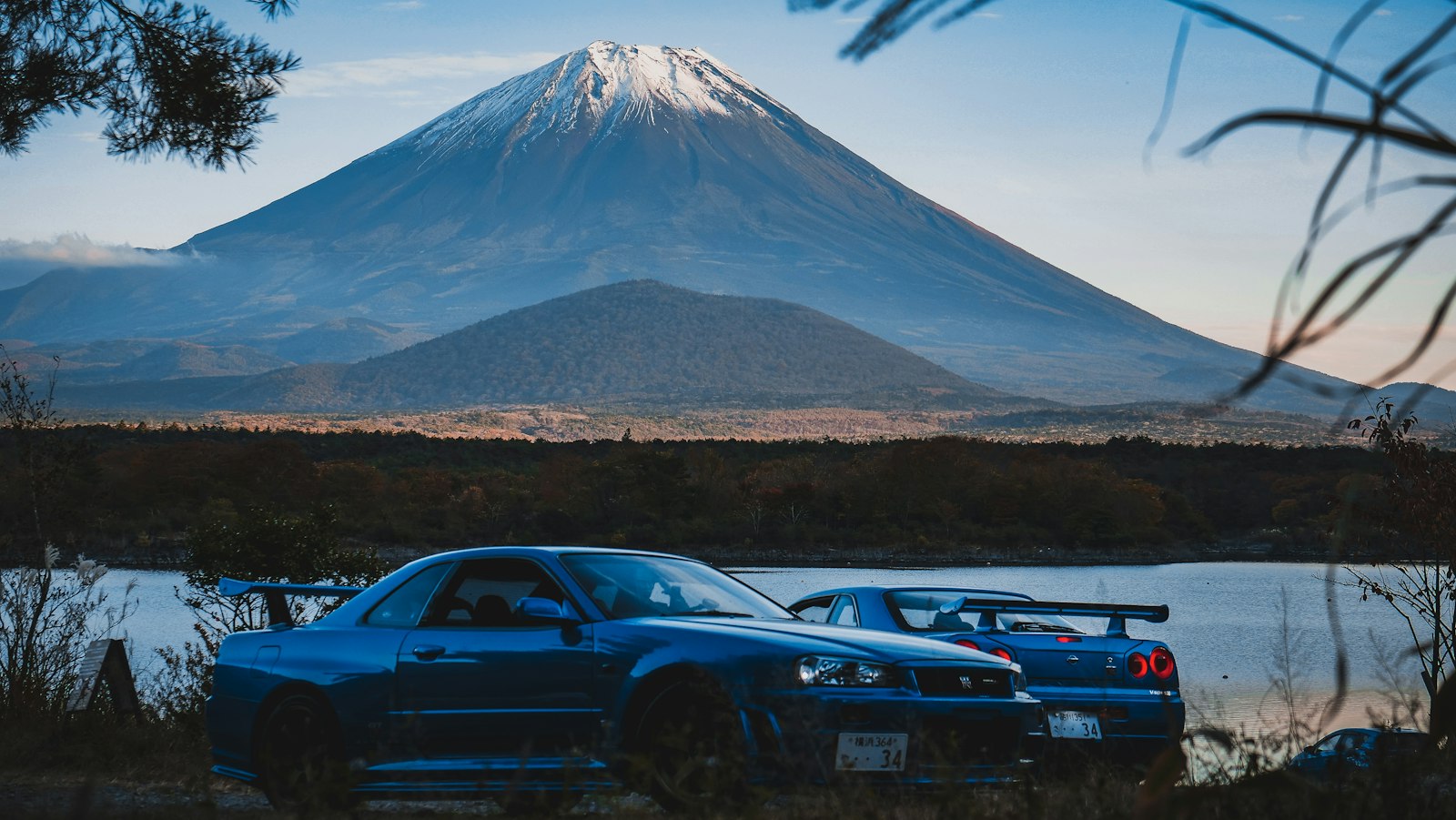
Other Spots on a Shutoko Night Drive
Because Daikoku closes so often, good tours plan alternative stops. The ones you’ll hear about most:
- Tatsumi No.1 PA — A parking area in Koto-ku on Shutoko Route 9 (Fukagawa Line), with high-rise night views behind the cars. It’s a known enthusiast hangout, but long stays, noise and hard acceleration caused enough problems that a view-blocking fence and speed bumps were added in 2020, plus speed tables at the exit in 2023. Expect a short, quiet stop, not a show.
- Umihotaru PA — A parking area built on an artificial island in the middle of Tokyo Bay on the Tokyo Wan Aqua-Line, operated by NEXCO East. Reaching it means driving through a long undersea tunnel and then out onto the water, which is a memorable night drive in itself. Facilities there have been under renovation in phases, so check NEXCO East notices before you go.
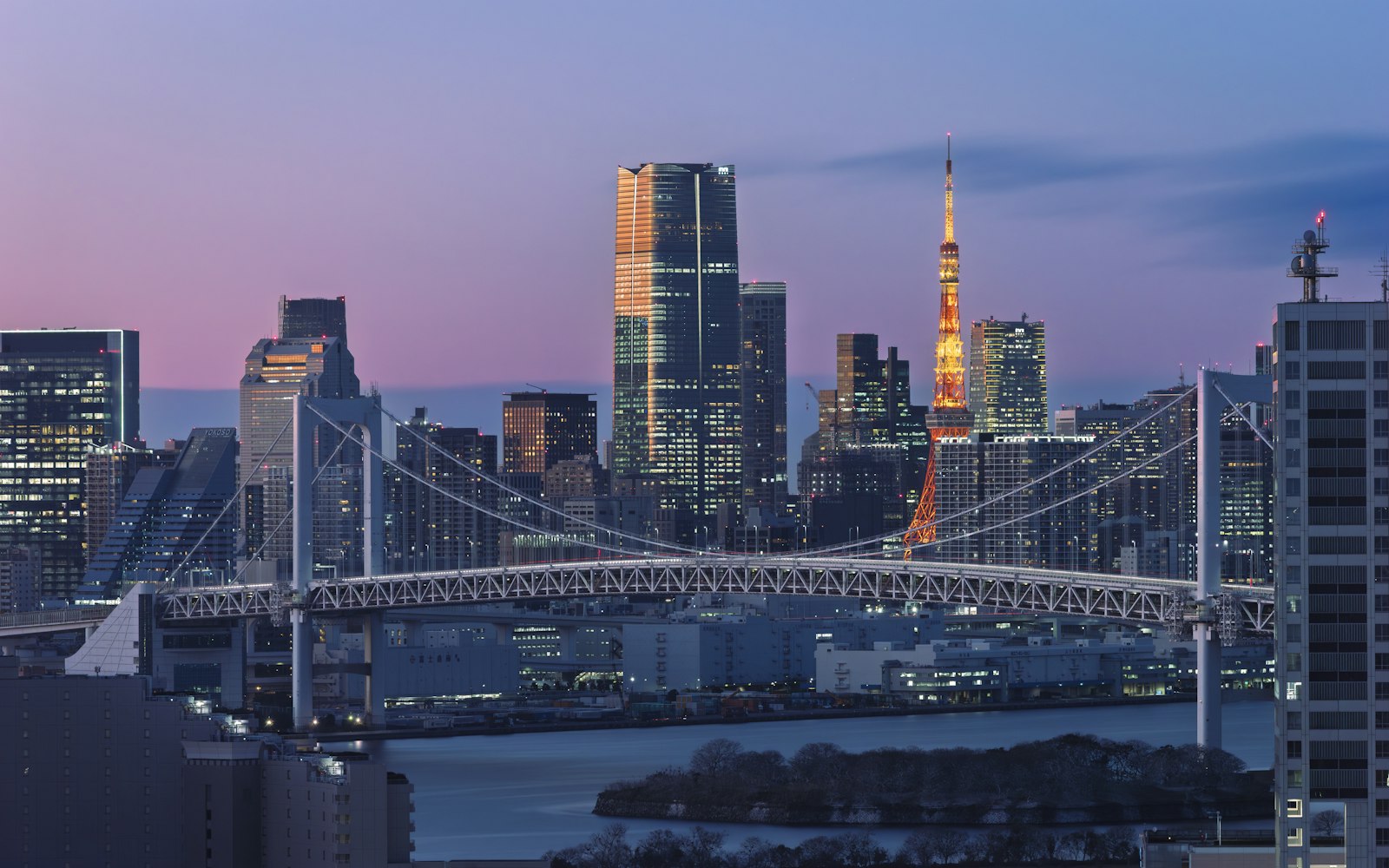
- The bridges themselves — Rainbow Bridge carries Shutoko Route 11 (Daiba Line) across to Odaiba on its upper deck, and the Yokohama Bay Bridge opened in 1989 as part of the Bayshore Route section toward Daikoku. Crossing either at night is often the most photogenic moment of the whole drive.
Combining two or three of these is what separates a well-designed Tokyo car culture tour from a single dash to Daikoku and back.
Is a JDM Night Tour in Tokyo Legal? The Question Nobody Asks
Here is the honest part that most listings skip. In Japan, running a paid passenger service requires a permit under the Road Transport Act, and paid rides in private cars are banned. Commercial vehicles carry green number plates; private and rental cars carry white ones. An unlicensed paid ride is known as a shiro-taku (“white taxi”), and operators face penalties of up to three years in prison or a ¥3 million fine.
The law targets the operator rather than the passenger, but passengers still carry the risk: you may not be covered by commercial accident insurance, and the tour can be stopped mid-evening. Japan’s limited rideshare scheme introduced in 2024 is run through licensed taxi companies and does not cover sightseeing tours.
Japanese travel portal LIVE JAPAN updated its Daikoku guide in September 2026 to say that the vast majority of “JDM Night Tours” listed on booking sites are highly likely to be illegal, and that it would no longer list them.
None of this means every tour is shady. It means you should ask before booking:
- Is the vehicle carrying me a green-plate (commercial) car? If you’re a passenger and a stranger is driving you for money in a white-plate private car, that’s the classic illegal “shiro-taku” setup.
- Who holds the license? A legitimate operator can name the licensed transport company or travel agency behind the tour.
- Does the driver hold a Type 2 (commercial) license, and what happens if Daikoku is closed? A real answer (“we go to X instead”) beats “it’s never closed.”
- What insurance covers me? If an unlicensed ride crashes, passengers may not be covered.
- Is any “drift” or “racing” promised? Street drifting and racing are illegal on public roads. A tour that advertises them is advertising a crime.
Looking for Adult Entertainment Services in Tokyo? Download this
I’ve spent over a decade exploring and studying Japan’s adult entertainment scene firsthand. If you’d like detailed insider information—including how to choose the right shop, what services are available, and tips for avoiding common mistakes—check out our exclusive E-book.
Self-Drive Option: What You Need
Driving yourself on the Shutoko is the most immersive option — and the most demanding.
- Driving permit: Visitors generally need an International Driving Permit issued under the 1949 Geneva Convention, or an official Japanese translation of their license for certain countries. Check the rules for your country on the Japan National Tourism Organization’s driving page before you book.
- Left-hand traffic: Japan drives on the left, and many JDM cars are right-hand drive manuals.
- ETC and tolls: The Shutoko is a toll road. Rental cars usually come with an ETC card reader; confirm that tolls are covered or how they’re billed.
- Complex junctions: Shutoko interchanges split fast, signage is dense and lanes merge from the right. Following a guide car makes a huge difference.
- Zero alcohol: Japan’s drink-driving limit is extremely strict, and passengers who knowingly ride with a drunk driver can also be penalized. Save the highball for after the car is returned.
If you’re not confident driving on the left at night in dense traffic, a passenger tour is the smarter choice.
How to Choose the Right Tokyo Night Drive Tour
Once you’ve cleared the legal questions above, compare tours on these points:
- Route: Does it actually cover the Shutoko and bay area, or is it a short hop to Daikoku? The best tokyo night drive tour jdm itineraries combine the city skyline, a bay bridge and at least one meet spot.
- Night of the week: Friday and Saturday have the most cars and the highest closure risk. Weeknights trade crowd size for a calmer, more reliable experience.
- Group size: Smaller groups mean more time talking to car owners and less waiting.
- Pickup and drop-off: Daikoku is in an industrial zone with no taxis inside the PA, so confirm you’ll be returned to a station or your hotel.
- Price transparency: Listings we checked in November 2026 ranged from roughly US$100 for shared rides to over US$400 for a private ride in a specific car. Make sure tolls, pickup and the backup plan are included in the quoted price.
Car Meet Etiquette: How Not to Be “That Tourist”
Daikoku’s meets survive on goodwill. A few rules keep you welcome:
- Ask before photographing people, and never touch a car without the owner’s permission.
- Don’t stand in driving lanes or block cars that are entering or leaving.
- No cheering for revving or burnouts. It’s exactly the behavior that triggers police closures.
- Keep your voice down and take your trash with you. Bins are limited; the convenience store is not a public dump.
- Leave when asked. If police start clearing the lot, go immediately.
A simple “sugoi” (amazing) and a thumbs-up go a long way with owners, many of whom are happy to pop the hood for a respectful fan.
Make a Full Night of It
A JDM night drive usually ends somewhere between 10 p.m. and midnight, which in Tokyo is barely halftime. If you’re staying central, consider pairing it with an earlier dinner or a late bar crawl:
- Not sure how you’ll get back from the bay area late at night? Our guide to getting around Tokyo at night covers last trains, taxis and night buses.
- If skyline views are what you love most about the drive, Odaiba’s night view spots give you the same bay panorama on foot.
- Car photographers will also enjoy our guide to Tokyo neon lights photography — the same night-shooting tricks work at Daikoku.
FAQ: Tokyo Night Drive Tours for JDM Fans
Can I visit Daikoku PA without a car? No. It’s only accessible from the Shuto Expressway. There’s no walking access, no train and no bus. Arriving on foot is trespassing.
What’s the best night for the Daikoku car meet? Friday and Saturday nights draw the most cars but are the most likely to be closed by police. Weeknights are quieter but more reliable. No night is guaranteed.
Is Daikoku PA in Tokyo? No — it’s in Tsurumi-ku, Yokohama, Kanagawa Prefecture, connected to Tokyo by the Shuto Expressway.
Are JDM night tours legal? Some are and some aren’t. Paid passenger transport requires a commercial license, and Japan’s travel media has warned that many listed tours are likely unlicensed. Ask about green plates and the licensed operator before booking.
Will I get to drive fast or drift? No legitimate tour offers racing or drifting on public roads. Expect legal-speed cruising with incredible views.
What do you do in Tokyo After 10?
Join our Tokyo Nightlife Private Tour
You deserve better than overpriced bars and missed opportunities. We’re here for you.
Want Tokyo After Dark Without the Guesswork?
A JDM night drive is one of the most memorable ways to see Tokyo’s skyline, but it’s only one slice of the city after dark. Once the engine’s off, the real night is just getting started — tiny bars, late-night ramen counters and neighborhoods that never appear on Google Maps.
If you’d rather spend the rest of your night with someone who actually lives here, our Tokyo After 10 nightlife private tour takes you through the bars and backstreets locals use, at your pace. For more ideas on what’s worth doing late, see our full list of things to do in Tokyo at night.