Photo by <a href="https://unsplash.com/@xvyn?utm_source=tokyodeepnightlife&utm_medium=referral">Q</a> on <a href="https://unsplash.com/?utm_source=tokyodeepnightlife&utm_medium=referral">Unsplash</a>
Most advice about Kabukicho bottakuri boils down to one line: don’t follow touts. That’s correct, and it’s still the most important rule. But it only covers the first two minutes of a bad night. What about the card in your wallet, the menu you didn’t photograph, the drink that arrived without anyone ordering it, and the moment a ¥4,000 promise becomes a six-figure bill?
This guide is the whole playbook, arranged in the order a night actually unfolds. It covers what Japanese law already requires of bars, what to set up before you leave your hotel, what to check at the table, and exactly who to call if the bill is wrong. None of it requires speaking Japanese, and none of it means skipping one of the best nightlife districts in Asia.
Contents
- The Short Version: 7 Kabukicho Bottakuri Countermeasures
- Why Kabukicho Bottakuri Is Still a Problem in 2026
- What the Law Already Does for You
- Countermeasure 1: Set Up Your Money Before You Go Out
- Countermeasure 2: Choose Every Door Yourself
- Countermeasure 3: Read the Price List Before You Order
- Countermeasure 4: Keep a Running Tab as You Go
- Countermeasure 5: If the Bill Is Wrong, Follow This Order
- Countermeasure 6: After the Night, Report and Dispute
- Kabukicho Bottakuri Countermeasures at a Glance
- Kabukicho Bottakuri FAQ
- What do you do in Tokyo After 10?Join our Tokyo Nightlife Private Tour
- Skip the Guesswork: See Kabukicho With Someone Who Knows the Doors
- About the Author
The Short Version: 7 Kabukicho Bottakuri Countermeasures
If you only have a minute, these are the countermeasures that matter:
- Never follow anyone who approaches you on the street. Every bar you enter should be one you chose yourself.
- Go out with a cash budget and leave your main credit card at the hotel.
- Save three numbers in your phone before dark: 110, the Japan Visitor Hotline, and Shinjuku Police Station.
- Ask to see the price list before you order. In Kabukicho, bars are legally required to display it.
- Photograph the menu and keep count of your orders, including any drinks for staff.
- If the bill is wrong, don’t swipe your card. Offer the amount you were quoted and call 110.
- Report it afterwards, even if you paid. Card disputes and police cases both start with a report.
The rest of this article explains why each one works and how to do it without ruining your night.
Why Kabukicho Bottakuri Is Still a Problem in 2026
Bottakuri (ぼったくり) means a grossly inflated bill. The pattern hasn’t changed much in years: a street tout, known in Japanese as a kyakuhiki (客引き), promises a cheap drinking deal and walks you to a venue. There, the bill ends up many times what you were told.
What has changed is the scale. Between January and June 2026, Shinjuku Police received 91 consultations from people who followed touts and were then charged outrageous amounts at bars and restaurants. Total losses came to roughly ¥99 million, and police say many of the victims were overseas visitors (Japan Today).
In July 2026, police arrested a man for touting in Kabukicho 1-chome under Tokyo’s anti-nuisance ordinance. Investigators believe he belongs to a group of touts who work the area at night.
Two takeaways. First, the average loss per case is huge, so Kabukicho bottakuri isn’t a problem of “a few overpriced beers.” Second, the scam depends almost entirely on a tout steering the victim, which is why the countermeasures below work so well.
For the full breakdown of the numbers, see our report on Kabukicho scams and the 2026 police data.
What the Law Already Does for You
Plenty of travelers assume that once they’re inside a bottakuri bar, they have no rights. That’s not true. Knowing the rules gives you something concrete to point to when the bill arrives.
Tokyo’s anti-bottakuri ordinance
Since 2000, Tokyo has had an ordinance aimed squarely at rip-off venues. It’s formally the ordinance regulating improper solicitation and fee collection in the nightlife trades (official text, Tokyo Metropolitan Government). It applies in areas the Public Safety Commission designates, and Shinjuku, which includes Kabukicho, is one of them.
It covers, among other businesses, bars where staff sit with and entertain customers. Three of its rules matter most to you:
- Price display. The venue must display its prices clearly inside the premises, where customers can easily see them. It must also display any cancellation fees or penalty charges.
- No misleading solicitation. Nobody may lead you to believe the price is far lower than it really is.
- No abusive collection. Staff may not collect payment using rough or violent language, or by holding onto your belongings to pressure you.
The 2025 amendment to the Amusement Business Act
On June 28, 2025, stronger national rules took effect for hospitality venues where staff entertain customers, such as host clubs and hostess clubs (National Police Agency enforcement notice, in Japanese). These venues may no longer:
- Explain their charges in a way that is false or misleading
- Serve food or drinks before the customer has ordered them, then pressure the customer into paying
- Intimidate customers into ordering or paying
- Exploit a customer’s romantic feelings toward staff to push spending
The same amendment sharply raised penalties for running this kind of business without a license. The maximum is now up to five years in prison or a ¥10 million fine for individuals.
Why this matters at 1 a.m.
You don’t need to cite article numbers. But “you didn’t show me a price” and “I never ordered that” aren’t just complaints. They describe conduct the rules specifically ban. That’s why, in a Kabukicho bottakuri dispute, calm and specific objections backed by a call to the police work better than simply refusing to pay.
Countermeasure 1: Set Up Your Money Before You Go Out
The most effective Kabukicho bottakuri defense happens in your hotel room, not on the street. A bill can only reach what you are able to pay on the spot.
- Carry a cash budget. Bring what you’re willing to spend tonight, plus a little extra for a taxi. Cash in your pocket is a hard ceiling.
- Leave your main credit card behind. If you need a card, bring one with a low limit.
- Turn on instant spending notifications in your card app, and learn where the “freeze card” button is. You want to be able to lock it in seconds if it’s ever out of your sight.
- Save these numbers now:
- 110: police emergency, free, 24 hours
- 050-3816-2787: the Japan Visitor Hotline run by the Japan National Tourism Organization, open 24/7 in English, Chinese and Korean for emergencies
- 03-3346-0110: Shinjuku Police Station’s main line
- Charge your phone. A dead phone takes away your ability to record, translate and call.
Countermeasure 2: Choose Every Door Yourself
Shinjuku Police’s own advice to visitors is simple: never follow a tout, and check a venue’s online reviews before you choose it. The Tokyo Metropolitan Police Department adds another warning. Don’t let someone you met on a dating app lead you to a bar they “know” (MPD crime prevention tips, English). It’s the same trick in a different wrapper.
In practice:
- Pick your bars before you go out. Read the lowest-rated reviews first. Venues that run this scam tend to collect reviews that all tell the same story.
- Treat any approach as a no. It doesn’t matter how friendly, funny or well-dressed the person is. Staff promoting a legitimate bar stay near their own entrance; they don’t follow you down the block.
- Don’t stop to be polite. Keep walking. Police note that engaging with touts only encourages them, and some will follow people for several blocks.
- Be suspicious of any “deposit.” The MPD specifically warns about requests for advance payments or deposits in nightlife districts.
If you want to recognize the pitch the moment it starts, our field guide on how not to get scammed in Kabukicho walks through the tout’s script stage by stage. For bars that are easy to choose on your own, Golden Gai sits on Kabukicho’s eastern edge, with its tiny bars packed into a few narrow lanes.
Countermeasure 3: Read the Price List Before You Order
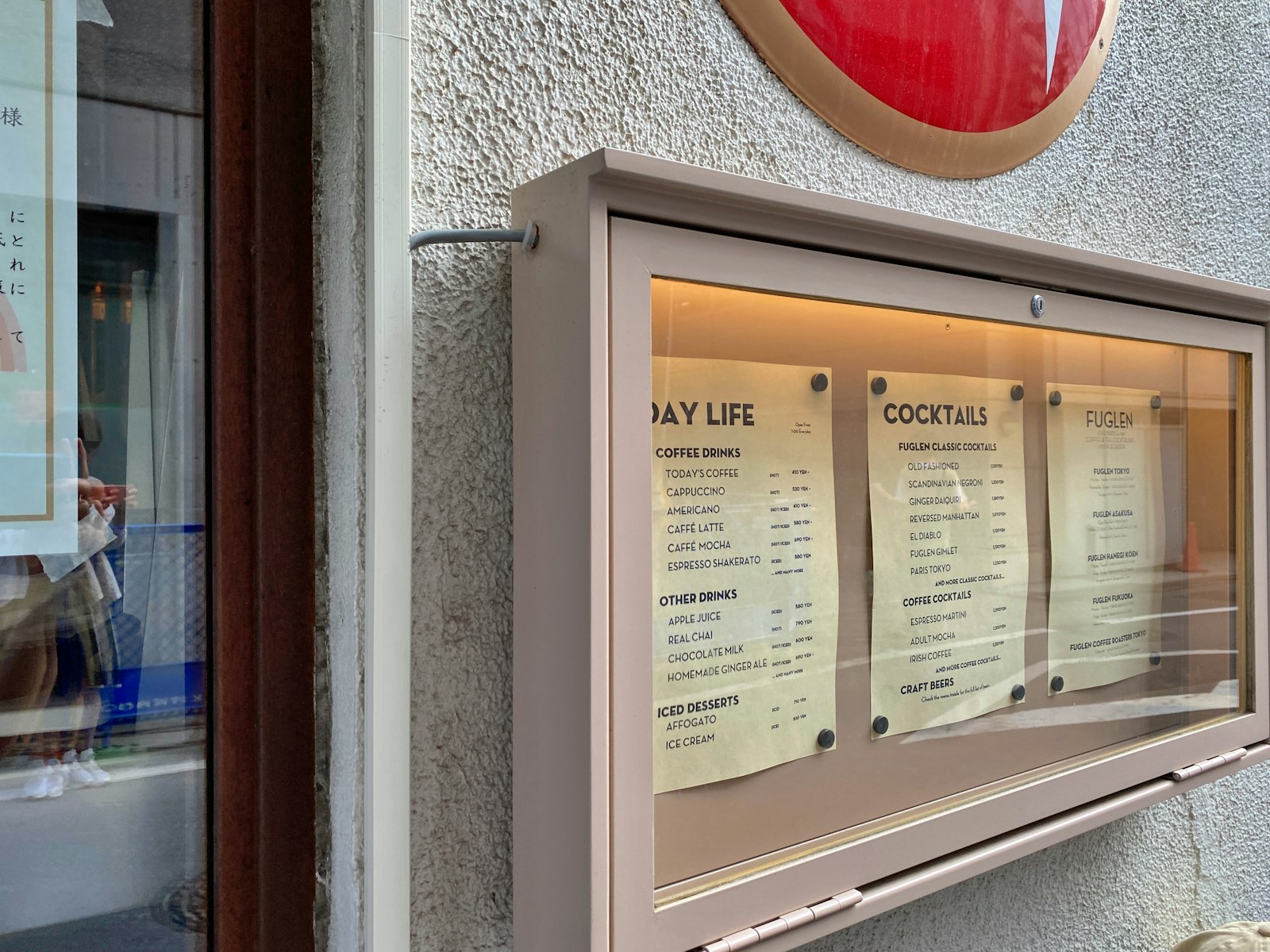
Once you’re seated, you have one clean moment to prevent a bottakuri bill: before your first order. Because Tokyo’s ordinance requires a posted price list, asking to see it is a completely normal request.
Before you order anything, confirm:
- The seat or table charge. How much is it, and is it per person?
- The time unit. Is the price per hour, per set, or flat for the night?
- The service charge and tax. Is a percentage added on top of everything?
- Drinks for staff. If someone sits with you, what does a drink for them cost, and does it get added automatically?
- All-you-can-drink details. Shinjuku Police specifically advise checking which drinks are included. Some deals cover only a few basic drinks, and everything else is billed separately.
If a venue can’t or won’t show you prices, get up and leave before you order anything.
Hospitality venues also have legitimate charges that surprise first-timers, so it’s worth knowing what normal looks like. Our explainer on the girls bar price system in Japan shows where legitimate charges come from.
Looking for Adult Entertainment Services in Tokyo? Download this
I’ve spent over a decade exploring and studying Japan’s adult entertainment scene firsthand. If you’d like detailed insider information—including how to choose the right shop, what services are available, and tips for avoiding common mistakes—check out our exclusive E-book.
Countermeasure 4: Keep a Running Tab as You Go
A Kabukicho bottakuri bill works because by midnight, nobody remembers exactly what happened at 10:15. Take that uncertainty away.
- Photograph the price list as soon as you see it. If there isn’t one, photograph the wall where one should be.
- Keep a tally in your notes app. Record every drink you order and every drink you agree to buy for staff. It takes five seconds.
- Refuse anything you didn’t order, right away. Say “I didn’t order this” and push it back. Serving first and billing later is exactly the tactic the 2025 amendment targets.
- Watch your drink. The MPD warns about cases where victims lose consciousness and their credit cards are then used for large charges. Only drink what you saw poured, and don’t return to a glass you left unattended.
- Don’t hand over your card to “open a tab.” Pay per round in cash if you can, or settle at the end.
Countermeasure 5: If the Bill Is Wrong, Follow This Order
Suppose you did everything right and the bill still comes back at ten times what you expected. Here is the order that tends to work.
- Stay calm and stay seated. Don’t shout, and never get physical. Losing your temper gives the venue a story to tell the police.
- Don’t pay the full amount, and don’t swipe your card. Once a card payment goes through, you’re no longer arguing about a bill. You’re trying to reverse a charge from overseas.
- Ask for an itemized bill. Compare it against your photo and your tally.
- Offer what you were quoted. “I was told ¥4,000. Here is ¥4,000.” A reasonable payment plus a refusal of the rest is a stronger position than refusing everything.
- Say you’re calling the police, then call 110. Say it calmly, as a plan rather than a threat. Legitimate venues don’t mind. Shinjuku Police tell victims to call 110, or to go to the nearest koban (police box) if they can’t use a phone.
- Record if you can. Audio from your pocket and photos of the bill are useful later.
- Use the Japan Visitor Hotline if language is a barrier. It’s open 24/7 in English for emergencies.
If staff hold onto your bag, your phone or your passport to make you pay, say so clearly when you call 110. Pressuring someone by keeping their belongings is conduct Tokyo’s ordinance specifically bans.
Countermeasure 6: After the Night, Report and Dispute
Many victims of Kabukicho bottakuri pay, feel embarrassed, and fly home without telling anyone. That’s the outcome the venues count on.
- Report it to Shinjuku Police (03-3346-0110) even if you already paid. Those 91 consultations in the first half of 2026 were only counted because people reported them.
- Call your card issuer immediately if a card was used. Freeze the card and ask about disputing the charge. Having a police report and your photos makes the conversation much easier.
- Keep everything together: receipts, screenshots, your order tally, recordings and the venue’s name or location.
- Write down the timeline while it’s fresh, including where you were approached and what the tout promised.
Kabukicho Bottakuri Countermeasures at a Glance
| When | Countermeasure | Why it works |
|---|---|---|
| Before going out | Cash budget, low-limit card, notifications on | Caps how much can be taken |
| Before going out | Save 110, 050-3816-2787, 03-3346-0110 | No searching for help in a panic |
| On the street | Only enter bars you chose yourself | The scam depends on a tout steering you |
| At the table | Ask for the posted price list first | Tokyo’s ordinance requires one |
| At the table | Check what all-you-can-drink includes | Shinjuku Police’s own specific advice |
| During the night | Photograph the menu, tally orders, refuse unordered items | Takes away the venue’s ambiguity |
| At the bill | Don’t swipe; offer the quoted price; call 110 | Keeps your money where you can still control it |
| Afterwards | Police report, card dispute, keep evidence | Makes recovery and enforcement possible |
Kabukicho Bottakuri FAQ
Do bars in Kabukicho have to show their prices? Yes. Tokyo’s anti-bottakuri ordinance requires venues in designated areas, including Shinjuku, to display their prices clearly inside the premises. If you can’t find a price list and staff won’t show one, leave before ordering.
Is it safer to pay by card than cash? Not in a bottakuri bar. Cash puts a hard limit on what you can lose, while a card left in the wrong hands has almost no limit. Carry a set cash budget and only bring a low-limit card as backup.
Will the police actually come for a bar bill? Shinjuku Police specifically tell people who have been overcharged to call 110 or go to the nearest koban. Calling is the right move, especially if you feel pressured or can’t leave.
Is Kabukicho too dangerous to visit? No. Huge crowds pass through it every night without trouble. The financial risk is concentrated in venues people were led to by strangers. Choose your own doors and use the countermeasures above, and Kabukicho is a fantastic night out.
What do you do in Tokyo After 10?
Join our Tokyo Nightlife Private Tour
You deserve better than overpriced bars and missed opportunities. We’re here for you.
Skip the Guesswork: See Kabukicho With Someone Who Knows the Doors
Every countermeasure in this guide works, but running all of them on your second night of jet lag is a lot to handle. The easiest way around it is to go out with someone who already knows which bars to choose, what things cost, and what normal looks like.
That’s what our local guides do on the Tokyo After 10 nightlife private tour. The bars are chosen in advance and prices are clear before you sit down. And touts rarely bother someone who’s obviously out with a local.
Come to Kabukicho with a plan, and you’ll remember the neon and the bars, not the bill.
Sources: Japan Today: Kabukicho tout arrest and Shinjuku Police figures · Tokyo Metropolitan Government: Tokyo anti-bottakuri ordinance (Japanese) · National Police Agency: 2025 Amusement Business Act amendment notice (Japanese) · Tokyo Metropolitan Police Department: Crime prevention tips in entertainment districts · Shinjuku Police Station: Enjoying Shinjuku’s nightlife safely (Japanese) · JNTO: Japan Visitor Hotline