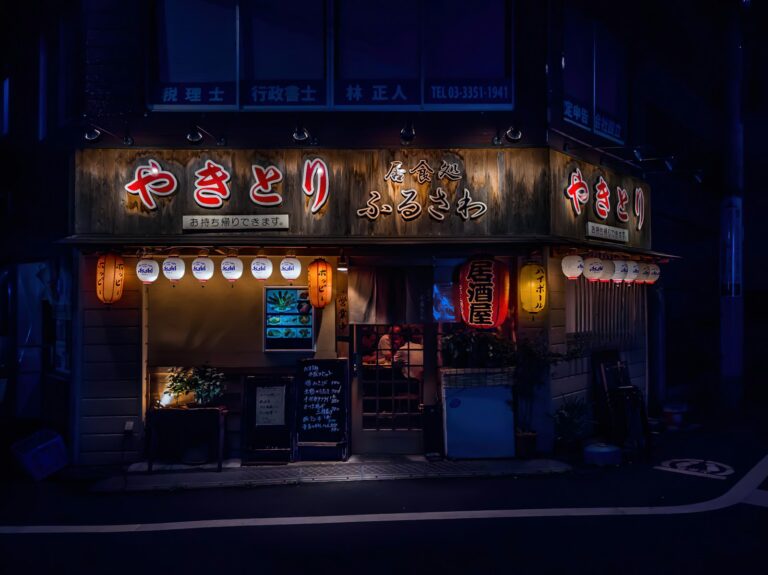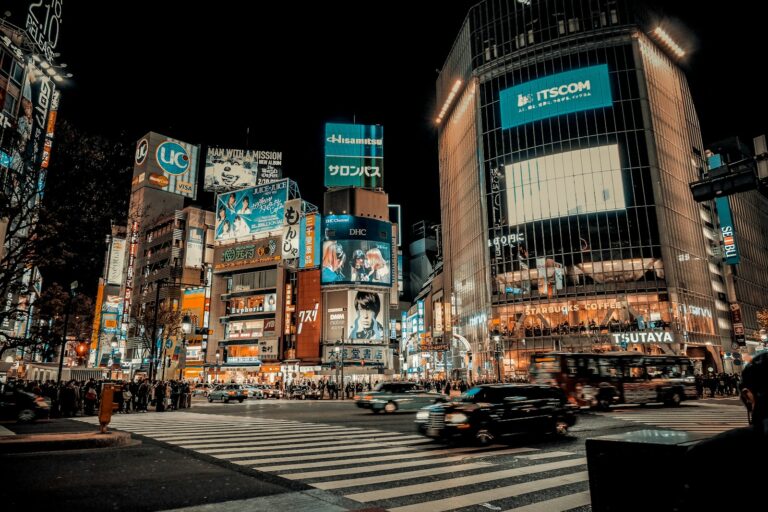
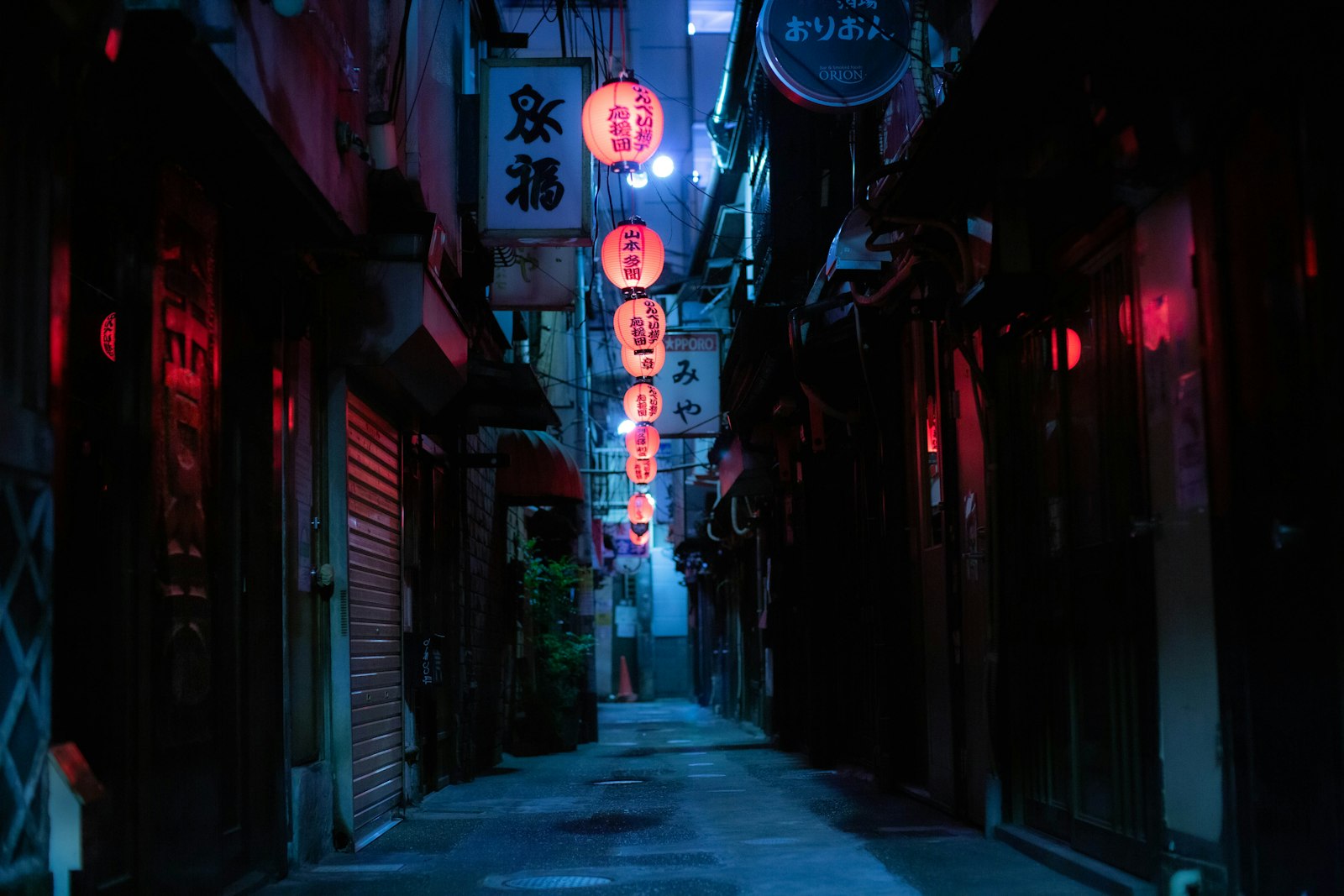
Photo by <a href="https://unsplash.com/@ozgut?utm_source=tokyodeepnightlife&utm_medium=referral">Ozgu Ozden</a> on <a href="https://unsplash.com/?utm_source=tokyodeepnightlife&utm_medium=referral">Unsplash</a>
There’s a moment most visitors have in Tokyo where they walk past a doorway, see fifteen people standing shoulder to shoulder at a counter with beer and skewers and no chairs anywhere, and think: that looks like the best time in the building — and I have absolutely no idea how to go in.
That doorway is a tachinomi. The word is blunt even by Japanese standards — tachi (standing) plus nomi (drinking) — and a tachinomi Tokyo standing bar is exactly what it sounds like. No seats, no reservation, often no English menu, and a bill at the end that will make you wonder what you’ve been paying for drinks everywhere else. They’re the cheapest, fastest, most sociable way to drink in this city, and they are almost entirely uncovered by the guidebooks.
This guide covers what you actually need: what a night costs, how to order without freezing up, the etiquette that separates a welcome guest from an awkward one, and which Tokyo neighbourhoods to walk when you want to find these places on your own.
Contents
- What Is a Tachinomi, Exactly?
- What a Night at a Tachinomi Tokyo Standing Bar Actually Costs
- How to Order at a Tachinomi: A Walkthrough
- Tachinomi Tokyo Standing Bar Etiquette: The Rules Nobody Writes Down
- What to Order: Drinks and Food
- Where to Find a Tachinomi Tokyo Standing Bar: The Best Neighbourhoods
- Standing Bars Worth Knowing by Name
- Tachinomi Tokyo Standing Bar Hopping: Building a Route
- Are Tachinomi Good for Solo Travellers and Women?
- Mistakes Visitors Make
- Frequently Asked Questions
- What do you do in Tokyo After 10?Join our Tokyo Nightlife Private Tour
- The Version of This Night That’s Hard to Do Alone
- About the Author
What Is a Tachinomi, Exactly?
A tachinomi (also called a tachinomiya) is a bar built around a standing counter. That single design choice changes everything downstream.
Because nobody sits, the venue can be tiny — some fit ten people total. Because it’s tiny, rent is low. Because rent is low, the drinks are cheap. And because turnover is fast, the owner doesn’t need you to spend two hours and ¥8,000 to make the night work. A tachinomi expects you for thirty minutes, two drinks, a couple of plates, and then your spot goes to someone else.
The format started as working-class infrastructure: sake shops that let customers drink on the premises, and post-war stands clustered around train stations where salarymen decompressed on the way home. That heritage is still visible in places like Akabane and Ueno. But over the past decade the category has broadened enormously — there are now standing bars specialising in single-estate sake, in natural wine, in sushi cut to order, in offal cooked by people who have been doing nothing else for forty years.
What connects all of them is the counter, the speed, and a social contract that’s genuinely different from a sit-down izakaya. If you’ve only ever done the tourist circuit of Golden Gai’s tiny bars, a tachinomi is the other half of Tokyo’s drinking culture — less cinematic, considerably more everyday, and far easier on your budget.
Tachinomi vs Izakaya: The Practical Difference
| Tachinomi | Izakaya | |
|---|---|---|
| Seating | Standing counter | Tables and seats |
| Typical stay | 20–40 minutes | 90 minutes to 3 hours |
| Cover charge (otoshi) | Usually none | Commonly ¥300–700 per person |
| Reservations | Almost never | Often expected |
| Ordering | Drink by drink, dish by dish | Rounds for the whole table |
| Best for | Solo drinkers, bar hopping | Groups settling in for the night |
That “no cover charge” line is the one that surprises people. A pure standing-only tachinomi generally doesn’t hit you with otoshi — the small compulsory appetiser that functions as a seating fee across most of Japanese bar culture. Venues that have added a few chairs at the back often do charge it, typically in the ¥300–700 range. It’s a small amount, but knowing the rule means you’re never confused by a line item on the bill.
What a Night at a Tachinomi Tokyo Standing Bar Actually Costs
Here is the number that changes people’s plans: a full evening at a tachinomi Tokyo standing bar — three or four drinks plus food — usually runs ¥1,500 to ¥3,000 per person.
Not per drink. For the night.
To put that in context, a single cocktail in a Roppongi lounge can cost more than an entire tachinomi evening. Individual dishes at a standing bar are frequently under ¥500, and draft beer or a highball often lands somewhere between ¥300 and ¥600. Sake by the glass at a specialist standing bar might be ¥550–650 for something a sit-down restaurant would pour at triple the price.
A few budget notes worth internalising:
- Bring cash. Most traditional tachinomi are cash-only. Some now take PayPay or cards, but assume they don’t unless you see a sticker on the door. Carry ¥3,000–5,000 in small bills and coins.
- Many keep a coin tray on the counter. You may be expected to pay as you go, dropping cash after each round, rather than settling a tab at the end. Watch what the person next to you does.
- Budget per bar, not per night. If you’re hopping between three places, ¥1,500 each is a comfortable, generous ceiling.
- The cheap end is genuinely cheap. Neighbourhood standing bars in residential districts run lower than anything in central Tokyo, and the difference is real.
How to Order at a Tachinomi: A Walkthrough
The anxiety about a tachinomi Tokyo standing bar is almost never about the drinking. It’s about the first ninety seconds. So here’s exactly how those go.
1. Look before you enter. Glance at how full it is. If there’s no gap at the counter, walk on — there’s another one down the street. Nobody is offended by this.
2. Step in and find a spot at the counter. There’s no host, no seating, no waiting to be acknowledged. You claim a space. A slight nod to the staff is enough of a greeting.
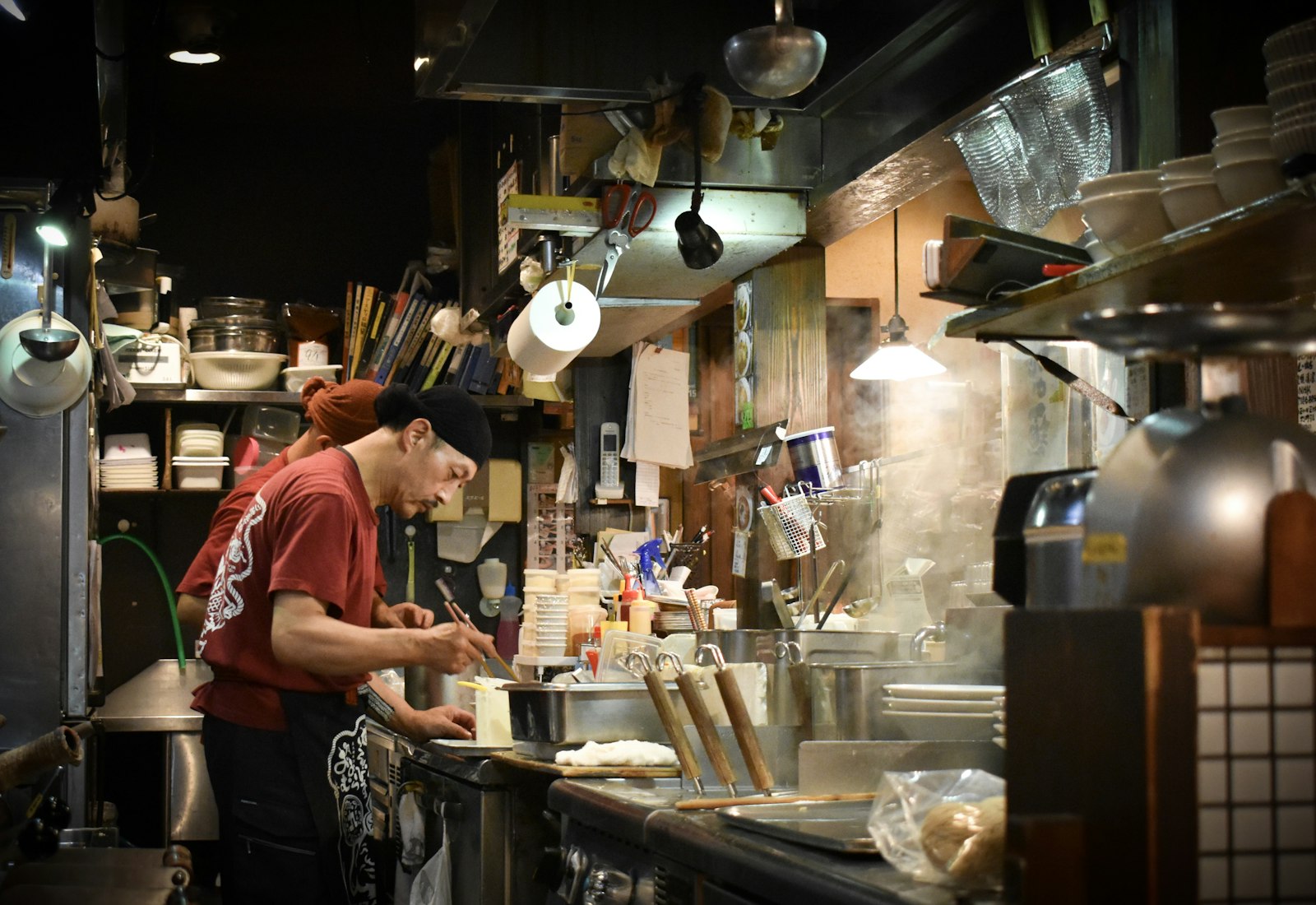
3. Order a drink immediately. This is the single most important move. Don’t stand there studying the menu — order first, study second. Nama biiru (draft beer), haibōru (highball), or lemon sour all work anywhere and are understood instantly. At sake-focused bars, saying osusume (“your recommendation”) is a legitimate and well-received order.
4. Then order food, one or two dishes at a time. Small orders that arrive in a minute or two are the rhythm of the place. Ordering six dishes at once marks you as someone who hasn’t done this before. If there’s a paper menu on the wall and you can’t read it, pointing is completely normal and nobody minds.
5. Speak up. Some tachinomi expect you to call your order across the counter rather than wait to be approached. A clear sumimasen gets attention. Being too quiet in a loud room is a more common visitor problem than being too loud.
6. Pay and go. Either settle at the end or pay per round, depending on the shop. A gochisōsama deshita on the way out is the standard thank-you and it always lands well.
Tachinomi Tokyo Standing Bar Etiquette: The Rules Nobody Writes Down
None of this is complicated, but breaking it is the difference between being a welcome stranger and a nuisance.
Keep it to 20–40 minutes. This is the big one. Counter space is the owner’s entire business — every metre of it has to turn over several times a night. Two drinks and a snack, then move on. Staying two hours on one beer is the fastest way to feel the temperature in the room change.
Keep ordering the longer you stay. If you’re having a great conversation and want to stay, the fix is simple: order another round. Occupying space without spending is the actual offence, not the time itself.
Pass your empty dishes back across the counter. Don’t let them pile up in front of you. It’s a small thing that staff notice immediately.
Don’t photograph other customers. Shoot the food, the shopfront, the lanterns — never the people. Many of the regulars are on their way home from work and did not sign up to appear in your feed.
Mind your volume and your elbows. You are standing very close to strangers. A group of four talking at group-of-four volume can dominate a room built for twelve.
Don’t tip. Tipping isn’t part of the culture and will create confusion, not gratitude.
Talk to people — carefully. Tachinomi are one of the few Japanese drinking formats where conversation between strangers is genuinely normal. Regulars will sometimes start it. Read the room: a nod and a smile first, and take a short reply as a signal that someone wants a quiet drink.
Pour for others, not yourself. If you end up sharing a bottle with anyone, topping up their glass before your own is standard practice and it’s noticed.
What to Order: Drinks and Food
Drinks. Draft beer is the default first order across the whole country. Highballs (whisky and soda) are ubiquitous and cheap. Hoppy — a near-beer mixer poured over shochu — is a classic old-school standing bar order and one of the most distinctly local things you can drink. Sake bars will pour by the glass, often from a lineup that rotates daily. Shochu specialists may have a hundred or more bottles, and the staff will absolutely pick one for you if you ask.
Food. The menu is built around things that come out fast and cost little: yakitori and other grilled skewers, motsu nikomi (slow-simmered offal stew, a genuine standing bar signature), potato salad, cold tofu, pickles, fried ham cutlet, sashimi at the seafood-leaning places. Some specialists go much further — there are standing sushi counters in Tokyo where a chef cuts to order in front of you at prices that would be impossible sitting down.
If you’re vegetarian, be aware that standing bar menus lean heavily on meat and fish, and dashi (fish stock) is in most simmered dishes. Tofu, edamame, pickles and grilled vegetable skewers are your reliable options.
Where to Find a Tachinomi Tokyo Standing Bar: The Best Neighbourhoods
Finding these places is less about a saved map pin and more about walking the right streets. Six areas reward that walk.
Shinjuku Sanchome
A few hundred metres east of the chaos around Shinjuku Station, Sanchome’s back streets hold one of the best concentrations of standing bars in Tokyo — including offal specialists and serious sake counters in basements you’d never find by accident. It pairs naturally with the rest of the area; our Shinjuku nightlife guide maps how the district’s different drinking zones connect.
Shimbashi
The salaryman heartland, and the most authentic tachinomi district in central Tokyo. The area around the SL Square exit is thick with standing bars, and from about 6pm on a weekday the pavement fills with people in suits drinking outside. Nobody comes here to be seen. That’s the appeal.
Yurakucho Gado-shita
Gado-shita means “under the girder,” and Yurakucho’s is the famous one: bars and grills packed into the arches beneath roughly 700 metres of elevated train track, with the Yamanote Line rumbling directly overhead while you eat. Note that the sit-down izakaya here frequently do charge a ¥300–500 cover, unlike pure standing bars. It’s one of the most atmospheric places to drink in the entire city.
Ueno and Ameyoko
Ameyoko is a market street running under the tracks between Ueno and Okachimachi, and by late afternoon it turns into a drinking district. Seafood stalls double as bars, and long-running institutions here open unusually early — one Ameyoko veteran that’s been trading since 1950 opens at 10am and serves horse-meat stew as its signature. This is where Tokyo’s afternoon drinking culture is most visible.
Akabane
Twelve minutes north of Shinjuku on the Saikyo Line, and one of the genuinely great drinking towns in Tokyo. The Ichibangai shopping street is dense with standing bars, and Akabane’s defining trait is how early it starts — one long-standing bar there opens at 9:30 in the morning. Almost no international visitors make the trip, which is precisely why it’s worth making.
Ebisu and Shibuya
The modern end of the spectrum. Ebisu has a well-known standing bar stocking seventy-plus varieties of one cup sake — the single-serve glass cups you also see in convenience stores — including some served frozen to a slush. Shibuya’s Sakuragaoka side has standing bars that regularly appear on Japanese best-of lists. Expect a younger, more mixed crowd and a slightly higher spend than Shimbashi.
Looking for Adult Entertainment Services in Tokyo? Download this
I’ve spent over a decade exploring and studying Japan’s adult entertainment scene firsthand. If you’d like detailed insider information—including how to choose the right shop, what services are available, and tips for avoiding common mistakes—check out our exclusive E-book.
Standing Bars Worth Knowing by Name
A caution before the list: Tokyo’s small bars move, renovate and change hours constantly, and several well-known tachinomi have relocated in the past few years. Treat these as anchors for a neighbourhood walk, and check current details before you make a special trip.
Nihon Saisei Sakaba — Shinjuku 3-chome. An offal specialist and a genuine local landmark, known for simmered beef tongue and motsu nikomi. Opens in the late afternoon. If you want to understand why Tokyoites take offal seriously, start here.
Nihonshu Stand Moto — Shinjuku Sanchome. A sake-focused standing bar with a small C-shaped counter that fits barely more than ten people, pouring a lineup that changes daily, with staff who will pair sake to what you’re eating. It has relocated within the neighbourhood, so confirm the current address.
Tachinomi Ryoma — Shimbashi, a few minutes from the SL Square. Over a hundred shochu varieties and a food menu where most dishes sit under ¥500. Ask the staff to choose a bottle for you; that’s the point of the place.
Buri — Ebisu. Seventy-plus kinds of one cup sake lining the walls, including the frozen ones, plus yakitori and izakaya snacks. Livelier and more contemporary than the old-school standing bars, and popular with a young after-work crowd.
Tachinomi Fujiya Honten — Shibuya, Sakuragaokacho. Relocated after the redevelopment of its original site and now noticeably more approachable for visitors. It has been recognised on Tabelog’s tachinomi list, which is about as strong a local endorsement as this category gets.
Motsuyaki Daitoryo — Ueno, Ameyoko. Trading since 1950, open from mid-morning, and famous for horse-meat stew. Crowds spill onto the street from early afternoon. Not standing-only, but unmissable if you’re drinking in Ameyoko.
Tachinomi Tokyo Standing Bar Hopping: Building a Route
The Japanese term is hashigo-zake — “ladder drinking” — and tachinomi are built for it. One drink and a plate per stop, then walk. Three or four bars in an evening is a normal, comfortable pace and still lands you well under ¥5,000.
A route that works:
- Start early, around 5pm. Standing bars open earlier than most Tokyo nightlife, and the first hour is the calmest and the easiest to order in.
- Anchor in one district. Shimbashi or Shinjuku Sanchome give you enough density that you’re never more than three minutes’ walk from the next option.
- One drink, one or two dishes, move on. Resist settling in. The variety is the entire experience.
- Finish somewhere with a seat. After three standing stops your legs will have opinions. A late izakaya or a small bar is the right closer — the tight alleys of Omoide Yokocho work perfectly for this if you’re ending in Shinjuku.
- Watch the last train. Tokyo’s network mostly stops between midnight and 1am, and a taxi home will cost more than your entire night of drinking.
Are Tachinomi Good for Solo Travellers and Women?
Yes to both, and more so than most other formats.
For solo drinkers, a tachinomi Tokyo standing bar is the friendliest room in the city. There’s no awkward table for one, no minimum spend, and standing at a counter next to strangers is the default state rather than an exception. Conversations start easily — often in fragments of two languages and a lot of gesturing, which is half the fun.
For women, standing bars are generally comfortable and unremarkable to walk into, alone or otherwise. Mixed crowds are the norm. The genuine caveats are practical: these places are small and can get very crowded, and the older stations-and-suits bars skew heavily male in the after-work rush. Going earlier in the evening or choosing the more contemporary standing bars in Ebisu, Shibuya or Sanchome sidesteps that entirely.
One thing worth being clear about: tachinomi are not part of Tokyo’s touting scene. Nobody stands outside them pulling in tourists, and there’s no upselling mechanism. If someone approaches you on the street offering to take you to a bar, that is a completely different kind of venue — our guide to Tokyo nightlife scams and how to stay safe covers what to watch for. A real standing bar just has an open door and people already drinking behind it.
Mistakes Visitors Make
- Treating it like a destination bar. A tachinomi Tokyo standing bar is a stop, not a night. Plan for three of them.
- Arriving at 8pm on a Friday. Peak crush, no counter space, no chance of a conversation. Go at 5pm or after 9:30.
- Bringing a group of six. Two is ideal, four is the practical ceiling. Larger groups can’t physically fit at most counters.
- Waiting to be served. Nobody is coming to greet you. Step up, claim a space, order.
- Only carrying a card. The best places are frequently the ones that have never taken one.
- Skipping the food. The cooking at a good standing bar is the reason locals go. Drinking without ordering anything to eat misses most of the point.
Frequently Asked Questions
Do I need to speak Japanese? No. Pointing works, drink names are loanwords you already know, and sumimasen (excuse me), osusume (recommendation) and gochisōsama (thanks for the meal) will carry you through an entire evening.
Do tachinomi have English menus? Rarely, especially at the traditional ones. Translation apps handle photographed menus well enough, and pointing at what the person beside you is eating is a time-honoured and very effective method.
What time do standing bars open? Many open around 5pm. Others — particularly in Ueno, Ameyoko and Akabane — open in the morning or early afternoon, which makes afternoon drinking genuinely easy in Tokyo.
Can I really only stay 30 minutes? Nobody will time you. But the format assumes turnover, and the honest rule is that the longer you stay, the more you should be ordering. Stay two hours if you’re spending like it.
Is it rude to go in alone? The opposite. Solo customers are the standing bar’s core clientele.
How do I find one if I’m just walking? Look for the word 立ち飲み on a sign, a counter visible from the street, red lanterns, and people standing with drinks. Station-adjacent back streets and the space under elevated train tracks are the highest-density hunting grounds.
What do you do in Tokyo After 10?
Join our Tokyo Nightlife Private Tour
You deserve better than overpriced bars and missed opportunities. We’re here for you.
The Version of This Night That’s Hard to Do Alone
Everything above is genuinely doable on your own, and plenty of people have a great night doing exactly that. But there’s a gap that’s honest to name: the best tachinomi in Tokyo are unmarked, Japanese-language, cash-only rooms where the difference between a good night and a mediocre one is knowing which door on which street, and being able to talk to the person standing next to you.
That’s the part that doesn’t come from a list. It comes from someone who drinks in these places, knows which owner is happy to see visitors and which counter is packed at 7pm, and can turn the guy next to you at the bar from a stranger into the reason you remember the night.
If that’s the version you want, our Tokyo After 10 nightlife tour runs exactly that route with a local guide — standing bars included, translation included, and no time spent standing on a corner wondering whether the place behind the sliding door is for you.
For broader background on the format and its revival across Japan, the Japan National Tourism Organization’s guide to tachinomi is a good companion read.
Either way, do this at least once. A tachinomi Tokyo standing bar is the cheapest ticket you’ll ever buy into how this city actually unwinds — one counter, one drink, thirty minutes, and then the street again.