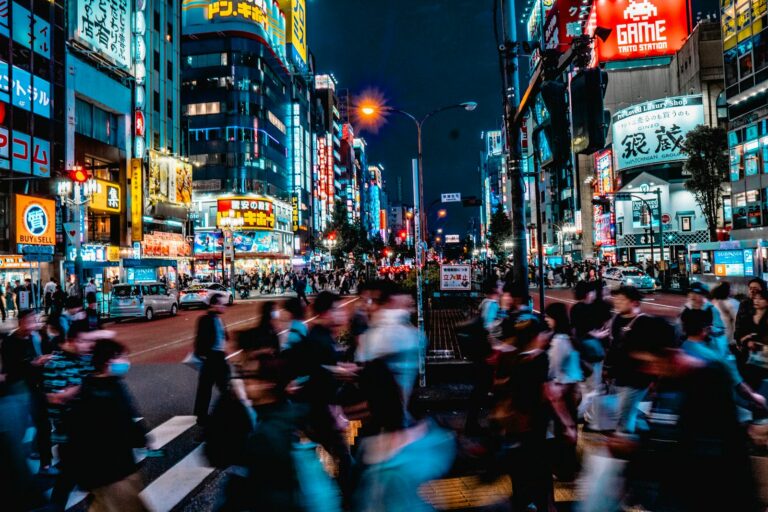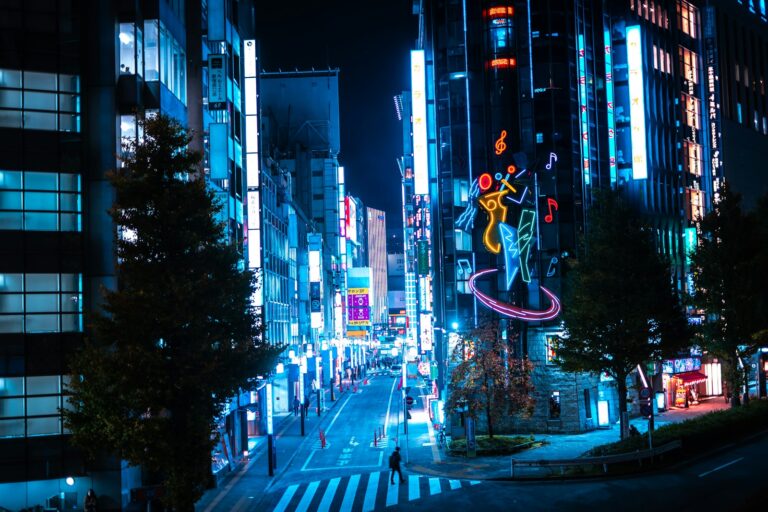
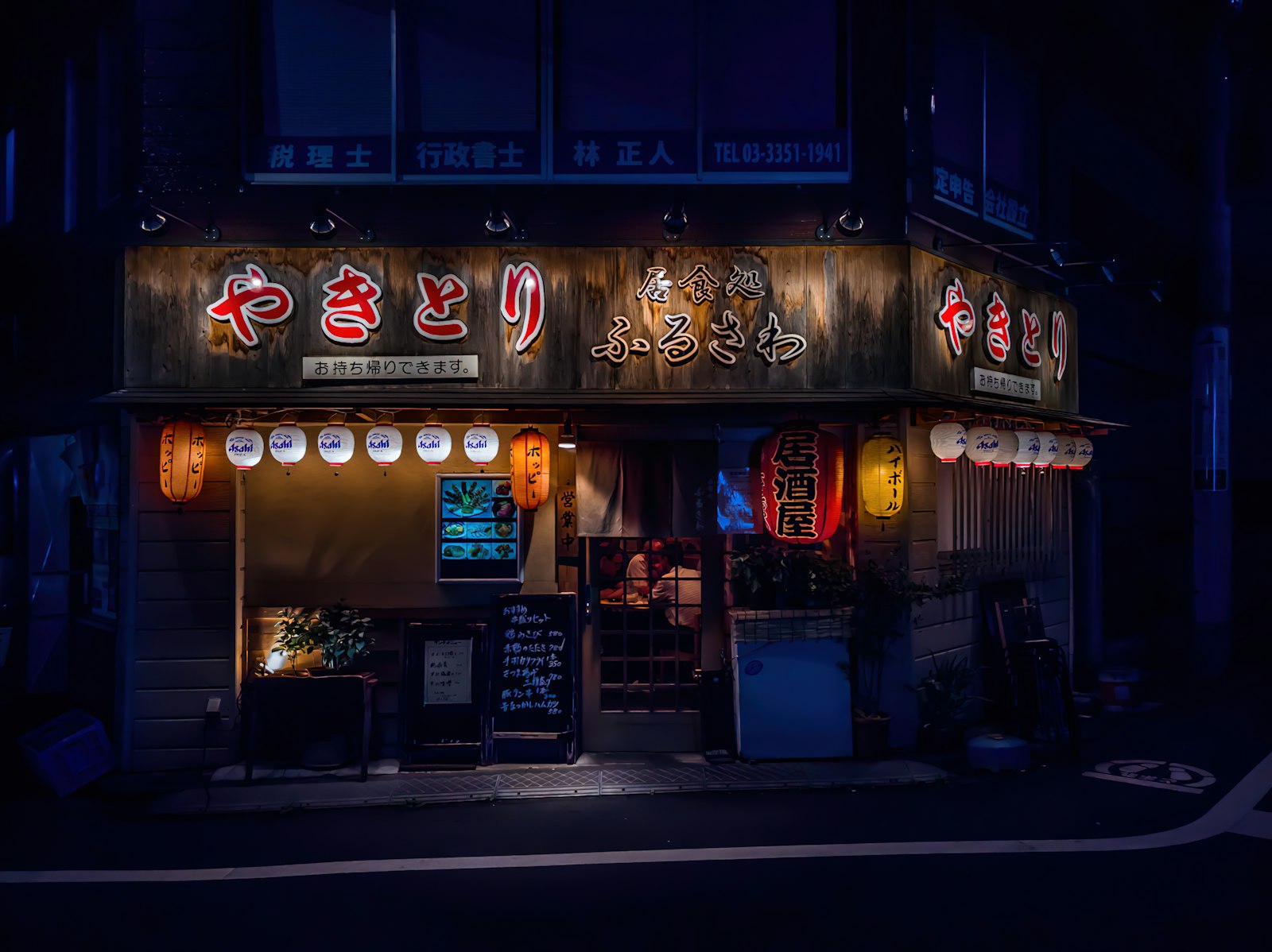
Photo by <a href="https://unsplash.com/@raph_lopes?utm_source=tokyodeepnightlife&utm_medium=referral">Raphael Lopes</a> on <a href="https://unsplash.com/?utm_source=tokyodeepnightlife&utm_medium=referral">Unsplash</a>
The cheapest good night out in Tokyo costs about as much as a coffee and a pastry back home. This tachinomi guide for foreigners exists because standing bars are the single best value in Japanese nightlife — and because the door of a tachinomi is one of the most intimidating doors in the city if nobody has told you how it works. No host, no menu in English, no seats, a room full of people who clearly know each other, and a sliding door you have to open yourself.
Here’s the thing worth knowing before you read another word: nobody inside cares that you’re a foreigner. They care whether you’re taking up more counter space than you need. Get that one thing right and the rest of the night takes care of itself.
Contents
- What Is a Tachinomi, Exactly?
- The ¥1,000 Rule: Understanding Senbero
- How to Walk Into a Tachinomi: The Step-by-Step
- Tachinomi Etiquette: The Unwritten Rules
- What to Order (and How to Say It)
- Where to Find Tachinomi in Tokyo
- A Realistic ¥1,000 Night, Stop by Stop
- Mistakes Foreigners Make (Easily Avoided)
- Tachinomi Guide for Foreigners: Quick Reference
- Frequently Asked Questions
- What do you do in Tokyo After 10?Join our Tokyo Nightlife Private Tour
- Doing This With Someone Who Already Knows the Room
- About the Author
What Is a Tachinomi, Exactly?
Tachinomi (立ち飲み) breaks down to tachi (standing) and nomi (drinking). A tachinomiya is a bar with a chest-high counter, no stools, and a menu of small plates designed to be eaten with one hand. You stand, you drink, you eat two or three things, you pay, you leave. Total time: 30 to 60 minutes. Then you walk 90 seconds and do it again somewhere else.
The format is older than it looks. Tokyo’s oldest sake shop, Toshimaya in Kanda, has been in business since 1596, and the practice of letting customers drink on the spot at a sake shop — later called kakuuchi — is generally credited as the ancestor of the modern standing bar. For most of the 20th century, tachinomi were unglamorous places near train stations where construction workers and salarymen had a quick one before the last train. In the last two decades they’ve become genuinely fashionable, and the current generation of standing bars includes serious sake specialists, natural wine counters, and offal grills with a following.
What hasn’t changed is the economics. No seats means faster turnover, which means the bar makes its money on volume rather than on your bill. That’s why ¥1,000 actually buys you something here — and almost nowhere else in Tokyo nightlife.
Tachinomi vs. izakaya vs. bar: the practical difference
| Tachinomi | Izakaya | Bar / snack bar | |
|---|---|---|---|
| Seating | Standing counter | Tables and counter | Counter, seated |
| Typical stay | 30–60 min | 2–3 hours | 1–2 hours |
| Reservations | Rarely possible | Usually expected on weekends | Varies |
| Cover charge (otoshi) | Often none | Almost always | Often, sometimes high |
| Realistic spend | ¥1,000–2,500 | ¥3,000–5,000 | ¥3,000+ |
| Solo-friendly | Extremely | Somewhat | Depends |
If you are traveling alone, the tachinomi is the friendliest room in Tokyo. Standing shoulder to shoulder makes conversation between strangers normal in a way that a table for one never does.
The ¥1,000 Rule: Understanding Senbero
There’s a word for what you’re trying to do. Senbero (せんべろ) is a compound of sen (one thousand) and berobero, slang for pleasantly wrecked — “drunk for a thousand yen.” It’s not a marketing gimmick invented for tourists; it’s a genuine subculture with its own blogs, its own guidebooks, and its own devotees who rank neighborhoods by how far ¥1,000 travels.
Some bars sell an explicit senbero set: typically two or three drinks plus a snack, at a fixed price. Others just have prices low enough that you can build your own. Either way, the math at a typical standing bar looks roughly like this (approximate — always check the board, prices move):
- **Draft beer (nama)**: ¥400–600
- Highball or chuhai: ¥350–500
- **Cup sake or a glass of *nihonshu***: ¥300–600
- **Skewers (kushi), one piece**: ¥150–300
- Small plates (potato salad, pickles, tofu): ¥200–450
So ¥1,000 realistically gets you two drinks and a snack, or one drink and three skewers. That is a complete, satisfying stop. It is not a whole night — but three stops at ¥1,000 each is a whole night, and it’s a far better night than one ¥3,000 sit-down.
A word of honesty: the ¥1,000 figure is a floor, not a promise. Order a premium sake or a second round of skewers and you’re at ¥2,000 fast. Nobody will stop you. The discipline is yours.
How to Walk Into a Tachinomi: The Step-by-Step
This is the part most tachinomi guides for foreigners skip. Here is the whole sequence, from the street to the door.
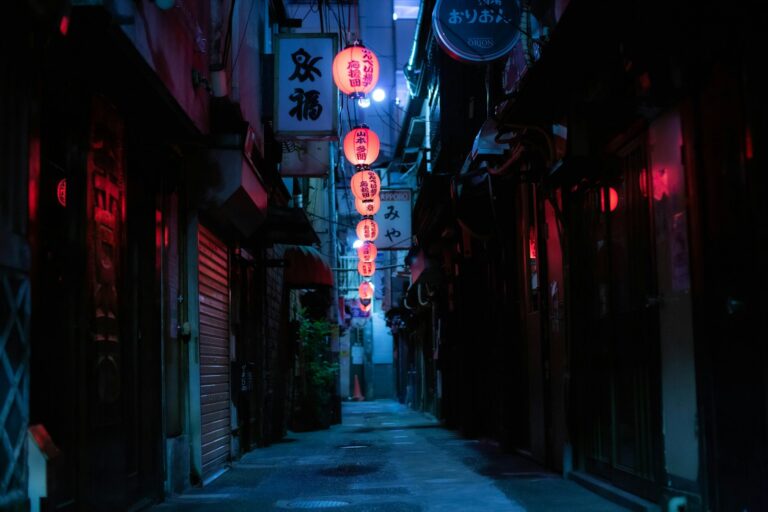
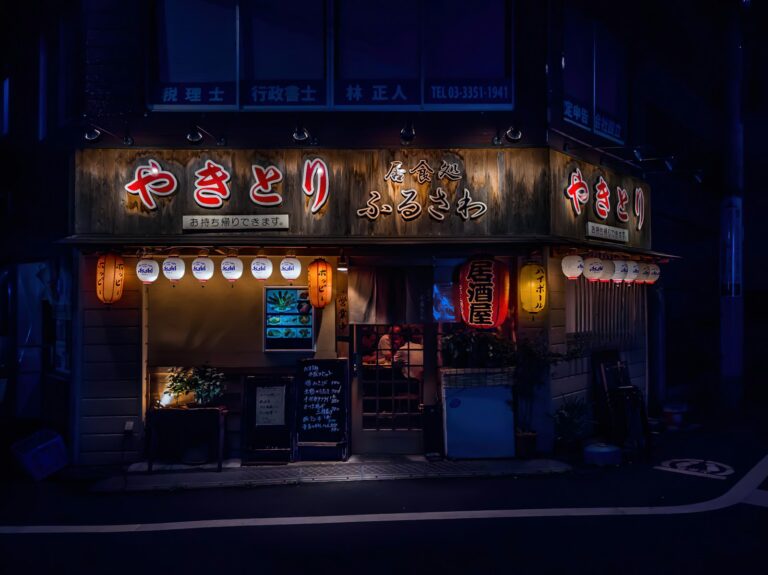
1. Read the outside. Look for red lanterns (akachochin), a curtain (noren) over the door, handwritten prices on paper taped to the window, and — the tell — people visible standing at a counter. If prices are posted outside and they’re low, that’s a good sign. If there’s no price information anywhere and a man outside is inviting you in, walk on. (More on that below.)
2. Check for space before you open the door. A tachinomi with no elbow room isn’t going to squeeze you in. Glance through the window. If it’s packed three deep, the next one is 30 seconds away.
3. Open the door and say hello. A clear “Konbanwa” (good evening) as you step in. That’s it. That’s the whole entry ritual. You’ll usually get a chorus of “Irasshaimase!” back.
4. Hold up fingers for your party size. Say “Hitori desu” (one person) or “Futari desu” (two), or just hold up the number. Staff will point you to a spot, or wave you toward wherever there’s a gap.
5. Claim exactly as much counter as you need. Bag on the hook under the counter or between your feet — not on the counter, not on a neighbor’s space. Coat off and folded. Phone away. Standing bars run on square centimeters.
6. Order your first drink immediately. Don’t study the menu first. The house expects a drink in your hand within about a minute. “Toriaezu nama” — “a draft to start with” — is what half the room says, and it is the single most useful phrase in this article.
7. Then look at the food. Now you have a drink, you have a spot, and you have time. Read the board, point at things, ask what’s good.
8. Pay and go. Either you pay per round as it comes, or you settle at the end — the bar will make it obvious which. Say “Okaikei onegaishimasu” (check, please) or cross your index fingers into an X.
Tachinomi Etiquette: The Unwritten Rules
None of these are posted on a wall, which is exactly why a tachinomi guide for foreigners is worth reading before you go. All of them are real.
Stay compact. The number one thing that annoys regulars isn’t your accent or your camera — it’s a person who spreads out. Elbows in, bag off the counter, don’t turn your back into someone else’s shoulder.
Don’t camp. A tachinomi seat is a shared resource. After two or three drinks, settle up and free the space. Locals think of standing bars as a circuit, not a destination.
Return your empties. When you finish a plate, slide it back toward the staff side of the counter. Small gesture, immediately noticed.
Keep the volume down. Tachinomi are lively, not loud. A boisterous group of six is the fastest way to make a small room resent you.
Come in twos or threes, not sixes. Most standing bars hold 10 to 20 people. A large group takes over the room and makes it impossible for the bar to serve its regulars. If you’re a big group, split up and meet at the next stop.
Don’t tip. Not expected, and pressing money on staff creates awkwardness. Say “Gochisousama deshita” (“thank you for the meal”) on the way out instead — it lands better than cash ever would.
Bring cash. Many tachinomi are family businesses that never installed card terminals. QR payment (PayPay) is increasingly common, but assume cash and carry a few ¥1,000 notes. There’s an ATM in every convenience store.
Watch the room for 30 seconds. Every bar has its own micro-rules — order at the counter vs. at your spot, self-serve water vs. asked-for. Thirty seconds of observation answers all of it.
No photos of other customers. The room, the food, your own drink: fine. Faces: ask, or don’t.
What to Order (and How to Say It)
Menus are usually handwritten, in Japanese, and sometimes hung on the wall as strips of paper. Pointing works. So do these:
| What you want | Say this | Notes |
|---|---|---|
| Draft beer to start | Toriaezu nama | The default opening move |
| One draft beer | Nama, hitotsu kudasai | Add futatsu for two |
| Sake | Nihonshu kudasai | Ask “osusume wa?” for a recommendation |
| Highball | Haiboru kudasai | Whisky and soda; very common |
| Lemon sour | Remon sawaa kudasai | Light, refreshing, cheap |
| What do you recommend? | Osusume wa nan desu ka? | Opens the door to the good stuff |
| This one, please (pointing) | Kore kudasai | Works everywhere |
| The check, please | Okaikei onegaishimasu | Or make an X with your fingers |
| Thank you (leaving) | Gochisousama deshita | Always say it |
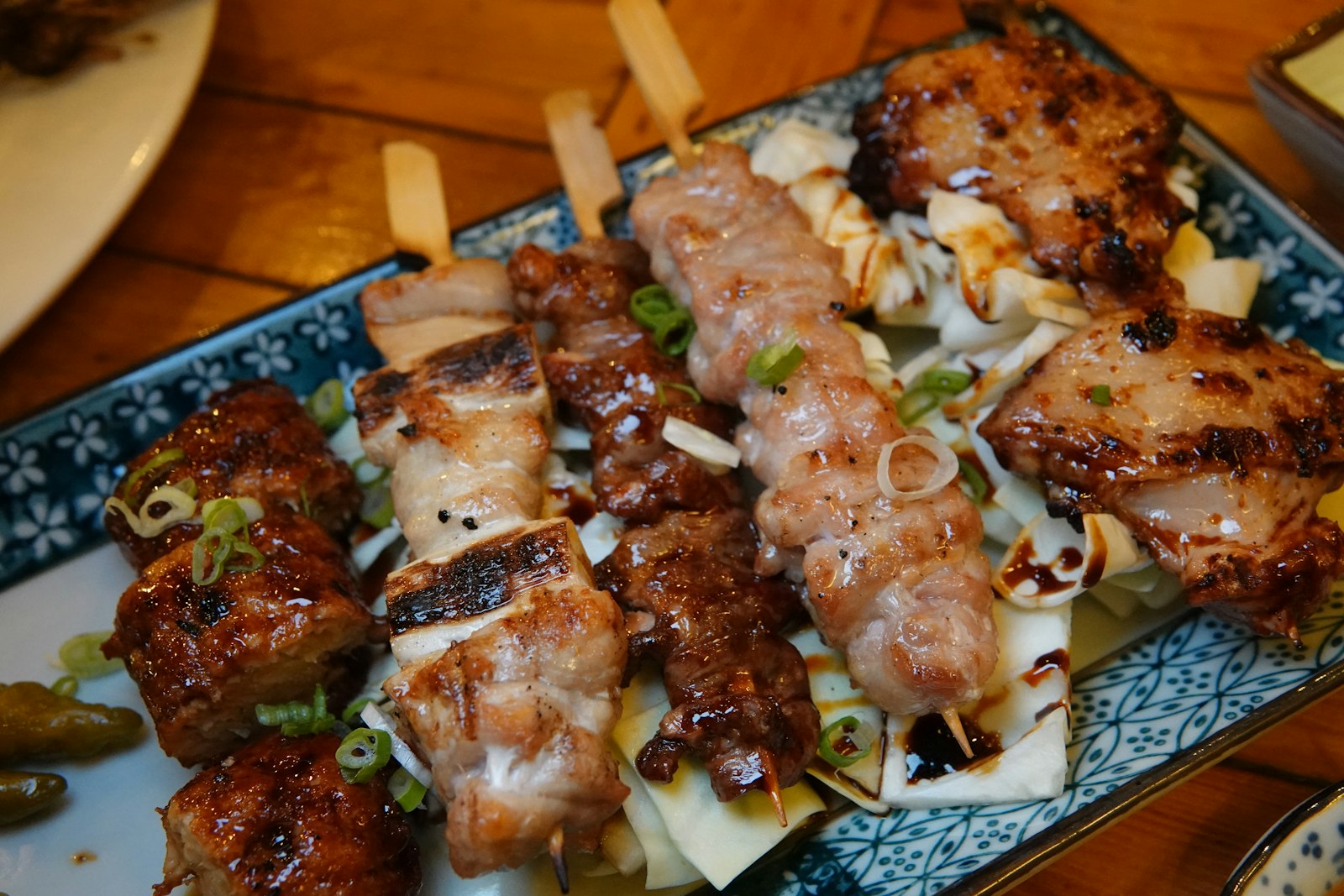
On the food side, the reliable order at almost any standing bar: something grilled (yakitori chicken skewers or motsuyaki offal), something cold and vinegary (pickles, or hiyayakko cold tofu), and potesara — potato salad, which is a genuine art form in Japanese bars and costs about ¥300.
If you’re nervous about offal, say so early: “motsu wa chotto…” trails off politely and staff will steer you elsewhere. Trailing off is a complete sentence in Japanese.
Looking for Adult Entertainment Services in Tokyo? Download this
I’ve spent over a decade exploring and studying Japan’s adult entertainment scene firsthand. If you’d like detailed insider information—including how to choose the right shop, what services are available, and tips for avoiding common mistakes—check out our exclusive E-book.
Where to Find Tachinomi in Tokyo
Standing bars cluster around train stations and under elevated tracks. These are the neighborhoods worth your evening.
Shinjuku Sanchome
The densest concentration of quality standing bars in central Tokyo, and the most beginner-tolerant. Nihon Saisei Sakaba (日本再生酒場) on Shinjuku 3-chome is a landmark of the modern tachinomi revival — a retro-styled motsuyaki standing bar grilling offal skewers over charcoal, priced by the piece in the low hundreds of yen, with a laminated English menu that translates the cuts honestly. It’s a minute from Shinjuku-sanchome station and it fills up early. A short walk away, Nihonshu Stand Moto (日本酒スタンド酛) is a basement standing bar built entirely around sake, with staff who will pair a glass to whatever you say you like. Hours at both shift with the season, so check before you build a night around one.
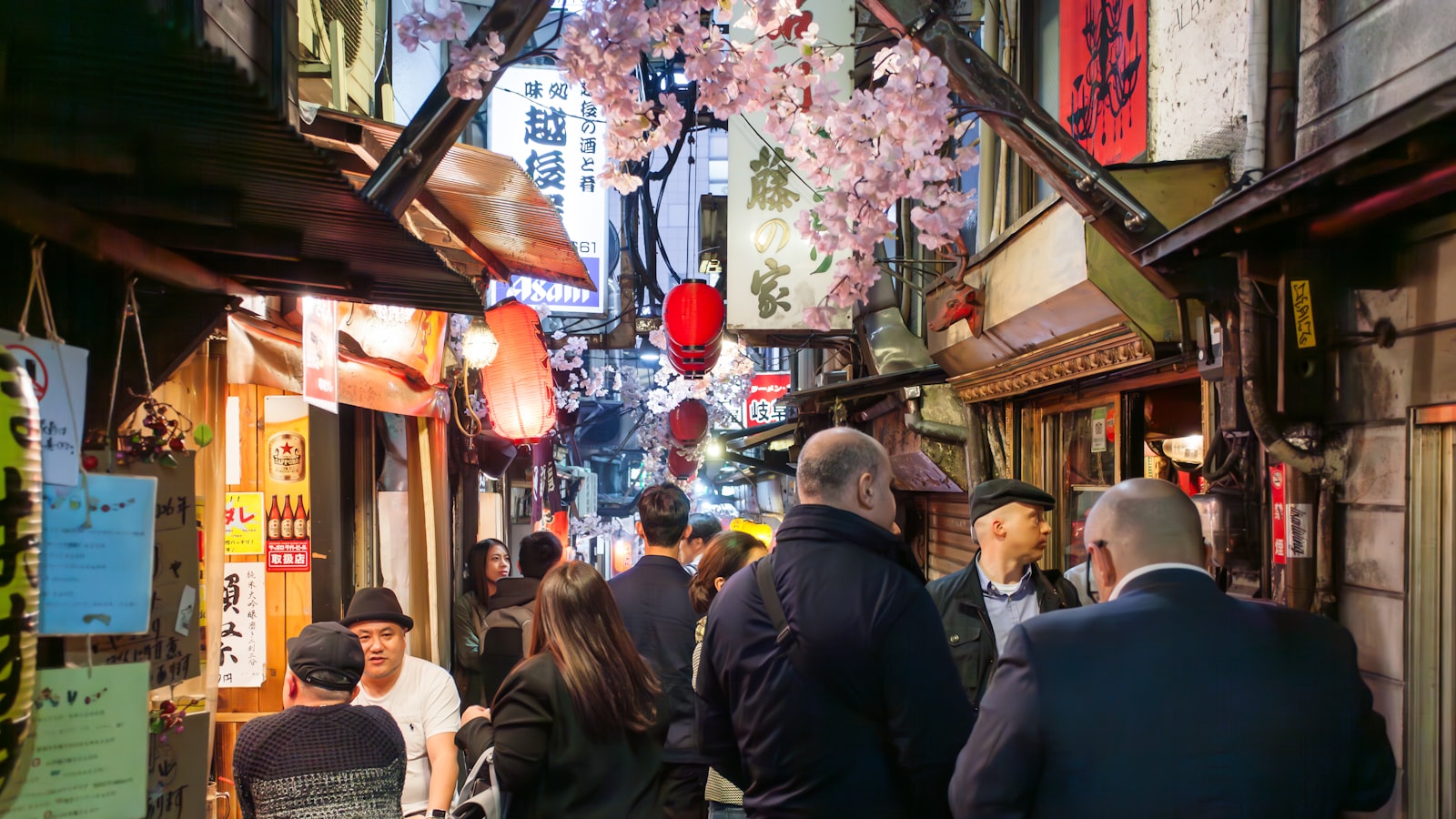
Shinjuku is also where Tokyo’s most famous drinking alleys sit. For the two you’ve seen photos of, our Omoide Yokocho guide and complete guide to Golden Gai cover how those work — they’re mostly tiny seated bars rather than true tachinomi, and the pricing rules are different, which is worth knowing before you sit down.
Ueno / Ameyoko
Ameyoko is a market under the JR tracks between Ueno and Okachimachi by day and a drinking street by night. Fish vendors pour sake, standing counters spill onto the pavement, and the crowd starts drinking in the afternoon. Kadokura (立ち飲み カドクラ), right by the Ameyoko entrance near Ueno station, is the classic first stop: big, loud, open early, and used to visitors. Ameyoko is also the best area in Tokyo for daytime drinking without anyone raising an eyebrow.
Shimbashi
The salaryman heartland. Standing bars packed with men in suits from 5pm, under and around the tracks. The least polished of these areas and the most authentically ordinary — this is what Tokyo drinking actually looks like on a Tuesday.
Akabane
Twenty minutes north of Shinjuku on the Saikyo Line, Akabane is regarded by Japanese budget-drinking obsessives as the spiritual home of senbero. Cheap standing bars that open at lunchtime, almost no English, almost no tourists. If you want the version of this experience that hasn’t been discovered yet, go here.
A Realistic ¥1,000 Night, Stop by Stop
Here’s how a three-stop crawl actually breaks down. Figures are typical, not guaranteed.
Stop 1 — 6:00pm, the warm-up. Draft beer (¥500) and two skewers (¥400). You’re standing, you’ve said konbanwa, you’ve got a drink in 60 seconds. ≈¥900.
Stop 2 — 7:00pm, the food stop. Highball (¥450) and potato salad (¥350), plus one more skewer (¥200). This is the stop where you talk to someone. ≈¥1,000.
Stop 3 — 8:00pm, the sake stop. Two glasses of nihonshu (¥500 each) at a specialist stand. No food; you’re not hungry anymore. ≈¥1,000.
Total: roughly ¥2,900 for three hours, three bars, six drinks and real food. Compare that to a single cocktail in a hotel bar and you understand why locals drink this way.
Budget an extra ¥500–1,000 for surprises — an otoshi charge at a place that turns out to be more izakaya than tachinomi, or a sake you didn’t expect to love. And carry more cash than you plan to spend.
Mistakes Foreigners Make (Easily Avoided)
Assuming the bar takes cards. It probably doesn’t. This is the number one way a good night goes sideways at the check.
Arriving at 10pm. Many tachinomi open at 3–5pm and close by 11pm or midnight — the whole culture is built around the pre-last-train hours, not the small ones. Start at 6, not 10. If you want somewhere still going after midnight, that’s a different scene entirely, and our roundup of what to do in Tokyo after 10pm is the better map.
Following someone who approaches you on the street. Real tachinomi don’t need touts. Anyone stopping foreigners on a Kabukicho street corner to recommend a bar is running a business model, and it isn’t a bar. We’ve documented how those setups work in our guide to Tokyo nightlife scams and staying safe — the short version is that any place without posted prices can invent them later.
Treating one bar as the whole evening. The point of standing bars is movement. Two drinks and out. The next place is better than the second hour of this one.
Over-apologizing for your Japanese. Three words delivered confidently beat a paragraph delivered nervously. Konbanwa, kore kudasai, gochisousama will carry an entire evening.
Tachinomi Guide for Foreigners: Quick Reference
If you read nothing else, take this:
- Go at 6pm, not 10pm. Standing bars are an early-evening culture.
- Cash. ¥5,000 in ¥1,000 notes covers a full crawl.
- **Say konbanwa on the way in, gochisousama on the way out.** Two words, whole night handled.
- Order a drink within a minute, food second.
- Two or three drinks, then move. One bar is not an evening.
- Stay small — groups of two or three, elbows in, bag off the counter.
- Budget ¥1,000 per stop, ¥3,000 for a three-bar night, plus a cushion.
Frequently Asked Questions
Do I need to speak Japanese? No. Pointing plus five words is functional. Most standing bars have handwritten Japanese-only menus, so a translation app helps, but staff are used to gesturing and many will use a calculator to show you prices.
Can women go alone? Yes. Tokyo is exceptionally safe, and solo women at standing bars are ordinary. Shinjuku Sanchome and Ueno are comfortable places to start; the difference in atmosphere between a tachinomi and a nightlife venue that solicits customers is stark and obvious.
Is there a cover charge? True standing bars often skip otoshi entirely — one of the reasons they’re cheap. Semi-seated places may charge ¥300–500. If you’re unsure, look for a small dish arriving unrequested; that’s the otoshi, and it means you’re being charged for it.
Are tachinomi smoking or non-smoking? Japan’s indoor smoking rules exempt many small, older establishments, so some standing bars still allow it. If that matters to you, look through the window before entering.
How long should I stay? Thirty to sixty minutes per bar. Longer isn’t rude, exactly, but it misses the point.
What if I don’t drink alcohol? Order oolong-cha (oolong tea) or nomu yogurt. Non-drinkers are common in Japanese drinking culture and nobody will push you.
What do you do in Tokyo After 10?
Join our Tokyo Nightlife Private Tour
You deserve better than overpriced bars and missed opportunities. We’re here for you.
Doing This With Someone Who Already Knows the Room
Everything above is genuinely doable alone — a tachinomi is not a puzzle, and this guide is enough to get you through the door with confidence. But there’s a version of this night that’s hard to reach on your own, and it’s the version where you end up in conversation with the regulars.
That’s the gap a local closes. Knowing which of the twenty standing bars on a given block is the one where the owner will actually talk to you, being able to translate the joke rather than the menu, ordering the thing that isn’t written down — that’s the difference between visiting a tachinomi and having a night in one. Our Tokyo After 10 nightlife tour is built around exactly this kind of crawl: small standing bars, local guides who drink in them, and the parts of the evening that don’t appear on Google Maps.
Either way — guided or on your own — go early, bring cash, stay compact, and keep moving. Tokyo’s best nights cost less than you think.
Further reading: the Japan National Tourism Organization’s guide to standing bars covers the culture from the official side.