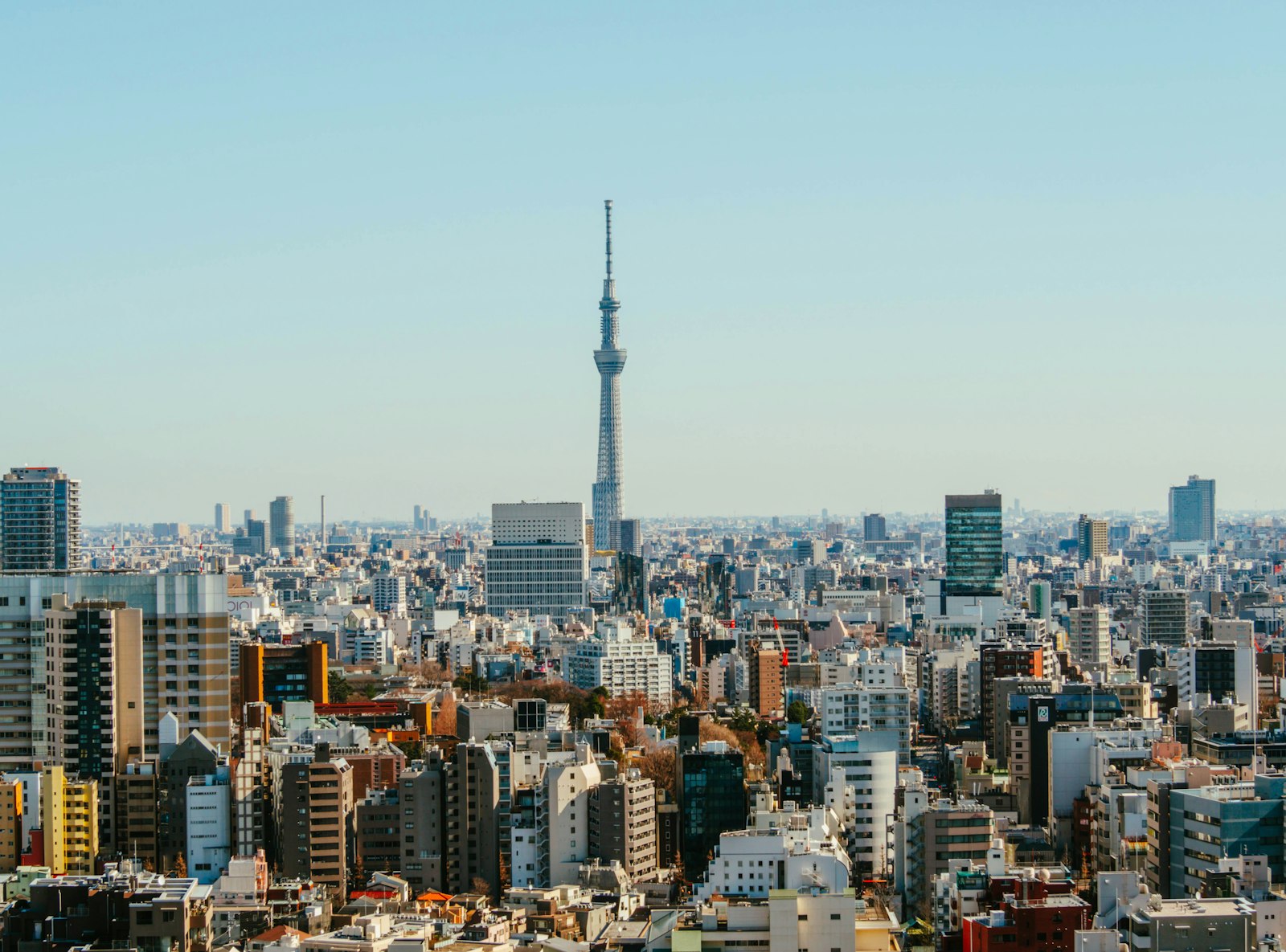
Photo by <a href="https://unsplash.com/@pen_ash?utm_source=tokyodeepnightlife&utm_medium=referral">pen_ash</a> on <a href="https://unsplash.com/?utm_source=tokyodeepnightlife&utm_medium=referral">Unsplash</a>
Most advice on how to find English friendly bars in Tokyo is just a list of ten bars. That works right up until you arrive and the place is full, closed, or nothing like the photo — and then you’re standing in an alley with six unmarked doors and no idea which one will actually let you in.
This guide teaches the method instead. You’ll learn what a door tells you before you open it, which two apps do the filtering for you, how to settle the cover charge question in one sentence, and which Tokyo neighborhoods give you the best odds per minute of walking. The bar list comes at the end, as a set of reliable starting points rather than the whole strategy.
Contents
- What “English Friendly Bars in Tokyo” Actually Means
- Step 1: Let the Apps Do the Filtering First
- Step 2: Reading the Door — Six Signals That a Bar Welcomes You
- Step 3: Settle the Charge Before You Sit Down
- Where and How to Find English Friendly Bars in Tokyo: Five Areas, Ranked by Effort
- Five Reliable English Friendly Bars in Tokyo to Start From
- Etiquette That Keeps You Welcome
- If You Get Turned Away
- What do you do in Tokyo After 10?Join our Tokyo Nightlife Private Tour
- Skip the Guesswork and Let a Local Open the Doors
- About the Author
What “English Friendly Bars in Tokyo” Actually Means
The phrase gets used for three very different things, and confusing them is why people end up disappointed.
Tier 1 — English menu, no English conversation. The menu is translated, the staff can take an order, and that’s the ceiling. Perfectly fine for a quiet drink; frustrating if you wanted to chat with the bartender.
Tier 2 — Staff who actually speak English. Usually a returnee, a foreign owner, or someone who worked abroad. This is what most travelers are picturing when they search for English friendly bars in Tokyo.
Tier 3 — An international room. The staff speak English and half the customers do too. Roppongi and parts of Shibuya default to this; almost nowhere else in Tokyo does.
Decide which tier you want before you start looking. Tier 1 is everywhere and takes no effort. Tier 3 is concentrated in maybe four neighborhoods. Tier 2 is the interesting middle, and it’s the one the rest of this guide is built around — when people ask how to find English friendly bars in Tokyo, Tier 2 is almost always what they mean.
Step 1: Let the Apps Do the Filtering First
You can eliminate most of the guesswork from your hotel room. Two tools will shortlist English friendly bars in Tokyo before you put your shoes on.
Use Tabelog’s English site, not just Google Maps. Tabelog is the review platform locals actually use, it has a full English version at tabelog.com/en, and — the part almost nobody uses — it has a filter for English menu alongside filters for non-smoking and credit cards. Its app added multilingual support in November 2025. Search by station name, apply the filter, and you have a shortlist of Tier 1 venues in thirty seconds.
Read Google Maps photos, not Google Maps reviews. Reviews tell you whether someone had fun. Customer-uploaded photos of the doorway and the menu tell you whether the place posts its prices in numerals, whether there’s an English menu, and how many seats it has. Sort photos by most recent — a bar that changed hands in the last year is a different bar.
Be skeptical of listings with only English reviews. Longtime Tokyo residents treat this as a warning sign: a bar reviewed exclusively by tourists and ignored by locals is often priced for tourists. You want a mix.
For a broader rundown of which venues in the city operate comfortably in English, our guide to Tokyo nightlife that works in English covers more ground than a single article can.
Step 2: Reading the Door — Six Signals That a Bar Welcomes You
Tokyo bars broadcast their policy on the door. Once you know the vocabulary, you can read a whole alley in about a minute — which is the real skill behind finding English friendly bars in Tokyo on foot. These are the green flags:
- A price posted in numerals. A sign reading チャージ ¥500 or “Cover ¥500” means the owner expected someone who can’t read Japanese and decided to remove the ambiguity. This is the single strongest signal on this list.
- An English or photo menu visible from outside. Not inside the door — outside, where you can read it before committing.
- Explicit welcome signage. “Welcome,” “Tourists OK,” “English OK,” or a row of national flags. Blunt, but honest.
- You can see the interior. A window or a propped-open door means the owner wants walk-ins. A solid door on the fourth floor of an unmarked building means the opposite.
- Card or QR payment stickers. Visa, Mastercard, PayPay. A cash-only bar isn’t unfriendly, but a bar that takes cards has consciously accommodated visitors.
- A ground-floor location in a busy alley. Foot traffic is the business model. Upstairs bars run on regulars.
And the red flags, which matter just as much:
- 会員制 (kaiin-sei, “members only”) — usually literal, and not a door to push on.
- 一見さんお断り (ichigen-san okotowari, “no first-time customers”) — a referral-only house.
- No posted prices anywhere. Not automatically a scam, but you have no way to price the evening in advance.
- Anyone on the street trying to walk you inside. In Kabukicho especially, street touts are the single most reliable predictor of a bad night. Our breakdown of how Kabukicho scams work explains the mechanics.
Step 3: Settle the Charge Before You Sit Down
Here’s the thing that blindsides more visitors than any other, and it isn’t a scam — it’s just how small Japanese bars have worked for decades. Plenty of thoroughly English friendly bars in Tokyo still charge it.
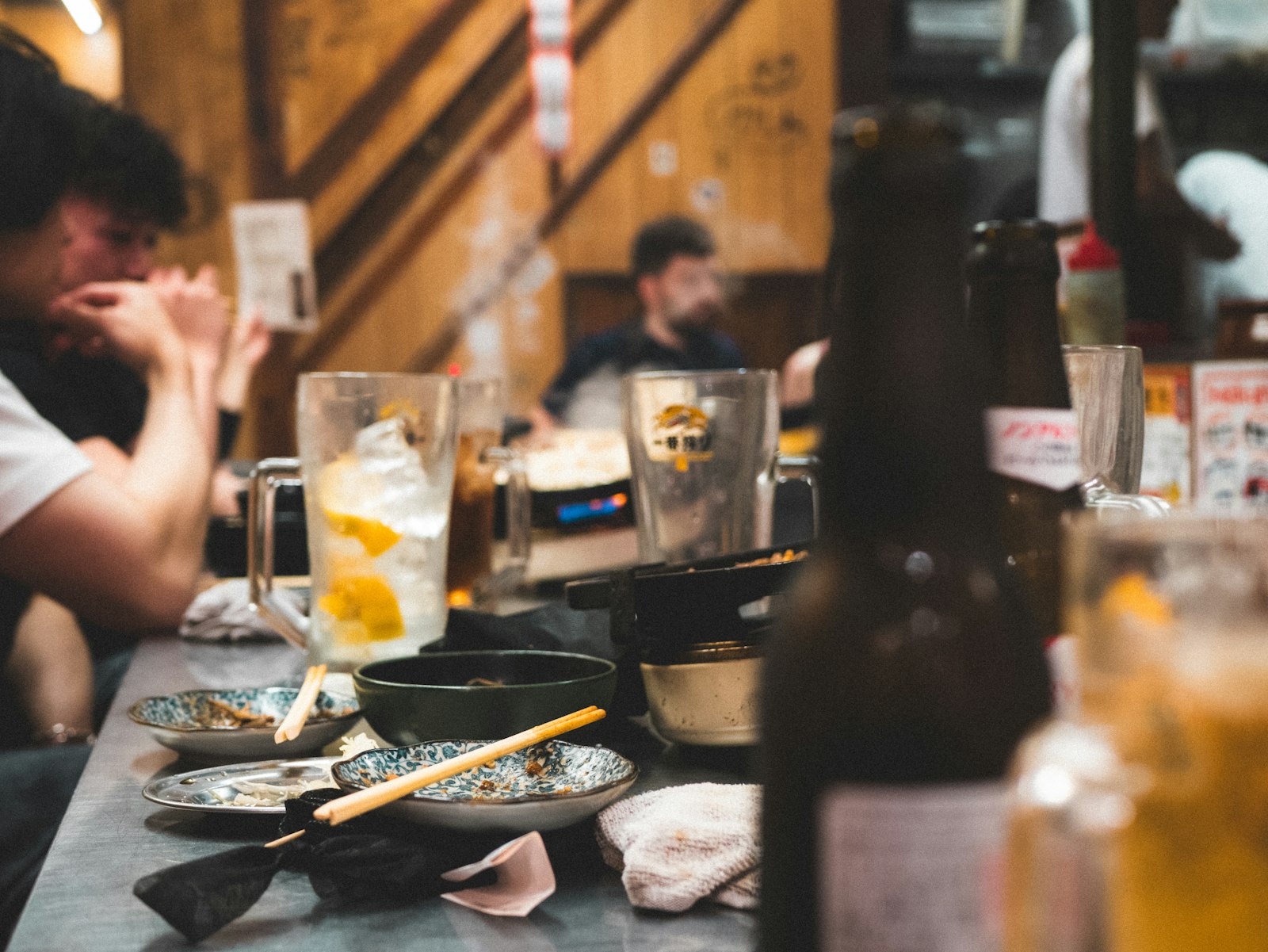
Otoshi (お通し) is a small appetizer served automatically at izakaya, and it carries a charge. In a casual izakaya, expect roughly ¥300–¥700 per person. It functions as a table charge in a country with no tipping.
Seki-ryō / cover charge is the bar equivalent. In Shinjuku’s Golden Gai, most bars charge somewhere between ¥500 and ¥1,500 per person just to take a seat, before you order anything. Some charge nothing at all. Increasingly, they post it at the entrance.
The fix is one sentence, asked while you’re still standing:
“Charge wa ikura desu ka?” — “How much is the cover charge?”
Or simply hold up a finger and say “Table charge?” Every bar in Tokyo understands the question. Asking is completely normal, nobody is offended, and it converts an unknown into a number. If the answer is evasive, that’s your information — leave.
Looking for Adult Entertainment Services in Tokyo? Download this
I’ve spent over a decade exploring and studying Japan’s adult entertainment scene firsthand. If you’d like detailed insider information—including how to choose the right shop, what services are available, and tips for avoiding common mistakes—check out our exclusive E-book.
Where and How to Find English Friendly Bars in Tokyo: Five Areas, Ranked by Effort
Not all neighborhoods reward the same amount of work. Here’s how they actually stack up.
Roppongi — Lowest effort, least local flavor
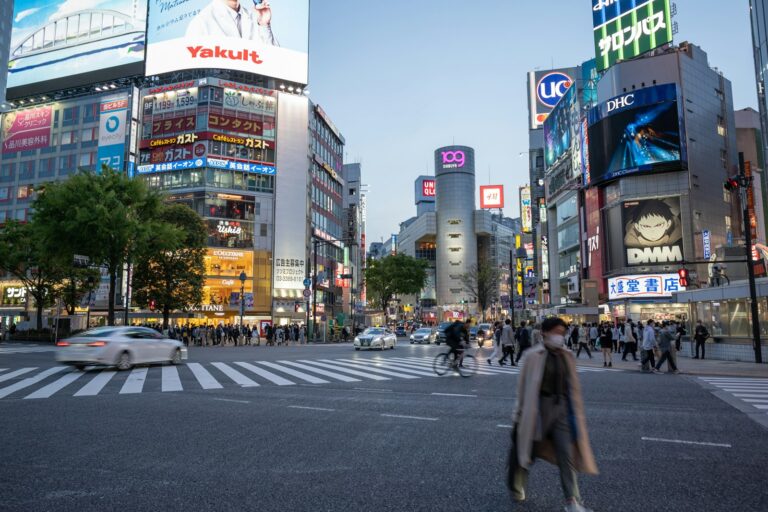
Roppongi is Tokyo’s default international district, shaped by decades of embassies and multinational offices. If you want English friendly bars in Tokyo with zero research, this is the neighborhood: English menus are the norm rather than the exception, and staff at most bars handle English without blinking.
The tradeoff is that Roppongi feels less like Tokyo and more like an international nightlife district that happens to be in Tokyo. It’s also the area with the most aggressive street touts. Go here when you want a guaranteed easy night, not when you want a story.
Shibuya — Craft beer, young crowd, moderate effort
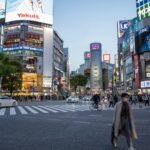
Shibuya splits into two scenes: the loud, cheap chains near the station and the smaller craft beer bars and listening bars in the side streets toward Shoto and Ebisu. The second group skews young, international, and genuinely welcoming.
Craft beer bars in particular are a shortcut. The industry is globally connected, staff tend to know beer vocabulary in English, and menus list country of origin and style — which are readable regardless of language. Walk uphill and west from Shibuya Station rather than into the crossing, and the average bar gets smaller, quieter, and easier to talk in.
Shinjuku Golden Gai — Highest reward, highest variance
Roughly two hundred tiny bars packed into six alleys, most seating five to ten people. Some are the warmest rooms in Tokyo. Some genuinely don’t want you, and a few will charge you ¥1,500 for the privilege of finding out.
Golden Gai is where the door-reading skill from Step 2 pays for itself, because the density of English friendly bars in Tokyo is nowhere higher — or harder to read. Walk all six alleys once without entering anything, note the doors with posted charges and English menus, then go back and pick. Twenty minutes of scouting changes the whole night. The full Golden Gai guide goes deeper on which alleys suit which mood.
Ginza and Yurakucho — Cheap standing bars, low drama
Everyone assumes Ginza means ¥3,000 cocktails. Under the Yamanote Line tracks and in Ginza’s side streets, there’s a whole layer of standing bars (tachinomi) with flat pricing, no cover charge, and a stand-anywhere social format that makes talking to strangers easy in any language.
Standing bars are underrated for solo travelers hunting English friendly bars in Tokyo — there’s no table to be stuck at and no minimum stay. See our Tokyo standing bar guide for how the format works.
Asakusa and Ueno — Tourist-adjacent and easygoing
Both areas have handled international visitors for generations, so English menus are common and nobody is startled by you. The bars skew older and more traditional, and the pace is slower than Shinjuku. Good for a first night in Tokyo when jet lag makes Golden Gai sound exhausting.
Five Reliable English Friendly Bars in Tokyo to Start From
These are venues with a long, well-documented record of operating in English. Use them as anchors — a known-good first stop while you get your bearings, not a full itinerary. Prices and hours below are as reported and do change, so confirm at the door.
HUB — the safety net, everywhere
A British-style pub chain with over 100 locations nationwide (around 50 in the Kanto region), English menus as standard, and — unusually for Japan — no table charge at all. The first one opened in Kobe in 1980.
Nobody’s most memorable Tokyo night happens at HUB. But when it’s 11pm, you’re tired, and you just want a beer without a negotiation, there’s one near almost every major station.
Ginza 300 Bar — flat pricing, zero ambiguity
Open since 1992 as Japan’s first ¥300 standing bar, it runs on a ticket system: one ticket is ¥300 plus tax, and most drinks and dishes cost one or two tickets. Buy ten and you get an eleventh free. English menus, no cover charge, happy hour daily from 5pm to 7pm, and around 150 cocktails on the list.
The flat pricing removes the entire cost-anxiety problem, which is exactly what you want on night one.
Goodbeer Faucets — Shibuya, 40 taps
Over 40 craft beers on tap from Japanese, American, and European brewers, in a large space a short walk from Shibuya Station (Shibuya Crossroad Building 2F, 1-29-1 Shoto). The menu lists origin and style for every tap, so it’s navigable without asking a single question. Pints generally run ¥800–¥1,400, with happy hour on weekday evenings.
Two Dogs Taproom — Roppongi, fully bilingual
Opened in 2013 by an American owner, around four minutes’ walk from Roppongi Station. Roughly 25 taps of Japanese and US craft beer plus California-style wood-fired pizza. Menus are in both English and Japanese and the staff speak English — it’s about as low-friction as Tokyo gets. Happy hour runs 5pm to 7pm.
Albatross G — Golden Gai, without the anxiety
A two-floor Golden Gai bar done up in chandeliers, gilded mirrors, and velvet, with a ¥500 cover charge, an English menu, and a reputation for genuinely welcoming international visitors. It’s larger than most Golden Gai bars, which takes the pressure off if you’re nervous about walking into an eight-seat room.
If you want the Golden Gai experience but don’t yet trust your door-reading, start here and branch out from the same alley.
Etiquette That Keeps You Welcome
None of this is complicated, and getting it right changes how you’re treated. Even the most English friendly bars in Tokyo run on these habits.
Wait for the toast. Don’t drink before someone says kanpai. In a group, it’s a real rule.
Don’t pour your own drink. Fill your neighbor’s glass; they’ll fill yours. The Japan National Tourism Organization’s manners guide covers the full set if you want the details.
Accept the otoshi. It’s the cost of the seat. Refusing it reads as rude and rarely removes the charge.
Respect the seat count. In a bar with eight stools, occupying one for three hours on a single drink is a real cost to the owner. Order at a reasonable clip or move on.
Carry cash. Card acceptance has improved a lot, but small bars — the good ones — are still frequently cash only.
Keep your voice down. Japanese bars run quieter than most Western equivalents. Matching the room’s volume is the fastest way to stop being read as a tourist.
JNTO’s overview of entertainment and nightlife in Japan is a solid neutral primer on what the different venue types actually are.
If You Get Turned Away
It happens, and it’s worth knowing how to handle it.
Sometimes it’s capacity — a five-seat bar with four regulars and a reservation genuinely has no room. Sometimes it’s a regulars-only house that never took walk-ins from anyone. And sometimes, honestly, it’s a bar that doesn’t serve foreigners, which is legal in Japan and does still exist.
Whichever it is, the response is the same: say thank you, leave, and go next door. Arguing achieves nothing, and it costs you the evening you came for. Searching for English friendly bars in Tokyo is a numbers game before it’s a skill. In an alley with two hundred bars, being refused at one is a rounding error — and every refusal narrows your list faster than a good review ever could.
What do you do in Tokyo After 10?
Join our Tokyo Nightlife Private Tour
You deserve better than overpriced bars and missed opportunities. We’re here for you.
Skip the Guesswork and Let a Local Open the Doors
Everything above is learnable, and if you’ve got a week here it’s worth learning how to find English friendly bars in Tokyo yourself. But the door-reading, the cover charge questions, and the twenty-minute scouting walk all cost you time on a trip where time is the scarce resource.
The shortcut is going with someone who already knows which doors open. A guide who drinks in these alleys knows which Golden Gai bar has the owner who loves talking to visitors, which counters have space at 9pm on a Friday, and which places never appear in English anywhere online because they don’t need to.
If you’d rather spend your night drinking than scouting, our Tokyo After 10 nightlife tour takes you through the bars locals actually use, with someone who can translate both the menu and the room.
Either way — go. The best bars in Tokyo are behind doors that look closed, and now you know how to tell which ones aren’t.