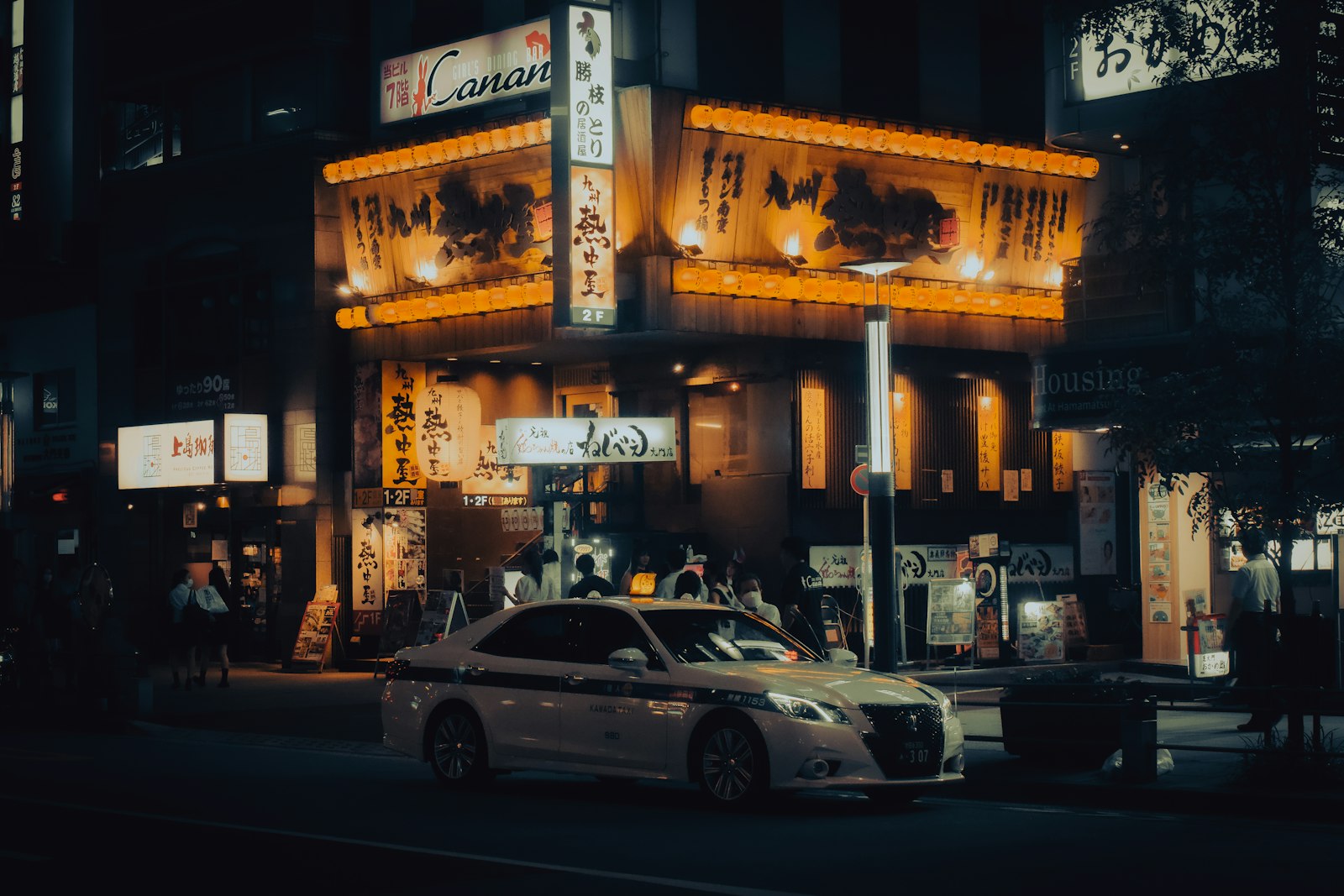
Photo by <a href="https://unsplash.com/@kanchanrp?utm_source=tokyodeepnightlife&utm_medium=referral">Kanchan Raj Pandey</a> on <a href="https://unsplash.com/?utm_source=tokyodeepnightlife&utm_medium=referral">Unsplash</a>
Tokyo nightlife runs on a hidden countdown. Somewhere around midnight, the world’s best public transport system simply switches off — and if you don’t know your Tokyo last train time, nightlife plans turn into a ¥6,000 taxi ride or four hours in a karaoke booth you didn’t plan on.
Here’s the thing most guides bury: the number you need isn’t “when does the last train leave Tokyo.” It’s “when does the last train leave that I can actually connect to.” Those are two very different times, and the gap between them is where tourists get caught.
This guide covers what time trains actually stop in 2026, why the districts you’ll be drinking in have different deadlines, and — when it goes wrong — exactly what your options cost.
Contents
- The Short Answer: When Tokyo Stops Moving
- Why “Last Train Time” Is the Wrong Question
- How to Check Your Real Last Train Time in 30 Seconds
- Tokyo Last Train Time by Nightlife District
- You Missed It. Now What? Five Options, Ranked
- What Most Guides Still Get Wrong About Tokyo After Midnight
- The First Train: Tokyo’s Real Reset Button
- One Night a Year the Rules Change
- A Simple Timeline for a Night Out in Tokyo
- What do you do in Tokyo After 10?Join our Tokyo Nightlife Private Tour
- Skip the Guesswork
- About the Author
The Short Answer: When Tokyo Stops Moving
For central Tokyo, plan around these ranges:
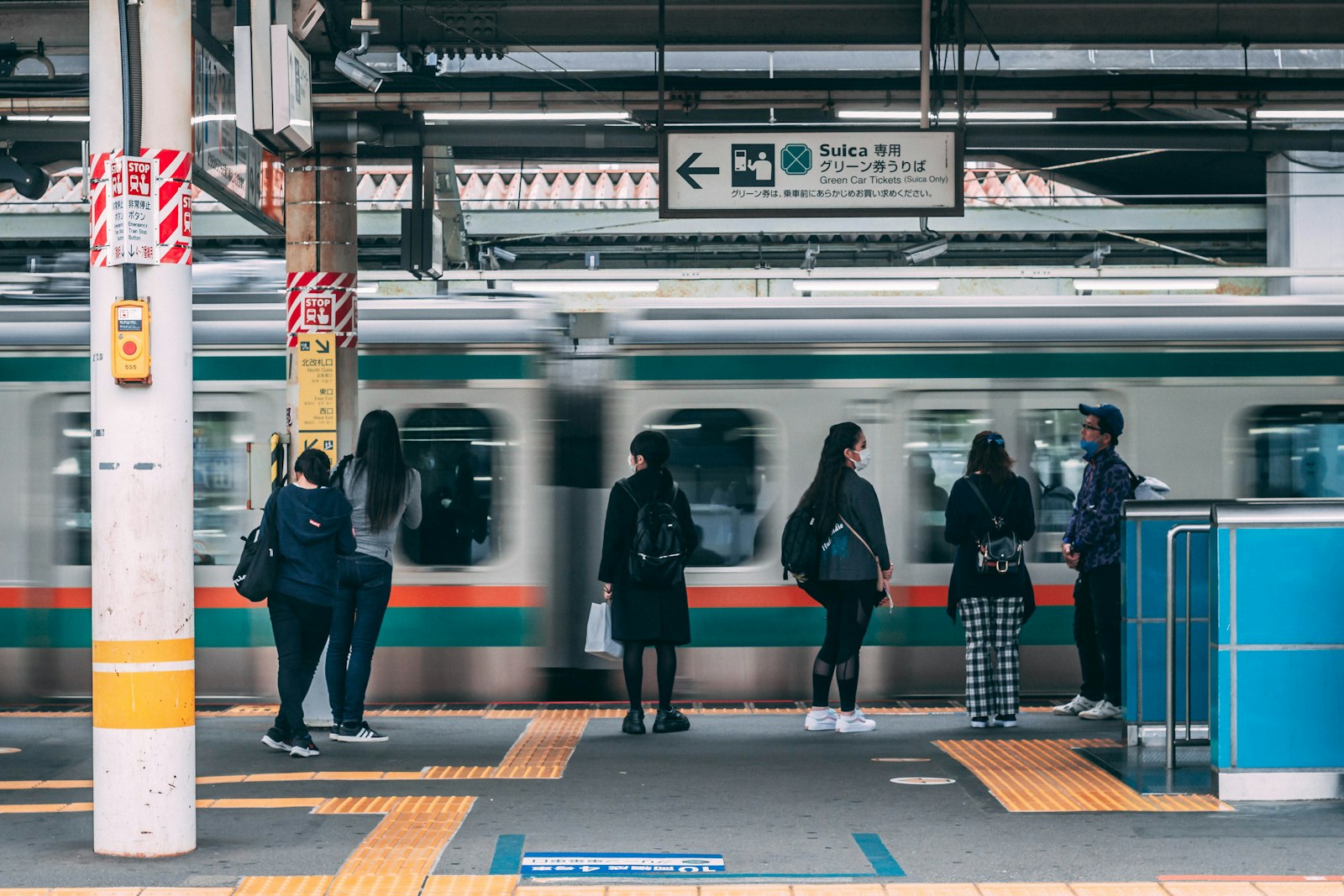
- JR lines (including the Yamanote loop): last departures generally fall between about 12:00 and 12:45 AM
- Tokyo Metro: roughly 12:00 to 12:30 AM
- Toei Subway (including the Oedo Line): roughly 12:15 to 12:30 AM
- First trains: service restarts around 4:30 to 5:10 AM, depending on the operator
That leaves a hard gap of roughly four hours when Tokyo has no trains at all. Not reduced service — none.
One thing worth knowing, because it catches returning visitors off guard: these times got earlier. In spring 2021, JR East pulled last departures forward on major Tokyo lines — by up to around 30 minutes on some routes — and Tokyo Metro moved its own last trains up by roughly 10 minutes across the network. The changes stuck. If you’re working from a guidebook or a blog post written before 2021, your Tokyo last train time is wrong by half an hour, and half an hour is the whole margin.
Why “Last Train Time” Is the Wrong Question
This is the part that actually strands people.
It’s the transfer that gets you, not the final departure
Say you’re drinking in Shibuya and staying in Nakano. The last Yamanote train out of Shibuya might leave around 12:30 AM — but that only gets you to Shinjuku. If the last Chuo Line train toward Nakano has already gone, that Yamanote train drops you at Shinjuku Station at 12:40 AM with nowhere to go, which is strictly worse than never leaving Shibuya.
Your real deadline is the last train on the slowest, earliest-closing leg of your journey, working backwards. For a two-transfer trip out to the suburbs, that can be 45 minutes to over an hour earlier than the headline “last train” for the line you board first.
The suburbs shut down long before the centre
Tokyo’s late-running lines are the central ones. If you’re staying out in Chiba, Saitama, or along the Odakyu and Keio lines toward the western suburbs, your practical cut-off can be closer to 11:00 or 11:30 PM — and the last direct service is often a local that stops everywhere, while the rapid trains you took in the daytime finished hours earlier.
This is why so many visitors who booked a “great value” hotel 40 minutes out end up paying for taxis three nights running. If you know in advance that you want late nights, staying within the Yamanote loop is usually cheaper overall than the room rate suggests.
How to Check Your Real Last Train Time in 30 Seconds
Do this before your first drink, not after your fourth.
- Open Google Maps, Yahoo! Norikae Annai (Yahoo! Transit), or Jorudan. All three carry accurate Japanese rail timetables.
- Enter your route: the station nearest where you’ll be drinking → your accommodation.
- Set the departure time to 11:30 PM tonight and search.
- The app will show you the last viable connection. Screenshot it.
That screenshot is the single most useful thing on your phone during a night out in Tokyo. Note the departure time, then subtract 15 minutes for the walk to the station and finding the right platform — Shinjuku Station alone has over 200 exits, and at 12:20 AM the wrong one costs you the train.
One more trick locals use: check the last train for two stations, not one. If you can get to any station within a reasonable walk or short taxi hop of your hotel, that’s a fallback worth ¥1,500 instead of ¥6,000.
Tokyo Last Train Time by Nightlife District
Every major nightlife area has its own rhythm around the final departure.
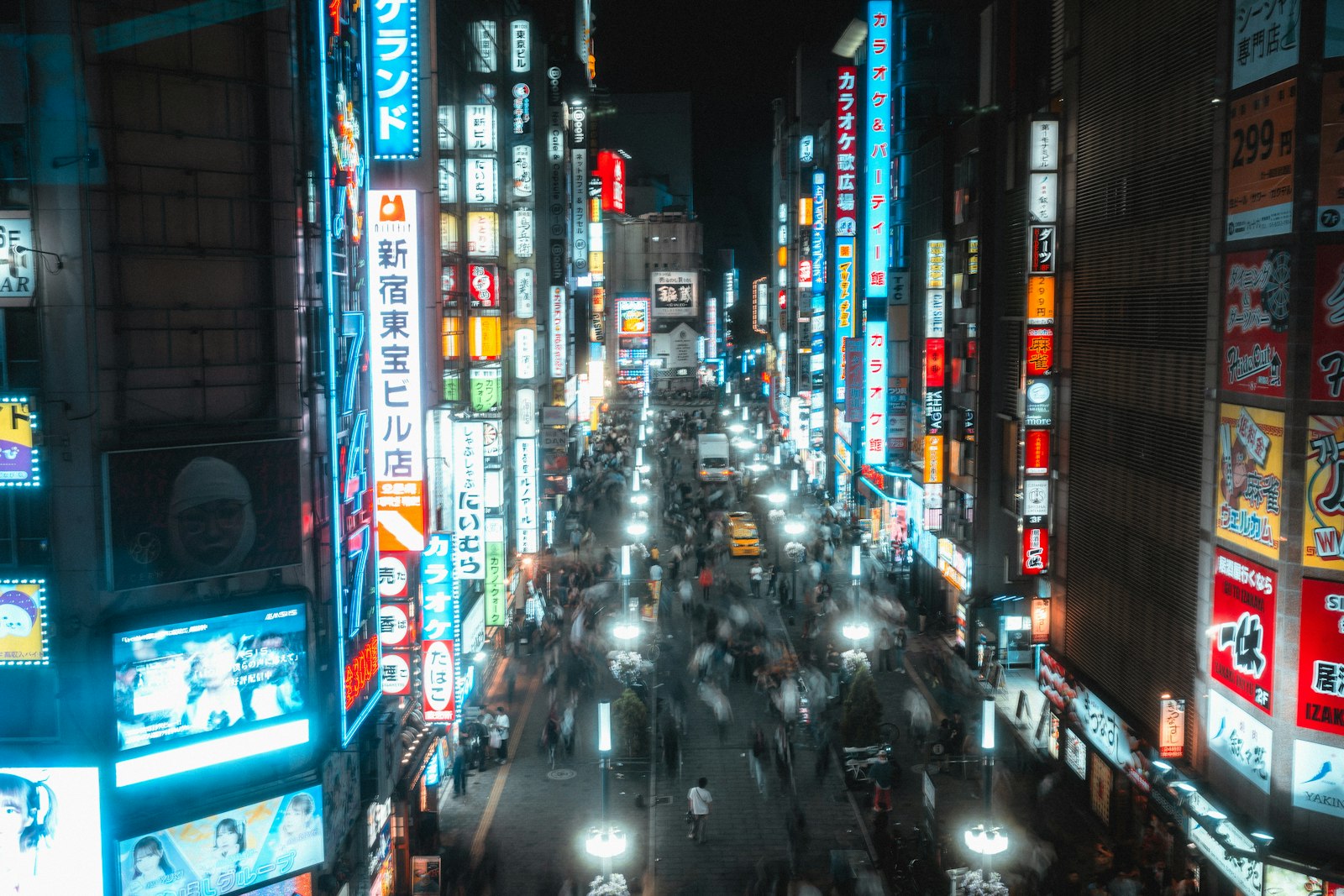
Shinjuku is the most forgiving. It’s the biggest rail hub in the world, served by JR, Metro, Toei, Odakyu and Keio, so there’s almost always one more option than you think. The catch is the station’s size — budget a genuine 15 minutes to cross it. If you’re deep in Golden Gai’s tiny bars on the east side, you’re a 10-minute walk from the JR gates before you even start.
Shibuya empties fast. The Yamanote, Ginza, Hanzomon, Fukutoshin, Den-en-toshi and Inokashira lines all serve it, but the late-night crowd is enormous and the station reconstruction has moved entrances around repeatedly. Our Shibuya nightlife guide covers the area in detail, but the transport rule is simple: Shibuya is a great place to start a night and a stressful place to end one.
Roppongi is the trap. It’s served by only the Hibiya Line and the Toei Oedo Line, both of which stop around the same time, and the district’s clubs are built to keep you until 5 AM. There is no late bus safety net anymore (more on that below). Roppongi is genuinely the district where “I’ll just get a taxi” is the realistic plan, so price it in before you go.
Asakusa and Ueno run on the early side. The Ginza Line — Tokyo’s oldest subway — is not a late-night line, and Asakusa in particular winds down earlier than the western districts. If you’re doing an evening in Asakusa, treat 11:30 PM as your soft deadline rather than midnight.
You Missed It. Now What? Five Options, Ranked
Congratulations — you’ve just joined a nightly Tokyo tradition. Here’s what each way out actually costs.
1. Taxi
The default, and less catastrophic than people fear for short distances. In Tokyo’s 23 wards, the initial fare is ¥500 for roughly the first kilometre. Between 10 PM and 5 AM a 20% late-night surcharge applies, so that opening fare becomes ¥600 and everything after scales up accordingly.
In practice: a hop between neighbouring districts (Roppongi to Shibuya, Shinjuku to Shibuya) lands somewhere around ¥2,000–4,000. Crossing the city — say Shibuya out to Kichijoji — climbs well past that. Airport runs at 2 AM are five-figure territory; don’t plan a night out around one.
To actually get a car, use the GO app. It’s the dominant taxi app in Japan, works in all 47 prefectures, and accepts foreign phone numbers and overseas credit cards — which matters, because plenty of Japanese apps don’t. Uber also operates in Japan by dispatching licensed taxis through partner networks rather than private drivers, with its S.Ride tie-up rolling out in Yokohama in May 2026 and Tokyo from June. Either way, you’re getting a regular metered taxi; the app just spares you standing in a 40-person queue outside Shibuya Station at 1 AM.
2. Karaoke until the first train
The most Japanese answer, and honestly the most fun one. Karaoke chains sell late-night “free time” packages designed exactly for stranded drinkers: walk in around 1 AM, stay until 5 AM, pay somewhere in the region of ¥1,500–2,700 per person. Most include a drink bar. Big Echo and Karaoke-kan are the chains you’ll see most often around Shinjuku, Shibuya and Roppongi.
You will not sleep well. You will have a better story than the people who took taxis.
3. Manga café / internet café
Japan’s 24-hour internet cafés (manga kissa) run overnight packages at roughly ¥1,500–3,500 for six to twelve hours, and you get a private booth, a reclining chair, unlimited soft drinks, and usually a shower. Kaikatsu Club is the most reliably tourist-friendly chain — showers are included at most branches.
Two things to know before you walk in: you’ll need to register for a membership card, which usually costs a one-time fee of around ¥300, and you’ll need your passport to do it. If your passport is in the hotel safe, this option is closed to you. Plan accordingly.
4. Capsule hotel
Around ¥3,000–5,000 for a walk-in, and by far the most comfortable of the cheap options. The problem is availability: on a Friday or Saturday at 1 AM, the capsule hotels near Shinjuku and Shibuya are frequently full, precisely because everyone else had the same idea. This is a fine plan if you book it at 10 PM when you first suspect the night is going long. It is a poor plan at 1:15 AM.
5. Just stay out — the actual local move
Here’s what a lot of Tokyoites do: nothing. You don’t solve the problem, you outlast it. Bars in Kabukicho, Shibuya and Roppongi are fully aware that a chunk of their clientele is now captive until dawn, and plenty stay open through it. Clubs run to 5 AM by design. There are late-night spots across the city built entirely around the four-hour train gap.
The one caveat: the post-midnight hours are when nightlife scams cluster, especially around Kabukicho. Tired, slightly drunk tourists with nowhere to be are exactly the target profile for touts offering a “cheap bar upstairs.” Missing your train is inconvenient; a ¥90,000 bill at 3 AM is a different category of problem.
Looking for Adult Entertainment Services in Tokyo? Download this
I’ve spent over a decade exploring and studying Japan’s adult entertainment scene firsthand. If you’d like detailed insider information—including how to choose the right shop, what services are available, and tips for avoiding common mistakes—check out our exclusive E-book.
What Most Guides Still Get Wrong About Tokyo After Midnight
Two pieces of advice circulate constantly online and are now simply false.
“Take the night bus.” Tokyo’s Toei Bus network used to run late-night services — buses departing 11 PM or later at a doubled fare of ¥420 instead of the usual ¥210. That service ended on 31 March 2026, across all six remaining routes, driven by a chronic shortage of drivers. Toei had already been cutting routes for years; this was the last of it. Any article telling you to catch a ¥400 night bus home is out of date, and following that advice means standing at a bus stop where nothing is coming.
“Taxis start at ¥730.” That was the old Tokyo fare structure. The 23-ward initial fare is now ¥500 for a shorter opening distance — cheaper to get in, but it climbs faster. The practical effect is that short hops are more affordable than the old system and long crossings are not meaningfully cheaper. Budget by distance, not by the base fare.
The First Train: Tokyo’s Real Reset Button
Shihatsu — the first train — arrives between roughly 4:30 and 5:10 AM, and the city comes back to life remarkably quickly. JR’s Yamanote line tends to start earliest, with Metro and Toei following around 5:00.
If you’ve committed to staying out, the first train is genuinely pleasant: half-empty carriages, morning light, and a station full of people in last night’s clothes quietly agreeing not to make eye contact. It’s a rite of passage. Time your last venue to end around 4:45 rather than 3:30, and you’ll spend far less on killing time.
One Night a Year the Rules Change
New Year’s Eve is the exception. JR East runs overnight service on six Tokyo-area lines through the night into New Year’s Day, including both directions of the Yamanote loop, plus the Chuo–Sobu, Chuo Rapid, Keihin-Tohoku/Negishi and Yokosuka lines. Several private railways, including the Keio Line out of Shinjuku, run all night as well.
Critically: Tokyo Metro and Toei Subway do not. No extended last trains, no earlier first trains, no special service. So on 31 December your Tokyo last train time depends entirely on which operator you’re using — and the subway lines that carry you around the nightlife districts are the ones that stop. Plan a JR-based route home that night.
A Simple Timeline for a Night Out in Tokyo
If you remember nothing else:
- Before you leave the hotel: screenshot your last connection home
- 11:00 PM: decision point if you’re staying in the suburbs
- 11:30 PM: decision point if you’re staying outside the Yamanote loop
- Midnight: last realistic call for a relaxed exit from central districts
- 12:15 AM: start walking to the station now, not in five minutes
- 1:00 AM: the trains are done — commit to a plan and stop checking the app
- 4:30–5:10 AM: first trains, and you’re free
The single biggest upgrade to your night is deciding in advance which side of midnight you’re on. Trying to catch the last train and failing is the worst outcome: you leave the good bar early, sprint through a station, miss the connection anyway, and end up paying for the taxi you were trying to avoid. Either leave with a comfortable margin, or decide you’re staying out and enjoy it properly.
What do you do in Tokyo After 10?
Join our Tokyo Nightlife Private Tour
You deserve better than overpriced bars and missed opportunities. We’re here for you.
Skip the Guesswork
The last train is only stressful when you’re managing it alone in a language you don’t read, in a station designed for people who already know where they’re going.
That’s most of what a local guide quietly handles for you. On our Tokyo After 10 nightlife tour, the route is built backwards from your actual last train — the bars are chosen so you’re never more than a few minutes from a station that still runs, and the night ends where you can get home from. No countdown in the back of your mind, no sprinting through Shinjuku, and no discovering at 12:40 AM that the connection you needed left at 12:05.
You get the bars that don’t have English menus and don’t need them, and someone who knows exactly how long you’ve got. Which, on a night out in Tokyo, turns out to be the whole game.
Train schedules change with each timetable revision. Always confirm your specific route on the day using Japan’s official travel information from JNTO or a live transit app before heading out.