Photo by <a href="https://unsplash.com/@masamasa3?utm_source=tokyodeepnightlife&utm_medium=referral">masahiro miyagi</a> on <a href="https://unsplash.com/?utm_source=tokyodeepnightlife&utm_medium=referral">Unsplash</a>
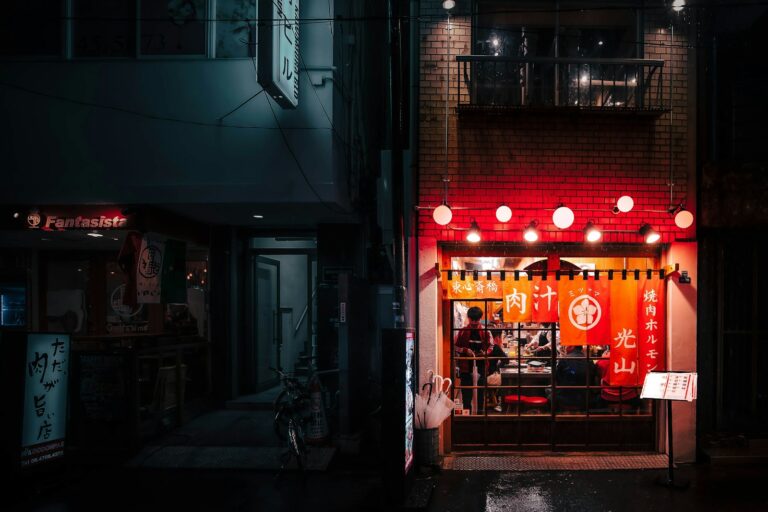
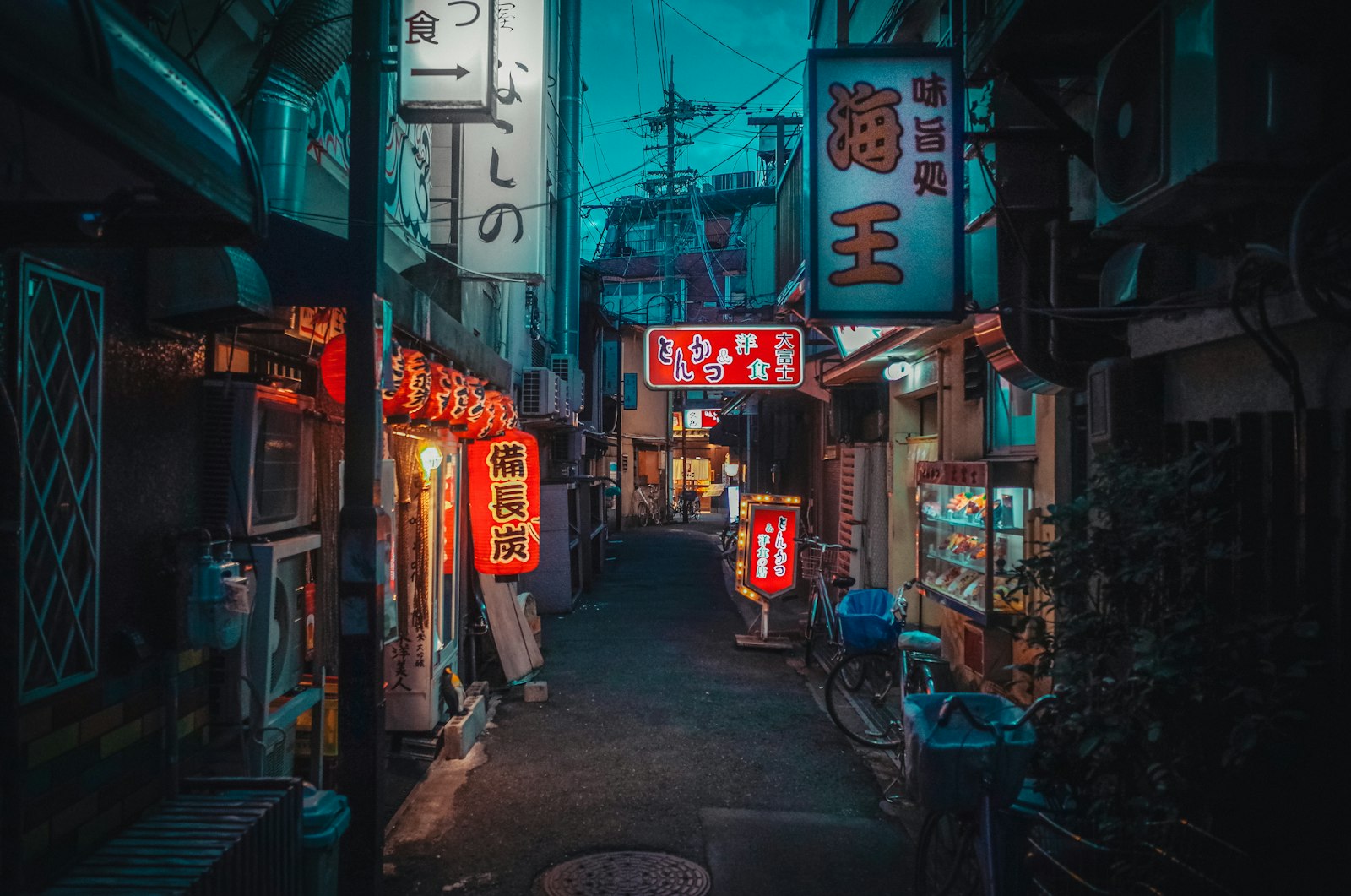
There is a category of Japanese bar that almost no guidebook handles well. You have walked past hundreds of them: a narrow door on the third floor of a mixed-tenant building, frosted glass, a small backlit sign reading SNACK followed by a woman’s name. No menu outside. No sense of what is happening in there. Most visitors assume it is either a restaurant or something adult, and keep walking.
It is neither. This is the snack bar — sunakku — and getting snack bar Japan explained properly is one of the higher-value things you can do before a trip here, because these rooms are where a huge amount of ordinary Japanese social life actually happens. Not the tourist version of it. The real one, where a woman in her sixties pours your whisky, asks what you do for a living, and makes you sing.
This guide covers what a sunakku is, why it legally exists in the shape it does, what the mama’s role really is, what a night costs, and how to tell from the street whether a particular door is open to you. No venue names — snacks turn over constantly and a list would be stale by next season. What doesn’t go stale is knowing how the room works.
Contents
- Snack Bar Japan Explained: The Short Version
- Why Snack Bars Exist in This Exact Shape
- The Mama: Why the Whole Room Runs Through One Person
- What a Night at a Snack Bar Actually Costs
- Karaoke, and the Rule Nobody Tells You
- How to Read the Door Before You Walk In
- Snack Bar Etiquette for Visitors
- Can Foreigners Actually Go to a Snack Bar?
- Where Snack Bars Are — and Where They Are Best
- Snack Bar Japan Explained: The 60-Second Recap
- What do you do in Tokyo After 10?Join our Tokyo Nightlife Private Tour
- Seeing One From the Inside
- About the Author
Snack Bar Japan Explained: The Short Version
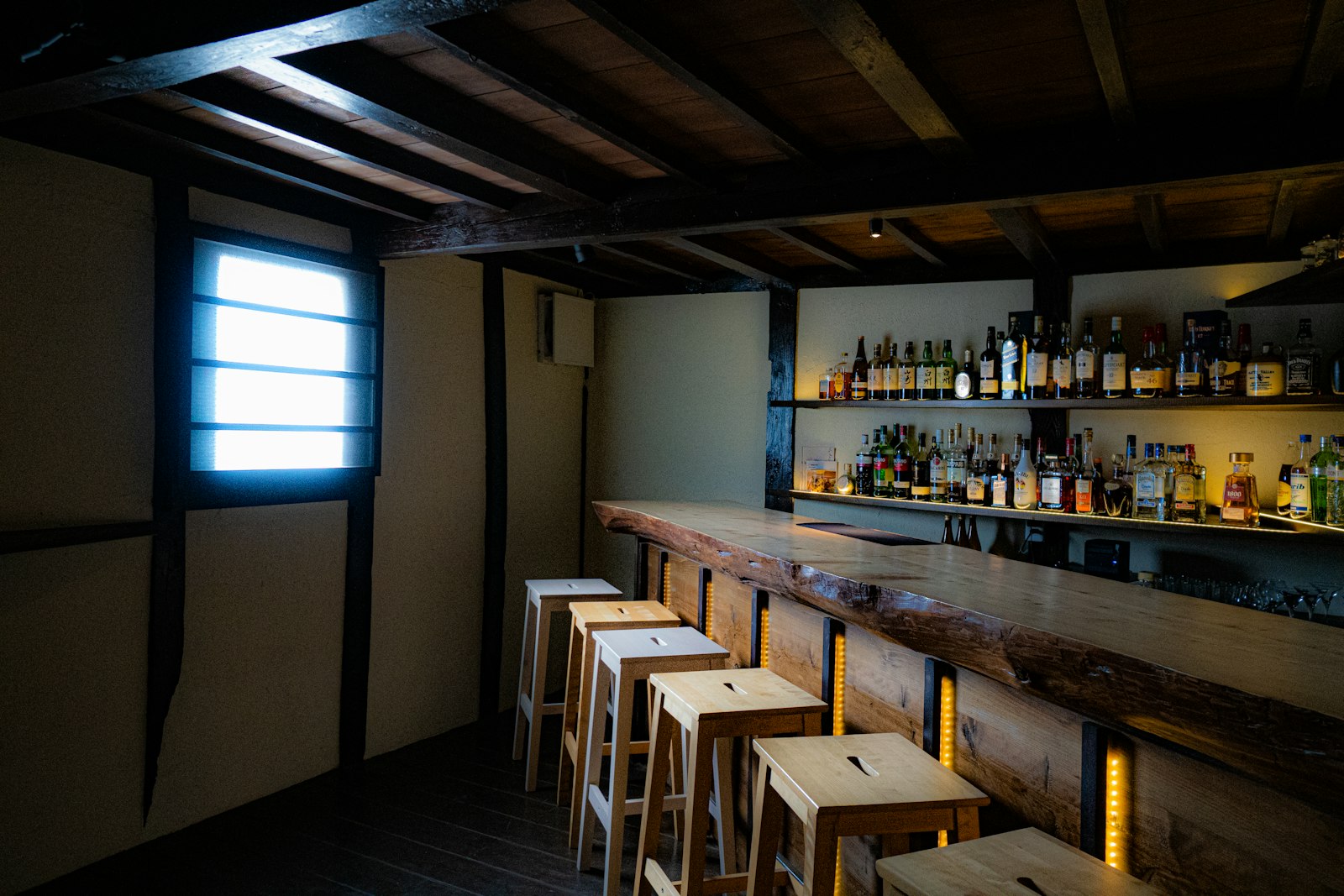
A snack bar is a small drinking establishment — typically six to fifteen seats, mostly counter — run by a female proprietor called the mama. She pours the drinks, puts out simple food, runs the karaoke machine, and manages the conversation in the room. That last part is the actual product.
Four things define the format:
- It is small. One room, one counter, sometimes a couple of tables. You will be able to hear everyone else’s conversation, and they will hear yours.
- The mama stays behind the counter. She talks to you across it. She does not sit down beside you. This is a legal distinction, not a stylistic one, and it is covered below.
- You pay a flat set charge, not per drink alone. The charge buys your seat, ice, mixers, the small dishes, and usually karaoke.
- The clientele is regulars. Most snacks run on a base of people who have been coming for years — the same salaryman every Thursday, the neighbourhood shop owner, the retired schoolteacher.
Think of it less as a bar and more as somebody’s living room that happens to sell whisky. The mama is hosting. You are a guest who pays.
The scale of this is easy to underestimate. Koichi Taniguchi, a law professor at Tokyo Metropolitan University who heads a research group dedicated to the subject, puts the number at roughly 70,000 snack bars nationwide — more than Japan has convenience stores, as The Japan Times documented in its feature on the format. This is not a niche. It is one of the most common types of business in the country, and it is nearly invisible to visitors.
Why Snack Bars Exist in This Exact Shape
The snack bar is a regulatory artifact, and knowing that explains nearly everything else about it.
Japan’s Adult Entertainment Business Law separates venues where staff provide settai (接待) — personal entertainment, meaning sitting beside a customer, pouring for them one-on-one, keeping them company at their table — from ordinary food-and-drink businesses. Venues licensed for settai are classed as entertainment businesses and face restricted operating hours. Ordinary restaurants and bars do not.
In the mid-1960s, around the time of the 1964 Tokyo Olympics, enforcement tightened. Bars that wanted to keep trading late had a choice: accept the entertainment licence and its earlier closing time, or drop the seated-hostess service and operate as a business serving light food — snacks. Large numbers chose the second route. The name on the sign came from the legal category, and it stuck for sixty years.
So the counter is the whole architecture. The mama talks to you from the other side of it because that is what keeps the venue in the lighter category. When people say a snack bar is “not a hostess club,” they are describing a licensing boundary, and it is a real one.
The Mama: Why the Whole Room Runs Through One Person
Everything about a snack bar is downstream of the mama. She is owner, bartender, cook, accountant, DJ, and — the part visitors do not expect — social director.
Her actual job is managing the room’s conversation. When you sit down, she will find out enough about you in three minutes to introduce you into whatever the regulars are already discussing. If the man two seats down is a retired civil engineer and you mentioned architecture, she will connect you. If somebody is drinking too fast, she will slow them down. If somebody is being tiresome, the room quietly reorganises around them.
The tone takes foreigners by surprise. A good mama is not deferential. She will tease you, tell you plainly that you are wrong about something, and comment on how much you’re drinking. In Japanese service culture — where the customer is usually treated with formal distance — this bluntness is the point. It signals that you are being handled as a person in her room rather than as a transaction. Being scolded by a snack mama is a small social promotion.
This is also what separates a snack from the rest of Japan’s night economy. In a hostess club the attention is bought and priced. In a snack, the mama’s attention is simply how the room operates, and it is distributed across everyone in it, including the regular who has been nursing the same shochu for an hour. If you want the full landscape of how these categories differ, we break it down in our comparison of girls bars, kyabakura and snack bars.
What a Night at a Snack Bar Actually Costs
Pricing is where visitors get nervous, and reasonably so — a room with no posted menu triggers every rip-off instinct you have. But snack bar pricing is usually simple and, in practice, modest. Expect something like this:
| Item | Typical range | Notes |
|---|---|---|
| Set charge (お通し / セット料金) | ¥1,500–¥3,000 per person | Seat, ice, mixers, small dishes, usually karaoke |
| Drinks | ¥500–¥900 each | Shochu or whisky with water or soda is standard |
| All-you-can-drink set | ¥3,000–¥5,000 | Common for 90–120 minutes where offered |
| Karaoke | Usually included | Occasionally ¥100–¥200 per song |
| Realistic total | ¥4,000–¥7,000 | For roughly two hours |
These are ranges, not quotes. A snack in a regional city will sit at the bottom of them; one in central Tokyo or Ginza can sit well above. The important habit is to ask before you sit down — “Sētto wa ikura desu ka?” (“How much is the set charge?”). Any legitimate snack will answer immediately and without irritation. Hesitation or a vague answer is your cue to leave, which is the same rule that applies across Tokyo’s night districts.
Two practical notes. Bring cash. A large share of snacks still do not take cards, and the ones that do may add a fee. And the bill is not negotiable but it is predictable — unlike some tout-driven venues in Kabukicho, snacks make their money from people returning for years, which is a powerful incentive against gouging anyone.
Bottle Keep: The System That Explains Everything
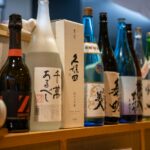
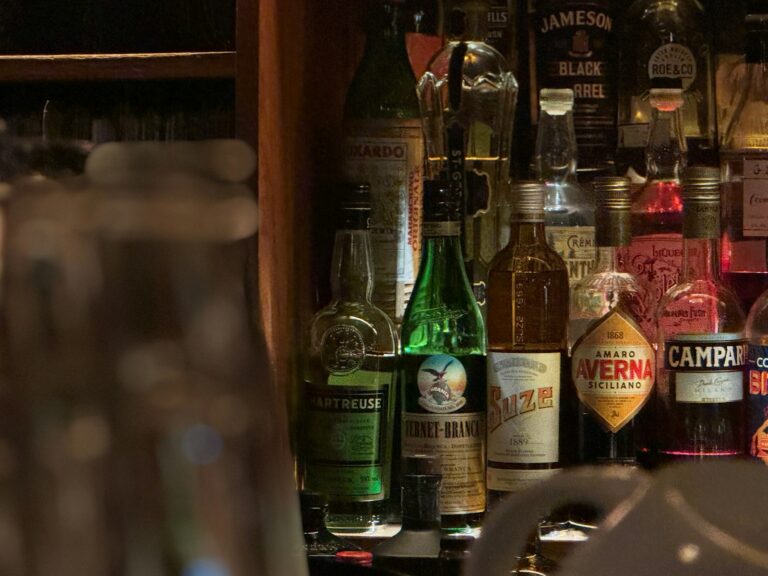
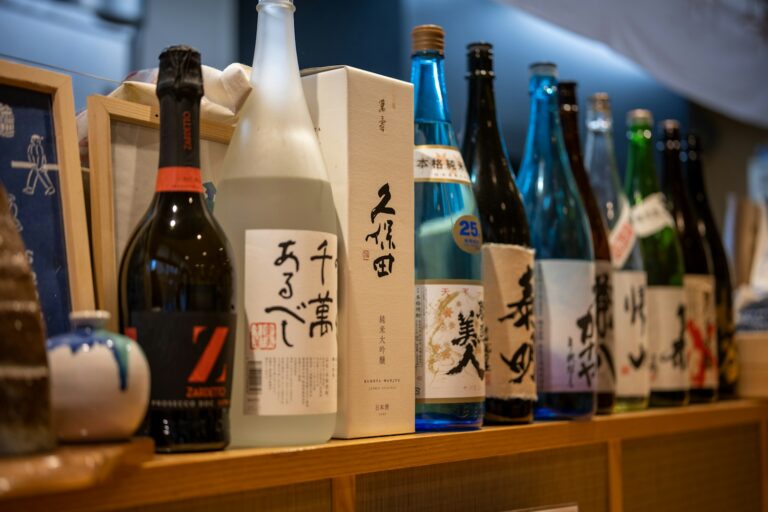
If you look behind the counter you will see a shelf of whisky and shochu bottles with paper tags on them. Each has somebody’s name written on it.
This is bottle keep. You buy a whole bottle rather than individual drinks, you drink what you want of it, and the mama stores the rest with your name on it until your next visit. Practically, it lowers the cost per glass for anyone who comes regularly. Socially, it does something more interesting: your bottle sitting on that shelf is physical proof that you belong to the place. It is a membership card made of whisky.
You do not need to do this as a visitor — bottle keep only pays off over months. But understanding it tells you what the whole business model is. A snack is not trying to sell you a maximum number of drinks tonight. It is trying to become the place you come back to.
Karaoke, and the Rule Nobody Tells You
Most snacks have a karaoke machine, and it is not optional decoration. Karaoke arrived in these rooms in the 1970s and became the social engine of the format.
The rule that matters: being good is irrelevant. Being willing is everything.
A snack bar’s karaoke is not performance, it is participation. A middle manager singing a Showa-era ballad slightly flat while the room claps along is the entire cultural point — it is the moment the professional mask comes off and gets accepted anyway. If you refuse to sing, nothing bad happens, but you have sat out the part of the evening that the room is built around.
Practical advice: pick something the mama’s machine will definitely have and the room can latch onto. The Beatles, Carpenters, Queen, and Elvis are safe in almost any snack in Japan. And when somebody else sings, put your glass down and listen. Talking through another customer’s song is one of the few genuine rudenesses in this environment.
Looking for Adult Entertainment Services in Tokyo? Download this
I’ve spent over a decade exploring and studying Japan’s adult entertainment scene firsthand. If you’d like detailed insider information—including how to choose the right shop, what services are available, and tips for avoiding common mistakes—check out our exclusive E-book.
How to Read the Door Before You Walk In
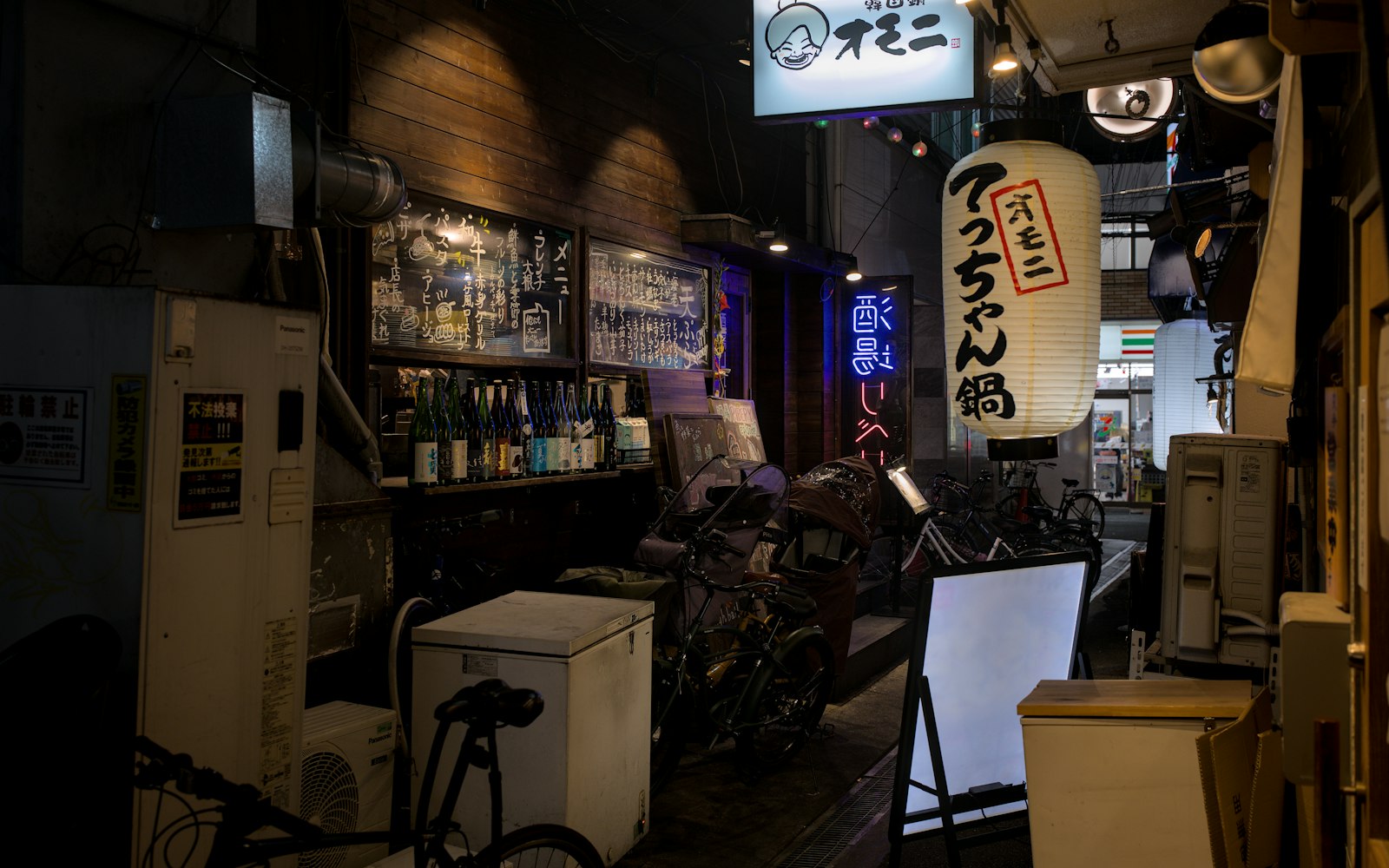
Not every snack wants walk-ins, and there is no shame in either direction. You can usually tell from outside.
Signs you are welcome:
- Prices posted at the entrance, in yen, where you can read them
- Any English at all — a chalkboard, a “Welcome” sign, a taped-up note
- A menu or photo board visible through the glass
- The door propped slightly open and noise coming out
Signs to keep walking:
- 一見さんお断り (ichigen-san okotowari) — “no first-time guests without an introduction.” This is a clear, polite no. It is not aimed at foreigners; it applies to Japanese strangers too.
- A members-only notice (会員制)
- No pricing anywhere and a completely sealed frontage
- Anyone on the street trying to pull you in. Snacks do not tout. A tout outside a “snack” sign is running something else, and you can read why that matters in our guide to avoiding inflated bar bills in Kabukicho.
If you are unsure, you can open the door, say “Hajimete desu” (“this is my first time”), and read the mama’s face. A welcoming snack will wave you to a seat. A regulars-only room will apologise politely, and you should just thank them and go. Nobody involved will be offended.
Snack Bar Etiquette for Visitors
The rules are few and mostly about being a decent guest in someone’s room.
- Greet the room, not just the mama. A general “konbanwa” on entry costs nothing and changes how you are received.
- Say it is your first time. “Hajimete desu.” It tells everyone to explain things and lowers the bar for you entirely.
- Order something simple. Whisky with water (mizuwari), whisky soda (haibōru), or shochu with hot water. Cocktails are not what this room does well.
- Talk to the people next to you. That is the product. A snack where nobody talks has failed at its job.
- Compliment the mama, not the customers’ wives. Standard bar wisdom, applied.
- Do not treat the mama or staff as available. This is not that kind of venue, and misreading it is the fastest way to be asked to leave.
- Stay about ninety minutes to two hours. Long enough to matter, short enough to leave the room fresh.
- Pay in cash, do not tip. Tipping is not done in Japan and will create confusion rather than goodwill.
Almost none of this requires fluent Japanese. It requires warmth, a willingness to look slightly foolish, and a few set phrases. The broader logic behind these rules — the drinking-first social contract, why the group matters more than the individual order — is something we cover in our guide to Japanese drinking culture.
Can Foreigners Actually Go to a Snack Bar?
Yes — with one honest caveat.
The barrier is not hostility. It is language and the mama’s anxiety about it. A mama running a room alone worries about a guest she cannot talk to, because a guest she cannot talk to is a guest she cannot look after, and looking after people is her entire job. Some will decline for that reason and no other.
The counterweight is that snack culture has shifted. Younger mamas have opened rooms aimed at a mixed crowd, English menus have appeared, and in tourist-heavy areas of Tokyo and Osaka a meaningful number of snacks now actively want international customers. The scene has also had a broad revival among younger Japanese drinkers who find polished cocktail bars sterile by comparison.
Realistically, your options are: find a snack that has signalled openness from the door, go with a Japanese-speaking friend, or go with a guide. The difference in experience between the three is large. Alone with no Japanese, you will have a pleasant but thin evening. With someone who can bridge the conversation, you get the thing people actually value about snacks — being absorbed into a room of strangers for two hours.
If a full evening of small bars appeals, the same skills apply next door in Shinjuku’s alley districts, and our Golden Gai guide covers that neighbouring world of six-seat rooms in detail.
Where Snack Bars Are — and Where They Are Best
Every Japanese city has them. What changes is the character.
- Central Tokyo (Shinjuku Sanchome, Akasaka, Ginza, Shimbashi) — denser, more expensive, more likely to have seen a foreign customer before.
- Suburban and regional cities — the format at its purest. Cheaper, warmer, less likely to have English, far more likely to end with the whole room singing together. Snack culture has thinned out in big-city centres while holding strong in smaller towns.
- Around train stations, one floor up — the classic location anywhere in the country. Look at the tenant boards by the entrance of mixed-use buildings; snack names are usually in hiragana or a woman’s given name.
The category is ageing, and that is worth knowing. Many mamas are in their sixties and seventies with no successor, and rooms close when they retire. The snack bar you walk into is part of something genuinely finite.
Snack Bar Japan Explained: The 60-Second Recap
If you take nothing else from this, take these:
- A snack bar is a small counter room run by a mama, who hosts rather than serves.
- The counter exists because of licensing — staff stay behind it, which is what makes a snack a snack and not a hostess club.
- You pay a set charge of roughly ¥1,500–¥3,000, and a normal two-hour night lands around ¥4,000–¥7,000. Ask the price before sitting. Bring cash.
- Bottle keep is the membership system: your bottle on the shelf means you belong.
- Karaoke is participation, not performance. Sing badly and enthusiastically.
- Read the door: posted prices and any English mean yes; ichigen-san okotowari means no, politely.
What do you do in Tokyo After 10?
Join our Tokyo Nightlife Private Tour
You deserve better than overpriced bars and missed opportunities. We’re here for you.
Seeing One From the Inside
Snacks are the most rewarding and least accessible rooms in Japanese nightlife, and both of those facts have the same cause: they are built for regulars, not for customers. Nothing about the format is designed to make a stranger’s first visit easy.
That is exactly the gap a local guide closes. Our Tokyo After 10 nightlife tour is built around getting into the small rooms — snacks, counter bars, the places with no English sign and no online presence — with someone who knows which door to open, knows the mama, and can keep the conversation moving in both directions. You skip the part where you stand on the street trying to guess, and go straight to the part where you are three drinks in, singing badly, and being told off affectionately by a woman you met an hour ago.
That is what a snack bar is for. It is worth the trouble of getting inside one.
Further reading: Nippon.com’s introduction to Japanese snack bars covers the format’s post-war history in more depth.