Photo by <a href="https://unsplash.com/@rinakemp?utm_source=tokyodeepnightlife&utm_medium=referral">Rina Kemppainen</a> on <a href="https://unsplash.com/?utm_source=tokyodeepnightlife&utm_medium=referral">Unsplash</a>
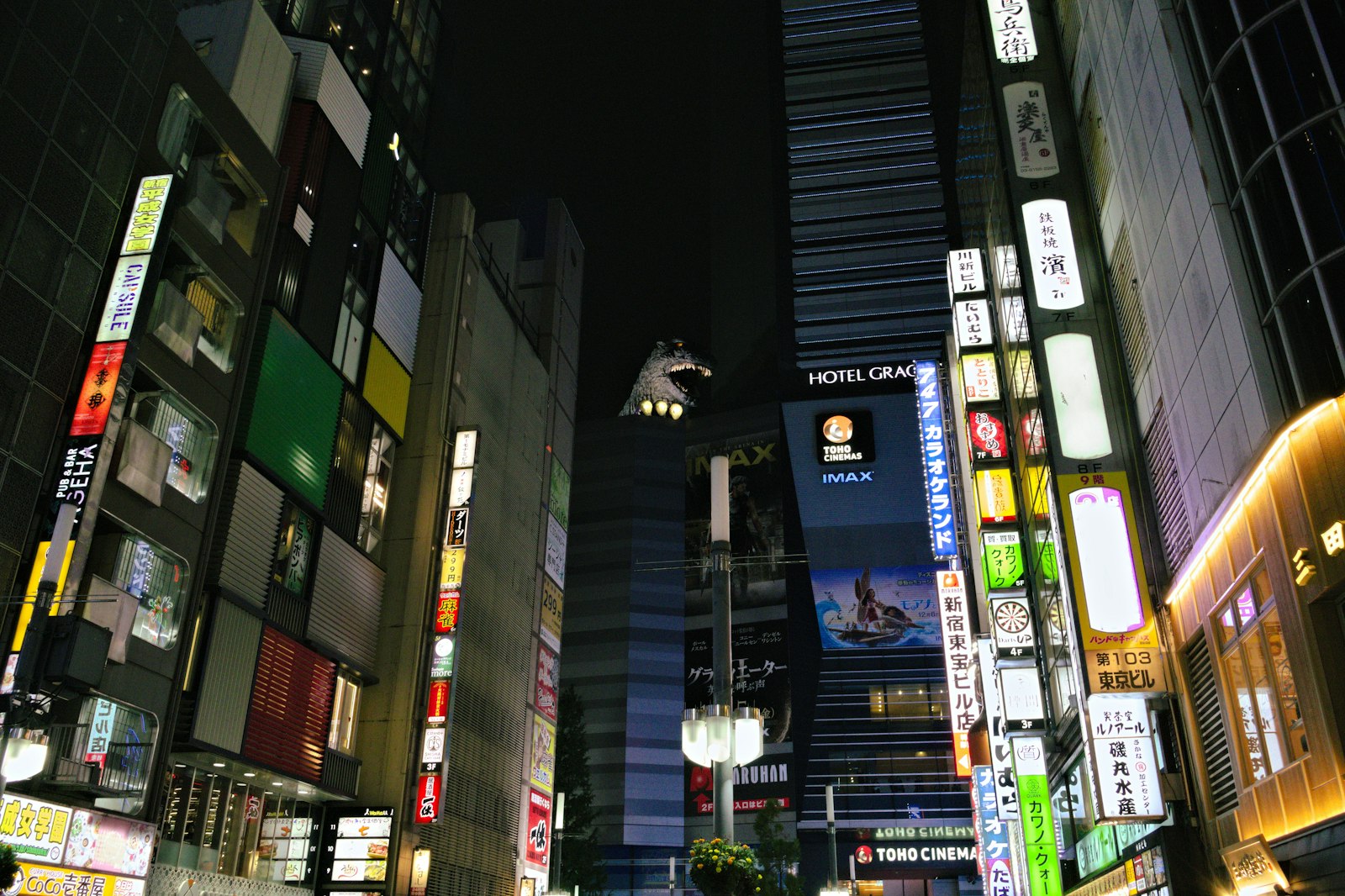
Walk one block through Kabukicho and you’ll pass a dozen signs advertising bars with women behind or beside the counter. Three words keep coming up, and understanding girls bar vs kyabakura vs snack is the difference between a ¥5,000 night and a ¥30,000 one. They look similar from the street. They are not the same product, they are not priced the same way, and they don’t even close at the same hour.
Most guides define these three separately and leave you to guess which one you actually want. That’s backwards. All three are shaped by a single line in Japanese law, and once you know what that line says, the whole system — the seating, the price, the closing time, the way staff behave — snaps into place. Here’s how it works.
Contents
- The One Rule That Explains Everything: Settai
- Girls Bar vs Kyabakura vs Snack at a Glance
- What a Girls Bar Actually Is
- What a Kyabakura Actually Is
- What a Snack Bar Actually Is
- Which One Should You Choose Tonight?
- Five Mistakes Foreigners Make in All Three
- How to Pay and Leave Without Awkwardness
- What do you do in Tokyo After 10?Join our Tokyo Nightlife Private Tour
- Skip the Guesswork with a Local Guide
- About the Author
The One Rule That Explains Everything: Settai
Japan’s Act on Control and Improvement of Amusement Business — usually shortened to fūeihō — regulates venues based on whether they provide something called settai (接待). The law defines it as “entertaining customers in a manner that creates a convivial atmosphere.” The National Police Agency’s operational guidelines narrow it further: it counts as settai when a staff member gives conversation or service that goes beyond what serving food and drinks normally requires, directed at a specific customer or group rather than the room in general.
Sitting down next to you on a sofa and talking to you for 50 minutes is settai. Standing behind a counter mixing highballs and chatting with whoever’s in front of her is not.
That distinction forces every venue into one of two lanes:
**Lane 1 — Category 1 license (fūzoku eigyō ichigō).** The venue may provide settai. Staff can sit beside you. In exchange, operating hours are capped: as a rule, no business between midnight and 6:00 a.m. Tokyo’s implementing ordinance allows an extension to 1:00 a.m. in designated commercial zones — parts of Kabukicho and Shinjuku Sanchome qualify — but that’s the ceiling, not a loophole.
Lane 2 — Late-night alcohol-serving restaurant notification. The venue can serve until dawn, but settai is prohibited. Staff stay on their side of the counter.
You cannot have both. Every operator picks a lane, and that choice is what you’re really buying when you walk in. Kyabakura are Lane 1. Girls bars are Lane 2. Snacks sit on the border, which we’ll get to.
If you’ve read our breakdown of how girls bars differ from full hostess clubs, this is the mechanism underneath it.
Girls Bar vs Kyabakura vs Snack at a Glance
| Girls Bar | Kyabakura | Snack | |
|---|---|---|---|
| Where staff are | Behind the counter | Seated beside you | Behind the counter (usually) |
| Attention | Shared with other guests | One-on-one, timed | Shared; the mama runs the room |
| Typical spend | ¥5,000–8,000 per hour | ¥15,000–30,000+ per hour | ¥4,000–6,000 per visit |
| Billing unit | Set of 40–60 min | Set of 40–60 min + extras | Table charge, often flat |
| Service & tax on top | ~10–20% | 20–40% | Usually built in |
| Closes | Often 3:00–5:00 a.m. | Midnight (1:00 a.m. in some Tokyo zones) | Varies; many run late |
| Staff age range | Mostly early-to-mid 20s | 20s–30s | The mama is often 40s–60s+ |
| Karaoke | Sometimes | Sometimes | Almost always |
| English odds | Moderate in tourist areas | Moderate in Roppongi/Kabukicho | Low outside tourist districts |
| Best for | A cheap, low-pressure first taste | A polished night with real budget | Conversation and local texture |
Price figures are typical ranges reported by Japanese nightlife operators and English-language coverage; individual venues vary widely, and the ranges assume you don’t buy rounds of drinks for staff.
What a Girls Bar Actually Is
A girls bar is a small counter bar — often eight to fifteen seats — where the bartenders are young women, and talking to them is the point. You sit on one side, they work on the other. One staff member typically floats between three or four customers, so the attention is real but shared. Nobody is going to sit down next to you, because legally nobody can.
The system and what it costs
You buy a set — usually 40 to 60 minutes — and it commonly runs ¥3,000–¥5,000, often with nomihōdai (all-you-can-drink) from a house list of highballs, shōchū, and beer. When your set ends, staff ask whether you want to extend. Say yes or say no; both are normal.
The variable that wrecks budgets is the cast drink — buying a drink for the woman serving you, at roughly ¥1,000 a pop. It’s optional. It’s also the main way girls bars make money, so you’ll be asked, sometimes more than once. A realistic hour lands around ¥5,000–¥8,000 including one or two cast drinks and 10–20% service and tax. We break the line items down further in our guide to the girls bar price system in Japan.
Who it suits
Girls bars are the low-stakes entry point. The bill is small enough that a misunderstanding costs you thousands of yen, not tens of thousands. They stay open long after kyabakura have shut, which makes them the natural 2:00 a.m. option. And because the counter sits between you and the staff, the social pressure is genuinely lower — you can nurse a drink and listen.
The trade-off: the conversation is split across the counter, the drinks are cheap house pours, and the room is often loud and bright rather than intimate.
What a Kyabakura Actually Is
Kyabakura is a contraction of “cabaret club.” A hostess — a kyabajō — sits down beside you, pours your drinks, manages the conversation, and stays for the length of your set before rotating to another table. This is settai in its licensed, above-board form. It’s also why kyabakura are the most expensive of the three by a wide margin, and why they close at midnight.
The charge sheet
Kyabakura pricing is modular, and the module names are worth memorizing before you walk in:
- Set charge — the base for 40–60 minutes, commonly ¥8,000–¥15,000, often including a house bottle
- Shimei (指名) — a nomination fee to request a specific hostess, typically ¥2,000–¥3,000
- Cast drinks — drinks for your hostess, ¥2,000–¥3,000 and up each
- Dōhan (同伴) — meeting a hostess for dinner beforehand and arriving together; carries its own fee
- Service charge and consumption tax — 20–40%, applied on top of everything above, not included in the menu prices
That last point is where foreign visitors get surprised. A menu that reads ¥10,000 is not a ¥10,000 evening. Add the extras and the multiplier and a single hour realistically runs ¥15,000–¥30,000 or more. Our Kyabakura first-timer’s guide walks through a full sample bill.
Who it suits
If you want the polished version — attentive one-on-one conversation, better liquor, a room designed to feel like an occasion — this is it, and it’s a genuine cultural experience with its own etiquette and rhythm. Go in with a hard number in your head and confirm the system at the door. Go early, too: the midnight cap is real, and last orders come sooner than you’d expect.
Looking for Adult Entertainment Services in Tokyo? Download this
I’ve spent over a decade exploring and studying Japan’s adult entertainment scene firsthand. If you’d like detailed insider information—including how to choose the right shop, what services are available, and tips for avoiding common mistakes—check out our exclusive E-book.
What a Snack Bar Actually Is
A snack is the one most travelers have never heard of and the one that most rewards curiosity. Picture a room the size of a studio apartment, a counter, a karaoke machine, bottles with customers’ names taped to them, and a proprietress — the mama — who has probably run the place for twenty years.
There are roughly 70,000 snack bars across Japan — more than there are convenience stores — with around 4,938 in Tokyo alone, according to The Japan Times. They are everywhere, including small towns where they’re the only place open after 10:00 p.m.
The format dates to around the 1964 Tokyo Olympics, when tightened regulations pushed drinking venues to close at midnight. Operators began serving light food — “snacks” — and restructuring service so they could keep the lights on later. That history is the same settai logic playing out sixty years ago.
The mama, bottle keep, and karaoke
The mama is host, bartender, and de facto counselor. She pours, hands you a hot towel, steers the conversation so nobody at the counter is left out, and will absolutely sing a duet with you. Interaction happens across the counter rather than seated beside you — the legal distinction again, though some snacks do hold Category 1 licenses and close at midnight accordingly.
Cost is refreshingly simple. A table charge of around ¥3,000, typically including light food and often bottomless house drinks, with a full visit landing at ¥4,000–¥6,000. Karaoke may cost extra per song. And you’ll see bottle keep: buy a bottle of whisky or shōchū, write your name on it, and it waits behind the counter for your next visit. Expect beer, whisky, and shōchū. Do not expect craft cocktails.
Who it suits — and the ichigensan problem
If you want to actually talk to Japanese people rather than be served by them, a snack is the best value in this entire comparison. The regulars will talk to you. The mama will introduce you.
The catch is access. Many snacks operate on a regulars-first culture, and some quietly decline first-time walk-ins — the ichigensan okotowari convention. There’s rarely a menu in the window, English is uncommon outside tourist districts, and the door is often unmarked on the fourth floor of a building with no elevator. Snacks are the highest-reward and highest-friction option of the three.
Which One Should You Choose Tonight?
The girls bar vs kyabakura vs snack decision gets easy once you work backwards from your constraint rather than from curiosity:
- It’s past 1:00 a.m. → Girls bar. Kyabakura are legally shut. This one decides itself.
- Budget under ¥10,000 for the night → Girls bar or snack. A kyabakura will eat that in forty minutes.
- You want one person’s full attention → Kyabakura. It’s the only one of the three that legally sells that.
- You want to meet actual locals → Snack. The other two are transactions; a snack is a room.
- You speak no Japanese and have no guide → Girls bar in Shinjuku or Roppongi. Highest odds of English, lowest cost of a misunderstanding.
- You want to sing → Snack, comfortably.
- It’s your first night in Japan → Girls bar. Learn the vocabulary — set, shimei, cast drink — on the cheap venue before you spend money on the expensive one.
Five Mistakes Foreigners Make in All Three
1. Following a tout. This is the big one. Street solicitation — kyakuhiki — is restricted by ordinance in Shinjuku and other Tokyo wards, and targeting specific passersby to pull them into a shop carries fines up to ¥500,000 for individuals. The only lawful version is someone standing with a placard calling out generally. If a man approaches you, walks with you, and offers a suspiciously good deal, the venue at the end of that walk is not a licensed girls bar. Our Kabukicho scam-avoidance guide covers the specific patterns.
2. Not confirming the system at the door. Before you sit, ask three questions: how long is one set, how much is it, and what’s the service charge. Any legitimate venue answers immediately, often with a printed sheet. Hesitation is your cue to leave.
3. Treating cast drinks as included. They never are. When someone asks whether you’d like to buy her a drink, that’s a line item. Saying “not right now, thanks” is completely acceptable and nobody will be offended.
4. Ignoring the clock. At a kyabakura, midnight isn’t a suggestion — the venue is legally obliged to stop. If you arrive at 11:20 p.m. you’re buying twenty minutes, not an evening.
5. Assuming cards work. Many small girls bars and most snacks are cash-only, and some venues that do take cards add a surcharge. Carry enough cash for the night you’re planning, plus a margin.
How to Pay and Leave Without Awkwardness
There’s no ritual to it. When your set is ending, staff will ask if you want to extend. Say “okaikei onegaishimasu” — check, please. You’ll get an itemized slip; look at it before you hand over money, and if a line doesn’t match what you were quoted, ask what it is. Politely querying a bill is normal in Japan and won’t cause a scene.
Tipping isn’t customary in any of the three. Nobody expects it, and leaving cash on the counter can create confusion rather than goodwill.
What do you do in Tokyo After 10?
Join our Tokyo Nightlife Private Tour
You deserve better than overpriced bars and missed opportunities. We’re here for you.
Skip the Guesswork with a Local Guide
You can absolutely do all of this alone — plenty of people do, and a girls bar is a forgiving place to start. But the three venues in this comparison are the ones where language, unwritten pricing conventions, and the difference between a licensed shop and a tout’s shop matter most. A snack bar that would never open its door to a walk-in foreigner will open it for a regular who brings you along.
That’s the gap our Tokyo After 10 nightlife tour fills — a local walks you into the venues that don’t advertise, handles the door, translates the bill, and knows which shops on which floors are actually worth your evening.
Whichever you choose, the girls bar vs kyabakura vs snack question comes down to one thing you can now check from the doorway: is she behind the counter, or beside you? Every price on the menu follows from the answer.
Further reading: The Japan Times has an excellent long-form feature on Japan’s snack bars, and Nippon.com’s introduction to snack bar culture covers the history in more depth.