Photo by <a href="https://unsplash.com/@masamasa3?utm_source=tokyodeepnightlife&utm_medium=referral">masahiro miyagi</a> on <a href="https://unsplash.com/?utm_source=tokyodeepnightlife&utm_medium=referral">Unsplash</a>
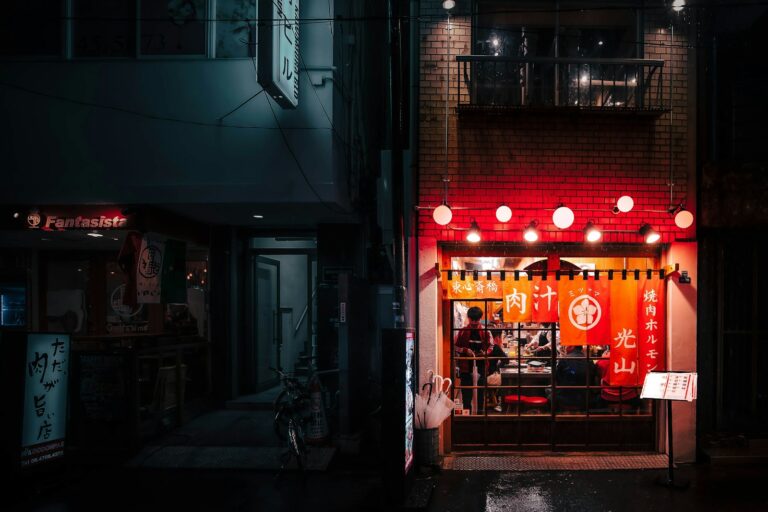
There is a category of Tokyo bar you have almost certainly walked past a hundred times without noticing. Second floor, narrow staircase, a small illuminated sign with a woman’s name on it — Yoko, Michiko, Rumi — and nothing else. No menu outside. No prices. Frosted glass you can’t see through.
That’s a sunakku (スナック), and walking into a snack bar in Tokyo as a foreigner is the single most underrated night out in this city. Not because it’s exotic. Because it’s the only bar format in Japan where the entire business model is built around someone talking to you.
The person doing the talking is the mama.
Contents
- What a Snack Bar Actually Is
- Why the Mama Is the Whole Point
- What Does a Snack Bar in Tokyo Cost a Foreigner?
- Can You Walk Into a Snack Bar in Tokyo as a Foreigner?
- Your First Two Hours, Step by Step
- The Japanese That Does the Heavy Lifting
- Karaoke: The Part Foreigners Get Wrong
- Snack Bar Etiquette: A Short List
- Where Snack Bars Cluster in Tokyo
- The Honest Downside
- Skip the Guesswork: Go With Someone Who Knows the Mama
- What do you do in Tokyo After 10?Join our Tokyo Nightlife Private Tour
- FAQ
- About the Author
What a Snack Bar Actually Is
A snack bar is a small counter bar — usually eight to twelve seats — run by a woman known as the mama or mama-san. She pours the drinks, puts out small dishes, keeps conversation moving between strangers at the counter, and runs the karaoke machine. That’s the product. You are not buying whisky. You are buying two hours of being talked to.
The format dates to the mid-1960s. Regulations at the time forced adult entertainment venues to close at midnight, so bars began serving light food — “snacks” — to qualify as food service businesses and stay open later. The name stuck. A legal distinction also stuck: at a proper snack bar, staff serve you from behind the counter rather than sitting beside you, which is what separates a snack from a hostess club in regulatory terms.
They are everywhere. Estimates vary widely because so many are unregistered or family-run, but Tokyo Metropolitan University law professor Koichi Taniguchi has put the figure at roughly 70,000 nationwide — more than the number of convenience stores in Japan. You have been surrounded by them this whole trip.
Snack vs. Girls Bar vs. Kyabakura
These get confused constantly, and confusing them is how tourists end up with a ¥40,000 bill they didn’t expect.
- Snack — One mama (sometimes with a part-timer), counter service, set charge, karaoke, mixed clientele including couples and women. Conversation is communal.
- Girls bar — Younger staff behind a counter, usually hourly pricing, drinks bought for staff.
- Kyabakura (hostess club) — Staff sit at your table, one-on-one, priced by the hour with nomination fees on top. A different price bracket entirely.
If you want the full breakdown before you go out, our guide to the difference between a girls bar, kyabakura and snack covers the pricing structures side by side.
Why the Mama Is the Whole Point
Every snack bar is a reflection of one woman’s personality. She chose the wallpaper, the glassware, the karaoke catalogue, and — over twenty or thirty years — the regulars. Some mamas are warm and maternal. Some are sharp and funny and will roast you inside four minutes. Some have run the same eight seats since the Bubble era and have opinions about every prime minister since.
Her actual job, the skill she has spent decades developing, is making a room of unrelated people feel like they know each other. She’ll tee up a topic, pull a quiet regular into it, and hand you a microphone at exactly the moment you’ve had enough shōchū to use it.
This is why a snack bar works so well for a foreign visitor even across a language gap. You are not expected to carry a conversation. She is. Your job is to show up, be pleasant, and let her do the thing she’s good at.
What Does a Snack Bar in Tokyo Cost a Foreigner?
The same as it costs anyone else — that’s the first thing worth saying, because visitors often assume there’s a tourist price. There isn’t, at a legitimate place. Snack bars don’t price by the drink. You pay a set charge (setto ryōkin) that bundles seat, snacks, ice, water, and usually a run of drinks.
- Set charge: most commonly ¥3,000–¥5,000 per person. Nippon.com describes ¥3,000 as the standard fixed-menu price. Ginza and other high-end pockets run considerably higher — figures up to ¥8,000 get quoted.
- What’s included: the seat, otōshi snacks, ice and water for mixing, and typically your drinks within a time block (often 90–120 minutes).
- Karaoke: included at many places; others charge roughly ¥100–¥300 per song or sell song tickets in bundles.
- Bottle keep: you buy a full bottle of whisky or shōchū, the mama writes your name on it and shelves it for your next visit. Economical only if you’re coming back — so, not usually a tourist move, though it’s a charming souvenir if you plan a return trip.
- Cash. Assume cash only. Many of these places have never owned a card terminal. There is no tipping.
Realistic all-in for one person for a couple of hours: ¥4,000–¥7,000. That is less than a single round at most Roppongi clubs.
The one rule that matters: confirm the set charge before you sit down. Ask “Setto wa ikura desu ka?” (セットはいくらですか?). A legitimate snack bar answers immediately and without drama. Any hesitation, any “don’t worry about it” — leave. That’s the same instinct that keeps you out of trouble generally; our Tokyo nightlife scams and safety guide goes deeper on the specific tricks used around Kabukicho.
Can You Walk Into a Snack Bar in Tokyo as a Foreigner?
Honest answer: sometimes, and it depends entirely on the door.
Plenty of snack bars are effectively regulars-only. This isn’t personal and it usually isn’t xenophobia — it’s that the mama runs an eight-seat room on relationships, and a group who can’t communicate, won’t sing, and may not understand the bill is genuine operational risk for her. Some places post 会員制 (kaiinsei, members only) or operate an ichigensan okotowari policy: no first-time customers without an introduction.
But the situation in 2026 is meaningfully better than it was ten years ago. A growing number of mamas actively want foreign customers, translation apps have removed most of the friction, and Tokyo’s central wards now have snack bars that put English signage in the window on purpose.
So you’re not locked out. You just have to read the door.
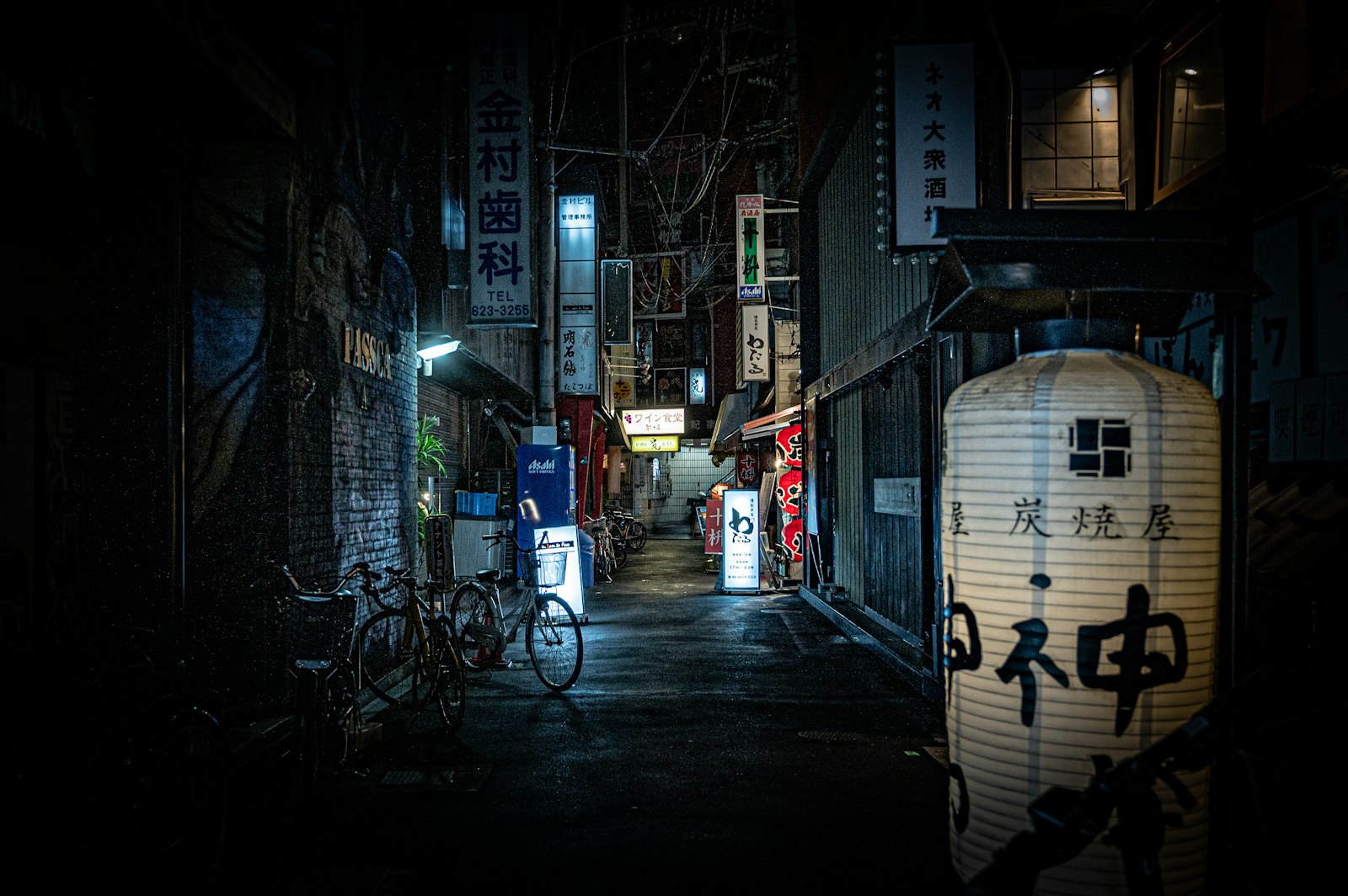
How to Read the Door Before You Walk In
Green lights:
- A posted set charge in plain numerals. Transparency about money is the single best signal.
- Any English at all — “Welcome,” “Tourist OK,” an English menu taped inside the glass.
- A door propped open, or glass you can actually see through.
- Rainbow of business cards / bottle-keep shelf visible from the entrance — a busy, sociable room.
Red lights:
- 会員制 (members only) or 紹介制 (introduction only). Don’t test it.
- No price posted anywhere, frosted glass, Japanese-only signage with no menu.
- A tout on the street pulling you toward it. Real snack bars do not need street hustlers. This is the clearest warning sign in all of Tokyo nightlife, and it’s how most rip-offs start.
If the door is ambiguous, open it, don’t sit down, and ask: “Hajimete desu ga, ii desu ka?” — “It’s my first time, is that okay?” A no costs you four seconds. A yes gets you a seat.
Your First Two Hours, Step by Step
1. Say the magic phrase. “Hajimete desu” (初めてです) — “it’s my first time.” This is the single highest-leverage sentence in this article. It tells the mama to switch into explain-everything mode: the system, the pricing, what’s included. It also tells the regulars to be nice to you.
2. Sit where she points. Counter unless directed otherwise. Don’t take a table.
3. Order something simple. Whisky mizuwari (with water), a highball, or shōchū rokku (on the rocks) are the house idiom. Beer is fine. Ordering a cocktail that requires six ingredients is not the move in a room with one person working.
4. Let the mama introduce you. She will. Usually to whichever regular has the most English or the most patience. Say yes to the introduction.
5. Sing. More on this below, but: you are going to sing.
6. Leave properly. Ask for the bill (“O-kaikei onegaishimasu”), pay in cash, and say “Gochisōsama deshita” on the way out. Ninety minutes is a respectable visit. Bow at the door. The mama will almost certainly come out to the landing to see you off — that’s standard, and it’s genuinely lovely.
The Japanese That Does the Heavy Lifting
You need about six phrases. Not six hundred.
| Japanese | Meaning | When |
|---|---|---|
| 初めてです (Hajimete desu) | It’s my first time | The moment you walk in |
| セットはいくらですか (Setto wa ikura desu ka) | How much is the set? | Before sitting |
| おすすめは? (Osusume wa?) | What do you recommend? | Ordering |
| 乾杯 (Kanpai) | Cheers | Constantly |
| お会計お願いします (O-kaikei onegaishimasu) | The bill, please | Leaving |
| ごちそうさまでした (Gochisōsama deshita) | Thank you for the hospitality | At the door |
Everything else can be a translation app, and the mama will not mind — many of them now keep one behind the counter themselves.
Looking for Adult Entertainment Services in Tokyo? Download this
I’ve spent over a decade exploring and studying Japan’s adult entertainment scene firsthand. If you’d like detailed insider information—including how to choose the right shop, what services are available, and tips for avoiding common mistakes—check out our exclusive E-book.
Karaoke: The Part Foreigners Get Wrong
Snack bar karaoke is not karaoke-box karaoke. There is no private room, no song queue on a tablet, no belting out nine songs in a row with your friends. It’s one machine, one shared room, and an unwritten rotation.
The rules that matter:
- Sing one, then pass. Hogging the machine is the cardinal sin.
- Read the room’s age. If the regulars are in their sixties and doing enka, a mid-tempo Western standard from the 70s or 80s lands far better than anything released this decade. The Beatles, Carpenters, Sinatra, Queen — these are universally stocked and universally welcomed.
- Quality is irrelevant. Nobody cares if you’re bad. They care whether you participated.
- Applaud everyone. Every single song. Loudly.
- Say yes to a duet. If the mama offers, take it. That’s the moment the whole night turns.
Refusing to sing is the one way to be genuinely rude in a snack bar. You don’t have to be good; you have to be willing.
Snack Bar Etiquette: A Short List
Nothing here is difficult. Almost everything that goes wrong for a foreigner in a Tokyo snack bar comes down to one of these.
Do:
- Compliment the mama — the bar, the food, the music. This is the correct currency.
- Talk to the regulars. Everyone at the counter is fair game for conversation; that’s the point of the format.
- Pour for others before yourself if a bottle is being shared. Standard Japanese drinking custom, and it reads well. Our explainer on Japanese drinking culture covers the broader pouring and toasting rules.
- Eat the otōshi. It’s included, she made it, eat it.
Don’t:
- Don’t treat the mama like a hostess. She is the owner of a business, not entertainment staff. No flirting-as-transaction, no asking for her number, no touching. This is the fastest way to be shown the door.
- Don’t ask what she charges “for extras.” There are none. Wrong venue, wrong country of assumption.
- Don’t photograph the room or the regulars without asking. Many snack bars ban photos outright.
- Don’t roll in with eight people. Two to four is the right size for an eight-seat counter.
- Don’t tip. It isn’t done and it creates awkwardness.
Where Snack Bars Cluster in Tokyo
Snack bars are deliberately hard to find by name — most don’t have websites, don’t appear in guidebooks, and don’t show up usefully on Google Maps. Which means finding a snack bar in Tokyo as a foreigner is less about searching and more about standing on the right block and looking up.
- Shimbashi — The densest salaryman drinking district in Tokyo, and the most traditional snack territory. Second and third floors of the small buildings west of the station.
- Shinjuku Sanchōme and Golden Gai — Golden Gai’s tiny bars aren’t all snacks, but the area is the easiest place in Tokyo to walk into a six-seat bar as a visitor, and several deliberately welcome foreigners. Our Golden Gai guide covers which alleys are which.
- Ginza — Older, formal, expensive. Beautiful if you’re prepared for the bill.
- Nakano, Kōenji, Shimokitazawa — Cheaper, younger, scruffier, often friendlier to walk-ins.
- Yokochō alleys generally — The old alley districts are dense with counter bars of every stripe; see our guide to Tokyo’s best yokochō for where to start.
One logistical note: snack bars run late, and the mama will happily keep you until the small hours. Tokyo’s trains will not. Check last train times before your second highball, or budget for a taxi.
The Honest Downside
Going solo into a snack bar in Tokyo as a foreigner is a coin flip. You might get a mama who lights up at the sight of a foreign guest, an English-speaking regular who buys you a drink, and the best two hours of your trip. Or you might get three closed doors in a row, a fourth where nobody says anything to you, and the sense that you crashed someone’s living room.
The variance is the whole problem. It’s not danger — it’s a coin flip, and you’ve got a limited number of nights in Tokyo. There are two ways to shorten the odds: hunt for the bars that advertise themselves as foreigner-friendly (our guide to finding English-friendly bars in Tokyo is built for exactly this), or go with somebody the mama already knows.
Skip the Guesswork: Go With Someone Who Knows the Mama
The reason a guide changes a snack bar in Tokyo for a foreigner isn’t translation — apps handle most of that now. It’s the introduction. In a format built entirely on ichigen-san etiquette, walking in with someone the mama recognises converts you from unknown risk into a guest, instantly. The door that would have been “sorry, members only” opens, and the regulars talk to you within five minutes instead of thirty.
That’s what Tokyo After 10, our private night tour, is built around: local guides taking small groups into the counter bars that don’t advertise, with the relationships already in place. You get the version of the night the regulars get.
If you’d rather do it solo — genuinely, do. Pick a block in Shimbashi, look for a posted price, say hajimete desu, and sing something from 1978. That’s the whole method, and when it works, it’s the story you’ll tell about Tokyo.
What do you do in Tokyo After 10?
Join our Tokyo Nightlife Private Tour
You deserve better than overpriced bars and missed opportunities. We’re here for you.
FAQ
Will a snack bar in Tokyo turn a foreigner away? Some will, and it’s rarely personal — a mama running eight seats on long-standing relationships is cautious about walk-ins she can’t communicate with. Look for a posted set charge or any English signage, ask “Hajimete desu ga, ii desu ka?” at the door, and never push past a 会員制 (members-only) sign.
Can women go to snack bars in Tokyo? Yes. Snack bars are not male-only venues — couples, groups of women, and female regulars are all normal. This is a key difference from hostess clubs.
Do I need to speak Japanese? No, but six phrases go a long way (see the table above). Bring a translation app. The mama’s job is conversation; she’ll meet you most of the way.
Is a snack bar a red-light venue? No. A snack bar is a counter bar with a host who talks and sings with you. Service is across the counter, there is no sitting-beside-you service, and there is nothing sexual on offer. Confusing snacks with other venue types is the most common misunderstanding foreigners have about this format.
What should I wear? Anything tidy. Snack bars are neighbourhood places; a collared shirt or a clean casual look is plenty. Ginza is the exception — dress up.
How long should I stay? About 90 minutes is a normal, polite visit. Stay longer only if the room is clearly enjoying you.
Can I bring a group of six or more? Call ahead if you can, or don’t. Most snack bars have eight to twelve seats total, and a large walk-in group is the single most common reason a mama says no.
Further reading: the Japan Times feature Sunakku: A rare glimpse into the world of Japan’s cozy ‘snack bars’ and Nippon.com’s Legend of the Night: An Introduction to Japanese Snack Bars.