Photo by <a href="https://unsplash.com/@anchora9e?utm_source=tokyodeepnightlife&utm_medium=referral">阿瞒</a> on <a href="https://unsplash.com/?utm_source=tokyodeepnightlife&utm_medium=referral">Unsplash</a>
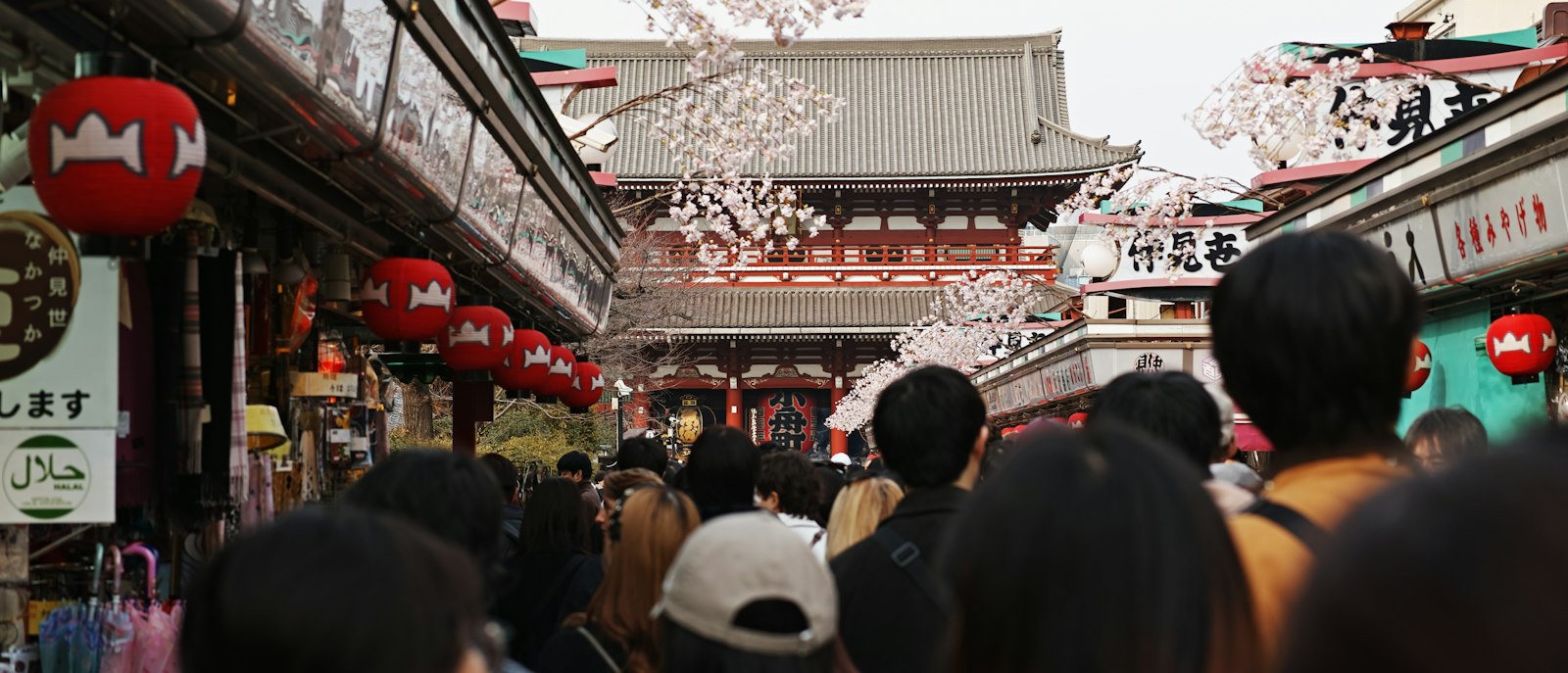
Eighty meters west of Senso-ji, the temple crowds thin out and the smell changes from incense to simmering broth. That’s Hoppy Street in Asakusa — a single block of open-fronted izakaya where salarymen, retirees, and the occasional lost tourist drink side by side at plastic tables on the pavement. It is loud, cheap, and completely indifferent to whether you speak Japanese.
It’s also one of the few places in Tokyo where drinking at two in the afternoon is not just acceptable but traditional. This guide covers what the street actually is, how to order the drink it’s named after, which shops are worth your time, and how the same block feels totally different at 2pm and at 9pm.
Contents
- What Is Hoppy Street in Asakusa?
- Hoppy: The Drink That Named the Street
- What to Eat on Hoppy Street
- Day Drinking on Hoppy Street: Asakusa’s Best Afternoon Move
- Night Drinking: When the Lanterns Come On
- The Shops Worth Knowing
- How to Get to Hoppy Street
- What to Budget, and Why You Need Cash
- Seven Things to Know Before You Sit Down
- How It Compares to Tokyo’s Other Drinking Alleys
- Frequently Asked Questions
- What do you do in Tokyo After 10?Join our Tokyo Nightlife Private Tour
- Drinking Asakusa with Someone Who Knows It
- About the Author
What Is Hoppy Street in Asakusa?
Hoppy Street is Asakusa’s most concentrated stretch of cheap izakaya — roughly 100 meters of them, lined up along the western edge of the Senso-ji temple grounds. Its actual address is the Koen Hondori shopping street. Almost nobody calls it that.
Depending on who you ask, it goes by two nicknames. Hoppy Dori (ホッピー通り) comes from the beer-like drink nearly every shop pours. Nikomi Dori — “Stew Street” — comes from the pots of simmered beef tendon bubbling away out front.
Around 15 to 20 izakaya operate here. Most are small, family-run, and decades old; several have been in the same hands since the 1950s. The street took its current shape during the late-1940s postwar reconstruction of Asakusa, when open-air stalls clustered around the temple and never quite left.
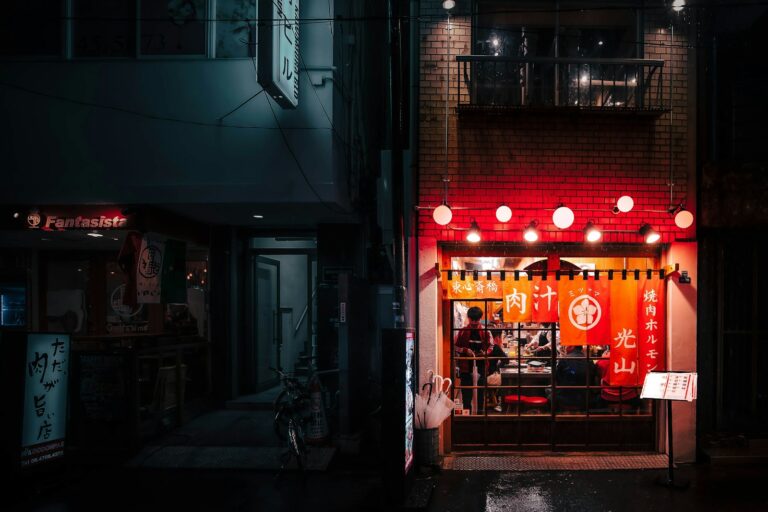
The visual signature is the seating. Shops set out tables directly on the pavement under red lanterns and awnings, so the “inside” and “outside” of a bar blur into one continuous drinking room. In winter, several shops wrap their terraces in clear plastic sheeting and run heaters, which turns the whole block into a row of glowing tents.
Hoppy: The Drink That Named the Street
Hoppy launched in 1948, produced by the Kokuka Beverage Company — later renamed Hoppy Beverage Co. after its own product. It’s brewed from malt and hops like beer, but comes in at just 0.8% ABV, which technically makes it a soft drink. It’s also low in calories and carbohydrates and contains no purines, which is why you’ll see older regulars drinking it by the crate.
Nobody drinks it straight. Hoppy is a mixer: you get a glass of cold shochu and a small bottle of Hoppy, and you combine them yourself at the table.
Naka and Soto: How to Order Like a Regular
Two words run the entire system, and knowing them will earn you a nod from the guy next to you.
- Naka (中, “inside”) — the shochu in the glass
- Soto (外, “outside”) — the bottle of Hoppy
When your glass runs low on spirit but you still have Hoppy left, you order a naka. When it’s the other way round, you order a soto. A “Hoppy set” is one of each to start, and most people alternate refills from there. It’s the cheapest way in Tokyo to sit somewhere for two hours without your bill running away from you.
The company recommends what it calls sanrei (三冷), or “three coolings”: chilled Hoppy, chilled shochu, and a glass straight out of the freezer. The standard ratio is five parts Hoppy to one part shochu, which lands the finished drink at around 5% ABV — roughly a beer. Pour the Hoppy in hard so it foams, don’t stir it, and don’t add ice.
White Hoppy vs Black Hoppy
The default is white Hoppy — light, dry, faintly bitter. There’s also a black version, richer and a little sweeter, closer to a dark lager. Ask for “kuro Hoppy kudasai” and you’ll get it at most shops.
One shop on the street, Suzuyoshi, serves Hoppy on draft rather than from the bottle — the only place on the block that does, and worth a stop for that alone.
What to Eat on Hoppy Street
Nikomi: The Reason for the Other Nickname
Nikomi is beef tendon or offal simmered for hours until it collapses. It’s the defining dish of Hoppy Street in Asakusa, it costs almost nothing, and — this is the part that matters — no two shops make it the same way.
Across the block you’ll find versions that are sweet and sukiyaki-like, soy-sauce based, clear and salt-seasoned with daikon, and Korean-style with a gochujang kick. Locals treat this as a tasting flight: one bowl per shop, then move on. Expect roughly ¥550–700 a plate.
The Rest of the Menu
Beyond the stew pots, the food is straightforward drinking food: yakitori and other grilled skewers, grilled beef tongue, tempura, okonomiyaki, yakisoba, and sashimi plates. Small dishes generally sit in the ¥550–700 range, with larger plates like okonomiyaki or a sashimi assortment closer to ¥1,000–1,200.
Portions are built for sharing across several stops, not for filling up in one place. Order two or three things, drink, move.
Denki Bran: Asakusa’s Own Cocktail
Ten minutes’ walk toward Azuma Bridge sits Kamiya Bar, founded in 1880 and generally called Japan’s oldest Western-style bar. Its house drink, Denki Bran (“electric brandy”), was created there in the 1880s: a brandy base blended with gin, wine, curaçao, and herbs in proportions the bar has never published.
It arrives in a small glass, it is considerably stronger than it tastes, and the building it’s served in — completed in 1921 — is a Registered Tangible Cultural Property. A few Hoppy Street shops also pour Denki Bran, but drinking it at the source is the better story.
Day Drinking on Hoppy Street: Asakusa’s Best Afternoon Move
Here’s what most itineraries miss: Hoppy Street in Asakusa is at its best in daylight, not after dark.
Many shops open late morning, which means you can be sitting outside with a Hoppy set by noon. On a weekday afternoon the terrace is half empty, the staff have time to talk, and you can actually hear the person across the table. Same street, completely different tempo.
The practical case for day drinking is simple. Terrace seats are the good seats, and after about 4pm on a weekday — earlier on weekends — they’re gone. If you want to sit outside with a view of the street, arrive before then.
It also slots neatly into a temple visit. Senso-ji in the morning, lunch and a couple of Hoppy sets by early afternoon, then Nakamise shopping street or a walk along the Sumida while it’s still light. Japanese drinking culture has a word for the afternoon session — hiruzake — and nobody here will find it strange. If you’re unsure how the broader rules work, our guide to Japanese drinking culture covers the unwritten ones.
Night Drinking: When the Lanterns Come On
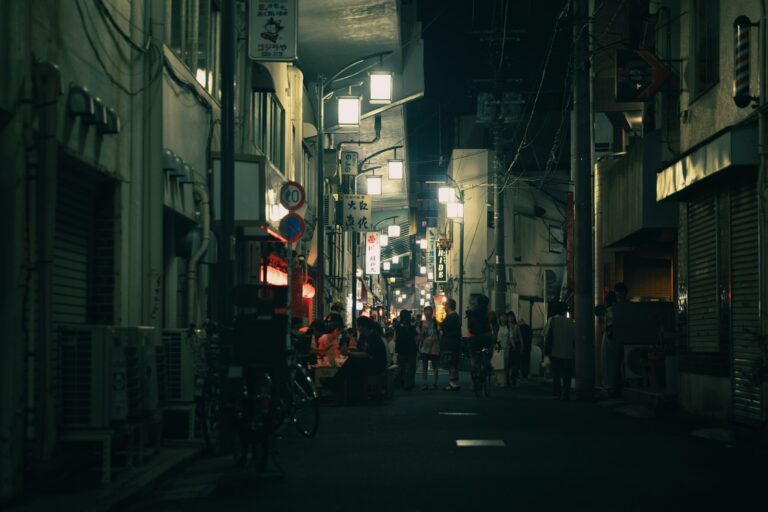
After about 5pm the lanterns switch on and the street earns its reputation. The atmosphere shifts to something genuinely Showa-era — smoke, shouting, glasses going down on plastic tables.
Between roughly 7pm and 10pm is peak hour, and it’s when the street belongs to regulars: local workers who come two or three times a week and know which shop does which stew best. Seating gets tight, you’ll likely be shoulder to shoulder with strangers, and that’s the point.
Plan on two or three shops over about three hours, with 20–30 minutes at each. Last orders are typically around 10:00–10:30pm, and Sunday closings tend to run earlier, so a night on Hoppy Street in Asakusa starts and finishes earlier than one in Shinjuku or Shibuya. Some shops also stop serving food well before they stop serving drinks.
If you want to keep going afterward, Senso-ji is floodlit after dark and nearly empty — see our illuminated Senso-ji night tour guide for the route.
The Shops Worth Knowing
Shop hours and closing days on Hoppy Street in Asakusa change often, and several places keep irregular holidays. Treat the notes below as orientation, not a timetable — check on the day.
Asakusa Sakaba Okamoto (1-40-7 Asakusa) — The largest operation on the street, with roughly 100 seats. It’s the only one that comfortably handles groups, it takes online reservations, and it keeps menus in English, Chinese, and Korean. Known for beef tendon stew and spicy horumon. Open late morning to around 11pm.
Suzuyoshi — The draft Hoppy shop, available white, black, or half-and-half. The nikomi here is the Korean-style one, made with beef tendon in a gochujang-based sauce. Cash only.
Sho-chan (2-7-13 Asakusa) — Dating to 1951 and the oldest stew shop on the block. The nikomi is the sweet, sukiyaki-leaning version. A good, low-pressure first stop if you’re nervous about the language barrier. Closing days vary.
Izakaya Koji (2-3-19 Asakusa) — Has a full English menu, which makes it the default recommendation for first-time visitors to Japan. Soy-sauce-based stew and handmade satsuma-age fish cakes. Cash only.
Motsukushi — Pork-giblet nikomi and kushiyaki, with tatami seating inside if the terrace is full or the weather turns.
Looking for Adult Entertainment Services in Tokyo? Download this
I’ve spent over a decade exploring and studying Japan’s adult entertainment scene firsthand. If you’d like detailed insider information—including how to choose the right shop, what services are available, and tips for avoiding common mistakes—check out our exclusive E-book.
How to Get to Hoppy Street
The confusing part about Asakusa is that three different “Asakusa Station” entrances sit at different distances from this block. Walking times to Hoppy Street in Asakusa, line by line:
| Line | Walking time |
|---|---|
| Tsukuba Express — Asakusa Station (Exit A1) | About 2 minutes |
| Tokyo Metro Ginza Line — Asakusa Station | About 5–10 minutes |
| Toei Asakusa Line — Asakusa Station | About 5–10 minutes |
The Tsukuba Express station is by far the closest, but it’s the one most visitors don’t use. If you arrive on the Ginza Line, the simplest approach is to walk to Senso-ji, then head west past the temple grounds — the street runs along that side. Tokyo’s official tourism site has more on the Senso-ji area if you’re building a wider Asakusa day around it.
What to Budget, and Why You Need Cash
Most shops on Hoppy Street in Asakusa are cash only. A few of the newer ones now take cards or QR payment, but assume they don’t and check the register before you sit down.
- Hoppy set: ¥400–600
- Nikomi: ¥550–700 per plate
- Small dishes: ¥550–700
- Otoshi (table charge): ¥200–500 per person, sometimes listed as a ¥300 cover
- Realistic total per shop: ¥1,500–2,500
For a two- or three-shop crawl, bring ¥5,000–8,000 in cash per person (roughly $33–53). There’s a 24-hour Seven Bank ATM at the 7-Eleven in Kaminarimon 2-chome, about three minutes away, which accepts foreign cards — but it’s far easier to arrive with yen than to go looking mid-crawl.
Seven Things to Know Before You Sit Down
- Otoshi is not a scam. A small appetizer arrives unordered and gets billed as a seating charge. This is standard practice across Japan, not a tourist markup.
- The shouting is friendly. Staff call out “Irasshai!” to everyone who walks past. A smile and a small wave is a complete and polite answer if you’re not stopping.
- Choose your own shop. Look at the pots, look at who’s sitting there, and pick. Nobody needs to lead you anywhere.
- Terrace seats are smoking seats at many shops. If that matters, ask for indoor seating or check before sitting.
- Drinking age is 20, and ID is your passport. Carry it.
- Don’t fill up at shop one. The whole appeal is comparing stews. Order small.
- It’s not a family destination in the evening. Daytime is fine; after 7pm it’s a drinking street, full stop.
Broader table manners — how to pour, when to say kanpai, what not to do with your chopsticks — are covered in our izakaya etiquette guide for foreigners.
How It Compares to Tokyo’s Other Drinking Alleys
Tokyo has no shortage of atmospheric drinking lanes, and they are not interchangeable.
Golden Gai and Omoide Yokocho (Shinjuku) are narrow, tiny, and vertical — six-seat bars, cover charges, a master behind the counter, and a real chance of being turned away from a regulars-only spot.
Hoppy Street in Asakusa is the opposite. It’s wide, open to the street, built around large shared tables, and effectively impossible to be shut out of. Prices are lower, the food is a bigger part of the experience, and it starts and ends earlier in the day.
If you’ve done Shinjuku’s alleys and found them charming but claustrophobic, this is the version that isn’t. Our roundup of the best yokocho in Tokyo maps out where each one fits.
Frequently Asked Questions
Do I need a reservation? Generally no — these are walk-in shops. The exception is groups, where the larger venues like Okamoto are the realistic option and do take bookings.
Can I enjoy it if I don’t drink alcohol? Yes. Hoppy itself is 0.8% ABV, so a bottle without the shochu is essentially a beer-flavored soft drink. Order it soto only. The nikomi and skewers are the other half of the appeal regardless.
Is English spoken? Unevenly. Several shops keep English menus — Izakaya Koji has a full one, Okamoto has multilingual menus — while others have none. Pointing works fine everywhere.
How many shops should I visit? Two or three. Any more and you’ll stop being able to taste the difference between the stews, which is the whole exercise.
Is it safe? Yes — Hoppy Street in Asakusa is one of the more relaxed places to drink in Tokyo. The district has no touting problem comparable to Kabukicho, and prices are posted openly. The main risk is overordering.
What do you do in Tokyo After 10?
Join our Tokyo Nightlife Private Tour
You deserve better than overpriced bars and missed opportunities. We’re here for you.
Drinking Asakusa with Someone Who Knows It
You can absolutely do this street alone. Walk in, point at a pot, say “Hoppy set kudasai,” and you’ll have a good night.
What’s harder solo is the part that makes it memorable: knowing which shop’s stew is worth the second bowl, getting drawn into a conversation with the regulars at the next table, and understanding what the man who’s been coming here since 1978 is telling you. That’s less about the bars than about having someone to translate the room.
If that’s the night you want, our Tokyo After 10 nightlife tour pairs you with a local guide who drinks in places like this by default, not as a novelty. Either way — go hungry, bring cash, and get there before the terrace fills up.