Photo by <a href="https://unsplash.com/@miyatankun?utm_source=tokyodeepnightlife&utm_medium=referral">Takashi Miyazaki</a> on <a href="https://unsplash.com/?utm_source=tokyodeepnightlife&utm_medium=referral">Unsplash</a>
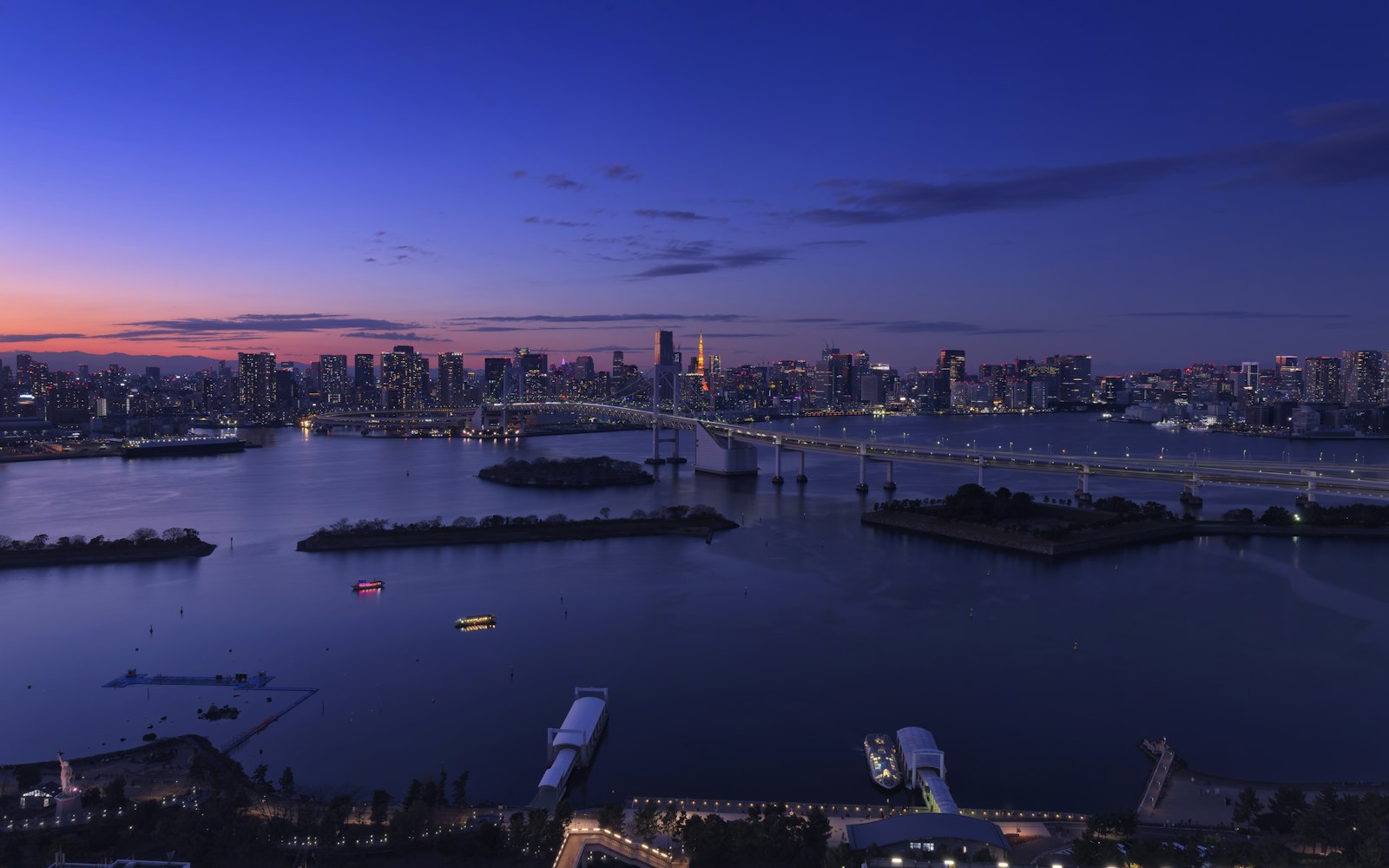
Most Tokyo night views are about looking down from a tower. Odaiba is different. Here you stand at sea level on a man-made island, with the lit-up Rainbow Bridge in front of you, the skyline of Minato and Tokyo Tower behind it, and the whole scene doubled in the water of Tokyo Bay. The Odaiba night view is one of the few big-ticket sights in the city that is mostly free.
The catch is that Odaiba is spread out, some viewpoints close surprisingly early, and a few things older guides still recommend are gone. This guide covers the best spots by type (free waterfront, paid observatory, on the bridge itself), the best timing, a new fountain show that opened in 2026, and how to get back to central Tokyo. Hours and prices were checked against official sources in October 2026.
Contents
- Why the Odaiba Night View Is Worth the Trip
- Best Free Spots for an Odaiba Night View
- Paid Observatories With a Rainbow Bridge Night View
- Walk Across Rainbow Bridge: The Rainbow Promenade
- New in 2026: Tokyo Aqua Symphony Fountain Show
- What’s No Longer There: The Unicorn Gundam
- Best Time to See the Odaiba Night View
- A Simple Odaiba Evening Route
- Getting to Odaiba and Back at Night
- Odaiba Night View FAQ
- What do you do in Tokyo After 10?Join our Tokyo Nightlife Private Tour
- Take Tokyo’s Night Further
- About the Author
Why the Odaiba Night View Is Worth the Trip
Rainbow Bridge links Shibaura on the mainland side with Daiba. The upper deck carries the Metropolitan Expressway, while the lower deck carries the Yurikamome line and a pedestrian walkway. At night the towers and suspension cables are lit, and the lights are powered by solar energy collected during the day.
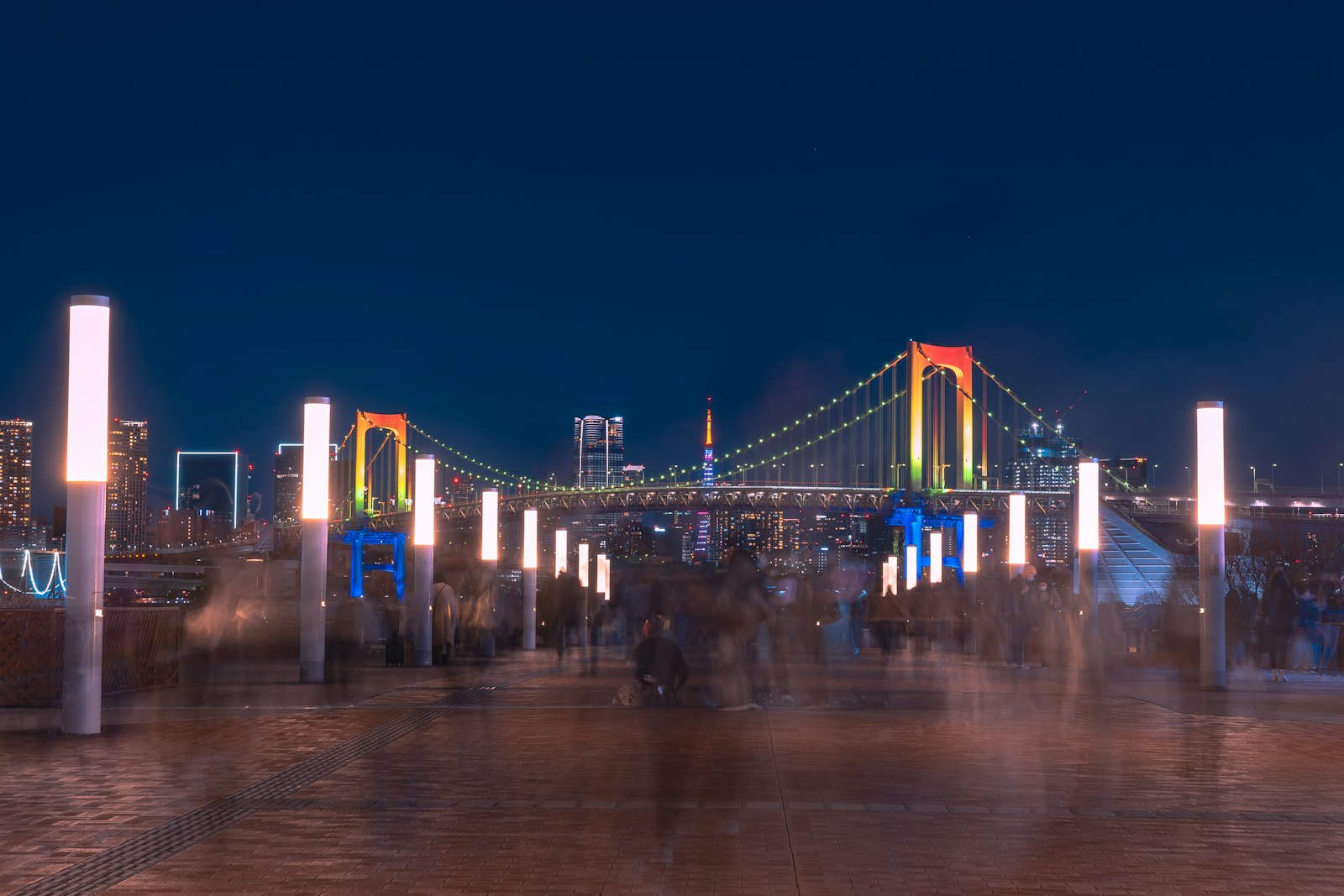
Most of the time the bridge glows white. Around the year-end holidays and for special events, the operator, Metropolitan Expressway Company (Shutoko), switches on colored lighting, including the rainbow pattern the bridge is named after. Shutoko’s own announcements over the years have listed the lighting as running from sunset until midnight, with some special nights running until sunrise.
What makes the view special is the layering. From the Odaiba side you get, in one frame:
- The bridge itself, close enough that it fills a phone screen
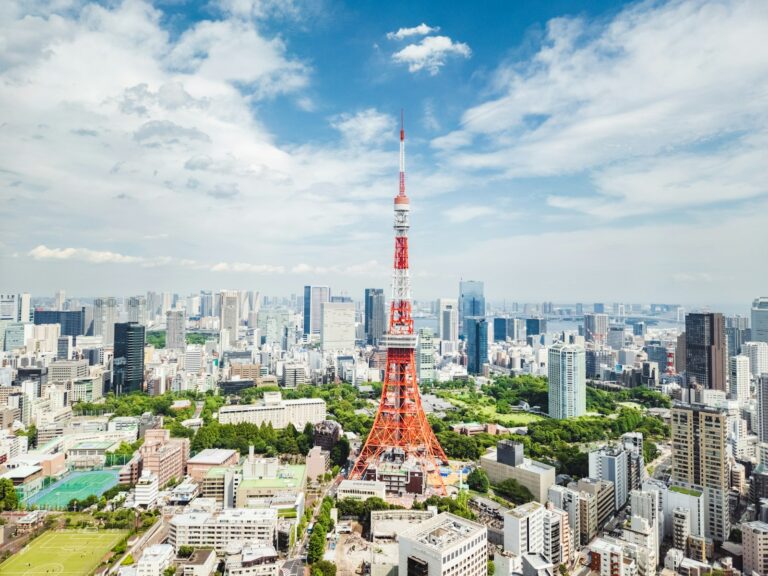
- The Shibaura and Minato skyline, with Tokyo Tower peeking through on a clear night
- Tokyo Bay, with houseboats and cruise boats crossing in front of the bridge
- Foreground details, like the Statue of Liberty replica and the beach
That is something a tower observatory can’t give you. You’re inside the scene rather than above it.
Best Free Spots for an Odaiba Night View
Odaiba Seaside Park (Odaiba Kaihin Koen)
If you only have time for one stop, make it this one. Odaiba Seaside Park is the classic Rainbow Bridge night view spot, and it’s free and open around the clock. The nearest station is Odaiba-kaihinkoen on the Yurikamome line, about a 3-minute walk away.
The park wraps around a curved artificial beach, and the bridge sits directly across the water. Walk to different points along the sand and promenade and the angle changes completely. From the western end you’re almost under the bridge. From the middle of the beach you get the full span with the skyline behind it.
Tripods aren’t banned, but the promenade gets busy on weekend evenings. If you set one up, keep it out of the walkway and pack it away when the crowd builds.
The Statue of Liberty Replica
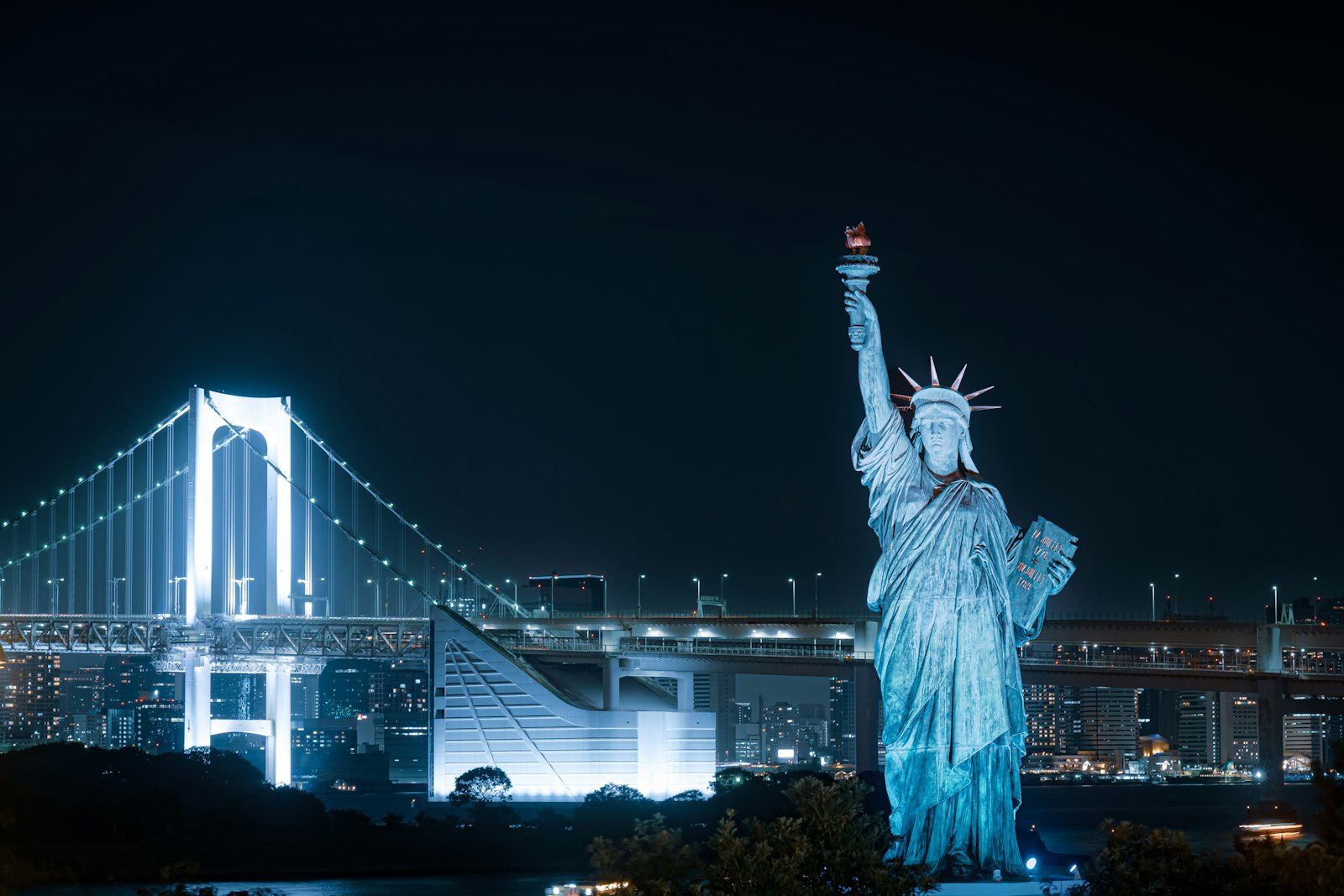
Yes, Tokyo has one. The statue at Odaiba Seaside Park is a replica of the one in Paris, brought here for a French-Japanese friendship event in 1998 and installed permanently in 2000. It stands on the waterfront with Rainbow Bridge right behind it.
This is the shot you’ve probably seen on Instagram: the statue lit up in the foreground, the bridge glowing behind, and the city on the far shore. Expect a small queue of photographers after dark, especially on weekends. Step back a little and use the statue as a silhouette if you can’t get a clean angle.
DECKS Tokyo Beach and the Waterfront Boardwalk
DECKS Tokyo Beach is a shopping and dining complex that faces the bay, with a wooden boardwalk running along its seaside front. The boardwalk sits higher than the beach, so you get a slightly elevated angle over the park and the bridge.
It’s a good spot if the weather turns or you want to pair the view with dinner. Several restaurants in the complex have windows facing the bay, so you can eat with the bridge in view. Window tables go first, so book ahead on weekends.
Aqua City Odaiba Rooftop Shrine
On the 7th-floor rooftop of Aqua City Odaiba there’s a small Shinto shrine, Aqua City Odaiba Jinja, which enshrines a branch spirit of Shiba Daijingu. It’s one of the more unusual places to watch the Odaiba night view: a torii gate in the foreground, Rainbow Bridge and the bay lights behind it.
Aqua City is about a minute from Daiba Station on the Yurikamome line, or roughly 6 minutes from Tokyo Teleport Station on the Rinkai line. The rooftop’s opening hours aren’t clearly published, so check with the mall before heading up late.
Paid Observatories With a Rainbow Bridge Night View
Telecom Center Observatory (View Tokyo)
This is the best-kept secret on the island. The 21st-floor observatory in the Telecom Center Building looks back across Odaiba toward the bridge, with the city skyline and Tokyo Tower lined up behind it. Because it’s at the quieter southern end of the island, it rarely gets crowded.
According to the Tokyo Convention & Visitors Bureau’s official Go Tokyo listing:
- Hours: weekdays 3pm to 8pm; weekends and national holidays 11am to 8pm, with last entry 30 minutes before closing
- Admission: 500 yen for adults, cash only
- Closed: over the New Year period and on the building’s maintenance day (second Sunday of February)
- Access: 1-minute walk from Telecom Center Station on the Yurikamome line
The 8pm close means you need to time it. In autumn and winter, when the sun sets well before 6pm, you get plenty of full darkness. In midsummer, sunset in Tokyo is around 7pm, so you’ll mostly be watching twilight. Check the official Go Tokyo page before you go, as hours change from time to time.
Fuji TV “Hachitama” Spherical Observatory
The silver sphere on the Fuji TV headquarters is Odaiba’s most recognizable building, and the observation room inside it, called Hachitama, sits on the 25th floor. The view over the bay is excellent.
The problem for night owls is the hours. Hachitama is open 10am to 6pm (last entry 5:30pm) and closed on Mondays, or the following weekday if Monday is a holiday. That means you can only catch city lights here in the darker months, when the sun sets around 4:30pm. Admission prices vary between listings, so confirm on Fuji TV’s site before you visit. For a true after-dark view, Telecom Center is the better bet.
Walk Across Rainbow Bridge: The Rainbow Promenade
You can also walk the bridge itself. The Rainbow Promenade runs along the lower deck on both sides, roughly 1.7km from the Shibaura entrance to the Daiba entrance. It takes about 20 to 30 minutes on foot, and it’s free.
There are two walkways. The north side looks toward central Tokyo, with Tokyo Tower and the Harumi waterfront. The south side looks toward Odaiba itself, including the loop where the Yurikamome swings onto the bridge. You can’t switch sides mid-way, so pick the view you want before you start.
According to the Tokyo Metropolitan Government Bureau of Port and Harbor, the walkway hours are:
- April 1 to October 31: 9am to 9pm
- November 1 to March 31: 10am to 6pm
- Last entry: 30 minutes before closing
- Closed: the third Monday of each month (the following day if it’s a national holiday), and sometimes for weather or maintenance
So from November, the promenade closes at 6pm. That still works out well, since winter sunsets come early. Start on the Shibaura side around sunset and you’ll reach Odaiba just as the lights come on. Cycling is not allowed on the walkway; you have to push your bike on a provided trolley. There are toilets only at the Shibaura end and no parking. Full details are on the Bureau of Port and Harbor’s Rainbow Bridge page.
New in 2026: Tokyo Aqua Symphony Fountain Show
The biggest change to the Odaiba night view in years opened on March 28, 2026. Tokyo Aqua Symphony is a huge choreographed fountain in the water off Odaiba Seaside Park, with jets set to music. After sunset the water is lit with colored LEDs, with the bridge and skyline as the backdrop.
Each show lasts about 10 minutes, and it’s free with no reservation. The Go Tokyo listing describes ten shows a day between 3pm and 9:30pm. The program has changed several times since opening, and evening slots have been added. So check the schedule on the official Tokyo Aqua Symphony site on the day. It’s about 3 minutes on foot from Daiba Station.
This is now the easiest way to add something to watch to a park visit. Aim for one of the later evening shows, then stay on the beach for the bridge.
Looking for Adult Entertainment Services in Tokyo? Download this
I’ve spent over a decade exploring and studying Japan’s adult entertainment scene firsthand. If you’d like detailed insider information—including how to choose the right shop, what services are available, and tips for avoiding common mistakes—check out our exclusive E-book.
What’s No Longer There: The Unicorn Gundam
A lot of Odaiba guides still send you to the life-size Unicorn Gundam statue outside DiverCity Tokyo Plaza for its evening light shows. The statue was scheduled to be taken down at the end of August 2026, with no replacement announced at the time. Don’t plan your evening around it unless the operator says otherwise.
Best Time to See the Odaiba Night View
Blue hour beats full darkness. The most beautiful window is roughly 20 to 40 minutes after sunset, when the sky is still deep blue and the bridge lights are already on. Photos look far better than in pitch black. Arrive before sunset and stay put.
Autumn and winter are best. Earlier sunsets mean the Telecom Center observatory and the walkway are still open when it gets dark, and the air is clearer, so the skyline and Tokyo Tower stand out. Winter also tends to bring special bridge lighting around the holidays.
Weekdays are calmer. Saturday evenings bring couples, families, and photographers all to the same few meters of the beach. On a weekday you can walk the whole park without bumping elbows.
Check for special events. In 2026, the Tokyo Bay Grand Fireworks Festival returns on October 24 after an 11-year break. Fireworks launch from off Harumi Pier from 5:30pm to 7pm, viewing is ticket-only, and the recreational water area of Odaiba Seaside Park is closed all day. Expect road closures and heavy crowds that evening. If you’d rather avoid the rush, pick another night.
A Simple Odaiba Evening Route
Here’s a route that links the main spots without backtracking:
- Before sunset: Take the Yurikamome from Shimbashi. Sit at the front if you can. The trains are driverless, so the front seats look straight down the track as it loops onto Rainbow Bridge.
- Sunset: Get off at Odaiba-kaihinkoen and walk to the beach. Watch the bridge lights come on.
- Blue hour: Walk along the waterfront to the Statue of Liberty for photos.
- Early evening: Catch a Tokyo Aqua Symphony show, then head up to Aqua City or DECKS for dinner with a bay view.
- Later: If you’re there before closing time, ride to Telecom Center for the observatory, or end with a final walk on the beach.
If you’d rather see the bridge from the water, a Tokyo night cruise on the bay passes right underneath it. For another classic tower view on the same night, Tokyo Tower is a short hop from Shimbashi. Our guide to Tokyo Tower at night covers when it lights up and where to see it from.
Getting to Odaiba and Back at Night
Two train lines serve Odaiba:
- Yurikamome line from Shimbashi or Toyosu. This is the scenic one, as it crosses Rainbow Bridge. Key stops are Odaiba-kaihinkoen (Seaside Park), Daiba (Aqua City, Fuji TV), and Telecom Center.
- Rinkai line to Tokyo Teleport Station. It runs underground, so there’s no view. It does connect with the JR Saikyo line toward Shibuya and Shinjuku on many services.
Odaiba empties out quickly late at night, and the last trains are earlier than many visitors expect. Check the last departure on your route before you settle in for the evening, or you’ll be stuck with a long taxi ride. Our guide on how to get around Tokyo at night covers last trains, taxis, and backup options.
Odaiba Night View FAQ
Is the Odaiba night view free? Yes, mostly. Odaiba Seaside Park, the Statue of Liberty, the DECKS boardwalk, the Rainbow Promenade and the Tokyo Aqua Symphony fountain are all free. The Telecom Center observatory charges 500 yen.
What time does Rainbow Bridge light up? Usually from sunset. Shutoko has listed the lighting as running until midnight, with special lighting at certain times of year.
Can you walk across Rainbow Bridge at night? Only until closing. The walkway closes at 9pm from April to October and at 6pm from November to March, with last entry 30 minutes earlier.
Where is the best place to photograph Rainbow Bridge at night? For the classic shot, the Odaiba Seaside Park beach and the Statue of Liberty. For a high angle with fewer people, try the Telecom Center observatory.
What do you do in Tokyo After 10?
Join our Tokyo Nightlife Private Tour
You deserve better than overpriced bars and missed opportunities. We’re here for you.
Take Tokyo’s Night Further
The Odaiba night view is a calm, wide-open kind of evening: sea air, a glowing bridge, and a skyline across the water. It pairs well with a quieter dinner or a cocktail somewhere higher up. If you’re collecting skyline views, our list of rooftop bars in Tokyo with a night view is a good next stop.
But the city’s after-dark energy lives elsewhere: in the tiny bars, standing izakaya and side streets that don’t show up on a map. If you’d like someone who knows them to take you there, our Tokyo After 10 nightlife private tour pairs you with a local guide who picks up where the bay views leave off.