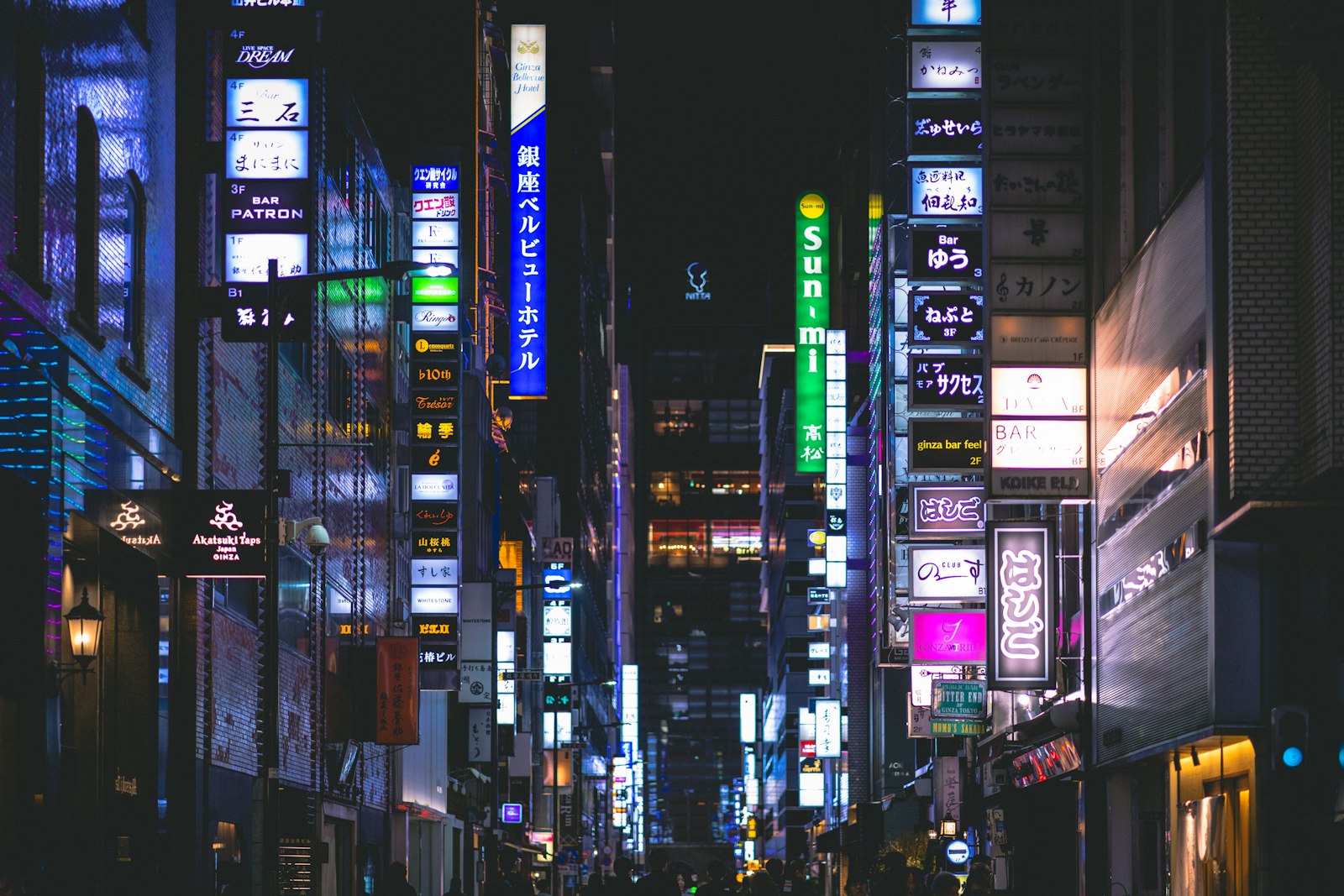
Photo by <a href="https://unsplash.com/@santesson89?utm_source=tokyodeepnightlife&utm_medium=referral">Andrea De Santis</a> on <a href="https://unsplash.com/?utm_source=tokyodeepnightlife&utm_medium=referral">Unsplash</a>
Yes — foreigners can go to hostess clubs in Japan. But if you walk into Kabukicho tonight and try five doors at random, you should expect to be turned away at three of them. That gap between “legally allowed” and “actually let in” is the thing nobody explains properly, and it’s why so many travelers come away thinking Japan’s hostess clubs are closed to outsiders.
They aren’t. The system just has a filter, and the filter isn’t really about your passport. Once you understand what a club is actually screening for, getting through the door stops being luck and starts being a checklist.
Contents
- The Short Answer: There Is No Nationwide Policy
- Why Some Hostess Clubs Turn Foreigners Away
- Where Foreigners Can Go to Hostess Clubs in Japan: Four Tiers
- What It Costs: Reading the Bill Before It Arrives
- The Rules You’re Expected to Already Know
- How to Get In: A Door Script That Works
- The Real Threat Isn’t Being Refused — It’s Being Invited
- If You Get Turned Away
- Going With Someone Who Already Knows the Door
- What do you do in Tokyo After 10?Join our Tokyo Nightlife Private Tour
- Quick FAQ
- About the Author
The Short Answer: There Is No Nationwide Policy
There is no law in Japan barring foreign customers from hostess clubs. Whether you get in comes down to one specific venue’s house rules on one specific night, decided by whoever is standing at the door.
So the useful question isn’t whether foreigners are allowed in Japan’s hostess clubs. It’s which clubs, where, and what makes a door manager say yes.
What a Hostess Club Actually Is
A hostess club — kyabakura (キャバクラ) in Japanese, short for “cabaret club” — is a licensed bar where you buy time at a table and a hostess sits with you, pours your drinks, lights your cigarette, and holds a conversation. That’s the product. Not dancing, not a show, and emphatically not a sexual service. Physical contact isn’t part of the deal and asking for it will end your night quickly.
It sounds thin when you write it down. In practice it’s a genuinely distinctive form of hospitality, and it’s one of the reasons people find the kyabakura experience harder to describe than they expected.
The conversation part matters enormously for your chances at the door — which brings us to the real reason clubs say no.
Why Some Hostess Clubs Turn Foreigners Away
It’s a billing problem, not a snobbery problem
Hostess club pricing is layered: a base set fee, a designation fee, a service charge percentage, extension blocks, and drinks priced individually. Staff explain this at the table, in Japanese, in about ninety seconds.
If the customer doesn’t follow that explanation, the club has a problem waiting for it at closing time. A guest who genuinely believed the evening cost ¥10,000 and is handed a bill for ¥28,000 will argue. Sometimes loudly. Police get called, the club gets a complaint on its record, and a licensed venue in a heavily policed district has every incentive to avoid that.
So when a door manager looks at you and says “sorry, Japanese only,” they are usually not making a judgment about you. They’re pricing the risk of a dispute they can’t talk their way out of. Show them that risk is low and the answer often changes.
Referral culture at the high end
The other filter has nothing to do with language. Many upmarket clubs, particularly in Ginza and Akasaka, run on introduction — you come in with an existing customer, or you don’t come in. In Japanese this is ichigensan okotowari (一見さんお断り), “no first-time visitors.”
That rule applies to Japanese salarymen with no connections just as firmly as it applies to you. It isn’t a foreigner rule; it’s a stranger rule. Don’t take it personally, and don’t waste your night trying to crack it.
And yes, private venues can refuse
Japanese businesses have broad discretion over who they admit, and a blanket “members and referrals only” policy is legal. It’s worth knowing this going in, simply so a refusal doesn’t derail your evening. It’s a door policy, not a verdict.
Where Foreigners Can Go to Hostess Clubs in Japan: Four Tiers
Think of it as tiers, easiest first.
Tier 1 — Girls bars. A girls bar is a counter bar where the staff serve from behind the bar rather than sitting at your table. Cheaper, looser, far more casual about foreign customers, and the counter format means less conversational pressure. If you have zero Japanese and want to test the water, start here. Our breakdown of girls bar versus hostess club differences covers what changes between the two formats.
Tier 2 — Explicitly foreigner-friendly kyabakura. These exist and they advertise it, concentrated in Roppongi and in parts of Kabukicho. Roppongi has served an international crowd for decades, so its clubs are the most likely to have staff who’ve done this before and hostesses comfortable working in English. Some venues in this tier keep a small number of English-speaking hostesses on rotation — see our guide to English-speaking hostess clubs in Tokyo for how to find them.
Tier 3 — Standard Kabukicho kyabakura. The core of the scene, and a coin flip. Some will take you, especially early in the evening when the floor is quiet. Many won’t. Your odds improve dramatically with a Japanese-speaking companion, a reservation, or a translation app you visibly know how to use.
Tier 4 — Ginza and Akasaka high-end clubs. Referral only. Realistically off the table for a short-stay visitor without a local connection, regardless of nationality or budget.
What It Costs: Reading the Bill Before It Arrives
Prices vary widely by district and venue tier, so treat these as typical ranges rather than a quote — and confirm every line before you sit down.
- Set fee (セット料金). Your table time, usually sold in 60-minute blocks and often including house whisky and shochu. Commonly around ¥5,000–¥15,000 per person, with high-end venues well above that.
- **Designation fee (指名料 / shimei-ryō).** Pay this to request a specific hostess instead of taking the rotation, where a new hostess swaps in every fifteen to twenty minutes. Typically ¥1,000–¥5,000.
- Service charge. A percentage added to the whole bill at the end, commonly 10–20% and reaching 30% at premium clubs. This is the line that surprises people most, because it multiplies everything above it.
- Extensions (延長). Usually sold in 30-minute blocks at roughly half a set fee. If you stay past your block without saying anything, you have agreed to one.
- Drinks. Anything outside the house selection is priced separately, including the drink your hostess orders. Buying her a drink is normal and expected; just know it lands on your tab.
- Bottles. Ordering a bottle is a five-figure decision in yen. You do not need one on a first visit.
A realistic first night at a mid-range Tokyo venue lands somewhere in the ¥15,000–¥25,000 range per person. For a fuller breakdown by venue type, our guide on what a hostess club night actually costs goes line by line.
One habit worth building: before you sit, ask for the total for one hour including service charge, and get a number. Not a gesture, not “don’t worry” — a number. A legitimate club will give it to you without hesitation. A venue that won’t is telling you something.
The Rules You’re Expected to Already Know
Some of these are law, some are etiquette. Breaking either one gets you the same result.
Age. You must be 18 to enter a licensed hospitality venue in Japan, and 20 to drink alcohol. Bring your passport — clubs do check, and Japan’s legal drinking age doesn’t bend for tourists from countries where it’s 18.
Closing time. This one catches visitors out constantly. Under Japan’s entertainment business law, hostess clubs in Tokyo generally cannot operate between midnight and 6:00 a.m., with certain designated districts permitted to run until 1:00 a.m. If you show up at 12:30 expecting to start your night, you’ve missed it. Arrive by 21:00 to have a real evening.
No physical contact. Not a suggestion. This is the line that separates a licensed hostess club from an entirely different category of business.
Let her pour. Pouring your own drink in front of a hostess reads as a small rejection of the service you’re paying for. Let her do her job.
No photos. Assume cameras are off unless staff explicitly say otherwise. Hostesses work under professional names for good reasons.
Don’t push for personal contact details. Asking for a real name, a phone number, or plans outside the club is the fastest way to make the table go cold.
Dress like you’re going somewhere. Smart casual clears most doors. Shorts, sandals, and a backpack will fail a door check that a collared shirt would have passed — and at that point the refusal genuinely was about you, just not the part you think.
Looking for Adult Entertainment Services in Tokyo? Download this
I’ve spent over a decade exploring and studying Japan’s adult entertainment scene firsthand. If you’d like detailed insider information—including how to choose the right shop, what services are available, and tips for avoiding common mistakes—check out our exclusive E-book.
How to Get In: A Door Script That Works
The most effective approach is short, calm, and gives the door manager the two pieces of information they need.
- Pick your venue before you leave the hotel. Wandering Kabukicho looking for a lit sign is how the night goes wrong. Decide in advance.
- Go early. Between 20:00 and 21:30 the floor has open tables and staff have time to work with you. At 23:00 they’re full and screening hard.
- Open in Japanese, even badly. “Sumimasen, hajimete desu. Futari desu.” — “Excuse me, it’s my first time. Two people.” The effort itself is the signal.
- Ask the price question. “Ichi-jikan, zenbu de ikura desu ka?” — “One hour, how much in total?” This tells them you understand there’s a total, which is exactly the reassurance they want.
- Have your translation app already open. Visibly. It answers their unspoken concern before they raise it.
- Confirm before sitting. Once you have a number, repeat it back. Then sit.
Going in a pair is better than going alone or in a group of five. Two is easy to seat and easy to manage.
The Real Threat Isn’t Being Refused — It’s Being Invited
Here’s the inversion that trips up almost every first-timer. The dangerous door is not the one that says no. It’s the friendly guy on the street who says yes.
Street touting for venues offering opposite-sex hospitality with alcohol is prohibited under Tokyo’s public nuisance ordinance, with penalties reaching a fine of up to ¥500,000 and, for repeat offenders, imprisonment. Shinjuku ward has its own layer of rules on top. So the man calling you “my friend” and offering a great deal on a club is, at minimum, committing an offense to bring you there. That is the entire character reference you need.
These invitations lead to bottakuri — inflated-bill venues, where a quoted all-you-can-drink price becomes a bill several times larger once staff drinks, mystery service fees, and charges you never agreed to are added. Tokyo police have logged hundreds of overcharging complaints from Kabukicho venues in a single year and periodically step up patrols in response.
The police advice is refreshingly concrete: choose venues you researched in advance, prefer ground-floor places where you can see inside, insist on a clearly displayed price list at the entrance, and don’t follow touts. The Tokyo Metropolitan Police Department publishes crime prevention guidance for visitors in English that’s worth five minutes before a night out.
If you want the full anatomy of how these operations work, we’ve documented the patterns in our guide to avoiding scams in Kabukicho.
Put simply: a club that screens you at the door is a club with a license worth protecting. Enthusiasm on the street is the warning sign, not the welcome.
If You Get Turned Away
Say “wakarimashita, arigatō gozaimasu” — understood, thank you — and leave. Don’t argue, don’t ask why, don’t linger. Arguing at a door in Kabukicho gets you remembered by every venue on that block, and staff talk to each other.
Then try the next place, or drop a tier. A girls bar on the same street will very likely take you, cost half as much, and give you a perfectly good night. Being refused once is a normal Tuesday in this district, not a referendum on you.
Going With Someone Who Already Knows the Door
Everything above is doable alone. It’s just that the failure modes are expensive — a wrong turn in Kabukicho costs money and a decent chunk of your evening, and the venues most worth seeing are precisely the ones least willing to gamble on a stranger.
The shortcut is arriving with someone the door already trusts. A local guide removes the language risk that door managers are actually screening for, confirms pricing before anyone sits down, and knows which venues on which streets are worth your night. Our Tokyo After 10 nightlife tour is built around exactly that: a guide who navigates the doors, the bills, and the etiquette so you can spend the evening on the part you came for.
Whether you go guided or on your own, the answer to the question stands. Foreigners can absolutely go to hostess clubs in Japan. Show up early, dressed reasonably, with a venue in mind and a translation app open — and skip anyone who approaches you on the street.
What do you do in Tokyo After 10?
Join our Tokyo Nightlife Private Tour
You deserve better than overpriced bars and missed opportunities. We’re here for you.
Quick FAQ
Do I need to speak Japanese? No, but you need a plan for not speaking it. A translation app you can actually operate is enough at foreigner-friendly venues and useless at high-end ones.
Can women go to hostess clubs? Some venues admit mixed-gender groups; many don’t, since the format assumes male customers. Women looking for the equivalent experience usually want a host club instead.
Cash or card? Many clubs take cards, but not all, and some add a surcharge. Carry enough cash to cover your bill and treat cards as a bonus.
Is it a sexual service? No. Kyabakura are licensed hospitality venues — conversation and drinks, no physical contact. Anything advertised otherwise on the street is a different business and usually a worse one.
What’s the best area for a first visit? Roppongi if you want the highest chance of English support; Kabukicho if you want the widest choice and are willing to be turned down a few times. For orientation, start with our Kabukicho nightlife guide.