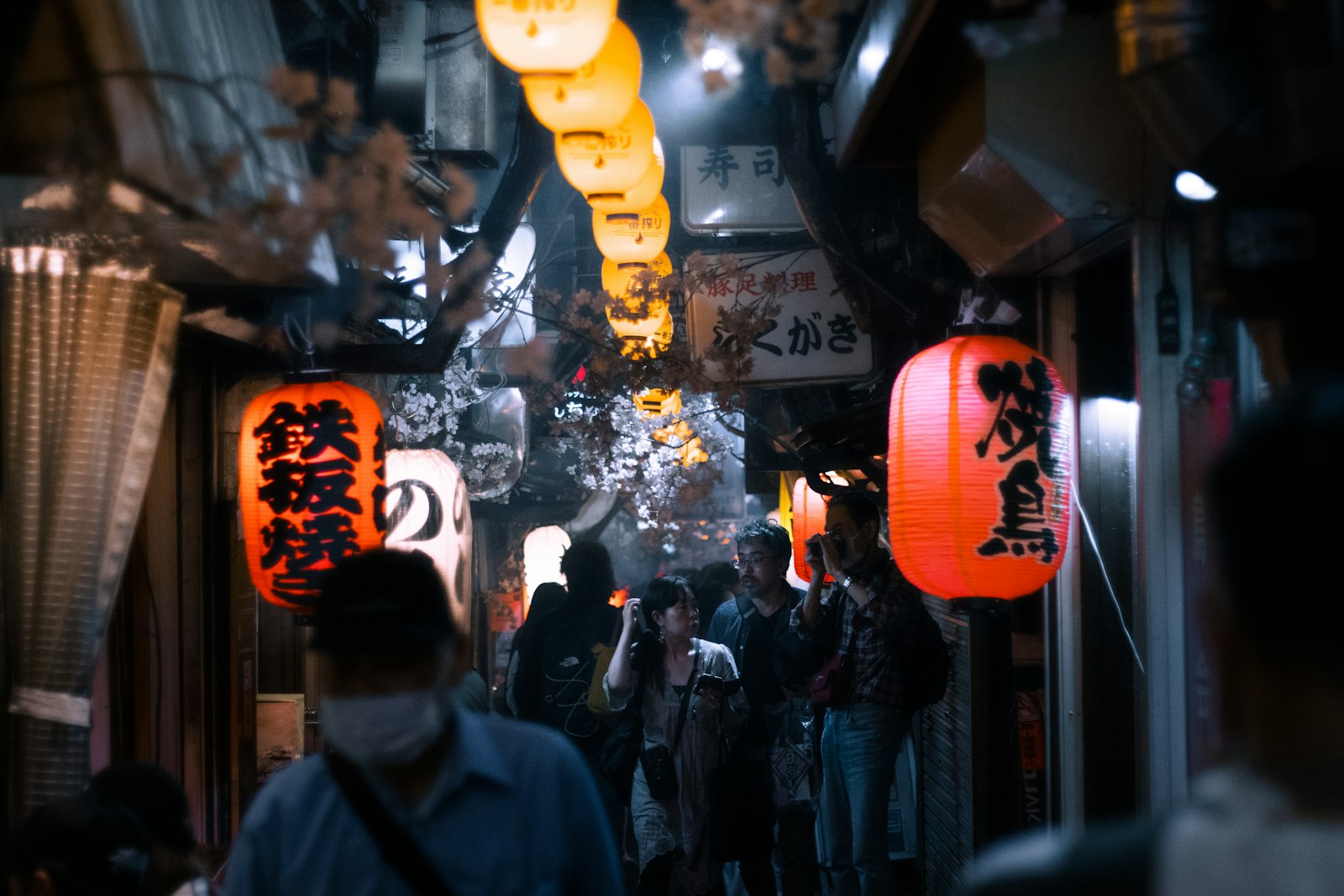
Photo by <a href="https://unsplash.com/@jpreet?utm_source=tokyodeepnightlife&utm_medium=referral">Jaipreet Singh</a> on <a href="https://unsplash.com/?utm_source=tokyodeepnightlife&utm_medium=referral">Unsplash</a>
Every traveler who lands in Shinjuku with one free evening ends up asking the same question: Golden Gai vs Omoide Yokocho — which one do I actually go to? Both are cramped, lantern-lit survivors of postwar Tokyo. Both show up in the same Instagram carousels. And both sit within a ten-minute walk of the same train station.
But they are not interchangeable, and picking the wrong one for your night is the difference between a great evening and standing awkwardly in an alley wondering what the fuss was about. Here’s the honest breakdown.
Contents
- The Short Answer
- Two Alleys, One Origin Story
- Omoide Yokocho: What It’s Actually Like
- Golden Gai: What It’s Actually Like
- Golden Gai vs Omoide Yokocho: The Side-by-Side
- Which One Should You Choose?
- How to Do Both in One Night
- Etiquette That Applies to Both
- Frequently Asked Questions
- What do you do in Tokyo After 10?Join our Tokyo Nightlife Private Tour
- Want to Skip the Guesswork?
- About the Author
The Short Answer
The Golden Gai vs Omoide Yokocho question comes down to one distinction: Omoide Yokocho is where you eat. Golden Gai is where you drink and talk.
If you’re hungry, arrive before 20:00, want grilled skewers and beer, and don’t want to think about cover charges — go to Omoide Yokocho.
If you’ve already eaten, it’s after 21:00, and you want to end up in a six-seat bar having a conversation with a bartender who’s been pouring in that room for twenty years — go to Golden Gai.
If you have a full evening, do both in that order. They’re roughly a ten-minute walk apart on opposite sides of Shinjuku Station, and the sequence works because their opening hours barely overlap.
Two Alleys, One Origin Story
The reason Golden Gai and Omoide Yokocho feel similar is that they came from the same moment in history.
Omoide Yokocho grew out of the rubble on the west side of Shinjuku Station around 1946, when the area became a black-market strip of stalls divided by nothing more than single door boards. It survived a major fire on November 24, 1999 that destroyed roughly a third of the lane, and was rebuilt — which is why some shops can still trace their recipes back to the late 1940s. Today, according to the official Omoide Yokocho association, around 60 restaurants sit shoulder to shoulder in the lane, more than half of them yakitoriya (chicken skewers) or motsuyakiya (grilled offal).
Golden Gai sits on the east side, wedged between Kabukicho and Hanazono Shrine. It began life after the war too — as an unlicensed red-light district — and when that trade was outlawed in the late 1950s, the tiny two-story wooden shophouses were converted into bars. The official Tokyo tourism guide counts around 280 bars packed into six rows of alleys, many seating only five or six people at a time.
So: same postwar bones, completely different businesses. One block fed the working city. The other gave it somewhere to talk after hours.
Omoide Yokocho: What It’s Actually Like
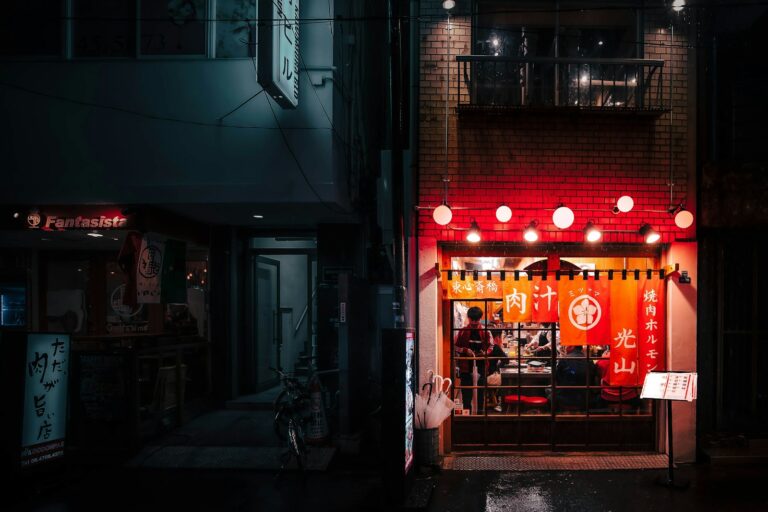
You’ll smell it before you see it — charcoal smoke pouring out of open counters, condensation on the plastic sheeting in winter, and staff calling out orders over the noise.
Most counters seat six to ten people, elbow to elbow, often with the grill less than an arm’s length away. Nobody is precious about it. You sit, you order a beer or a chuhai, you point at skewers, you eat, you leave. Turnover is fast and the shops expect it.
What to order: yakitori is the default, but the lane’s real specialty is motsuyaki — grilled pork and chicken offal, which is cheaper and, honestly, more interesting. Liver, heart, and tongue are the staples. There are outliers too: Kabuto, founded in 1948, grills eel over binchotan charcoal from head to tail, and Asadachi has built its reputation on genuinely unusual delicacies including frog and soft-shell turtle. Neither is a tourist gimmick — they’ve been doing it for decades.
What it costs: skewers typically run around ¥200–¥400 each and drinks ¥500–¥900, so a filling dinner with a few beers lands somewhere in the ¥2,500–¥4,000 range per person. Most shops don’t charge a seating fee, though a small otoshi (table snack) sometimes appears.
When to go: shops start opening in the late afternoon, around 17:00, and the lane is at its best between 18:00 and 21:00. Arrive at 22:00 and you’ll find some counters already winding down.
English: patchy but improving. More shops have English menus than they did five years ago, but many masters speak little English. Pointing works fine.
Golden Gai: What It’s Actually Like
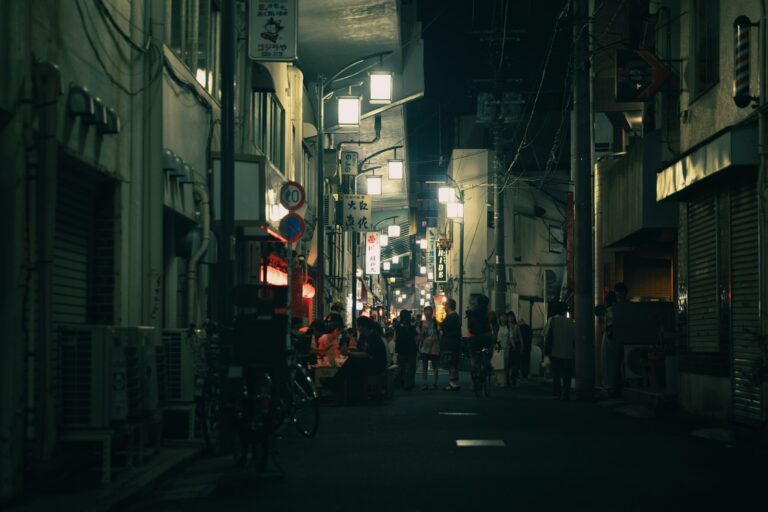
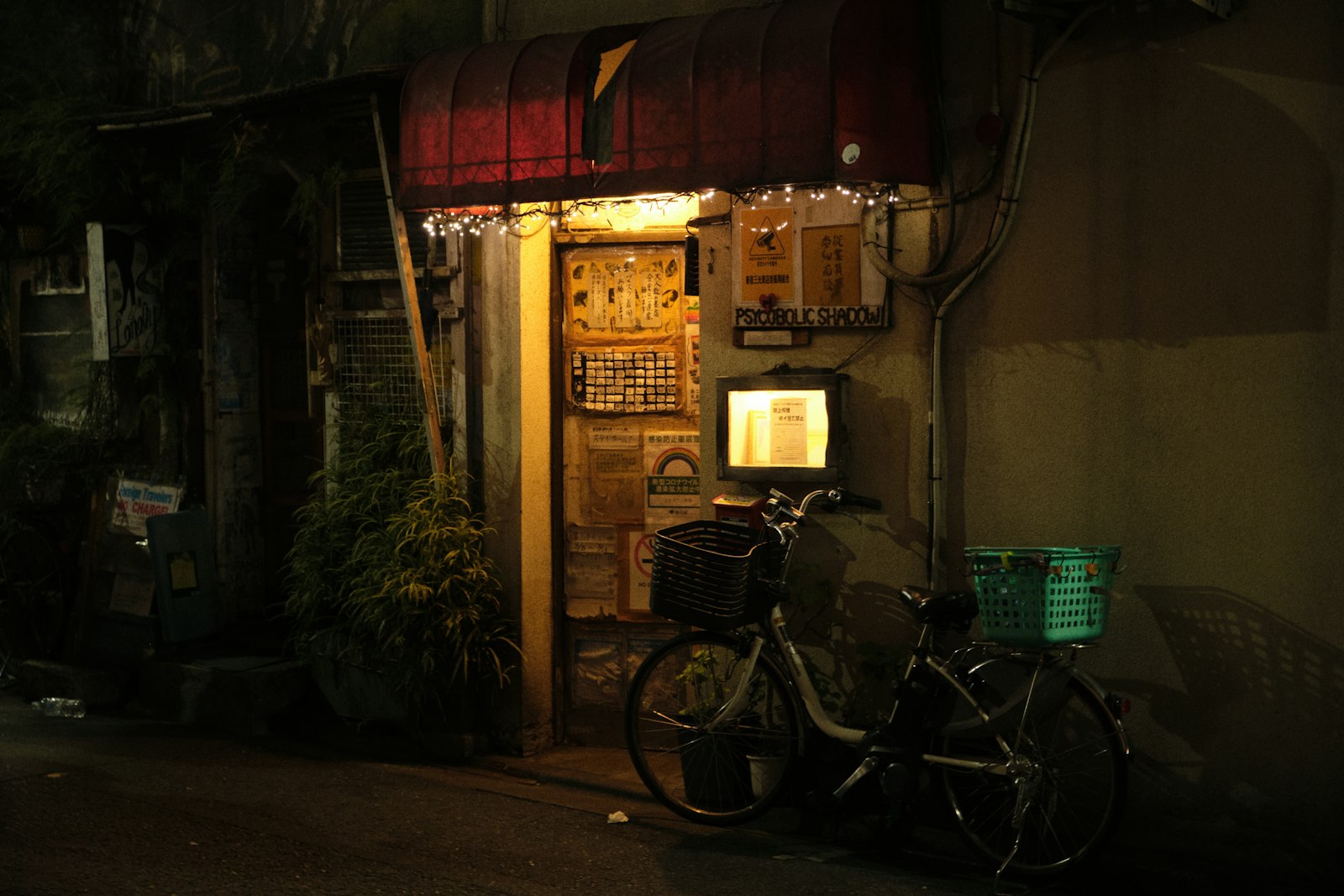
Golden Gai is quieter than you expect. There’s no music spilling into the street, no touts, no neon wall — just six narrow lanes of wooden buildings with hand-painted signs stacked up the facades, and a lot of closed doors you have to be brave enough to open.
That’s the whole experience. You pick a door, slide it open, and either there’s a seat or there isn’t. Inside, you’ll usually find a counter, six stools, one bartender, and a room organized around a single obsession — punk records, 1970s horror films, flamenco, a specific brand of whisky. Conversation with strangers is the point, not a bonus.
What it costs: almost every bar charges a seating fee, commonly ¥500–¥1,500 per person, occasionally higher. Drinks typically run ¥700–¥1,500. Two hours and a couple of bars puts most people in the ¥3,000–¥5,000 range. Cash is still king in a lot of these rooms.
The rule that trips people up: some bars are effectively members-only, or post an English sign about a different (higher) charge for first-time visitors. That’s not a scam — it’s a small business rationing eight seats. If a bar looks closed to you, it probably is. Move on and try the next door. For a wider look at what genuinely is and isn’t a rip-off after dark in Shinjuku, our guide to Tokyo nightlife scams covers the things worth watching for.
Easy first doors: Albatross G is the standard recommendation for a reason — English-speaking staff, an eccentric chandelier-and-taxidermy interior, and multiple floors so there’s usually room. Bar Araku, with its wall of foreign banknotes, and TOTO BAR Shinjuku, which focuses on Japanese sake, are also used to travelers walking in. And if you need food at 3am, Sugoi Niboshi Ramen Nagi has a second-floor branch inside Golden Gai known for its sardine-heavy broth.
When to go: most bars open around 20:00, and the alley doesn’t really come alive until 21:00. The sweet spot runs from 21:00 to about 01:00. Show up at 19:00 and half the lane is still shuttered.
Golden Gai vs Omoide Yokocho: The Side-by-Side
| Omoide Yokocho | Golden Gai | |
|---|---|---|
| Main purpose | Dinner and drinks at a counter | Drinking and conversation |
| Location | West side of Shinjuku Station | East side, next to Kabukicho |
| Scale | ~60 restaurants in one lane | ~280 bars across six alleys |
| Opens | ~17:00 | ~20:00 |
| Best window | 18:00–21:00 | 21:00–01:00 |
| Seating fee | Usually none | Common, ~¥500–¥1,500 |
| Typical spend | ¥2,500–¥4,000 | ¥3,000–¥5,000 |
| Group size that works | 1–3 | 1–2 per bar |
| Ease for first-timers | Easier | Requires some nerve |
Looking for Adult Entertainment Services in Tokyo? Download this
I’ve spent over a decade exploring and studying Japan’s adult entertainment scene firsthand. If you’d like detailed insider information—including how to choose the right shop, what services are available, and tips for avoiding common mistakes—check out our exclusive E-book.
Which One Should You Choose?
Most Golden Gai vs Omoide Yokocho debates ignore the thing that actually decides it: who you’re travelling with and what time it is. Find yourself below.
You’re hungry. Omoide Yokocho, no contest. Golden Gai bars serve snacks, not dinner.
You’re travelling solo. Both work, but for different reasons. A counter seat in Omoide Yokocho is the least awkward solo dinner in Tokyo. Golden Gai is the better place to actually meet people, because a six-seat bar makes conversation nearly unavoidable.
You’re a group of four or more. Split up in Golden Gai — you will not all fit in one bar, and squeezing in makes you the group everyone else resents. Omoide Yokocho handles small groups slightly better, but two or three is still the comfortable maximum.
You want photos. Omoide Yokocho, easily. The lantern-and-smoke geometry of that lane is the shot people come for. Do keep the camera pointed down the alley rather than into people’s faces — several shops have signs asking you not to photograph inside.
You have limited time and want the “real Tokyo” feeling. Golden Gai, but only if you’re willing to open a door and sit down. Walking through it taking photos and leaving is a wasted trip; the alley itself is just wood and signage. The experience is inside the rooms.
You’re on a tight budget. Omoide Yokocho. No cover charge and cheap skewers make it easy to control spending.
It’s raining or freezing. Omoide Yokocho’s counters are more sheltered than they look, and you’ll be indoors within a minute. Golden Gai involves standing outside deciding between doors.
How to Do Both in One Night
The genuinely correct answer to Golden Gai vs Omoide Yokocho is usually “both,” in this order:
- 18:30 — Omoide Yokocho. West exit of Shinjuku Station. Eat at one counter, then move to a second one for a couple more skewers. Budget an hour.
- 20:00 — Walk east. Cut through or around the station toward the east exit. It’s about ten minutes on foot, and you’ll pass through the neon core of Kabukicho on the way — worth the detour in itself.
- 20:30 — A warm-up drink. Golden Gai is still waking up, so grab something on Yasukuni-dori or in Kabukicho first.
- 21:15 — Golden Gai. Start with a bar that has an English sign or an open door. Two bars is a realistic night; three is ambitious.
- Watch the last train. Most Shinjuku lines stop running around midnight to 00:30. If you’re staying out past that, plan on a taxi or commit to staying until the trains restart around 05:00.
For the wider picture of how these two alleys fit alongside Kabukicho, Nichome and the department-store bars, our Shinjuku nightlife guide maps out the whole district.
Etiquette That Applies to Both
- Order a drink. In both alleys, a drink is the price of the seat. Don’t sit down and order only food or only water.
- Don’t linger. These are eight-seat businesses. One to two drinks, then free up the stool — especially when there’s a queue outside.
- Cash. Cards are increasingly accepted but far from universal. Carry ¥10,000 in cash for the evening.
- Ask before photographing anyone. Signage varies, but a hand gesture toward your camera and a nod from the master takes two seconds.
- No large luggage. There is genuinely nowhere to put it. Use a station coin locker.
- Smoking still happens. Many counters in Omoide Yokocho and bars in Golden Gai permit it. If that’s a dealbreaker, ask at the door.
Frequently Asked Questions
Is Golden Gai or Omoide Yokocho more touristy? Both draw heavy foreign traffic now. Omoide Yokocho feels more touristy because it’s photographed constantly and sits right by the station. Golden Gai is more visited than it looks, but the small rooms keep the concentration low.
Why is Omoide Yokocho called Piss Alley? The nickname — Shonben Yokocho in Japanese — dates from the postwar era, when the stalls had no toilets of their own. It’s still used affectionately, but the official name is Omoide Yokocho, “Memory Lane.”
Can I visit Golden Gai without speaking Japanese? Yes. Plenty of bars welcome English speakers, and several advertise it openly. You’ll have a better night if you learn sumimasen (excuse me), kanpai (cheers), and o-kaikei onegaishimasu (the bill, please).
Are they safe? Both are among the safer parts of Shinjuku nightlife — no touts working the alleys, and businesses that depend on repeat regulars. The risk sits in the surrounding streets of Kabukicho, not in the lanes themselves.
Do I need a reservation? No. Neither alley takes them in any meaningful way. You walk, you look, you sit where there’s space.
What do you do in Tokyo After 10?
Join our Tokyo Nightlife Private Tour
You deserve better than overpriced bars and missed opportunities. We’re here for you.
Want to Skip the Guesswork?
Choosing between Golden Gai vs Omoide Yokocho is the easy part. The hard part is standing in front of a closed wooden door at 21:30, unable to tell whether the bar behind it welcomes visitors or has been serving the same eight regulars since 1994 — and that’s where most travelers give up and walk back to the station.
If you’d rather spend that hour drinking than deciding, our Tokyo After 10 nightlife tour puts a local guide next to you for the whole evening: the right doors, the introductions, the ordering, and the walk home. You still get the alley. You just skip the standing around.
Want more detail on either lane before you go? We’ve written full guides to Shinjuku’s Golden Gai and to Omoide Yokocho for first-timers.