Photo by <a href="https://unsplash.com/@danbucklephotography?utm_source=tokyodeepnightlife&utm_medium=referral">Daniel Buckle</a> on <a href="https://unsplash.com/?utm_source=tokyodeepnightlife&utm_medium=referral">Unsplash</a>
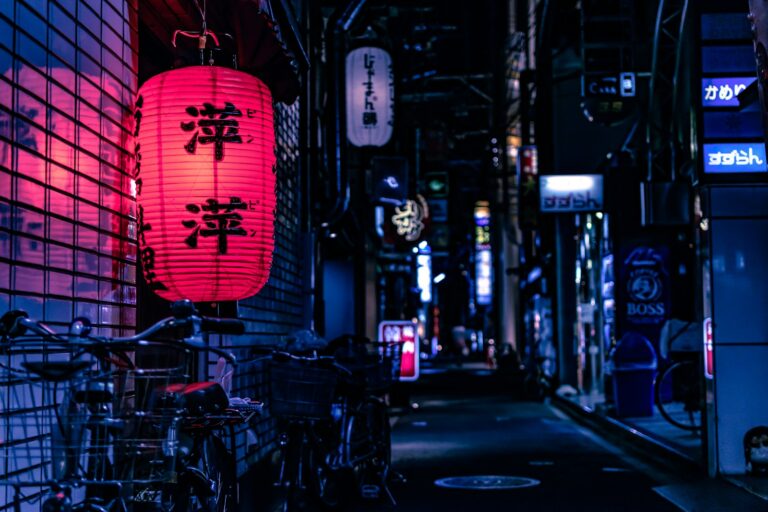
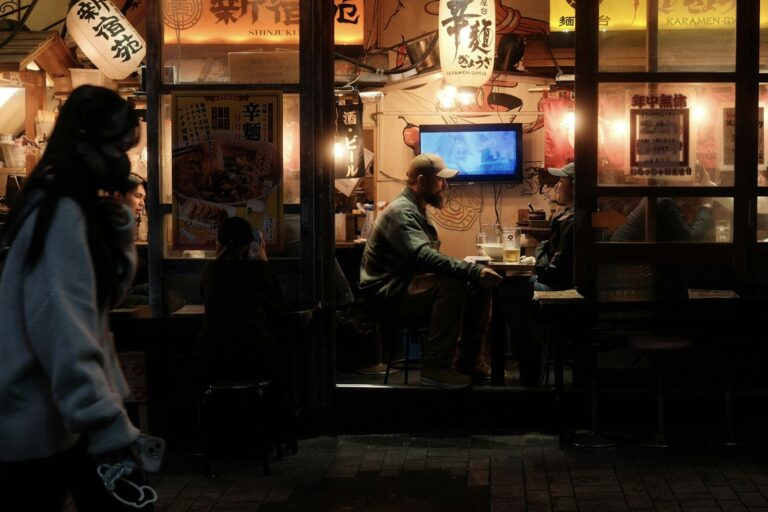
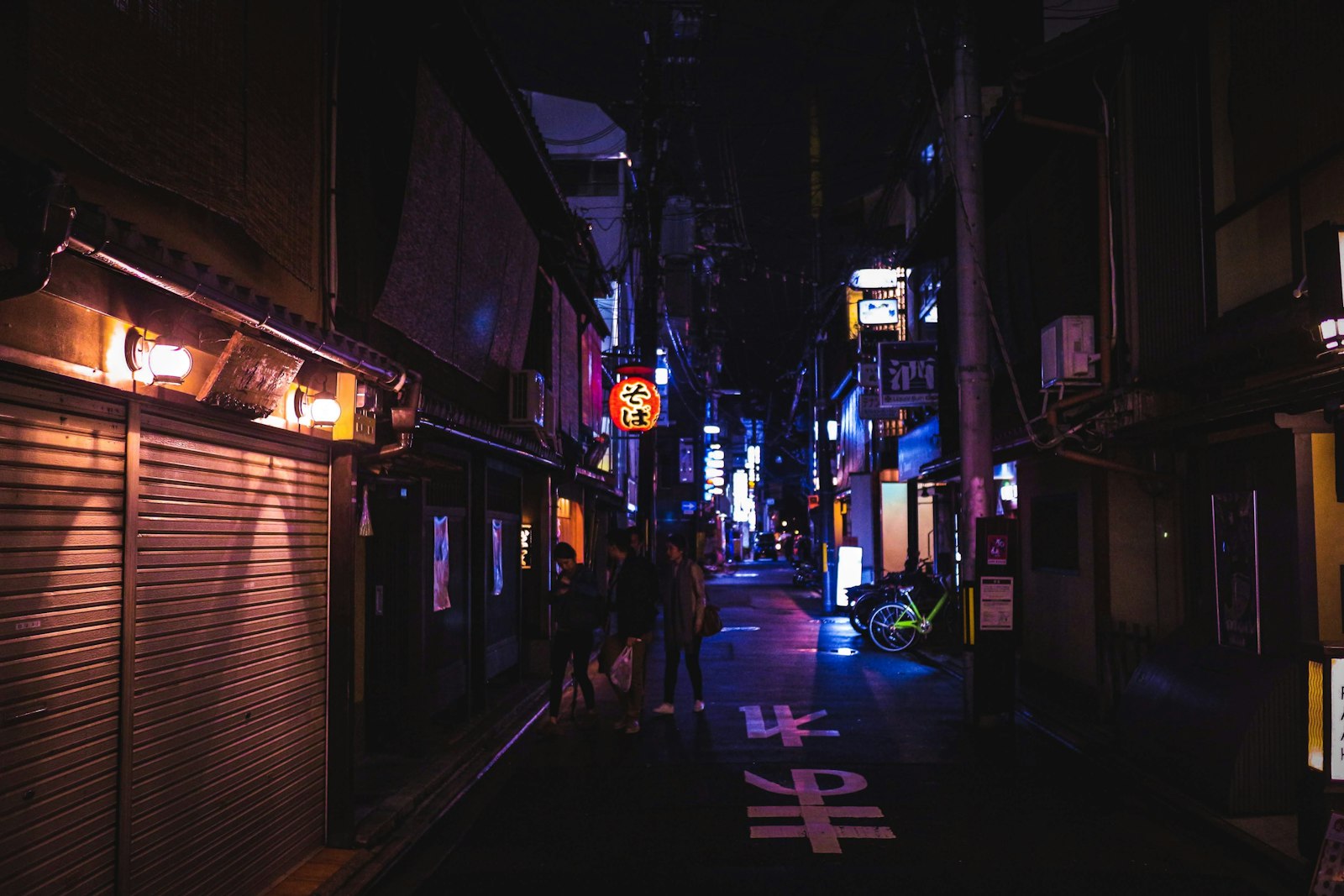
By day, Ameyoko is a market. People come for dried squid, cheap sneakers, spices and bags of discount chocolate. Go to Ueno Ameyoko at night and you get something else. The shops pull their shutters down, the izakaya under the train tracks put plastic stools out on the pavement, and the smell of charcoal and frying oil spreads down the alleys.
This guide covers what Ueno Ameyoko at night actually feels like, when to go and which standing bars and street-facing izakaya to look for. Every name, address and opening time below was checked against Japanese listing sites before publishing. If we couldn’t confirm a detail, we left it out.
Contents
- What Ueno Ameyoko at Night Is Really Like
- When to Visit Ameyoko After Dark
- Standing Bars and Stall-Style Spots to Try on Ueno Ameyoko at Night
- Tachinomi Kadokura (立飲みカドクラ): The Ham Katsu Standing Bar
- Tachinomi Takioka (立飲み たきおか): The Old-School Counter
- Daitoryo (大統領): Offal Skewers Under the Tracks
- Jizakana Yatai Hamachan Ueno (地魚屋台 浜ちゃん 上野店): Seafood, Yatai Style
- Ueno Sanchoku Inshokugai and Uogashi Uomaru (上野産直飲食街 / 魚河岸 魚○本店): The 24-Hour Food Street
- How to Order at a Standing Bar or Street Stall in Ameyoko
- A Simple Walking Route for Ameyoko After Dark
- Safety and Practical Tips for Ueno Ameyoko at Night
- Is Ueno Ameyoko at Night Worth It?
- What do you do in Tokyo After 10?Join our Tokyo Nightlife Private Tour
- See the Side of Ueno That Isn’t on Google Maps
- About the Author
What Ueno Ameyoko at Night Is Really Like
Ameyoko (short for Ameya Yokocho) runs along the elevated JR tracks between Ueno and Okachimachi stations. Part of it sits directly under the viaduct. Sources disagree a little on the numbers: Japan’s tourism ministry describes about 390 shops along a 600-meter main street plus side alleys, and other guides say roughly 400 shops over about 500 meters. Either way, it’s a long, packed strip that you can walk end to end in 10 to 15 minutes if the crowd lets you.
The market grew out of the postwar years, when traders sold goods that came from the U.S. occupation forces. That rough-edged, everyone-welcome feel never went away. Most shops are still cash only, and bargaining is part of the culture.
After dark, the balance shifts. Retail stalls start closing in the early evening, and the eating and drinking places take over the street. Three kinds of places do most of the work:
- Tachinomi (standing bars). No seats, or very few. You stand at a counter, order a drink and a small plate, and leave when you want.
- Open-front izakaya. Many places under and beside the tracks have no front wall. Tables spill outside, and you drink with trains rumbling overhead.
- Stall-style eateries. Kebab stands, Chinese-style street food counters and yatai-style (food-stall-style) izakaya where you order from a counter and eat on a stool.
It’s loud, smoky and cheap, and it’s one of the most enjoyable places in Tokyo to spend an evening without a plan.
When to Visit Ameyoko After Dark
Timing matters more here than in Shinjuku or Shibuya. Ueno drinks early and goes home relatively early.
- Late afternoon to 19:00. The changeover. Shoppers are still around, and the first after-work crowd arrives at the standing bars. This is the best time if you want to see both sides of Ameyoko in one visit.
- 19:00 to 21:00. Peak drinking hours. Outdoor tables fill up, especially on Fridays and Saturdays. Expect to wait or squeeze in at busy spots.
- After 22:00. Things thin out. Some bars stop taking orders around 21:30 to 22:30. A few places stay open later, and at least one never closes (see below).
Insider tip: If you only have one evening for Ueno Ameyoko at night, arrive around 17:30. You’ll catch the market closing up, get a spot at a standing bar before it fills, and still have time for three or four stops.
The last days of December are a special case. The street gets packed with Tokyoites buying food for New Year, and it can be hard to move. That’s fun to see once, but it’s not the best night for relaxed drinking.
Standing Bars and Stall-Style Spots to Try on Ueno Ameyoko at Night
All the places below sit within a few minutes’ walk of each other in the Ueno 6-chome and 7-chome blocks. Details come from Tabelog (Japan’s main restaurant review site) and other Japanese listings at the time of writing. Hours change, so check before you go, especially on holidays.
Tachinomi Kadokura (立飲みカドクラ): The Ham Katsu Standing Bar
Kadokura is the standing bar most people picture when they think of Ameyoko. It sits about a minute from Ueno Station, it’s big, and it’s busy from the afternoon on. The thing to order is ham katsu, thin slices of ham breaded and deep-fried. Tabelog’s menu listing shows ham katsu at ¥300 at the time of writing, which tells you the price level of the whole place.
Standing at the counter is free. There’s a seating area at the back that costs ¥300 per person, which includes a small appetizer (otoshi). Unusually for this area, it takes cards, e-money and PayPay.
- Address: Forum Aji Building 1F, 6-13-1 Ueno, Taito-ku, Tokyo
- Hours: 11:00–22:00 Sunday to Thursday and holidays (last order 21:30); 11:00–23:00 Friday, Saturday and the day before a holiday (last order 22:30)
- Budget (Tabelog): ¥1,000–¥1,999
Tachinomi Takioka (立飲み たきおか): The Old-School Counter
If Kadokura is the famous one, Takioka is the one that feels most like old downtown Tokyo. It opens at 7am and stays open late, so you’ll find regulars here at almost any hour. Order a drink, point at a small plate and stand shoulder to shoulder with locals.
Bring cash. Tabelog lists no card, e-money or QR payments. It also allows smoking throughout, so this one may not suit everyone.
- Address: 6-9-14 Ueno, Taito-ku, Tokyo
- Hours (Tabelog): 07:00–23:30
- Payment: Cash only
- Budget (Tabelog): ¥1,000–¥1,999
Daitoryo (大統領): Offal Skewers Under the Tracks
Daitoryo has been grilling motsu (offal) skewers in Ueno since 1950. The main shop is a small, cramped spot by the tracks, and its stewed offal (nikomi) is the reason regulars keep coming back. There’s also a larger branch nearby, so check which one you’re heading to.
If grilled offal sounds like a big step, start with the nikomi. It’s softer and milder, and it goes well with a cold highball.
- Main shop: 6-10-14 Ueno, Taito-ku, Tokyo
- Branch: 6-13-2 Ueno, Taito-ku, Tokyo
- Opens: 10:00 (closing times vary by source, so check before a late visit)
Jizakana Yatai Hamachan Ueno (地魚屋台 浜ちゃん 上野店): Seafood, Yatai Style
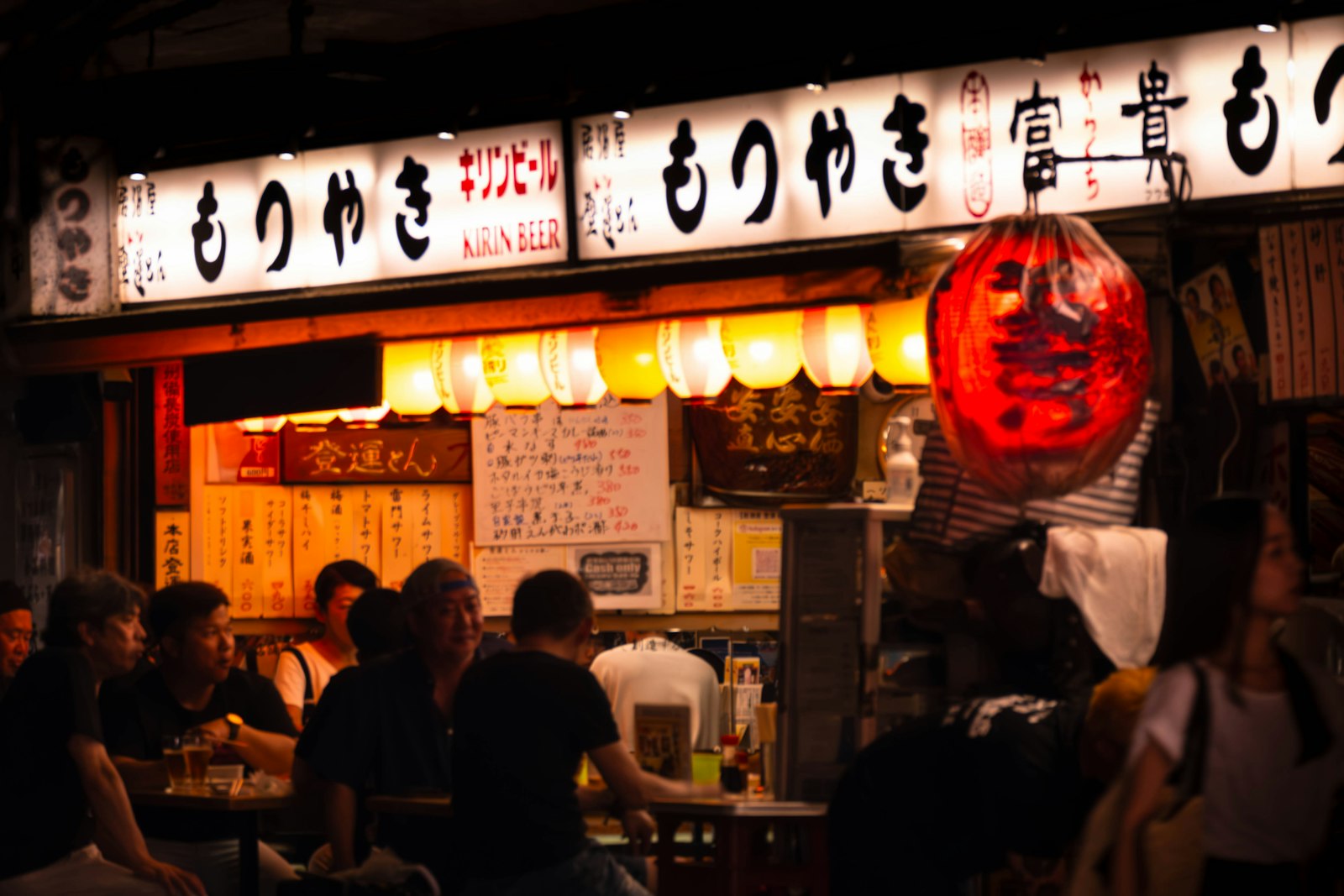
“Yatai” in the name means food stall, and the mood matches: bright, noisy and casual. The focus is seafood, and the tempura has a strong following. You order by marking a handwritten sheet. When you’ve had enough offal and fried ham, this is a good place to sit down and switch to fish.
- Address: FIT’S Building 1F, 6-9-13 Ueno, Taito-ku, Tokyo
Ueno Sanchoku Inshokugai and Uogashi Uomaru (上野産直飲食街 / 魚河岸 魚○本店): The 24-Hour Food Street
On the ground floor of the Fundes Ueno building, Ueno Sanchoku Inshokugai is a small indoor food alley built to feel like a row of stalls. It opened in 2017 with several izakaya serving seafood and meat sourced directly from producers. The anchor is Uogashi Uomaru Honten, which Tabelog lists as open 24 hours a day.
That makes it the obvious last stop when the rest of Ameyoko closes. Note the table charge.
- Address: Fundes Ueno 1F, 7-2 Ueno, Taito-ku, Tokyo
- Hours (Tabelog): Open 24 hours
- Charge: ¥399 per person (excluding tax)
- Payment: Credit cards not accepted
For more places to add to your night, our Ueno bar hopping guide to Ameyoko’s izakaya goes deeper on offal joints and seafood counters around the station.
How to Order at a Standing Bar or Street Stall in Ameyoko
The places along Ameyoko are casual, but they move fast. A few habits will make you look like you’ve done this before.
- Order a drink first. “Nama, kudasai” (a draft beer, please) or “Haibōru, kudasai” (a highball, please) works everywhere.
- Watch how people pay. Some standing bars take money per order (cash on delivery), others run a tab. If you see coins sitting on the counter or in a small tray, it’s cash on delivery. Have small change ready.
- Point if you need to. Menus are often handwritten in Japanese. Pointing at what the person next to you is eating is perfectly normal.
- Keep it short. At a tachinomi, one or two drinks and a plate is a normal visit. Twenty or thirty minutes is fine, and then you move on.
- Expect a charge at some sit-down places. A small per-person fee, often with an otoshi appetizer, is standard and not a scam. Our explainer on the otoshi charge in Japanese bars covers how it works.
If standing bars are new to you, read our Tokyo tachinomi standing bar guide before you go. It explains the format, the etiquette and what to order.
Looking for Adult Entertainment Services in Tokyo? Download this
I’ve spent over a decade exploring and studying Japan’s adult entertainment scene firsthand. If you’d like detailed insider information—including how to choose the right shop, what services are available, and tips for avoiding common mistakes—check out our exclusive E-book.
A Simple Walking Route for Ameyoko After Dark
You don’t need a strict plan, because everything is close together. But a loose order helps you pace the night.
- 17:30, start near Ueno Station. Walk into Ameyoko from the Ueno end while the shops are closing. Look down the side alleys as well as the main street.
- 18:00, Kadokura. First drink and ham katsu while you can still get a spot at the counter.
- 18:45, Daitoryo. Nikomi and a highball near the tracks.
- 19:30, Takioka. One round at the counter with the regulars.
- 20:15, Hamachan. Sit down for seafood and a slower drink.
- Late, Fundes Ueno. Finish at the 24-hour food street if you’re not ready to go home.
At standing bars, ¥1,000 to ¥2,000 per stop is a reasonable budget. Five stops at that pace still costs less than a couple of cocktails in some parts of Tokyo.
Safety and Practical Tips for Ueno Ameyoko at Night
Ameyoko is a busy, well-lit public street, and most visitors have no problems at all. Still, a few things are worth knowing:
- Carry cash. Most market shops and many bars only take cash. Don’t count on cards everywhere.
- Ignore touts. The street stalls themselves rarely call out to passersby. If someone on a side street is pushing hard to take you to a bar, especially late at night, keep walking. Stick to places with visible prices and open fronts.
- Watch your bag in crowds. The busiest stretches get tight, especially on weekend evenings.
- Mind the drinking age. It’s 20 in Japan.
- Check your last train. Ueno is a major hub, but final trains on many lines leave around midnight. Check your route before the last round.
- Don’t wander with open drinks. Drinking on the street isn’t illegal in Tokyo, but in Ameyoko it’s polite to finish your drink at the stall or bar where you bought it.
If you want to see more of the area, the Tokyo Metropolitan Government’s GO TOKYO guide to Ueno covers the park, museums and other sights for daytime planning. After your drinks, a short walk to Shinobazu Pond at the edge of Ueno Park is a quiet contrast to the noise of the market.
Is Ueno Ameyoko at Night Worth It?
Yes, if you like your nightlife loud, cheap and unpolished. Ameyoko doesn’t have the neon of Kabukicho or the cocktail bars of Ginza. What it has is the feeling of drinking where Tokyo’s working people actually drink, with trains overhead and grilled skewers at a few hundred yen.
It’s less suited to anyone looking for clubs or late-night partying. Most of the action winds down before midnight. For that, you’ll want Shinjuku or Roppongi.
For a broader look at outdoor eating after dark, our guide to Tokyo’s night food stalls and yatai covers other areas with a similar street-food feel.
What do you do in Tokyo After 10?
Join our Tokyo Nightlife Private Tour
You deserve better than overpriced bars and missed opportunities. We’re here for you.
See the Side of Ueno That Isn’t on Google Maps
The places in this guide are easy to find on your own. The harder part is everything around them: the unmarked counter in a side alley, the tiny bar where the owner has been pouring for decades, the dish that’s only on the handwritten board. Without Japanese, it’s easy to walk past all of it.
That’s where a local guide makes the difference. On Tokyo After 10, our private nightlife tour, you go out with someone who lives here and knows which doors to open, what to order and how to fit in with the regulars. Whether you explore Ueno Ameyoko at night on your own or with us, give it one evening. A skewer in one hand and a highball in the other is a very good way to see Tokyo.